The Hidden Risk of Trying to Disappear in Plain Sight
The gray man idea sounds smart, but taken too far it can increase danger, delay help, and create false confidence. Learn when a low profile helps, when visibility saves lives, and how to build safer habits for home, travel, and emergencies.

The phrase gray man gets repeated constantly in preparedness circles. Usually it means blending in, avoiding attention, and not advertising what you have. At a basic level, that can be sensible. Most people do not benefit from flashy gear, loud talk about supplies, or posting every detail of their routines online.
The problem starts when a useful idea turns into an identity. If you become so focused on looking invisible that you stop reading the room, delay calling for help, act strangely around police or security, or ignore medical needs, the tactic can become dangerous. In some situations, trying to stay unnoticed can make you look more suspicious. In others, it can keep rescuers, bystanders, or first responders from noticing you when you need them most.
A better approach is not to ask, “How do I become a gray man all the time?” A better question is, “What posture fits this setting right now, blend in, stand out, or leave?” That shift puts safety ahead of aesthetics.
This article takes a practical view. We will look at what the gray man concept really means, where it helps, where it fails, and what evidence-based habits matter more than trying to look tactically forgettable.
What the gray man idea actually means
The term came out of military, intelligence, and security culture, where low visibility can matter in specific missions. In civilian preparedness, it usually means dressing normally, avoiding obvious displays of wealth or gear, keeping plans private, and moving through public spaces without drawing notice.
That broad definition hides several very different ideas:
- Everyday discretion, such as not leaving valuables visible in your car.
- Travel caution, such as dressing in a way that fits local norms.
- Offline OPSEC, such as not discussing your stockpile with casual acquaintances.
- Online privacy, such as limiting location sharing and public posts about absences from home.
- Covert behavior, which some people imitate from movies or tactical content, often without a realistic need.
The first four can be healthy and practical. The last one is where people often get into trouble. Civilian life is not a covert operation, and pretending it is can distort judgment.
Gray man, situational awareness, and normalcy bias are not the same thing
Many people confuse these concepts. They overlap, but they are not interchangeable.
| Concept | Core goal | Typical advice | Main benefits | Main risks |
|---|---|---|---|---|
| Gray man | Avoid unnecessary attention | Dress neutrally, keep valuables discreet, avoid broadcasting plans | Can reduce obvious targeting in some settings | Can become performative, suspicious, or overly secretive |
| Situational awareness | Notice hazards early and make better decisions | Watch exits, observe behavior, trust context, leave early when needed | Improves avoidance, response time, and judgment | Can slide into hypervigilance if taken to an unhealthy extreme |
| Normalcy bias | Assume things are fine because they seem familiar | Often no deliberate advice, it is a mental trap | Can reduce panic in minor situations | Delays action during real danger |
If you remember one thing, remember this: awareness matters more than appearance. A person in ordinary clothes who is alert, calm, and willing to act early is usually safer than someone who has perfected a low-profile look but misses the warning signs around them.
When blending in helps
There are many ordinary situations where a low profile is smart. Crime prevention guidance, travel safety advice, and common sense all support not making yourself an easy or obvious target.
| Scenario type | Best overall posture | Concrete actions to take |
|---|---|---|
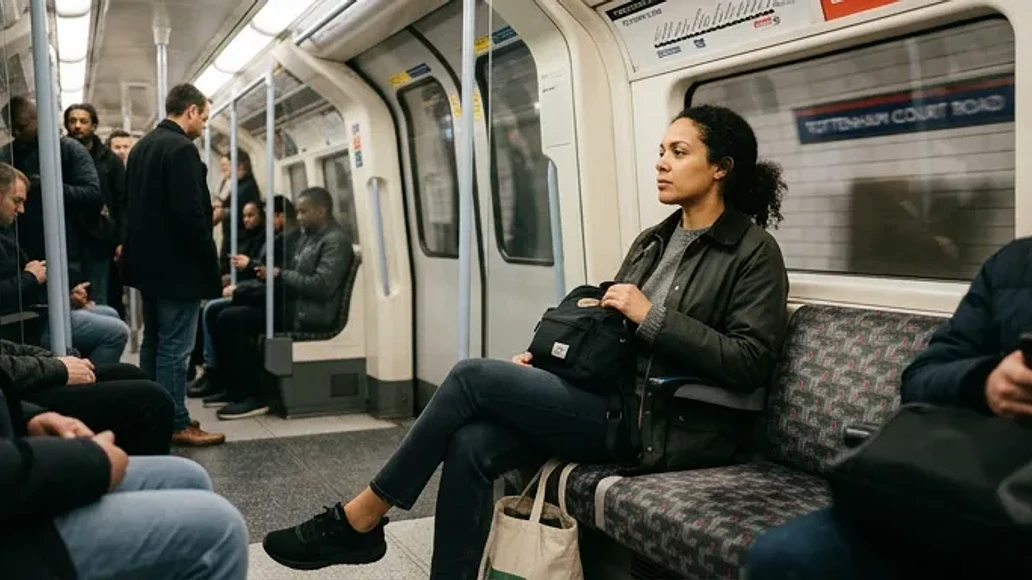
| Public transit in a busy city | Blend in | Keep your phone and wallet secure, avoid displaying cash, stay aware of exits and stops, do not wear attention-grabbing valuables |
| Tourist travel in an unfamiliar area | Blend in | Dress modestly for local norms, avoid loud discussions about money or plans, use a bag that does not scream expensive gear |
| Large public event | Blend in, while staying alert | Know meeting points, identify exits, limit intoxication, keep your hands free enough to move quickly |
| Parking lots and gas stations at night | Blend in, then leave promptly | Stay in well-lit areas, avoid lingering, keep keys ready, scan before exiting your vehicle |
| Online posting during travel | Stay low profile digitally | Delay vacation posts, avoid live location sharing, do not advertise an empty home |
These are not glamorous tactics. That is the point. The most useful version of gray man behavior is usually boring. It is less about costume and more about reducing obvious vulnerability.
How trying too hard can backfire
This is where the warning becomes serious. A person who is obsessed with not being noticed may start behaving in ways that actually attract attention or increase risk.
Furtive behavior can look suspicious
Repeatedly scanning people, avoiding eye contact in an exaggerated way, changing direction abruptly, hovering near exits, concealing your hands, or acting evasive around security personnel can trigger concern. Even if your intent is harmless, your behavior may not read as harmless.
That matters in stores, transit hubs, office buildings, schools, airports, and any place with cameras or security staff. Looking “too careful” can be interpreted as casing, shoplifting, or preparing to do something wrong.
Context beats a formula
There is no universal gray man outfit. Neutral clothing in one place may look out of place somewhere else. A muted tactical backpack, heavy boots, and stiff posture may blend into some environments and stand out sharply in others. Local culture, weather, age, occupation, and neighborhood norms all matter.
False confidence is dangerous
Some people start believing that because they look low profile, they are safe. That can lead to poor decisions, such as walking into bad areas without a plan, carrying gear they cannot use, or assuming they can move unnoticed in a crowd. Appearance is not a substitute for route planning, communication, medical readiness, or leaving early.
Delaying help can cost lives
One of the worst mistakes is staying quiet during a medical emergency, assault, fire, or disaster because you do not want attention. If you are having chest pain, severe bleeding, signs of stroke, trouble breathing, or anaphylaxis, call 911 or seek emergency care immediately. Do not hide symptoms to stay “under the radar.” If you wear medical identification for diabetes, severe allergies, seizure disorders, or heart conditions, do not stop using it just to look more anonymous without talking to your clinician first.
When visibility saves lives
Preparedness content sometimes overvalues invisibility and undervalues being clearly identifiable when it matters. In real emergencies, visibility often improves outcomes.
| Situation | Why standing out helps | Safer action |
|---|---|---|
| Medical emergency | Bystanders and EMS need to recognize distress quickly | Call 911, wave for help, state the problem clearly, use medical ID if applicable |
| Natural disaster or evacuation | Responders need to locate and direct people fast | Follow official instructions, use lights or signals if stranded, stay where rescuers can find you when appropriate |
| You witness a crime or threat | Clear reporting can protect you and others | Move to safety, call authorities, give concise descriptions, do not insert yourself physically unless necessary and lawful |
| You are lost or separated in a crowd | People cannot help if they cannot identify you | Go to staff or security, use a preplanned meeting point, make yourself easy to locate |
| Vehicle breakdown in a dangerous location | Roadside visibility reduces secondary hazards | Use hazard lights, call for assistance, move to a safer visible area if possible |
There is also a community angle here. Neighborhood safety research and community policing principles consistently show that social ties, visible guardianship, and cooperative behavior help reduce crime. Total isolation is not a strength. A trusted neighbor who notices something wrong can be more valuable than a perfectly curated low-profile wardrobe.
The emotional cost of living like you must always disappear
Constant threat monitoring can wear people down. Psychology research on hypervigilance and anxiety shows that living in a state of nonstop scanning can affect sleep, concentration, relationships, and overall wellbeing. Preparedness should make life more stable, not more fearful.
Warning signs that your safety mindset may be becoming unhealthy include:
- Persistent insomnia because you feel you must always stay alert.
- Avoiding normal social contact because everyone feels like a threat.
- Feeling unable to relax in ordinary public places.
- Compulsively changing routines without a clear reason.
- Becoming preoccupied with looking invisible rather than living well.
If fear of crime or the need to stay hidden is causing significant anxiety, social withdrawal, or distress, consider speaking with a licensed mental health professional. Preparedness and mental health are not opposites. Calm judgment is part of readiness.

Why blending in is not one size fits all
Advice about looking “normal” often ignores a basic reality. Not everyone is read the same way in public. Age, race, sex, disability, body type, religion, accent, and clothing style can all affect how a person is perceived. Travelers and marginalized groups may face extra scrutiny even when behaving appropriately.
That means gray man advice must stay humble. A tactic that works for one person in one city may not work for another person in a different setting. Trying to copy a tactical influencer's version of “average” can be especially risky if it clashes with local norms or makes law enforcement, security, or bystanders more suspicious.
The practical takeaway is simple. Study the environment, not the internet fantasy. Ask what is normal here, for this place, this time of day, this weather, and this social setting.
Popular gray man myths that deserve skepticism
| Claim | What people think it does | What evidence or expert guidance suggests | Safer alternative |
|---|---|---|---|
| If nobody notices you, you are safer | Total anonymity prevents targeting | Sometimes true, but not in emergencies, disasters, or when help is needed | Use context, stay low profile when useful, become visible when safety requires it |
| Specific clothing colors make you invisible | A wardrobe formula guarantees blending in | Evidence is weak, context matters far more than color rules | Wear ordinary, location-appropriate clothing and focus on behavior |
| Never help anyone | Engagement always creates risk | Blanket disengagement can be unethical and may worsen outcomes | Prioritize safety, call for help, be a good witness, intervene only within your abilities and local law |
| Never share any information | Total secrecy equals perfect OPSEC | Extreme secrecy can isolate you and complicate emergencies | Share selectively with trusted family, emergency contacts, and key neighbors |
| More hidden gear means more safety | Carrying extra equipment solves uncertainty | Skills, planning, and communication usually matter more than gear volume | Carry what you know how to use and keep it practical |
Low profile habits that actually help, and those that mostly feel helpful
| Strategy | Impact on real risk | Possible downsides | Recommended use |
|---|---|---|---|
| Keeping valuables out of sight | High | Minimal | Use consistently in vehicles, public spaces, and at home |
| Not posting travel plans in real time | Moderate to high | Minimal | Strong digital habit for most households |
| Knowing exits and leaving early when a place feels wrong | High | Can feel inconvenient | Core situational awareness skill |
| Neutral, ordinary clothing for the setting | Moderate | Can be overthought | Useful, but do not obsess over formulas |
| Using visible home lighting and solid locks | High | Cost and maintenance | Better investment than tactical aesthetics |
| Talking loudly about stockpiles or weapons | Negative | Invites attention and gossip | Avoid |
| Covering your face or acting evasive in normal settings | Low to negative | Can trigger suspicion or confrontation | Avoid unless there is a legitimate reason |
| Carrying gear you cannot use | Low | False confidence, extra weight, legal issues in some places | Replace with training and simpler tools |
Safer low profile strategies for home, work, and travel
If you want practical discretion without the downsides, focus on habits with real payoff.
At home
- Use quality locks, exterior lighting, and trimmed landscaping that improves visibility.
- Keep expensive deliveries and equipment packaging out of plain view.
- Avoid bumper stickers or signs that advertise gear, politics, or stockpiles.
- Build a small circle of trusted contacts who can notice unusual activity.
At work and in daily routines
- Keep your commute and parking habits predictable enough to be practical, but not so rigid that you ignore changing conditions.
- Do not leave bags, laptops, or firearms unsecured in vehicles.
- Know building exits, severe weather procedures, and emergency contacts.
- Stay cooperative and calm with staff, security, and first responders.
While traveling
- Dress for local norms and weather, not for an online persona.
- Use discreet luggage and keep backup payment methods separated.
- Share your itinerary with a trusted person, even if you keep it off social media.
- Have a charged phone, local emergency numbers, and a simple plan for getting out of an area quickly.
Digital gray man without paranoia
Online oversharing can create real risks. Burglars, stalkers, scammers, and harassers often use publicly available information, routines, and location clues. A healthy digital version of low profile behavior is worthwhile, but it should not cut you off from support.
Good digital OPSEC includes limiting public location sharing, reviewing privacy settings, avoiding photos that reveal home layouts or security weaknesses, and not posting inventories of expensive gear or supplies. It also means being careful about public arguments, doxxing risks, and oversharing children's schedules.
What it does not mean is disappearing from everyone. Trusted family members, emergency contacts, and key neighbors should know how to reach you and what to do if something goes wrong.
How to communicate safely with police, security, and first responders
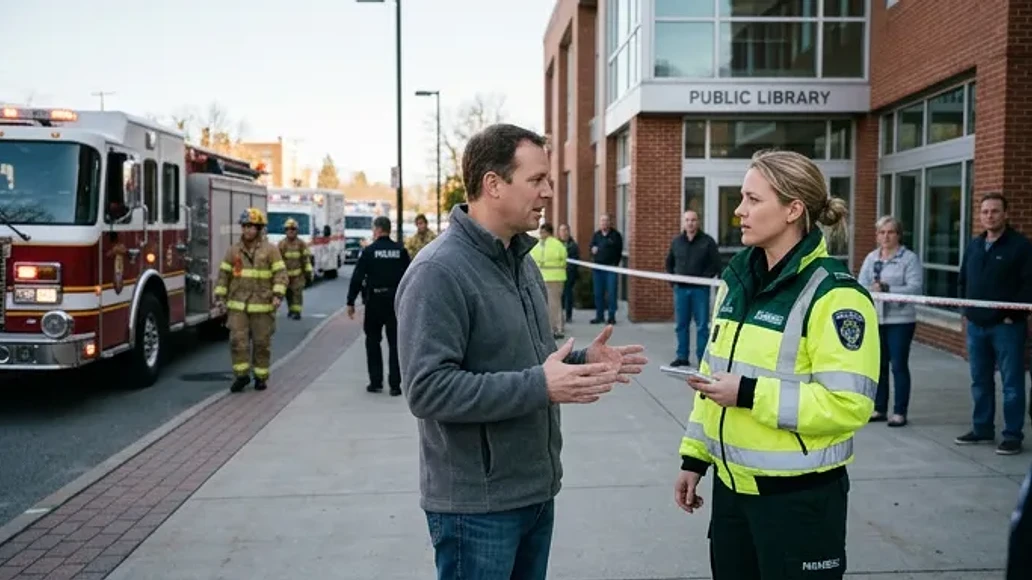
One overlooked danger of extreme gray man thinking is that it can make people act evasively in moments when clarity matters most. In a crisis, your goal is to be understood as a cooperative, non-threatening person who needs help or is reporting useful information.
Helpful habits include keeping your hands visible when appropriate, following instructions, speaking plainly, and avoiding sudden movements. If you are carrying a weapon where legal, know your local laws and the proper way to disclose that information if required. Laws vary widely by state and locality, so check current regulations or get qualified legal advice when in doubt.
Simple scripts can help under stress:
- “I need medical help. He is having chest pain and trouble breathing.”
- “I saw a fight near the north entrance. I am moving to a safe place now.”
- “I do not want to interfere. I can describe what I saw.”
These are not dramatic lines. They are effective because they are clear.
Legal and ethical limits
Preparedness advice should stay inside the law and inside common sense. Self-defense, concealed carry, use of force, and recording laws vary by jurisdiction. Do not rely on forum summaries for legal decisions. If you carry weapons, train lawfully and seek competent instruction. If you are unsure about local rules, consult official state resources or a qualified attorney.
There are ethical limits too. Staying low profile does not excuse abandoning basic responsibility. You may not be able to safely intervene in every situation, but you can often call 911, guide responders, help someone access aid, or serve as a good witness. “Never get involved” is too crude to be a sound rule.
Build skills, not a costume
The strongest alternative to extreme gray man thinking is real capability. Skills shorten problems. Aesthetic choices often only change how prepared you feel.
High-value skills include:
- Basic first aid, CPR, and bleeding control.
- De-escalation and conflict avoidance.
- Route planning and navigation.
- Emergency communication and family check-in plans.
- Home hardening and everyday crime prevention.
- Stress management and decision-making under pressure.
If you invest time anywhere, invest it there first. A person with medical training, a charged phone, a realistic plan, and good judgment is far better prepared than someone fixated on looking forgettable.
Common mistakes that make preppers easier targets
Ironically, many people who talk about staying gray do the opposite in daily life. They advertise themselves through behavior, purchases, and online habits.
- Flashy tactical gear in ordinary settings.
- Vehicle stickers that reveal equipment, politics, or preparedness identity.
- Public talk about generators, fuel, firearms, or food stores.
- Posting photos of supplies, safes, or home layouts online.
- Assuming secrecy alone replaces locks, lighting, insurance, and community ties.
Real discretion is quiet and boring. It does not need to be announced.
A simple framework, blend in, stand out, or get out
When you enter a place or face a developing problem, ask yourself a few quick questions:
- What is normal here right now?
- Am I drawing attention for a useful reason or a useless one?
- Who is around, and who can help?
- Where are the exits and barriers?
- Do I need to be less noticeable, more noticeable, or gone?
Use the answers to choose one of three postures:
| Posture | Best used when | What it looks like |
|---|---|---|
| Blend in | The environment is stable, public, and you simply want to avoid unnecessary attention | Ordinary dress, discreet valuables, calm behavior, active awareness |
| Stand out | You need help, must identify yourself, or need others to notice a hazard | Clear speech, visible signaling, direct requests for assistance, following responders' instructions |
| Get out | The setting is deteriorating, feels wrong, or offers no upside worth the risk | Leave early, move to a safer area, call for help from a better position |
This framework is more useful than any rigid gray man doctrine because it adapts to reality.
FAQ
Is it ever a good idea to be a gray man in everyday life, or should I avoid the idea entirely?
Use the practical parts, not the ideology. Everyday discretion, modest dress for the setting, quiet valuables, and limited oversharing are sensible. The problem is treating invisibility as the goal in every situation.
How do I stay low profile without looking suspicious to police or security?
Act normal for the setting. Do not behave evasively, conceal your hands, or make abrupt unexplained movements. Be calm, cooperative, and clear if approached. Context and behavior matter more than trying to look like a stereotype of “average.”
Can trying to be a gray man make anxiety or hypervigilance worse?
Yes. If the mindset turns into constant scanning, social withdrawal, sleep problems, or fear-driven behavior, it may be harming your wellbeing. Preparedness should support calm function, not chronic distress.
What are safer alternatives to the gray man strategy for protecting my family?
Focus on awareness, home security, communication plans, first aid training, digital privacy, and trusted community ties. Those measures have more practical value than obsessing over clothing, packs, or tactical aesthetics.
Should I keep my preparedness plans completely secret from neighbors and friends?
No. Keep sensitive details private, but do not isolate yourself. Trusted family members, emergency contacts, and a few reliable neighbors can be important during storms, medical emergencies, evacuations, and property crimes.
Putting it all together
The safest version of the gray man idea is simple discretion. Do not advertise valuables. Do not overshare. Dress for the environment. Stay aware. Leave early when something feels wrong.
The dangerous version is turning low profile into a rigid identity. That can produce false confidence, suspicious behavior, delayed emergency response, and unnecessary anxiety. In the real world, safety often depends less on disappearing and more on choosing the right posture for the moment.
Blend in when it helps. Stand out when it saves lives. Get out when the situation is turning bad. That is a far better rule than trying to be invisible all the time.
References
No direct reference links were provided in the research brief. For current authoritative guidance, consult official resources from the FBI Uniform Crime Reporting Program, the Bureau of Justice Statistics National Crime Victimization Survey, Ready.gov, CDC emergency preparedness pages, the U.S. Department of State travel advisories, the DOJ COPS Office, and the National Institute of Justice.