Why Some Wildfires Turn Catastrophic, and How Households Can Lower the Odds
America’s deadliest wildfires are rarely caused by one thing alone. This guide explains the science behind ignition, extreme fire spread, wildland urban interface risk, utility failures, smoke hazards, and the practical steps families can take to prepare safely.

Wildfires become deadly for reasons that are more complicated than a single spark, a single policy failure, or a single weather event. In the United States, the most destructive fires usually happen when several risk factors overlap at once: an ignition source, dry fuels, dangerous wind, homes built close to flammable vegetation, and too little time for people to get out safely.
That is the key distinction many headlines miss. A fire can start small and still become catastrophic if it reaches a community under extreme conditions. It can also burn a large area without causing many deaths if it stays away from homes and evacuation routes. To understand the real causes behind America’s deadliest wildfires, it helps to separate three parts of the problem: what starts fires, what makes them spread fast, and what puts people directly in harm’s way.
This article is general information, not a substitute for local emergency orders, building codes, or medical advice. During an active fire, always follow local fire authorities, public health guidance, and your healthcare provider. If evacuation is ordered, leave. Do not stay behind to defend a home.
What makes a wildfire deadly in the United States?
A deadly wildfire is not just a big fire. It is a fire that causes loss of life, serious injuries, mass displacement, or heavy destruction of homes and infrastructure. Fire scientists often distinguish between ignition, spread, and impact.
| Term | What it means | Why it matters |
|---|---|---|
| Ignition | The event that starts the fire, such as lightning, equipment use, a power line failure, or an unattended campfire | Prevention efforts often focus here because stopping the spark can stop the whole event |
| Spread | How quickly and intensely the fire moves through grass, brush, timber, or structures | Weather, fuel dryness, slope, and wind determine whether a small fire stays small |
| Impact | The human consequences, including deaths, injuries, evacuations, and home loss | Community layout, warning systems, road access, and home construction strongly affect outcomes |
One more term matters a lot: the wildland urban interface, often shortened to WUI. This is where homes and neighborhoods meet or mix with flammable vegetation. Many of the deadliest modern fires have happened in these edge zones, where embers can travel ahead of the flame front and ignite roofs, vents, decks, fences, mulch, and dry leaves in gutters.
How most wildfires start today
Across the US, a large majority of wildfire ignitions are human caused. Lightning remains the main natural source, but people start many more fires overall through accidents, equipment, infrastructure failures, and unsafe burning. That does not mean every deadly fire is caused by carelessness, and it does not mean every human caused fire is intentional. In fact, many severe events begin with ordinary activities under extraordinary conditions.
| Ignition source | Typical setting | Share of total ignitions | Examples of deadly pathways | Prevention focus |
|---|---|---|---|---|
| Equipment use | Rural properties, construction, mowing, welding, chains | Common human cause | Sparks in cured grass during heat, wind, and low humidity | Restrict spark producing work on red flag days, maintain arrestors, follow local bans |
| Debris burning | Backyards, agricultural land, brush piles | Common human cause | Escaped burns spreading into brush or timber near homes | Obey burn restrictions, use permits where required, never burn in windy conditions |
| Campfires | Parks, dispersed camping, recreation sites | Frequent human cause | Unextinguished coals reigniting after people leave | Use only where allowed, drown and stir until cold to the touch |
| Power lines and utility equipment | WUI corridors, high wind areas, aging infrastructure zones | Smaller share of total starts, but important in major disasters | Line failures or vegetation contact during wind events near communities | Grid upgrades, vegetation management, shutoff policies, inspections |
| Vehicles | Road shoulders, towing routes, off road travel | Recurring human cause | Hot exhaust, dragging chains, or parking on dry grass | Vehicle maintenance, safe parking, chain checks |
| Arson | Varies | Present, but not the main explanation for most deadly fires | Intentional starts near populated areas | Law enforcement, reporting, access control, investigation |
| Lightning | Mountains, forests, dry storm zones, remote terrain | Main natural source | Multiple simultaneous starts that strain firefighting capacity | Detection, rapid response, fuel management, evacuation readiness |
The important takeaway is that the spark is only part of the story. A mower blade striking a rock on a cool damp morning is not the same risk as the same spark during a heat wave with gusty winds and critically dry grass.
What turns a spark into a deadly fire
Deadly wildfires usually require a chain of conditions. Fire behavior depends on fuel, weather, and topography. Human losses depend on where the fire goes and how fast people can react.
| Factor | How it raises death risk | What households can influence | What requires broader action |
|---|---|---|---|
| Dry fuels | Grass, brush, and trees ignite more easily and burn faster | Reduce vegetation close to structures, remove leaf litter | Landscape scale fuel treatment, prescribed fire, land management |
| Wind | Pushes flames rapidly and carries embers far ahead of the main fire | Prepare to evacuate early on red flag days | Forecasting, utility shutoffs, public warning systems |
| Low humidity and heat | Dry out fine fuels and increase ignition potential | Avoid spark producing tasks in dangerous conditions | Regional planning, weather monitoring, public restrictions |
| Steep terrain | Fire often moves uphill quickly and can trap people on narrow roads | Know multiple evacuation routes if possible | Road design, access improvements, community planning |
| WUI housing growth | More homes in flammable landscapes means more exposure and more ignition opportunities | Home hardening, defensible space, insurance review | Zoning, building codes, subdivision design |
| Communication failures | Late or confusing alerts reduce evacuation time | Use multiple alert methods, family communication plan | Emergency communications systems, sirens, backup power |
| Limited road capacity | Traffic bottlenecks can become life threatening during fast moving fires | Leave early, keep vehicle fueled, preplan routes | Evacuation planning, traffic control, infrastructure upgrades |
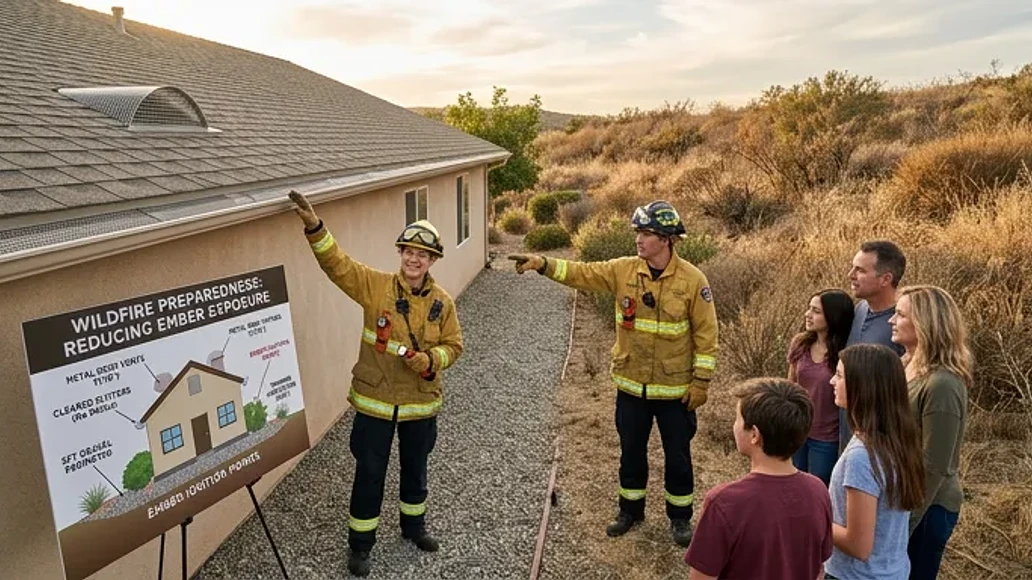
In many fatal fires, embers are the real home killer. A house does not need a wall of flame to ignite. Windblown embers can enter attic vents, collect in corners, or land in dry debris. That is why home ignition zone research places so much emphasis on the first few feet around the structure and on vulnerable building features.
Extreme weather and climate trends are making bad fire days worse
It is inaccurate to say climate is the only cause of deadly wildfires. It is also inaccurate to ignore it. Strong evidence shows that hotter conditions, longer fire seasons, earlier snowmelt in some regions, more intense heat waves, and periods of very low humidity can make fuels more flammable and increase the odds that a fire will spread rapidly once it starts.
Think of climate and weather as force multipliers. They do not usually provide the spark, but they can create the conditions that turn a routine ignition into a fast moving emergency. Heat domes, drought, dry lightning, and strong downslope or offshore wind events are especially dangerous combinations. In recent years, many communities have seen major fires outside what used to be considered the normal season, which makes preparedness harder because people may not be mentally ready.
That does not mean every region faces the same pattern. Some places are dominated by grass fire risk, where a fire can move with shocking speed. Others face heavy timber and brush conditions, where long term fuel build up and drought stress matter more. The common thread is that extreme fire weather increases the chance of rapid spread and ember storms.
Why the wildland urban interface matters so much
One of the clearest explanations for rising wildfire losses is simple: more people live where fire can reach them. As development expands into foothills, canyons, forest edges, and grassland fringes, the number of homes exposed to wildfire rises. More roads, fences, sheds, decks, vehicles, and utility lines also create more opportunities for ignition and more obstacles during evacuation.
WUI growth changes the stakes. A fire that once would have burned through open land can now become a neighborhood disaster. Dense subdivisions with limited exits can be especially dangerous when a wind driven fire moves faster than expected. Even communities that do not look remote can still be in the WUI if they border open space, brush, timber, or unmanaged grass.
| Region | Typical fuels | Main ignition patterns | Peak concern | Preparedness focus |
|---|---|---|---|---|
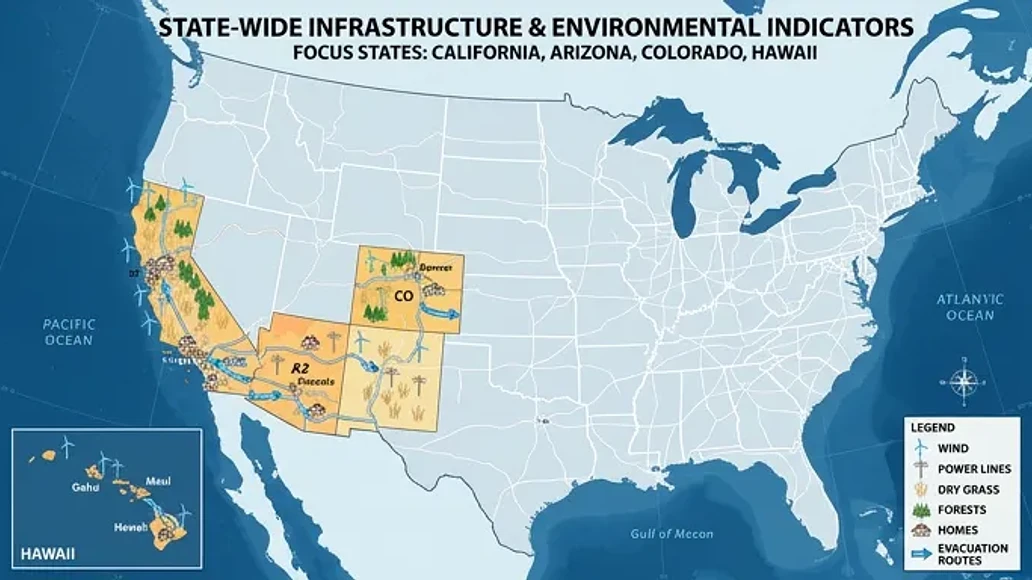
| California and parts of the West | Brush, timber, mixed chaparral, cured grasses | Human ignitions, utilities, lightning in some areas | Wind driven ember storms near communities | Home hardening, evacuation planning, utility awareness |
| Rockies and interior West | Forest, beetle affected timber, grass, shrublands | Lightning and human causes | Long duration fires in dry forests and fast grass fires | Fuel awareness, alerts, route planning, smoke readiness |
| Southeast | Pine, understory, brush, marsh and grass in some areas | Human causes are common, prescribed fire also part of management | Rapid spread under dry windy conditions, smoke impacts | Burn law compliance, property maintenance, local alerts |
| Hawaii | Dry grasses, shrubs, invasive fuels in some areas | Human and infrastructure related starts | Fast moving grass fires under strong wind | Evacuation speed, communication redundancy, vegetation control |
| Great Plains and grassland regions | Cured grasses, rangeland fuels | Equipment, vehicles, power lines, lightning | Very rapid fire spread over open ground | Vehicle readiness, livestock plans, early evacuation |
Lessons from recent deadly fires
Case studies show that there is no single master cause. Different fires begin in different ways, but the deadliest ones often share the same amplifiers: wind, dry fuels, exposed communities, and limited time.
Camp Fire, California
The Camp Fire is often cited because it combined a utility related ignition with extreme fire weather, dry vegetation, and a vulnerable community layout. The fire spread rapidly into Paradise, where evacuation became extraordinarily difficult. This was not just a story about one failed component. It was a story about infrastructure, weather, fuels, and exposure colliding.
Lahaina, Maui
The Lahaina disaster highlighted how dry grass fuels, strong winds, infrastructure concerns, and communication challenges can produce catastrophic consequences in a place many people do not mentally associate with wildfire. It also showed that deadly wildfire risk is not limited to dense forests. Grass fires can be just as lethal when they move quickly into populated areas.
Yarnell Hill, Arizona
Yarnell Hill is often remembered for firefighter fatalities, but it also underscores how quickly conditions can change in rugged terrain. Wind shifts, heat, and topography can create dangerous fire behavior even when responders are highly trained.
Marshall Fire, Colorado
The Marshall Fire demonstrated that suburban and exurban communities can face extreme wildfire losses even outside the classic mountain forest image. Dry grasses, severe wind, and dense development contributed to rapid structure to structure spread.
Tubbs Fire, California
The Tubbs Fire showed how embers and wind can carry destruction into urbanized areas at night, when warning and evacuation become harder. Time of day matters. So do alert systems and public understanding of risk.
Utilities and infrastructure can be hidden ignition sources
Power lines and related equipment do not cause most wildfire starts nationwide, but they matter disproportionately in some of the deadliest events. Under high wind conditions, damaged lines, vegetation contact, or equipment failures can ignite dry fuels near communities. Aging infrastructure can increase risk, especially where maintenance, vegetation clearance, and shutoff decisions are difficult or delayed.
Infrastructure risk goes beyond the spark itself. Communications systems, backup power, sirens, and cell networks all affect whether people receive timely warnings. A community can be physically exposed to fire and informationally exposed at the same time, which is a dangerous combination.
For households, the practical lesson is not to tamper with utility equipment. Instead, sign up for utility outage alerts, understand local public safety shutoff policies if they exist, keep backup lighting and charging options, and plan for evacuation even if communications fail.
Fire suppression history, fuel build up, and prescribed burning
Another real cause behind severe wildfire behavior in some landscapes is long term fuel accumulation. In many US forests, decades of aggressive fire suppression reduced the frequency of lower intensity fires that once cleared understory fuels. Over time, that can leave more dense vegetation available to burn.
But this issue is often oversimplified. Fuel build up matters a great deal in some ecosystems and less in others. It is not a complete explanation for every disaster, especially in grass fire events or in places where wind and WUI exposure dominate. Prescribed burning and cultural burning can reduce fuel loads and improve resilience, but they are tools, not guarantees. Their effectiveness depends on scale, timing, weather windows, local ecology, staffing, and public acceptance. They also require trained professionals and legal compliance.
Homeowners should never attempt unauthorized burns to reduce fuel. Burning rules vary by state and county, and illegal or careless burning can cause injuries, criminal penalties, and civil liability.
Myths versus realities
| Claim | Evidence strength | Reality |
|---|---|---|
| Most US wildfires are human caused, while lightning is the main natural source | Well supported | Consistent agency data show people start a large majority of fires, though lightning remains important, especially in remote areas |
| Climate change is lengthening fire seasons and increasing conditions for extreme fires | Well supported | Hotter temperatures, heat waves, and drier fuels increase the chance that ignitions become severe events |
| Growth of the WUI strongly increases deaths and losses | Well supported | More homes in fire prone landscapes means more exposure, more evacuation pressure, and more structure loss potential |
| Decades of suppression have contributed to fuel build up in many forests | Well supported | This is a major factor in some ecosystems, but not the only driver of modern wildfire losses |
| Utilities significantly contribute to some of the deadliest recent fires | Well supported | Investigations of major fires have repeatedly identified utility related ignitions in certain disasters |
| Arson is the leading cause of deadly US wildfires | Mixed | Arson happens, but many deadly fires begin through accidents, infrastructure failures, or lightning |
| Prescribed burns always prevent deadly wildfires | Mixed | They can reduce risk, but they are not universally effective in every fuel type, season, or community setting |
| Forest mismanagement alone explains rising wildfire deaths | Weak | This ignores weather extremes, WUI growth, infrastructure, and evacuation challenges |
| Clearing leaves from gutters materially reduces ignition risk | Well supported | Embers often ignite small combustible materials on and around homes |
| N95 masks meaningfully reduce inhaled smoke particles | Well supported | A well fitted respirator offers better particle filtration than cloth or loose masks, though it is not perfect protection |
Health effects of wildfire smoke
Wildfire danger does not end at the flame front. Smoke can travel far from the fire and still harm health. Fine particulate pollution, often called PM2.5, can irritate the eyes and throat, worsen asthma, stress the heart and lungs, and increase risk for people with chronic disease.
Higher risk groups include children, older adults, pregnant people, people with asthma or COPD, people with heart disease, and anyone with limited mobility or limited access to transportation or medical equipment. If someone develops trouble breathing, chest pain, confusion, fainting, or severe worsening of a chronic condition during a smoke event, seek urgent medical help.
For many families, smoke may be the most likely wildfire related hazard they experience, even if they live far from flames. That makes indoor air planning worth doing before fire season.
What homeowners and renters can realistically do
No individual can control regional drought, utility policy, or where the next lightning strike lands. But households can reduce the odds that embers ignite their home and improve the odds of a safe evacuation.
| Action | Category | Difficulty | Safety impact |
|---|---|---|---|
| Clear leaves, pine needles, and debris from roofs and gutters | Root risk reduction | Low to moderate | High, because embers often ignite accumulated debris |
| Create and maintain defensible space according to local guidance | Root risk reduction | Moderate | High, especially near the structure |
| Install ember resistant vents and maintain screens where code allows | Root risk reduction | Moderate | High, reduces ember entry into attics and crawl spaces |
| Use ignition resistant roofing, siding, decking, and fencing when replacing materials | Root risk reduction | Moderate to high | High over the long term |
| Move firewood, propane tanks, and combustible furniture away from the home | Root risk reduction | Low | Moderate to high |
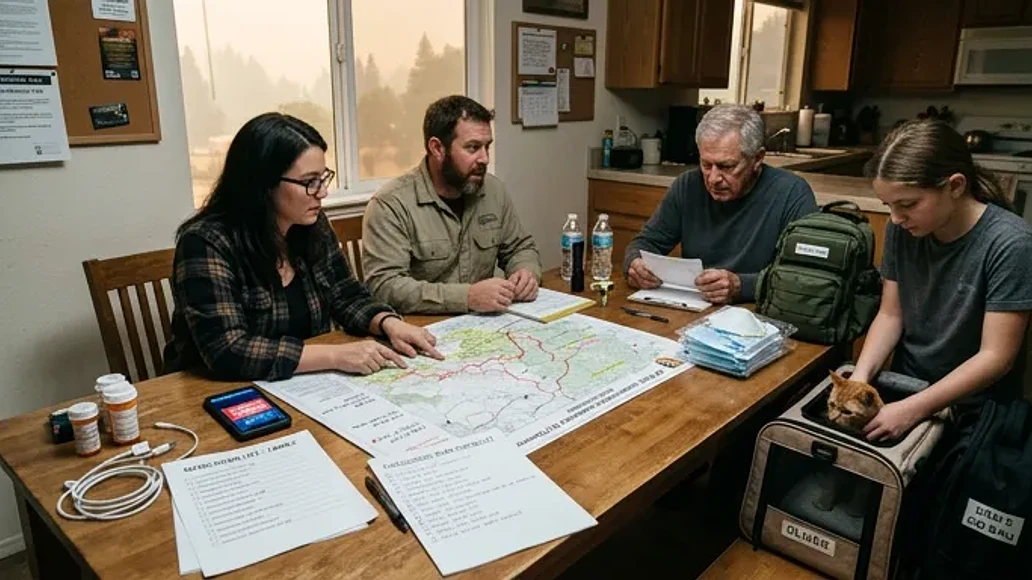
| Sign up for emergency alerts and keep a written evacuation plan | Impact reduction | Low | High for life safety |
| Prepare go bags, medication copies, pet supplies, and important documents | Impact reduction | Low to moderate | Moderate to high during evacuation |
| Use portable HEPA filtration or a properly sized air cleaner during smoke events | Symptom reduction | Moderate | Helpful for indoor air, but does not reduce fire ignition risk |
| Wear a well fitted N95 during heavy smoke when you must be outside | Symptom reduction | Low | Helpful for smoke exposure, but not a substitute for evacuation from fire danger |
Renters still have options. You may not be able to replace vents or roofing, but you can keep balconies free of combustibles, ask management about evacuation procedures, maintain renters insurance, use indoor air filtration, and know at least two ways out of the building and neighborhood.
Neighborhood level actions save lives too
Individual preparedness matters, but wildfire safety is also a community problem. Neighborhood clean up days, local Firewise style programs, shared fuel reduction, visible address markers, and coordinated evacuation planning can improve outcomes. Communities with only one road in and out should take evacuation timing especially seriously.
If your area has a homeowners association, local fire safe council, extension office, or fire department outreach program, ask about home assessments, chipping days, vegetation guidance, and neighborhood communication plans. Prevention is usually far cheaper than rebuilding after a major fire.
Alerts, evacuation orders, and when to leave
Many wildfire deaths happen because people wait too long, underestimate speed, or do not receive clear warning. If your area is under red flag conditions, pay attention before smoke is visible. If local officials issue an evacuation warning, use that time to load your vehicle, contact family, and prepare to leave. If an evacuation order is issued, go immediately.
Do not rely on a single alert method. Use phone alerts, weather radio, local emergency apps, county text systems, and trusted local news. Keep your vehicle fueled during fire season if you live in a risk area. If someone in your household uses oxygen, mobility equipment, or refrigerated medication, plan early for transportation and backup power needs.
Living with smoke more safely
When smoke is heavy, stay indoors with windows and doors closed if temperatures allow. Run a properly sized air cleaner or HVAC system with an appropriate filter if your system supports it. Avoid adding indoor pollution by burning candles, frying food heavily, smoking, or vacuuming without good filtration. If you must go outside for necessary tasks, a well fitted N95 can reduce inhaled fine particles better than cloth masks.
Seek professional medical advice if you have a high risk condition and face several days of poor air quality. Seek urgent care for breathing difficulty, chest pain, confusion, or fainting. Homemade masks and unproven gadgets should not be treated as primary protection.
What the next few years may look like
The underlying drivers of deadly wildfire risk are not disappearing. More homes are being built in fire prone landscapes. Some utility systems are aging. Many regions are seeing longer periods of heat and dryness, and some are experiencing major fires outside traditional seasons. At the same time, better detection tools, improved building standards, and stronger community planning can reduce losses if they are used consistently.
The most realistic view is neither panic nor denial. America’s deadliest wildfires are usually the product of overlapping risks, not a single villain. That means solutions also have to overlap: fewer preventable ignitions, stronger infrastructure, smarter land use, better home hardening, cleaner evacuation planning, and practical smoke protection.
FAQ
Are most deadly wildfires in the US started intentionally or by accident?
Most wildfire ignitions in the US are human caused, but that does not mean they are mostly intentional. Many begin accidentally through equipment use, debris burning, campfires, vehicles, or utility failures. Arson does occur, but it is not the best single explanation for most deadly wildfire disasters.
If I do not live in the forest, do I still need to worry about wildfires?
Yes. Grass fires, brush fires, and ember driven fires can threaten suburbs, exurbs, and towns near open space. Smoke can also affect people far from the flames. You do not need to live deep in the woods to face wildfire risk.
How can I tell if my home is in the wildland urban interface?
Check local hazard maps from your county, state forestry agency, fire department, or FEMA related resources. In practical terms, if your neighborhood borders brush, grassland, timber, canyon land, or unmanaged open space, you may be in or near the WUI even if the area feels suburban.
What is the single most effective thing I can do this year to reduce my family’s wildfire risk?
If you own your home, start with the home ignition zone closest to the structure. Remove leaves from gutters and roofs, clear combustible debris, and create the noncombustible or low fuel area recommended by local guidance around the home. If you rent, focus on evacuation planning, alerts, insurance, and reducing combustibles on balconies or near entry points.
Do air filters and masks really help during wildfire smoke events, or is staying inside enough?
They can help. Staying indoors reduces exposure, but indoor air can still become polluted. A properly sized air cleaner can improve indoor air quality, and a well fitted N95 can reduce inhaled particles if you must be outside. These measures help with smoke exposure, but they do not replace evacuation when fire threatens your area.
References
For current conditions, local orders, and health guidance, use official sources first. The following general resources are useful starting points: