Grow a Home Herb Bed That Actually Helps, 10 Practical Plants and Their Limits
A safer, more useful guide to building a backyard herb garden for minor everyday complaints, with growing tips, evidence levels, preparation methods, and clear medical safety boundaries.

A backyard remedy garden can be a smart part of home preparedness, but it works best when expectations stay realistic. Homegrown herbs can support comfort, calm, digestion, and minor skin care. They cannot replace emergency care, prescription treatment, or a proper diagnosis for serious symptoms.
This guide focuses on ten relatively practical plants for a US home garden, with attention to evidence, safety, growing conditions, and simple ways to prepare them. The goal is not to turn your yard into a substitute clinic. It is to help you build a small, well-labeled herb bed that may be useful for minor, self-limited problems while fitting into a broader preparedness plan.
What a backyard remedy garden can, and cannot, do
For most households, the best use of medicinal plants is modest. A few herbs may ease nausea, calm mild anxiety, soothe irritated skin, support sleep, or make a sore throat feel better. Some may slightly shorten the course of a minor cold or digestive upset, but effects are usually small and inconsistent.
Think of these plants as supportive tools. They are not antibiotics, not a replacement for inhalers, not a treatment for chest pain, and not a safe do-it-yourself answer for severe infection, uncontrolled diabetes, major depression, or serious wounds.
If you take medications, have a chronic illness, are pregnant or breastfeeding, or want to use herbs for a child, talk with a clinician or pharmacist before using concentrated herbal products.
How to choose plants that fit your climate and household
The best backyard pharmacy starts with plants you can actually grow well and use safely. Choose herbs based on four filters, common minor needs in your home, your local climate, your available sun and water, and the presence of children or pets.
For many beginners, culinary herbs and gentle tea herbs are the safest starting point. Peppermint, thyme, garlic, chamomile, and lemon balm are easier to understand and often easier to grow than more potent or less studied herbs.
Plant | Light needs | Water needs | Space | Container friendly | Life cycle |
|---|---|---|---|---|---|
Chamomile | Full sun to part sun | Moderate | 12 to 18 inches | Yes | Usually annual, some perennial types |
Peppermint | Part sun to full sun | Moderate to moist | 18 to 24 inches | Yes, preferred because it spreads | Perennial |
Lemon balm | Full sun to part shade | Moderate | 18 to 24 inches | Yes | Perennial |
Calendula | Full sun | Moderate | 12 to 18 inches | Yes | Annual |
Echinacea | Full sun | Low to moderate | 18 to 24 inches | Possible in large pots | Perennial |
Garlic | Full sun | Moderate | 4 to 6 inches between cloves | Yes | Annual crop |
Lavender | Full sun | Low once established | 18 to 36 inches | Yes with sharp drainage | Perennial |
Thyme | Full sun | Low to moderate | 12 to 18 inches | Yes | Perennial |
Yarrow | Full sun | Low to moderate | 18 to 24 inches | Possible | Perennial |
Plantain | Full sun to part shade | Moderate | 12 to 18 inches | Yes | Perennial or self-seeding |
How to think about herbal evidence
Herbal traditions matter, but tradition is not the same as proof. Some herbs have moderate evidence for symptom relief in specific situations. Others are supported mainly by historical use, lab studies, or small trials. That does not make them useless, but it does mean you should avoid strong cure claims.
A practical way to judge an herb is to ask two questions. First, does it mainly ease symptoms, such as cramping or tension? Second, is there decent evidence that it may shorten the course of a minor problem? Most backyard herbs do the first better than the second.
Ten useful plants for a safer home herb garden
Plant | Main uses | Evidence level | Shortens the problem? | Eases symptoms only? | Key cautions |
|---|---|---|---|---|---|
Chamomile | Mild anxiety, sleep support, soothing tea, minor skin irritation | Moderate | Usually no | Yes | Avoid if allergic to ragweed family plants. Use caution with blood thinners. |
Peppermint | Digestive discomfort, gas, mild nausea, tension support | Moderate | Sometimes for mild digestive upset | Yes | May worsen reflux. Concentrated oil is not for young children. Can interact with some medicines. |
Lemon balm | Mild stress, restlessness, sleep support | Mixed | No | Yes | May cause drowsiness. Use caution with sedatives and thyroid concerns. |
Calendula | Minor skin irritation, soothing washes, salves | Limited to mixed | No | Yes | Use on minor skin issues only. Avoid if allergic to ragweed family plants. |
Echinacea | Cold season support | Mixed | Possibly, modestly | Yes | May trigger allergy in some people. Use caution with autoimmune conditions. |
Garlic | Culinary immune support, cardiovascular support, food use | Moderate for some cardiovascular effects | No for most acute issues | Mostly supportive | Can increase bleeding risk. May interact with blood thinners and some medicines. |
Lavender | Mild anxiety, sleep support, calming aroma | Moderate for symptom relief | No | Yes | May cause drowsiness. Essential oil should be used carefully and diluted. |
Thyme | Cough support, soothing steam or tea, culinary antimicrobial tradition | Mixed | Usually no | Yes | Strong preparations may irritate. Essential oil is much stronger than the herb. |
Yarrow | Traditional use for minor topical care and feverish discomfort | Mainly traditional | No clear evidence | Yes | Avoid in pregnancy. May cause allergy in ragweed-sensitive people. |
Plantain | Minor bites, stings, skin irritation, soothing poultice | Mainly traditional | No | Yes | Correct identification matters. Use only on minor skin issues. |
1. Chamomile
Chamomile is one of the gentlest herbs for a beginner garden. The flowers are commonly dried for tea that may help with mild tension, bedtime wind-down, and general digestive comfort.
Grow it in full sun or light afternoon shade, in well-drained soil. Harvest flowers when fully open and dry them quickly out of direct sun. For home use, tea is the simplest preparation.
Safety note, people with ragweed family allergies may react to chamomile. Stop use if you notice rash, wheezing, or mouth itching.
2. Peppermint
Peppermint is one of the most practical herbs for a home garden, especially for tea. It is often used for gas, mild stomach upset, and that tight, unsettled feeling after a heavy meal.
It spreads aggressively, so containers are often the best choice. Harvest leaves before flowering for strong flavor and aroma.
Safety note, peppermint can worsen acid reflux in some people. Concentrated peppermint oil is not the same as peppermint tea and should be treated much more cautiously.
3. Lemon balm
Lemon balm is a calm, lemon-scented mint relative often used for mild stress, restlessness, and evening tea blends. It is easy to grow and forgiving in many gardens.
Pinch it often to keep it bushy. Dry leaves promptly after harvest for best quality.
Safety note, it may add to drowsiness if combined with sedating medicines or alcohol.
4. Calendula
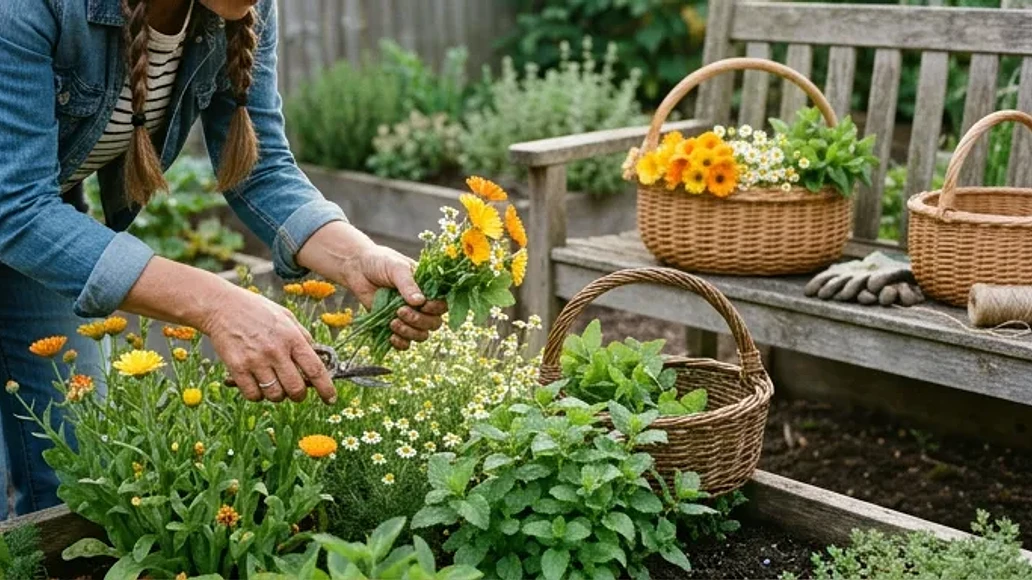
Calendula is grown mainly for its bright flowers, which are often infused into oils and salves for minor skin soothing. It is useful to have if you want a simple topical herb in your garden.
Pick flowers often to keep plants blooming. Dry petals thoroughly before storage.
Safety note, use on minor skin irritation only. Deep wounds, animal bites, punctures, or spreading redness need medical evaluation.
5. Echinacea
Echinacea is a popular preparedness plant because it is hardy, attractive to pollinators, and widely associated with cold season use. Modern evidence is mixed. Some studies suggest a small benefit for cold duration or severity, while others show little effect.
It prefers full sun and decent drainage. The flowers are easy to grow, though roots are sometimes used in herbal preparations after plants mature.
Safety note, avoid treating echinacea like a guaranteed cold cure. People with autoimmune conditions or plant allergies should ask a clinician before use.
6. Garlic
Garlic belongs in almost every practical garden because it is food first and remedy second. It has some evidence for modest cardiovascular support over time and a long tradition of use in everyday wellness.
Plant cloves in fall in many regions, or in late winter where winters are severe. Harvest when lower leaves brown and cure bulbs in a dry, airy place.
Safety note, garlic can increase bleeding risk, especially in supplement-level amounts. Culinary use is generally the safer lane for most people.
7. Lavender
Lavender is less about internal medicine and more about calming support. The scent may help some people unwind, and dried lavender can be used in sachets, baths, or carefully prepared teas.
It needs full sun and excellent drainage. Overwatering is a common reason it fails.
Safety note, essential oil is far more concentrated than the plant. If you use it on skin, dilute it properly and avoid eyes and mucous membranes.
8. Thyme
Thyme is another food-first herb with practical value. It is commonly used in teas, steam bowls, and broths during cough and cold season, mostly for comfort and throat support.
It likes sun and relatively lean, well-drained soil. Trim lightly to keep it productive.
Safety note, strong essential oil preparations are much more potent than kitchen thyme. For beginners, tea or broth is the safer approach.
9. Yarrow
Yarrow has a long history in traditional herbalism for minor topical use and general feverish discomfort, but modern evidence is limited. It can still have a place in a preparedness garden if you treat it as a traditional support herb rather than a proven treatment.
It is drought tolerant once established and attracts beneficial insects.
Safety note, avoid internal use in pregnancy, and use caution if you have ragweed family allergies.
10. Plantain
Plantain, the common broadleaf yard herb, is valued by many gardeners for simple fresh poultices on minor bites, stings, and skin irritation. It is easy to grow or preserve in a dedicated bed if correctly identified.
Harvest clean leaves from unsprayed ground only. Wash thoroughly before use.
Safety note, do not rely on plantain for infected wounds or serious skin problems. Correct identification matters.
Growing and harvesting basics for medicinal herbs
Most medicinal herbs do best when treated like quality food crops. Grow them in clean soil, away from roadside contamination, herbicide drift, and pet waste. Use labeled beds or pots so you never guess what is what.
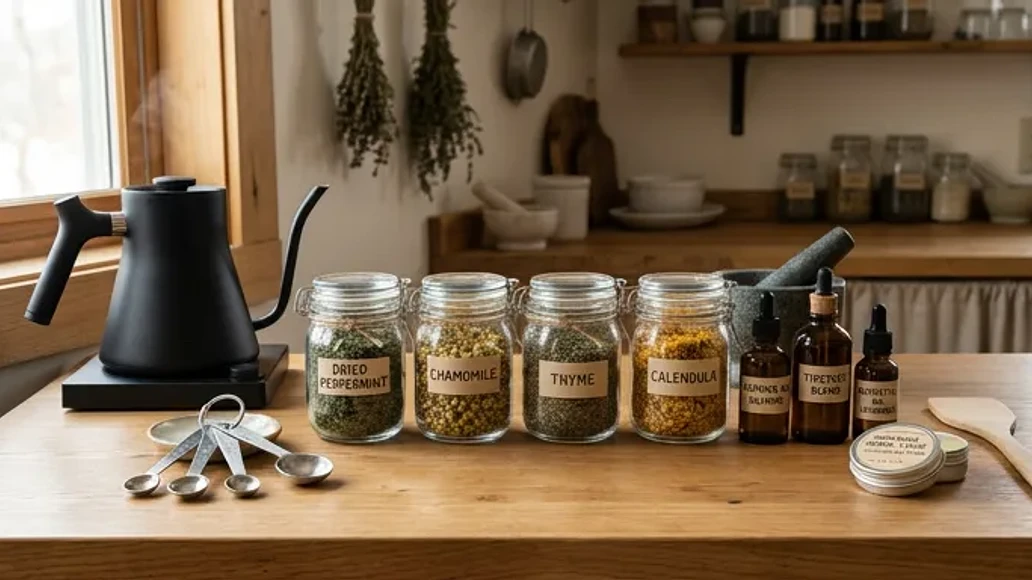
Harvest leaves after morning dew dries but before intense afternoon heat. Harvest flowers when newly open. Harvest roots only from mature plants and only when you are certain the species and plant part are correct. Dry herbs in a warm, airy, shaded place until crisp, then store them in labeled jars away from heat and light.
Simple ways to turn garden herbs into useful preparations
For beginners, teas, infused oils, and salves cover most practical needs. Strong tinctures are less forgiving and are better approached after you understand identification, ratios, and safety.
Preparation | Best for | Basic home method | Typical shelf life | Storage notes |
|---|---|---|---|---|
Tea or infusion | Leaves and flowers like chamomile, peppermint, lemon balm | Steep 1 to 2 teaspoons dried herb per cup for 10 to 15 minutes | Use same day | Keep covered while steeping |
Decoction | Tougher plant parts | Simmer gently rather than just steep | Use same day | Refrigerate if holding briefly |
Infused oil | Calendula and other topical herbs | Use fully dried herb in a clean carrier oil | Several months if made carefully | Protect from heat, light, and moisture |
Salve | Minor dry or irritated skin | Combine infused oil with beeswax | About 6 to 12 months | Discard if smell, color, or texture changes |
Compress | Localized soothing | Soak clean cloth in cooled tea and apply briefly | Single use | Use clean materials each time |
Use clean jars, dry plant material for oils, and careful labeling. Water contamination is one of the easiest ways to spoil a homemade product.
Which herbs may help the issue, and which mostly offer comfort
Common minor issue | Herbs to consider | Preparation type | Likely role | Important limits |
|---|---|---|---|---|
Mild digestive discomfort | Peppermint, chamomile | Tea | Mostly symptom relief | Persistent pain, vomiting, blood, or dehydration need medical care |
Mild stress or bedtime wind-down | Chamomile, lemon balm, lavender | Tea, aroma, bath | Symptom relief | Not a treatment for severe anxiety, depression, or insomnia with safety concerns |
Minor skin irritation | Calendula, plantain | Wash, compress, salve | Symptom relief | Do not use as sole care for infected, deep, or dirty wounds |
Cold season comfort | Thyme, chamomile, echinacea | Tea, steam, broth | Mainly comfort, possible modest benefit from echinacea in some cases | Breathing trouble, chest pain, high fever, or worsening symptoms need prompt evaluation |
Tension and restlessness | Lavender, lemon balm | Aroma, tea | Symptom relief | Use caution with sedatives and alcohol |
Safe use, dose caution, and who should avoid certain herbs
Start with one herb at a time. Use the gentlest form first, usually a tea or culinary amount. Watch for rash, stomach upset, headache, unusual sleepiness, or any breathing symptoms. Stop immediately if a reaction appears.
Pregnant or breastfeeding adults should be especially cautious with internal herbal use because safety data are limited for many plants. People with liver disease, kidney disease, heart disease, diabetes, clotting disorders, autoimmune disease, or psychiatric conditions should check with a clinician before using medicinal herbs beyond normal food amounts.
Children are not just smaller adults. Concentrated tinctures, essential oils, and strong extracts are not a casual starting point for kids. If you want to use herbs for a child, get pediatric guidance first.
When to skip home remedies and get medical help
Use herbs only for minor, self-limited issues. Seek urgent or emergency care for trouble breathing, chest pain, confusion, severe allergic reaction, signs of stroke, severe dehydration, or rapidly worsening illness.
Call a clinician for high fever, symptoms that last more than a few days without improvement, blood in stool or urine, deep or dirty wounds, spreading redness, pus, severe headache, unexplained weight loss, or any symptom that feels out of proportion to a simple home remedy.
A simple layout for a 4 by 8 backyard remedy bed
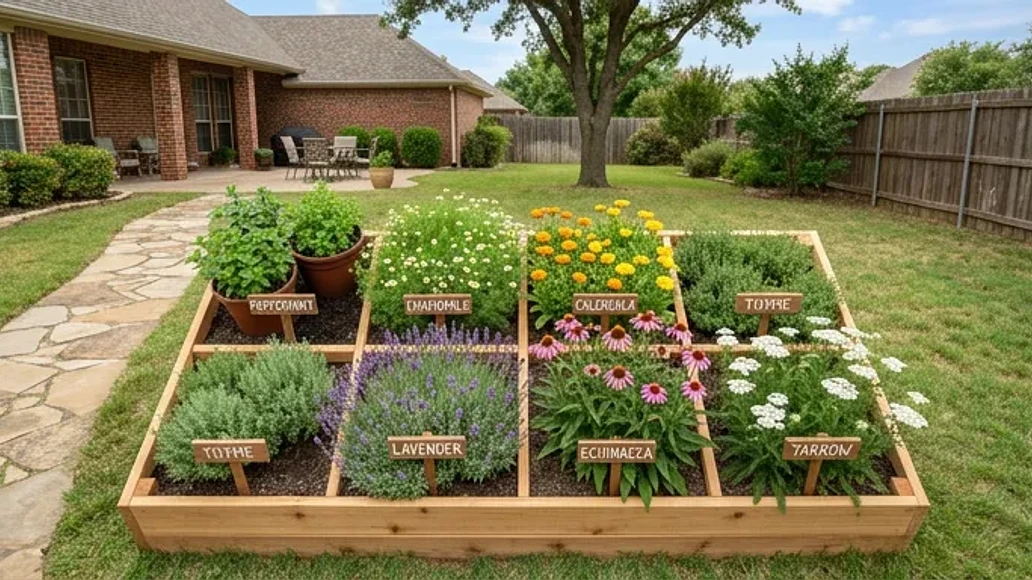
Group plants by sun and water needs. Put spreading plants like peppermint and lemon balm in containers sunk into the bed or kept nearby. Keep drought lovers like lavender and thyme together in the sharpest-draining section. Place taller echinacea and yarrow toward the back, with lower chamomile and calendula in front.
A practical layout might include one corner for tea herbs, one for topical herbs, one for culinary support herbs, and one for pollinator-friendly perennials. This makes harvest and labeling easier and reduces confusion.
Labeling, storage, and shelf life
Every jar should include the plant name, plant part, harvest date, and preparation type. If you make an infused oil or salve, add the carrier oil and the date made. Good labeling is one of the easiest ways to prevent mistakes.
Item | Typical shelf life | Best storage conditions | Signs to discard |
|---|---|---|---|
Dried leaves and flowers | About 1 year for best potency | Cool, dark, dry jar | Faded smell, mold, moisture, insect activity |
Dried roots | About 1 to 2 years | Cool, dark, dry jar | Musty odor, mold, soft texture |
Infused oils | Several months, sometimes longer depending on oil and handling | Dark bottle, cool place | Rancid smell, cloudiness from contamination, mold |
Salves | About 6 to 12 months | Cool, dark place | Off odor, separation, visible contamination |
Fresh teas | Same day | Covered cup or refrigerated briefly | Sour smell or long room-temperature holding |
Common mistakes to avoid
Misidentifying a plant and using the wrong species.
Harvesting from sprayed lawns, roadsides, or contaminated soil.
Using herbs as the only treatment for serious symptoms.
Trying several new herbs at once and not knowing what caused a reaction.
Using essential oils as if they were the same as a mild tea.
Making infused oils from wet plant material and creating spoilage risk.
Ignoring medication interactions, especially with blood thinners, sedatives, blood pressure drugs, and diabetes medicines.
Legal and regulatory basics in the United States
In the United States, herbal products are generally regulated as dietary supplements, not as approved drugs. That matters because potency and purity can vary, and companies are not allowed to market herbs as cures for diseases without proper approval. FDA and FTC enforcement actions continue to target exaggerated claims, especially around serious illnesses.
For home use, the practical takeaway is simple. Keep your claims modest, focus on minor wellness support, and do not assume natural means risk-free.
Special considerations for homes with children and pets
If children help in the garden, label everything clearly and teach them not to taste plants without permission. Store dried herbs, tinctures, and essential oils out of reach. Pets may chew leaves or dig roots, so check pet toxicity before planting and fence off problem areas if needed.
For family gardens, the safest core usually includes culinary herbs and gentle tea herbs, with concentrated extracts kept to a minimum.
How this fits into a broader preparedness plan
A backyard remedy bed is most useful when paired with ordinary preparedness basics, a stocked first aid kit, clean water, soap, oral rehydration supplies, a thermometer, over-the-counter medicines you know how to use, and a plan for when to call for help. Herbs can add resilience and comfort, but they work best as one layer in a larger system.
FAQ
Can a backyard remedy garden replace over the counter medicines for my family?
No. It may reduce how often you reach for some comfort products, but it should not replace essentials like fever reducers, allergy medicines, oral rehydration supplies, or clinician-recommended treatments.
Are medicinal plants safe for children, and should doses just be smaller?
Not automatically. Children process substances differently, and many herbs lack good pediatric safety data. Do not assume a smaller adult dose is safe. Get professional guidance before giving concentrated herbal products to children.
Is it legal to grow and use medicinal herbs at home in the United States?
In general, yes, for personal use. The bigger legal issue is marketing and disease claims. Selling products or advertising them as cures raises separate regulatory concerns.
How can I tell if a homegrown herb has lost potency or gone bad?
Dried herbs that have little smell, faded color, moisture, or mold should be discarded. Oils and salves should be thrown out if they smell rancid, separate oddly, or show contamination.
References
No reference links were provided in the brief.