The Truth About So-Called Bulletproof Drywall for Homes
Most people looking for bulletproof drywall are really asking about concealed bullet resistant wall systems. Here is why those products are rarely sold in home centers, how UL 752 ratings work, and which security upgrades usually make more sense first.

People search for “bulletproof drywall” because it sounds like a simple upgrade, a stronger version of ordinary wallboard that can be picked up with the rest of a remodel order. In practice, that is not how the industry works. What gets called bulletproof drywall is usually a bullet resistant wall system, often a fiberglass, aramid, or steel panel installed behind standard gypsum board as part of a tested assembly.
That distinction matters. Ordinary drywall is brittle, and no wall product should be assumed to stop gunfire unless it has been tested to a recognized standard and installed the way the manufacturer specifies. For most homeowners, the bigger question is not whether such products exist. They do. The better question is why they are rarely sold in consumer stores, and whether they are the smartest first step for improving safety.
What people usually mean by “bulletproof drywall”
The phrase is mostly a shortcut, not a precise building term. In commercial security work, specifiers usually talk about bullet resistant wall panels, ballistic fiberglass, armored wall assemblies, or UL 752 rated barriers. The visible drywall finish may look normal after installation, but the protective component is hidden behind it.
That is why the phrase can mislead buyers. The gypsum layer is not doing the ballistic work by itself. The resistance comes from the tested core material, the framing, the fasteners, the joints, and the way the whole wall assembly is built.
It is also important to drop the word “bulletproof” in a literal sense. No material is universally bulletproof. Products are bullet resistant to a defined threat level, under a defined test standard, with specific ammunition, shot spacing, and velocity conditions.
How bullet resistant wall systems actually work
Most architectural ballistic wall systems are designed to absorb, spread, and slow the energy of a projectile so it does not fully penetrate the protected side. Different materials do this in different ways. Ballistic fiberglass panels, for example, use layered composite construction to catch and dissipate energy. Steel relies more on hardness and deformation resistance. Other systems may use aramid or hybrid composites.
The key point for a homeowner is simple. Performance is not about thickness alone. A heavy or dense panel is not automatically safer. A tested product in a tested assembly is what matters.
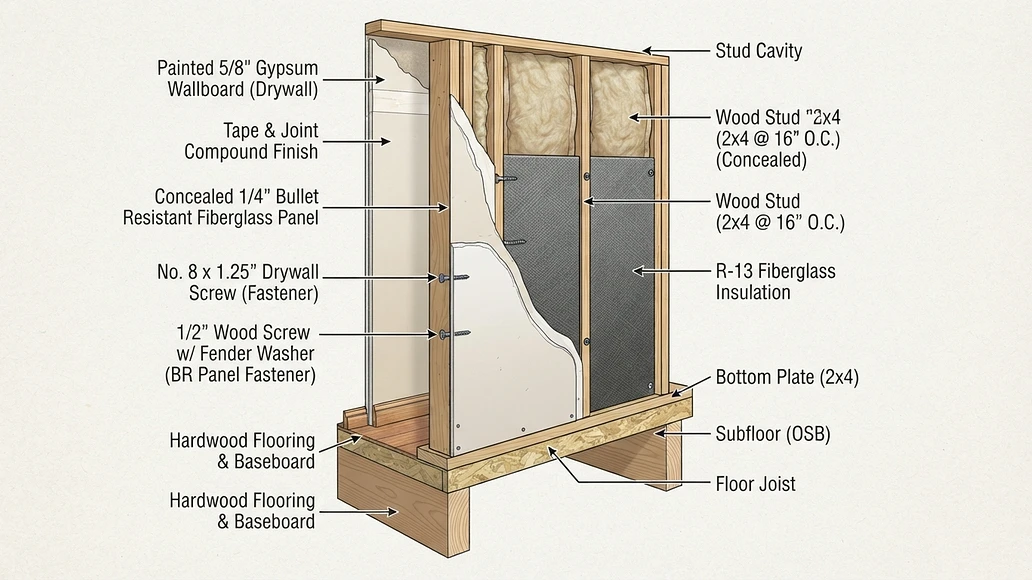
Another practical issue is spall and fragmentation. Even when a barrier stops penetration, the wrong material or assembly can create dangerous fragments or fail at seams, edges, or penetrations. That is one reason random DIY layering is a poor substitute for a listed system.
Standards matter, especially UL 752 and NIJ 0108.01
If you are evaluating wall protection products, the first thing to ask is which standard applies. In building applications, UL 752 is the standard most often used for bullet resisting equipment such as wall panels, transaction windows, barriers, and similar architectural products. NIJ 0108.01 is another ballistic standard, but it is more commonly referenced for protective materials and certain law enforcement related applications.
For a home or small business wall project, UL 752 is usually the more relevant language when discussing architectural assemblies with suppliers and installers.
| Standard | Primary use | Where you will see it | Why it matters to buyers |
|---|---|---|---|
| UL 752 | Bullet resisting equipment for buildings and barriers | Wall panels, glazing, counters, doors, secure vestibules | Most useful standard for architectural products in homes, schools, banks, and offices |
| NIJ 0108.01 | Ballistic resistant protective materials | Protective materials and some security products | Helpful background standard, but often less direct than UL 752 for wall assemblies |
Buyers also need to understand that a rating level is not a general promise against all threats. It is a test result against specific rounds under specific conditions. If a seller cannot clearly explain the rating, the listing, and the installation requirements, that is a warning sign.
A simplified UL 752 view for homeowners
Exact test details vary by edition and product documentation, so always verify current manufacturer data. Still, a simplified chart helps explain why these products are specialized and expensive.
| UL 752 level | Typical threat example | Approximate panel profile | Approximate weight impact | Typical use |
|---|---|---|---|---|
| Lower handgun levels | Common handgun threats | Thinner composite panels may be available | Noticeably heavier than drywall | Reception areas, offices, selected residential safe spaces |
| Mid handgun levels | More demanding handgun threats | Thicker composite or hybrid assemblies | Substantial wall weight increase | Schools, pharmacies, cash rooms, secure vestibules |
| Higher rifle capable levels | Rifle threats and more severe test conditions | Much thicker and heavier systems | Major structural and installation implications | Government, law enforcement, critical infrastructure |
That broad progression explains why there is no one-size-fits-all “bulletproof drywall sheet” sitting next to regular gypsum board.
Why home centers rarely stock it
There are several practical reasons these products are rarely sold through big-box retail channels.
It is a niche, specified product
Most homeowners do not need ballistic wall assemblies, and those who do often need only a limited area protected, not an entire house. That makes demand too narrow for standard retail shelf space.
Cost is far above ordinary drywall
Standard drywall is inexpensive, familiar, and easy to estimate. Bullet resistant panels are specialty materials with much higher manufacturing, testing, shipping, and liability costs. Even before labor, the price difference is dramatic.
Weight and handling are a serious issue
Ballistic panels can be heavy enough to change framing needs, handling methods, and installation sequencing. A store that sells consumer sheet goods is not set up to advise every buyer on structural implications, lifting needs, or code issues.
Performance depends on the full assembly
Retail products work best when they are simple to use correctly. Ballistic wall systems are the opposite. Seams, fasteners, backing, penetrations, outlet locations, and transitions to doors or glazing all affect real-world performance.
Liability is higher
If a consumer misunderstands a rating or installs a panel incorrectly, the consequences can be severe. That pushes the market toward specialty distributors, commercial suppliers, and professional installers rather than casual over-the-counter sales.
Where bullet resistant walls are commonly used
These systems are real products, but they are usually found where there is a documented security need and a formal specification process.
| Setting | Why protection is used | Typical approach |
|---|---|---|
| Banks and cash handling areas | Protect staff and assets in predictable high-risk zones | Rated counters, glazing, wall panels, controlled access areas |
| Schools and secure vestibules | Delay forced entry and protect staff during an incident | Concealed wall panels, secure entry design, reinforced doors and glazing |
| Government and law enforcement buildings | Protect occupants, evidence, and critical functions | Higher-rated assemblies, controlled circulation, hardened rooms |
| Pharmacies and clinics | Protect controlled substances and staff | Selective hardening around counters, storage, and access points |
| Critical infrastructure | Protect essential operations | Integrated security design with multiple layers of protection |
Does it make sense in a home
Sometimes, yes, but usually only in a narrow and carefully planned way. A homeowner with a documented threat, a rural response-time concern, a high-value target profile, or a desire for a hardened safe room may have a legitimate reason to explore ballistic wall systems. Even then, the best use is often limited to a small protected area rather than broad installation throughout the house.
A realistic home use case might be a safe room, a hardened bedroom wall, or a protected section near a secure retreat point. The goal is not to create a fantasy “bulletproof house.” The goal is to improve delay and protection in a specific space while preserving fire safety, code compliance, and everyday livability.
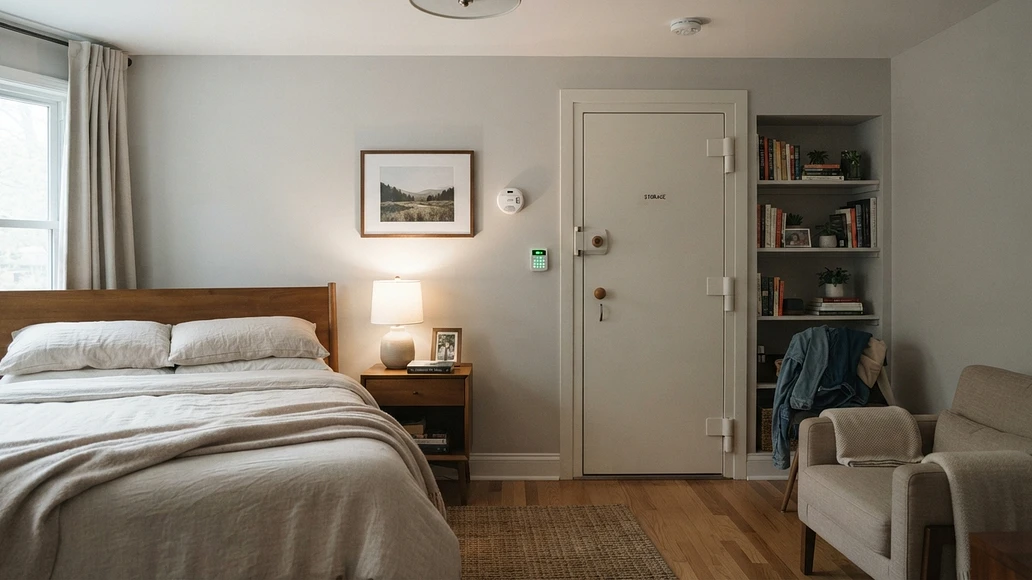
For many households, however, ballistic walls are not the first or best investment. If doors are weak, windows are vulnerable, exterior lighting is poor, and there is no family emergency plan, money usually goes further by fixing those basics first.
Security upgrades that often matter more first
Preparedness works best in layers. A wall upgrade may help in a narrow scenario, but many homes can reduce risk more effectively through broader security improvements.
| Measure | Relative cost tier | Installation complexity | Everyday security value |
|---|---|---|---|
| Reinforced exterior doors, quality locks, hinge and strike upgrades | Low to medium | Low to medium | High, helps against common forced-entry risks |
| Improved exterior lighting, cameras, alarms, and visibility | Low to medium | Low to medium | High, supports deterrence and awareness |
| Safer room layout and family emergency planning | Low | Low | High, improves response under stress |
| Window hardening and controlled access improvements | Medium | Medium | Medium to high, depending on layout |
| Bullet resistant wall panels in selected areas | High | High | Situational, best for specific threats and protected spaces |
This is not a claim that walls never matter. It is practical prioritization. Most households benefit more from stronger entry points, communication plans, and a designated retreat area than from trying to harden large sections of interior wall.
Cost, weight, and installation realities
Specialty ballistic panels are commonly sold in sheet sizes similar to other construction materials, but that does not make them interchangeable with drywall. Depending on the rating and material, thickness and weight can increase quickly. That affects freight cost, crew size, staging, framing, and finish work.
It can also affect the rest of the assembly. Electrical boxes, plumbing penetrations, trim details, and door frames may all need coordination. If the wall is load-bearing or fire-rated, the design gets more complicated.
That is why professional installation is common. Even if a homeowner can physically fasten a panel, that does not mean the finished wall will match the tested configuration.
Code, fire rating, and inspection issues
Ballistic performance is only one part of a safe wall. A home still has to meet local structural and fire requirements. Some ballistic products are tested for fire performance, but that does not automatically mean every field-built combination is code-compliant.
Important questions include whether the wall is load-bearing, whether the assembly must maintain a fire rating, how penetrations are treated, and whether the added weight changes structural demands. Local permit requirements vary, but any significant wall modification should be reviewed before work begins.
This is especially important in multifamily buildings, commercial spaces, and any project involving public occupancy. Misrepresenting a wall as “bulletproof” without proper testing and documentation can create serious liability.
Common myths that lead people astray
Myth 1, thick material is automatically protective
Thickness alone proves very little. Brittle materials can shatter, seams can fail, and untested combinations may perform unpredictably.
Myth 2, a rated panel makes the whole room safe
A protected wall section does not solve weak doors, windows, ceilings, floors, or adjacent partitions. Security works as a system.
Myth 3, DIY layering is close enough
Improvised assemblies can create false confidence. Without testing, there is no reliable way to know how a wall will behave under real ballistic impact.
Myth 4, “bulletproof” means guaranteed survival
No responsible product claim should promise that. At best, these systems are one risk-reduction measure within a larger emergency plan.
How to plan responsibly if you are considering a hardened room
Start with a threat assessment grounded in reality, not headlines. Ask what risk you are trying to reduce, where the vulnerable points are, how long you need a space to hold, and whether your plan depends more on delay, concealment, communication, or evacuation.
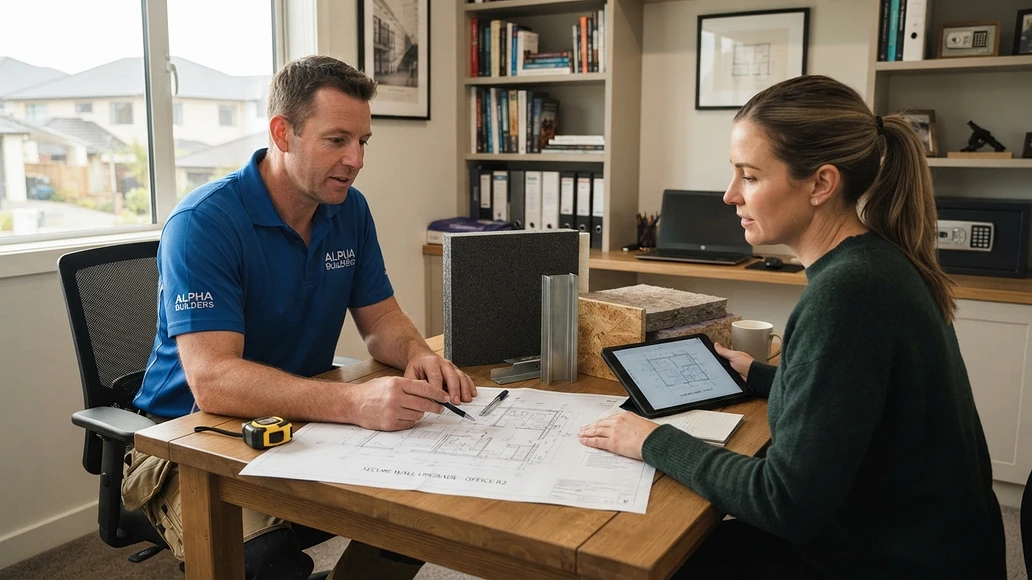
Then match the project to qualified help. A security consultant can help define the threat. An architect or engineer can address structure and code. A contractor familiar with ballistic products can coordinate installation details. Local building officials can clarify permit and inspection requirements.
| Task | DIY suitability | Why caution is needed | Recommended help |
|---|---|---|---|
| Basic home security assessment | Moderate | Easy to overlook weak points and daily-use issues | Security consultant if risk is elevated |
| Selecting a ballistic rating level | Low | Wrong threat assumptions can waste money or underprotect | Qualified supplier or security designer |
| Installing panels in non-structural, non-rated areas | Low to moderate | Seams, fasteners, and penetrations affect performance | Contractor experienced with listed systems |
| Modifying structural or fire-rated walls | Very low | Can create structural and life-safety problems | Engineer, architect, licensed contractor |
| Commercial or public-facing installations | Very low | Higher liability and code complexity | Full professional team |
Questions to ask suppliers and installers
If you do decide to explore products, ask for the exact rating standard, the listing documentation, the tested assembly details, the fire performance information, the required framing and fasteners, and the limitations around penetrations and field modifications. Also ask who is responsible for design, who is responsible for installation, and what documentation you should keep after the job is complete.
A reputable supplier should be comfortable discussing UL 752 levels, intended use, finish options, and whether the product is appropriate for residential work. If the answers are vague, move on.
FAQ
Can regular drywall ever stop a bullet?
Ordinary drywall should not be relied on for ballistic protection. It is a brittle finish material, not a tested bullet resistant barrier.
Is there any true bulletproof drywall product I can buy for my house?
Not in the literal sense. What is sold is usually a bullet resistant panel or wall assembly that can be concealed behind standard drywall. Availability is typically through specialty suppliers, not general retail.
What UL 752 level is enough for most realistic handgun threats?
That depends on the threat you are actually trying to address. Lower and mid handgun-rated levels are often discussed for architectural applications, but the right choice should come from a realistic assessment and current manufacturer documentation, not guesswork.
Do bulletproof walls make a home safer than stronger doors and locks?
Not usually as a first upgrade. For many homes, stronger doors, better hardware, improved lighting, alarms, and a practiced emergency plan provide more everyday value per dollar.
How much does a bullet resistant wall panel typically cost compared with standard drywall?
It is dramatically more expensive than standard drywall, and the total installed cost also includes shipping, labor, framing considerations, finish work, and possible code-related changes. That price gap is one major reason these products are not common in home centers.
Bottom line
So-called bulletproof drywall is rarely sold because it is not really a simple drywall product. It is a specialty, tested, and often heavy wall protection system that belongs in a carefully designed assembly. For the small number of homeowners with a legitimate need, it can be useful in a limited, professionally planned application such as a hardened room. For everyone else, the smarter path usually starts with stronger entry points, better awareness, and a realistic emergency plan.
References
- The Impulse for Bullet Proof Drywall | Impact Security
- Ballistic Gypsum Board Assemblies: Code Compliance Guide
- Ballistic Protection Standards for Buildings | ISCoA
- UL 752 Explained: The Complete Guide to the Bullet-Resisting Equipment Standard
- Difference between UL 752 and NIJ standards | Armortex
- NIJ Testing Standards | Insulgard