Old Jar, Still Good? A Practical Guide to Petroleum Jelly Shelf Life
Petroleum jelly is one of the most stable products in a home medicine cabinet, but that does not mean every old jar is automatically safe to use. Here is how long it usually lasts, how to read the label, and when to keep or toss it.

Petroleum jelly has a reputation for lasting almost forever, and compared with many skincare products, that reputation is mostly deserved. Pure petrolatum is highly stable, contains no water, and usually breaks down very slowly when stored well. Still, there is an important difference between a jar that is chemically stable and a jar that is clean, uncontaminated, and appropriate to use on skin.
If you are keeping a jar in a bathroom cabinet, first aid kit, or emergency stash, the useful question is not just, “Does it expire?” It is, “Is this specific jar still safe and worth using?” The answer depends on the formula, whether it has been opened, how it was stored, and whether it shows signs of contamination.
This guide explains the practical shelf life of petroleum jelly, how to read the label, what changes matter, and when to toss an old jar. It also covers safe home and preparedness uses, with clear limits for damaged skin, children, and people with chronic skin issues.
What petroleum jelly is, and why it lasts so long
Petroleum jelly, often called petrolatum, is a refined mixture of hydrocarbons. In plain terms, it is an oily, waxy occlusive that sits on the skin and helps lock in moisture. One reason it lasts so well is that it contains no water. Products without water are much less likely to support microbial growth than creams or lotions.
That does not mean contamination is impossible. Once you dip fingers into a jar, you can introduce skin cells, dirt, moisture, and microbes. So the biggest real-world risk with old petroleum jelly is often contamination from use, not dramatic chemical spoilage.
Refined petrolatum also has a long track record in skincare. Expert commentary in recent years has mostly focused on clearing up myths about cancer risk and “toxicity,” not on any new danger or recall. The main takeaway is simple: refined petroleum jelly is generally considered safe for topical use, but old or dirty product should still be judged carefully.
Does petroleum jelly expire? The short answer
Yes, it has a practical shelf life, but it usually does not spoil suddenly the way food does. Many jars and tubs are labeled for about 2 to 3 years unopened, especially if the product is sold as an OTC skin protectant. Pure petroleum jelly often remains usable longer than that if it has been stored in a cool, dark place and still looks, smells, and feels normal.
The catch is that not all products sold under the Vaseline name are equally stable. Original pure petroleum jelly is the most durable. Scented versions, products with botanical additives, and medicated ointments tend to have shorter and stricter shelf lives.
| Product type | Typical unopened shelf life | Typical opened shelf life | What matters most |
|---|---|---|---|
| Pure petroleum jelly | Often labeled around 2 to 3 years, may remain usable much longer if stored well | Often usable for years if clean, though the PAO symbol or manufacturer guidance should lead | Contamination risk is usually more important than chemical breakdown |
| Scented or enhanced petroleum jelly | Usually shorter practical life than pure jelly | Often shorter after opening because added ingredients can degrade faster | Watch for odor, separation, or texture change |
| Medicated or drug-labeled ointment | Use the printed expiration date | Follow label directions closely after opening | Active ingredients can lose potency over time |
Unopened vs opened, what changes in real life
Unopened jars
An unopened jar stored in a cool, dark cabinet usually has the best chance of lasting well beyond its printed quality window. If the seal is intact and the product has not been exposed to repeated heat, cold, or sunlight, pure petroleum jelly can stay stable for many years.
Opened jars
Once opened, the clock is less about chemistry and more about hygiene. Every dip into the jar increases the chance of contamination. If you use clean hands or a clean spatula, keep the lid tightly closed, and store it at room temperature, an opened jar may remain fine for a long time. But if it lives in a humid bathroom, rides in a hot car, or has visible debris inside, its safe life is shorter.
Storage conditions matter
A jar in a bedroom cabinet will usually age better than one in a car trunk, garage, or bug-out bag that sees summer heat and winter freezing. Heat can soften the product, encourage separation, and stress packaging. Repeated temperature swings also make it easier for condensation and contamination to become a problem.
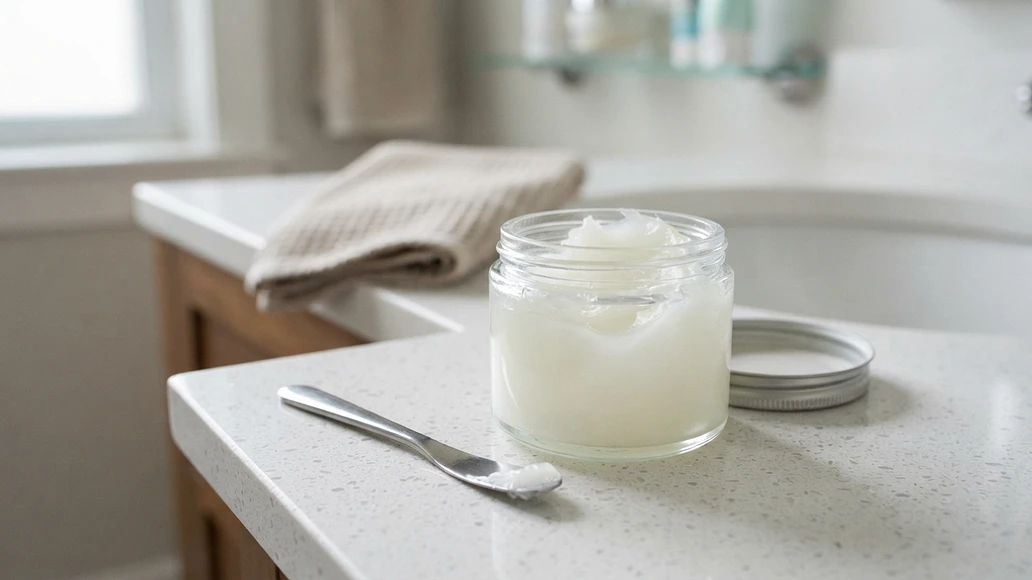
How to read the label, expiration date, batch code, and PAO symbol
One reason this topic is confusing is that not every jar is labeled the same way. In the United States, cosmetics are not generally required to carry expiration dates, while OTC drug products are. That means one petroleum jelly product may have a clear expiration date and another may not.
How to find the date or code
Check the bottom of the jar, the back label, the crimp of a tube, or near the barcode. You may see a printed expiration date, a lot code, or a batch code. A batch code does not always look like a date, but it can sometimes be used with a brand batch checker to estimate manufacture timing.
What the open-jar symbol means
The PAO, or Period After Opening, symbol looks like a small open jar with a number such as 12M or 24M. That means the manufacturer expects the product to maintain quality for about 12 or 24 months after opening, assuming normal storage and use.
If your jar has both a printed expiration date and a PAO symbol, use the more conservative limit. For example, if the jar says 24M after opening but the printed expiration date arrives sooner, follow the printed expiration date.
| Label clue | Where you may find it | What it means | What to do |
|---|---|---|---|
| Printed expiration date | Bottom label, back panel, tube crimp | Manufacturer's final recommended use date | Follow it, especially for medicated or drug-labeled products |
| Batch or lot code | Bottom, side, or near barcode | Production identifier, sometimes useful for estimating age | Use a reputable batch checker if no date is printed |
| PAO symbol, such as 12M or 24M | Back or bottom label | Recommended months of use after opening | Count from the month you first opened it |
| No date at all | Common on some cosmetic products | You must rely on age estimate, storage history, and condition | Inspect carefully and be conservative for lips, children, or broken skin |
Pure jelly vs scented or medicated versions
Original petroleum jelly is the most forgiving option for long storage. It is simple, stable, and less likely to change quickly. Once you add fragrance, plant oils, colorants, or active ingredients, the product becomes more likely to degrade or irritate skin over time.
That matters for preparedness. If you want a long-stash skin protectant for dry skin, chafing, or minor first aid support, plain petroleum jelly is usually the better long-term storage choice than a heavily enhanced version.
| Version | Stability | Best use case | Main caution |
|---|---|---|---|
| Original pure petroleum jelly | Highest | Long-term home storage, dry skin, barrier protection | Still discard if contaminated or changed |
| Scented or cosmetic variant | Moderate | Everyday personal care | Added ingredients may age faster or irritate sensitive skin |
| Medicated ointment or skin protectant with actives | Lower than pure jelly | Specific labeled uses | Do not stretch past expiration for medical use |
Signs your old jar should be tossed
Petroleum jelly should normally look smooth and uniform, with a mild or nearly neutral smell. If it has changed in a noticeable way, do not try to force yourself to use it up.
| What you notice | Likely issue | Keep or toss |
|---|---|---|
| Strong or unusual odor | Degradation of added ingredients or contamination | Toss |
| Yellowing, darkening, or odd discoloration | Age, heat exposure, or contamination | Toss if clearly different from normal |
| Grainy texture, separation, watery film | Temperature stress or formula breakdown | Toss |
| Visible particles, lint, hair, dirt | Contamination from use or storage | Toss |
| Moisture droplets or visible mold | Contamination | Toss immediately |
| No odor, normal color, smooth texture | Likely still fine if storage history is good | Usually keep, with caution based on age and use area |
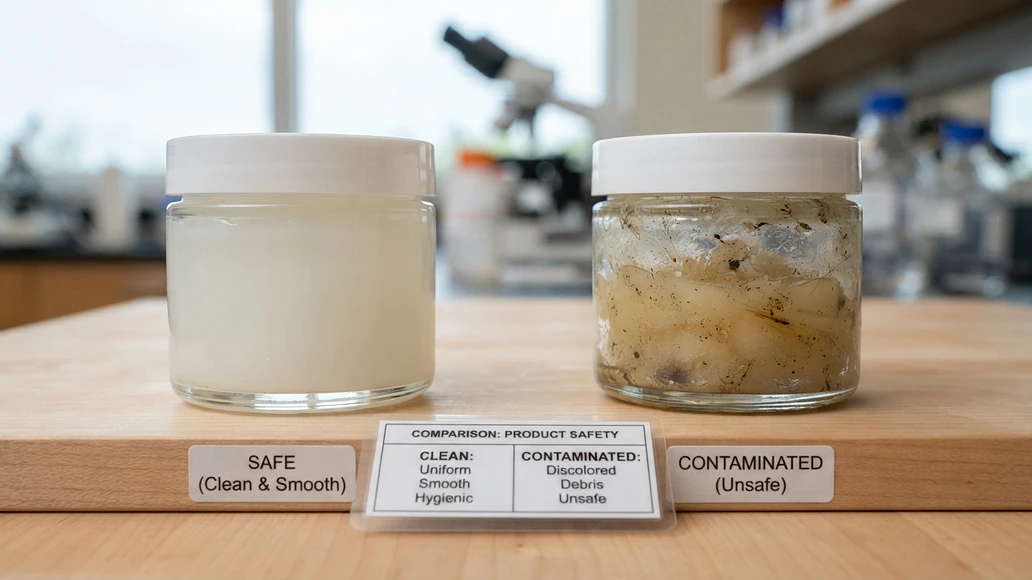
Can you use expired petroleum jelly?
Sometimes yes, but context matters. If an old jar of pure petroleum jelly is past its printed date yet still looks, smells, and feels normal, it is usually not considered highly dangerous on intact skin. The bigger concern is whether it has been contaminated or whether you are using it on a sensitive area.
Usually lower risk
Using a clean-looking older jar on intact skin for dry elbows, heels, or chafing is generally lower risk.
Use more caution
Be more conservative for lips, cracked skin, minor cuts, diaper area, or skin that is already irritated. For babies, young children, immunocompromised adults, or anyone with slow healing, it is smarter to use a fresh product.
Do not use questionable product
If the jar looks off, smells strange, contains debris, or has been stored in harsh conditions, do not use it on any body area. Throw it out.
Is refined petroleum jelly safe for long-term skin use?
For many people, yes. Refined petrolatum is widely used as an occlusive to reduce water loss from the skin. It is commonly recommended for dry skin and barrier support. It is not known to be significantly absorbed through intact skin, and recent expert commentary continues to reject the common myth that properly refined topical petroleum jelly causes cancer.
That said, safe does not mean ideal for every person or every problem. Petroleum jelly helps seal moisture in, but it does not treat the underlying cause of eczema, psoriasis, fungal infection, or bacterial infection. It can ease symptoms, not diagnose or cure the reason they keep returning.
Who should be more cautious
Some people should think twice before using an old jar, or before using heavy occlusive products often.
| Person or situation | Why caution makes sense | Safer approach |
|---|---|---|
| Acne-prone or folliculitis-prone skin | Heavy occlusion may worsen breakouts for some people | Patch test, use sparingly, follow dermatologist guidance |
| People using prescription topical medications | Petroleum jelly can change how some creams sit on the skin | Follow clinician instructions on layering |
| Pregnant or breastfeeding people | Generally considered low risk topically, but special areas need care | Ask a clinician before use on cracked nipples, vaginal area, or over medicated skin |
| Babies and toddlers | Sensitive skin and higher concern about contamination | Use fresh product and avoid questionable jars |
| Immunocompromised or slow-healing adults | Higher consequence if contaminated product is used | Use new product and seek medical advice for wounds or persistent skin issues |
Best storage practices at home and in emergency kits
If you want petroleum jelly to last, store it like a stable household supply, not like a glove-box afterthought.
| Storage location | How it performs | Recommendation |
|---|---|---|
| Cool, dark cabinet | Best overall stability | Ideal for long-term storage |
| Bathroom | Okay, but humidity and frequent handling can shorten practical life | Fine for daily use, less ideal for long-term backup stock |
| Car trunk or glove box | Poor due to heat and freezing cycles | Avoid for long-term storage |
| Bug-out bag | Reasonable if packed well and rotated | Use a small sealed container and inspect regularly |
| Garage or shed | Often poor due to temperature swings | Not recommended unless climate controlled |
For preparedness, smaller containers can be smarter than one giant tub. A small sealed jar in a first aid kit is easier to rotate and less likely to become contaminated than a large family tub that gets opened constantly.
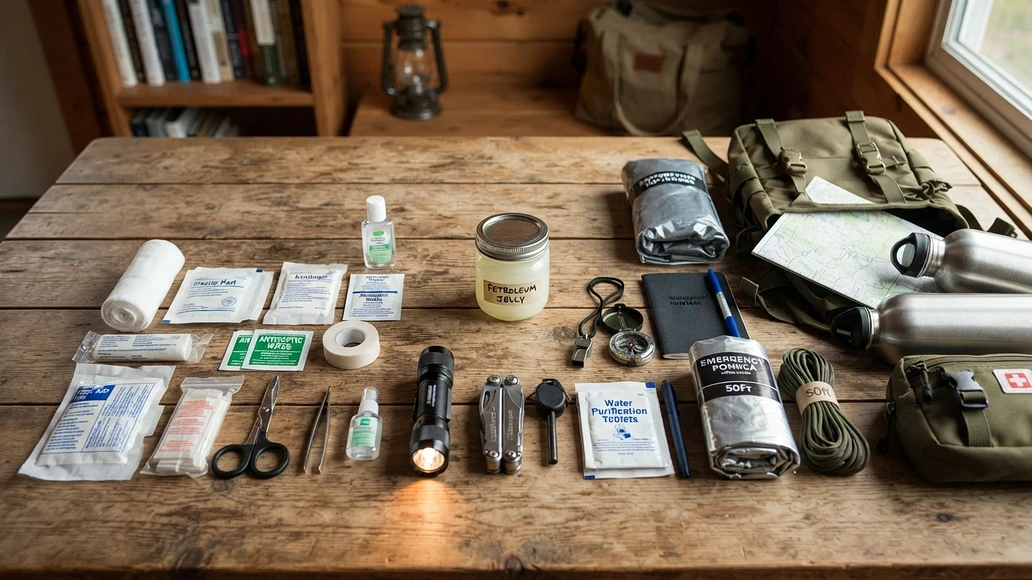
Useful skin and first aid roles, and where the limits are
Petroleum jelly is most useful as a barrier. It can help protect dry skin, reduce chafing, and cover minor superficial scrapes after gentle cleaning. It is often helpful when applied over damp skin or over a moisturizer, because it seals moisture in.
| Use | Generally appropriate? | Safety note | When to avoid or get help |
|---|---|---|---|
| Dry hands, elbows, heels | Yes | Works best after bathing or over moisturizer | See a clinician if cracking, bleeding, or rash persists |
| Chafing prevention | Yes | Apply to intact skin only | Avoid if skin is infected or heavily irritated |
| Minor superficial scrape | Sometimes | Clean first, use only clean product | Get help for deep wounds, spreading redness, pus, or fever |
| Lips | Usually yes with fresh product | Use a clean, uncontaminated product | Avoid questionable old jars |
| Baby diaper area | Sometimes | Fresh product only, monitor skin closely | Get help if rash worsens or does not improve |
| Inside the nose | Not a good routine use | Avoid habitual intranasal use | Ask a clinician for safer options |
Seek medical care if skin becomes more red, warm, painful, swollen, or starts draining pus. Also get help if dry or cracked skin does not improve within 1 to 2 weeks of basic home care.
Preparedness and household uses beyond skincare
Petroleum jelly also has practical non-skin uses around the home. In preparedness circles, it is often used with cotton as a fire starter, as a light lubricant for sticky zippers, or as a temporary moisture barrier on some metal items. Those uses can make sense, but keep your skin-use supply separate from your utility-use supply.
| Household or prep use | Reasonable? | Safety note |
|---|---|---|
| Fire starter with cotton | Yes | Store away from heat sources and label clearly |
| Zipper lubrication | Yes | Use a separate utility container |
| Temporary rust barrier on small metal items | Yes | Keep separate from personal care jar |
| Intentional ingestion | No | Not a food or remedy to swallow |
| Routine use inside nostrils | No | Choose safer alternatives recommended by a clinician |
How long a jar lasts in normal household use
A jar can last surprisingly long. A small tub used only for occasional dry spots or first aid support may last many months or even years. A larger tub used nightly on hands, heels, or for heavy winter dry skin will disappear much faster.
| Usage pattern | How fast it tends to go | Practical note |
|---|---|---|
| Emergency-only first aid kit | Very slow | Rotate periodically because age and storage matter more than volume used |
| Occasional dry skin use | Slow | Small containers are often enough |
| Nightly use on hands or heels | Moderate | Buy fresh stock more often |
| Whole-family shared bathroom jar | Variable | Higher contamination risk, consider smaller personal containers |
Quick decision guide, keep it or toss it?
If you are staring at an old jar and trying to decide, use this simple order of operations.
- Check for a printed expiration date. If it is a medicated or drug-labeled product and it is expired, replace it.
- Look for a PAO symbol. If it says 12M or 24M and you opened it long ago, be conservative.
- Think about storage. A cool cabinet is good. A hot car or damp bathroom is worse.
- Inspect the product. Any odd smell, discoloration, separation, particles, moisture, or mold means toss it.
- Consider where you want to use it. Intact skin is lower risk. Lips, baby skin, and broken skin call for fresher product.
When in doubt, replace it. Petroleum jelly is usually inexpensive, and a fresh jar is often the better choice than gambling on a questionable one.
Disposal and cleanup
Do not wash large amounts down the drain. Wipe out small leftovers with paper towels and place them in the trash according to local rules. If the container is recyclable in your area, clean it first as required by your local program.
FAQ
Is it safe to use petroleum jelly after the date on the jar?
Sometimes, especially if it is plain petroleum jelly and it still looks and smells normal. But the older it is, the more important contamination and storage history become. For medicated products, babies, lips, or broken skin, use a fresh product instead of stretching an expired one.
How can I tell how old my jar is if there is no date?
Look for a batch or lot code on the bottom or back. You may be able to estimate age with a batch code checker. If that does not help, rely on storage history, whether it has been opened, and the product's appearance and smell.
Can old petroleum jelly be used on a baby or toddler?
It is better not to use an old or questionable jar on babies or toddlers. Their skin is more sensitive, and the downside of contamination is higher. Use a fresh, clean product and ask a pediatric clinician if a rash persists or worsens.
Can petroleum jelly grow bacteria or mold?
Pure petroleum jelly does not provide a friendly environment for microbial growth the way water-based products do, but contamination can still happen after opening. Dirt, moisture, and repeated finger dipping can introduce problems. Visible mold, moisture, or debris means discard it.
What should I do if a jar looks or smells strange?
Throw it out. Do not try to salvage it for lips, skin, or first aid. If you want to keep petroleum jelly in long-term storage, replace questionable jars and rotate stock periodically.
Important safety note
This article is for general information only. Petroleum jelly is not a substitute for professional diagnosis or treatment. If you have persistent dry skin, worsening rash, signs of infection, severe cracking, or questions about use during pregnancy, breastfeeding, or with prescription skin medications, contact a qualified healthcare professional.