EMP and Unplugged Devices, What Really Raises the Risk at Home
Unplugged electronics are not automatically safe from an EMP, but they are not automatically doomed either. Here is a practical look at what matters most, what current evidence suggests, and which home protection steps are worth doing.

Many people hear two extreme claims about EMPs. One says unplugged electronics are perfectly safe. The other says every chip in your house will be destroyed no matter what you do. Neither view is very helpful.
The more accurate answer is this. Yes, an EMP can damage electronics that are unplugged or turned off, but unplugging usually improves the odds of survival because it removes major pathways for damaging surges. Small, self-contained devices with short internal wiring often have a better chance than grid-connected equipment, large systems, or devices attached to long cables and antennas. That is especially important when comparing a nuclear high-altitude EMP with a solar geomagnetic storm, because those threats do not affect homes in the same way.
This guide keeps the focus on practical household preparedness. It explains what is well supported, what is often overstated, and what steps are realistic for normal families. It is not a guarantee of survival for any device, and it should be treated as one layer of emergency planning, not the whole plan.
What an EMP is, in everyday terms
EMP stands for electromagnetic pulse. In plain language, it is a burst of electromagnetic energy that can induce voltage and current in conductors. That means wires, traces on circuit boards, antennas, power lines, and other metal paths can pick up energy they were never designed to handle.
There are a few different scenarios people often lump together under the same label.
| Threat type | What it is | Main home concern | Typical scale |
|---|---|---|---|
| Nuclear high-altitude EMP | A pulse created by a nuclear detonation high above the atmosphere | Can affect electronics directly and can also disrupt large infrastructure | Very large regional or continental footprint |
| Localized non-nuclear EMP | A smaller pulse from specialized equipment or a localized event | More limited area, more scenario dependent | Local |
| Solar geomagnetic storm, often called CME effects | A disturbance from solar activity that interacts with Earth’s magnetic field | Mainly threatens long conductors, transformers, and the grid | Regional to continental grid effects |
You may also see references to E1, E2, and E3 components in discussions of nuclear EMP. The short version is that E1 is the fast pulse most often discussed in relation to electronics, while E3 is more associated with long-line effects on the grid and infrastructure. For a homeowner, that means the same event can threaten both small electronics and large power systems, but not in the same way or to the same degree.
How EMPs actually damage electronics
EMPs do not ruin electronics by magic. They cause trouble by inducing unwanted voltage and current into conductive paths. The longer and more exposed those paths are, the more energy they can collect.
That is why long power lines, utility equipment, antenna cables, solar array wiring, and network runs are often treated as higher-risk pathways. A tiny battery flashlight sitting alone in a drawer simply presents less conductor length to couple with than a home inverter tied to panels, batteries, and household circuits.
Modern electronics can also be sensitive because microprocessors and semiconductor components operate at low voltages and tight tolerances. A brief spike can be enough to upset operation, corrupt data, or in some cases permanently damage parts.
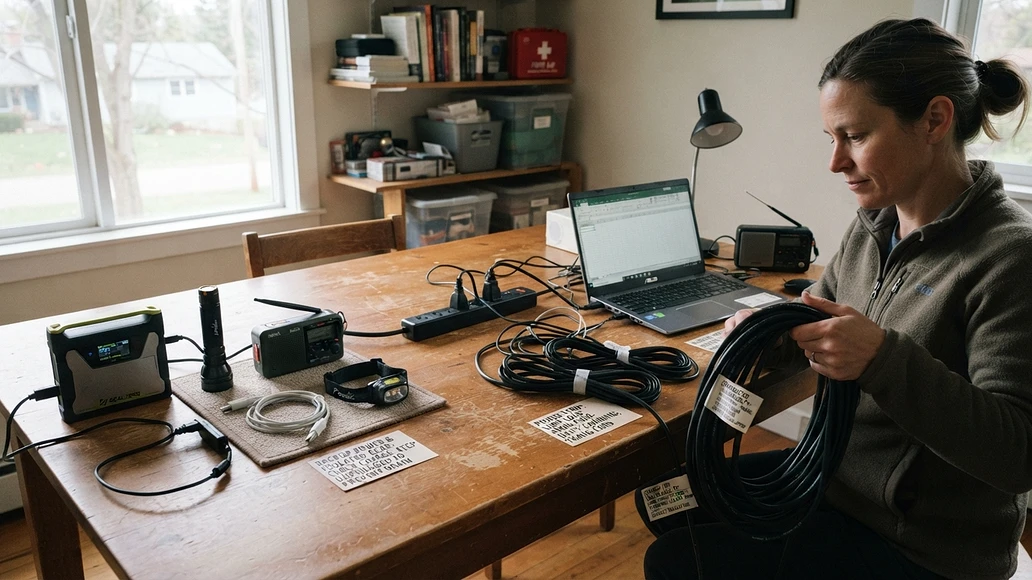
Can unplugged electronics be damaged by an EMP?
Yes, they can. But that does not mean unplugged devices face the same risk as plugged-in ones.
Current expert framing generally supports three points. First, unplugging reduces risk because it removes the direct connection to household wiring and the grid. Second, unplugging does not create immunity because a strong pulse can still couple directly into the device itself. Third, small self-contained devices often have better survival odds than larger, more complex, or cable-connected systems.
That is the nuance many articles skip. If a device is unplugged, turned off, and not attached to any long cable or antenna, it is usually in a better position than the same device left connected to wall power, Ethernet, coax, or a charging cable. Better odds are not the same as guaranteed survival.
Factors that change unplugged survival odds
| Factor | Why it matters | What it usually means for survival odds |
|---|---|---|
| Device size and internal wiring | More conductor length can collect more induced energy | Smaller, simpler devices often do better |
| External cables or antennas | Long attached conductors act like collection paths | Attached cables usually increase risk |
| Complexity of electronics | Sensitive chips and tightly packed systems can be easier to disrupt | Microprocessor-heavy gear may be more vulnerable |
| Shielding or enclosure | Metal enclosures can reduce coupling if well built | Proper shielding improves odds |
| Event strength and distance | Not every EMP scenario has the same field strength at your location | Results are highly scenario dependent |
Plugged in, turned off, unplugged, or shielded, what changes most?
People often assume that turning a device off is almost the same as unplugging it. In EMP terms, that is not necessarily true. A device can be switched off and still remain connected to household wiring, chargers, network cables, or antennas. Those connections matter.
| Condition | E1 direct pulse risk | Grid or long-line surge risk | Practical takeaway |
|---|---|---|---|
| Plugged in and powered on | Higher | Highest | Most exposed overall |
| Plugged in but turned off | Still meaningful | High | Off is not the same as disconnected |
| Unplugged only | Reduced but not zero | Much lower | Useful basic step |
| Unplugged in a metal cabinet or can with insulation | Lower if enclosure is continuous and well fitted | Very low from household wiring | Reasonable household protection for selected items |
| Unplugged in a tested Faraday bag or well-built Faraday container | Lower still, depending on build quality | Very low from household wiring | Best practical option for small critical spares |
For most households, unplugging is worth doing during unstable conditions or when storing backup devices. It is not pointless. It simply should not be confused with shielding.
Nuclear EMP and solar storms are not the same threat
This distinction matters because many readers picture a solar flare frying every phone in a drawer. That is not how solar geomagnetic storms are generally understood to affect infrastructure.
Solar events mainly threaten long conductors such as transmission lines, pipelines, and large transformers. Their biggest household effect is more likely to come through grid disruption, not direct destruction of a disconnected phone or laptop sitting by itself.
Nuclear high-altitude EMP is different. Its fast E1 component is the part most often discussed in relation to direct effects on electronics over a wide area. That is why an unplugged device may still be at some risk in a nuclear EMP scenario even though it would be much less of a concern in a solar storm scenario.
| Question | Nuclear high-altitude EMP | Solar geomagnetic storm |
|---|---|---|
| Can it directly affect small electronics? | Yes, potentially | Usually not the main concern |
| Does it strongly affect long conductors and the grid? | Yes | Yes, this is the main concern |
| Is an unplugged phone in a drawer the top worry? | No, but it can still be discussed as a secondary risk | No, grid and infrastructure are the bigger issue |
| Best household focus | Layered protection for a few critical devices plus non-electric backups | Outage readiness, backup power planning, and general emergency supplies |
What testing and expert panels suggest
One reason EMP discussions become exaggerated is that hard public data for every device and every scenario does not exist. That uncertainty is real. But uncertainty does not justify saying everything electronic will certainly die.
Public summaries of EMP Commission vehicle testing are often cited because they push back on the idea that all modern vehicles would instantly become permanent scrap. The reported results suggested mostly temporary disruptions, with limited permanent damage in the tested cases. That does not prove all vehicles are safe. It does show that universal, instant failure claims are too simple.
More broadly, expert and government-oriented discussions often place the greatest concern on grid and infrastructure vulnerability. That does not mean small electronics are invulnerable. It means the largest, most consequential risks are often tied to long conductors and interconnected systems.
| Claim or practice | Evidence status | What to take from it |
|---|---|---|
| EMP damages electronics by inducing voltage in conductors | Well supported | This is the core mechanism |
| Long conductors and grid-connected systems are more vulnerable than small self-contained devices | Well supported | Infrastructure and wired systems deserve the most concern |
| Unplugging reduces risk but does not guarantee safety | Well supported | Good habit, not complete protection |
| Unplugged devices are just as likely to be destroyed as plugged-in ones | Mixed and often overstated | Risk is usually lower when disconnected |
| Small battery devices without external antennas are relatively likely to survive | Moderately supported | Better odds, but still scenario dependent |
| A solar flare will fry your unplugged phone or laptop | Weak or misleading | Solar events mainly threaten long conductors and the grid |
| Faraday bags and cages can meaningfully protect small devices | Moderately supported | Quality and construction matter |
Which unplugged household electronics face the highest risk?
If you are deciding what to protect first, focus less on every gadget in the house and more on the devices that combine sensitive electronics with long conductors, antennas, or critical functions.
| Device category | Unplugged risk level | Why | Simple protection step |
|---|---|---|---|
| Grid-tied inverter systems, solar charge controllers, battery management electronics | Higher | Complex electronics and multiple connected conductors | Keep critical spare components shielded if affordable |
| Desktop computers with many peripherals and long cables | Moderate to higher | Multiple ports, cables, and sensitive components | Disconnect fully and protect backups of key data |
| Wi-Fi gear, radios with external antennas, scanners | Moderate to higher | Antennas and attached cables can increase coupling | Disconnect antennas and store a backup unit in shielding |
| Smart home hubs, routers, network switches | Moderate | Microelectronics plus cable exposure when in use | Keep one spare communication option protected |
| Laptops, tablets, smartphones stored loose and disconnected | Lower to moderate | Shorter conductors and self-contained design help | Store one backup device in a Faraday bag or container |
Which unplugged items are more likely to survive?
The best candidates for survival are usually the least electronically complex and the least connected. Mechanical tools are the obvious example, but some simple battery-powered devices also have decent odds.
| Item type | Relative survival odds when unplugged | Reason | Preparedness value |
|---|---|---|---|
| Mechanical hand tools | Very high | No sensitive electronics | Excellent |
| Manual can openers, pumps, and kitchen tools | Very high | No circuitry to damage | Excellent |
| Simple LED flashlights not connected to chargers | Moderate to high | Small and self-contained | High |
| Basic battery radios without long external antennas attached | Moderate to high | Short conductors and portable design | High |
| USB drives and external hard drives stored disconnected | Moderate | Small size helps, but they still contain electronics | Useful for backup copies |
Again, these are not guarantees. They are better bets, not certainties.
Practical EMP preparedness for a normal household
The most useful approach is to protect a small set of critical functions instead of trying to shield every electronic item you own.
| Priority | What to protect | Why it matters | Reasonable household step |
|---|---|---|---|
| Communication | Backup radio, spare phone, charging accessories | Information and coordination after an outage | Store one set in a Faraday bag or container |
| Light | Flashlights, headlamps, spare batteries | Immediate safety and function | Keep both electronic and non-electronic lighting options |
| Data | USB drives, external drives with copies of key documents | Identity, insurance, records, maps | Maintain duplicate offline copies |
| Power support | Small solar charger components, charge controller spares if relevant | Longer outages become easier to manage | Protect only the most important small components |
| Low-tech backups | Manual tools, paper contacts, printed maps | Works even if electronics fail | Build these into your normal emergency kit |
For households that depend on powered medical equipment, EMP planning should never rely on guesswork or DIY shielding experiments. Talk with healthcare providers and device manufacturers about backup power, replacement timelines, and outage contingencies. Do not alter life-sustaining equipment without professional guidance.
Faraday cages and bags, what works in practice
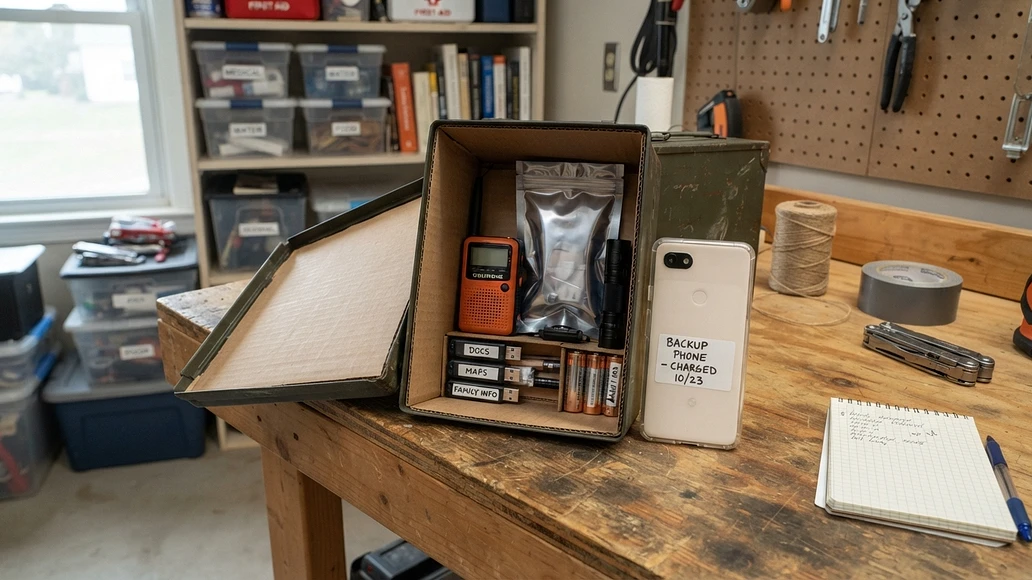
A Faraday container works by surrounding the device with conductive material that helps keep electromagnetic energy from coupling into the protected item. In household terms, the basics are simple. You want continuous conductive coverage, minimal gaps, good closure at seams, and an insulating layer so the device does not directly touch the metal enclosure.
That does not mean every expensive product is excellent, and it does not mean every improvised metal box is useless. Build quality matters more than marketing language.
| Storage option | What can work well | Common weakness | Best use |
|---|---|---|---|
| Commercial Faraday bag | Portable, convenient, good for phones and radios | Cheap bags may have weak seams or closures | Small grab-and-go electronics |
| Metal trash can with tight lid and insulating liner | Can protect multiple items if well fitted and lined | Poor lid contact, gaps, and no liner | Home storage of backup gear |
| Metal ammo can with interior insulation | Durable and compact | Seal and seam performance varies by design | Small critical spares |
| Metal cabinet or locker | Useful if seams and closure are reasonably continuous | Large gaps and poor electrical continuity | Better than open shelf storage, but variable |
| Whole-house hardening | Potentially broader protection when professionally designed | Costly, complex, and beyond most DIY skill levels | Specialized projects with licensed professional help |
Common mistakes include storing devices in a metal container without insulating them from the sides, assuming any metallic pouch is automatically protective, and forgetting attached cables, chargers, or antennas. A disconnected spare radio inside a decent Faraday bag is much more realistic than trying to harden an entire house on a casual weekend.
What still works if many electronics fail
Preparedness gets stronger when it does not depend on a single technology. If an EMP or a long grid outage disrupts electronics, low-tech capability becomes valuable fast.
| Need | Electronic option | Low-tech backup | Why the backup matters |
|---|---|---|---|
| Lighting | Rechargeable lantern | Candles used carefully, oil lamp, or battery flashlight with spare cells | Reduces dependence on charging systems |
| Cooking | Electric range or microwave | Camp stove, grill, rocket stove where safe and legal | Keeps meals possible during outages |
| Water access | Electric pump | Stored water, manual pump options where applicable | Water is usually more urgent than gadgets |
| Information | Internet and smart devices | Battery radio, printed contacts, paper maps | Works when networks fail |
| Tools | Power tools | Hand tools | Repairs continue without electricity |
How to balance EMP concerns with broader preparedness
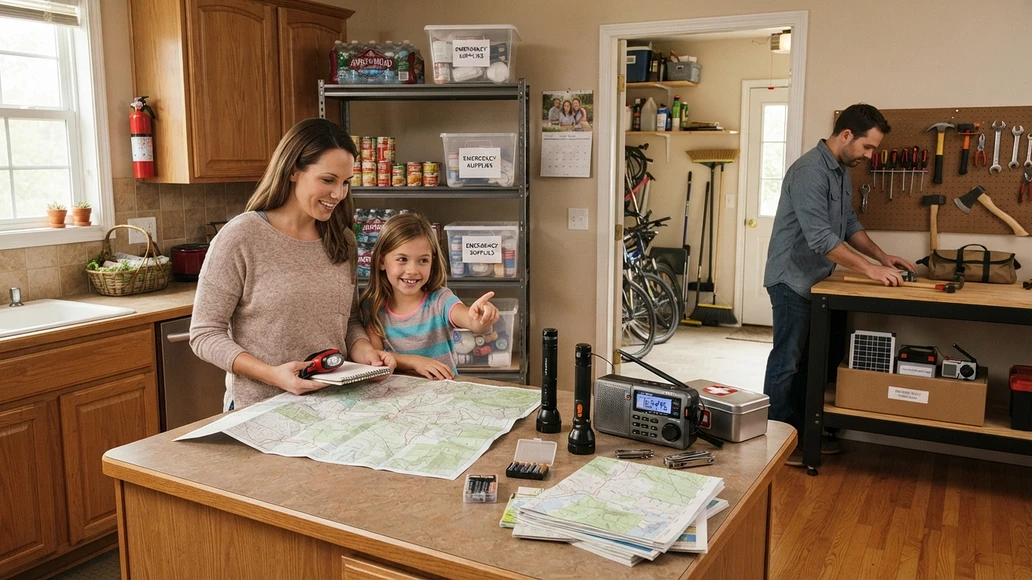
EMP is usually described as a low-probability, high-impact hazard. That makes it worth understanding, but not worth letting it crowd out more common disruptions such as storms, wildfires, earthquakes, and ordinary grid failures.
In practical terms, the same steps that help with blackouts often help with EMP resilience too. Store water. Keep shelf-stable food. Maintain flashlights and radios. Print important contacts. Back up key documents. Protect a few critical electronics rather than chasing total protection for everything.
At the household level, these actions mostly ease the symptoms of a major disruption. They do not solve the larger infrastructure problem. That is still mainly a utility, engineering, and policy issue. Your goal at home is not to defeat the event. Your goal is to stay functional if the event happens.
FAQ
Will an EMP destroy a smartphone that is turned off and unplugged?
It could, but it is not a certainty. A turned-off, unplugged phone is generally in a better position than one connected to a charger or cable. In a solar storm scenario, a disconnected phone is not usually the main concern. In a nuclear EMP scenario, direct effects are more plausible, so shielding a spare phone is a reasonable precaution.
Are solar flares as dangerous to unplugged electronics as nuclear EMPs?
No. Solar geomagnetic storms mainly threaten long conductors and the grid. Nuclear high-altitude EMP is the scenario more often associated with direct effects on unshielded electronics over a wide area.
Do I need a professional Faraday cage, or will a simple metal box work?
A simple metal container can be useful if it has continuous conductive coverage, reasonably tight seams, and an insulating liner so devices do not touch the metal. A quality Faraday bag can also work well for small items. Neither option should be treated as a 100 percent guarantee.
Will my car stop working if an EMP hits, even if it is parked and turned off?
Maybe, but not necessarily. Public summaries of testing often suggest many vehicles would experience temporary or limited effects rather than universal permanent failure. Cars are complex systems, so outcomes depend on the event and the vehicle.
Is it worth protecting USB drives and external hard drives from EMP?
Yes, if they contain important records. They are small, inexpensive to duplicate, and easy to store in a Faraday bag or lined metal container. For many households, protecting copies of documents and photos is more practical than trying to shield every large device.
References
- Electromagnetic Pulses - Six Common Misconceptions
- How EMPs Work: The Science Behind Electromagnetic Pulses
- Electromagnetic Pulse, EMP Explained: Nuclear, Non-Nuclear
- How to Protect Electronics From EMP
- How to Survive an EMP: Preparedness Guide
- Solar Flare and EMP Preparedness: Grid Vulnerability, Faraday Guidance