Build Job Skills That Open Better Doors
Learn how to choose the right vocational skills, compare training paths, practice safely, and turn targeted upskilling into better work, stronger pay, and more career options.

Improving vocational skills is one of the most practical ways to qualify for better work, earn more responsibility, and create options if your current job changes. The key is to build skills on purpose, not just stay busy. A focused plan helps you choose the right technical abilities, strengthen the soft skills employers notice, and avoid wasting time or money on training that does not lead anywhere.
This guide explains how to identify the skills that matter for your goals, compare learning paths, practice safely, and build a realistic timeline. It is general career information, not individualized advice. Before enrolling in a program or preparing for a licensed occupation, confirm requirements with your state licensing board, an accredited school, employer, or workforce office.
What vocational skills are, and why they matter
Vocational skills are work-related abilities used to perform specific tasks in a job or trade. Some are technical, such as welding, bookkeeping, HVAC troubleshooting, medical billing, machine operation, or spreadsheet analysis. Others are transferable, such as communication, reliability, teamwork, customer service, and digital literacy. Employers usually want both.
These skills matter because they connect directly to employability. A clear skill set can help you qualify for interviews, perform better once hired, and compete for raises or promotions. In many fields, a short certificate, apprenticeship, or employer-recognized credential can also make your experience easier to prove.
Hard skills and soft skills work together
A person may know how to run equipment, install parts, or use software, but still struggle at work if they miss deadlines, communicate poorly, or cannot solve routine problems. In the same way, a dependable worker with strong people skills may hit a ceiling without job-specific training. Better work usually comes from combining both sides.
| Skill type | Examples | Typical training path | Licensing or regulation |
|---|---|---|---|
| Technical trade skills | Electrical work, HVAC, welding, plumbing | Apprenticeship, trade school, community college, employer training | Often yes, varies by state and occupation |
| Digital and office skills | Excel, bookkeeping, CAD, data entry, cybersecurity basics | Short courses, certificates, community college, employer training | Usually no license, but certifications may help |
| Healthcare support skills | Phlebotomy, CNA tasks, medical billing, sterile processing | Approved training programs, clinical practice, certificates | Often regulated, may require exams or background checks |
| Service and operations skills | Customer service, logistics, food safety, inventory systems | On-the-job training, short courses, employer programs | Sometimes regulated, depending on role |
| Transferable soft skills | Communication, teamwork, punctuality, problem solving | Practice, feedback, coaching, work-based learning | No license, but essential for hiring and promotion |
How to identify the right skills for your career goals
The fastest way to improve is to target skills that match real jobs. Random learning can feel productive, but it often leads to scattered certificates and little career movement.
Start with a skill audit
Write down your current abilities in three groups. First, list technical skills you can already perform. Second, list tools, software, or equipment you know how to use. Third, list soft skills you can demonstrate with examples. Then compare that list with the requirements of jobs you want.
Look at several current job postings, not just one. Repeated requirements are your strongest clues. If five postings for maintenance technician mention preventive maintenance, safety procedures, and basic electrical troubleshooting, those are likely higher-value targets than a random course that sounds interesting.
Use labor market and career tools
Government and mainstream career tools can help you narrow your focus. CareerOneStop, state workforce websites, and the Occupational Outlook Handbook are useful for checking common duties, training expectations, and job outlook. This can help you avoid investing in a path with weak local demand or hidden licensing barriers.
Ask yourself a few practical questions:
- What job do I want next, not someday, but within the next 6 to 18 months?
- Which three skills appear most often in postings for that job?
- Which of those skills can I start building quickly?
- Which ones require formal training, supervised hours, or a license?
- What proof will employers want, experience, a portfolio, a certificate, or references?

Choosing a learning path that fits your budget and schedule
There is no single best training route for everyone. The right option depends on your target job, available time, local employers, and whether the field requires supervised practice or licensing.
Community colleges and technical schools
These are often strong choices for adults because they may offer lower tuition, evening schedules, and recognized credentials. Many also have employer partnerships, labs, and advisors who can explain course sequences. For regulated fields, approved programs matter because not every school qualifies you for licensure.
Apprenticeships and paid work-based training
Apprenticeships are especially valuable in skilled trades because they combine classroom learning with paid hands-on work. This can reduce debt while building real experience. If your field offers a registered apprenticeship or structured employer training, it is often one of the most efficient paths to better work.
Short courses and online certificates
Short programs can work well for digital, administrative, and support roles, especially when you need to upskill while working full time. They are also useful for stacking smaller credentials over time. The main caution is quality. A short course is only helpful if employers recognize the skill and you can apply it in real tasks.
| Training option | Typical duration | Cost range | Schedule flexibility | Best for | Main caution |
|---|---|---|---|---|---|
| Community college program | Several months to 2 years | Low to moderate compared with many private schools | Often moderate, with day or evening options | Recognized credentials, structured learning, regulated fields | May require prerequisites or a fixed schedule |
| Technical or trade school | Several months to 1 year or more | Moderate to high | Varies by school | Hands-on job training in a focused field | Compare outcomes carefully before enrolling |
| Apprenticeship | 1 to 5 years depending on trade | Usually lower direct tuition, paid training is common | Less flexible, work-based schedule | Trades and occupations where experience matters most | Entry can be competitive, requirements vary |
| Online course or certificate | Weeks to several months | Low to moderate | Often high | Digital skills, office skills, part-time upskilling | Quality and employer recognition vary widely |
| Employer training or cross-training | Weeks to months | Often low cost to employee | Built into work schedule | Advancing within your current workplace | May be narrow and not portable to other employers |
Low-cost ways to practice vocational skills safely
You do not always need a large budget to improve. Many people can make real progress through supervised practice, cross-training, volunteer work, and project-based learning. The important word is supervised. In some fields, safe practice is possible at home. In others, it is not.
Good low-cost practice options
Ask for stretch assignments at work. Volunteer to help with inventory systems, scheduling software, documentation, quality checks, customer communication, or basic maintenance tasks within your role. If you are changing careers, look for community projects, makerspaces, nonprofit work, or simulated labs that let you practice under guidance.
For digital and office skills, build small proof-of-skill projects. Create spreadsheets, sample reports, mock invoices, simple designs, or portfolio pieces that show what you can do. For service roles, practice scripts, conflict resolution, and scheduling habits that improve reliability and professionalism.
When not to DIY
Some vocational tasks should not be learned through unsupervised trial and error. Electrical work, gas systems, medical procedures, heavy machinery, commercial driving, chemical handling, and many construction tasks involve safety rules, legal requirements, and supervised hours. If a field is licensed or regulated, confirm the official path before assuming home practice will count toward employability.
Follow workplace safety rules, OSHA guidance, and program instructions. Do not use dangerous tools, chemicals, or equipment without proper training and supervision.
The soft skills that make technical skills pay off
Employers often say they can teach some tasks faster than they can fix poor work habits. That is why soft skills have such a large effect on hiring and advancement.
Communication and teamwork
Clear communication reduces mistakes, improves customer trust, and makes you easier to train. Teamwork matters in almost every setting, from warehouses to clinics to offices. Practice giving updates, asking clarifying questions, and documenting work clearly.
Reliability and time management
Showing up on time, meeting deadlines, and following through are basic, but they carry real weight. If you are building new skills while working, use a simple weekly schedule. Even four focused hours per week can add up if you stay consistent.
Problem solving and digital literacy
Many jobs now expect workers to handle routine software, online forms, scheduling tools, and digital communication. Even in hands-on trades, digital paperwork and diagnostics are common. Improving basic digital fluency can raise your value across many occupations.

Use work-based learning to speed up progress
Hands-on experience often closes skill gaps faster than studying alone. It helps you apply knowledge, get feedback, and build confidence in real conditions.
Ways to get work-based learning
Look for internships, apprenticeships, job shadowing, temporary assignments, co-ops, or internal projects. If you already have a job, ask your supervisor whether you can cross-train in a related function. A warehouse worker might learn inventory software. A receptionist might learn scheduling systems or billing support. A maintenance helper might assist with preventive checks under supervision.
These experiences do two things at once. They build skill and create evidence. When you later apply for a better role, you can point to actual tasks completed, not just courses watched.
Mentors, networks, and community resources that help
Skill growth is easier when you can ask questions, get feedback, and learn how the field really works. A mentor can save you months of confusion by pointing out which skills matter most and which credentials employers actually respect.
Where to find support
Start with people close to your target field. That may be a supervisor, a senior coworker, an instructor, a union contact, a local business owner, or someone in a professional association. Ask specific questions, such as which entry-level tasks matter most, what beginners usually get wrong, and which training options local employers trust.
Also use workforce development centers, adult education programs, libraries, and community colleges. These resources may offer resume help, career counseling, training referrals, and information about grants, transportation support, or childcare assistance.
Create a realistic skill-building plan
A good plan is specific enough to guide action, but simple enough to follow when life gets busy. Focus on a few high-value skills, not everything at once.
| Time frame | Primary focus | Actions | Expected outcome |
|---|---|---|---|
| 0 to 3 months | Skill audit and quick wins | Review job postings, identify top skill gaps, improve resume language, begin one targeted course, ask for feedback at work | Clear target role, one active learning path, stronger job documents |
| 3 to 6 months | Applied practice | Complete a short course or module, build portfolio samples, cross-train at work, practice interview stories | Proof of skill, better confidence, stronger examples for interviews |
| 6 to 12 months | Credential and advancement | Pursue a certificate, apprenticeship step, or employer-recognized training, expand network, apply for better roles | Recognized credential, stronger experience, promotion or job-change readiness |
Review your plan every 3 to 6 months. If your target job changes, update the skill list. If a course is not helping, replace it. Progress matters more than perfection.
How to evaluate a vocational program before you pay
Training can be a smart investment, but only if the program is credible and aligned with real jobs. Compare quality, cost, and outcomes before you commit.
| Question to ask | Why it matters | Where to verify |
|---|---|---|
| Is the program accredited or officially recognized? | Recognition affects transferability, aid, and employer trust | School website, accreditor database, state agency |
| Does it meet state licensing requirements if the field is regulated? | You may need approved hours or coursework to qualify for work | State licensing board, program advisor |
| What is the total cost, including fees, tools, exams, and supplies? | Hidden costs can change the value of the program | Financial aid office, catalog, written estimate |
| What are completion and job placement outcomes? | Outcomes help you judge whether the program works | School disclosures, advisor, alumni |
| Are there employer partnerships or internships? | Work-based learning improves hiring chances | Program office, employer list, student services |
| Can the schedule fit your life? | Even a good program fails if you cannot attend consistently | Course calendar, advisor, current students |
Be especially careful with expensive private programs that promise fast results without clear employer connections. Compare them with community college and workforce-funded options first.
Common mistakes that slow skill growth
Learning without a target job
If you do not know what role you are aiming for, it is easy to collect random skills that do not add up. Start with the job, then work backward.
Taking too many courses at once
Overloading often leads to burnout and unfinished programs. One or two focused priorities usually work better than five scattered ones.
Ignoring soft skills
Technical ability gets attention, but reliability, communication, and professionalism often decide who gets hired or promoted.
Skipping quality checks
Not all certificates carry the same value. Verify accreditation, employer recognition, and local demand before spending money.
Unsafe or unlicensed practice
Do not assume that watching videos or doing informal practice qualifies you for regulated work. Confirm official requirements first.
How stronger vocational skills can lead to better work
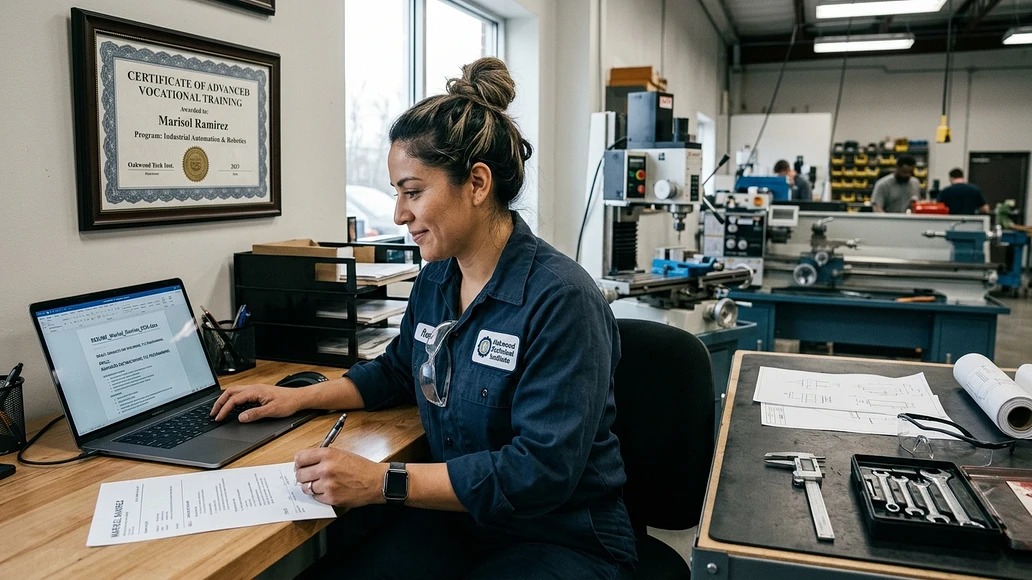
Better work does not always mean a dramatic career change. Sometimes it starts with a small move, such as learning scheduling software, earning a safety credential, improving customer communication, or completing one employer-recognized certificate. Those smaller steps can lead to a raise, a shift into a more stable department, a promotion, or a new job with better hours.
Vocational growth can also support career changes later in life, after caregiving, or after time away from the workforce. Adults returning to work often benefit from short modular training, updated digital skills, and help from workforce counselors who understand local hiring patterns.
When to seek professional career help
Sometimes outside guidance is the smartest next step. Consider professional help if you are changing industries, returning after a long break, comparing several training paths, dealing with disability accommodations, or unsure whether a program is worth the cost.
Useful sources include state or local workforce centers, college advisors, apprenticeship offices, and qualified career counselors. They can help you compare options, understand licensing rules, and find lower-cost training resources.
FAQ
What are some quick vocational skills I can learn in under six months to improve my job prospects?
That depends on your target field, but common short-term options include spreadsheet skills, bookkeeping basics, customer service systems, medical billing foundations, inventory software, basic CAD, and entry-level IT or cybersecurity certificates. Choose skills that appear often in local job postings.
Is it better to take online courses or enroll in a local vocational program?
Online courses are often best for flexible, lower-cost learning in digital or office skills. Local programs are often better for hands-on fields, regulated occupations, and roles where employers expect lab work, supervised practice, or approved credentials.
How can I improve vocational skills if I have a full-time job and family responsibilities?
Use a narrow plan. Pick one high-value skill, study in short weekly blocks, and look for work-based learning at your current job. Evening classes, modular certificates, and employer-supported training can be easier to sustain than full-time programs.
Do I need a certificate or license for every vocational skill I learn?
No. Many skills can be learned and demonstrated without a license. But some occupations, especially in trades, transportation, cosmetology, and healthcare, have legal requirements. Always check state rules and employer expectations before relying on informal training.