Use April 20 as Your Annual Emergency Plan Reset
April 20 is not a prediction date. It is a memorable checkpoint to review your household emergency plan, update supplies, and prepare for the disruptions most likely to affect your home.

April 20 does not have any official disaster meaning, and it is not a date that makes emergencies more likely. What it does offer is something useful, a memorable annual prompt. If you have been meaning to build or update a household emergency plan, picking one easy-to-remember date each year can turn vague concern into action.
In preparedness circles, people often use the term SHTF to describe a serious disruption. In real life, that usually means something more ordinary and more likely than total collapse, such as a long power outage, severe storm, wildfire smoke, flash flooding, evacuation, supply disruption, public-health emergency, or a period when normal services are limited. Planning for those events is practical, affordable, and far more helpful than chasing dramatic scenarios.
This guide explains why April 20 can work as a planning checkpoint, how to translate SHTF into real household risks, and how to build a plan that fits your location, budget, and family needs. This is general preparedness information, not medical, legal, or emergency command advice. Always adapt your plan to local emergency management instructions, your housing rules, your utility setup, and the guidance of your clinician or pharmacist for health needs.
Why April 20 works as a reminder, not a prediction
The date is memorable because of its cultural association with 4/20. That makes it easy to remember each year, much like changing smoke alarm batteries at daylight saving time or doing taxes by a fixed deadline. The value is not in the date itself. The value is in having a repeatable habit.
If you choose April 20 as your annual preparedness reset, you can use it to review what changed over the past year. Did someone move in or out? Did a child start school? Did a prescription change? Did you buy a generator, add a pet, switch jobs, or move to a flood-prone area? A fixed date helps catch those changes before an emergency exposes them.
| Approach | What it means | Why it helps |
|---|---|---|
| Using April 20 as a checkpoint | A yearly reminder to review plans, supplies, contacts, and local hazards | Creates a simple routine that is easy to remember |
| Treating April 20 as a warning date | Assuming the date predicts a disaster | Not evidence-based, can distract from realistic planning |
| Ignoring dates entirely | Planning only when a threat is already obvious | Often leads to rushed decisions, shortages, and missed details |
What SHTF means in practical preparedness
SHTF is internet shorthand, not an official emergency category. For a household plan, it helps to replace the phrase with specific disruptions you can actually prepare for.
| Preparedness term | Useful real-world translation | Typical planning focus |
|---|---|---|
| SHTF | Any event that seriously disrupts normal life | Written plan, supplies, communication, evacuation options |
| Grid down | Power outage lasting hours or days | Lighting, charging, food safety, backup power, temperature control |
| Bug out | Evacuate because staying is unsafe | Routes, destinations, go-bags, fuel, pet transport, documents |
| Shelter in place | Stay home temporarily because travel is unsafe or unnecessary | Water, food, medicine, sanitation, information, indoor safety |
| Supply chain disruption | Store shortages or delayed deliveries | Extra staples, prescriptions, household basics, cash buffer |
That shift matters. If you plan for named, local, likely problems, your decisions become clearer. You can estimate how long you may need to manage on your own, what supplies matter most, and when to leave instead of staying put.
Start with your ZIP code, not a generic checklist
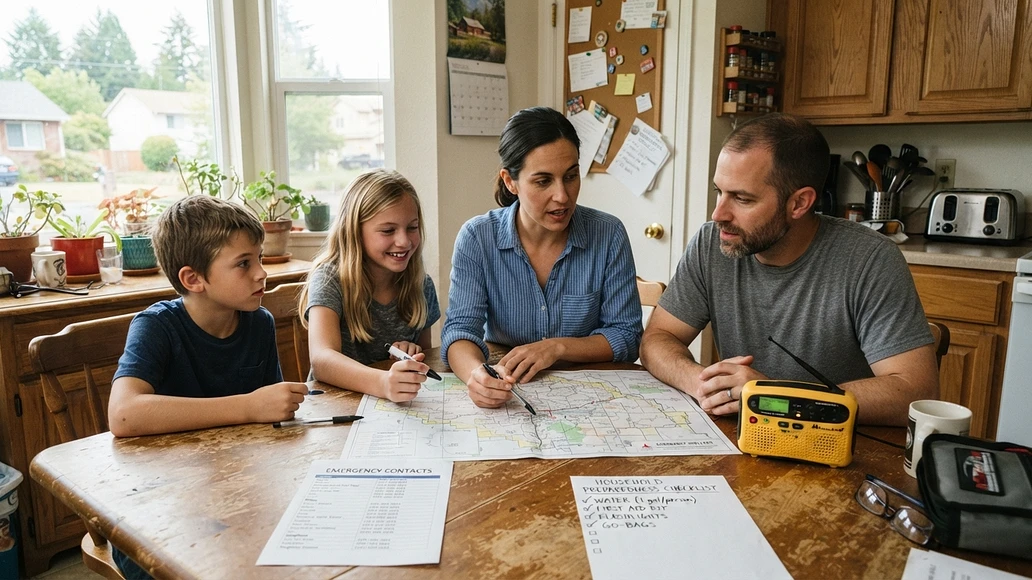
The best emergency plan begins with local hazards. A family in coastal Florida should not build the same plan as an apartment renter in California or a rural household in the upper Midwest. Your risk depends on geography, season, housing type, transportation, and nearby infrastructure.
Look at the events most likely to affect your area. These may include hurricanes, tornadoes, winter storms, earthquakes, wildfire, smoke, extreme heat, flash floods, water outages, chemical incidents near highways or rail lines, and long utility interruptions. Then consider your home. A high-rise apartment, a mobile home, and a house with a well all have different weak points.
| Household factor | Questions to ask | Planning impact |
|---|---|---|
| Location | What hazards are common in this county or ZIP code? | Determines whether you prioritize evacuation, sheltering, smoke, flooding, or cold weather |
| Housing type | Do you live in an apartment, house, mobile home, or rural property? | Affects storage, generator options, water access, and evacuation timing |
| Transportation | Do you have one car, no car, or a driver with mobility limits? | Shapes evacuation routes, destination choices, and fuel planning |
| Utilities | Do you rely on electric heat, a well pump, or refrigerated medicine? | Changes backup power and water priorities |
| Household needs | Are there infants, pets, older adults, or medical devices? | Requires tailored food, medication, mobility, and temperature planning |
The three planning horizons that matter most
Many people jump straight to gear. A better approach is to plan in layers. The first layer is a 72-hour kit. The second is a two-week home supply. The third is long-term resilience, which means habits and systems that make disruptions easier to handle.
| Planning horizon | Purpose | Examples |
|---|---|---|
| 72 hours | Cover immediate disruption or evacuation | Go-bag, water, snacks, flashlight, chargers, medicine list, pet basics |
| Two weeks | Handle a longer outage or shelter-in-place period | Stored water, shelf-stable food, sanitation supplies, backup cooking plan, extra prescriptions if available |
| Long-term resilience | Reduce repeat stress over months and seasons | Rotating pantry, savings buffer, home maintenance, insurance review, backup power planning |
A 72-hour kit is a useful minimum, but it is not a promise that help will arrive within three days. Some disasters last longer, and recovery can be uneven. That is why a home supply layer matters.
A household inventory is more important than a shopping spree
Before buying anything, take inventory. Most homes already have some useful supplies. You may already own flashlights, batteries, canned food, refillable water containers, blankets, power banks, pet food, and basic first aid items. The goal is to identify gaps, not to start from zero.
| Category | What to check | Common gap |
|---|---|---|
| Water | How much drinkable water is already stored? | Not enough for several days, no plan for sanitation |
| Food | What can be eaten without refrigeration or complex cooking? | Too much frozen food, not enough easy shelf-stable meals |
| Lighting | Do you have flashlights and fresh batteries? | Relying only on phones |
| Power | Do you have charging cables, power banks, car charging, or backup power? | No way to recharge devices during a long outage |
| Medical | Are prescriptions, glasses, and medical supplies current? | No refill plan, no written medication list |
| Documents | Can you quickly access IDs, insurance, and emergency contacts? | Everything stored in one place with no backup copy |
Water planning, the baseline and the limits
A common federal baseline is one gallon of water per person per day for several days. That is a good starting point, not a universal answer. Hot weather, illness, pregnancy, infant feeding, pets, and sanitation can all increase needs. If you live in a hot climate or have medical needs, plan for more.
Store water in clean, food-safe containers and rotate it as needed. If your home depends on a well pump, remember that a power outage can also become a water outage. If local officials issue a boil-water notice or contamination warning, follow that guidance. No single consumer filter handles every biological or chemical hazard, and questionable water should not be trusted based on marketing claims alone.
| Water topic | Practical baseline | Important caution |
|---|---|---|
| Daily drinking and basic use | Start with one gallon per person per day for several days | Heat, illness, pets, and sanitation may require more |
| Storage | Use clean, food-safe containers in a suitable location | Follow container guidance and rotate as appropriate |
| Treatment | Use proven methods and follow local public-health instructions | No single filter removes every contaminant |
| Emergency water source | Know where additional safe water may come from | Do not assume tap water is safe during every outage |
Food planning that still works when the power is out
Food storage should match how your household actually eats. Focus on ordinary foods you will rotate, not extreme stockpiles you will ignore. Think in terms of calories, hydration, preparation method, and dietary needs. If the power goes out, your freezer full of food may not help for long unless you have a safe backup power plan.
Choose foods that require little water, little fuel, and minimal cleanup. Include items for infants, allergies, diabetes management, and pets. If someone in the home cannot chew well or needs a medically tailored diet, build around that reality now, not later.
| Food type | Why it helps | Watch for |
|---|---|---|
| Ready-to-eat shelf-stable foods | Useful during outages and evacuations | Sodium, allergies, expiration rotation |
| Staples you already use | Easy to rotate and budget for | Need for water, fuel, or long cook times |
| Infant and medical nutrition items | Critical for vulnerable household members | Short shelf life, storage temperature limits |
| Pet food | Often overlooked but essential | Special diets, water needs, transport containers |
Medication, medical devices, and first aid
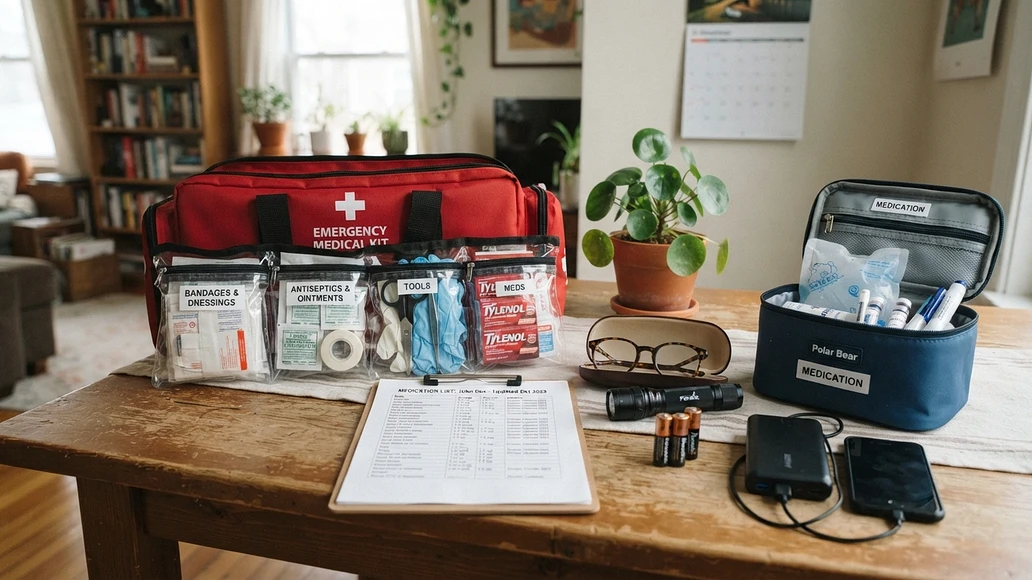
Medical planning deserves special care. Do not change prescription doses, ration essential medication, or store medicines outside labeled conditions unless your clinician or pharmacist tells you to. If someone in your home uses insulin, oxygen, CPAP, dialysis, refrigerated medication, or other powered medical equipment, make a continuity plan with the healthcare team and utility provider.
Keep an updated medication list with names, doses, prescribing clinicians, pharmacy numbers, and refill timing. Include copies of prescriptions if available, spare glasses, hearing aid batteries, mobility aids, and backup charging methods for essential devices. A first aid kit is useful for minor issues, but it does not replace professional care for serious injury, dehydration, chest pain, breathing trouble, or suspected carbon monoxide exposure.
| Medical need | Best preparedness step | Safety limit |
|---|---|---|
| Daily prescriptions | Track refill dates and ask about emergency refill options in advance | Do not self-adjust doses |
| Refrigerated medicine | Plan for safe temperature control during outages | Follow pharmacy or clinician guidance on storage limits |
| Powered medical equipment | Identify backup power and utility outage procedures | Do not assume a small power bank can run critical equipment |
| First aid | Stock basics for minor injuries and common needs | Seek urgent care for serious symptoms or worsening condition |
Shelter in place versus evacuation
One of the biggest planning mistakes is assuming you will always stay home, or always leave. Real preparedness requires both options. Sheltering in place may make sense during a short winter storm, a local water issue, or a brief power outage. Evacuation may be the safer choice for wildfire, fast-moving floodwater, a chemical release, or an official order to leave.
Do not leave because of online rumors alone. Use official alerts, local emergency management instructions, weather warnings, and evacuation orders. If authorities say go, go early if possible. Waiting too long can trap you in traffic or deteriorating conditions.
| Situation | More likely response | Reason |
|---|---|---|
| Short local outage with safe home conditions | Shelter in place | Travel may add risk without improving safety |
| Wildfire approaching or heavy smoke with official warnings | Evacuate | Conditions can change quickly and roads may close |
| Flash flood warning in a vulnerable area | Evacuate or move to safer ground if instructed | Floodwater can become life-threatening fast |
| Chemical incident near home | Follow official shelter or evacuation instructions | Protective action depends on the substance and wind conditions |
Choose destinations before you need them
Pick more than one possible destination. One option might be a nearby friend or relative. Another might be a hotel outside the risk area. A third could be a public shelter if local officials open one. Know how pets fit into each option, because not every shelter or lodging choice handles animals the same way.
Emergency communication and reunification
Communication plans are often more valuable than extra gear. In a real emergency, family members may be at work, school, a medical appointment, or on the road. Decide how you will reconnect if local networks are overloaded.
Use multiple alert methods, such as phone alerts, local emergency notifications, weather warnings, and a battery-powered or hand-crank radio if that fits your plan. Keep printed contact information in case phones die or apps fail. Choose an out-of-area contact who can relay messages if local calling is unreliable.
| Communication element | What to include | Why it matters |
|---|---|---|
| Emergency alerts | Wireless alerts, local alert signups, weather warnings | Gives earlier notice and clearer instructions |
| Household contact sheet | Phone numbers, addresses, medical contacts, school and work numbers | Works even if devices fail |
| Meeting places | One near home, one outside the neighborhood | Reduces confusion if family members are separated |
| Backup charging | Power banks, car chargers, charging cables | Keeps phones usable longer during outages |
Power outages, generators, and refrigeration safety
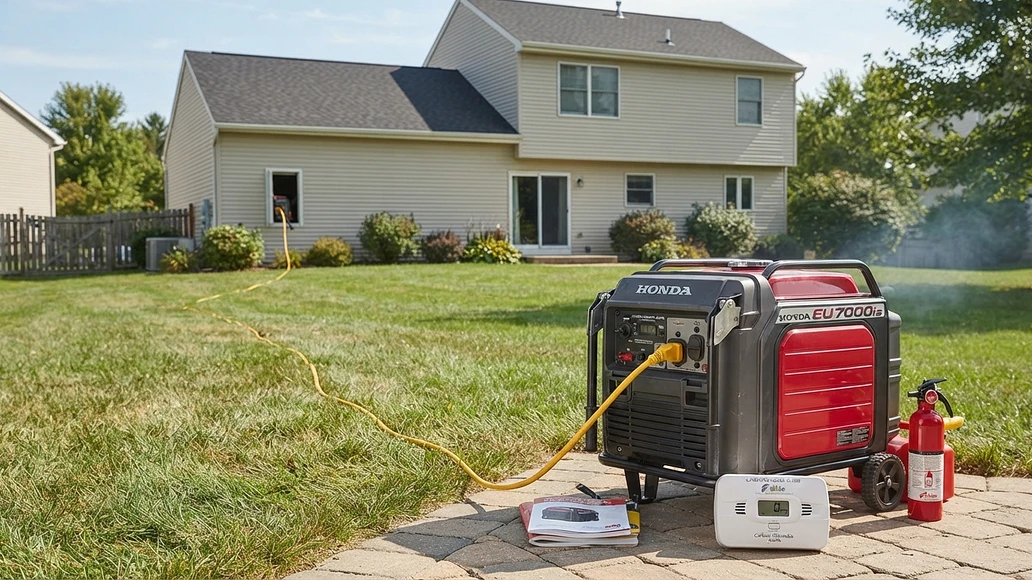
Power loss is one of the most common disruptions, and it creates a chain reaction. Lights go out, phones need charging, refrigerated food warms up, internet may fail, and some homes lose heat, cooling, or water pumping. Plan around those effects.
If you use a generator, safety is critical. Never operate a gasoline, propane, or other fuel-burning generator, grill, camp stove, or heater indoors, in a garage, or near doors and windows. Carbon monoxide is odorless and can be fatal. Follow the manufacturer instructions and use working carbon monoxide alarms. If anyone has symptoms such as headache, dizziness, weakness, nausea, confusion, or chest pain after fuel-burning equipment is used, get to fresh air and seek emergency help right away.
| Outage issue | Preparedness step | Safety note |
|---|---|---|
| Phone charging | Keep power banks charged and car chargers accessible | Test cables before an emergency |
| Food spoilage | Keep refrigerator and freezer doors closed as much as possible | When in doubt, throw unsafe food out |
| Backup power | Match equipment to actual needs and instructions | Improper generator use can cause fatal carbon monoxide poisoning |
| Lighting | Use flashlights or lanterns placed where they are easy to find | Avoid open flame where safer lighting is available |
Documents, insurance, cash, and digital readiness
Preparedness is not only about food and batteries. It is also about reducing paperwork chaos when you are stressed. Keep copies of identification, insurance policies, medical information, pet records, and key account numbers in a secure, accessible format. Many households use both a waterproof physical folder and a secure digital backup.
It can also help to keep a modest amount of emergency cash if that is practical for your situation. Card systems and ATMs may be disrupted during outages. There is no universal amount that fits every household, so think in terms of likely short-term needs such as fuel, food, or transportation.
| Record type | Why keep it ready | Storage idea |
|---|---|---|
| Identification and insurance | Speeds evacuation, lodging, claims, and recovery | Physical copies plus secure digital backup |
| Medical information | Helps if care is needed away from home | Printed list in go-bag and phone backup |
| Home inventory | Useful for insurance documentation | Photos or video stored securely |
| Emergency cash | Useful if electronic payment systems are down | Small, secure reserve in a safe location |
Preparedness on a real-world budget
You do not need to buy everything at once. In fact, gradual planning is often better because it is easier to sustain. Start with what you have, close the most important gaps first, and build in layers.
| Budget level | Best first moves | Goal |
|---|---|---|
| Very low budget | Fill clean water containers, gather flashlights, print contacts, organize medicines, set meeting places | Create a basic written plan and cover immediate essentials |
| Moderate budget | Add shelf-stable food, power banks, extra hygiene supplies, pet supplies, and a better first aid kit | Improve comfort and function for several days to two weeks |
| Higher budget | Expand water storage, improve backup power, add weather radio, upgrade cooling or heating contingencies | Increase resilience for longer disruptions |
The smartest purchases are often the least exciting. Water storage, medication continuity, backup charging, and a written evacuation plan usually matter more than novelty gear.
Accessibility, aging, caregiving, and pets
A strong plan accounts for the people and animals who depend on you. That includes children, older adults, disabled household members, roommates, and pets. Think through mobility, communication, sensory needs, temperature sensitivity, feeding schedules, and transportation.
If someone cannot easily use stairs, hear alerts, read small print, tolerate heat, or travel without assistance, write down the workaround now. If you care for someone outside your home, include how you will check on them, who the backup caregiver is, and what supplies they need.
| Household member | Planning question | Example need |
|---|---|---|
| Infants and young children | What do they need that adults do not? | Formula, diapers, comfort items, child-safe medicines |
| Older adults | What mobility or medical support is required? | Walkers, hearing aids, medication list, cooling or heating support |
| Disabled household members | What access barriers exist during outages or evacuation? | Communication aids, transfer equipment, accessible transport |
| Pets | How will they travel, eat, and be documented? | Leash, carrier, food, water, vaccination records |
A simple timeline to start on April 20
If the hardest part is getting started, use a staged timeline. That keeps the project realistic.
| Time frame | Action | Result |
|---|---|---|
| Day one | Write down local hazards, emergency contacts, meeting places, and evacuation options | You now have a basic plan instead of a vague intention |
| First week | Inventory water, food, medicine, lighting, charging, and pet supplies | You identify the most important gaps |
| First month | Build or improve a 72-hour kit and a two-week home supply | You can handle common disruptions more calmly |
| Quarterly | Check expiration dates, rotate food, test chargers, update contacts, review seasonal risks | Your plan stays current and usable |
Common mistakes to avoid
Many preparedness mistakes come from focusing on dramatic scenarios instead of likely problems. Another common error is buying gear before making decisions. A flashlight is useful, but it will not tell your family where to meet, how to evacuate with pets, or how to manage a refrigerated medication during a blackout.
| Mistake | Why it causes trouble | Better approach |
|---|---|---|
| Using rumors as a trigger to flee | Can send you into danger or traffic without good information | Use official alerts and local instructions |
| Buying random gear first | Leaves major planning gaps unresolved | Start with hazards, people, and written decisions |
| Ignoring medical and accessibility needs | Creates the highest-risk failures | Plan around prescriptions, devices, mobility, and caregiving |
| Unsafe generator or stove use | Can cause fire or carbon monoxide poisoning | Follow manufacturer guidance and keep fuel-burning devices outdoors only |
| Storing food nobody eats | Wastes money and goes unused | Build around normal foods you can rotate |
Make April 20 your reset, then keep the plan alive
The best reason to start an SHTF plan on April 20 is simple. You are more likely to follow through if you attach preparedness to a date you will remember. Not because the date predicts trouble, but because routine beats intention.
Use the day to review risks, update contacts, rotate supplies, check medications, test backup charging, and revisit evacuation choices. Then do smaller check-ins through the year. Preparedness does not shorten the storm, outage, or wildfire season itself. It does reduce confusion, improve response time, and make your household safer and more functional while the problem is happening.
If you have urgent symptoms, suspected carbon monoxide exposure, serious injury, dehydration, medication interruption, or a mental health crisis, seek professional help immediately. Call 911 for immediate danger.
References
- Federal Emergency Management Agency, Ready.gov, Make a Plan
- Federal Emergency Management Agency, Ready.gov, Build a Kit
- Federal Emergency Management Agency, Ready.gov, Alerts
- Federal Emergency Management Agency, Ready.gov, Evacuation
- Federal Emergency Management Agency, Ready.gov, Power Outages
- Centers for Disease Control and Prevention, Carbon Monoxide Poisoning Prevention
- Centers for Disease Control and Prevention, Emergency Preparedness and Response
- U.S. Food and Drug Administration, Emergency Preparedness for Medications
- National Weather Service, Wireless Emergency Alerts and Weather Safety
- American Red Cross, Prepare for Emergencies