Stored Water Safety, What Really Matters More Than the Date
Water itself does not spoil like milk or juice, but storage conditions, container type, and contamination risks determine whether old water is still usable. Here is how to judge bottled water, opened containers, and emergency supplies safely.

People often ask whether water expires, but the better question is whether stored water is still safe and pleasant to use. Water does not spoil in the same way food does. The practical problems are contamination, damaged packaging, poor storage conditions, and changes in taste or odor over time. That is why an old bottle of water may still be fine, while a newer one left in a hot car or dirty container may not be.
For preparedness, it helps to separate five different situations: unopened commercially bottled water, opened bottles, tap water stored at home, treated emergency water, and large-volume storage in drums or tanks. Each has a different risk profile. The calendar matters, but it matters less than the source, the seal, the container, and where the water has been stored.
This guide focuses on practical household decisions. It is not a substitute for instructions issued during a boil-water advisory, flood, wildfire, chemical spill, hurricane, or other emergency. In those situations, follow current local health department, CDC, FEMA, or EPA guidance.
What people mean when they say water “expires”
Pure water molecules do not expire like perishable food. What changes is the condition of the water around them. A printed date on bottled water is usually about manufacturer quality guidance, packaging, or best taste, not an automatic safety deadline. In real life, old water becomes questionable when one of three things happens: microorganisms are introduced, chemicals get into it, or the container breaks down or becomes compromised.
| Term | What it usually means | Why it matters |
|---|---|---|
| Expiration date | A date associated with product quality, packaging, or manufacturer guidance | It is not always a hard safety cutoff for water |
| Best-by date | A quality date for best taste or freshness | Water may still be usable after this date if stored properly |
| Shelf life | The period a product is expected to remain acceptable in storage | Depends heavily on container, seal, and environment |
| Contamination | Introduction of microbes, chemicals, or debris | This is the main safety concern with stored water |
| Quality loss | Changes in taste, smell, or appearance | May make water unpleasant, but not every quality change means danger |
How long different kinds of water can last
There is no single timeline that fits every container and every storage condition. The table below is a practical way to think about it.
| Water type | Typical storage outlook | Main concerns | Best practice |
|---|---|---|---|
| Unopened commercially bottled water | Often usable well beyond the printed date if the seal is intact and storage was cool and shaded | Heat, sunlight, damaged bottles, chemical exposure, broken seals | Store sealed bottles indoors, off concrete if possible, away from chemicals and temperature extremes |
| Opened bottled water | Risk rises after opening, especially if people drank directly from the bottle | Mouth bacteria, dirty caps, warm temperatures, poor refrigeration | Use promptly, refrigerate when practical, and discard if odor, cloudiness, or contamination is suspected |
| Tap water stored in clean household containers | Can remain usable for emergency storage when filled from a safe source and stored correctly, but should be rotated periodically | Dirty containers, non-food-grade plastic, poor sealing, warm storage | Use food-grade containers, label the fill date, and replace on a regular schedule based on CDC or local guidance |
| Treated emergency water | Useful when source safety is uncertain and proper treatment was applied | Incorrect treatment, recontamination, assuming treatment removes chemicals | Follow official boiling or disinfection instructions exactly, then store in clean, covered containers |
| Sparkling water | Usually safe while sealed if stored properly, but quality drops as carbonation fades | Loss of carbonation, damaged cans or bottles | Check for swelling, leaks, rust, or broken seals |
| Water in cans | Often stores very well when unopened and undamaged | Dents at seams, swelling, corrosion | Keep dry and inspect for damage before use |
| Water in drums or large tanks | Can work well for emergency storage if food-grade and protected from contamination | Improper materials, algae growth from light, dirty fittings, chemical exposure | Use purpose-made food-grade storage, keep covered and labeled, and inspect regularly |
Unopened bottled water, should you trust the printed date?
If a commercially bottled water container is factory sealed, undamaged, and stored in a cool, dark place, it may remain usable beyond the printed date. That date is not the same thing as milk going sour. In many cases, the bigger issue is quality. Water can pick up off tastes from long storage or from the packaging environment, especially if it sat in heat or sunlight.
That said, “sealed” does not mean “safe no matter what.” Discard bottled water without tasting it if the bottle is leaking, swollen, cracked, punctured, or smells unusual, or if it was stored near fuel, pesticides, solvents, or cleaning products.
Opened bottles and refillable containers
Once water is opened, the risk changes. Drinking directly from the bottle introduces bacteria from the mouth. Touching the cap with dirty hands, leaving the bottle warm, or refilling it without proper cleaning all increase the chance of contamination. There is no universal magic number of hours or days that guarantees safety in every home, because temperature, handling, and cleanliness vary too much.
A conservative household approach is simple. If you opened the bottle and handled it cleanly, use it soon. Refrigeration helps slow microbial growth, but it does not fix contamination that already happened. If the water sat warm for a long time, was shared among several people, or has any off smell or visible change, discard it.
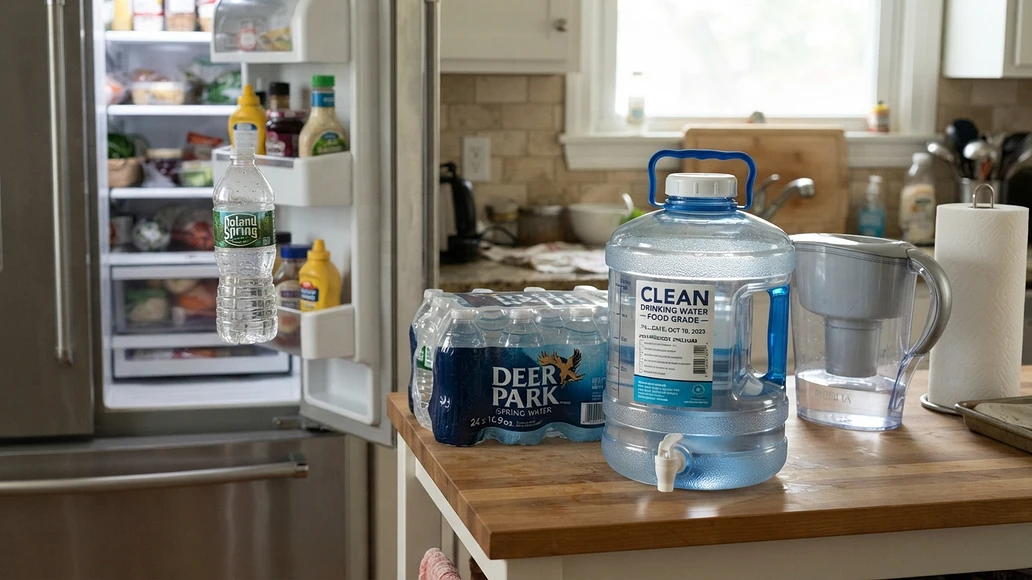
Tap water stored at home
Home-stored tap water can be a solid emergency option if the tap water was safe to begin with and the container is clean, food-grade, and tightly sealed. This is where many problems start, because people often use whatever container is available. That is not always safe.
Use the right container
Choose food-grade water storage containers made for potable water. Containers should be clean, intact, and able to seal tightly. Never use a container that previously held gasoline, pesticides, cleaners, solvents, or other chemicals. Even careful washing may not make those containers safe for drinking water.
Rotate periodically
Preparedness guidance commonly recommends labeling stored water and replacing it periodically. The point of rotation is not that water suddenly becomes dangerous on one exact date. Rotation helps maintain quality, catch damaged containers, and reduce the chance that old storage conditions go unnoticed.
| Container choice | Good option? | Why |
|---|---|---|
| Purpose-made food-grade water jug | Yes | Designed for potable water and long-term storage |
| Commercial bottled water in original sealed packaging | Yes | Convenient and sanitary when stored properly |
| Clean food-grade drum or tank | Yes | Useful for larger emergency reserves |
| Used milk jug | Usually no | Hard to sanitize fully and can break down over time |
| Container that once held chemicals | No | Chemical residues can remain and make water unsafe |
| Open bucket without a proper lid | No | High contamination risk from dust, insects, and handling |
Heat, sunlight, freezing, and nearby chemicals
Storage conditions matter more than many people realize. Water kept in a climate-controlled interior closet is very different from water left in a garage, attic, shed, or vehicle through seasonal extremes.
Heat can worsen taste and may raise concerns about packaging breakdown over time. Sunlight can encourage quality problems and, in some storage setups, algae growth if light reaches the water. Freezing can crack containers or break seals. Strong odors and chemical vapors from nearby fuels, paints, pesticides, or cleaners can also create problems, especially if containers are damaged or not designed for long-term potable storage.
For most households, the best storage location is cool, dark, dry, and away from chemicals. Avoid long-term storage in cars unless it is part of a short-term travel kit that you inspect and rotate often.
How to inspect old water before deciding to keep it
Inspection helps, but it has limits. You can spot some obvious problems with your eyes and nose, but you cannot smell or taste your way to guaranteed safety. Some pathogens and many chemical contaminants are not detectable by casual inspection.
| Inspection point | What to look for | What to do |
|---|---|---|
| Seal and cap | Broken seal, loose cap, leakage | Discard for drinking use |
| Container body | Cracks, punctures, swelling, dents at seams, heavy scuffing | Discard if integrity is compromised |
| Water appearance | Cloudiness, unusual color, particles, oily sheen, slime | Do not drink, discard unless official guidance says otherwise for non-potable use |
| Odor | Chemical smell, fuel odor, mustiness, sewage smell | Discard without tasting |
| Storage history | Heat, sunlight, floodwater, chemical exposure, uncertain source | Treat as questionable or discard depending on exposure |
| Container history | Previously used for non-food substances | Do not use for drinking water |
When to discard water without trying to treat it
Some water should not be salvaged for drinking. If the container was exposed to fuel, pesticides, solvents, cleaning products, sewage, floodwater, or other chemicals, discard it. If a local authority has issued a do-not-drink warning, follow that guidance. Boiling does not remove many chemicals, and in some cases it can make the concentration problem worse as water evaporates.
Likewise, if the source is unknown and you cannot verify how the water was collected or stored, be cautious. Treatment methods are for microbiological hazards in appropriate situations, not for every possible contamination problem.
Emergency water planning, how much to store
A common baseline is at least 1 gallon per person per day. That is a planning minimum for drinking and some sanitation. Many households need more, especially in hot weather or when caring for children, pregnant people, older adults, pets, or anyone with illness or medical needs.
| Household factor | Why needs may increase | Planning note |
|---|---|---|
| Hot climate or summer outages | Higher fluid loss through sweat | Store more than the minimum baseline |
| Infants and young children | Greater vulnerability to dehydration | Keep extra safe water and formula-prep plans if needed |
| Pregnancy | Hydration needs may be higher | Build in additional reserve |
| Older adults | Dehydration can become serious quickly | Keep easy-to-access, clearly labeled supplies |
| Chronic illness or immune compromise | Higher risk from contaminated water | Use stricter standards and follow medical guidance during advisories |
| Pets | Animals need their own water supply | Add pet water to household totals |
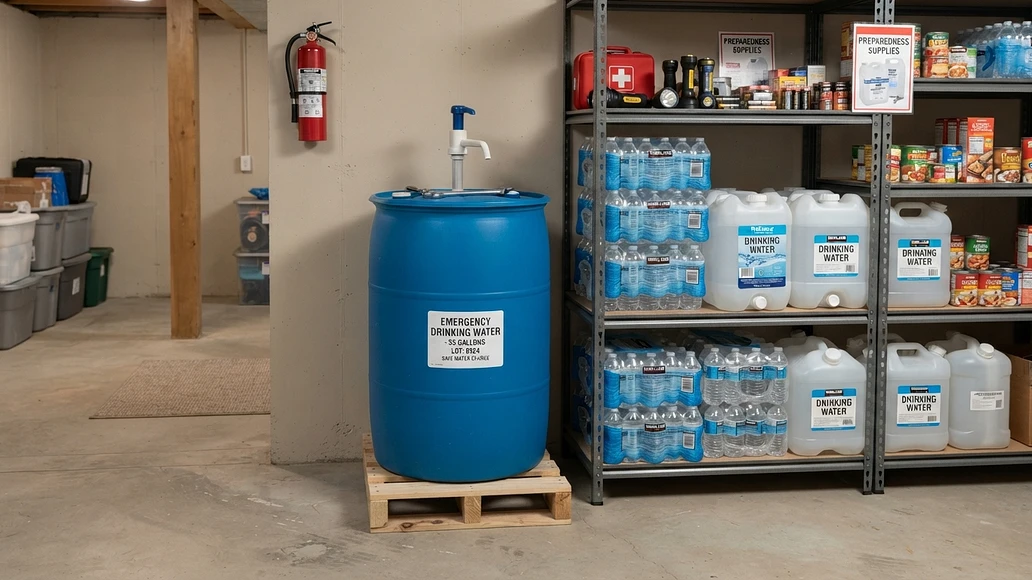
How to label and rotate an emergency supply
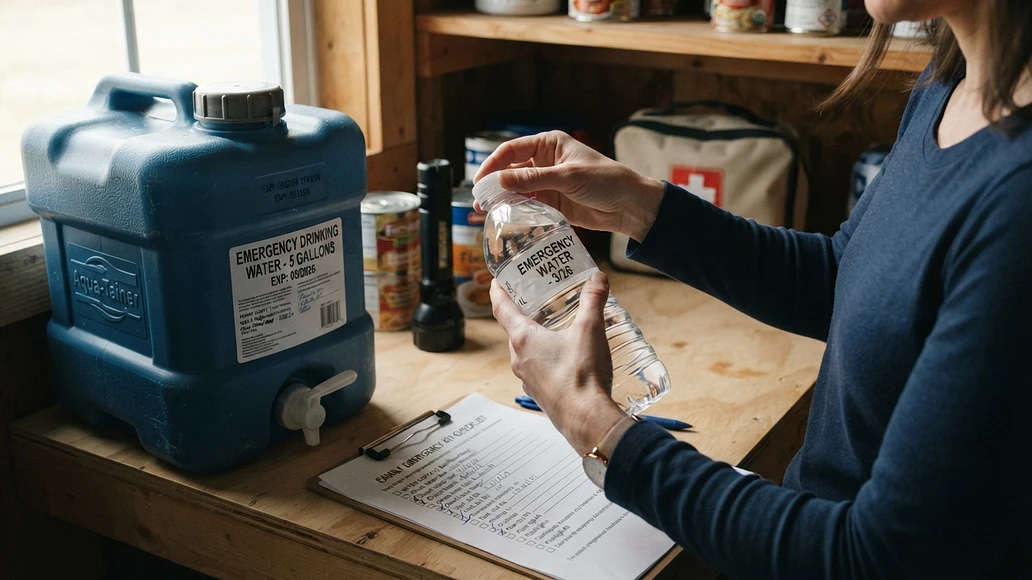
Label each container with the fill or purchase date and the source. Keep newer water behind older water so the oldest supply gets used first. Check containers periodically for leaks, damage, or changes in storage conditions. If your storage area becomes hotter, wetter, or more exposed to chemicals than intended, re-evaluate the supply even if the dates look fine.
For many families, rotation is easiest when emergency water is part of normal household use. Small sealed bottles and a few larger food-grade containers are often easier to manage than one giant supply that nobody inspects.
If water is questionable, what treatment can help
If the concern is possible microbial contamination and there is no sign of chemical pollution, official treatment methods can reduce risk. Boiling is one of the most reliable household methods for killing many microorganisms. Unscented household chlorine bleach can also be used in some emergency situations, but only when the product concentration and official instructions are followed exactly.
Do not improvise with scented bleach, splashless bleach, gel products, or cleaners with additives. Do not assume treatment makes chemically contaminated water safe. Treatment is situation-specific, and instructions can vary by emergency and by local public health guidance.
| Method | What it can help with | Important limits |
|---|---|---|
| Boiling | Many bacteria, viruses, and parasites | Does not remove fuels, solvents, salts, heavy metals, or many chemical pollutants |
| Unscented household bleach, used per official instructions | Some microbial contamination | Wrong product or wrong dose can be unsafe, does not fix chemical contamination |
| Household filters | Depends on the filter type and certification | Not all filters remove microbes or chemicals, follow manufacturer specs carefully |
| Aeration or chilling | May improve taste | Does not make contaminated water safe |
A simple decision guide for old or stored water
| Situation | Best choice for drinking | Possible non-drinking use |
|---|---|---|
| Factory-sealed bottled water, stored cool and dark, no damage | Usually acceptable | Also suitable for cooking and hygiene |
| Opened bottle, handled cleanly, recently stored cold | Usually acceptable if no signs of contamination | Can also be used for cooking |
| Opened bottle left warm, shared, or with uncertain handling | Better to discard for drinking | May be used for plants or cleaning if not chemically contaminated |
| Stored tap water in clean food-grade container, labeled and well kept | Usually acceptable | Suitable for cooking and hygiene |
| Water with cloudiness, odor, slime, or damaged container | Do not drink | Avoid household use if contamination is uncertain |
| Water exposed to chemicals, floodwater, or sewage | Do not drink or cook with it | Discard according to local guidance |
| Water under a boil-water advisory | Follow official instructions before use | Use only as directed by local authorities |
Special caution for higher-risk households
Infants, pregnant people, older adults, people with weakened immune systems, and those with chronic medical conditions should be more conservative with questionable water. During an active advisory or suspected contamination event, these groups should follow local health guidance or medical advice rather than relying on taste, smell, or a generic storage timeline from the internet.
Seek medical help after drinking questionable water if severe or persistent vomiting, bloody diarrhea, dehydration, high fever, confusion, or symptoms in a vulnerable person occur.
The bottom line
Water does not expire like food, but stored water can absolutely become unsafe or unpleasant. The most important questions are not just how old it is, but where it came from, what it is stored in, whether the seal is intact, and how it has been handled. A sealed bottle in a cool closet may outlast its printed date by a wide margin. A newer bottle in a hot car or a reused chemical container may be a bad idea immediately.
For preparedness, the safest approach is simple: store enough water, use food-grade containers, keep supplies cool and shaded, label and rotate them, and discard any water with damage, visible changes, unusual odor, or chemical exposure. When in doubt during a real emergency, use current instructions from CDC, FEMA, EPA, and your local health department.
References
- U.S. Food and Drug Administration, Bottled Water Everywhere
- Centers for Disease Control and Prevention, Water Emergencies
- Centers for Disease Control and Prevention, Creating and Storing an Emergency Water Supply
- Ready.gov, Water
- U.S. Environmental Protection Agency, Emergency Disinfection of Drinking Water
- Centers for Disease Control and Prevention, Water Treatment Options When Hiking, Camping, or Traveling
- U.S. Food and Drug Administration, What You Need to Know About Bottled Water
- Utah State University Extension, Water Storage
- Minnesota Department of Health, Water Emergencies and Safe Drinking Water