Wild Lettuce and Other So-Called Natural Opioids, What They Are and What the Risks Really Look Like
Many people searching for a plant that acts like morphine are really hearing about wild lettuce. Here is what it is, how it differs from opium poppy and kratom, what the evidence actually shows, and when self-treatment is not a safe choice.

Searches for a plant that is “like morphine” usually point to wild lettuce, sometimes called opium lettuce in folk use. That nickname can be misleading. Wild lettuce is not the same plant as opium poppy, and it does not contain morphine in the way poppy does. The comparison usually comes from its milky sap, its traditional use for discomfort and sleep, and limited preclinical research on compounds such as lactucin and lactucopicrin.
That distinction matters, because pain can be a symptom of anything from a minor strain to a medical emergency. A backyard plant, tea, tincture, or online extract should never be treated as a proven substitute for diagnosis, urgent care, or prescription treatment. If pain is severe, new, worsening, follows an injury, or comes with chest pain, trouble breathing, weakness, fever, black stool, vomiting blood, or numbness, seek medical care instead of self-treating.
What people usually mean by a plant that “resembles morphine”
There are three different ideas that often get mixed together online.
| Meaning of the claim | What it actually refers to | Why it can mislead readers |
|---|---|---|
| Visual resemblance | Wild lettuce and opium poppy both produce a milky latex when cut | Similar-looking sap does not mean the same chemistry |
| Traditional use | Wild lettuce has a history of folk use for calming effects and discomfort | Traditional use is not the same as strong human clinical evidence |
| Opioid-like effect | Some plants or compounds may affect pain perception or sedation | “Opioid-like” does not mean safe, standardized, or equivalent to morphine |
In plain language, wild lettuce is best understood as a traditional sedating botanical with limited evidence, not as a natural morphine replacement.
Wild lettuce is not opium poppy
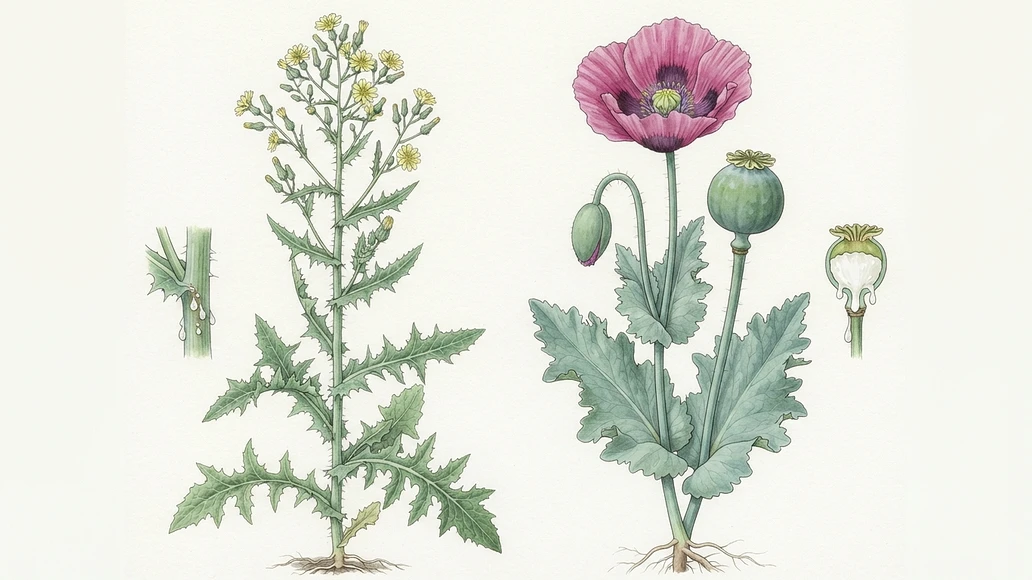
Opium poppy, Papaver somniferum, is the well-known plant source of opium alkaloids such as morphine and codeine. Wild lettuce, usually discussed as Lactuca virosa or related species in folk herbal use, belongs to a different plant group and is not a meaningful source of true opiates.
This is the most important correction to many online claims. The milky latex of wild lettuce may invite comparison to poppy latex, but visual similarity is not chemical identity.
| Plant | Main compounds discussed | Contains morphine or codeine | Typical online claim | Reality check |
|---|---|---|---|---|
| Wild lettuce | Lactucin, lactucopicrin, other sesquiterpene lactones | No meaningful morphine content | “Natural painkiller” or “opium lettuce” | Traditional use exists, but evidence for reliable human pain relief is limited |
| Opium poppy | Morphine, codeine, other opium alkaloids | Yes | Source plant for opiates | This is the true morphine-producing plant |
| Kratom | Mitragynine, 7-hydroxymitragynine | No morphine, but opioid-like activity | “Natural opioid” or pain aid | Not FDA-approved, with real concerns about dependence, contamination, liver injury, seizures, and overdose risk |
What lactucarium is, and why the comparison to opium exists
Lactucarium is the dried milky sap associated with wild lettuce and related species. Historically, it was discussed as a calming or sedating substance. That history is one reason people compare it to opium. But the comparison should stop at appearance and old folk reputation, not chemistry.
Wild lettuce latex does not make it a poppy equivalent. It also does not solve the biggest practical problem for home use, which is that plant chemistry varies by species, growing conditions, maturity, harvest timing, and preparation method. That means homemade products are not standardized, and strength can vary widely.
What the research says about pain relief
The evidence for wild lettuce as a pain reliever is limited. Traditional use and preclinical findings suggest possible analgesic and sedative activity, but that is not the same as strong proof in people. Readers should be especially cautious with online articles that jump from animal data or historical use straight to confident treatment claims.
| Claim | Evidence level | Best practical takeaway |
|---|---|---|
| Wild lettuce works like morphine | Weak and misleading | Do not treat wild lettuce as a morphine substitute |
| Wild lettuce may reduce discomfort or promote sedation | Limited and mixed | Possible traditional benefit, but not a proven or standardized pain treatment |
| Opium poppy contains true opioid alkaloids | Strong | This is the actual plant source associated with morphine |
| Kratom has opioid-like effects | Mixed for benefit, stronger for risk concerns | Potential effects come with significant safety and dependency concerns |
| Homemade plant extracts can be dosed reliably | Poor support | Potency is unpredictable, which raises safety concerns |
If someone has mild, short-term discomfort and is considering an herbal product, the safest framing is that it may or may not help symptoms, but it does not diagnose or treat the cause. Persistent pain deserves proper evaluation.
How wild lettuce is identified, and why misidentification matters
Wild lettuce is often described as a tall, weedy plant with lobed leaves, yellow dandelion-like flowers, and milky sap when cut. Depending on species and growing stage, leaves may clasp the stem and can have a somewhat prickly midrib underside. Those broad descriptions are not enough for safe foraging on their own.
Misidentification is a real risk. Many plants share some visual traits, especially when young, damaged, or growing in poor conditions. A mistaken ID can expose someone to an ineffective plant, an irritant, or a toxic lookalike.
Safer identification habits
- Use multiple traits, not one feature such as milky sap alone.
- Compare mature leaves, stem, flower, growth habit, and habitat.
- Cross-check with a regional field guide or local extension resource.
- Do not consume a plant if identification is uncertain.
- Avoid harvesting from roadsides, sprayed areas, industrial lots, or contaminated soil.
Common lookalikes and confusion points
The biggest confusion online is not always a toxic twin. Often it is simply mixing up wild lettuce with opium poppy, sow-thistles, prickly lettuce, or other milky-sapped plants. The danger is that people may assume all latex-bearing plants are interchangeable or that a folk nickname confirms medicinal value.
| Confusion point | Why it happens | Risk created |
|---|---|---|
| Wild lettuce vs opium poppy | Both can produce latex and are discussed in pain-relief forums | Readers may wrongly assume wild lettuce contains opiates |
| Wild lettuce vs other wild lettuces and sow-thistles | Similar yellow flowers and weedy growth | Variable potency, uncertain identity, wasted effort |
| Milky sap equals medicinal value | Simple visual rule spreads easily online | False confidence and unsafe experimentation |
| Backyard plant equals safe plant | Natural products are often seen as gentler | Overlooks allergy, contamination, and interaction risks |
Forms people use, tea, tincture, latex, and extracts
Wild lettuce is commonly discussed in several forms, including tea, tincture, dried herb, latex, and concentrated extract. The problem is not only whether a form has any effect. The bigger issue is that none of these home-prepared forms gives a reliable, standardized dose the way an approved medicine aims to do.
Concentrated extracts deserve extra caution. When people chase stronger effects, they also increase the chance of side effects, contamination, and delayed medical care. That is one reason it is safer to avoid homemade extraction advice that implies predictable strength.
| Form | Why people choose it | Main limitation | Main safety concern |
|---|---|---|---|
| Tea | Simple traditional preparation | Unknown extraction strength | Uncertain effect, possible sedation or stomach upset |
| Tincture | Convenient storage and use | Strength varies by maker and solvent | Alcohol content and interaction concerns |
| Dried latex | Associated with historical use | Very inconsistent potency | Easy to overestimate safety because of folk reputation |
| Commercial extract | Marketed as stronger or more reliable | Quality varies, not FDA-approved for pain treatment | Label accuracy and contamination concerns |
Why homemade dosing is unreliable
Plants are not fixed formulas. Species differences, weather, soil, harvest timing, storage, and extraction method all change the final product. Two batches made from similar-looking plants can differ substantially. That variability is a poor fit for self-treating pain, especially if someone is also taking other medicines or trying to manage severe symptoms.
Another problem is expectation. If a person believes a plant is “nature’s morphine,” they may keep increasing the amount when the first try does not help. That is not evidence-based and can raise the risk of sedation, nausea, dizziness, or dangerous interactions.
Side effects and interaction risks that matter most
Even if a plant product seems mild, side effects still matter. Sedation is one of the biggest concerns with wild lettuce-type products, especially when combined with alcohol or medicines that also slow the central nervous system.
| Risk area | What to watch for | Why it matters |
|---|---|---|
| Sedation | Drowsiness, slowed reaction time, confusion | Raises fall, driving, and work-safety risks |
| Drug interactions | Use with opioids, benzodiazepines, sleep medicines, alcohol, some antidepressants, seizure medicines | Can increase sedation or complicate other treatment |
| Allergy or sensitivity | Rash, itching, swelling, stomach upset | Plant families can trigger reactions in sensitive people |
| Contamination | Pesticides, heavy metals, mold, mislabeling | Common concern with unregulated or poorly sourced products |
| Delayed care | Repeated self-treatment while symptoms worsen | Can postpone diagnosis of a serious cause of pain |
Do not drive, operate tools, or do hazardous work after taking a sedating botanical. If someone becomes hard to wake, has trouble breathing, collapses, or has seizure-like activity, seek emergency help.

Who should avoid wild lettuce and similar sedating botanicals
Some groups have a lower margin of safety and should avoid self-treatment with sedating or poorly standardized plant products unless a qualified clinician specifically advises otherwise.
| Group or condition | Why extra caution is needed | Practical guidance |
|---|---|---|
| Pregnant or breastfeeding people | Safety data are inadequate | Avoid self-treatment |
| Children and teens | Dosing and safety are unclear | Avoid use unless directed by a clinician |
| Older adults | Higher sensitivity to sedation and falls | Use extreme caution, preferably avoid |
| People with liver disease | Metabolism and toxicity concerns | Seek medical advice before any herbal product |
| People with seizure history | Some substances and interactions may lower seizure threshold | Avoid unsupervised use |
| People with substance use disorder history | “Natural” products can still reinforce risky use patterns | Choose clinician-guided pain care instead |
| Anyone taking sedatives or opioids | Combined effects may be dangerous | Do not combine without medical guidance |
Wild lettuce vs kratom vs opium poppy
These plants are often discussed together, but they are not interchangeable. Kratom deserves special caution because current public health concern is much stronger around dependency, contamination, and concentrated 7-hydroxymitragynine products than around wild lettuce.
| Feature | Wild lettuce | Kratom | Opium poppy |
|---|---|---|---|
| Main discussion point | Traditional sedative and discomfort remedy | Opioid-like effects, stimulant and sedative effects depending on dose | Source of opium alkaloids |
| Key compounds | Lactucin, lactucopicrin | Mitragynine, 7-hydroxymitragynine | Morphine, codeine, related alkaloids |
| Evidence for reliable pain treatment | Limited | Mixed and not FDA-approved | Opioid pharmacology is well established, but this is not a DIY remedy topic |
| Main safety concern | Sedation, misidentification, delayed care | Dependence, liver injury, seizures, contamination, overdose risk, especially with concentrated 7-OH products | Legal, toxicity, and misuse concerns |
| Good choice for self-treating unexplained pain | No | No | No |
If a website treats kratom or 7-OH as a casual natural painkiller, that is a major credibility warning. Those products are not benign, and stronger does not mean safer or smarter.
Legal and regulatory context in the United States
Legal status can be confusing because a product may be sold online or in stores without being approved to diagnose, treat, cure, or prevent disease. That is especially important for pain claims. In the United States, kratom products are not FDA-approved, and federal agencies have repeatedly raised safety concerns. Wild lettuce products may be marketed as supplements or herbal products, but that does not prove effectiveness or consistent quality.
Readers should separate three questions: Is it sold, is it legal where I live, and is it proven safe and effective for my situation. Those are not the same question.
When a plant remedy is not the right choice
Pain is a symptom, not a diagnosis. A sedating herb may dull awareness of pain without addressing the cause. That can be especially risky with abdominal pain, chest pain, severe headache, nerve symptoms, infection, or injury.
| Situation | Why self-treatment is a poor fit | Better next step |
|---|---|---|
| Severe pain after a fall, cut, or accident | Could involve fracture, internal injury, or infection risk | Urgent medical evaluation |
| Chest, jaw, or left arm pain | Could be cardiac | Emergency care |
| Abdominal pain with fever, vomiting, or guarding | Could be appendicitis, gallbladder disease, obstruction, or other urgent cause | Prompt medical evaluation |
| Back pain with weakness, numbness, or bladder changes | Possible nerve compression emergency | Urgent medical care |
| Pain that keeps returning or lasts more than a few days | Needs diagnosis, not repeated masking | Schedule a clinician visit |
What to try instead for short-term pain relief
For minor aches, strains, or overuse soreness, lower-risk basics usually make more sense than chasing a “natural morphine” claim. Rest, hydration, gentle movement when appropriate, ice or heat depending on the situation, and evidence-based over-the-counter options may be more predictable. Follow label directions, and ask a pharmacist or clinician if you have ulcers, kidney disease, liver disease, blood thinner use, or other medication concerns.
For chronic or recurring pain, the best next step is usually a proper evaluation. Treatment may involve physical therapy, sleep improvement, activity changes, targeted medication, or workup for an underlying condition. Symptom relief matters, but diagnosis matters more.

How to judge online claims about “natural morphine”
Use a simple filter before trusting any article, video, or product page.
- Does it clearly say whether the plant actually contains morphine, or is it using vague language?
- Does it separate traditional use from human clinical evidence?
- Does it warn about interactions, sedation, and who should avoid it?
- Does it avoid promising homemade dosing accuracy?
- Does it tell readers when to seek professional care?
If the answer is no, the source is probably overselling the idea and underselling the risk.
References
- FDA, FDA and Kratom
- Yale Medicine, Kratom, What Is It and Is It Safe?
- Encyclopaedia Britannica, Kratom
- PubMed, current research framing on kratom analgesic potential and safety caveats
- ScienceDaily, Natural product shows pain-killing properties
- Chulalongkorn University, Analgesic and anti-inflammatory discussion related to kratom research