Wild Lettuce and Other So Called Natural Opioids, What They Are and the Risks to Know
People often search for a backyard plant that works like morphine. The answer is usually wild lettuce, but the comparison is often overstated. Here is what wild lettuce is, how it differs from opium poppy and kratom, what evidence exists for pain relief, and when self-treatment is not a safe choice.

When people look up a plant that is "like morphine," they are usually being pointed toward wild lettuce, sometimes called opium lettuce. That nickname creates confusion. Wild lettuce is not opium poppy, it does not contain morphine in meaningful amounts, and it should not be treated as a proven substitute for medical pain care. What it does have is a long history of folk use, a milky latex called lactucarium, and a small body of limited research suggesting possible sedative or pain easing effects from compounds such as lactucin and lactucopicrin.
That distinction matters because pain can be a symptom of anything from a strained muscle to appendicitis, a fracture, kidney stones, nerve compression, or a heart problem. A plant remedy may dull discomfort for a short time, but it does not diagnose or fix the cause. For severe, unexplained, or worsening pain, professional care is the safer path.
What people usually mean by a plant that resembles morphine
The phrase can mean three different things, and they are not interchangeable. First, some people mean a plant with milky sap that looks visually similar to poppy latex. Second, they may mean a plant with traditional use for pain or sleep. Third, they may mean a plant with opioid-like effects. Wild lettuce fits the first two ideas better than the third. Kratom fits the third more than the first. Opium poppy is the actual plant source of morphine and codeine.
In plain language, wild lettuce is often compared to morphine because of folklore and appearance, not because it is chemically the same thing.
Wild lettuce is not the same as opium poppy
Wild lettuce generally refers to species in the Lactuca group, commonly Lactuca virosa and related wild types. Opium poppy is Papaver somniferum. They are different plants, from different botanical groups, with different chemistry and different risk profiles.
| Plant | Main compounds discussed | Why people compare it to morphine | What the evidence really supports | Major risks and cautions | General U.S. context |
|---|---|---|---|---|---|
| Wild lettuce | Lactucin, lactucopicrin, milky latex called lactucarium | Milky sap, traditional use for pain and sedation, old nickname "opium lettuce" | Limited and mixed evidence, mostly traditional use and preclinical data, not proven as a reliable human pain treatment | Sedation, dizziness, allergy, contamination, delayed care, interaction risk with alcohol and sedatives | Not an FDA approved pain treatment, product quality varies |
| Opium poppy | Morphine, codeine, other opium alkaloids | It is the true plant source of opiate alkaloids | Well established source of opioid compounds, but not a safe DIY remedy | Legal issues, overdose risk, respiratory depression, dependence, poisoning | Heavily regulated, not appropriate for home extraction or self-medication |
| Kratom | Mitragynine, 7-hydroxymitragynine | Can have opioid-like effects, especially at higher doses or in concentrated products | Mixed evidence for benefit, stronger evidence for safety concerns and adverse events | Dependence, liver injury, seizures, contamination, overdose risk, especially with concentrated 7-OH products | Not FDA approved, legal status varies by state and product type |
What lactucarium is, and why the comparison can mislead
Lactucarium is the dried milky latex from wild lettuce and related species. Historically, it was used in folk medicine for calming and discomfort. Because opium poppy also produces a latex, people sometimes blur the two together. That is where much of the "natural morphine" language comes from.
But milky latex is not the same as morphine. Similar appearance does not mean similar chemistry. Wild lettuce latex does not make it an opiate plant, and homemade preparations do not become safer or more effective just because they come from a backyard weed.
What the research says about pain relief
The evidence for wild lettuce as a pain reliever is limited. There is traditional use, and some preclinical work suggests compounds in the plant may have sedative or analgesic activity. That is not the same as strong human evidence. There are not robust, standardized clinical trials showing that homemade wild lettuce tea, tincture, or latex is a dependable treatment for acute injury pain, chronic back pain, migraine, dental pain, or nerve pain.
That does not mean every report is false. It means the claims are ahead of the evidence. Readers should treat online testimonials as anecdotes, not proof.
| Claim | Evidence level | Practical takeaway |
|---|---|---|
| Wild lettuce contains morphine or true opiates | Weak to false | Do not assume wild lettuce is chemically similar to opium poppy |
| Wild lettuce may reduce pain or promote calm | Limited and mixed | Traditional use and preclinical findings exist, but reliable human benefit is not well established |
| Opium poppy is the source of morphine and codeine | Strong | This is the true morphine related plant, and it is not a safe home remedy topic |
| Kratom can act in an opioid-like way | Moderate for effect, strong for risk concerns | Some users report pain relief, but safety issues are significant and products are not FDA approved |
| Homemade plant extracts provide predictable dosing | Weak | Potency varies widely, which raises the risk of overuse, side effects, and false confidence |
| Natural means safe | False | Plant products can still cause sedation, toxicity, interactions, contamination, and delayed treatment |
How wild lettuce is identified, and why caution matters
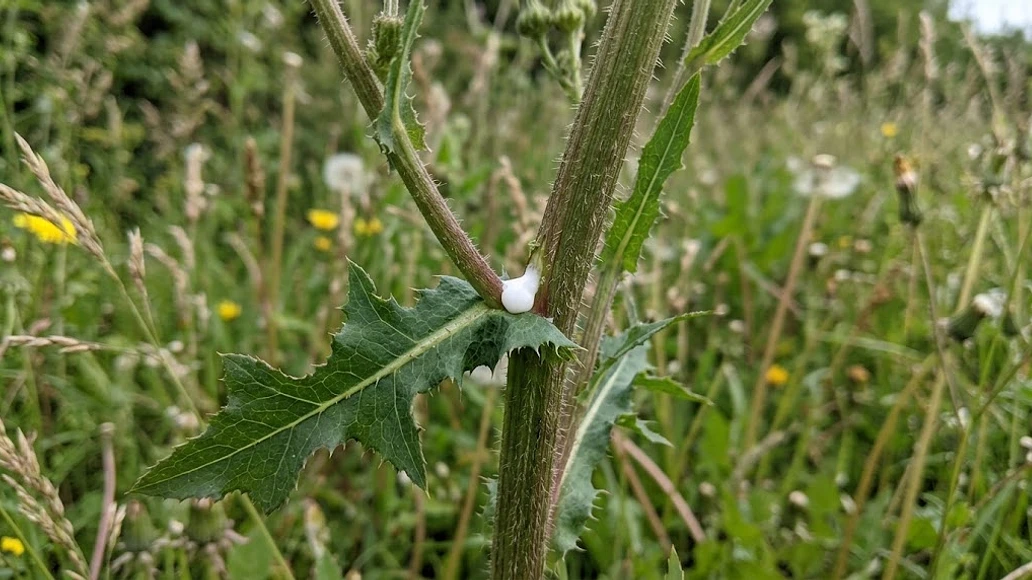
Wild lettuce is often described as a tall, weedy plant with lobed leaves, a central stem, yellow dandelion-like flowers, and milky sap when cut. Some species have leaves that clasp the stem and may show a line of prickles on the underside of the leaf midrib. Mature plants can become quite tall and branch near the top.
That said, plant identification from internet photos is not reliable enough for self-medicating. Growth stage, region, hybridization, and local lookalikes can confuse even experienced gardeners. If a person cannot identify a plant with confidence using multiple trusted field references, the safest choice is not to ingest it.
Common lookalike concerns
The biggest practical risk is not that wild lettuce secretly contains morphine. It is that people may misidentify a plant, use a contaminated roadside specimen, or assume all milky-sapped weeds are interchangeable. Plants can also accumulate pesticides, herbicides, heavy metals, or road pollutants depending on where they grow.
| Issue | Why it matters | Safer takeaway |
|---|---|---|
| Misidentification | Different species can have different safety profiles and unknown effects | Do not ingest a plant unless identification is certain from trusted field resources |
| Roadside or sprayed areas | Plants may carry contaminants or chemical residues | Avoid harvesting from roadsides, industrial edges, or treated lawns |
| Assuming milky sap means medicinal value | Milky latex is not proof of safety or usefulness | Use appearance only as one identification feature, not as a reason to consume |
| Confusing wild lettuce with opium poppy | The chemistry and legal issues are completely different | Keep the two plants clearly separate in your mind |
Tea, tincture, latex, and extract, why form does not solve the safety problem
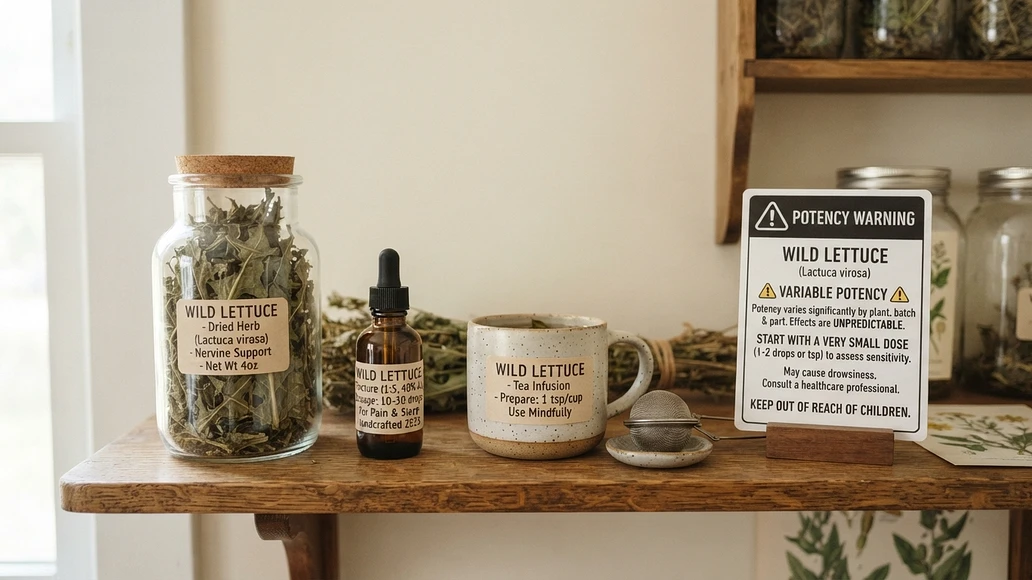
Wild lettuce is commonly discussed in the form of tea, tincture, dried herb, latex, or concentrated extract. The problem is not just the form. The problem is that the amount of active compounds can vary by species, growing conditions, harvest timing, plant part, and preparation method. A homemade batch is not standardized the way an approved medicine is standardized.
Because of that variability, detailed dosing or extraction advice can create a false sense of precision. A stronger batch can cause more sedation or side effects than expected, while a weaker batch may do nothing and delay proper care.
Side effects and interaction risks that matter most
Even when a plant is sold as natural or gentle, it can still cause problems. Wild lettuce is most often associated with sedation related concerns. That means the biggest practical risks are impaired alertness, combining it with other substances that slow the central nervous system, and using it instead of getting evaluated for serious pain.
| Risk area | What to watch for | Why it is important |
|---|---|---|
| Sedation | Drowsiness, slowed reaction time, feeling foggy | Can increase fall risk and make driving or tool use unsafe |
| Alcohol or sedative interaction | Greater sleepiness, poor coordination, excessive CNS depression | Combining substances can amplify adverse effects |
| Medication interaction | Unexpected effects with opioids, benzodiazepines, sleep medicines, antidepressants, or seizure medicines | Interactions may be unpredictable and medically significant |
| Allergy or intolerance | Rash, stomach upset, dizziness, unusual symptoms | Plant sensitivity varies by person |
| Contamination | Unknown residues, molds, adulterants in purchased extracts | Unregulated products may not match the label |
| Delayed care | Pain persists, worsens, or keeps returning | Masking symptoms can postpone diagnosis of a serious condition |
Who should avoid wild lettuce and similar sedating botanicals
Some groups should be especially cautious or avoid use altogether unless a clinician specifically advises otherwise. This is not because every use causes harm. It is because the downside risk is higher and the evidence for benefit is weak.
| Person or situation | Why extra caution is needed |
|---|---|
| Pregnant or breastfeeding people | Safety data are inadequate, and fetal or infant exposure is a concern |
| Children and teens | Effects and dosing are not well studied, and sedation risk is harder to manage safely |
| Older adults | Higher risk of falls, confusion, and medication interactions |
| People taking opioids, benzodiazepines, sleep aids, or alcohol regularly | Combined sedative effects can be dangerous |
| People with liver disease | Metabolism and tolerance may be altered, raising side effect risk |
| People with seizure history | Unpredictable neurologic effects and interaction concerns warrant caution |
| People with substance use disorder history | Self-treatment with psychoactive or sedating products can complicate recovery and safety |
| Anyone with new, severe, unexplained, or post-injury pain | The priority should be diagnosis, not symptom masking |
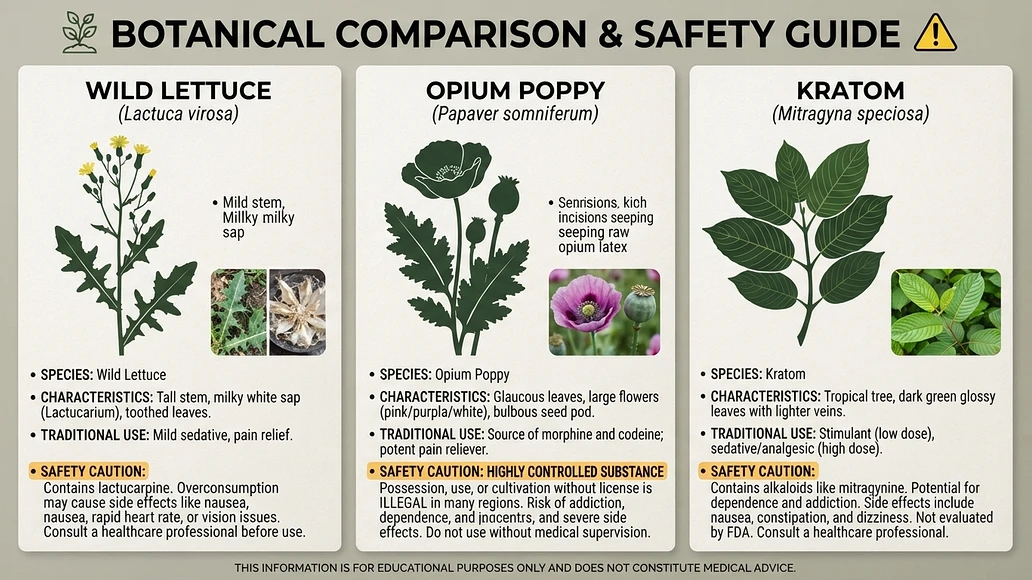
Wild lettuce vs kratom vs opium poppy, the practical difference
These plants are often lumped together online, but they do not belong in the same mental bucket. Wild lettuce is mostly a folk remedy with limited evidence and a reputation that often outruns the data. Opium poppy is the true source of morphine related alkaloids and carries obvious legal and medical danger. Kratom has more direct opioid-like activity than wild lettuce, but that does not make it safer. In fact, concentrated kratom products and 7-hydroxymitragynine products raise serious concerns about dependence, toxicity, and overdose.
If a website casually moves from wild lettuce to kratom as if both are just natural pain herbs, that is a red flag. The risk profile changes substantially.
Legal and regulatory context in the U.S.
In the United States, a product being sold online or in a smoke shop does not mean it is FDA approved for pain treatment. Wild lettuce products are not approved prescription pain medicines. Kratom products are also not FDA approved, and federal agencies have repeatedly warned about safety concerns, contamination, and misleading claims. State rules can vary, especially for kratom related products.
Claims like "works like morphine" or "natural opioid" should be read skeptically. Marketing language often compresses folklore, chemistry, and pharmacology into one dramatic phrase. That is not the same as clinical proof.
When a plant remedy is not the right choice
Self-treatment is a poor fit for pain that is severe, persistent, unexplained, or tied to other warning signs. It is also a poor fit when pain is interfering with sleep, work, walking, or normal daily function. In those cases, the question should shift from "what herb can I take" to "what is causing this, and how quickly should I be evaluated?"
| Situation | Why self-treatment is risky | Better next step |
|---|---|---|
| Severe pain after a fall, blow, or accident | Could involve fracture, internal injury, or bleeding | Urgent medical evaluation |
| Chest pain or shortness of breath | Could signal a heart or lung emergency | Emergency care |
| New numbness, weakness, confusion, or one-sided symptoms | Could indicate a neurologic emergency | Emergency care |
| Black stool, bloody stool, or vomiting blood | Possible internal bleeding | Emergency care |
| Fever with worsening pain | Possible infection or inflammatory condition | Prompt medical care |
| Abdominal pain that is severe or localized | Could be appendicitis, gallbladder disease, kidney stone, or other urgent problem | Prompt medical care |
| Pain lasting more than a few days without improvement | Persistent symptoms need diagnosis, not repeated masking | Schedule a clinician visit |
| Pain that repeatedly requires sedating remedies | Higher risk of side effects and missed diagnosis | Discuss a safer plan with a healthcare professional |
Safer first steps for short-term pain relief
For minor aches and strains, safer basics usually beat experimental botanicals. Resting the area, reducing strain, using ice or heat appropriately, staying hydrated, and following labeled directions for standard over the counter options may be more predictable than an unstandardized herb. If pain is frequent or chronic, the long-term answer often involves diagnosis, physical therapy, sleep improvement, stress management, or a condition-specific treatment plan rather than repeated symptom suppression.
If you already take prescription medicines, have chronic illness, or are considering any sedating herbal product, it is wise to ask a pharmacist or clinician first.
How to read online claims about a natural morphine substitute
A good rule is to separate four questions. Is the plant correctly identified? Does it actually contain opioid compounds, or is that just a nickname? Is there human evidence for the claimed effect? What are the interaction, contamination, and delayed-care risks? If a source gives dramatic promises but skips those four questions, it is not giving balanced guidance.
For wild lettuce specifically, the most accurate summary is this. It is a traditional herb with limited evidence for calming or pain easing effects, but it is not morphine, not opium poppy, and not a proven substitute for medical pain treatment.
References
- FDA, Kratom and safety warnings
- Yale Medicine, What kratom is and whether it is safe
- University of Utah Health, Kratom and 7-OH safety concerns
- Encyclopaedia Britannica, Kratom overview
- PubMed, Research framing on kratom analgesia and safety caveats
- ScienceDaily, Preclinical discussion of plant compounds with pain-killing properties
- Chulalongkorn University, Background on kratom research and traditional use