Charcoal and Cuts, What Helps, What Hurts, and What Belongs in a Real Wound Kit
Activated charcoal has a place in medicine, but not in the way many DIY wound care articles suggest. Here is what charcoal dressings may do, where home use goes wrong, and how to handle wounds safely in a preparedness setting.

Activated charcoal has a strong reputation in preparedness circles, but its real medical uses are narrower than many people think. If you are wondering whether charcoal can help a wound heal, the short answer is this: medical-grade charcoal dressings may sometimes help manage odor and moisture in certain chronic wounds, but improvised charcoal powder on an open cut is not the same thing and can create new problems.
This article is for general information only and is not a substitute for professional medical advice, poison control guidance, or emergency care. For poisoning or overdose, call 911 or Poison Control right away. Do not try to self-treat with oral charcoal at home.
What activated charcoal is, and what it actually does
Activated charcoal is a specially processed form of carbon with a very large surface area. Its main action is adsorption, not absorption. That means substances can stick to its surface. In medicine, that property is useful in selected poisoning cases because charcoal can bind some toxins in the gut before they are absorbed into the body.
Topically, charcoal-based wound products are designed to adsorb odor-causing compounds and excess wound fluid. That is different from killing bacteria, closing tissue, or reversing poor circulation. It can support the wound environment in some cases, but it does not do the core healing work by itself.
The one clearly proven medical use, poisoning and overdose care
The best-supported medical use of activated charcoal is oral administration for certain poisonings and overdoses, usually under clinical supervision and within a limited time window. Even then, it is not used for every substance or every patient. Timing, airway safety, the specific toxin, and the patient's condition all matter.
That is why oral charcoal should not be treated as a general home remedy. It can cause vomiting, constipation, black stools, and in rare cases more serious bowel complications. It can also interfere with important medications.
| Use or claim | Evidence level | Typical setting | Main risks or limits |
|---|---|---|---|
| Oral activated charcoal for selected poisonings | Well supported | Hospital or poison control guided care | Wrong timing, wrong toxin, aspiration risk, medication interference |
| Activated carbon dressings for chronic wound odor and exudate | Emerging but limited | Clinical wound care, sometimes home care with guidance | Adjunct only, does not replace cleaning, debridement, or treatment of underlying disease |
| Loose charcoal powder on minor cuts | Weak or mixed | DIY use | Contamination, retained particles, irritation, delayed proper care |
| Charcoal as a wound disinfectant | Mixed and not reliable | Often overstated in DIY advice | Does not reliably sterilize wounds or replace antibiotics when needed |
| Charcoal detox for skin or whole-body wellness | Weak to unsupported | Supplements and cosmetic marketing | Misleading claims, skin irritation, medication and nutrient absorption problems |
Can charcoal help a wound heal?
There is a small but real difference between saying charcoal can help manage a wound and saying it can heal a wound naturally. Some clinical reports on activated carbon cloth dressings suggest they may help with chronic wounds by reducing odor, handling exudate, and improving the local wound environment. In some cases, that may support healing progress.
But the evidence is still limited and mostly applies to specific medical-grade dressings used in structured wound care, not to random charcoal powders, capsules, or homemade poultices. For a simple scrape or cut, there is no strong proof that sprinkling charcoal on it heals faster than standard cleaning and a clean dressing.
Medical charcoal dressings versus DIY charcoal poultices
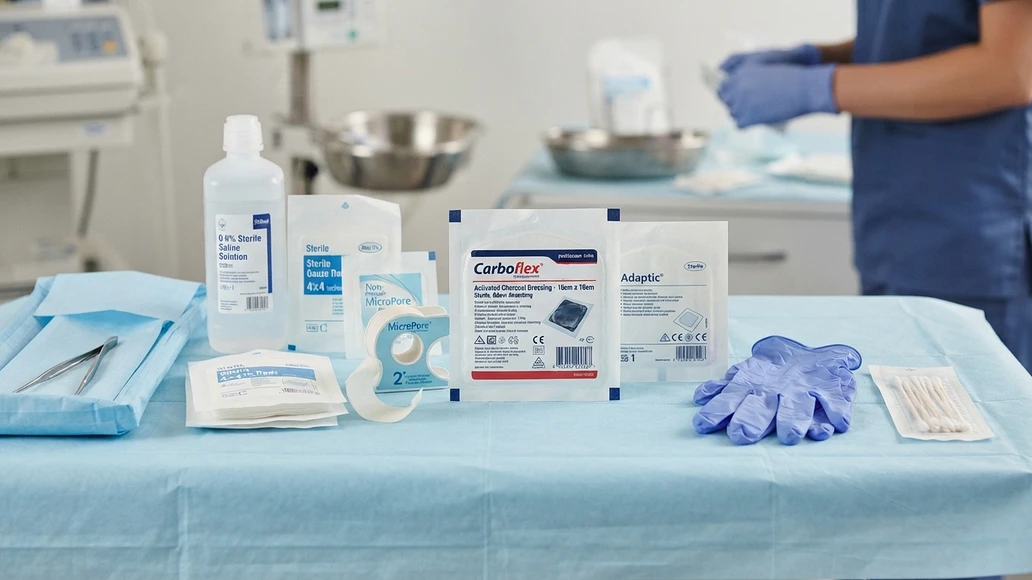
This is the point most articles skip. Medical charcoal dressings are manufactured products. They are designed for contact with wounds, made with controlled materials, and used within a broader wound-care plan. A homemade charcoal paste or powder from capsules is not equivalent.
Loose charcoal on an open wound can introduce contaminants, leave particles behind, and make later cleaning harder. If the product came from a cosmetic jar, grill charcoal source, or a supplement not intended for wound use, the risk goes up further. In a preparedness context, that matters because improvised care is already working with fewer safeguards.
| Feature | Medical-grade charcoal dressing | DIY charcoal powder or poultice |
|---|---|---|
| Intended use | Designed for wound management | Usually not designed for open wounds |
| Sterility and quality control | Controlled manufacturing, product labeling | Variable, often unknown |
| Handling of exudate and odor | Structured dressing layers can help | Unpredictable performance |
| Ease of removal | Generally easier when used as directed | Particles may stick in wound bed |
| Best role | Adjunct for selected wounds | Generally not recommended on open wounds |
What charcoal can do in wound care, and what it cannot
Charcoal may help adsorb odor and some excess moisture. That can make a wound easier to manage, especially in chronic wounds with drainage. It may also improve comfort and reduce the social stress of malodor.
What it cannot do is just as important. Charcoal does not reliably disinfect a wound, remove all infection, repair damaged blood flow, close deep tissue, or replace debridement. It also does not magically draw out toxins in the popular detox sense. Wound healing depends much more on cleaning, moisture balance, blood supply, pressure relief, nutrition, and control of infection.
Basic wound care comes first, at home or in the field
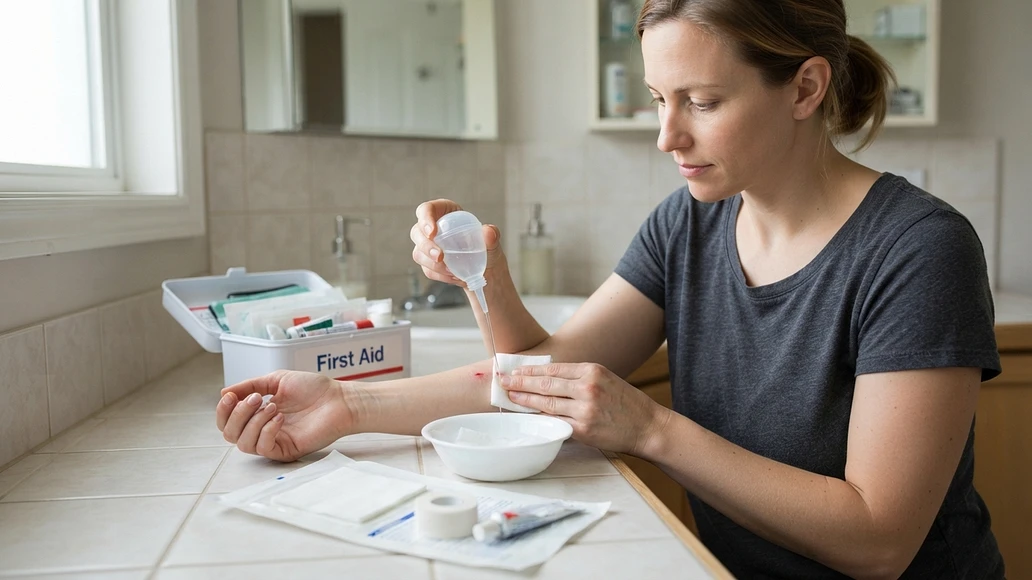
Before thinking about charcoal, focus on the basics that actually change outcomes. For a minor cut or scrape, wash your hands if possible, control bleeding with firm pressure, rinse the wound well with clean running water or sterile saline, gently remove visible debris, and cover it with a clean dressing. Keep the wound slightly moist, not dried out and not soggy, and change the dressing when wet, dirty, or no longer protective.
If you are in a low-resource setting, your priorities are still the same: clean water, pressure for bleeding, a clean barrier over the wound, and close monitoring for infection. Those basics do more for healing than most improvised additives.
| Wound situation | Reasonable home care action | When charcoal should not be the focus |
|---|---|---|
| Small clean scrape | Rinse, protect, monitor | Standard dressing is usually enough |
| Minor shallow cut with controlled bleeding | Clean, approximate if appropriate, dress | Do not add loose powders that complicate cleaning |
| Draining chronic wound with odor | Needs structured wound plan | Charcoal dressing may be an adjunct, not the main treatment |
| Deep puncture wound | Prompt medical evaluation | Do not pack with charcoal |
| Burn, heavily contaminated wound, exposed tendon or bone | Urgent professional care | DIY charcoal is inappropriate |
When a charcoal dressing might make sense in preparedness
If you want to include charcoal in an emergency kit, the most sensible option is a sealed, medical-grade activated carbon dressing from a reputable manufacturer. Its most realistic use is as an optional adjunct for a chronic, draining, or malodorous wound when standard wound-care steps are already in place.
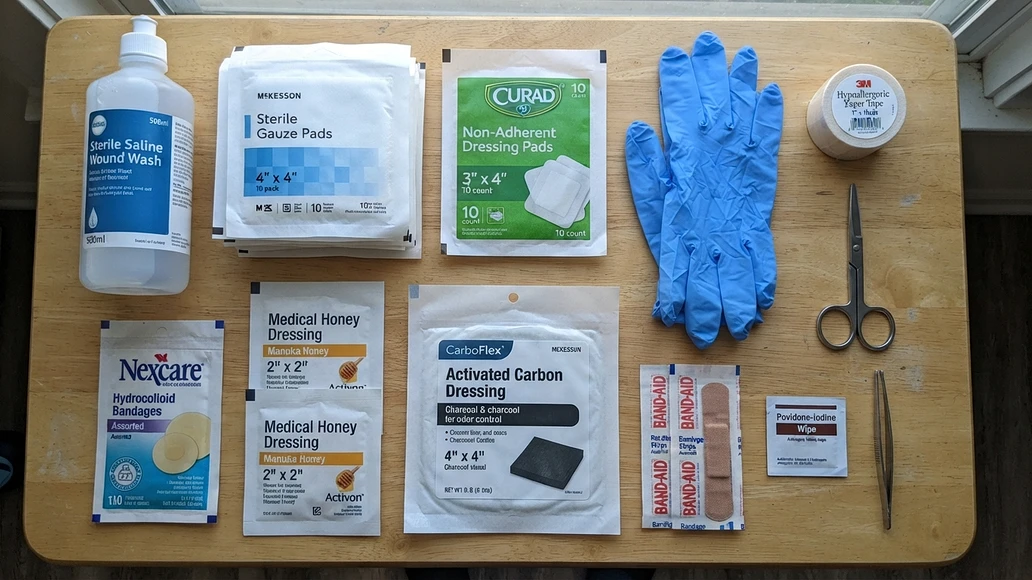
That means charcoal belongs lower on the priority list than irrigation supplies, sterile gauze, nonstick pads, tape, gloves, antiseptic appropriate for skin around the wound, and dressings that maintain a healthy moisture balance. For most households, those basics matter far more.
How charcoal compares with other low-tech or natural-leaning options
Many readers looking for charcoal are really looking for simple, practical wound options that work when resources are limited. In that comparison, charcoal is usually not the strongest first choice. Other products often have clearer roles.
| Dressing or approach | Main benefit | Evidence strength | Best use case | Main caution |
|---|---|---|---|---|
| Sterile gauze and nonstick pads | Protection and absorption | Strong for basic care | Most minor wounds | Needs regular changes and proper cleaning |
| Hydrocolloid dressings | Moist healing environment | Good for selected wounds | Shallow clean wounds with low to moderate drainage | Not ideal for infected wounds without guidance |
| Medical honey dressings | Moisture balance and broad wound-care use | Moderate and practical | Selected minor and chronic wounds | Use medical-grade products, not kitchen honey in serious wounds |
| Silver dressings | Antimicrobial support in selected cases | Moderate | Higher-risk wounds under guidance | Not needed for every simple cut |
| Chitosan-based dressings | Hemostasis and wound support | Promising | Bleeding control and advanced kits | Availability and cost vary |
| Activated carbon dressings | Odor and exudate control | Limited but promising | Chronic or malodorous wounds | Adjunct only, not a cure or disinfectant |
Who should avoid DIY charcoal wound treatment
Some people have much less room for trial and error. Children, older adults, pregnant patients, and anyone with diabetes, poor circulation, kidney disease, immune suppression, or significant skin disease should be especially cautious. A wound that looks minor can become serious faster in these groups.
If you have diabetes or vascular disease, a foot or leg wound deserves early attention. Charcoal will not correct poor blood flow, nerve damage, or infection risk. In these cases, delaying proper care can lead to major complications.
When to stop home treatment and get medical help
Seek urgent care if bleeding does not stop after 10 to 15 minutes of firm pressure, the wound is deep or gaping, there is visible fat, tendon, or bone, the injury is a puncture wound, or the wound is contaminated with soil, animal waste, or embedded debris. Burns, crush injuries, bites, and wounds with numbness or loss of function also need prompt evaluation.
Watch closely for infection. Spreading redness, warmth, swelling, increasing pain, pus, foul odor, fever, or red streaking are warning signs. If a wound is not clearly improving over 7 to 14 days, especially on the feet or lower legs, it needs professional assessment.
| Warning sign | Why it matters | Recommended action |
|---|---|---|
| Bleeding that continues despite pressure | May need closure or more advanced bleeding control | Seek urgent care |
| Deep puncture or dirty wound | High infection risk, hard to clean fully | Get medical evaluation |
| Spreading redness, pus, fever | Possible infection | Prompt medical care |
| Wound on diabetic foot or poorly perfused leg | High complication risk | Early professional assessment |
| No improvement after 7 to 14 days | May be chronic, infected, or poorly supplied with blood | Schedule medical evaluation |
Common myths about charcoal in first aid
One common myth is that charcoal pulls infection or toxins out of a wound in a way that replaces cleaning and medical treatment. It does not. Another is that oral charcoal is a smart household antidote for poisoning. It is not. The safest response to poisoning is to call 911 or Poison Control and follow expert instructions.
A third myth is that if charcoal is natural, it must be gentle. In reality, charcoal products can irritate skin, damage the skin barrier in some cosmetic forms, and create problems if used on broken skin without a clear purpose.
How to build a practical wound kit instead
A better preparedness approach is to build a kit around proven basics first, then add specialty items only if you understand their role. Think in layers: cleaning, bleeding control, protection, moisture balance, and escalation when needed.
| Priority level | Item | Why it matters |
|---|---|---|
| Essential | Clean water or sterile saline | Wound irrigation is one of the most important steps |
| Essential | Gloves | Reduces contamination during care |
| Essential | Sterile gauze and nonstick pads | Basic coverage and absorption |
| Essential | Medical tape and wrap | Keeps dressings secure |
| Essential | Pressure bandage materials | Helps control bleeding |
| Useful | Hydrocolloid or blister dressings | Supports moist healing for selected wounds |
| Useful | Medical honey dressing | Versatile adjunct for selected wounds |
| Optional | Activated carbon dressing | Mainly for odor and exudate control in selected wounds |
FAQ
Can I sprinkle activated charcoal from a capsule directly onto a cut or scrape?
It is generally not a good idea. Capsule charcoal is not the same as a medical wound dressing, may not be sterile, and can leave particles in the wound. For a minor cut or scrape, thorough rinsing and a clean dressing are safer and better supported.
Is it safe to use activated charcoal on a wound for my child or an older relative?
Be cautious. Children and older adults can have more fragile skin or higher complication risk. If the wound is more than very minor, skip experimental DIY treatments and use standard wound care or get medical advice.
Will activated charcoal remove toxins or infection from a wound on its own?
No. It may adsorb odor and some moisture, but it does not reliably remove infection or replace cleaning, debridement, antibiotics, or proper wound management.
What kind of charcoal wound dressings should I look for if I want to add them to my emergency kit?
Look for sealed, medical-grade activated carbon dressings from reputable wound-care manufacturers, with clear labeling for wound use. Avoid cosmetic charcoal products, loose powders, or products that do not specify wound-care use.
Can I take activated charcoal pills after an injury or surgery to help my body heal faster?
No. There is no good evidence that oral charcoal improves healing after injury or surgery. It can interfere with medications and nutrient absorption, which may make recovery harder rather than easier.
References
- Activated Charcoal, StatPearls, NCBI Bookshelf
- Activated Charcoal: Benefits, Uses and Risks, WebMD
- Application of 100% Activated Carbon Cloth Dressings in Patients With Chronic Wounds, Wounds International
- Charcoal, Activated Monograph for Professionals, Drugs.com
- Canadian Antidote Guide, Activated Charcoal
- Therapeutic Potential of Chitosan-Based and Related Wound Dressings, PMC