Why Pemmican Still Earns a Place in a Serious Emergency Food Plan
Pemmican is compact, calorie-dense, and time-tested, but it is not magic. Learn what it is, how it works, how to make it safely at home, and where it fits in a balanced preparedness pantry.

Pemmican has a near legendary reputation in preparedness circles because it packs a lot of calories into a small, portable food. That reputation is deserved, but only when the food is made and stored correctly. Pemmican is a traditional survival food, not a complete everyday diet. This guide is informational only and does not replace food safety advice, medical care, or guidance from a qualified dietitian for people with chronic health conditions.
If you want a practical answer to whether pemmican belongs in your emergency pantry, the short version is yes, for many households it can be useful. It offers dense energy, requires no cooking, and stores well when moisture is kept very low and the fat is properly rendered. At the same time, it has real limits. It does not provide fiber, broad micronutrient coverage, or the variety most people need for long emergencies.
What pemmican is, and why it became famous
Pemmican is traditionally made from very lean dried meat that is pounded into shreds or powder, then mixed with rendered animal fat, often tallow. Some versions also include dried berries. Indigenous peoples of North America developed and used pemmican long before modern survival culture adopted it. It later became important in trade, travel, and expedition food because it was lightweight, durable, and highly energizing.
Its reputation comes from simple strengths. It is compact. It is calorie-dense. It travels well. It can be eaten cold. In a real emergency, those traits matter more than culinary appeal.
Why pemmican lasts so well when made correctly
The food science behind pemmican is straightforward. Bacteria, molds, and many spoilage organisms need moisture to grow. Properly dried meat has very low available water. Properly rendered tallow also contains little residual moisture and creates a protective fat matrix around the meat particles.
Three things largely determine whether pemmican keeps well or fails early. First is dryness. If the meat is not dried until brittle, shelf life drops sharply. Second is fat quality. Stable rendered tallow generally performs better than softer, more unsaturated fats. Third is storage. Heat, light, oxygen, and humidity all speed spoilage and rancidity.
| Topic or claim | Evidence quality | Practical takeaway |
|---|---|---|
| Pemmican is based on dried lean meat and rendered fat, sometimes with berries | Well supported | This is the core formula to preserve if you want traditional function and storage performance. |
| Pemmican is highly calorie-dense | Well supported | It is excellent when weight and cooking fuel are limited. |
| Home pemmican can last for decades | General guidance only | Historical stories exist, but a realistic home target is often 1 to 5 or more years under good conditions. |
| Pemmican is a complete long-term diet | Mixed to weak | It covers calories and protein well, but not full nutrition needs. |
| Berry additions improve nutrition but can shorten storage | General guidance only | Use only thoroughly dried berries and expect some shelf life tradeoff. |
| Improperly dried or poorly rendered pemmican is still safe | Weak and potentially harmful | Do not assume safety. Moisture and poor fat handling can create spoilage and illness risk. |
Traditional and modern versions
Traditional pemmican was built for function, not novelty. Modern versions often split into three broad styles, each with different tradeoffs.
| Version | Main ingredients | Best use | Shelf life outlook | Main tradeoff |
|---|---|---|---|---|
| Traditional plain | Lean dried meat and tallow | Long storage, emergency calories | Best of the three when made well | Very limited flavor and no fiber |
| Berry-enriched | Lean dried meat, tallow, dried berries | Taste improvement, slight nutrient boost | Usually shorter than plain | More moisture and sugar risk |
| Modern hiking bar | Meat, fat, seasonings, sometimes nuts or sweeteners | Trail food and convenience | Often shortest | Less true to survival-storage goals |
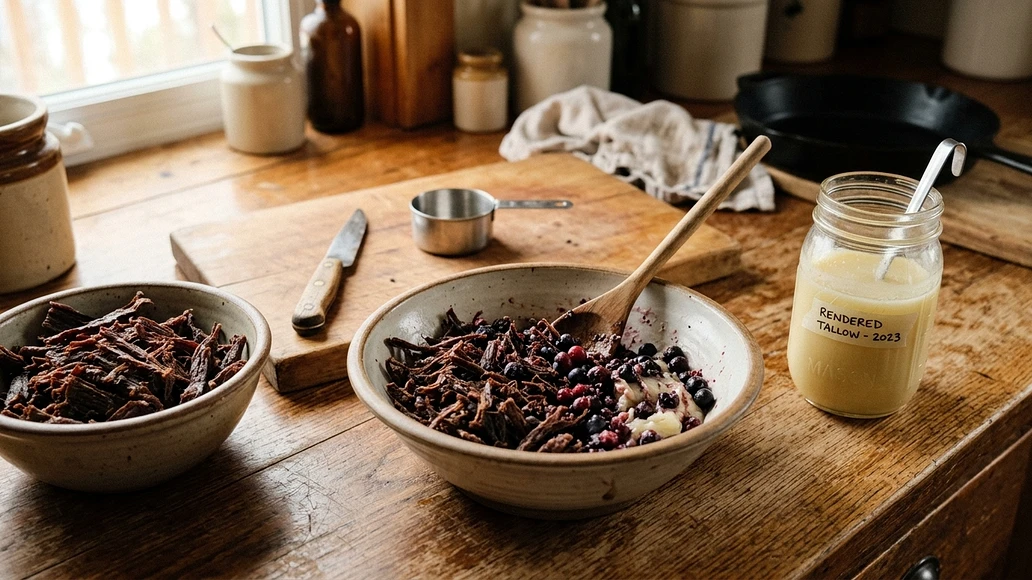
How to make pemmican safely at home
Safe home production matters more than any recipe variation. The goal is to remove as much moisture as practical from the meat, render the fat cleanly, and avoid reintroducing water during mixing and storage.
1. Choose the right meat
Start with very lean meat. Beef round, eye of round, venison, elk, or similarly lean cuts work well. Trim away visible fat, gristle, and connective tissue as much as possible. Fat left in the meat can go rancid faster than properly rendered tallow.
2. Slice and dry thoroughly
Slice the meat thin for even drying. Use a dehydrator or low oven setup that keeps the process controlled and sanitary. Dry until the meat is hard and brittle, not chewy. If it bends instead of snapping, it is not dry enough for long storage. Avoid marinades for long-term pemmican because they can add moisture, sugar, and unstable ingredients.
3. Grind or pound the dried meat
Once fully dry and cooled, break the meat into fine shreds or powder. Smaller particles mix more evenly with tallow and reduce air gaps.
4. Render the fat properly
Use beef suet or another stable animal fat and render it slowly. The finished tallow should be clear, with solids removed. Water and cracklings left in the fat can shorten shelf life. Strain carefully through a fine filter while the tallow is still liquid.
5. Mix while warm, not wet
Combine the dry meat with warm liquid tallow until the mixture holds together. A common starting point is roughly equal parts by volume, then adjust until the meat is coated and the mixture packs firmly. If using berries, they must be fully dried and used sparingly.
6. Pack, cool, and store
Press the mixture into bars, balls, or small bricks. Let it cool completely. Package in airtight containers or vacuum-sealed bags. Label each batch with the date and ingredients.
| Step | What to do | Why it matters | Common mistake |
|---|---|---|---|
| Meat selection | Use very lean cuts and trim visible fat | Reduces rancidity risk | Using fatty ground meat |
| Drying | Dry until brittle and fully cooled | Lowers spoilage risk | Stopping when meat is still leathery |
| Fat rendering | Render slowly and strain well | Removes moisture and solids | Using cloudy fat with residue |
| Mixing | Combine only dry ingredients with warm tallow | Helps even coating and structure | Adding moist fruit or fresh seasonings |
| Storage | Seal airtight and keep cool, dark, dry | Slows oxidation and spoilage | Storing near heat or sunlight |
How long pemmican really lasts
Stories about pemmican lasting for decades are part of its lore, but home food storage should be approached more conservatively. A realistic expectation for carefully made home pemmican is often 1 to 5 years or longer under favorable conditions. Cooler temperatures, darkness, airtight packaging, and low humidity all help. Hot garages, sheds, and vehicles do not.
| Storage location | Typical conditions | Expected shelf life | Pros | Cons |
|---|---|---|---|---|
| Cool pantry | Stable, dry, dark indoor storage | Often around 1 to 3 years | Easy access | More temperature swings than cellar or fridge |
| Cellar or cool basement | Cooler than living space, low light | Often 2 to 5 years or more | Good for long storage | Humidity must be controlled |
| Refrigerator | Cold, enclosed storage | Can extend quality further | Slows rancidity | Needs power, condensation risk if handled poorly |
| Freezer | Very cold storage | Longest quality retention | Best for backup stock | Needs power and protective packaging |
Rotate stock instead of treating any batch as permanent. Open one batch occasionally, inspect it, and taste a small amount only if it appears normal. If there is mold, sourness, unusual softness, bubbling, or a strong rancid odor, discard it.
Nutrition, strengths, and blind spots
Pemmican shines as a calorie and protein source. Depending on the ratio of meat to fat, it can provide very high energy per pound, which is exactly why it has survival value. But high energy density is not the same as complete nutrition.
| Nutrition factor | What pemmican does well | What it misses |
|---|---|---|
| Calories | Excellent for compact energy | Can be too rich for some people |
| Protein | Strong source | Not enough variety for long-term balance |
| Fat | Provides dense fuel and satiety | Very high saturated fat may not suit everyone |
| Carbohydrates | Useful for low-carb needs if plain | Little to none for quick glycogen replacement |
| Fiber | None | Digestive regularity may suffer |
| Micronutrients | Some iron and B vitamins from meat | Limited vitamin C, calcium, magnesium, iodine, and others |
That means pemmican is best viewed as a concentrated emergency ration, not a stand-alone food plan for months on end. Pairing it with beans, grains, dried fruit, vegetables, and a reliable water supply creates a much stronger preparedness setup.
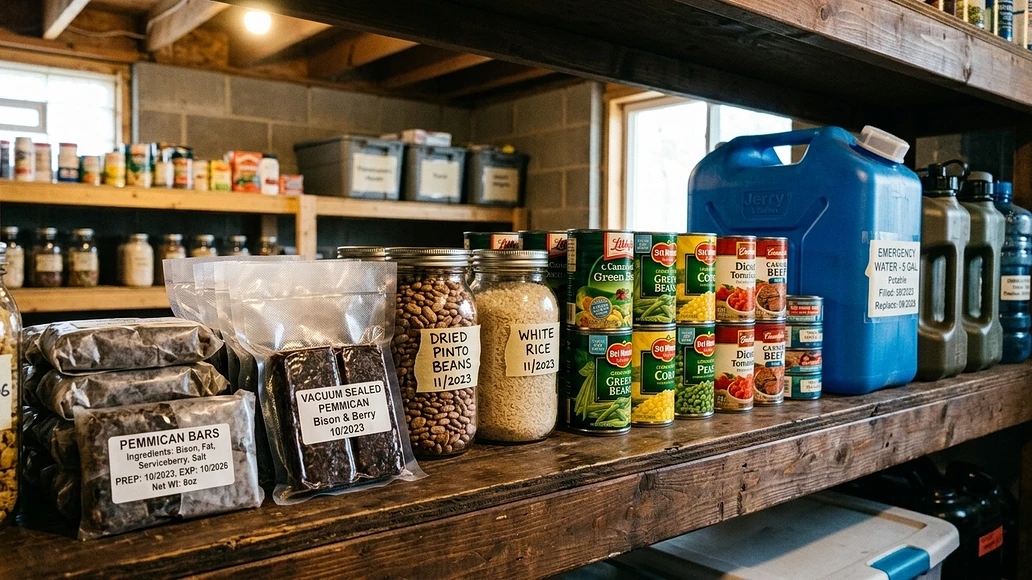
Is pemmican healthy for everyday eating?
For short-term emergencies, the question is usually not whether a food is ideal. It is whether it is safe, practical, and effective at preventing hunger and fatigue. In that role, pemmican can be excellent.
For routine daily eating, the answer is more cautious. A diet built heavily around pemmican resembles very low-carb or carnivore-style eating. Evidence in this area is still evolving, and long-term claims are much stronger than the science. Potential concerns include nutrient deficiencies, lack of fiber, and in some people, unfavorable cholesterol changes or other metabolic issues.
If you enjoy pemmican as an occasional snack, trail ration, or backup emergency food, that is different from making it your main diet. The latter deserves medical guidance, especially if you already have health concerns.
Who should use extra caution
| Group or condition | Main concern | Practical guidance | When to seek advice |
|---|---|---|---|
| Heart disease or high LDL cholesterol | Very high saturated fat intake may be a poor fit | Use as emergency food, not routine staple | Before regular use |
| Kidney disease | High protein intake may be problematic | Avoid relying on it without a care plan | Before any significant use |
| Liver or gallbladder issues | High fat loads may worsen symptoms | Test tolerance cautiously, if at all | If symptoms or prior diagnosis exist |
| Pregnancy or breastfeeding | Higher micronutrient needs and food safety sensitivity | Do not use as a primary food | For any planned regular use |
| Children | Need balanced nutrition and easier textures | Only occasional use in emergencies | If used beyond short-term need |
| Older adults | Chewing, digestion, and chronic disease concerns | Use softer forms and balanced meals | If there are swallowing or medical issues |
If anyone develops severe nausea, vomiting, neurological symptoms, or signs of foodborne illness after eating homemade preserved food, seek urgent medical care.
Pemmican compared with other emergency foods
No single emergency food wins every category. Pemmican is strongest where portability and calorie density matter. Other foods often win on nutrition variety, convenience, or standardization.
| Food | Calories per 100 g | Shelf life estimate | Nutrition completeness | Prep needs | Typical best use |
|---|---|---|---|---|---|
| Pemmican | High | Good to very good if made well | Low to moderate | None | Portable emergency calories |
| MRE | Moderate | Good, factory engineered | Moderate to high | None or minimal | Grab-and-go full meal option |
| Hardtack | Moderate | Very long if dry | Low | Often better soaked | Cheap carb reserve |
| Freeze-dried meal | Moderate | Very long unopened | Moderate | Needs water | Long storage with meal variety |
| Canned meat | Moderate | Good | Moderate | None | Home pantry protein |
If you are building a pantry for sheltering at home, canned goods, grains, beans, and freeze-dried produce usually deserve more space than pemmican. If you are building compact rations for evacuation, vehicle kits, or backcountry use, pemmican becomes more attractive.
How to build a balanced emergency pantry around pemmican
The smartest use of pemmican is as one component in a broader food plan. Think of it as a dense protein-and-fat anchor, then add foods that cover carbohydrates, fiber, vitamins, minerals, and morale.
| Pantry category | What it contributes | How it pairs with pemmican |
|---|---|---|
| Rice, oats, pasta, or crackers | Carbohydrates and easy calories | Balances the low-carb nature of plain pemmican |
| Beans and lentils | Fiber, minerals, extra protein | Improves fullness and nutrition variety |
| Dried fruit | Quick energy and some micronutrients | Adds variety and helps with palatability |
| Canned vegetables | Micronutrients and hydration support | Helps offset nutrient gaps |
| Powdered milk or shelf-stable dairy | Calcium and protein | Useful for family food planning |
| Electrolytes and vitamins | Insurance against gaps | Helpful in longer disruptions |
A practical emergency day might include a small portion of pemmican for breakfast, rice and canned beans for lunch, canned meat and vegetables for dinner, and fruit or crackers as snacks. That approach uses pemmican for what it does best without expecting it to do everything.
Common mistakes that ruin homemade pemmican
| Mistake | What happens | How to avoid it |
|---|---|---|
| Leaving fat on the meat before drying | Faster rancidity | Trim aggressively before drying |
| Under-drying the meat | Higher spoilage risk | Dry until brittle, not chewy |
| Using poorly rendered fat | Residual moisture and solids shorten shelf life | Render slowly and strain thoroughly |
| Adding too many berries or moist ingredients | Reduced storage stability | Use only fully dried additions and keep them limited |
| Storing in warm or bright places | Faster oxidation and quality loss | Store cool, dark, and airtight |
| Making huge batches first | More waste if the recipe or process is flawed | Start with a small test batch |
When in doubt, throw it out. Homemade preserved foods are not the place to gamble.
Respecting the food's origins
Pemmican is not just a prepper recipe. It comes from Indigenous food knowledge and practical adaptation to place, season, and travel. That history deserves acknowledgment. Learning how pemmican was used, traded, and adapted over time gives a fuller picture than treating it as a novelty survival hack.
Respectful use means giving credit to those origins and being careful not to flatten a living tradition into a slogan.
When pemmican is not the best choice
Pemmican is not ideal for every scenario. In very hot climates, fat stability becomes a bigger challenge. In long shelter-in-place situations, food variety and micronutrients matter more than extreme calorie density. For families with young children, older adults, or people with special diets, softer and more balanced foods may be more practical.
In those cases, canned meals, freeze-dried foods, grains, legumes, and shelf-stable staples often make more sense as the foundation, with pemmican serving as a niche backup.

FAQ
Can pemmican really last for decades, or is that a myth?
Historical accounts describe very long storage, but for home use it is safer to think in terms of years, not legends. A carefully made batch stored cool, dark, and dry may last 1 to 5 years or more, but every ingredient choice and storage condition matters.
How much pemmican should I eat in a day during an emergency?
That depends on your size, activity level, weather, and what other foods are available. Because pemmican is very calorie-dense, a relatively small amount can go a long way. Most people should treat it as part of a ration plan, not the entire menu, and drink adequate water.
Is pemmican safe for kids and older adults?
It can be used occasionally in emergencies, but it should not be a primary food for either group. Texture, digestion, and nutrient balance are all concerns. Softer, more varied foods are usually better for routine planning.
Can I make pemmican with pork or poultry instead of beef or game?
You can make meat-and-fat bars from many meats, but traditional long-storage pemmican usually favors lean red meat plus stable rendered fat such as tallow. Pork and poultry fats are generally less stable than tallow, which can reduce shelf life. If you experiment, make small batches and use them sooner.
References
- Carnivore Diet: A Scoping Review of the Current Evidence
- Health Risk Assessment of Dietary Chemical Exposures
- Pemmican, The Indigenous Survival Food of Canada
- Making Pemmican: The Shelf-Stable Survival Food
- How to Make Pemmican: The Ultimate Survival Superfood
- Explorers Ate It. It Stored For 50 Years. Here's Their Recipe.