The Backyard Herb Most People Miss, How to Identify and Use Common Plantain Carefully
Common plantain, the lawn weed, not the banana-like fruit, is one of the most widespread edible wild plants in North America. Learn how to identify broadleaf and narrowleaf plantain, harvest from clean places, prepare it as food, and understand the limits of its traditional first-aid uses.

When people talk about an edible medicinal plant that seems to grow almost everywhere, they are often referring to common plantain, usually Plantago major or Plantago lanceolata. This is the low-growing lawn and path weed, not the banana-like cooking plantain sold in grocery stores. For preparedness-minded readers, plantain is worth knowing because it is widespread, easy to overlook, and useful in modest ways. The key word is modest. Correct identification, clean harvesting, and realistic expectations matter more than folklore.
This article is general educational information only. It is not a diagnosis, poison advice, or a substitute for a clinician, pharmacist, Poison Control, or emergency services. Never eat a wild plant unless you are certain of the identification.
What “plantain” means in a foraging context
In wild food and traditional herb discussions, plantain usually means one of two common species:
| Name | Scientific name | Typical leaf shape | Common habitat | Main practical use |
|---|---|---|---|---|
| Broadleaf plantain | Plantago major | Oval to egg-shaped, broad leaves | Lawns, paths, compacted soil, disturbed ground | Young leaves as cooked greens, traditional topical use for minor irritation |
| Narrowleaf plantain | Plantago lanceolata | Long, narrow, lance-shaped leaves | Fields, yards, trail edges, disturbed ground | Similar traditional uses, often somewhat less fleshy than broadleaf |
| Cooking plantain | Musa species | Large tropical leaves | Tropical cultivation | Starchy fruit, unrelated to lawn plantain |
That distinction matters. The edible lawn weed and the tropical fruit are unrelated plants with very different uses.
How to identify common plantain safely
Do not rely on one photo or one leaf trait. Safe identification means confirming several features at once.
Key traits to confirm
| Trait | What to look for | Why it matters |
|---|---|---|
| Growth form | Low basal rosette, leaves arising from the base close to the ground | Helps separate it from upright weeds |
| Leaf veins | Several strong parallel veins running from leaf base toward tip | One of the most useful confirming traits |
| Leaf arrangement | Leaves form a circular cluster at ground level, not opposite pairs on a stem | Supports rosette identification |
| Flower stalk | Leafless stalk rising from the center of the rosette | Common in mature plants |
| Seed head | Broadleaf has a slender spike, narrowleaf often has a more compact cylindrical flower head | Useful when the plant is in bloom or seed |
| Habitat | Compacted soil, lawns, path edges, disturbed places | Common setting, but habitat alone never proves identity |
If you are uncertain, stop there. Use a regional field guide, your county extension service, a local native plant group, or a qualified botanist before eating or applying any wild plant.
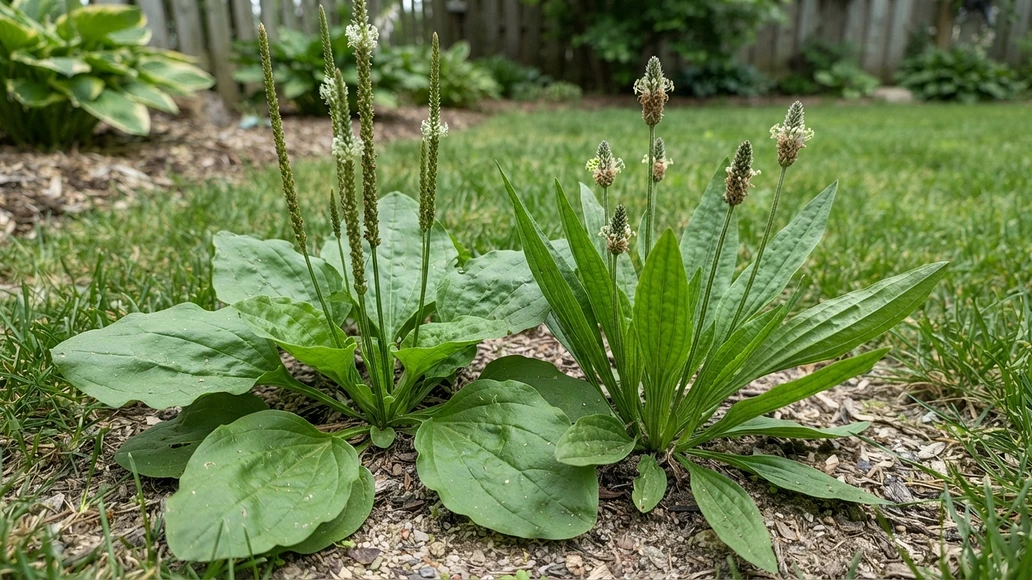
Broadleaf versus narrowleaf plantain
Both species are commonly discussed together because their practical uses overlap, but they are not identical in appearance or texture.
| Feature | Broadleaf plantain, P. major | Narrowleaf plantain, P. lanceolata |
|---|---|---|
| Leaf shape | Broad, oval, often smooth-edged or slightly wavy | Long, narrow, spear-like leaves |
| Texture | Often more tender when young, thicker leaf blade | Usually stringier and more fibrous as it matures |
| Best food stage | Very young leaves | Very young leaves |
| Traditional topical use | Commonly used for minor superficial irritation | Commonly used for minor superficial irritation |
| Where you may notice it | Lawns, garden edges, compacted yards | Fields, trails, rough grass, disturbed areas |
Where it grows, and where not to harvest
Plantain is widespread because it tolerates foot traffic, poor soil, and disturbance. That makes it easy to find, but not automatically safe to use.
Better harvest locations
| Location type | Usually acceptable? | Notes |
|---|---|---|
| Untreated backyard you control | Often yes | Best option if you know the history of the soil and sprays |
| Unsprayed garden edge | Often yes | Confirm no herbicides, pesticides, or pet waste issues |
| Remote trail edge | Sometimes | Only if away from contamination and legal to harvest |
Places to avoid
| Location type | Why to avoid it | Main concern |
|---|---|---|
| Roadsides | Traffic residue and contaminated dust | Heavy metals, pollutants |
| Treated lawns | Unknown chemical applications | Herbicides, pesticides |
| Industrial or construction areas | Disturbed soil may contain contaminants | Chemicals, metals, debris |
| Drainage ditches | Runoff collects there | Waste, chemical runoff |
| Dog parks or pet-heavy areas | Frequent animal waste exposure | Pathogens, parasites |
| Areas with wildlife concentration | Droppings and contamination risk | Pathogens |
Abundance is not the same as cleanliness. A common weed in a dirty place is still a dirty plant.
Edible parts and what they are like through the season
Plantain is edible when correctly identified and harvested from a clean location. Culinary use is different from medicinal-dose use. Young leaves are the main food part most people use.
| Plant part | Edibility | Best stage | Texture and flavor |
|---|---|---|---|
| Young leaves | Edible | Spring to early growth | Mild to slightly earthy, best when tender |
| Mature leaves | Edible but less desirable | Later season | Fibrous, stronger flavor, better cooked |
| Seeds | Technically usable | When mature and dry | Specialized use, not equivalent to commercial psyllium |
| Flower stalks | Sometimes eaten very young | Early stage only | Small yield, often chewy |
If you are trying plantain as food for the first time, start with a small amount of properly washed young leaves mixed into other greens.
How to harvest responsibly
Take only what you need, and leave enough for the patch to recover. Harvesting from your own untreated yard is often the simplest and safest option.
| Step | Good practice | Reason |
|---|---|---|
| Confirm identity | Check multiple traits, not one | Reduces misidentification risk |
| Assess location | Skip contaminated or questionable sites | Reduces chemical and pathogen exposure |
| Select leaves | Choose young, healthy leaves | Better texture and lower spoilage risk |
| Harvest lightly | Take a portion, not the whole patch | Supports regrowth and good stewardship |
| Transport cleanly | Use a clean bag or basket | Prevents extra contamination |
How to clean and prepare it as food
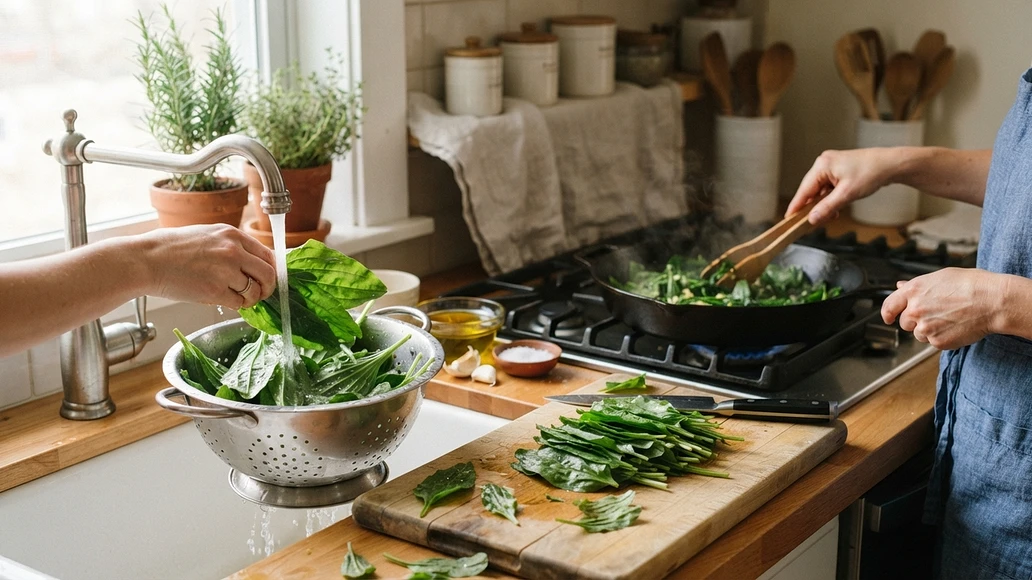
Wild edible does not mean ready to eat straight from the ground. Use the same food-safety mindset you would use for garden produce.
| Preparation method | How to do it | Best for |
|---|---|---|
| Rinse and inspect | Wash hands, rinse leaves thoroughly, remove damaged parts | All food use |
| Chop into mixed greens | Use only very young leaves in small amounts | Tender spring leaves |
| Saute or steam | Cook mature leaves until softened | Older, more fibrous leaves |
| Add to soups | Slice thin and simmer | Mature leaves with stronger texture |
Mature leaves can be stringy. Cooking improves texture and may make them more pleasant to eat.
Traditional topical uses, and what they can realistically do
Plantain has a long history in folk use for minor bites, stings, itchy spots, and superficial skin irritation. The most reasonable modern framing is symptom relief for minor problems, not treatment of serious ones.
| Situation | Reasonable expectation | What not to assume |
|---|---|---|
| Minor itchy bug bite | May feel soothing when clean and cool | Does not neutralize venom or prevent infection |
| Mild superficial irritation | May provide temporary comfort | Does not diagnose the cause or cure dermatitis |
| Small scrape with intact surrounding skin | Comfort only, after proper cleaning | Not a substitute for standard wound care |
| Deep wound, burn, puncture, eye exposure | Not appropriate | Needs proper medical assessment and standard care |
One traditional method is a leaf poultice. If you discuss that tradition, it is important to update it with sanitation. Chewing a leaf and placing it on skin is not a hygienic first-aid method. Saliva and unwashed plant material are not sterile.
Why fresh leaves are not sterile first aid
Preparedness advice sometimes romanticizes wild plants as instant field medicine. In reality, fresh leaves carry dirt, microbes, and whatever contaminants were in the environment. If a commercial first-aid product is available, that is usually the better choice.
| Approach | Risk level | Comment |
|---|---|---|
| Chewed leaf on broken skin | Higher | Avoid, introduces saliva and contamination |
| Unwashed leaf on irritated skin | Higher | Avoid, dirt and residue may worsen irritation |
| Washed leaf on intact skin for minor itch | Lower | Still stop if irritation worsens |
| Standard first-aid supplies | Lowest practical risk | Preferred when available |
If you choose to try a topical use for a minor issue, wash your hands, wash the leaf, use only on superficial intact skin or around a minor irritated area, and stop immediately if burning, rash, swelling, or worsening occurs.
What the evidence actually shows
Plantain is a good example of why traditional use and proven medical treatment are not the same thing. Some laboratory and animal research suggests anti-inflammatory or antimicrobial activity in certain preparations, but that does not automatically translate into reliable home treatment for people.
| Claim | Evidence level | Practical takeaway |
|---|---|---|
| Plantain is widespread in disturbed ground | Well supported ecological observation | Common does not mean safe everywhere |
| Young leaves are edible | Generally supported food use | Only after correct identification and cleaning |
| Traditional use for minor bites and irritation | Traditional use, limited clinical evidence | May soothe symptoms, should not replace standard care |
| Anti-inflammatory or antimicrobial effects | Mostly laboratory and animal evidence | Do not treat this as proven home therapy |
| Reliable wound healing in humans | Limited and mixed evidence | Do not assume it heals serious wounds or burns |
| Tea for cough, digestion, or urinary complaints | Traditional use, limited evidence | Not an established treatment |
| Seeds equal commercial psyllium | Not equivalent | Standardized products have labeling and warnings for a reason |
Oral use, teas, and seed caution
Eating a few young leaves as a wild green is very different from making concentrated teas, powders, tinctures, or seed preparations. Homemade medicinal dosing is not standardized, and safety depends on species, plant part, amount, preparation, and the person using it.
Plantain seeds are related to psyllium in a broad botanical sense, but readers should not assume wild-collected seeds are interchangeable with labeled commercial psyllium products. Fiber-rich products can swell, require adequate hydration, and may interfere with medication timing or create obstruction risk in some people.
| Use type | Risk profile | Main caution |
|---|---|---|
| Small culinary use of young leaves | Lower | Identification and cleanliness still matter |
| Homemade tea | Moderate | Evidence is limited, avoid treating illness with it |
| Homemade seed or husk use | Higher | Hydration, obstruction, and medication timing concerns |
| Commercial psyllium product | More standardized | Follow label directions and warnings |
Who should be extra cautious
| Group | Why caution is needed | Safer approach |
|---|---|---|
| Pregnant or breastfeeding people | Insufficient safety data for medicinal-dose oral use | Discuss with a qualified clinician first |
| Children | Higher risk from misidentification and dosing errors | Avoid homemade oral preparations without guidance |
| People with plant allergies | Topical or oral reactions are possible | Stop use if symptoms appear |
| People with bowel, swallowing, or severe GI problems | Fiber or mucilage may worsen obstruction risk | Use only with professional guidance |
| People taking regular medicines | Absorption or timing may be affected | Ask a pharmacist or clinician before oral use |
Common mistakes to avoid
| Mistake | Why it is a problem | Better choice |
|---|---|---|
| Using one photo to identify a plant | Many weeds look similar at a glance | Confirm multiple traits with a regional guide |
| Harvesting from roadsides or sprayed lawns | Contamination can be invisible | Use only known clean sites |
| Eating mature leaves raw in quantity | Texture is poor and tolerance varies | Use small amounts, cook older leaves |
| Applying chewed leaves to broken skin | Introduces contamination | Use standard first aid, or only washed material on minor intact skin irritation |
| Assuming natural means safe | Allergy, interactions, and misidentification still exist | Treat wild plants with the same caution as any remedy |
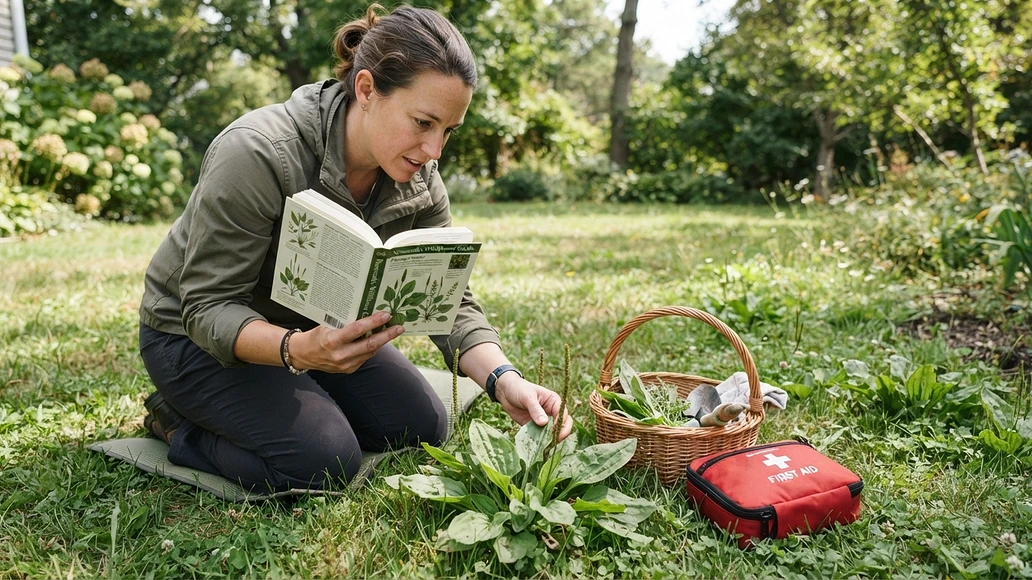
A simple preparedness decision tree
| Question | If yes | If no |
|---|---|---|
| Are you certain it is plantain? | Continue to location check | Do not use it |
| Is the site clean and unsprayed? | Harvest lightly and wash thoroughly | Do not harvest there |
| Are you using it as food in small culinary amounts? | Prefer young leaves, clean and prepare properly | If using medicinally, be more cautious |
| Is the problem minor and superficial? | A clean topical application may offer comfort | Use standard care and seek help when needed |
| Are there red flags like severe pain, spreading redness, fever, deep wounds, burns, or breathing trouble? | Get medical help promptly | Monitor closely and stop if symptoms worsen |
When not to use plantain
Do not delay proper care for deep or gaping wounds, uncontrolled bleeding, animal or human bites, extensive burns, eye injuries, suspected poisoning, rapidly spreading redness, pus, fever, numbness, severe pain, or symptoms that worsen or do not improve. Hives, facial swelling, wheezing, throat tightness, dizziness, or trouble breathing require emergency care.
If someone may have eaten the wrong plant, or you are unsure what was ingested, contact Poison Control in the United States at 1-800-222-1222. Call emergency services for collapse, seizures, severe swelling, or breathing difficulty.
Bottom line
Common plantain is one of the most useful weeds to recognize because it is widespread, edible when correctly identified, and traditionally used for minor superficial irritation. But it is not a miracle cure, and it is not sterile first aid. The practical preparedness approach is simple: identify carefully, harvest only from clean places, use it mainly as a modest wild food, and keep any topical use limited to minor symptom relief while standard first aid and medical judgment stay in first place.
References
- National Capital Poison Center, Plant Poisoning Prevention
- U.S. Food and Drug Administration, Selecting and Serving Produce Safely
- Centers for Disease Control and Prevention, Food Safety
- National Center for Complementary and Integrative Health, Herbs at a Glance
- MedlinePlus, Psyllium
- U.S. Forest Service, Broadleaf Plantain
- Canadian Wildlife Federation, Broadleaf Plantain
- American Botanical Council, Plantago major and P. lanceolata