Lost, Cold, or Overheated? A Smarter Field Guide to Staying Alive Outdoors
This practical guide explains what to do first in a wilderness emergency, how to prioritize shelter, water, signaling, and first aid, and when to stay put versus attempt self-rescue.

Most wilderness emergencies do not begin with a dramatic survival scenario. They start with a small mistake, a weather change, a missed turn, a dead phone, a twisted ankle, or a late turnaround. The good news is that many bad outcomes can be prevented by making better decisions early. The goal is not to know a hundred clever tricks. The goal is to protect life, avoid compounding the problem, and make it easier for rescuers, or your own group, to get you home safely.
This guide focuses on practical wilderness survival tricks and tips in the order they matter most. In many situations, shelter, injury control, signaling, and location matter more than food. It also explains when common advice becomes dangerous, especially in heat, cold, steep terrain, wildfire conditions, and poor visibility. This is general preparedness information, not a substitute for wilderness medicine training, local regulations, or emergency medical care.
What wilderness survival really means
For most hikers, campers, hunters, anglers, and backcountry travelers, survival is not about living off the land for weeks. It is about preventing a short emergency from becoming a fatal one. That means planning well before the trip, then using a calm decision sequence if something goes wrong.
Prevention and response are different skills. Prevention includes route planning, weather checks, water planning, clothing choices, communication plans, and turnaround rules. Response begins after you are lost, injured, stranded, or delayed. People often focus on fire-making or foraging, but those are rarely the first priorities in a real emergency.
The first 10 minutes after you realize something is wrong
If you become lost, injured, or unexpectedly stranded, your first few decisions matter more than almost anything that comes later. Panic causes wandering, poor navigation, missed hazards, and wasted energy. A simple framework helps.
Use STOP
Stop, do not keep walking just because movement feels productive.
Think, what changed, when were you last certain of your location, who knows your plan, what gear do you have, and what hazards are immediate.
Observe, check weather, daylight, terrain, injuries, water, group condition, and communication options.
Plan, choose the safest next action, not the fastest-looking one.
If you are with others, keep the group together unless there is a very specific, low-risk reason to separate. Splitting up often creates multiple emergencies instead of one.
Immediate red flags that justify rescue activation
Activate emergency rescue, call 911 if reachable, or use a personal locator beacon or satellite communicator according to its instructions for severe bleeding, loss of consciousness, breathing difficulty, chest pain, suspected spinal injury, major fracture, heat stroke, severe hypothermia, rapidly worsening illness, or any situation where you cannot keep the person safe. Do not delay a rescue request while attempting increasingly risky self-rescue.
Priority order in most wilderness emergencies
People often ask whether they should look for food, build a fire, or start walking. In most short-term emergencies, the order below is safer.
| Priority | Why it comes first | What to do | Common mistake |
|---|---|---|---|
| Immediate hazards | Rockfall, lightning, flood water, wildfire, thin ice, and unstable slopes can kill quickly | Move only far enough to reach a safer spot | Standing exposed while deciding what to do |
| Shelter and temperature control | Cold, wind, rain, and heat can impair judgment fast | Get dry, get shaded or insulated, block wind, insulate from ground | Waiting until you already feel very cold or overheated |
| Injury care | Bleeding, fractures, and shock worsen with delay | Control bleeding, protect airway, stabilize obvious injuries, monitor mental status | Trying to hike out before basic treatment |
| Signaling and communication | Early signaling improves discovery | Use whistle, light, mirror, bright gear, beacon, phone, satellite device | Saving all signaling for later |
| Water | Hydration supports judgment and physical function | Use carried water wisely, locate safer sources, treat when possible | Drinking untreated water because it looks clean |
| Movement or self-rescue | Travel can help or make things much worse | Move only with a clear route, daylight, and a real safety advantage | Wandering without reliable navigation |
| Food | Usually less urgent in the early phase | Eat familiar carried food if available | Eating unknown plants, berries, mushrooms, or insects |
Stay put or self-rescue?
One of the most important wilderness survival tricks and tips is knowing when not to move. Staying put is often safer when your location is uncertain, visibility is poor, darkness is approaching, terrain is technical, or someone in the group is injured. A stationary person is usually easier for rescuers to find than a moving one.
Self-rescue may be reasonable when you know exactly where you are, have a reliable route to safety, have enough daylight, can travel without worsening injury, and the route does not involve dangerous water crossings, cliffs, avalanche terrain, or severe heat exposure. If your plan depends on guessing, it is probably not a good plan.
| Situation | Safer choice | Reason |
|---|---|---|
| You are unsure of your location | Stay put and signal | Random movement expands the search area |
| It is near dark or visibility is poor | Stop and shelter | Night travel increases falls and navigation errors |
| You have a major injury or cannot walk normally | Stay put and activate rescue | Movement may worsen injury |
| You are on a known trail with a short, obvious route to safety | Consider cautious self-rescue | Only if travel clearly reduces risk |
| Terrain ahead is steep, flooded, icy, or unknown | Do not continue | Hazard exposure rises sharply |
Shelter first, because exposure changes everything
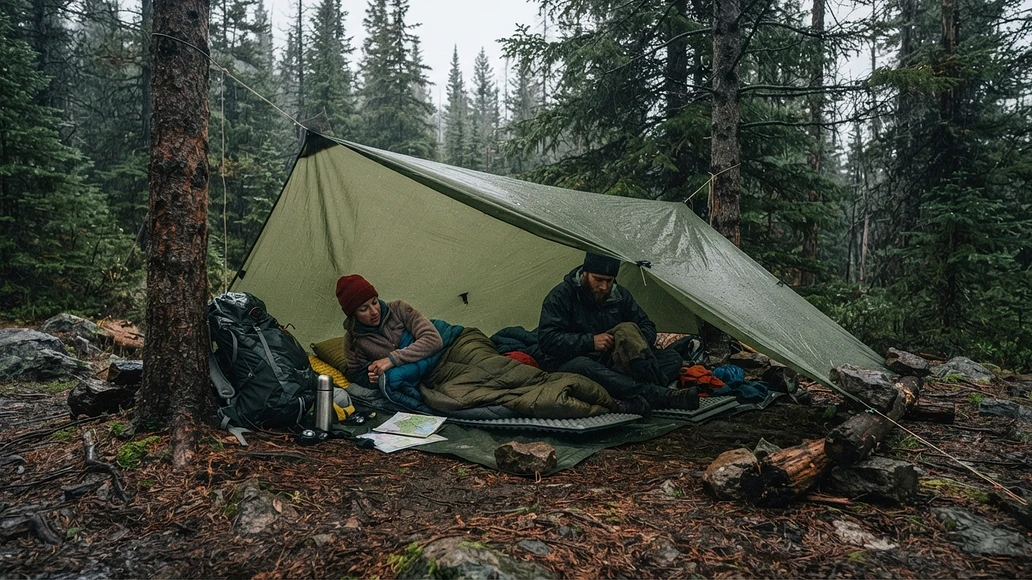
Shelter does not have to mean building a perfect structure. It means reducing heat loss or heat gain as quickly as possible. Use what you already have before spending energy on elaborate construction. Extra clothing, a rain shell, a tarp, an emergency bivy, a foam pad, a pack under your legs, and a spot out of wind can matter more than a debris hut built after you are already exhausted.
Cold, wind, and rain
Get out of wind. Replace wet layers if you can. Add insulation before you start shivering hard. Insulate from the ground with a pad, pack, rope bag, evergreen boughs where legal and appropriate, or other dry material. Keep your head, neck, hands, and core protected. If one person is cold and another is still comfortable, act for the colder person now, not later.
Heat and sun
Create shade first. Loosen excess clothing while still protecting skin from direct sun. Rest during peak heat if movement is not urgent. Hot ground and reflected heat from rock can worsen heat stress even when there is a breeze.
Natural shelter hazards
Overhangs, dead trees, narrow drainages, dry washes, and caves can look attractive but may expose you to rockfall, flash flooding, unstable branches, poor ventilation, or wildlife. Do not enter mine shafts or unstable caves.
Cold illness, what to watch for and what to do
Hypothermia can happen well above freezing, especially with wind, rain, exhaustion, and inadequate clothing. Early signs include intense shivering, clumsiness, fumbling hands, poor judgment, and slurred speech. More severe signs include confusion, severe drowsiness, inability to coordinate movement, and loss of shivering.
Move the person out of wind and wet conditions. Replace wet clothing if possible. Add dry insulation around the torso, head, and neck. Insulate from the ground. If the person is awake and can swallow safely, warm drinks may help comfort, but alcohol is not appropriate. Seek emergency help for confusion, worsening symptoms, inability to walk normally, or severe cold exposure. Do not aggressively rub numb skin.
Frostbite risk rises in freezing wind and prolonged cold exposure. Protect affected areas from further freezing and avoid rewarming if they may refreeze before definitive care.
Heat illness, when dehydration becomes dangerous
Heat exhaustion can include heavy sweating, weakness, headache, nausea, dizziness, muscle cramps, and reduced performance. Heat stroke is a medical emergency and may include confusion, collapse, seizure, altered behavior, or loss of consciousness. Do not assume altered mental status is simple dehydration.
Stop exertion. Move the person to shade or a cooler area. Loosen excess clothing. Cool the person with available methods such as wetting skin, fanning, cool cloths, or immersion where safe and practical. If the person is confused, collapses, has a seizure, or you suspect heat stroke, activate emergency help immediately. Do not force fluids into an unconscious person.
| Condition | Common signs | Immediate actions | When to escalate |
|---|---|---|---|
| Heat exhaustion | Heavy sweating, weakness, headache, nausea, cramps, dizziness | Rest in shade, cool the body, sip fluids if alert | If symptoms worsen, persist, or walking becomes unsafe |
| Heat stroke | Confusion, collapse, seizure, altered behavior, loss of consciousness | Rapid cooling and emergency rescue activation | Always urgent |
| Mild hypothermia | Shivering, clumsiness, poor coordination, cold stress | Dry layers, insulation, shelter, warm the core | If symptoms do not improve quickly |
| Severe hypothermia | Confusion, severe drowsiness, inability to function, loss of shivering | Protect from further heat loss and activate rescue | Always urgent |
Water, how to find it and how to make it safer
Clear water is not necessarily safe water. Streams, springs, lakes, snowmelt, and stock ponds can all contain pathogens or contaminants. In a short emergency, dehydration matters, but so does avoiding preventable illness that can make self-rescue impossible.
Safer source selection
Moving water from a cleaner upstream area is often preferable to stagnant water, but no natural source should be assumed safe. Avoid water near heavy animal activity, downstream from camps, mining areas, agricultural runoff, or obvious contamination. Seawater is not safe to drink.
Treatment basics
Boiling, properly used filters, and chemical disinfection can reduce infectious risk, but each method has limits. Filters vary by pore size and maintenance. Chemical treatment needs contact time and may be less effective against some organisms. A homemade filter made from cloth, sand, or charcoal may improve appearance but does not make water microbiologically safe.
If you carry treatment gear, know exactly how to use it before the trip. If you do not, your best option may be to conserve effort, reduce heat exposure, and seek a safer source rather than drinking the first clear puddle you find.
| Method | Strengths | Limits | Best use |
|---|---|---|---|
| Boiling | Reliable against many pathogens when done correctly | Requires fuel, time, and a container | Base camp, delayed travel, cold conditions with stove access |
| Filter | Fast, convenient, improves taste and clarity | Performance varies, can clog, may not address all contaminants | Hiking and repeated water collection |
| Chemical treatment | Lightweight and compact | Needs contact time, effectiveness varies by water quality and organism | Backup treatment or lightweight kits |
| Untreated water | No gear needed | High illness risk | Not recommended except in extreme life-threatening circumstances |
Navigation, avoid the myths that get people more lost
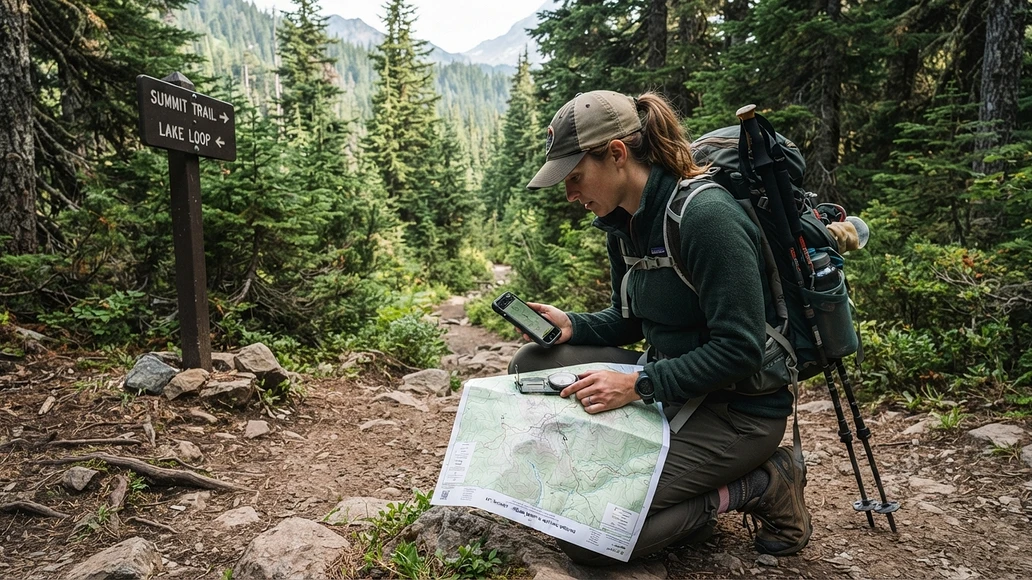
Good navigation starts before the trip. Carry a paper map, know the route, and understand major terrain features, junctions, water crossings, and bailout points. A compass is valuable only if you know how to use it. GPS and offline maps are excellent tools, but they depend on battery, reception, and user skill.
Dangerous myths persist. Moss does not reliably indicate direction. The sun is not a precise compass without context. Following a stream can lead into cliffs, canyons, flood hazards, or terrain that is harder to travel than the ridge you left. Climbing for a view may expose you to falls or lightning. If you are uncertain, stop and verify rather than guessing.
Battery discipline
Keep phones warm in cold weather. Use airplane mode when appropriate. Download offline maps before departure. Reduce screen brightness. Do not burn all battery on repeated map checking, photos, and nonessential messaging if you may need the device for emergency communication later.
Signaling, make yourself easier to find
Signaling should begin early if you are truly lost, injured, or delayed beyond your plan. Do not assume anyone will notice you quickly. Terrain, vegetation, weather, and timing all affect signal range.
Use repeated whistle blasts, bright clothing, reflective materials, lights, and visible ground markers where appropriate. A signal mirror can be highly effective in open country. At night, a headlamp is both a movement tool and a signaling tool. If you have a satellite communicator or personal locator beacon, know how and when to activate it. Follow the device instructions and preserve battery where applicable.
If aircraft or search teams may be looking for you, choose a visible location if it is safe to do so. Large contrasting shapes on the ground can help. Once you establish a shelter and signal plan, avoid unnecessary movement that makes you harder to relocate.
Fire, useful but not always the right answer
Fire can provide warmth, morale, light, and signaling, but it is not automatically the first or safest move. In drought, high wind, or active fire restrictions, building a fire may be illegal, reckless, or both. Check local fire restrictions, weather alerts, trail closures, and land-management rules before departure.
If fire is legal and conditions are safe, use established fire rings where required, keep the fire small, clear the area around it, and never leave it unattended. In many emergencies, extra clothing, a shelter, a stove, a warm drink, and a headlamp are safer than trying to build a large open fire in bad conditions.
| Situation | Fire may help | Safer alternative |
|---|---|---|
| Cold, wet, calm conditions with legal fire use | Warmth, drying, morale, signaling | Also use shelter and dry layers |
| High wind or wildfire danger | Usually not worth the risk | Insulation, stove if allowed, emergency bivy |
| Need for night signaling | Possible if legal and controlled | Headlamp, flashlight, beacon, reflective gear |
| Exhausted or injured group | Only if safe and manageable | Prioritize shelter and communication |
First aid priorities in the field
Basic first aid can stabilize a problem. It does not replace evacuation when the injury is serious. Severe bleeding, breathing problems, major fractures, suspected spinal injury, chest pain, severe allergic reaction, heat stroke, severe hypothermia, and altered mental status all justify urgent rescue decisions.
Bleeding
Apply direct pressure with a clean dressing or cloth. Use a tourniquet only if you are trained or if severe life-threatening bleeding cannot be controlled otherwise, and follow current first-aid guidance. Improvised tourniquets are unreliable and can cause harm if used incorrectly.
Fractures and sprains
Immobilize as best you can, reduce further movement, and decide honestly whether travel is safe. A minor ankle sprain on a flat trail is not the same as a suspected lower leg fracture miles from the trailhead.
Blisters and foot failure
Hot spots become mobility problems fast. Stop early, dry the area, pad friction points, and adjust footwear. In a real backcountry delay, foot care is not cosmetic. It is mobility preservation.
Shock and worsening illness
Pale skin, weakness, confusion, rapid breathing, and declining responsiveness are serious warning signs. Keep the person protected from heat loss or heat gain and activate help.
Environment-specific adjustments
Advice changes with terrain and climate. A smart response in one place may be dangerous in another.
| Environment | Main risks | Best early priorities | Avoid |
|---|---|---|---|
| Desert and hot scrubland | Heat illness, dehydration, sun exposure | Shade, pacing, water discipline, route certainty | Midday overexertion, severe water rationing that impairs judgment |
| Alpine and exposed ridges | Lightning, wind, cold, falls | Descend from exposed high points if safe, add layers, shelter from wind | Ridgetop delays during storms |
| Forest and dense brush | Navigation errors, wet exposure, hidden terrain hazards | STOP, map check, stay on known features, signal early | Bushwhacking blindly downhill |
| Snow and winter terrain | Hypothermia, frostbite, avalanche, hidden obstacles | Dry insulation, wind protection, conservative travel decisions | Traveling after losing route confidence |
| Coastal and tidal zones | Tides, slippery rock, cold water, isolation | Check tide timing, move above surge zone, signal from safe ground | Assuming the shoreline stays passable |
| Flood-prone canyons and washes | Flash flooding, debris flow, entrapment | Move to higher safe ground early | Camping or waiting in a drainage bottom |
Food, important later, risky if improvised
In most short wilderness emergencies, food is not the first problem. Carry familiar, high-energy food that you know you tolerate well. Foraging is usually a poor early strategy because it costs time and energy, and the consequences of misidentification can be severe. Do not eat unidentified plants, mushrooms, berries, insects, or raw wildlife.
If the situation extends, calorie needs rise with cold, exertion, and injury, but that still does not make unknown food a good gamble. The safer strategy is to carry enough food for delays and focus on shelter, water, and signaling first.
Lightweight gear that solves real problems
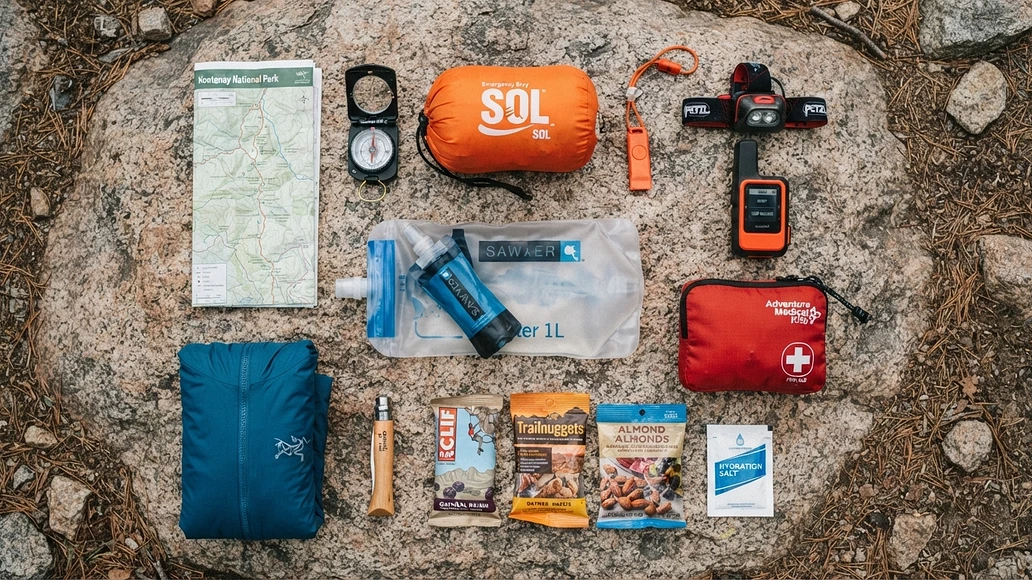
Gear should be chosen by function, weather, trip length, and skill level. The best kit is the one you can use correctly under stress.
| Function | Useful items | Why they matter |
|---|---|---|
| Navigation | Paper map, compass, phone with offline maps, spare battery | Reduces wandering and supports informed decisions |
| Shelter | Rain shell, insulating layer, emergency bivy, tarp, cordage | Helps manage exposure fast |
| Water | Water bottles, filter, chemical backup, metal container if appropriate | Supports hydration and treatment options |
| Signaling | Whistle, headlamp, signal mirror, bright bandana, satellite device if needed | Improves discoverability |
| First aid | Dressings, blister care, wrap, gloves, personal medications | Stabilizes common injuries |
| Fire and heat | Lighter, waterproof matches, stove where appropriate | Useful when legal and conditions allow |
| Energy | Familiar snacks and extra calories | Supports decision-making and endurance |
Children, older adults, and people with disabilities may become hypothermic, dehydrated, or disoriented faster and may need earlier evacuation decisions. Pregnancy, diabetes, heart or lung disease, seizure disorders, kidney disease, and medications that affect hydration, temperature regulation, alertness, or blood pressure require individualized planning before the trip.
Pre-trip planning prevents most survival situations
The best survival skill is often the decision made at home. Check local weather, fire restrictions, trail closures, water availability, permits, wildlife advisories, and communication coverage before leaving. Share your route, expected return time, vehicle location, and contingency plan with a reliable person. Set a turnaround time and honor it even if the destination is close.
Know the emergency numbers for the area when possible. In the United States, 911 is standard where service exists, but remote areas may depend on county search and rescue, park dispatch, or satellite communication. Do not assume your phone will work where the trailhead had coverage.
Common myths and bad improvisations
| Myth or shortcut | Why it is risky | Better approach |
|---|---|---|
| Follow any stream downhill to safety | Can lead into cliffs, canyons, flood zones, or impassable brush | Use map, known route features, and verified navigation |
| Drink only tiny sips to make water last | Over-rationing can impair judgment and performance | Manage pace, shade, and route while drinking deliberately |
| Clear water is safe water | Pathogens are invisible | Treat water when possible |
| Moss always shows north | Not reliable enough for navigation | Use compass, map, GPS, and terrain association |
| Urine is a backup drink | Not a safe hydration strategy | Seek safer water and reduce heat load |
| Unknown berries or mushrooms are worth the risk | Misidentification can be serious or fatal | Eat carried food only |
A simple practice plan for beginners
Readiness improves quickly with a little structured practice. Start local. Take a short day hike with a map, compass, extra layers, water treatment, and a headlamp. Practice locating yourself on the map at trail junctions. Time how long it takes to put on rain gear before you are wet. Build a legal tarp shelter in fair weather so you are not learning in a storm. Take a certified first-aid course, and if you spend time in remote areas, consider wilderness first-aid training.
The point of practice is not to become fearless. It is to become less likely to make a preventable mistake under stress.