Why Pemmican Still Earns a Place in a Modern Emergency Pantry
Pemmican is one of the most calorie-dense traditional survival foods ever made, but it is only useful if you understand its limits and make it safely. Learn what it is, how to dry meat and render fat correctly, how long homemade pemmican really lasts, and where it fits in a practical preparedness plan.

Pemmican has a reputation that is almost larger than life. In preparedness circles, it is often described as a miracle ration that lasts forever, fuels hard work, and solves the problem of portable emergency calories. The truth is more useful than the myth. Properly made pemmican can be an excellent backup food because it is compact, calorie-dense, and simple. But it is still a home-preserved meat product, which means safety, dryness, fat quality, and storage conditions matter a great deal.
This guide explains what pemmican is, where it came from, why it mattered historically, and how to make a safer modern version at home using current dried-meat food safety principles. This article is for educational purposes only and is not a substitute for personalized medical, nutrition, or food safety advice.
What pemmican actually is
At its core, pemmican is a mixture of very dry lean meat and rendered fat. The meat is dried until brittle, ground or pounded into small pieces or powder, then mixed with melted tallow. Some versions also include fully dried berries for flavor and a small nutritional boost.
The word comes from Cree language roots, and pemmican has deep Indigenous origins in North America. It should be understood first as a traditional food developed through experience and environmental knowledge, not just as a modern prepper project. Indigenous communities, fur traders, voyageurs, and later expedition travelers valued it because it packed a lot of energy into a small, durable form.
That historical success does not automatically mean every homemade batch is safe in a modern pantry. Traditional methods were shaped by climate, season, ingredients, and handling practices that may be very different from a warm garage, a humid kitchen, or loosely dried supermarket beef.
Why preparedness-minded households care about it
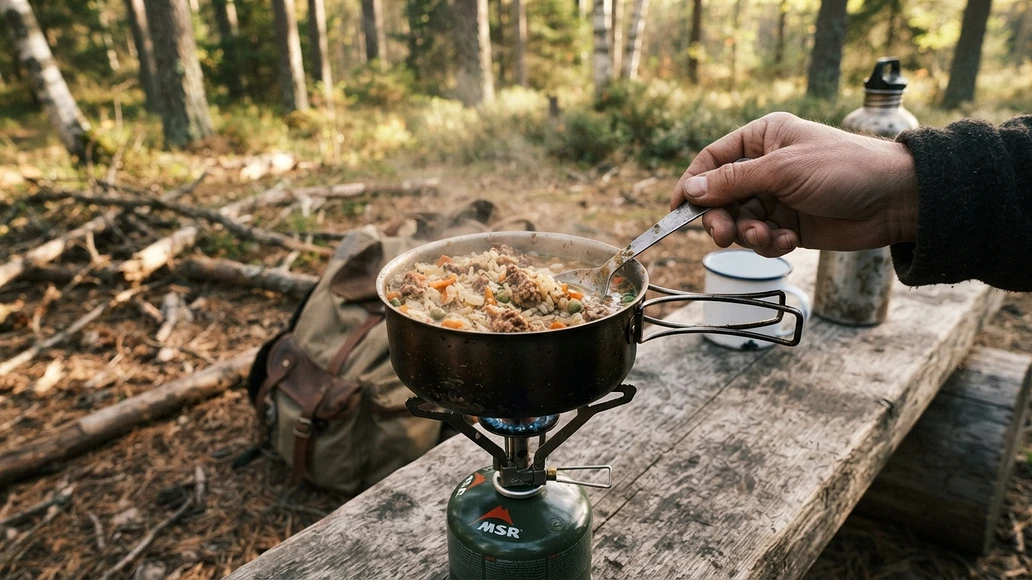
Pemmican shines when you need dense calories without refrigeration and without a lot of cooking. It is especially attractive for winter travel, power outages, bug-out food, hunting camp, and as a compact reserve in a broader food storage plan.
| Food | Typical calories per 100 g | Main strengths | Main limits | Prep required |
|---|---|---|---|---|
| Pemmican | About 400 to 500 | Very calorie dense, portable, high fat and protein | Low in fiber, vitamin C, and variety | Ready to eat |
| Jerky | About 250 to 350 | High protein, lightweight | Less energy dense than pemmican, often salty | Ready to eat |
| White rice | About 360 | Cheap, stores well, versatile | Needs water and cooking, low protein by itself | Cook before eating |
| Canned beans | About 100 to 150 | Fiber, minerals, easy to use | Heavy, bulky, lower calorie density | Can be eaten as is |
| Commercial ration bar | About 400 to 450 | Convenient, standardized, long shelf life | Less satisfying for meals, often expensive | Ready to eat |
For a prepper, the key advantage is not that pemmican replaces everything else. It is that it fills a specific role. It gives you concentrated calories and protein when fuel, time, or cooking options are limited.
A short history, and why context matters
Pemmican was widely used by Indigenous nations across parts of North America and later became central to the fur trade. It fed voyageurs on long routes and supported travel in harsh conditions where fresh food was unreliable. It also appeared in expedition use because it was compact and energy rich.
Historical accounts are one reason pemmican has such a legendary reputation. But there is a difference between food stored in cold climates, moved seasonally, and consumed within a working trade system, versus food made at home and forgotten on a shelf for ten years. Modern readers should treat stories of multi-decade shelf life as historical anecdotes, not guarantees.
Nutrition, strengths, and what it does not provide
A basic pemmican recipe made from lean dried meat and tallow is usually high in fat, moderate to high in protein, and very low in carbohydrates. Exact numbers vary by ratio, but many batches land around 400 to 500 calories per 100 grams.
That makes it useful for hard physical work, cold weather, and emergency situations where compact calories matter. It does not make pemmican a complete long-term food. It is low in fiber and generally poor in vitamin C. Depending on the recipe, it may also be low in several other micronutrients unless paired with other foods.
| Nutritional feature | What pemmican offers | What you should add elsewhere |
|---|---|---|
| Calories | Excellent density for storage and travel | No major gap here |
| Protein | Strong source from dried meat | Can be balanced with beans and grains |
| Fat | Very high, useful for energy | May need moderation for some people |
| Fiber | Very low | Add oats, beans, dried vegetables, fruit |
| Vitamin C | Usually very low | Add stored fruit, vegetables, or supplements |
| Variety and morale | Limited if eaten often | Rotate with other pantry foods |
A practical emergency pantry uses pemmican as one component. Pair it with rice, oats, beans, dried fruit, powdered vegetables, soup bases, and safe drinking water. That gives you better balance and better morale.
Is pemmican a complete survival food
Not by itself for long periods. It can carry a lot of the calorie burden in a short-term emergency or during strenuous outdoor travel, but relying on it alone for weeks or months is not ideal. A pemmican-heavy diet can leave gaps in fiber, vitamin C, and food variety. Historically, people often ate it alongside other foods when available.
If you want a simple planning idea, think of pemmican as a dense reserve food rather than your only stored food. It is best used to complement staples, not replace them.
Food safety basics you cannot skip
This is where many romantic descriptions of pemmican fall short. The safest way to think about homemade pemmican is as a dried meat product that should follow modern jerky-style safety principles. The goal is to reduce pathogen risk with adequate heat, remove enough moisture to make the meat very dry, and use fully rendered fat with no trapped water.
Home-dried meats can carry risks from bacteria such as E. coli, Salmonella, Listeria, and Staph aureus if handled poorly. Low moisture helps, but low moisture is not magic. If the meat was not heated and dried properly, or if moist ingredients are trapped in fat, you can create a risky product.
Recent food safety notes for dried meat
Current dried-meat guidance puts more emphasis on validated heating and low water activity than on old rules of thumb. For home use, that means focusing on safe internal temperatures, thorough drying, and careful storage, not folklore about how long a batch should last.
| Step | Target | What to check | Why it matters |
|---|---|---|---|
| Meat selection | Very lean cuts | Trim all visible fat | Fat left on meat turns rancid faster |
| Heating meat | 160 F for red meat, 165 F for poultry | Use a calibrated thermometer | Reduces pathogen risk |
| Drying | Very low moisture, firm to brittle texture | Strips should snap or crumble, not bend softly | Low water activity limits microbial growth |
| Rendering fat | Clear, fully rendered tallow with water cooked off | No bubbling from water, no cloudy moisture | Water in fat shortens shelf life and raises risk |
| Optional berries | Completely dry only | No tacky or moist pieces | Moist fruit can spoil the batch |
| Packaging | Cool product, airtight storage | No condensation inside container | Condensation reintroduces moisture |
Correctly dried pemmican is less likely to support botulism than a moist, low-acid food, but oxygen-reduced storage is only a good idea when the product is truly dry. Vacuum sealing a damp batch is not a shortcut to safety.
How to make pemmican at home, with safety checkpoints
1. Choose the right meat and fat
Use a very lean cut of beef, venison, or bison. Eye of round, top round, and similar lean cuts work well. Trim off all visible fat before drying. Fat on the meat is the enemy at this stage because it can go rancid and interfere with proper drying.
For the fat portion, rendered beef tallow is the most common choice. It is more stable than many softer fats. Avoid using bacon grease, fresh drippings with water, or unrendered fat scraps.
2. Slice and heat the meat
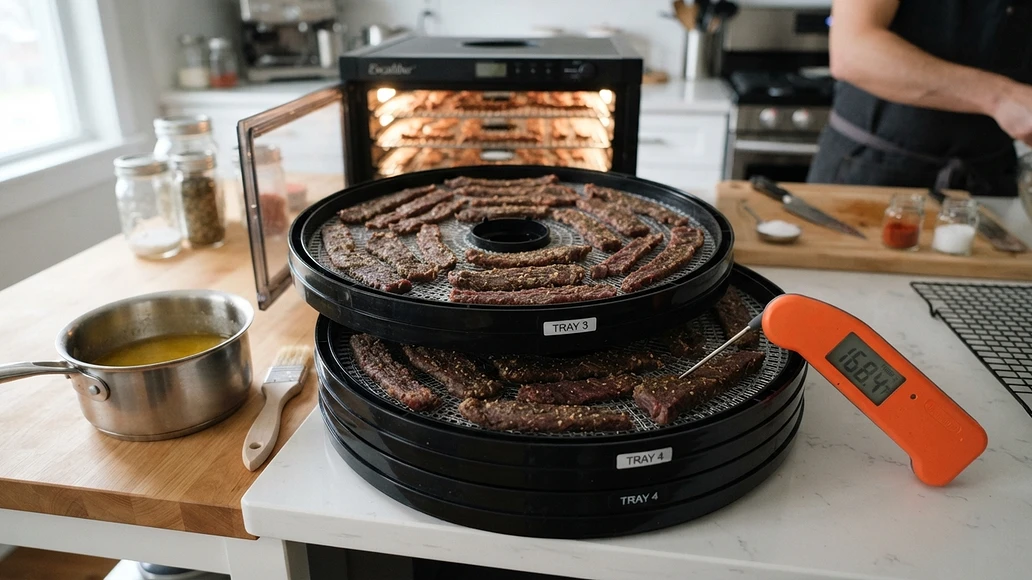
Slice the meat thinly so it dries evenly. Keep everything clean and cold during prep. To align with modern jerky safety guidance, heat the meat to a safe internal temperature, 160 F for red meat and 165 F for poultry, using a calibrated thermometer. Some home preservers do this before drying, while others use a post-dry oven heating step. The important point is that you should not skip the validated heat step.
3. Dry until brittle, not chewy
You can use a dehydrator or an oven set up for drying. The meat for pemmican should end up drier than snack jerky. It should be firm, dry, and close to brittle. If it still feels flexible and moist in the center, it is not ready.
For pemmican, think crumble, not chew. Once cooled, the meat should grind or pound into small flakes or powder easily.
4. Grind or pound the dried meat
After the meat cools fully, grind it in a food processor, blender, or with a mortar-style method until it becomes a coarse powder or fine crumble. Let it cool before grinding if it came from the oven or dehydrator. Warm meat can trap steam in the container.
5. Render the tallow low and slow
Render beef fat gently over low heat until the solids separate and the liquid fat becomes clear. Strain out solids. The goal is clean tallow with as little water and debris as possible. If the fat still contains moisture, shelf life drops and spoilage risk rises.
Do not scorch it. Overheated fat can develop off flavors and degrade quality.
6. Add optional berries only if they are fully dry
If you want a berry version, use only thoroughly dried fruit. It should be dry enough that it does not feel sticky or moist inside. Berry additions can improve flavor and may add a little nutrition, but they usually shorten storage life compared with a plain meat-and-tallow batch.
Do not add fresh fruit, honey, syrup, nut butter, or any wet ingredient if you plan to store the batch at room temperature.
7. Mix by weight
A common starting point is roughly 1 part dried meat powder to 1 part melted tallow by weight. Stir until the meat is fully coated and the mixture holds together. Some people prefer slightly less fat for a firmer bar, while others increase fat for higher calories and a softer texture.
For beginners, small test batches are smart. Make enough to evaluate texture and taste before committing pounds of ingredients.
8. Form, cool, and package
Press the mixture into bars, patties, or a shallow pan lined for easy portioning. Let it cool completely before sealing. If you package while it is still warm, condensation can form inside the container, and that moisture can ruin the batch.
A simple starter batch
For a first attempt, keep it plain.
| Ingredient | Amount | Notes |
|---|---|---|
| Very lean dried meat powder | 1 pound | Beef, venison, or bison, dried until brittle |
| Rendered tallow | About 1 pound | Use enough to bind fully |
| Salt | Optional, light amount | For flavor, not as the main preservation method |
| Fully dried berry powder | Optional, small amount | Use only for shorter-term batches |
If you are new to home-preserved meat, a safe shortcut is to practice drying lean meat properly first, then make a small pemmican batch for short-term use. If your goal is long shelf life with less uncertainty, commercially inspected meat bars or ration products may be a better choice for the core of your emergency food plan.
How long homemade pemmican really lasts
Realistic shelf life depends on dryness, fat quality, packaging, temperature, and whether you added fruit. The biggest mistake is confusing historical lore with a dependable home-storage promise. Think in terms of months to a few years, not guaranteed decades.
| Storage method | Typical shelf life range | Pros | Cons |
|---|---|---|---|
| Wrapped or loosely stored at room temperature | Days to a few weeks | Simple, traditional style for near-term use | Fast oxidation, moisture exposure, shortest life |
| Airtight jar or container in a cool pantry | Several months to around 1 year | Easy and accessible | Still vulnerable to heat and rancidity |
| Vacuum sealed at cool room temperature | Around 6 months to 2 years | Less oxygen exposure, better quality retention | Only appropriate if the batch is truly dry |
| Cool basement or cellar, sealed | Often longer than a warm pantry | Stable temperature helps | Humidity can be a problem if packaging is poor |
| Refrigerated | About 1 to 3 years | Slows rancidity and quality loss | Takes space, power dependent |
| Frozen | Often 2 to 5 years for best quality | Best for long-term quality retention | Texture changes possible, power dependent |
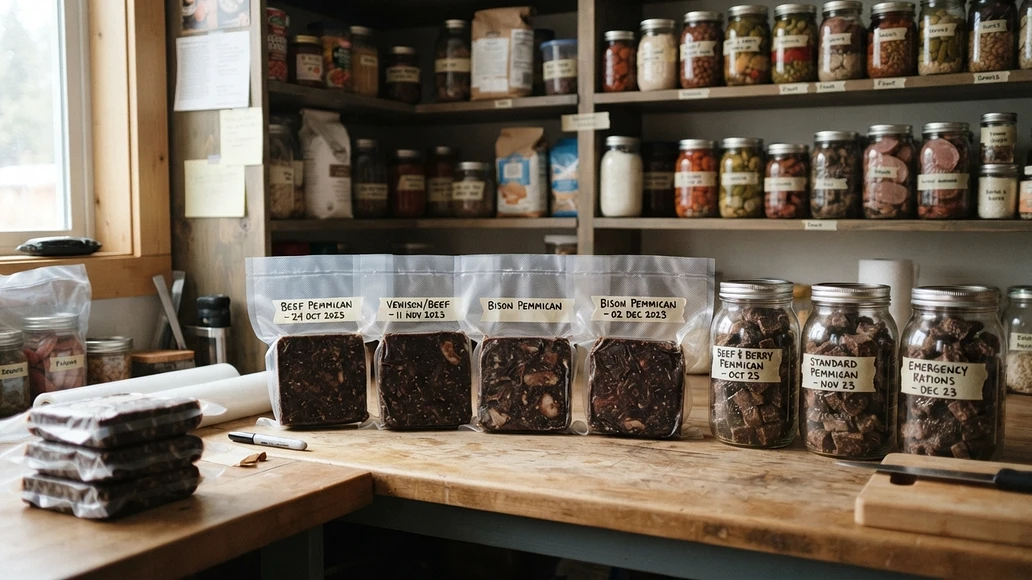
These are practical ranges, not guarantees. Safety and quality are not the same thing. A batch may still look intact while the fat has turned rancid. Label every package with the date, ingredients, and whether berries were included. Rotate older batches first.
How to tell when pemmican has gone bad
Trust your senses, but be conservative. If you are unsure, throw it out.
| Warning sign | What it may mean | Recommended action |
|---|---|---|
| Paint-like, soapy, bitter, or stale smell | Rancid fat | Discard |
| Visible mold | Microbial spoilage | Discard entire batch |
| Moisture droplets inside package | Condensation or incomplete drying | Discard unless immediately identified before storage and product is re-evaluated very cautiously |
| Soft, wet, or sticky interior | Too much water remains | Do not trust for room-temperature storage |
| Gas, swelling, or unusual bubbling | Spoilage activity | Discard |
| Odd sour or rotten odor | Possible bacterial spoilage | Discard |
Do not taste a suspicious batch to test it. If anyone develops severe vomiting, diarrhea, fever, dehydration, or neurological symptoms after eating homemade preserved meat, seek medical care promptly.
Common mistakes that ruin batches
The most common failure points are simple. Meat that is not dry enough. Fat left on the meat before drying. Moist berries or sweeteners added for flavor. Warm packaging that creates condensation. Storage in a hot garage or shed. Thin plastic bags that allow oxygen and odor transfer.
Another mistake is making a giant batch before you have a repeatable process. Start small, keep notes, and improve your method.
Variations, and how they affect storage
Beef, venison, and bison are all common choices. Leaner is better. Venison and bison can make excellent pemmican if trimmed well and dried thoroughly. Poultry is less common and requires extra attention to the 165 F safety target.
Berry versions are popular, but they are best treated as shorter-term pantry food unless you are very confident in the dryness of every ingredient. Everyday trail versions may include more seasoning and be eaten within weeks or months. A more austere survival version should stay simple, dry, and conservative.
How to eat pemmican in an emergency
You can eat it plain in slices or chunks, but many people prefer it warmed into other foods. Crumble it into rice, oats, cornmeal, or a thin stew. A little can add a lot of calories and richness.
| Meal | How pemmican fits in | What it adds |
|---|---|---|
| Breakfast porridge | Small crumbled portion stirred into savory oats or cornmeal | Fat, protein, staying power |
| Lunch snack | Slice with dried fruit and crackers | Portable calories |
| Soup or stew | Melt into hot broth with rice or dehydrated vegetables | Richness and energy |
| Trail ration | Eat in small pieces during exertion | Compact fuel |
Hydration matters. High-fat, high-protein foods can feel heavy if you are already stressed, dehydrated, or overheated. Keep water and electrolytes in mind, especially during hard work or hot weather.
Where pemmican fits in a real emergency food plan
Most adults need a meaningful amount of calories per day in an emergency, especially if they are hauling water, cleaning debris, walking long distances, or staying warm in cold weather. Pemmican can cover part of that need efficiently, but it should not crowd out staples that provide fiber, carbohydrates, and variety.
A useful way to think about it is as a compact reserve. A few pounds can provide several days of dense supplemental calories for one adult, depending on activity level and what else is available. That makes it valuable in bug-out bags, vehicle kits, hunting camp, and short-term home backup.
| Preparedness use | Is pemmican a good fit | Why |
|---|---|---|
| Bug-out bag | Yes, in modest amounts | Dense, ready to eat, compact |
| Home pantry backup | Yes, as a supplement | Pairs well with grains and soups |
| Long-term sole food storage | No | Nutritional gaps and monotony |
| Winter camping or hunting | Yes | Useful in cold conditions and hard work |
| Hot-weather daily ration | Sometimes | Can feel heavy, rancidity risk rises with heat |
Who should be cautious with pemmican
Pemmican is not ideal for everyone. It is very high in fat and can be high in sodium depending on the recipe. People with cardiovascular disease, high cholesterol, hypertension, kidney disease, gallbladder disease, pancreatitis, or significant digestive disorders should talk with a health professional before making it a regular food.
Pregnant people, older adults, and immunocompromised individuals should be especially careful with any homemade dried meat product because foodborne illness can hit these groups harder. Children may tolerate small portions, but they still need a more varied diet than a dense preserved meat ration provides.
| Condition or group | Main concern | Suggested approach |
|---|---|---|
| Heart disease or high cholesterol | Very high saturated fat intake | Limit portions, seek medical advice for regular use |
| Kidney disease | High protein and possible sodium load | Consult a clinician before use |
| Gallbladder disease or pancreatitis history | High fat may trigger symptoms | Avoid or use only with medical guidance |
| Pregnant people | Higher risk from foodborne pathogens | Be cautious with homemade preserved meat |
| Older adults or immunocompromised people | Higher risk from contamination | Prefer commercially inspected products if needed |
| Children | Need balanced nutrition and milder foods | Use only as a small part of meals |
Respecting the roots of pemmican
Pemmican deserves more than a survival-food label. It comes from Indigenous food knowledge and should be discussed with respect. If this topic interests you, it is worth learning more about the communities and histories connected to it, rather than treating it only as a prepper trick.
Quick FAQ
How long does homemade pemmican really last in a normal pantry?
If made very dry and stored airtight in a cool, dark place, many home batches may keep for several months and sometimes around a year or more. Vacuum sealing and cooler storage can extend quality. Claims of decades should be treated as lore, not a promise.
Can you make pemmican safely without a dehydrator?
Yes, an oven can work if you can maintain proper drying conditions and verify safe heating with a thermometer. The key is not the appliance. The key is reaching safe temperatures and drying the meat until it is truly brittle.
Is pemmican safe for kids and pregnant women?
It can be risky for higher-vulnerability groups if homemade meat preservation steps were not done correctly. Pregnant people should be especially cautious with homemade dried meat products. Kids can eat small amounts, but pemmican should not replace a balanced diet.
Can I add nuts, seeds, or fresh fruit and still store it at room temperature?
That is not a good idea for long-term room-temperature storage. Fresh fruit adds water. Nuts and seeds add fats that can go rancid. If you experiment with those ingredients, treat the result as a short-term food and refrigerate it.
Does pemmican need refrigeration if I vacuum seal it?
Not always, but refrigeration improves quality and slows rancidity. Vacuum sealing is helpful only if the pemmican is already dry and stable. It does not make a moist batch safe.