The Dry Biscuit That Endures, How Hardtack Works, How to Make It, and How to Store It Safely
Hardtack is famous for lasting far longer than ordinary bread, but the real reason is not folklore. Learn the food science behind its shelf life, a safe home recipe, realistic storage timelines, and the limits that matter for nutrition and safety.

Hardtack has a reputation that borders on legend, but its staying power comes from simple food science, not magic. When flour, water, and a little salt are baked until they are extremely dry, the result is a dense biscuit with very little available moisture for microbes to use. That is why hardtack can outlast ordinary bread by a wide margin. It is also why small mistakes, like sealing it before it cools or adding butter for flavor, can cut that shelf life down fast.
If you want to make hardtack for emergency use, the goal is not just a tough cracker. The goal is a low moisture, low risk, shelf stable food that fits into a broader pantry plan. Below, you will find the history, the science, a practical recipe, realistic storage advice, and the safety limits that many survival articles skip.
What hardtack actually is
Hardtack is a very simple baked ration traditionally made from flour, water, and salt. Unlike regular bread, it contains no yeast, no oil, no butter, no milk, and no sugar in the classic form. It is rolled or pressed into a flat shape, pierced so moisture can escape, then baked long enough to dry it thoroughly.
That makes hardtack different from both fresh bread and most modern crackers. Bread is soft because it retains much more moisture. Many crackers are crisp, but they often include fats, sweeteners, or flavorings that improve taste while shortening storage life. Classic hardtack is plain by design because simplicity helps it keep.
A short history, from ship biscuit to emergency pantry staple
Long before modern packaged rations, armies and sailors needed food that could survive months of travel. Double baked biscuits appeared in various forms across Roman, medieval, and naval food traditions. On ships, where fresh bread spoiled quickly, hard dry biscuits became a practical carbohydrate source. In military history, especially in the age of sail and the Civil War, hardtack was valued because it could be transported, stacked, and stored with relatively little spoilage if kept dry.
Modern interest comes from two directions. One is historical curiosity. The other is preparedness. People looking for low cost emergency foods often rediscover hardtack because it uses pantry basics and can last much longer than homemade bread.
Why hardtack lasts so long, the science in plain English
The biggest reason hardtack lasts is low moisture. More specifically, it has very low water activity, which means there is not much available water for bacteria, yeast, and mold to grow. Food can contain some moisture and still be shelf stable if that water is tightly bound and not available to microbes. Hardtack works because baking drives off enough moisture that spoilage organisms struggle to grow.
Its ingredient list matters too. Traditional hardtack contains no fat, which means there is little risk of rancidity from oils. It contains no eggs or dairy, which removes ingredients that spoil more easily. It contains no leavening, so there is no soft crumb holding extra moisture inside.
Double baking, or a long low bake followed by additional drying, addresses the root cause of spoilage. It shortens the problem by reducing available moisture. By contrast, soaking hardtack in coffee or soup only makes it easier to eat. That improves comfort, not shelf life.
Evidence, myths, and what is actually well supported
| Topic or claim | Evidence strength | Notes |
|---|---|---|
| Very low moisture and low water activity prevent microbial spoilage | Well supported | This is the core reason hardtack and similar dry breads keep longer than fresh bread. |
| Classic hardtack can remain edible for years if kept completely dry | Well supported | Practical shelf life depends heavily on storage conditions, packaging, and temperature. |
| Hardtack can last 100 years as normal food | Mixed | Old museum examples show durability, but intact is not the same as advisable to eat. |
| Adding fat, sugar, eggs, or dairy shortens shelf life | Well supported | These ingredients increase spoilage risk or rancidity risk. |
| Hardtack provides complete survival nutrition by itself | Weak | It is mainly carbohydrate, with limited vitamins, fats, and overall dietary balance. |
| Hardtack is inherently unsafe | Weak | Properly made and stored hardtack is generally a safe dry food. Problems come from moisture, contamination, or misuse. |
Hardtack compared with bread and crackers
| Food | Typical ingredients | Moisture level | Typical shelf life | Nutrition profile | Main weakness |
|---|---|---|---|---|---|
| Classic hardtack | White flour, water, salt | Very low | Months to years when stored dry | Mostly carbohydrate, modest protein, very low fat | Hard texture, limited nutrition, bland taste |
| Regular bread | Flour, water, yeast, often sugar or fat | High | Days at room temperature | Mostly carbohydrate, varies by recipe | Mold and staling happen quickly |
| Modern crackers | Flour, fat, salt, seasonings | Low to moderate | Weeks to months unopened | Carbohydrate with more fat than hardtack | Fats can go rancid, texture degrades after opening |
| Crispbread | Flour, water, salt, sometimes seeds | Low | Months unopened | Similar to crackers, varies by grain | Whole grain and seed oils can shorten best quality life |
In practical terms, hardtack wins on simplicity and durability, not on comfort or complete nutrition. It is best viewed as a long keeping starch base, not a stand alone emergency diet.
A safe, modern hardtack recipe for home storage
This version keeps to the classic formula because shelf life is the priority.
Ingredients
- 4 cups white all purpose flour
- 1 to 1 1/2 cups water, added gradually
- 1 teaspoon salt, optional or adjustable
White flour is the best choice for longest storage because it contains less natural oil than whole grain flour. You can reduce the salt if you are watching sodium, but do not add butter, oil, honey, milk, or eggs if your goal is long term storage.
Method
- Preheat the oven to 300 degrees Fahrenheit.
- Mix the flour and salt in a bowl.
- Add water slowly, stirring until a stiff dough forms. You want a firm dough, not a sticky batter.
- Knead briefly until the dough holds together evenly.
- Roll or press the dough to about 1/2 inch thick for traditional dense hardtack, or slightly thinner if you want faster drying.
- Cut into squares or rectangles.
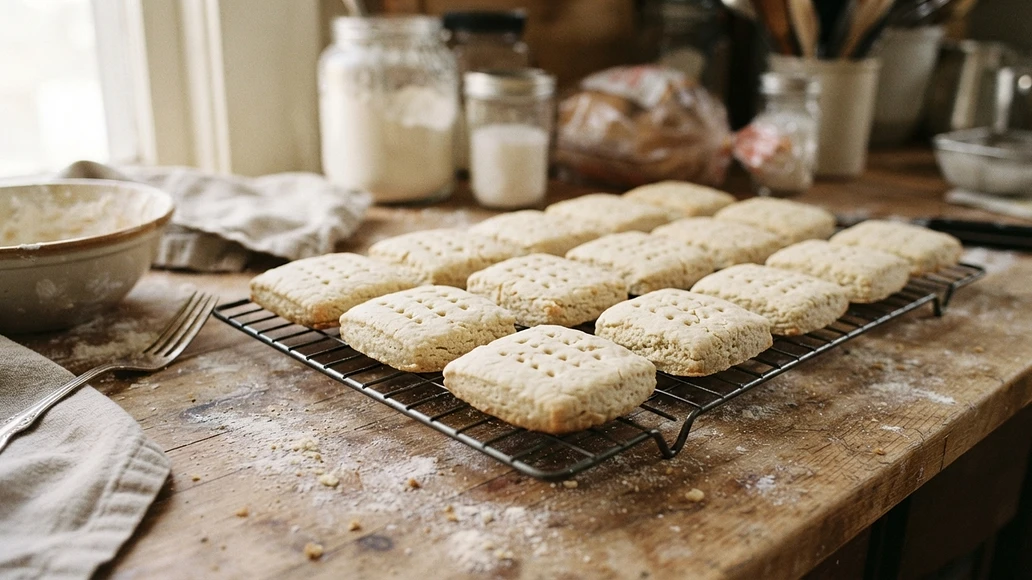
- Pierce each piece several times with a fork or skewer. This helps moisture escape during baking.
- Place on a baking sheet and bake for about 30 minutes.
- Flip the pieces and bake another 30 minutes.
- Lower the oven to about 200 to 225 degrees Fahrenheit if needed, then continue drying until the pieces are fully hard and dry throughout. Depending on thickness and humidity, this may take another 30 to 90 minutes.
- Turn off the oven and let the hardtack sit inside with the door cracked, if desired, for extra drying.
- Cool completely on a rack before packaging.
How to tell if it is dry enough
Many failed batches are not ruined by the recipe. They are ruined by trapped moisture. Hardtack should feel very hard, sound dry when tapped together, and show no soft center when broken open. It should not feel cool or damp inside after resting. If a piece bends or has a chewy middle, it needs more drying time.
Useful home cues include weight and texture. A fully dried batch feels lighter than expected for its size. The surface should be firm, not tacky. After cooling, break one test piece in half. The interior should look dry and uniform, not doughy or slightly darker in the center from retained moisture.
Humidity matters. On a humid day, you may need longer oven drying and more cooling time before storage. If you are unsure, dry it longer at a low temperature rather than trying to rush the process with high heat that can brown the outside before the center is dry.
How long hardtack can really last
Realistic shelf life is measured in conditions, not myths. Properly made hardtack can remain usable for years if it stays completely dry, protected from insects, and stored away from heat. That does not mean every batch should be forgotten for a decade. For home preparedness, rotation is still smart. Label the batch date, inspect it periodically, and use older stock first.
The famous stories about century old hardtack are interesting, but they are not a practical food safety standard. An artifact that survived in a museum or sealed collection is not the same thing as a food item stored in a garage through seasonal heat and humidity swings. For ordinary households, think in terms of careful storage and regular inspection, not immortality.
What usually fails first
Classic hardtack usually loses quality before it becomes dangerous. It may become stale tasting, absorb odors, or soften if packaging fails. Variants made with whole grain flour may develop rancid notes sooner because of natural oils in the bran and germ. The biggest safety problem is moisture intrusion, which can allow mold growth.
Storage options, pantry use versus multi year emergency storage
| Storage method | Moisture protection | Pest protection | Best use period | Pros | Cons |
|---|---|---|---|---|---|
| Tightly sealed jar or food container in pantry | Moderate | Moderate | Short term to medium term | Easy access, simple, reusable | Less protection from humidity over long periods |
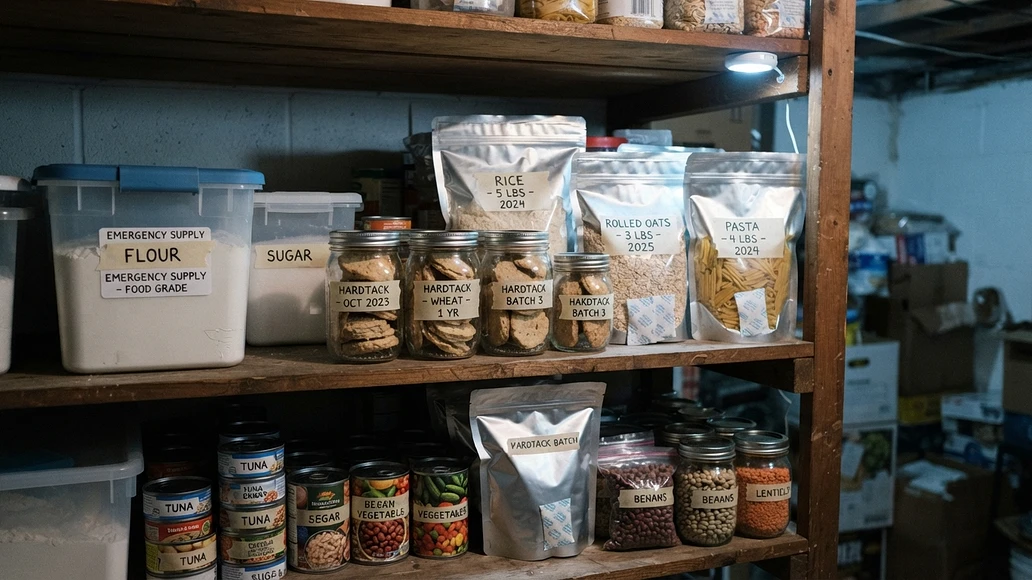
| Mylar bag with desiccant, stored in a bucket or bin | High | High | Long term emergency storage | Strong barrier against moisture and light | Less convenient for frequent opening |
| Vacuum sealed bag inside rigid container | Moderate to high | High | Medium to long term | Compact and organized | Vacuum sealing alone does not fix moisture left in the food |
| Paper bag or loose tin | Low | Low | Very short term only | Traditional look, easy handling | Poor defense against humidity and insects |
Store hardtack in a cool, dry, dark place. Avoid garages, sheds, and attics if they swing between hot and humid conditions. Moisture control matters more than nostalgia. If you package hardtack while it is still warm, condensation can form inside the container and undo all your drying work.
When old hardtack should be discarded
Even very dry foods can become unsafe if they get wet or contaminated. Throw hardtack out if you see mold, smell anything sour or off, notice unusual softness, find insect damage, or see signs that rodents got into the package. If in doubt, throw it out.
| Warning sign | Likely cause | What to do | Main risk |
|---|---|---|---|
| Mold spots or fuzzy growth | Moisture intrusion | Discard the batch | Foodborne illness risk |
| Soft or chewy texture after storage | Humidity exposure or incomplete drying | Discard if there is any doubt about safety | Possible microbial growth |
| Off odor, sour smell, or rancid note | Contamination or oils going bad in modified recipes | Discard the batch | Spoilage and poor safety margin |
| Insect holes, webbing, or droppings | Pest infestation | Discard immediately | Contamination |
| Condensation inside container | Sealed while warm or stored in humidity | Discard or at minimum isolate and inspect very carefully | Moisture driven spoilage |
How to eat hardtack without damaging your teeth
Dry hardtack can be extremely hard. Biting it straight can chip or crack teeth, especially if you have fillings, crowns, dentures, or other dental work. Children and older adults should be especially cautious.
The safer approach is to soften it first. Soak it in soup, stew, coffee, tea, or hot water. Crumble it into a bowl and let it absorb liquid before eating. You can also break it into pieces and use it like a thickener in brothy meals. For short term use, some people pan fry soaked crumbs with a little fat right before serving, but that added fat should be introduced at mealtime, not baked into the storage batch.
Nutrition, health limits, and who should be careful
Hardtack is mainly a carbohydrate food. It provides energy, some protein from flour, and very little fat in the classic version. That makes it useful as a durable calorie source, but weak as a complete ration. It lacks the balanced fats, fiber variety, vitamins, and minerals you would want in a full emergency diet.
Salt is another consideration. Traditional recipes can be fairly salty. People with hypertension, heart failure, kidney disease, or sodium restricted diets should use a lower salt version and watch portions. Pregnant people and anyone managing a chronic condition should treat hardtack like any other high carbohydrate pantry food, not as a special health food.
Gluten is a clear limit. Standard hardtack made with wheat flour is not suitable for people with celiac disease or gluten sensitivity. Gluten free versions are possible, but ingredient changes can affect texture, structure, and shelf life. If you experiment with alternative flours, make smaller batches and rotate them more often.
Whole grain flour adds nutrients, but it also adds natural oils that can go rancid sooner. If your goal is maximum storage life, white flour is the better choice. If your goal is better nutrition for shorter rotation, whole grain may be reasonable with the expectation of faster turnover.
General information disclaimer
This article is general preparedness information, not personalized medical or nutrition advice. If you expect to rely heavily on stored foods because of health, financial hardship, or disaster risk, consider speaking with a registered dietitian or healthcare professional about meeting full nutritional needs. If anyone develops vomiting, diarrhea, fever, or other signs of food poisoning after eating stored food, seek prompt medical care.
Common mistakes that shorten shelf life
| Mistake | Why it causes trouble | Better approach |
|---|---|---|
| Underbaking or skipping the drying phase | Leaves moisture in the center | Bake low and long, then test a piece after cooling |
| Adding butter, oil, sugar, milk, or eggs | Raises spoilage or rancidity risk | Keep the storage batch plain |
| Sealing while still warm | Creates condensation inside packaging | Cool completely before packing |
| Using whole grain flour for very long storage | Natural oils can go rancid sooner | Use white flour for longest shelf life |
| Storing near heat or humidity | Speeds quality loss and moisture problems | Choose a cool, dry, dark location |
Hardtack, crispbread, and modern emergency crackers
| Option | Best feature | Main drawback | Best use case |
|---|---|---|---|
| Classic hardtack | Very simple, low cost, long keeping when dry | Very hard and nutritionally limited | Backup carbohydrate staple in a home emergency pantry |
| Crispbread | More pleasant texture and often better flavor | May include oils or seeds that shorten storage life | Everyday pantry rotation |
| Commercial emergency ration crackers | Convenient packaging and predictable shelf life | Higher cost, often less flexible for home baking | Grab and go kits and compact storage |
| Regular crackers | Easy to eat and familiar | Usually shorter shelf life after opening | Short term outages and normal pantry use |
Hardtack is not automatically better than modern emergency foods. It is simply one useful tool. Commercial rations often offer better packaging, more calories per package, and more predictable shelf life. Hardtack wins when you want a cheap, homemade, ingredient transparent staple.
Where hardtack fits in a balanced emergency pantry
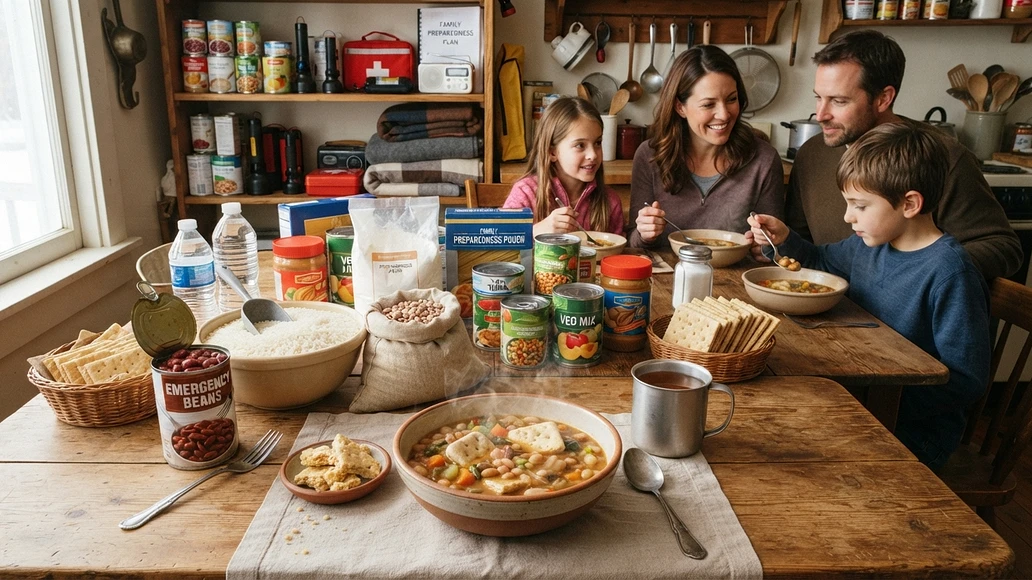
The best role for hardtack is as a durable starch base. Pair it with foods that fill its nutritional gaps, such as canned meats, peanut butter if you rotate it regularly, beans, lentils, shelf stable cheese products, soups, and canned vegetables. That gives you protein, fats, and micronutrients that hardtack alone cannot provide.
A practical pantry plan uses hardtack alongside rice, oats, pasta, canned goods, and ready to eat items. That way you have both long keeping staples and foods that are easier to eat under stress. Hardtack is most useful when it expands your options, not when it replaces everything else.
Teaching history and preparedness with hardtack
Hardtack can also be a useful teaching project. A small batch helps kids and adults understand how people preserved food before modern packaging, and it opens the door to conversations about moisture, spoilage, and emergency planning. For family cooking projects meant to be eaten soon, you can make slightly thinner pieces for easier drying and serving, while still keeping the lesson focused on safe storage and realistic expectations.
Recent context for home storage
Current home food storage guidance continues to stress the same basics that matter for hardtack, moisture control, safe storage temperatures, clean handling, and discarding suspect foods. Interest in long shelf life staples has grown with weather disruptions and economic uncertainty, but the old rules still hold. Dry food stays safe longest when it stays dry, cool, and protected.
Frequently asked questions
Can hardtack really last for 100 years?
As a historical object, sometimes yes. As practical food for a household, that is not a useful planning standard. Home stored hardtack can last a long time if kept dry, but regular inspection and rotation are still the smart approach.
Is it safe to add butter, oil, or sugar for better flavor?
It is safer for short term eating, not for long term storage. Added fat can go rancid, and richer ingredients reduce the margin that makes classic hardtack keep so well. If you want more flavor, add it when serving.
How can I tell if stored hardtack has gone bad?
Discard it if you see mold, smell anything off, notice unusual softness, find insects, or see condensation in the package. If in doubt, throw it out.
Can people with gluten intolerance eat hardtack?
Not if it is made with wheat flour. Standard hardtack contains gluten. Gluten free versions require different flours and should be tested in small batches because texture and shelf life can change.
How much hardtack should I store?
Think of it as one part of your carbohydrate supply, not your whole emergency menu. Store an amount that fits your household's likely needs, rotation habits, and available complementary foods like protein, fats, and canned meals.