Using Baking Soda in Place of Eggs, What It Can Do and What It Cannot
Baking soda can help some egg-free recipes rise, but it is not a true one-for-one egg replacement. Learn how the soda-plus-acid method works, exact starting ratios, when it fits cakes and muffins, and when you need a different substitute for binding or structure.

If you are out of eggs, baking for someone who avoids them, or just trying to make a recipe work with pantry basics, baking soda can sometimes help. The important word is sometimes. Baking soda is not a full egg substitute by itself. It can help with leavening, which means helping batter rise, but it does not automatically replace the binding, moisture, and structure that eggs also provide.
That is the real trick. In the right recipe, baking soda paired with an acid can create lift and tenderness. In the wrong recipe, it can leave you with a flat center, a gummy crumb, or a soapy taste. This guide explains how it works, where it fits, exact starting ratios, and how to choose a better substitute when baking soda is not enough.
What baking soda actually does in baking
Baking soda is sodium bicarbonate, a chemical leavener. In baking, a chemical leavener creates gas bubbles that expand in the oven and help batter or dough rise. Eggs can contribute some lift in certain recipes, but they also do much more than that.
To use any egg substitute well, it helps to know the main jobs eggs perform:
- Leavening, helping baked goods rise and feel lighter
- Binding, helping ingredients hold together
- Moisture, adding liquid and tenderness
- Structure, especially in recipes that depend on egg proteins to set firmly
A batter is a pourable mixture of flour, liquid, and other ingredients, such as what you use for pancakes, muffins, or cakes. A quick bread is a bread-like bake that rises with baking soda or baking powder instead of yeast, such as banana bread or zucchini bread.
Baking soda helps mostly with the first job, leavening. That is why it works best in tender baked goods where eggs are not doing all the heavy lifting.
Why baking soda needs an acid
Baking soda does not do much on its own in an egg-free recipe. It needs an acidic ingredient to react. When baking soda meets acid, it produces carbon dioxide gas. Those bubbles expand in the batter and create lift.
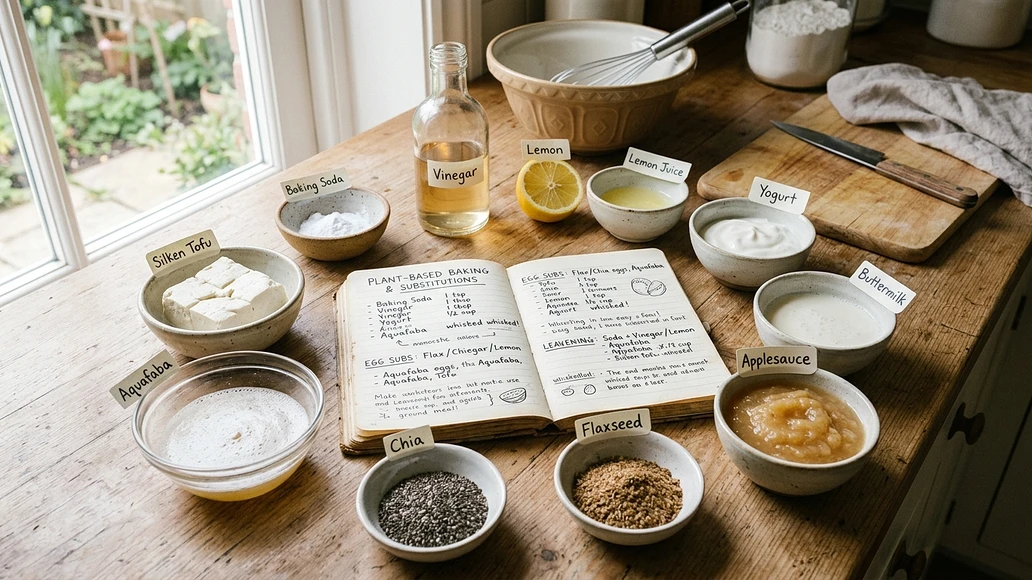
Common acids used with baking soda include vinegar, lemon juice, yogurt, and buttermilk. Applesauce is mildly acidic and can help in some recipes, but it is usually more useful for moisture than for strong leavening.
If you add too much baking soda without enough acid, the result can taste bitter, metallic, or soapy. If you add acid but do not balance the rest of the recipe, the batter can become too thin or the crumb too delicate.
So the useful rule is simple. Baking soda plus acid can replace some of the lift eggs provide in certain baked goods. Baking soda alone cannot replace an egg.
How the soda-plus-acid method works in practice
For many home bakers, the most practical starting point is a small amount of baking soda paired with a measured acid for each egg you need to replace. This approach works best in recipes where eggs are present in modest amounts and the finished texture should be soft and tender.
Good candidates include simple cakes, muffins, pancakes, and quick breads. Less reliable candidates include chewy cookies, rich brownies, custards, meringues, and recipes that use several eggs for structure.
The reason is mechanical. In a muffin, a little extra lift can go a long way. In a custard, eggs are the structure. No amount of baking soda will recreate that protein network.
Best acid partners for baking soda, and when to use each one
Different acids bring different side effects to the recipe. Some add moisture. Some add tang. Some thin the batter more than others.
| Acid partner | How it helps | Best uses | Watch for |
|---|---|---|---|
| White vinegar or apple cider vinegar | Strong reaction with baking soda, reliable lift | Cakes, cupcakes, pancakes, quick breads | Too much can leave a noticeable tang if the recipe is delicate |
| Lemon juice | Provides acid and a fresh flavor | Light cakes, pancakes, citrus-friendly bakes | Flavor may show up in neutral recipes |
| Yogurt | Adds acid, moisture, and some body | Muffins, snack cakes, quick breads | May require reducing other liquid slightly |
| Buttermilk | Adds acid and tenderness | Pancakes, biscuits, cakes, muffins | Recipe may need liquid adjustments |
| Applesauce | Adds moisture and mild acidity | Muffins, spice cakes, sweet quick breads | Can make texture dense if overused |
For the cleanest lift with the least extra body, vinegar is often the easiest pantry choice. For a softer crumb and more moisture, yogurt or buttermilk are often better.
Exact starting ratios per egg
Ratios vary by recipe, but these are practical starting points for replacing one egg in baked goods where eggs are not the main structural ingredient.
| Substitute method | Starting ratio for 1 egg | Main function replaced | Best for |
|---|---|---|---|
| Baking soda plus vinegar | 1 teaspoon baking soda plus 1 tablespoon vinegar | Leavening | Cakes, muffins, pancakes, quick breads |
| Baking soda plus lemon juice | 1 teaspoon baking soda plus 1 tablespoon lemon juice | Leavening | Light cakes, pancakes |
| Yogurt plus baking soda | 1/4 cup plain yogurt plus 1/4 teaspoon baking soda | Moisture plus some lift | Muffins, snack cakes, quick breads |
| Buttermilk plus baking soda | 1/4 cup buttermilk plus 1/4 teaspoon baking soda | Moisture plus some lift | Pancakes, cakes, muffins |
| Applesauce | 1/4 cup unsweetened applesauce | Moisture and some binding | Muffins, sweet breads |
| Ground flaxseed | 1 tablespoon ground flax plus 3 tablespoons water, rested until gelled | Binding | Cookies, muffins, hearty quick breads |
| Chia seed | 1 tablespoon chia plus 3 tablespoons water, rested until gelled | Binding | Muffins, pancakes, rustic bakes |
| Aquafaba | 3 tablespoons liquid from unsalted chickpeas | Light binding and some lift | Cookies, lighter cakes, some whipped uses |
| Silken tofu | 1/4 cup blended silken tofu | Moisture and structure | Dense cakes, brownies, some quick breads |
| Commercial egg replacer | Use package directions | Varies by product | General baking |
If you are using the baking soda plus vinegar approach, mix it in quickly and get the batter into the oven without delay. The reaction starts right away, and you want that gas production to help the bake rather than fade on the counter.
When this swap works best
The soda-plus-acid method is most useful when the recipe needs a little rise and tenderness, not major structure. Think of it as a targeted fix for the leavening role of eggs.
| Recipe type | Does baking soda plus acid work well? | Notes |
|---|---|---|
| Simple cakes | Usually yes | Best when the recipe uses 1 to 2 eggs and does not rely on whipped eggs |
| Muffins | Usually yes | Very good fit, especially with yogurt or buttermilk |
| Pancakes | Usually yes | Good for lift, but watch batter thickness |
| Quick breads | Often yes | Works well in banana bread, spice bread, and similar recipes |
| Cookies | Sometimes | Can work, but texture may spread more or become cakier |
| Brownies | Usually not ideal alone | Need more binding and structure, tofu or commercial replacer often works better |
| Custards | No | Eggs are essential to setting the structure |
| Meringues | No | Baking soda cannot replace whipped egg white structure |
| Souffles | No | Egg proteins and whipped volume are central to the recipe |
When it does not work, and what to use instead
If eggs are doing more than helping a recipe rise, you need a substitute that matches the missing function. This is the biggest mistake people make with baking soda. They use a leavener when the recipe really needs a binder or a structural ingredient.
| Egg's main job in the recipe | Best substitute choices | Why |
|---|---|---|
| Leavening | Baking soda plus vinegar, lemon juice, yogurt, or buttermilk | Creates gas and lightness |
| Binding | Flax egg, chia egg, commercial replacer | Helps ingredients hold together |
| Moisture | Applesauce, yogurt, mashed banana, pumpkin puree | Adds softness and prevents dryness |
| Structure | Silken tofu, commercial replacer, sometimes aquafaba | Supports a more stable crumb |
| Whipped volume | Aquafaba in select recipes | Can mimic some whipped egg white behavior |
If you are baking for an egg allergy, this distinction matters even more. An egg-free recipe needs a substitute that actually performs the needed job, not just one that sounds similar.
Baking soda versus baking powder versus commercial egg replacers
These ingredients are often confused, but they are not interchangeable in purpose.
| Ingredient | What it is | Needs acid added? | Can it replace eggs by itself? |
|---|---|---|---|
| Baking soda | Pure sodium bicarbonate | Yes | No |
| Baking powder | Baking soda plus acid salts and starch | Usually no | No |
| Commercial egg replacer | Blend designed to mimic some egg functions | Depends on product | Often yes, within package directions |
Baking powder can help with rise in egg-free baking, but it still does not replace the full role of eggs. Commercial replacers are often more reliable when you need a balanced substitute for binding and structure.
How to adjust liquid, sweetness, fat, and bake time
Any egg swap changes the formula. Even a good substitute may need small adjustments.
Liquid
If you use yogurt, buttermilk, or applesauce, you may need to reduce another liquid by 1 to 3 tablespoons so the batter does not become too loose. If the batter looks thinner than usual, that is your first clue.
Sweetness
Applesauce and banana add sweetness. If your recipe is already sweet, consider reducing sugar slightly. Unsweetened applesauce is usually the easiest option for control.
Fat
Egg yolks contribute richness. In some recipes, especially cakes and muffins, a teaspoon or two of extra oil can improve tenderness if the finished bake seems dry.
Bake time
Egg-free batters can bake a little differently. Start checking a few minutes early, but do not pull the pan too soon. A center that looks set on top can still be gummy inside. Use a toothpick or cake tester and look for moist crumbs rather than wet batter.
How to prevent a soapy taste or over-browning
Most baking soda failures come from imbalance, not from the idea itself.
| Problem | Likely cause | Fix |
|---|---|---|
| Soapy or metallic taste | Too much baking soda, not enough acid | Reduce baking soda, measure carefully, make sure enough acid is present |
| Too much browning | Excess alkalinity from too much soda | Lower soda, verify oven temperature, tent loosely if needed late in baking |
| Flat bake | Weak reaction, old soda, batter sat too long | Use fresh baking soda, mix quickly, bake immediately |
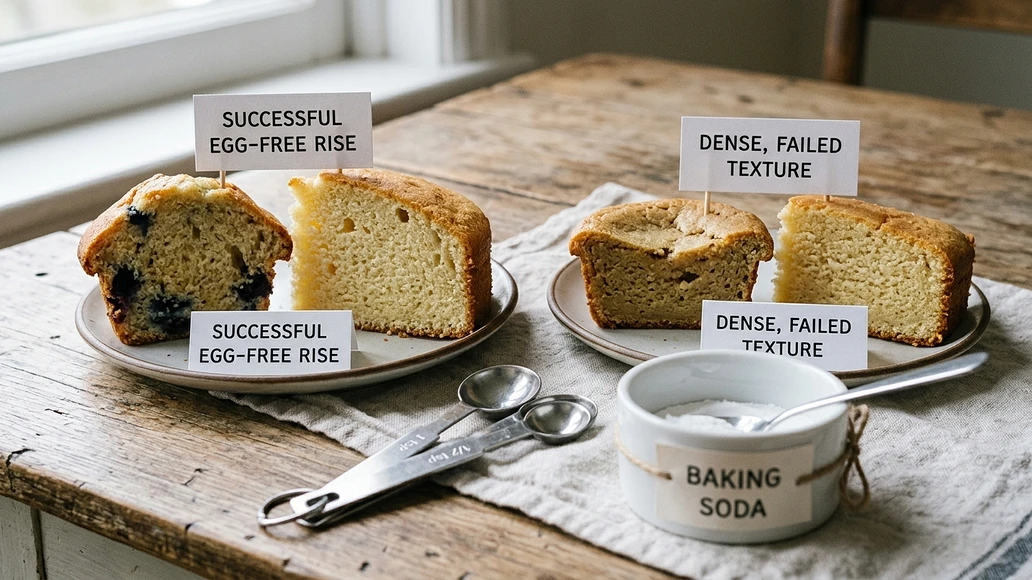
| Dense crumb | Recipe needed binding or structure, not just lift | Switch to flax, chia, tofu, or commercial replacer |
| Gummy center | Too much wet substitute or underbaking | Reduce liquid slightly, bake longer, test center carefully |
Precision matters here. Baking soda is powerful in small amounts. Eyeballing it is a fast way to get off flavors.
Simple decision guide for choosing the right substitute
If you are not sure what to use, start by asking what the egg is doing in the recipe.
| If the recipe is... | Egg is mostly doing... | Best first choice | Backup choice |
|---|---|---|---|
| Pancakes or waffles | Lift and tenderness | Buttermilk plus baking soda | Vinegar plus baking soda |
| Muffins | Lift plus moisture | Yogurt plus baking soda | Applesauce plus a little extra leavener if needed |
| Simple cake | Lift and soft crumb | Vinegar plus baking soda | Commercial egg replacer |
| Banana bread or quick bread | Moisture and some binding | Applesauce or yogurt, with recipe leavener balanced | Flax egg |
| Chewy cookies | Binding and texture control | Flax egg | Commercial egg replacer |
| Brownies | Structure and moisture | Silken tofu | Commercial egg replacer |
| Custard or meringue | Structure or whipped foam | Use a recipe designed to be egg-free | Aquafaba only in recipes built for it |
Testing small batches before scaling up
If you are adapting a family recipe, test a half batch first. This is especially important if the original recipe uses more than two eggs. Small-batch testing helps you answer three practical questions before you waste ingredients:
- Did the substitute provide enough lift?
- Did the batter stay thick enough to bake properly?
- Did the flavor stay neutral, without tang or soda taste?
Take notes on the exact measurements, pan size, and bake time. A one-tablespoon liquid change can noticeably affect muffins or pancakes.
Allergy, vegan, and diet considerations
For vegan baking, baking soda plus acid can be useful, but it is only one tool. Many vegan recipes work better with flax, chia, applesauce, aquafaba, tofu, or a commercial replacer chosen for the specific texture you want.
For egg allergy households, make sure every ingredient is truly egg-free. A leavening trick is not enough if another ingredient in the recipe still contains egg. If the allergy is severe or the recipe is for someone with medically important dietary restrictions, use professional guidance and carefully verified ingredients.
Sodium and health cautions
Baking soda adds sodium. In ordinary baking amounts, that may not matter much for most people, but it can matter for readers on sodium-restricted diets. People with hypertension, kidney disease, heart failure, or other sodium-sensitive conditions should treat baking soda as a meaningful sodium source if they use it often. This article is general culinary guidance, not medical advice.
Also, keep this topic separate from the unrelated idea of adding baking soda to scrambled eggs for tenderness. That is a different cooking technique and not the same thing as replacing eggs in baking.
Troubleshooting dense, gummy, or flat results
If the batter is too thin
Reduce other liquid by 1 to 2 tablespoons, or switch from vinegar to yogurt for the next batch. Thin batter often leads to weak rise and a wet center.
If the crumb is gummy
The recipe may need more structure. Try a flax egg, chia egg, silken tofu, or a commercial replacer instead of relying on baking soda alone.
If the bake is flat
Check that your baking soda is fresh, your acid was measured correctly, and the batter went into the oven right after mixing.
If the flavor is off
Use less baking soda, choose a milder acid partner, and avoid overdoing vinegar in delicate vanilla or butter-style cakes.
If the texture is dry
Add a little more moisture next time, such as a tablespoon of yogurt, applesauce, or oil, depending on the recipe.
Bottom line
The useful pantry trick is not that baking soda magically becomes an egg. It is that baking soda plus the right acid can replace some of the lift eggs provide in certain baked goods. That makes it a smart option for cakes, muffins, pancakes, and quick breads when you need a practical workaround.
But if the recipe depends on eggs for binding, moisture, or structure, choose a substitute that matches that job. That is the difference between an emergency fix that works and a pan of disappointing results.