Swollen Glands or Something Else? A Practical Home Check Guide
Learn how to recognize swollen lymph nodes, where to check, what normal versus concerning nodes feel like, and when home monitoring is reasonable versus when medical care is needed.

Swollen lymph nodes are common, and most of the time they are your immune system reacting to an infection or irritation nearby. The tricky part is knowing whether you are feeling a normal small node, a temporary reactive node, or a lump that needs medical attention. This guide explains how to check safely, what swollen nodes usually feel like, what can cause them, and when to stop monitoring at home and get evaluated.
Important: This article is educational only and is not a substitute for professional medical advice, diagnosis, or treatment. Seek urgent care right away for trouble breathing, trouble swallowing, rapidly worsening swelling, severe pain, pus drainage, or skin that is red and hot over the area.
What lymph nodes do and why they swell
Lymph nodes are small immune system filters found throughout the body. They help trap germs, damaged cells, and other material that your body needs to respond to. When they become active because of infection, inflammation, or another trigger, they can enlarge and become easier to feel.
This is why a sore throat may lead to tender nodes under the jaw or in the neck, and why a skin infection on the leg may cause swelling in the groin. In many cases, the node itself is not the main problem. It is reacting to something happening nearby.
A useful rule is this: you do not directly treat the node, you treat the cause. The swelling often settles as the underlying issue improves.
Normal versus swollen lymph nodes
Many healthy people can feel small lymph nodes, especially in the neck or groin. A normal node may feel like a small, soft or slightly firm pea under the skin. It often moves a little when pressed and is not very painful.
A swollen node is usually more noticeable than usual. It may feel larger, more tender, and easier to find. Some people describe it as a bean-shaped bump under the skin. Infection-related nodes are often sore and mobile. More concerning nodes may feel hard, rubbery, fixed in place, or continue growing without tenderness.
| Feature | Often less concerning | Needs medical evaluation |
|---|---|---|
| Size | Small, mild enlargement during a recent cold or skin irritation | Larger than about 1 to 2 cm, or clearly increasing in size |
| Tenderness | Tender or sore during infection | Painless and progressively enlarging |
| Texture | Soft or slightly firm | Hard or rubbery |
| Mobility | Moves a little under the skin | Fixed in place |
| Location | Near a recent sore throat, dental issue, or skin infection | Above the collarbone, or multiple areas without a clear cause |
| Duration | Improves as illness improves | Persists beyond 2 to 4 weeks or keeps growing |
| Whole-body symptoms | None, or mild symptoms from a short-term infection | Weight loss, drenching night sweats, persistent fever, severe fatigue |
How to check your lymph nodes at home
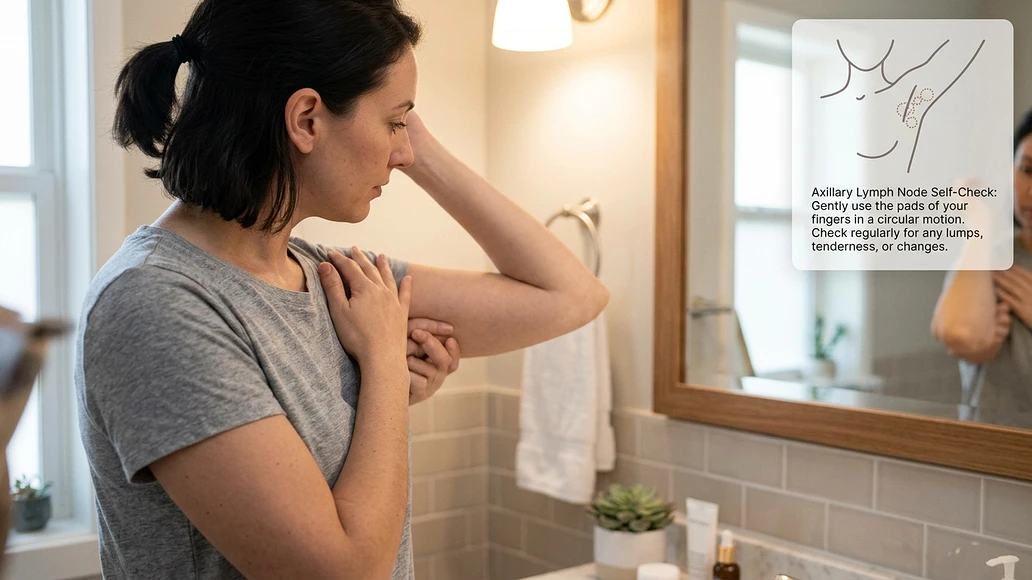
A self-check should be gentle. Do not poke repeatedly, squeeze hard, or massage aggressively. That can irritate the area and make it harder to tell what is changing.
General self-exam tips
- Wash your hands.
- Use the pads of your fingers, not your fingertips.
- Press gently in small circular motions.
- Compare the same area on both sides of the body.
- Notice size, tenderness, texture, and whether the lump moves.
- Check once, then monitor over time instead of rechecking many times a day.
Where to check
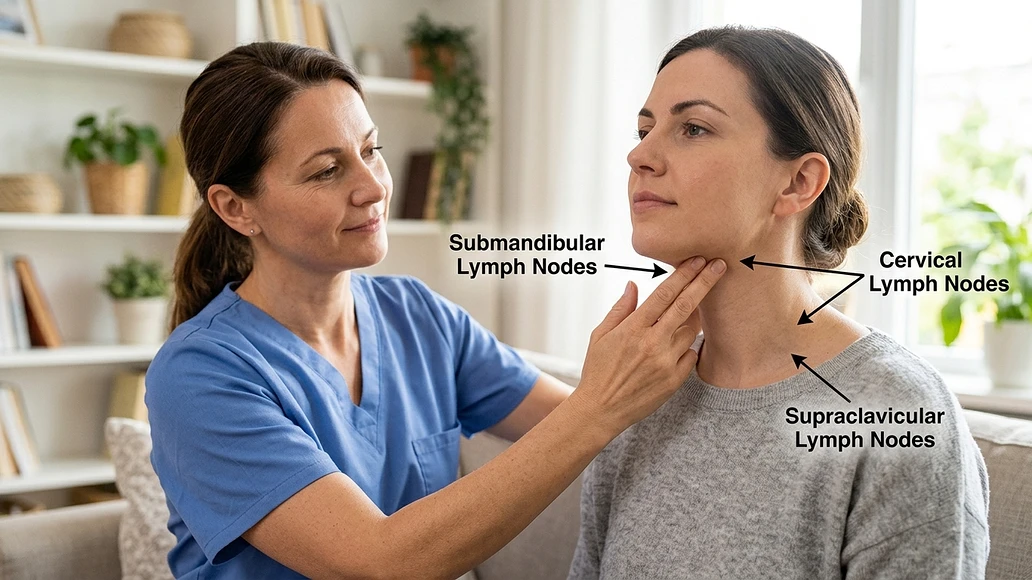
Neck and under the jaw: Tilt your head slightly forward to relax the muscles. Feel under the jawline, along the sides of the neck, and behind the ears. These nodes often react to colds, throat infections, ear infections, scalp irritation, and dental problems.
Armpits: Relax your arm. With the opposite hand, feel high into the armpit and move your fingers gently around the area. Nodes here may react to skin infections, cuts, shaving irritation, or problems affecting the arm, chest, or breast area.
Groin: Feel where the upper thigh meets the pelvis. Groin nodes can enlarge with foot injuries, leg skin infections, insect bites, or irritation in the genital area.
Above the collarbone: Gently feel the hollow just above the collarbone. A node here is more concerning than nodes in many other areas and should not be ignored.
Common causes of swollen lymph nodes
Most swollen nodes are caused by common infections or inflammation. The location often gives clues.
| Body area | Nearby issues that commonly trigger swelling | Examples |
|---|---|---|
| Neck and jaw | Upper respiratory and mouth-related problems | Cold, flu, sore throat, ear infection, dental infection, mouth ulcers |
| Behind the ear or scalp area | Scalp or skin irritation | Skin infection, dandruff irritation, insect bite |
| Armpit | Arm, chest, or breast area irritation or infection | Cut, shaving rash, skin infection, inflamed hair follicle |
| Groin | Leg, foot, or genital area issues | Foot blister, infected bug bite, skin infection, ingrown hair |
| Multiple regions | Body-wide illness or systemic condition | Viral illness, autoimmune disease, medication reaction, less commonly cancer |
Other possible causes include certain medications, autoimmune conditions, tuberculosis, HIV, and cancers such as lymphoma or leukemia. These are less common than routine infections, but they matter because the pattern and red flags are different.
Swollen nodes versus other lumps
Not every lump is a lymph node. People often confuse nodes with cysts, lipomas, abscesses, swollen salivary glands, or even tight muscle knots.
A lymph node is usually a small, rounded or bean-shaped structure under the skin in a known node area. A lipoma often feels soft and doughy. A cyst may feel more superficial and rounded. An abscess is often painful, warm, red, and may feel like it contains fluid. A muscle knot tends to sit within muscle tissue and changes with movement or pressure.
If you are not sure what you are feeling, especially if it is growing or has concerning features, a clinician should examine it.
What makes a lymph node more concerning
Some features raise the chance that the swelling needs prompt medical evaluation rather than simple watchful waiting.
- It is hard, rubbery, or fixed in place.
- It is painless but keeps getting larger.
- It is above the collarbone.
- It is larger than about 1 to 2 cm and not improving.
- It lasts more than 2 to 4 weeks.
- You have swollen nodes in several different body areas.
- You also have unexplained weight loss, drenching night sweats, persistent fever, or marked fatigue.
How long swollen lymph nodes usually last
Nodes related to a short-term infection often improve as the illness improves. They may become less tender first, then gradually shrink over days to a few weeks. Sometimes a node stays slightly noticeable for a while even after the infection has passed.
What matters most is the trend. A node that is slowly settling is less concerning than one that is enlarging, staying firm, or remaining unchanged for weeks without a clear explanation.
| Time since you noticed it | What may be typical | Suggested action |
|---|---|---|
| First few days | Tender node with a cold, sore throat, or nearby skin irritation | Monitor, rest, hydrate, treat the likely cause if known |
| About 1 to 2 weeks | Symptoms improving and node becoming less sore | Continue observation if clearly getting better |
| 2 to 4 weeks | Still enlarged, not shrinking much, or no clear cause | Arrange medical evaluation |
| Any time | Rapid growth, hard or fixed feel, supraclavicular location, breathing or swallowing trouble | Seek prompt or urgent medical care depending on severity |
Swollen lymph nodes without feeling sick
It is possible to have enlarged nodes without obvious illness. Sometimes the cause is still minor, such as a dental problem, a healing skin infection, a recent vaccine, or irritation you did not notice. In other cases, the cause may be less obvious, such as a medication reaction, autoimmune disease, or a more serious condition.
If you feel well but a node is persistent, growing, hard, fixed, or in a concerning location, it still deserves evaluation. Lack of pain does not automatically mean it is harmless.
When to call a doctor and when to seek urgent help
Seek urgent care now if
- You have trouble breathing or swallowing.
- The area is very painful, rapidly enlarging, or draining pus.
- The skin over it is red, hot, and looks infected.
- You feel severely unwell, dehydrated, or confused.
Arrange medical evaluation soon if
- The node lasts more than 2 to 4 weeks.
- It keeps growing instead of shrinking.
- It feels hard, rubbery, or fixed.
- It is painless and enlarging.
- It is above the collarbone.
- You have multiple swollen areas.
- You have fever that persists, night sweats, weight loss, or severe fatigue.
People who are pregnant, immunocompromised, have a history of cancer, or have autoimmune disease should have a lower threshold for calling a clinician. Children with persistent or multiple swollen nodes, especially with fever or whole-body symptoms, should be evaluated by a pediatric clinician. Do not give aspirin to children under 16 unless specifically directed by a medical professional.
Safe home care for comfort
Home care can help with discomfort, but it does not cure the underlying cause. The goal is comfort and careful monitoring while your body heals or while you arrange care if needed.
- Rest and drink enough fluids.
- Use a warm compress for tenderness.
- Use over-the-counter pain relief such as acetaminophen or ibuprofen if appropriate for you, and follow label directions.
- Avoid repeated pressing, squeezing, or vigorous massage.
- Track the date you noticed it, the location, size trend, pain level, and any other symptoms.
Ibuprofen and other NSAIDs are not right for everyone, especially some people with kidney disease, ulcers, bleeding risk, or certain stages of pregnancy. If you are unsure, ask a clinician or pharmacist.
What not to do
Do not try to drain a lymph node at home. Do not rely on herbs, teas, or supplements marketed to cleanse or drain the lymphatic system, especially if the node has red flags. Evidence for those approaches is weak, and they can delay proper diagnosis. Repeated handling can also make the area more irritated and harder to assess.
How doctors evaluate swollen lymph nodes
If you need medical evaluation, the visit usually starts with questions about timing, recent illness, dental issues, skin problems, travel, medications, vaccine history, and symptoms such as fever or weight loss. Then a clinician examines the node and nearby body area.
| Evaluation step | What happens | Why it is done |
|---|---|---|
| History | Questions about symptoms, timing, exposures, medications, and recent infections | Helps narrow the likely cause |
| Physical exam | Checks size, tenderness, mobility, location, and nearby skin or throat findings | Looks for signs of local infection or concerning features |
| Blood tests | May include infection or inflammation testing | Looks for systemic illness |
| Imaging | Ultrasound or other imaging in selected cases | Provides more detail about the lump |
| Biopsy | A sample is taken if the node remains suspicious | Checks for cancer or other specific disease |
Preparedness angle, monitor smart and communicate clearly
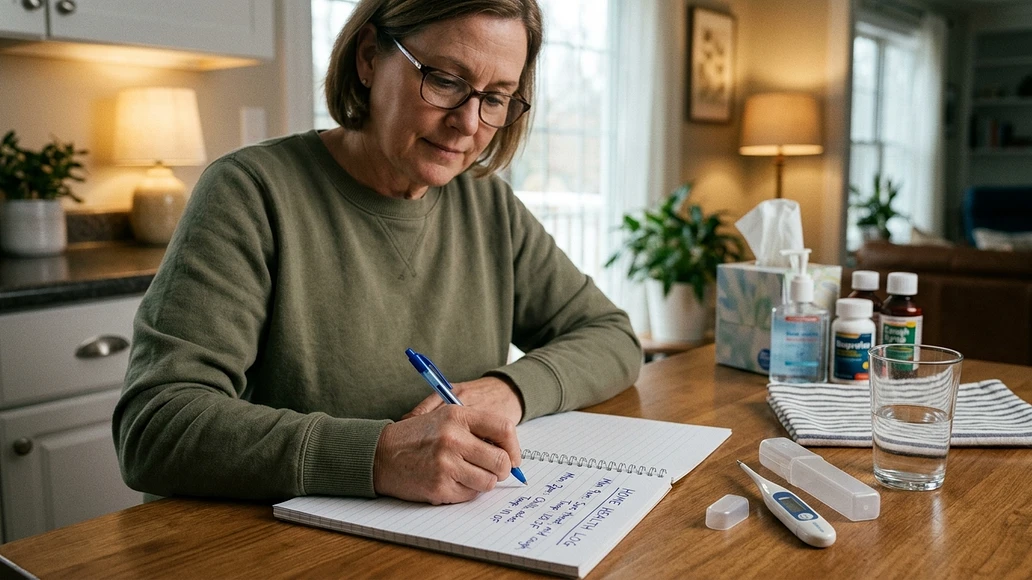
From a home preparedness standpoint, the best tool is not a home remedy. It is a simple symptom log. Write down when you first noticed the node, where it is, whether it is tender, whether it moves, whether it seems larger or smaller, and any related symptoms like sore throat, dental pain, skin rash, fever, night sweats, or weight loss.
If you need to call a clinic, urgent care, or telehealth service, this record helps you explain the situation clearly. It also reduces the temptation to keep poking at the area to see if it changed.
Special situations
Children
Children often get swollen neck nodes with routine viral illnesses. Even so, persistent swelling, multiple enlarged areas, high fever, worsening pain, or a child who seems unusually ill should be assessed by a pediatric clinician.
Pregnancy
Pregnancy changes what medicines are appropriate and may lower the threshold for checking in with a clinician. If you are pregnant and have persistent or concerning swelling, call your healthcare team.
Immune compromise or chronic illness
If you have HIV risk, take immune-suppressing medications, have a history of cancer, or live with autoimmune disease, do not wait as long to seek advice. The causes and urgency can be different.
FAQ
Can swollen lymph nodes go away on their own, or do they always need treatment?
Yes, many go away on their own when the trigger is a short-term infection or irritation. The key is whether the node is improving. If it persists, grows, or has red flags, it needs evaluation.
Is it normal for one lymph node to stay enlarged for weeks?
It can happen after an infection, but a node that stays enlarged beyond 2 to 4 weeks, especially without clear improvement, should be checked by a clinician.
Can you have swollen lymph nodes without having an infection or feeling sick?
Yes. Causes can include dental issues, skin problems, recent vaccines, medication reactions, autoimmune disease, and less commonly cancer. A persistent or concerning node should not be ignored just because you otherwise feel fine.
Do vaccines or medications cause swollen lymph nodes, and should I be worried?
They can. Vaccine-related swelling is usually temporary and reactive. Some medications can also contribute. If the timing fits and the node improves, that is reassuring. If it persists, grows, or has concerning features, get medical advice.
Can I safely massage or drain swollen lymph nodes at home?
It is best not to. Gentle touching during a one-time check is fine, but repeated massage or squeezing can irritate the area and does not treat the cause.