Stored Fuel Basics, How to Keep Gasoline Usable and Safe at Home
Gasoline in a can does not stay engine-ready forever. Learn realistic shelf-life ranges by fuel type, what makes fuel go stale, how storage conditions change the timeline, and when to use, stabilize, or dispose of old gas safely.

If you keep fuel on hand for yard equipment, storm prep, or backup power, the real question is not just how long gasoline lasts in a can. It is how long that gasoline stays safe for engines, how storage conditions change the answer, and when old fuel becomes more trouble than it is worth.
In practical terms, gasoline stored at home should usually be treated as a short-term supply unless you are rotating it regularly. Unstabilized fuel may begin losing quality within weeks, especially in heat or in a partly filled can. Under good storage conditions, many people can get a few months of reliable use, and in some cases longer. Ethanol-blended fuel usually has the shortest useful life. Ethanol-free gasoline generally stores better. A fuel stabilizer can help, but it works best when added to fresh fuel, not fuel that is already stale or contaminated.
Just as important, gasoline that still burns is not automatically gasoline you should trust in a generator, chainsaw, mower, or vehicle. Old fuel can cause hard starts, rough running, deposits, and moisture-related problems even if it remains flammable.
How long gasoline lasts in a can
A realistic answer is a range, not a single number. Fuel life depends on the blend, the container, temperature swings, sunlight, moisture exposure, and whether a stabilizer was added while the fuel was fresh.
| Fuel type and condition | Typical practical shelf life | What shortens it | Best use advice |
|---|---|---|---|
| Regular gasoline, untreated | Often about 3 to 6 months for dependable engine use | Heat, air space in the can, poor sealing, frequent opening | Buy only what you can rotate soon |
| Ethanol-blended gasoline, such as E10 | Often about 1 to 3 months in average home conditions | Moisture absorption, temperature swings, long storage | Use fastest and avoid long storage if possible |
| Ethanol-free gasoline | Often longer than E10, sometimes around 6 months or more under good storage | Oxidation, evaporation, poor container seal | Better choice for seasonal equipment and storage |
| Fresh gasoline with stabilizer added promptly | Can extend useful life, often toward the longer end of the range | Old fuel, contaminated fuel, bad storage conditions | Add stabilizer at purchase if you plan to store it |
Those ranges are conservative and practical for home users. They are better for decision-making than optimistic claims. If the fuel is for critical equipment, use the shortest credible window and rotate often.
What “gas going bad” actually means
Gasoline is a blend of hydrocarbons designed to vaporize and burn in a controlled way. Over time, that blend changes. When people say gas has gone bad, they usually mean one or more of these things has happened:
- Oxidation, oxygen reacts with fuel components and creates gums and varnish-like deposits.
- Evaporation of light ends, the most volatile parts escape first, making the fuel harder to ignite properly in an engine.
- Moisture contamination, water enters through condensation or humid air exposure.
- Phase separation, in ethanol-blended fuel, absorbed water can pull ethanol out of the gasoline and create a separate layer.
That last point matters a lot. Phase separation means the fuel is no longer a uniform blend. If that happens, do not rely on it for engines. It may still be flammable, but it is not trustworthy fuel.
How gasoline changes over time
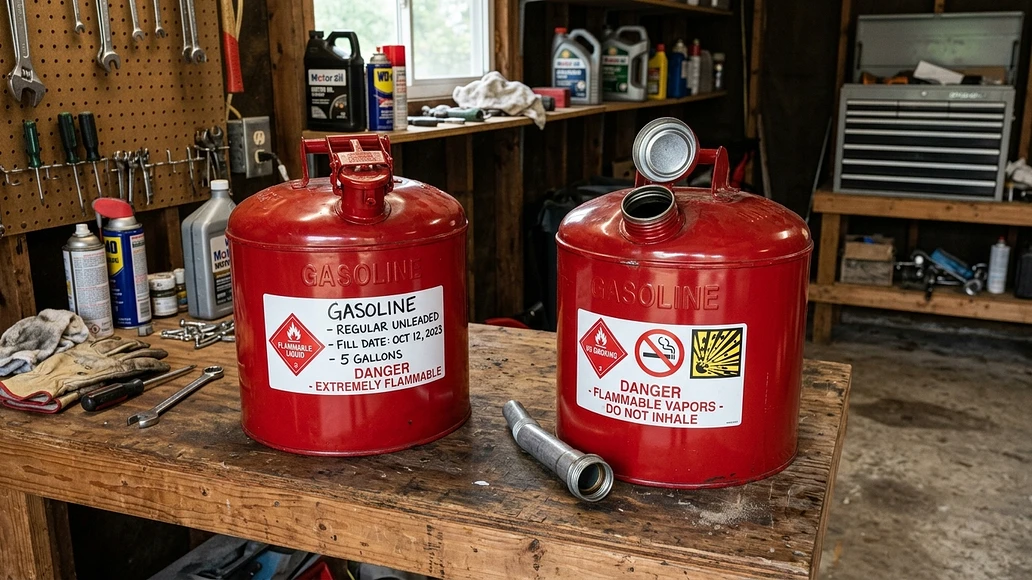
Fresh gasoline is formulated to meet performance standards at the pump, not to sit indefinitely in a can. Once it is stored, several things start working against it. Heat speeds up chemical change. Sunlight warms the container and increases vapor pressure. A loose cap allows more evaporation. A half-empty can leaves more headspace, which is the air volume above the fuel, and that extra air gives oxidation more room to happen.
Repeated opening also matters. Every time the can is opened, fresh air and humidity can enter. In humid climates, ethanol-blended fuel is especially vulnerable because ethanol can absorb water from the air.
Shelf life by fuel type
Regular gasoline vs ethanol-blended gasoline vs ethanol-free gasoline
Gasoline is the general fuel used in spark-ignition engines. Ethanol-blended fuel is gasoline mixed with alcohol, commonly around 10 percent ethanol in E10. Ethanol-free gasoline contains no ethanol and is often preferred for storage, marine use, and small engines. In general, ethanol-free fuel stores better because it is less prone to moisture-related problems.
| Fuel type | Storage strengths | Storage weaknesses | Best fit |
|---|---|---|---|
| Regular gasoline with ethanol blend | Easy to find, standard pump fuel | Shorter storage life, moisture absorption risk | Fuel you will rotate quickly |
| Ethanol-free gasoline | Better long-term stability, often better for small engines | May cost more or be harder to find | Seasonal tools, backup equipment, stored reserve |
| Stabilized fresh gasoline | Slows degradation when stored correctly | Not a fix for already degraded fuel | Preparedness storage with a rotation plan |
How container type affects shelf life
An approved fuel container is a can designed and labeled for gasoline storage, with materials and closures intended for flammable liquids. This is not the place for milk jugs, glass jars, soda bottles, or random utility containers.
Container choice affects both safety and fuel life. A good can limits vapor loss, reduces contamination, and handles expansion better.
| Container type | Effect on fuel quality | Safety notes | Bottom line |
|---|---|---|---|
| Approved plastic gas can | Good if sealed well and kept cool | Common for home use, inspect for cracks and cap wear | Practical choice for most households |
| Approved metal gas can | Good durability and sealing when maintained | Can rust if damaged internally, may be heavier | Strong option for repeated use |
| Unapproved household container | Poor vapor control, contamination risk | Unsafe and not recommended | Do not use |
Whatever can you use, keep it tightly sealed, do not overfill it, and label it with the purchase or fill date. Leave some expansion room rather than filling to the brim.
Best storage conditions for gasoline
Good storage conditions can make the difference between fuel that stays usable for months and fuel that becomes questionable much sooner.
| Storage factor | Good practice | Bad practice | Why it matters |
|---|---|---|---|
| Temperature | Cool, stable conditions | Hot attic, direct sun, repeated heat swings | Heat speeds degradation and vapor pressure changes |
| Light exposure | Shaded storage | Full sun exposure | Sunlight increases heating |
| Seal quality | Cap closed tightly, gasket in good shape | Loose or damaged cap | Reduces evaporation and moisture entry |
| Headspace | Some expansion room, but not half-empty for long storage | Large air gap above fuel | More air can speed oxidation |
| Handling frequency | Open only when needed | Frequent opening and pouring | Each opening introduces fresh air and humidity |
Where to store gas cans safely
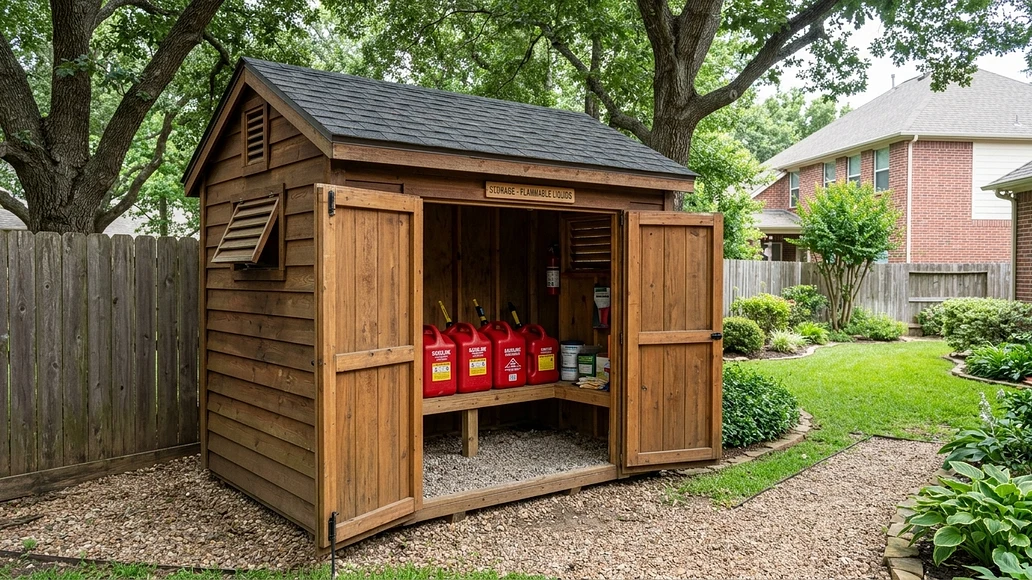
Do not store gasoline in the house, in an attached garage, or near water heaters, furnaces, pilot lights, electrical equipment, or anything that can spark. For most homes, the safer choice is a detached shed or outbuilding with ventilation, shade, and restricted access.
Keep fuel away from children and pets. Store cans upright on a stable surface where they cannot tip over. Avoid places where flooding, direct weather, or vehicle impact is possible. If you are unsure how much fuel can legally be stored at home, check local fire code, municipal rules, HOA rules, and state guidance.
How to tell if gasoline has gone stale
There is no perfect home test, but several warning signs are useful. Compare stored fuel with fresh fuel if you can do so safely and without creating extra exposure.
| Sign | What it may mean | Risk level | Recommended action |
|---|---|---|---|
| Sour or varnish-like smell | Oxidation and aging | Moderate to high | Do not use in critical or small engines |
| Darker color than fresh fuel | Chemical degradation | Moderate | Treat as suspect fuel |
| Cloudiness | Contamination or moisture | High | Do not rely on it |
| Visible water or separated layers | Phase separation or water contamination | Very high | Do not use in engines |
| Hard starting, rough running, stalling | Fuel may be stale or contaminated | High for equipment reliability | Stop using that batch and inspect fuel system as needed |
Can you still use old gasoline?
Sometimes old gasoline is still combustible, but that does not mean it is wise to use. The key question is engine suitability. Fuel that is only slightly aged and has been stored well may still work in some situations. Fuel that smells bad, looks dark, appears cloudy, or shows water separation should not be trusted.
Be especially cautious with emergency generators, chainsaws, trimmers, mowers, and other small engines. These are often less tolerant of stale fuel, and they may be the exact tools you need to work when conditions are already difficult. If the fuel is questionable, replacing it is usually cheaper than dealing with a no-start or repair.
When to add a fuel stabilizer
A fuel stabilizer is an additive meant to slow gasoline degradation during storage. It is most useful when added to fresh gasoline right after purchase, before the fuel has had time to age significantly. If you buy fuel specifically for storage, adding stabilizer the same day is the best practice.
Do not think of stabilizer as a rescue product for old gas. It does not reverse oxidation, remove water, or fix phase separation.
Does a fuel stabilizer extend shelf life?
Yes, it can extend practical shelf life when used correctly, but only within limits. Stabilizer helps slow chemical breakdown. It does not cancel out poor storage conditions, a bad container, repeated heat exposure, or moisture contamination.
| Situation | Will stabilizer help? | Reason | Best move |
|---|---|---|---|
| Fresh fuel placed in an approved sealed can | Yes | It can slow normal degradation | Add promptly and label the date |
| Fuel already several months old | Limited at best | Damage may already be underway | Use soon if still good, do not count on long extension |
| Fuel with water contamination | No | Stabilizer does not remove water | Do not use as normal stored fuel |
| Fuel with phase separation | No | The blend has already failed | Follow local disposal guidance |
How to rotate stored gasoline
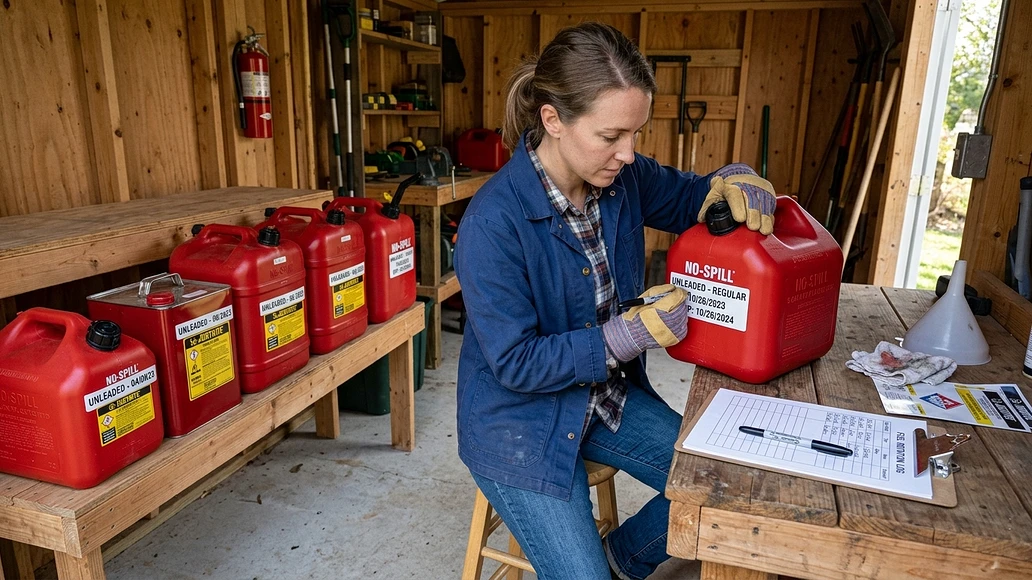
The simplest fuel plan is a rotation plan. Buy only what you can reasonably cycle through. Mark each can with the fill date and fuel type. Use the oldest can first. Refill with fresh fuel and stabilizer if that is part of your storage routine.
For many households, a seasonal rotation schedule works better than trying to stretch fuel to the edge of its possible life. If you rely on stored fuel for storm readiness, test and refresh your supply before severe weather season rather than after.
Gas can safety rules and common mistakes
Most gasoline storage problems come from preventable mistakes. The biggest ones are storing fuel too close to ignition sources, using the wrong container, keeping old unlabeled fuel, and assuming that if gas still smells like gas it must be fine.
- Use only approved fuel cans.
- Keep containers tightly sealed.
- Do not overfill, leave room for expansion.
- Store in a detached, ventilated area when possible.
- Keep away from flames, sparks, appliances, and vehicles being worked on.
- Label the date and fuel type.
- Do not mix mystery fuel with fresh fuel just to avoid disposal.
Local rules and quantity limits for home storage
Home fuel storage limits vary by state, county, city, and fire code. Some areas also have rules for detached structures, total gallons allowed, and container types. Because these rules change and can differ widely, the safest advice is to check your local fire marshal, municipal code office, or state fire safety guidance before storing more than a small practical amount.
If you live under HOA rules, rental restrictions, or insurance policy conditions, those may matter too. Legal storage is not always the same as smart storage.
What to do with bad or contaminated gasoline
If gasoline is clearly stale, contaminated, or phase-separated, do not pour it on the ground, into a drain, into household trash, or into a septic system. That creates fire risk and environmental harm. Treat it as household hazardous waste and follow local disposal instructions.
Hazardous waste in this context means a material that can harm people, property, or the environment if handled improperly. Many communities have hazardous waste collection days or designated drop-off sites. If you are not sure where to take it, contact your local solid waste authority, fire department non-emergency line, or municipal hazardous waste program.
When to replace fuel instead of trying to save it
If the fuel is old and you do not know the date, if it smells sour, if it looks dark or cloudy, if you see water, or if the can was stored badly, replacement is usually the smarter choice. This is especially true for emergency equipment. Fuel is cheaper than downtime when you need a generator during an outage or a chainsaw after a storm.
| Situation | Keep and rotate | Use soon | Dispose through local guidance |
|---|---|---|---|
| Fresh, labeled, sealed fuel in good storage | Yes | No rush | No |
| Fuel nearing the end of your normal rotation window but still looks and smells normal | No | Yes | No |
| Fuel of unknown age | No | Maybe, only if clearly normal and noncritical use is appropriate | Often the safer choice |
| Cloudy fuel, water present, separated layers, sour odor | No | No | Yes |
References
- Gasoline Safety and Fuel Storage Tips, Exxon
- Consumers Warned Against Storing Gasoline, U.S. Consumer Product Safety Commission
- Used Oil and Household Hazardous Waste, U.S. Environmental Protection Agency
- Gasoline Safety Information, National Fire Protection Association
- Fuel Storage Guidance, Oregon State Fire Marshal