The Stockpile Mistakes That Spoil Food Faster, And the Safer Fixes
A reliable emergency pantry is not just about buying more food. It is about avoiding the common storage mistakes that lead to waste, pests, quality loss, and foodborne illness. Here are five myths to stop believing, plus practical ways to store food more safely.

Building a dependable food reserve is not only about quantity. It is also about safety, rotation, and storage conditions that match the food you actually have. Many stockpiles fail quietly. Dry goods pick up moisture, canned foods sit too long in bad conditions, leftovers are cooled the wrong way, and decorative organizers create a false sense of security.
The result can be wasted money, disappointing quality, pest problems, and in some cases real foodborne illness risk. That matters even more if your household includes infants, older adults, pregnant people, or anyone with chronic health conditions.
This guide breaks down five common myths that can undermine a home stockpile, then expands into the practical details most short prepper listicles skip. This article is for general education only and does not replace product labels, medical advice, local regulations, or guidance from USDA, FDA, CDC, extension services, or your clinician.
Why bad storage advice costs more than a few stale crackers
Food storage myths usually sound harmless. In practice, they can cause three expensive problems at once. First, they shorten shelf life and lower quality. Second, they increase the odds that food becomes unsafe before you realize it. Third, they make your emergency pantry less usable when you actually need it.
A stockpile should reduce stress, not create uncertainty. If you cannot trust your storage system, you may end up throwing away food, replacing supplies early, or relying on items that no longer fit your household's needs.
| Myth | What really happens | Practical fix |
|---|---|---|
| If it looks and smells fine, it is safe | Some dangerous contamination cannot be seen or smelled | Follow time and temperature rules, discard suspect food |
| Dry foods last forever in any container | Moisture, oxygen, fat content, and packaging all affect storage life | Use proper long term packaging only for suitable low moisture foods |
| Any basement or garage is good enough | Heat swings and humidity speed spoilage and damage packaging | Measure conditions and choose the most stable indoor location |
| Canned food lasts forever if the can is not bulging | Can integrity, storage conditions, and age all matter | Inspect regularly, rotate, and discard damaged or suspect cans |
| Emergency food does not need rotation | Quality drops, dates pass, and family needs change | Use FIFO and store foods you already eat |
Safety is not the same thing as shelf life
One of the biggest misunderstandings in preparedness is treating shelf life and safety as if they mean the same thing. They do not. A food can lose flavor, texture, color, or nutrition while still being safe. A food can also appear normal while being unsafe because bacteria or toxins are not always obvious to the senses.
That distinction matters most with perishables, leftovers, cooked foods, and any item exposed to unsafe temperatures. The familiar danger zone, roughly 40 to 140 degrees Fahrenheit, is where many harmful bacteria can grow quickly. Perishable food should generally be refrigerated within 2 hours, or within 1 hour if the environment is above 90 degrees Fahrenheit.
For cold storage, a refrigerator should stay at 40 degrees Fahrenheit or below, and a freezer at 0 degrees Fahrenheit or below. Those numbers are not prepper trivia. They are core safety limits.
| Claim or practice | Evidence level | What to do |
|---|---|---|
| Refrigerate perishables within 2 hours, 1 hour above 90 degrees Fahrenheit | Well supported | Treat this as a hard rule for meats, dairy, cooked foods, and leftovers |
| Keep fridge at 40 degrees Fahrenheit or below, freezer at 0 degrees Fahrenheit or below | Well supported | Use appliance thermometers, do not guess |
| Cool, dark, dry storage for pantry staples | Well supported | Choose stable indoor spaces away from heat and moisture |
| Visual and smell checks are enough for safety | Harmful to recommend | Do not rely on senses alone for perishables or suspect foods |
| All basements and garages are fine for long term storage | Weak and context dependent | Measure temperature and humidity before trusting the space |
| Canned food is safe indefinitely | Weak | Rotate and inspect, storage conditions still matter |
Myth 1, If it looks and smells fine, it is safe to eat
This is one of the most dangerous food storage myths because it encourages people to trust their senses over time and temperature controls. Spoilage organisms may create obvious off odors or visible mold, but some harmful bacteria do not announce themselves that way. A container of leftovers can smell normal and still be unsafe if it sat out too long or cooled too slowly.
That matters in everyday life and in emergencies. During a power outage, after a long shopping trip, or when batch cooking for preparedness, people often make judgment calls based on appearance. That is risky.
The safer approach is simple. Use time limits, keep cold foods cold, cool hot foods quickly in shallow containers, and when there is real doubt, throw it out. This is especially important for cooked rice, meats, casseroles, soups, dairy, cut produce, and anything handled repeatedly.
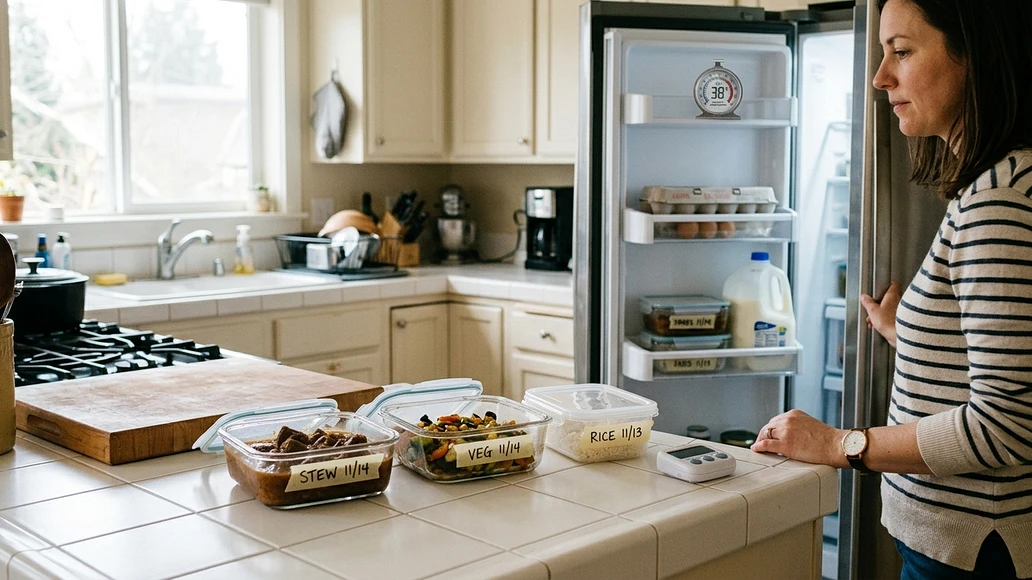
Where smell tests fail most often
Smell tests are especially unreliable with leftovers, deli foods, cooked grains, and foods that were temperature abused but not yet visibly spoiled. They are also a poor safety screen for vulnerable household members. If someone in your home is pregnant, elderly, immunocompromised, or medically fragile, be stricter, not looser, with discard decisions.
Myth 2, Dry foods last forever in any container
Dry storage is where a lot of preparedness advice becomes oversimplified. Yes, some low moisture staples can store for a very long time under the right conditions. No, that does not mean every dry food belongs in a bucket for decades.
Long term storage works best for low moisture, relatively low fat foods such as white rice, many dried beans, oats, and similar staples, when packaged correctly. Foods with higher moisture, higher oil content, or delicate quality can go rancid, clump, mold, or lose usefulness much sooner. Brown rice is a classic example. Its oils make it far less suitable for very long storage than white rice.
Container choice also matters. Original paper or thin plastic packaging is often fine for short term pantry use, but it is poor protection against oxygen, humidity, and pests over the long haul. For true long term storage, many households use food grade buckets with properly sealed Mylar liners and oxygen absorbers, but only for foods appropriate to that method.
A critical caution, oxygen absorbers are not a magic upgrade for every food. They are generally used for suitable low moisture dry goods. They are not a blanket solution for moist foods, and improper use can create a false sense of safety.
| Food type | Short term pantry approach | Long term approach | Main risk if done wrong |
|---|---|---|---|
| White rice | Original package in a cool, dry pantry for routine rotation | Mylar plus oxygen absorber inside a food grade bucket | Moisture, pests, odor absorption |
| Brown rice | Rotate faster in original or airtight food safe container | Not ideal for very long storage because of oil content | Rancidity |
| Dried beans | Airtight food safe container for regular use | Suitable for long term packaging if low moisture and stored cool | Moisture, hardening with age, pests |
| Flour | Shorter rotation in sealed food safe container | Varies by type, not all flours are ideal for extended storage | Rancidity, insects, moisture |
| Jerky or dehydrated fruit | Follow label directions and rotate often | Not a one size fits all long term bucket item | Residual moisture, mold, quality loss |
Short term pantry versus true long term storage
A 3 to 12 month pantry and a 10 to 25 year emergency reserve are not managed the same way. Short term storage focuses on convenience, regular use, and normal packaging. Long term storage requires more attention to moisture, oxygen, light, pests, and stable temperatures. Mixing those two systems is how people end up overpacking foods that should have been rotated normally.
Myth 3, Any cool room, basement, or garage will protect your stockpile
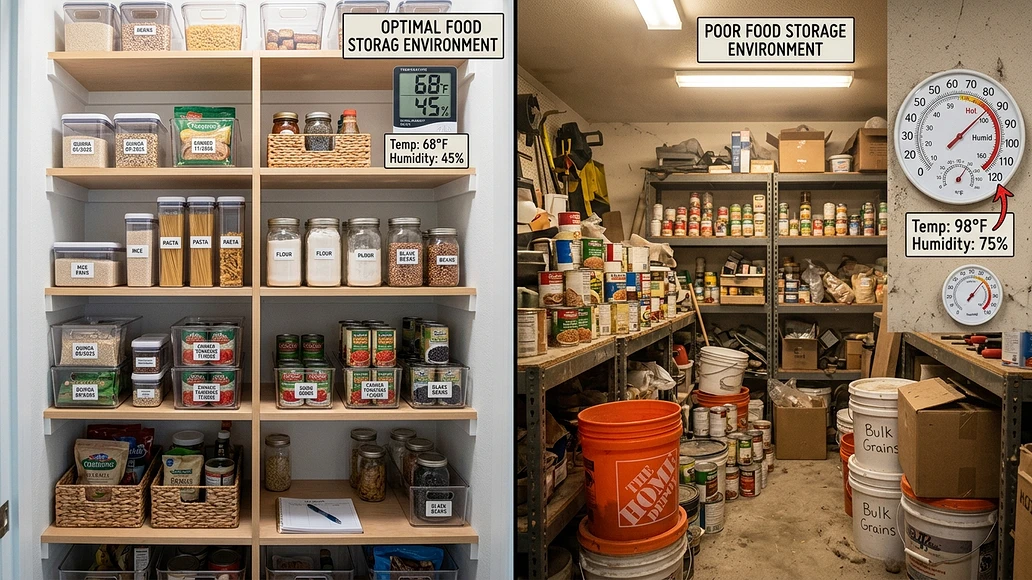
Many homes have a space that seems good enough for storage because it feels out of the way. The problem is that food does not care whether a room feels cool for five minutes in spring. It responds to actual temperature swings, humidity, and exposure over time.
Garages often get too hot in summer and too cold in winter. Basements can be better, but some are damp, musty, or prone to flooding. Attics are usually among the worst places for food because of extreme heat. Even a closet inside the main living area can outperform a garage if the temperature is more stable.
The fix is to measure, not assume. Put a basic thermometer and humidity monitor in your candidate storage area for a few weeks. Check highs and lows. Look for signs of condensation, rust, cardboard softening, or musty smells. Those clues tell you more than a quick walk through ever will.
| Storage location | Typical strengths | Typical problems | Best use |
|---|---|---|---|
| Interior closet or conditioned pantry | Stable temperature, lower humidity, easy monitoring | Limited space | Best general choice for most homes |
| Basement | Can be cool and dark | Humidity, flooding, odors, pests, mold risk | Good only if dry, stable, and monitored |
| Garage | Convenient, roomy | Heat swings, freezing, fumes, pests | Poor for many foods, use cautiously |
| Attic | Out of the way | Extreme heat, poor access | Generally unsuitable for food |
Simple environmental targets
For pantry and long term dry storage, think cool, dark, dry, and stable. Lower and steadier temperatures usually preserve quality better. Humidity control matters because moisture migration ruins dry goods and weakens packaging. Keep food off concrete floors, away from water heaters, laundry areas, and direct sunlight.
Myth 4, Canned food is good forever if the can is not bulging
Commercial canned food is one of the most useful preparedness tools because it is durable, familiar, and easy to rotate. But durable is not the same as immortal. Can integrity, storage temperature, age, and product type all affect quality and safety.
A bulging can is an obvious danger sign, but it is not the only one. Rust, deep dents, leaking seams, spurting liquid on opening, or unusual odors are all reasons to discard the product. Even when a can remains safe, quality can decline over time. Texture softens, flavors flatten, and nutrition may slowly drop.
Dates on cans are often about quality rather than a strict safety deadline, but that does not mean dates can always be ignored. Poor storage conditions can shorten useful life. A can stored for years in a hot garage is not the same as one kept in a stable indoor pantry.
How to inspect canned goods
| What to check | Why it matters | What to do |
|---|---|---|
| Bulging ends or swelling | Possible gas production from spoilage | Discard without tasting |
| Leaks or sticky residue | Seal failure or contamination | Discard |
| Deep dents, especially on seams | May compromise can integrity | Discard if severe or near seams |
| Heavy rust | Can weaken the container | Discard if rust affects opening or seams |
| Missing label or unreadable date | Makes rotation and recall checks harder | Relabel when possible, rotate sooner |
Also remember recalls. A stockpile is not exempt from them. Periodically checking lot numbers and recall notices is a smart habit, especially for foods you plan to keep a long time.
Myth 5, Emergency food is for emergencies only, so rotation is optional
This myth creates stale, outdated stockpiles that no one wants to eat. It also leads people to buy foods their household does not normally use, then forget about them until an emergency arrives. A better system is simple, store what you eat, and eat what you store.
Rotation does not have to be complicated. Use first in, first out, label purchase or pack dates clearly, and place newer items behind older ones. Build meals around stockpile foods so your reserve stays familiar and current. This is more realistic for busy families, apartment dwellers, and anyone on a budget.
Rotation also helps you catch problems early. You notice dented cans, stale crackers, insect activity, and foods your family dislikes before they pile up into a bigger failure.
| Rotation habit | Why it works | Low effort way to do it |
|---|---|---|
| First in, first out | Reduces waste and keeps dates moving | Put new items behind old ones on the shelf |
| Date labeling | Makes audits faster | Write month and year with a marker |
| Meal integration | Keeps stockpile foods familiar | Use pantry staples in weekly meal planning |
| Quarterly checks | Catches spoilage and pests early | Set a recurring calendar reminder |
Container myths, buckets, jars, and pretty organizers
Not every container sold for kitchen organization is suitable for preparedness. Decorative canisters may look tidy but fail at moisture control, airtight sealing, or pest resistance. Non food grade buckets can also be a bad choice because materials matter when food sits in contact with them for long periods.
Food grade containers are the safer baseline. Beyond that, match the container to the food and the storage timeline. Glass jars can work well for some dry goods in short to medium rotation, but they break and let in light unless stored properly. Vacuum sealing can help with some foods, but it is not a universal replacement for proper long term packaging systems.
| Container type | Pros | Cons | Best use case |
|---|---|---|---|
| Original packaging | Convenient, labeled, no repacking needed | Weak against pests, moisture, and oxygen over time | Short term pantry rotation |
| Mylar plus food grade bucket | Strong protection for suitable dry staples | More setup, not right for every food | Long term storage of low moisture staples |
| Mason jar | Reusable, visible contents, good for dry goods rotation | Breakable, light exposure, limited capacity | Short to medium term indoor pantry use |
| Decorative canister | Looks neat, easy access | Often not airtight enough for long storage | Frequently used pantry items only |
Fridge and freezer myths that quietly weaken preparedness
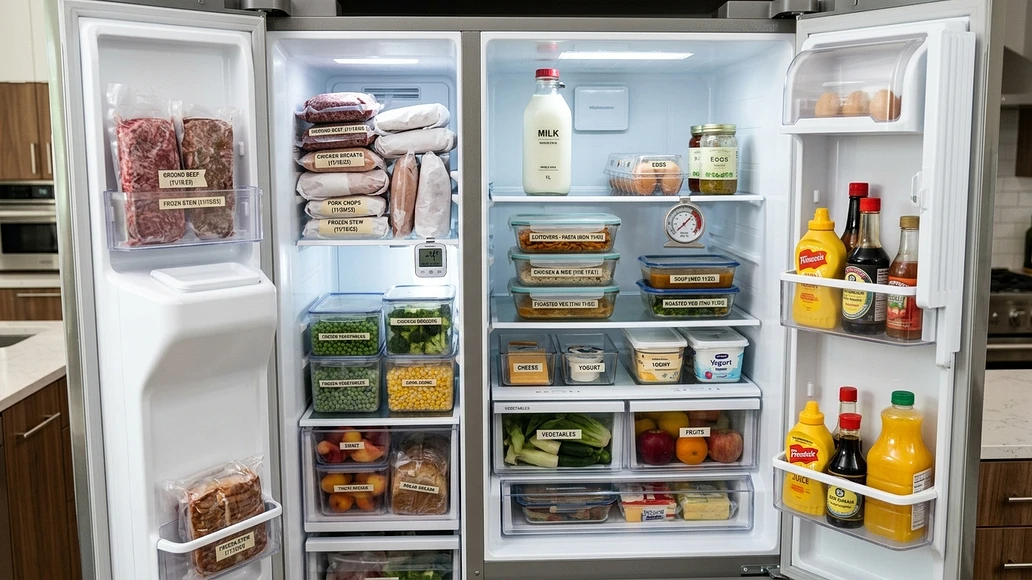
Preparedness is not only about shelf stable food. Your refrigerator and freezer are part of the system, especially for leftovers, bulk buys, and power outage planning. Common mistakes here can create the same safety problems people worry about in long term storage.
One frequent mistake is putting hot, dense food into deep sealed containers and expecting the refrigerator to cool it fast enough. Large volumes cool slowly, which can keep food in unsafe temperature ranges too long. Use shallow containers and divide big batches into smaller portions.
Another myth is that leftovers last until they smell bad. In reality, many cooked leftovers should be used within a few days, often around 3 to 4 days for mixed dishes and cooked meats. Freezer burn is another misunderstood issue. It usually affects quality more than safety if the freezer stayed cold enough, but badly wrapped food becomes less appealing and more likely to be wasted.
Pests, contamination, and the myth that sealed means safe
A lid helps, but it is not a complete pest plan. Rodents can chew packaging. Pantry insects can arrive inside products you bring home. Crumbs, spills, and cardboard clutter make the problem worse. A good stockpile uses layers of protection.
Keep food off the floor, clean shelves regularly, wipe spills promptly, and inspect corners, seams, and container lids during routine rotation. If you repackage bulk foods, work on clean surfaces with clean tools and clear labels. Cross contamination matters in storage too, especially for allergens and foods handled in mixed kitchens.
Do not overlook odors and nearby chemicals. Food should not be stored next to gasoline, solvents, pesticides, or strong smelling products. Packaging can be more permeable than people assume.
Stockpiling for real households, not imaginary ones
The best pantry for your home depends on who lives there. A generic pile of salty canned meals and sugary snacks may be easy to buy, but it may not be appropriate for infants, people with hypertension, kidney disease, diabetes, food allergies, or medication interactions.
| Household situation | What to prioritize | What to watch closely |
|---|---|---|
| Infants | Age appropriate formula or foods, safe water plan, familiar items | Expiration dates, preparation instructions, supply continuity |
| Older adults | Easy to chew foods, manageable packaging, hydration options | Sodium load, difficult can openings, special diets |
| Hypertension or heart disease | Lower sodium staples, beans, grains, shelf stable proteins with better nutrition | Highly salted soups, instant noodles, processed snacks |
| Kidney disease | Clinician guided food choices | Potassium, phosphorus, sodium, protein limits |
| Food allergies | Clearly labeled safe foods, separate storage if needed | Cross contamination during repackaging and rotation |
If anyone in your household is pregnant, immunocompromised, medically complex, or dependent on a therapeutic diet, review your stockpile with a clinician, registered dietitian, or pharmacist. Medication interactions can matter too. Grapefruit products, high vitamin K foods, and some herbal products may not fit every plan.
Build a safer food reserve with a simple step by step plan
- Audit what you already have. Check dates, packaging condition, storage location, and whether your family actually eats the items.
- Separate short term pantry foods from true long term staples. Do not package everything the same way.
- Improve the environment first. A stable indoor closet or pantry often beats a larger but harsher space.
- Upgrade containers where it matters most. Focus on food grade, airtight, pest resistant solutions.
- Start a rotation routine. Label, use FIFO, and schedule quarterly checks.
- Add monitoring tools. Use a fridge thermometer, freezer thermometer, and a temperature and humidity monitor in your storage area.
- Tailor the stockpile to your household's health needs, allergies, and cooking habits.
- Review the system annually. Update quantities, remove foods no longer suitable, and check recall notices.
Recent guidance that should shape your habits
Recent public health messaging continues to reinforce a few basics that every prepper should treat as non negotiable. Perishables should not sit out beyond the 2 hour rule, or 1 hour in very hot conditions. Refrigerators should stay at 40 degrees Fahrenheit or below, freezers at 0 degrees Fahrenheit or below. Leftovers often have a shorter safe window than people assume. And recall awareness matters, even for foods tucked away in storage.
If your current system relies mostly on memory, smell tests, or old rules of thumb, this is a good time to tighten it up.
FAQ
How long can I safely keep canned food in my emergency stockpile?
It depends on the product, the can's condition, and storage conditions. Commercial canned foods can remain usable for a long time, but they are not automatically safe forever. Rotate them, inspect for rust, leaks, swelling, and severe dents, and store them in a cool, dry, stable place. If a can is damaged or the contents seem abnormal, discard it.
Is it safe to repackage bulk foods from warehouse clubs into long term storage containers?
Yes, for suitable low moisture foods, if you use clean methods and food safe materials. Repackaging can improve shelf life and pest protection. The key is matching the method to the food. Not every bulk item is a good candidate for very long storage, especially foods with higher oil content or uncertain moisture levels.
Do I really need oxygen absorbers for all dry goods, or only some of them?
Only some of them. Oxygen absorbers are commonly used for appropriate low moisture staples in long term storage systems. They are not needed for every pantry item, and they are not a cure all for poor storage conditions or unsuitable foods. If you are unsure whether a food is appropriate for this method, keep it in normal rotation instead of guessing.
Can I store home canned foods in my long term stockpile alongside commercial cans?
You can store home canned foods, but they should be treated differently and require stricter attention to safe canning methods, product type, seal quality, and rotation. Home canning carries more room for error than commercial canning. Follow tested canning guidance from extension services or USDA sources, and do not assume home canned foods belong in a very long unattended reserve.
What is the safest way to store food if I only have a small apartment and no cool basement?
Use the most temperature stable interior space you have, such as a closet, under bed bins in conditioned space, or a shaded pantry cabinet away from the stove and dishwasher. Focus on rotation, compact food grade containers, and foods your household already uses. A small, well managed stockpile is safer and more useful than a large one stored badly.