Underground Food Storage Explained, Why Some Amish Families Use It and Where It Fails
Curious about why some Amish households store food underground? This guide explains what the practice really means, why cool soil can help certain crops last longer, which foods are suitable, and when safer modern methods are the better choice.

People searching for why the Amish bury food for storage are usually picturing a hidden old-world trick. In practice, the idea is much less mysterious. Some Amish and other homesteading families use underground storage because the earth can provide a naturally cool, dark, and fairly stable environment for certain foods. That can slow spoilage and reduce dependence on electricity. It does not mean every Amish household does it, and it does not mean burying food is a universal substitute for refrigeration.
The useful version of this method is really about cold storage, not magic. It overlaps with root cellars, buried caches, and insulated underground spaces used for crops that tolerate cool, humid conditions. Done well, it can help preserve potatoes, carrots, beets, apples, onions, and some shelf-stable canned goods. Done poorly, it can ruin food fast through moisture, pests, flooding, freezing, or unsafe temperatures.
This guide separates tradition from hype, explains why underground storage works, and shows where modern food safety rules should take priority.
What does “burying food” actually mean?
When people say food is buried for storage, they may be talking about several different setups. These are not all the same, and the differences matter.
| Method | What it is | Typical use | Main limitation |
|---|---|---|---|
| Root cellar | A dedicated underground or partially underground room with ventilation and insulation | Longer storage of root crops, apples, squash, and some canned goods | Requires planning, drainage, and proper design |
| Buried cache | A container or pit placed below ground level | Shorter-term storage of hardy produce or emergency supplies | Higher moisture and pest risk |
| Pit storage | A lined trench or pit with straw, sand, or soil layers around produce | Seasonal storage of root vegetables in cold climates | Harder to monitor and more climate-dependent |
| Buried refrigerator or insulated box | An improvised underground chamber using an old appliance shell or box | Attempted cool storage where no cellar exists | Can trap moisture, fail ventilation, and create contamination issues |
So the phrase often points to a broad family of methods rather than one specific Amish custom. In many cases, what people call buried food storage is simply a low-tech version of a root cellar system.
Why underground storage works
Soil temperature changes more slowly than air temperature. A few feet below the surface, the ground is often cooler in summer, less likely to swing wildly in winter, and naturally dark all year. Those conditions can help slow respiration and moisture loss in certain fruits and vegetables.
Underground storage works best because it can provide four useful conditions at once.
| Condition | Why it helps | What can go wrong |
|---|---|---|
| Cool temperatures | Slows decay and sprouting in many crops | If too warm, food spoils faster. If too cold, food freezes and breaks down |
| Darkness | Reduces light-triggered sprouting and quality loss | Darkness alone does not make unsafe food safe |
| Humidity buffering | Helps root crops stay firm instead of shriveling | Too much humidity encourages mold and rot |
| Stable conditions | Less day-to-day fluctuation than above-ground storage | Poor drainage or bad ventilation can erase the benefit |
That is the real appeal. Underground storage can reduce the speed of spoilage for the right foods. It cannot stop spoilage forever, and it cannot make risky foods safe.
Is this really an Amish practice?
Sometimes, yes. Universally, no. Amish communities are diverse, and their food storage habits vary by region, climate, farm size, access to basements or spring houses, and whether a family relies more on canning, cellar storage, or modern permitted equipment. The broader truth is that underground storage is a long-standing rural and homestead practice used by many groups, not a secret owned by one community.
The Amish connection tends to stand out because Amish households are often associated with self-reliance, gardening, home preservation, and lower dependence on grid-powered appliances. In that context, root cellars and other cool-storage methods make practical sense. But it is more accurate to say some Amish families use traditional underground storage methods than to claim all Amish people bury food.
What foods are best suited for underground storage?
The safest candidates are sturdy whole foods that already store reasonably well and benefit from cool, dark, humid conditions. Even then, quality at harvest matters. Bruised, cut, overripe, or diseased produce will not improve underground.
| Food type | Generally suitable | Conditionally suitable | Not suitable |
|---|---|---|---|
| Root vegetables | Potatoes, carrots, beets, parsnips, turnips | Radishes and rutabagas, depending on humidity and temperature | Cut or peeled roots |
| Bulb crops | Onions and garlic in drier storage zones | Shallots if well cured | Bulbs with soft spots or neck rot |
| Fruits | Storage apples in cool, monitored conditions | Pears only with careful timing and checking | Soft berries, cut fruit, overripe fruit |
| Winter crops | Winter squash and pumpkins in cool but not overly damp conditions | Cabbage if protected and checked often | Summer squash or damaged squash |
| Shelf-stable preserved foods | Properly sealed canned goods in a dry, non-freezing cellar-like space | Fermented foods only if the recipe and temperature range are appropriate | Leaking jars, rusted lids, or anything exposed to flooding |
Notice that “suitable” does not mean “bury and forget.” Underground storage still requires sorting, spacing, checking, and removing bad items quickly.
What foods should not be buried?
This is where safety matters most. Underground storage is not a general replacement for refrigeration. It should not be used for foods that need strict cold control or validated preservation methods.
Do not rely on buried storage for meat, dairy, cooked leftovers, seafood, or prepared meals. These foods carry higher foodborne illness risk and need proper refrigeration or freezing. The same caution applies to low-acid foods unless they have been preserved using tested methods such as pressure canning. If you are considering underground storage for meat preservation, the safest move is to use established food preservation guidance rather than improvising.
Also avoid burying foods in containers that can trap condensation, leak chemicals, invite rodents, or sit in flood-prone ground.
Root cellar vs buried cache vs buried refrigerator
These methods are often lumped together, but they differ a lot in safety and practicality.
| Method | Cost | Effort | Power needed | Food safety margin | Best use case |
|---|---|---|---|---|---|
| Root cellar | Medium to high | Medium to high | No | Moderate when well designed and monitored | Households storing garden crops seasonally |
| Buried cache | Low to medium | Medium | No | Lower due to moisture and temperature uncertainty | Short-term storage of hardy produce or emergency dry goods |
| Buried refrigerator | Low upfront, often poor long-term value | Medium | No | Low if improvised poorly, especially with drainage and ventilation issues | Usually not the best first choice |
| Pantry | Low | Low | No | Good for dry goods, poor for root crops in warm homes | Shelf-stable foods |
| Refrigerator | Medium | Low | Yes | High for foods that require refrigeration | Daily household food safety |
| Canning | Medium | Medium to high | No after processing | High only when tested methods are followed | Long-term shelf-stable storage |
| Freezing | Medium to high | Low to medium | Yes | High if temperature is maintained | Meat, prepared foods, and produce |
| Dehydrating | Low to medium | Medium | Sometimes | Good for appropriate foods when dried and packed correctly | Fruits, herbs, some vegetables, jerky with tested guidance |
A proper root cellar is usually the most reliable underground option because it is designed for airflow, drainage, and access. Improvised buried containers are usually less forgiving.
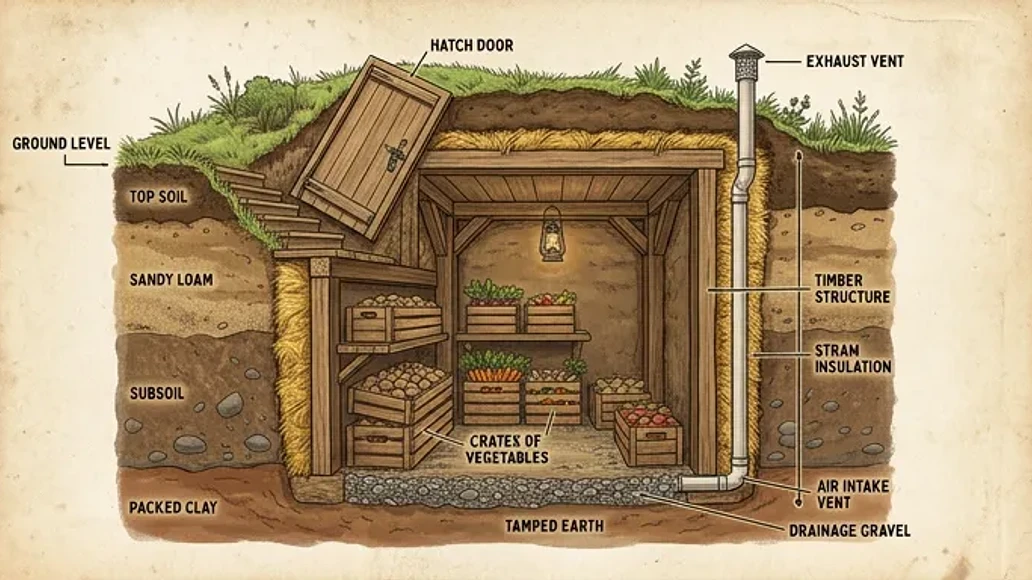
How buried food storage is set up
The practical setup depends on climate and soil, but the basic idea is to create a cool, dark, protected space while controlling moisture and pests.
- Choose high ground with good drainage. Avoid low spots, flood paths, and areas with a high water table.
- Use only sound produce. Sort out bruised, cracked, insect-damaged, or overripe items.
- Cure crops that need curing, such as potatoes, onions, garlic, and winter squash, before storage.
- Separate foods by their preferred conditions. Apples can speed ripening in nearby produce, while onions prefer drier air than carrots.
- Use clean containers that allow some airflow where appropriate, such as crates, bins, or layered storage with straw or sand.
- Insulate enough to reduce temperature swings, but do not seal so tightly that condensation builds up.
- Monitor regularly. Remove spoiled items immediately and watch for leaks, rodents, or freezing.
For built structures, check local excavation, drainage, and building rules before digging. A poorly placed underground chamber can become a water trap or structural hazard.
Common materials and containers
The right materials help protect food from crushing, moisture, and pests. The wrong ones can speed spoilage.
| Material or container | Why people use it | Main caution |
|---|---|---|
| Wooden crates | Allow airflow and easy sorting | Can absorb moisture and harbor mold if not kept clean |
| Food-safe bins | Protect from dirt and some pests | Need ventilation management to avoid trapped condensation |
| Straw | Insulates and cushions produce | Can attract pests if damp or dirty |
| Sand or sawdust | Helps separate root crops and buffer humidity | Must be clean and not soaking wet |
| Shelving | Keeps goods off the floor and easier to inspect | Needs spacing for airflow |
| Rodent-resistant mesh | Protects vents and openings | Must be installed tightly and checked often |
Old refrigerators and freezers are often suggested online, but they are not automatically good underground containers. They can trap moisture, are awkward to ventilate, and may create safety issues if repurposed carelessly.
How climate and soil affect success
Geography matters as much as technique. A method that works in a cold inland climate may fail in a warm, wet, or flood-prone region.
| Factor | Helpful condition | Problem condition | Effect on storage |
|---|---|---|---|
| Climate | Cool seasonal temperatures | Hot, humid weather for long periods | Warmer soil reduces storage life |
| Soil drainage | Sandy or well-drained soil | Heavy clay or waterlogged ground | Raises risk of rot and container failure |
| Water table | Low water table | High groundwater | Can flood pits or create constant dampness |
| Winter pattern | Steady cold with protection from deep freeze | Repeated freeze-thaw swings | Damages produce and increases condensation |
| Site exposure | Shaded, stable location | Full sun on shallow storage area | Can warm storage unexpectedly |
If your property floods, stays soggy, or has a very high water table, underground food storage may be more trouble than it is worth.
How long can food last underground?
There is no honest one-size-fits-all timeline. Storage life depends on the crop, harvest condition, temperature, humidity, airflow, and how often the food is disturbed. Claims that fresh vegetables will last for years underground should be treated cautiously.
| Variable | How it affects storage life | Why estimates vary |
|---|---|---|
| Food type | Potatoes and carrots usually outlast tender produce | Different crops respire and rot at different rates |
| Harvest quality | Undamaged produce stores longer | Bruises and cuts invite decay |
| Temperature | Stable cool temperatures extend life | Warm spells speed spoilage, freezing damages texture |
| Humidity | Proper humidity prevents shriveling | Too much moisture encourages mold |
| Container design | Ventilated systems reduce condensation | Sealed systems can trap moisture |
| Monitoring | Frequent checks prevent one bad item from ruining many | Neglected storage fails faster |
Think in terms of extending a season, not defeating biology. Underground storage can help bridge harvest to winter or early spring for suitable crops, but it is not indefinite.
Pests, moisture, and flood risks
The biggest failures in buried storage are usually not dramatic. They are slow, hidden problems that build up underground.
| Risk | What it looks like | Why it matters | Basic response |
|---|---|---|---|
| Moisture intrusion | Wet walls, condensation, soggy bedding | Promotes mold and rot | Improve drainage, airflow, and remove affected food |
| Rodents | Droppings, gnaw marks, disturbed bins | Contamination and food loss | Use mesh barriers, sealed access points, and discard contaminated food |
| Flooding | Standing water or mud inside storage | Can contaminate all contents quickly | Discard compromised food and correct site drainage |
| Temperature swings | Freezing, thawing, or unusual warmth | Breaks down produce and shortens shelf life | Add insulation or move to a more stable method |
| Insect activity | Larvae, webbing, bore holes | Spreads spoilage and contamination | Remove affected items and clean thoroughly |
If floodwater, rodent waste, or leaking containers are involved, err on the side of discarding food rather than trying to salvage it.
Mistakes that shorten shelf life
Most underground storage problems start before the food is ever buried. Common mistakes include storing damaged produce, mixing crops with very different humidity needs, using airtight containers that trap condensation, skipping regular inspections, and choosing a site that looks convenient but drains poorly.
Another frequent mistake is assuming cool weather above ground means the underground space is automatically safe. Without a thermometer and regular checks, you are guessing. Guessing is especially risky for anyone storing food for children, older adults, pregnant people, or people with weakened immune systems.
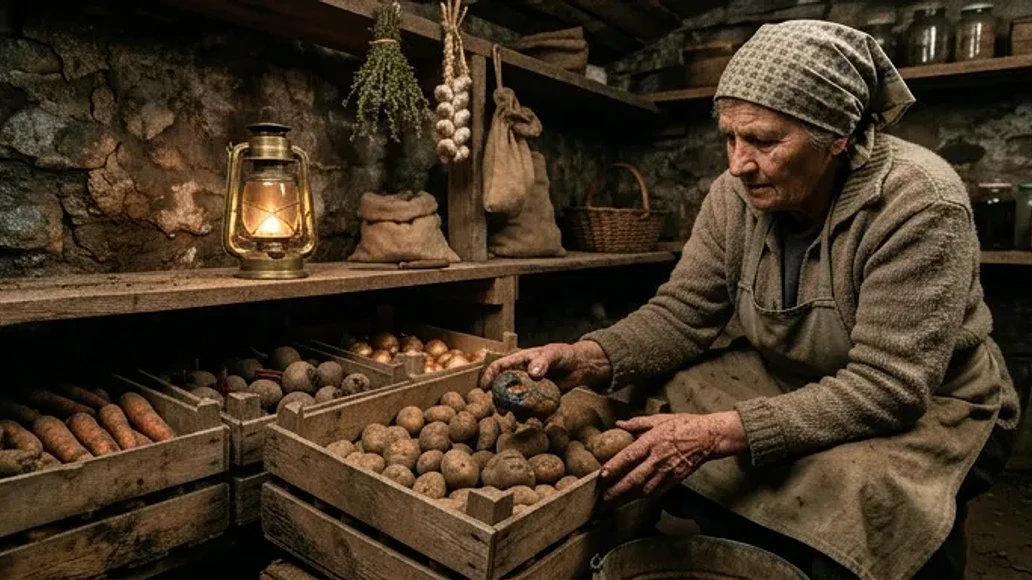
How to tell when stored food has gone bad
Do not taste questionable food to test it. Spoilage signs are enough reason to discard it.
- Mold growth
- Off-odors or sour smells
- Leaking, swelling, or rusted containers
- Gas buildup in jars or lids that bulge
- Soft rot, slime, or unusual discoloration
- Insect contamination or rodent damage
- Produce that froze, thawed, and turned watery or collapsed
If canned food is involved, be especially cautious. Pressure canning and boiling-water canning follow different rules based on food acidity. Only use tested canning methods, and discard any jar with a broken seal, leakage, spurting liquid, or signs of spoilage.
Cost and effort compared with other storage methods
Underground storage can be economical if you already grow food and have suitable land. It can also become a frustrating project if your site needs drainage work, insulation, pest control, and repeated repairs. The cheapest method on paper is not always the cheapest after food losses.
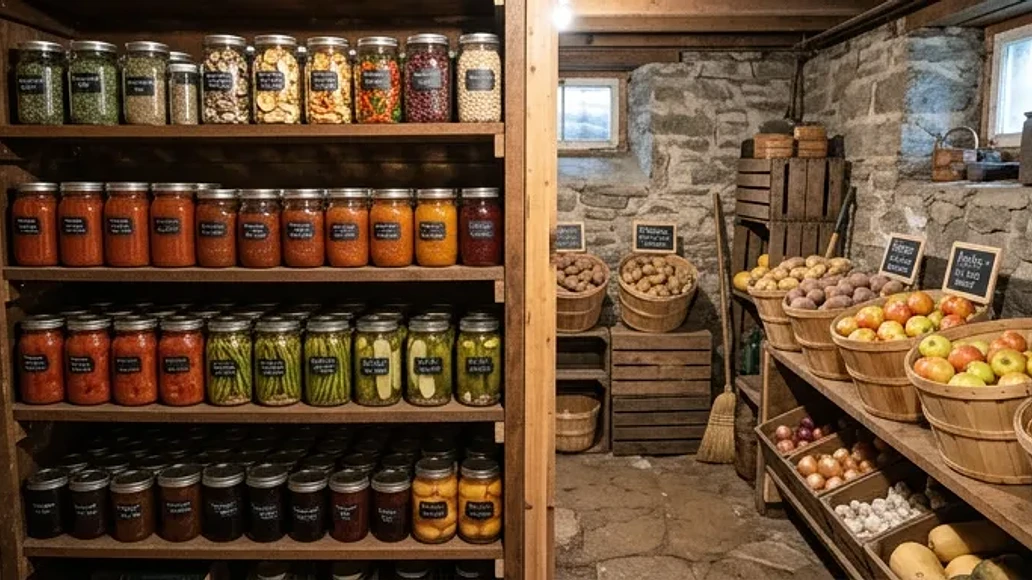
For many households, the best system is mixed. Use a pantry for dry goods, a refrigerator for perishables, a freezer for meat and prepared foods, canning for shelf-stable meals and produce, and a cellar-like space for hardy crops. That spreads risk instead of betting everything on one method.
Safer modern alternatives
If your goal is reliable food storage rather than historical curiosity, several methods are usually safer and easier to manage.
| Method | Best for | Main advantage | Main caution |
|---|---|---|---|
| Refrigeration | Daily perishables, leftovers, dairy | Reliable temperature control | Needs power |
| Freezing | Meat, prepared foods, many vegetables | Long storage with good quality retention | Vulnerable to outages |
| Pressure canning | Low-acid foods like vegetables, meats, soups | Shelf-stable when done with tested recipes | Must follow exact safety rules |
| Boiling-water canning | High-acid foods like many jams and pickles | Simple shelf-stable preservation | Not safe for low-acid foods |
| Dehydrating | Fruits, herbs, some vegetables | Lightweight, compact storage | Needs proper drying and packaging |
| Cool basement or insulated pantry | Potatoes, onions, squash, canned goods | Easier access than buried storage | Conditions may be less stable than a true cellar |
If you need dependable storage for high-risk foods, these methods are usually better than burying food.
When to avoid underground storage entirely
Skip this method if your property floods, your soil stays saturated, rodents are a constant problem, or you cannot monitor temperatures and conditions regularly. It is also a poor choice if you mainly want to store meat, dairy, leftovers, or ready-to-eat foods that require strict refrigeration.
Underground storage is best for people who understand the limits, grow or buy suitable crops in season, and are willing to inspect food often. It is not ideal for anyone looking for a set-it-and-forget-it solution.
Who this method is best for
The people most likely to benefit are gardeners, homesteaders, and preparedness-minded households with cool climates, good drainage, and a harvest of storage crops. For them, underground storage can reduce waste, stretch the harvest, and lower energy use. For urban households, warm climates, or families storing mostly perishables, a refrigerator, freezer, or tested preservation method usually makes more sense.
What rules or local considerations should you check before digging?
If you plan to build a root cellar, excavate a pit, or install any buried structure, check local rules first. Requirements may apply to setbacks, drainage, utility lines, excavation depth, retaining walls, and access. In some areas, even a small underground structure can trigger permit or safety requirements.
It is also smart to contact local Extension resources for crop-specific storage advice in your climate. Regional guidance often matters more than generic internet tips.
Bottom line
The reason some Amish families bury food for storage is practical, not mystical. Underground spaces can stay cool, dark, and relatively stable, which helps certain crops last longer without electricity. But the method only works well for the right foods, in the right climate, with the right setup. It is not universal, not risk-free, and not a replacement for refrigeration or tested preservation methods.
If you want to try it, think like a careful food preserver, not a social media myth collector. Start with suitable crops, monitor conditions, and use safer modern methods whenever the food requires stricter control.
References
- USDA Food Safety and Inspection Service, Food Safety Basics
- National Center for Home Food Preservation
- Oregon State University Extension, Root Cellars
- Penn State Extension, Root Cellars
- Michigan State University Extension, Root Cellars
- University of Minnesota Extension, Food Storage Basics
- CDC, Food Safety
- FDA, Buy Store Serve Safe Food