Turn Trimmings Into Harvests, A Practical Guide to Replanting Kitchen Leftovers
Learn which kitchen scraps actually produce useful food, which ones only make greens, and how to regrow them safely with realistic timelines, simple setups, and beginner-friendly steps.

Regrowing produce from leftovers can be a smart way to stretch groceries, cut waste, and keep a little fresh food within reach. It also helps to know what this method can and cannot do. Some scraps give quick new greens in a jar of water. Others can be planted and turned into full crops over time. A few popular examples are mostly fun science projects, not serious food production.
If you want the best payoff, focus on scraps with strong roots, healthy growing points, and realistic harvest potential. Clean containers, fresh water, enough light, and timely transplanting make a big difference. Just as important, toss anything slimy, moldy, or foul-smelling. Regrowing scraps is a useful supplement for herbs and greens, but it does not replace a real garden or a stocked pantry.
What regrowing from scraps really means
Kitchen scrap regrowth falls into three practical categories. The first is fast greens, such as green onions, celery, and lettuce cores. These can produce small amounts of edible top growth quickly. The second is true replanting, where a piece of the plant can develop into a full new crop, such as potatoes, sweet potatoes, garlic, ginger, and many herb cuttings. The third is novelty regrowth, where you may get leaves or a decorative plant but not much food, such as carrot tops or pineapple crowns.
This distinction matters because many articles blur the line between “it sprouts again” and “it feeds you again.” A lettuce base may give a handful of tender leaves, but it will not become a grocery-store-sized head on your windowsill. A carrot top can grow feathery greens, but it will not make a new carrot root. Potatoes and garlic, on the other hand, can produce a real harvest if planted and cared for properly.
Best scraps for quick results and useful food
If you are new to this, start with scraps that respond fast and do not need much space. These projects work well in apartments, on windowsills, or in a small container garden.
| Scrap | What you get | Time to first harvest | Water or soil | Success rate |
|---|---|---|---|---|
| Green onions | New green tops | 5 to 14 days | Water first, soil for better long-term growth | High |
| Celery base | Small cluster of new leaves and stems | 1 to 3 weeks | Water first, then soil | Moderate to high |
| Romaine or leaf lettuce core | Loose new leaves | 1 to 2 weeks | Water first, then soil if desired | Moderate |
| Leeks | New green tops | 1 to 2 weeks | Water first, soil for stronger regrowth | High |
| Basil cuttings | Rooted cuttings and new leaves | 2 to 4 weeks | Water to root, then soil | High |
| Mint cuttings | Rooted cuttings and spreading new growth | 2 to 4 weeks | Water to root, then soil | High |
Green onions
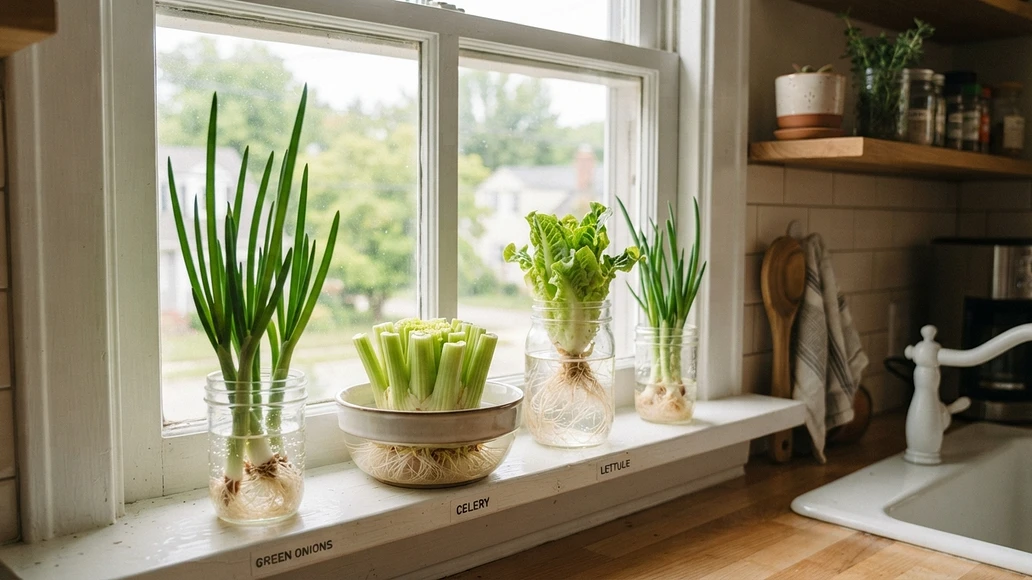
Green onions are one of the easiest and most reliable scraps to regrow. Save the white root end with about 1 to 2 inches of the base attached. Set it upright in a small glass with just enough water to cover the roots, not the whole stem. Place it in bright light and change the water every day or two. You can usually snip fresh tops within a week.
For a longer run, move the rooted bases into potting mix once they start growing strongly. In soil, they stay healthier, need less constant water changing, and can give multiple cuttings.
Celery and lettuce cores
Cut the base so you keep the bottom 1 to 2 inches of the plant. Place it in a shallow dish with a little water, keeping the cut top above the waterline. New leaves usually appear from the center first. Change the water often and move the base into potting mix once roots and fresh growth appear.
These are worth doing for small harvests and reduced waste, but keep expectations realistic. You are usually getting a modest flush of leaves, not a full replacement head.
Herb cuttings
Soft-stem herbs such as basil and mint are excellent candidates. Cut a healthy stem just below a leaf node, remove the lower leaves, and place the stem in clean water. Keep the leaves above water and set the jar in bright indirect light. Once roots are a couple of inches long, transplant to potting mix.
Mint is especially forgiving, but it spreads aggressively in containers and garden beds. Basil prefers warmth and bright light. Both can provide repeated harvests once established.
Scraps that can become full crops
These are the projects with the best preparedness value because they can produce substantial food, not just garnish. They usually need soil, more time, and often outdoor space or larger containers.
| Crop | Scrap used | Planting method | Time to harvest | Indoor vs outdoor suitability |
|---|---|---|---|---|
| Potatoes | Piece with at least one eye | Plant in soil with eyes facing up | About 80 to 120 days | Best outdoors or in large grow bags |
| Sweet potatoes | Slips grown from a sprouting tuber | Root slips, then plant in warm soil | About 90 to 150 days | Best outdoors or in large containers |
| Garlic | Single clove | Plant pointed end up in soil | Several months, often planted fall to summer | Best outdoors, possible in containers |
| Ginger | Rhizome piece with growth buds | Plant shallow in warm potting mix | 4 to 10 months depending on desired size | Good in containers |
| Onions | Rooted base or small bulb section | Plant in soil with top exposed | Varies, greens first, bulbs later if conditions are right | Best in containers or garden beds |
Potatoes
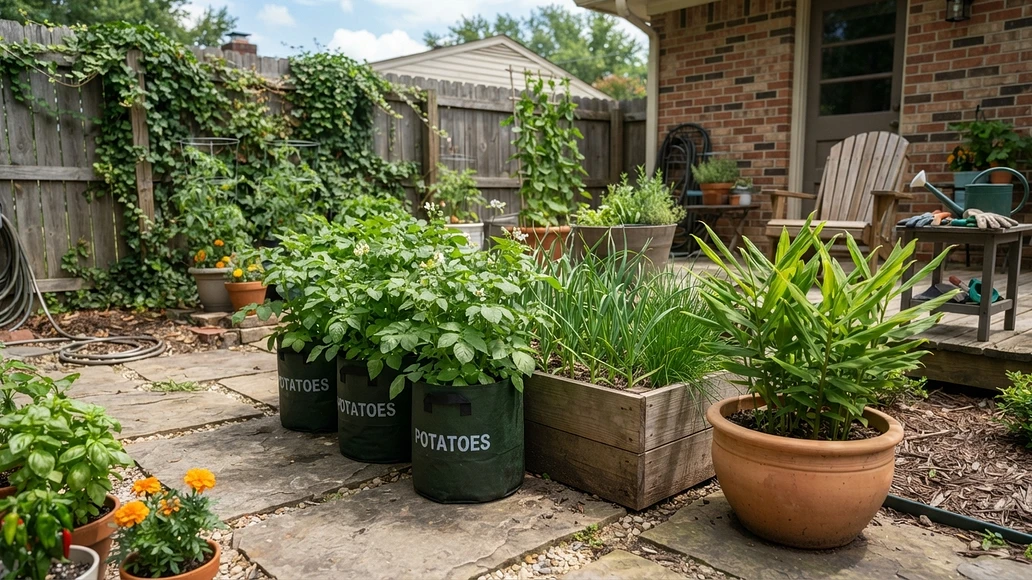
Potatoes are not usually regrown from random peels. You need a piece with one or more healthy eyes. Let freshly cut pieces dry for a day or two before planting to reduce rot. Plant them in loose soil, hilled rows, or grow bags. Keep them evenly moist and add soil around stems as they grow.
For dependable results, seed potatoes are better than grocery potatoes because store potatoes may be treated to slow sprouting. If your grocery potatoes are already sprouting, they can still work, but success is less predictable.
Sweet potatoes
Sweet potatoes are usually grown from slips, which are shoots that emerge from a sprouting tuber. Suspend part of the sweet potato over water or lay it in moist potting mix until slips form. Twist off slips when they are several inches long, root them in water, then plant them in warm soil.
This is a longer project and works best in warm weather. In cooler climates, start indoors and transplant after frost danger passes.
Garlic and ginger
Garlic is straightforward. Plant individual cloves in soil with the pointed end up. Give them sun, moderate moisture, and time. Hardneck and softneck types behave differently by region, so local extension advice is helpful.
Ginger grows from rhizome pieces with visible buds. Plant shallowly in rich potting mix, keep it warm, and do not overwater. You can harvest young ginger earlier or wait longer for larger rhizomes.
Greens only, scraps that do not make a new root crop
Some scraps are still useful, but mainly for leaves. This is where many people get disappointed because the regrowth looks promising at first.
| Scrap | Edible regrowth | Typical yield | Best uses in the kitchen |
|---|---|---|---|
| Carrot tops | Feathery greens | Small | Pesto, garnish, compost booster if not eaten |
| Beet tops | Leafy greens | Small to moderate | Sauteed greens, soups |
| Turnip tops | Leafy greens | Small to moderate | Cooked greens |
| Cabbage core | Loose leaves | Limited | Small salads, stir-fries |
| Kale stems | Occasional side shoots | Limited | Baby greens |
Carrot tops are the classic example. The top contains enough energy to push out leaves, but the harvested carrot root is already the storage organ. Once it has been cut off and eaten, the plant does not rebuild a full new carrot from that top. The same basic limitation applies to beet and turnip tops.
That does not make these scraps useless. If you enjoy small amounts of fresh greens or want a kid-friendly project, they are fine. Just do not count them as a serious source of calories.
Long-term projects that are mostly for fun
Pineapple crowns can root and grow into a plant, but this is a patience project. Twist off the crown, remove some lower leaves, let the base dry briefly, then root it in water or plant it directly in a light potting mix. In the right conditions it can grow well, but fruiting may take years and often requires a warm climate or careful indoor culture.
Other novelty regrows, such as some cabbage cores or old onion bottoms left too long in water, can be enjoyable experiments but are rarely the best use of space if your goal is food production.
How to set up scraps for success
Most failures come from too much water, too little light, or waiting too long to transplant. A simple setup works best.
Water setup basics
- Use a clean glass, jar, or shallow dish.
- Add only enough water to cover roots or the very bottom of the base.
- Keep the cut top and most of the stem above water.
- Place in bright light, ideally near a sunny window.
- Change the water regularly so it stays clear and odor-free.
Soil setup basics
- Use fresh potting mix, not dense yard soil in small pots.
- Choose a container with drainage holes.
- Plant so the growing point stays above the soil when appropriate.
- Water enough to keep the mix lightly moist, not soggy.
- Increase pot size or move outdoors as the plant grows.
As a rule, water is best for starting roots and observing growth. Soil is better for sustained growth and better yields. If a scrap is doing well in water, that is usually your signal to move it into potting mix.
Water or soil, when to transplant
Green onions can stay in water for short periods, but they usually become thin and weak if left there too long. Move them to soil when roots are active and tops are growing fast. Celery and lettuce should also be transplanted once you see fresh center growth and some root development.
Herb cuttings should go into soil after they form a healthy root system. Potatoes, garlic, ginger, and sweet potato slips belong in soil for real production. Water alone is only a starting step for some of these crops, not the final growing method.
Best projects for apartments vs outdoor space
| Scrap project | Windowsill only | Container friendly | Needs garden bed |
|---|---|---|---|
| Green onions | Yes | Yes | No |
| Celery base | Short term only | Yes | No |
| Lettuce core | Short term only | Yes | No |
| Basil and mint cuttings | To root only | Yes | No |
| Ginger | No | Yes | No |
| Garlic | No | Yes | Helpful but not required |
| Potatoes | No | Large containers only | Best option |
| Sweet potatoes | No | Large containers in warm climates | Best option |
| Pineapple crown | No | Yes | No |
If you live in an apartment, green onions, herbs, lettuce cores, celery, and ginger are the most practical choices. If you have a patio, deck, or yard, potatoes, garlic, and sweet potatoes become much more worthwhile.
Food safety and hygiene matter
Regrowing scraps is low risk when you keep things clean, but it is not a “set it and forget it” project. Stagnant water and decaying plant tissue can grow mold and bacteria. Start only with fresh, sound produce. Do not try to revive scraps that are already moldy, rotten, or badly bruised.
Wash containers before use. Change water often enough that it stays fresh. If a scrap turns slimy, smells sour, develops fuzzy mold, or attracts fungus gnats, discard it and clean the container. Do not eat questionable regrowth just because it looks salvageable. This is a home gardening project, not a food rescue challenge.
If you are worried about mold, pests, or plant disease spreading to other houseplants or your garden, contact your local cooperative extension office or master gardener program for region-specific advice.
Choosing produce that will actually regrow
Not all store-bought produce is equally reliable. Some potatoes, garlic, and ginger are treated to slow sprouting. They are fine to eat, but they may fail as planting stock. Organic produce often sprouts more readily, though “organic” is not a guarantee. For the most dependable results with potatoes and garlic, seed-grade planting stock is usually the better choice.
Also choose scraps from vigorous produce. A crisp celery base, a fresh bunch of green onions with intact roots, and a firm ginger piece with visible buds all outperform tired scraps from the back of the fridge.
Saving seeds from kitchen produce
Seed saving is different from regrowing scraps, but it belongs in the same waste-reduction mindset. Tomatoes, peppers, and some squash can provide viable seeds for future planting. Dry them thoroughly before storage, label them, and keep them cool and dry.
There are limits here too. Seeds from hybrid produce may not grow true to type, and some crops cross-pollinate easily. For a casual home garden, that may be perfectly fine. For predictable harvests, named seed varieties are more reliable.
How much can you really save?
The honest answer is that scrap regrowing saves a little money, not a fortune. Green onions and herbs offer the fastest and most noticeable return because you can harvest them repeatedly from something that often gets discarded. Celery and lettuce can stretch a meal or two. Potatoes, garlic, ginger, and sweet potatoes can become meaningful crops, but they require time, soil, and space.
For preparedness, think of this as a skill builder and a fresh-food supplement. It teaches propagation, container growing, observation, and basic plant care. Those are valuable abilities. But if your goal is serious food security, pair scrap regrowing with a real garden plan, preserved foods, and staple storage.
Common mistakes that waste time
- Expecting full vegetables from scraps that only make greens.
- Submerging too much of the plant and causing rot.
- Leaving successful scraps in water too long instead of moving them to soil.
- Using weak, old, or damaged produce.
- Giving plants too little light.
- Overcrowding jars and dishes.
- Ignoring slime, odor, or mold.
Most of these problems are easy to fix. Start small, keep only the projects that are thriving, and compost the rest.
Good starter projects for kids and beginners
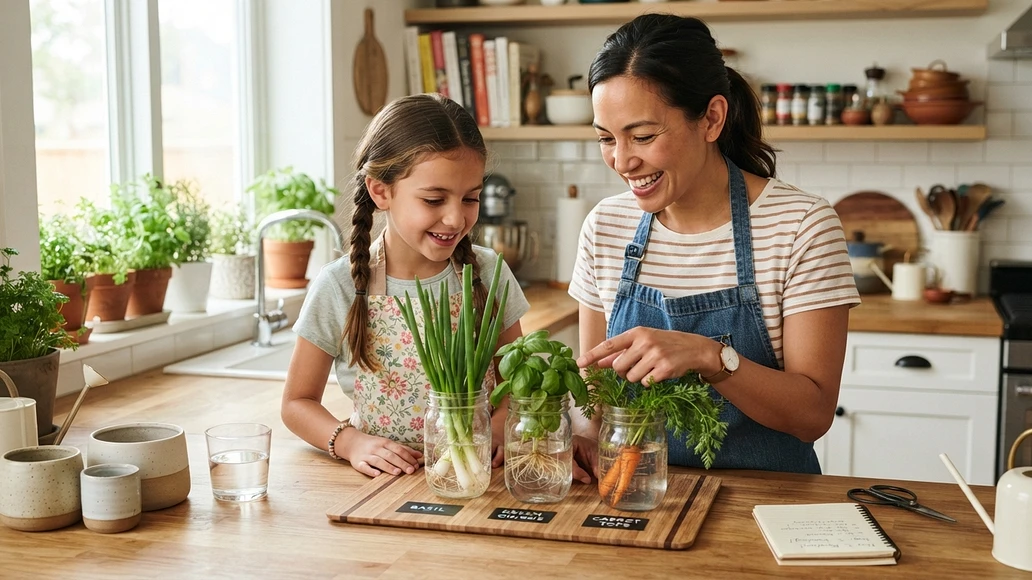
Green onions, romaine cores, celery bases, and carrot tops are great for children because they change visibly in just a few days. They are also easy to handle and do not require tools beyond a cup or shallow dish. For a beginner adult who wants practical results, green onions and basil are usually the best first two projects.
Use these projects to teach observation. Measure growth every day, compare water versus soil, and note which scraps produce food worth eating versus which ones are mostly educational.
Myths about regrowing scraps
One common myth is that any vegetable top can become a whole new vegetable. In reality, many tops can only make leaves. Another myth is that you can stop buying produce if you keep enough scraps. In practice, scrap regrowing is best for herbs, green onions, and a few replantable crops like potatoes, garlic, and ginger.
A third myth is that water alone is enough forever. Water is often just the first stage. If you want stronger plants and better harvests, most successful regrows need potting mix or garden soil after they get started.
FAQ
Can I really regrow grocery store vegetables, or do I need special seed potatoes and garlic?
You can often regrow grocery store produce, especially green onions, celery, lettuce, and herb cuttings. For potatoes and garlic, seed-grade stock is more reliable because some store produce is treated to discourage sprouting. Grocery produce may still work, but results are less predictable.
Is it safe to eat vegetables regrown in water on my windowsill?
Yes, if you start with fresh produce, use clean containers, change the water regularly, and discard anything slimy, moldy, or foul-smelling. Treat regrown scraps like any other fresh produce. If it looks or smells off, do not eat it.
Why will my carrot tops regrow greens but not a new carrot root?
The carrot you buy is the plant's stored root. Once that root has been harvested and cut, the top can still push out leaves for a while, but it does not rebuild a full new carrot. The same basic idea applies to beet and turnip tops.
How often should I change the water when regrowing vegetables from scraps?
For small jars and warm kitchens, every day or two is a good rule. At minimum, change it whenever it turns cloudy or develops an odor. Clean water is one of the easiest ways to improve success and reduce mold problems.
Do I save significant money by regrowing food from kitchen scraps, or is this mostly a hobby?
It is mostly a modest saver and a useful skill, not a major grocery replacement. The best financial payoff usually comes from green onions, herbs, and a few replantable crops. The biggest value may be less waste, fresher garnish and greens, and better gardening confidence.