Blackout Power Plans That Keep the Essentials Alive
Learn how to plan safe, practical backup power for short outages and longer grid failures. This guide covers load audits, sizing, generators, battery stations, solar options, medical priorities, food safety, and common mistakes to avoid.

When the power fails, most households do not need to run everything. They need to keep the most important things working safely, for as long as the outage lasts. That usually means refrigeration, communications, lighting, medical equipment, heat system controls, sump pumps, and device charging. A good backup plan starts with priorities, not gadgets.
This article provides general information on home emergency power backup. It is not a substitute for professional electrical, medical, or legal advice. If your household depends on life-supporting equipment, refrigerated medications, or permanently installed electrical systems, talk with qualified professionals before an emergency happens.
Why backup power matters more now
Many Americans are seeing more weather-related outages, heat-driven grid stress, and wildfire shutoffs than they did a decade ago. That does not mean every home needs an expensive whole-house system. It does mean every home should have a realistic plan for at least 72 hours of self-reliance, with a path for longer outages if your area is prone to storms, ice, hurricanes, or public safety power shutoffs.
The biggest shift in recent years is that backup power is no longer just about gasoline generators. Portable battery stations, home batteries, and solar charging options have become mainstream. For many households, the best answer is a layered setup: small batteries for phones and lights, a larger battery or generator for essentials, and a longer-term plan for food, water, and medical needs.
What emergency backup means in a modern home
Backup power usually falls into three levels. Knowing which level you need prevents overspending and underplanning.
| Backup level | What it powers | Typical examples | Best fit |
|---|---|---|---|
| Micro-backup | One device or a few small devices | Phone power banks, UPS for internet modem, battery lanterns, CPAP battery | Short outages, apartments, tight budgets |
| Essential-load backup | Critical household circuits or selected appliances | Portable generator, large power station, transfer-switch-fed circuits | Most households preparing for 1 to 7 days |
| Whole-home backup | Most or all household loads, sometimes automatically | Standby generator, professionally installed solar plus battery | Large homes, medical needs, frequent long outages |
For most readers, essential-load backup is the sweet spot. It is far more affordable than whole-home coverage and much more useful than only charging phones.
Step 1, audit your essential loads before the lights go out
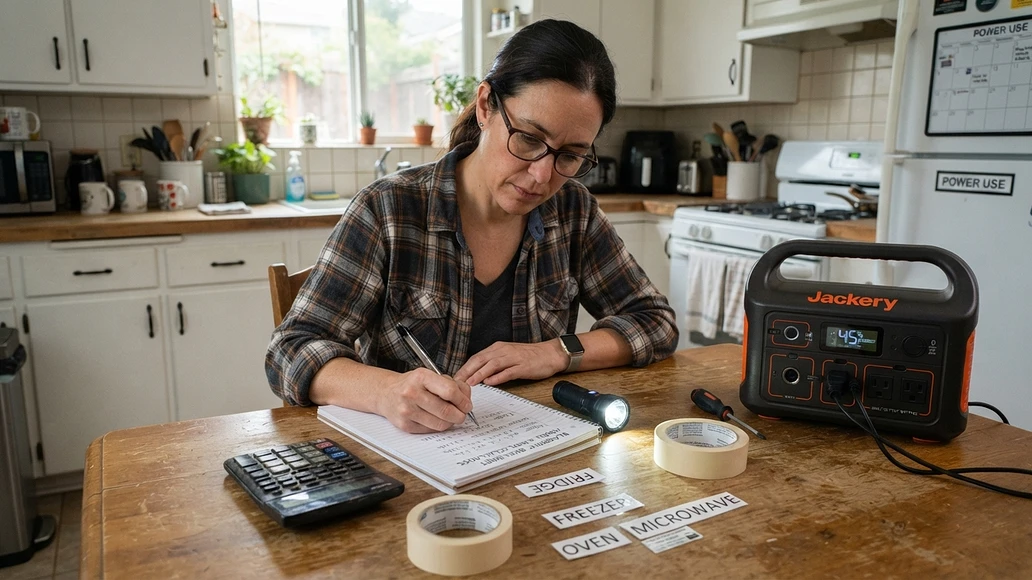
The most common mistake is buying backup power without knowing what needs to run. Start by walking room to room and listing devices in four priority groups.
| Priority level | What belongs here | Why it matters | Can it wait? |
|---|---|---|---|
| Critical | Medical devices, medication refrigeration, sump pump, well pump if no stored water, furnace controls in freezing weather | Health and property protection | No |
| High | Refrigerator, freezer, phone charging, internet modem, basic lighting | Food safety, communication, daily function | Only briefly |
| Moderate | Fans, laptop, microwave, coffee maker, security devices | Convenience and limited comfort | Usually yes |
| Comfort | TV, gaming, decorative lighting, nonessential appliances | Morale, not survival | Yes |
Next, note each device's running watts and, if possible, startup or surge watts. Motors often need more power for a few seconds when starting. Refrigerators, freezers, pumps, and some furnace blowers can have a much higher startup demand than their normal running draw.
A simple sizing formula is:
Watts x hours of use = watt-hours per day
Example:
- A 60 watt CPAP used for 8 hours needs about 480 Wh per night.
- A 100 watt router and charging station used for 6 hours needs about 600 Wh.
- A refrigerator may average much less than its peak label wattage over a full day, but you still need enough surge capacity to start it.
After adding your daily needs, include a buffer for inverter losses, battery inefficiency, cold weather, and real-world usage. A practical planning buffer is often 15 to 25 percent.
How much backup is enough, practical sizing examples
You do not need exact engineering math to make a better decision. You need a realistic target based on outage length and priorities.
| Scenario | Likely essentials | Approximate daily energy target | What often fits |
|---|---|---|---|
| Basic 24-hour outage | Phones, lights, modem, small medical device | 300 to 1,000 Wh | Power banks, small to mid-size battery station, UPS |
| 72-hour outage with food protection | Above plus refrigerator, more charging, limited fan use | 1,500 to 4,000 Wh per day, depending on loads | Large battery station with recharge plan, or portable generator |
| One-week outage | Above plus pump, heat controls, freezer management | 2,000 to 8,000 Wh per day, sometimes more | Portable generator with fuel plan, standby generator, or solar plus battery |
| Medical or rural critical loads | CPAP, oxygen support equipment, well pump, refrigeration for medication | Highly variable, often requires custom planning | Layered system with professional input |
Be careful with large HVAC loads. Space heaters, central air conditioning, electric water heaters, and electric dryers can overwhelm small generators and power stations. In many homes, it is smarter to power furnace controls, a blower, or a fan rather than trying to run full electric heating or cooling from a modest backup source.
Generators, battery stations, and solar, how the options compare
Each backup type solves a different problem. The best choice depends on outage length, noise tolerance, fuel access, budget, and whether you need indoor-safe operation.
| Option | Typical strengths | Main drawbacks | Indoor safe | Best outage window |
|---|---|---|---|---|
| Portable gas generator | High power for the price, can run fridge, freezer, tools, some pumps | Fuel storage, noise, maintenance, carbon monoxide risk | No | 1 day to 1 week, if fuel is available |
| Standby generator | Automatic operation, supports larger loads, convenient for repeated outages | High installation cost, fuel dependence, maintenance, permitting | Installed outdoors only | Multi-day outages, frequent outage areas |
| Portable battery station | Quiet, no fumes, easy indoors, low maintenance | Limited runtime on large loads, recharge can be slow without solar or vehicle charging | Yes, if used per manufacturer instructions | Hours to several days for small loads |
| Solar plus battery system | Quiet, can recharge during long outages, low fuel dependence | High upfront cost, installation complexity, output depends on system size and sunlight | Battery portion generally yes when properly installed | Best long-term resilience option |
| Car battery with inverter | Low-cost emergency workaround for small electronics | Easy to misuse, can damage battery, limited capacity, wiring risks | Only with proper ventilation and safe setup | Short-term, low-load backup only |
Portable generators
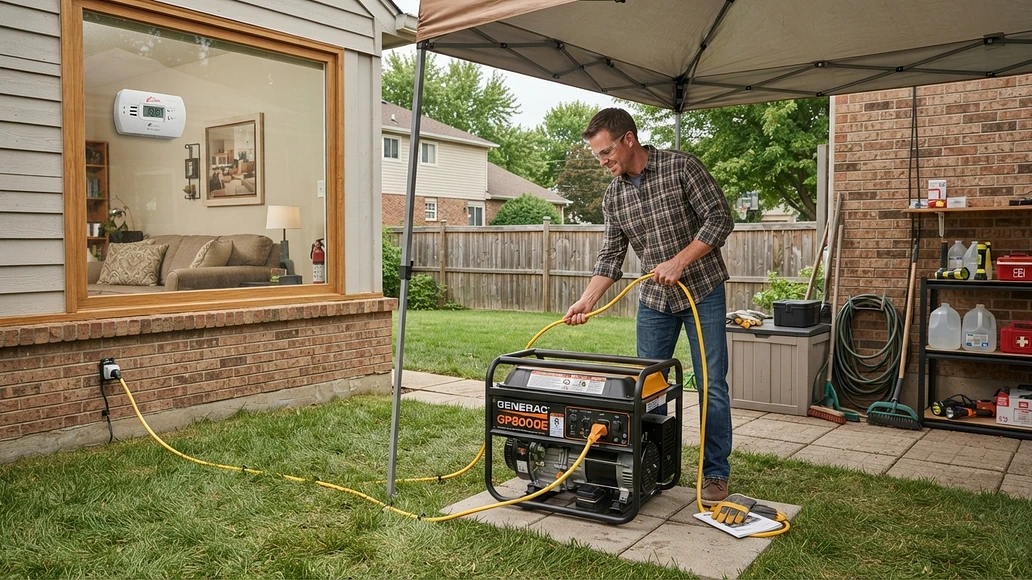
Portable generators remain one of the most cost-effective ways to run heavier loads. They are especially useful for refrigerators, freezers, and some pumps. But they come with serious safety responsibilities. They must stay outdoors, generally at least 20 feet from doors, windows, and vents, with exhaust pointed away from the home. Never run one in a garage, even with the door open.
Battery power stations
Battery stations are excellent for apartments, overnight use, and households that want quiet indoor power. They shine for communications, lighting, laptops, routers, CPAP machines, and sometimes refrigeration if sized correctly. Their limitation is runtime. A battery that feels large for phones can feel very small once a refrigerator enters the picture.
Solar plus battery
For homes with frequent outages, solar plus battery can turn a short-term backup plan into a longer resilience strategy. The key advantage is recharging without fuel deliveries. The key limitation is cost and design complexity. Not every solar system works during an outage, and not every battery setup can start large motor loads. This is an area where professional design matters.
Plan by outage length, not just by device
Your strategy should change as the outage stretches from hours into days.
| Outage length | Main goal | Power strategy | Food and water focus |
|---|---|---|---|
| First 24 hours | Stabilize and preserve essentials | Use power banks, UPS, battery station, or generator sparingly | Keep fridge and freezer closed, confirm water supply |
| 24 to 72 hours | Extend runtime and reduce waste | Cycle loads, recharge devices efficiently, manage generator fuel carefully | Use perishables first, monitor temperatures, ration ice and cold storage |
| 3 to 7 days | Shift to sustainability | Need fuel resupply, solar recharge, or a larger installed system | Rely more on shelf-stable food and stored water |
| 1 week or more | Decide whether to shelter in place or relocate | Long-term power becomes a logistics problem, not just a battery problem | Water, sanitation, medication storage, and cooking become central |
For short outages, preserving cold food and communication matters most. For medium outages, fuel rotation, battery charging, and selective appliance use become more important. For long outages, backup power must be part of a larger resilience plan that includes water, food, sanitation, and evacuation triggers.
Medical and vulnerable-household priorities
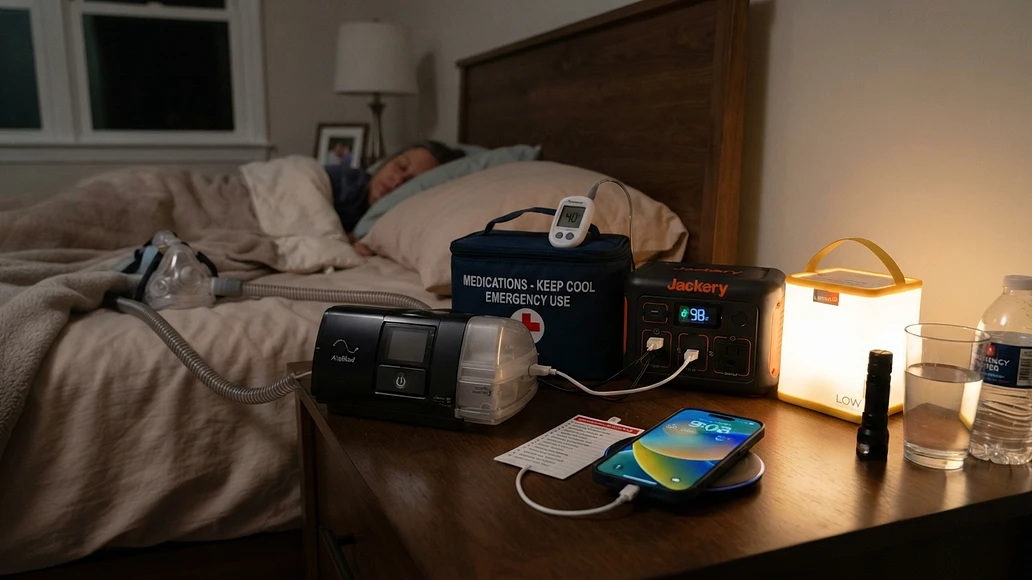
If someone in the home relies on powered medical equipment, backup power planning moves from convenience into health protection. CPAP and BiPAP users should know the device's watt draw, whether a DC power option exists, and how many nights of runtime their battery provides. Households using oxygen concentrators, powered mobility devices, refrigerated medications, infant feeding equipment, or temperature-sensitive medications need a more robust plan.
Talk with your clinician, equipment provider, and utility if an interruption could be dangerous. Ask about battery options, safe interruption limits, alternate charging methods, and local emergency support programs. Keep written model numbers, prescriptions, and emergency contacts in a waterproof folder.
Medication refrigeration deserves special attention. If an outage threatens safe storage for insulin or other temperature-sensitive medications, seek medical or pharmacy guidance early rather than waiting until supplies are compromised.
Safety rules you cannot ignore
The most dangerous backup power mistakes are also the most preventable.
| Hazard | Risky behavior | Safer practice | Helpful equipment |
|---|---|---|---|
| Carbon monoxide poisoning | Running a generator in a garage, basement, porch enclosure, or near openings | Run fuel-burning generators outdoors, generally at least 20 feet from doors, windows, and vents | Battery-backed CO detectors |
| Back-feeding household wiring | Plugging a generator into a dryer outlet or home circuit without approved isolation | Use an approved transfer switch or interlock installed by a licensed electrician | Transfer switch, interlock kit, professional installation |
| Overload and fire | Exceeding rated watts or using undersized cords | Add loads carefully, respect surge limits, use outdoor-rated heavy-duty cords when needed | Watt meter, correct extension cords, breaker protection |
| Battery damage or thermal risk | Charging or storing lithium systems in wet, hot, or physically unsafe areas | Follow manufacturer instructions, keep systems dry and ventilated, protect from extreme temperatures | Original charger, stable surface, temperature-aware storage |
| Fire from lighting | Relying on candles as primary lighting | Use LED lanterns and headlamps first | Lanterns, rechargeable lights, spare batteries |
Never connect a generator directly to household wiring unless a proper transfer switch or approved interlock system has been installed. Back-feeding can kill utility workers, damage appliances, and start fires. This is not a shortcut. It is a serious hazard.
Food and water safety during a blackout
Backup power is only part of outage resilience. Food and water management can prevent a bad situation from becoming a health problem.
As a general rule, an unopened refrigerator keeps food cold for about 4 hours. A full freezer may hold temperature for about 48 hours, and a half-full freezer for about 24 hours, if left unopened. That makes door discipline one of the cheapest and most effective outage strategies.
Frozen water bottles can help fill empty freezer space and provide emergency cold packs for coolers. In longer outages, move high-value perishables into a cooler with ice rather than repeatedly opening the refrigerator.
If your home uses a well pump, remember that water may stop when power stops. Store drinking water ahead of time, and do not assume backup power for the fridge solves your biggest problem if you cannot flush toilets or access safe water.
Low-budget options that still improve your odds
You do not need a whole-house system to make a blackout much easier. Smaller, layered tools often deliver the best value per dollar.
| Budget level | What to buy first | What it covers | Main limitation |
|---|---|---|---|
| Very low | Power banks, LED lanterns, headlamps, car chargers, cooler thermometers | Phones, light, basic communication | No appliance support |
| Low | Small battery station, UPS for modem/router, extra rechargeable batteries | Internet, charging, lights, some small medical devices | Limited runtime |
| Moderate | Larger battery station or small inverter generator | Adds refrigeration and more flexible charging | Still may not support pumps or HVAC |
| Higher | Portable generator with transfer setup, or professionally planned home battery | Broader essential-load coverage | Cost, installation, maintenance |
A car battery and inverter can work for short-term charging in a pinch, but it is not a beginner-friendly system. Poor wiring, over-discharge, and lack of fusing can create fire and battery damage risks. If you use this approach, keep it limited to small electronics and follow equipment instructions carefully.
Urban, suburban, and rural outage planning
Where you live changes your best backup strategy.
| Setting | Common constraints | Best-fit backup approach | Special concern |
|---|---|---|---|
| Urban apartment | Noise rules, no fuel storage, limited outdoor space | Battery stations, power banks, UPS, building-specific guidance | Elevators, shared access, no generator placement options |
| Suburban home | Moderate storage space, neighbors nearby | Portable generator, battery station, transfer switch, possible solar battery | Noise, fuel rotation, sump pump needs |
| Rural property | Well pumps, septic systems, long resupply times | Larger generator or solar plus battery, layered fuel and water plan | Water access, road access, longer restoration times |
Rural homes often need more than electricity for convenience. They may need power for water, sanitation, livestock support, gate access, and heating systems. Apartment dwellers, by contrast, often need quiet indoor-safe power and a plan for stair access, building entry, and refrigeration in a small footprint.
Maintenance and testing before storm season
A backup system that has not been tested is a guess. Batteries age. Fuel degrades. Extension cords disappear. Generators fail to start when they sit too long.
At minimum, test your system on a schedule. Charge and inspect battery stations monthly or according to manufacturer guidance. Test generators under load, not just at idle. Rotate stored fuel safely and according to local rules. Replace batteries in flashlights, lanterns, and CO detectors on schedule. Practice connecting your essentials before you need to do it in the dark.
A short family drill can reveal weak points fast. Can everyone find the lanterns? Do you know which extension cord reaches the freezer? Can you power the modem without also powering half the entertainment center? Small rehearsals reduce confusion when the real outage arrives.
What to do in the first 10 minutes, first hour, and first day
First 10 minutes
- Confirm whether the outage is only your home or the wider area.
- Unplug or protect sensitive electronics from surges when power returns.
- Grab lights, not candles.
- Keep refrigerator and freezer doors closed.
- Check on anyone with medical or mobility needs first.
First hour
- Decide whether to activate battery backup, generator power, or both.
- Charge phones and essential devices while power use is still low.
- Set up your generator safely outdoors if using one.
- Review weather alerts, utility updates, and local emergency messages.
- Fill containers with water if you suspect well or municipal pressure issues.
First day
- Shift to your essential-load plan, not normal living.
- Track fuel, battery percentage, and device runtime.
- Use perishables strategically.
- Check indoor temperatures, especially for infants, older adults, and pets.
- Reassess whether staying home remains safe if the outage extends.
Common myths that cause trouble
| Myth | Reality | Better approach |
|---|---|---|
| A generator is safe in the garage if the door is open | Carbon monoxide can still build up and kill | Run it outdoors, well away from openings |
| A small power station can run my whole kitchen | Large appliances drain batteries quickly and may exceed surge limits | Match battery size to actual loads and runtime goals |
| My fridge will stay cold all day if I check it often | Opening the door dumps cold air and shortens safe time | Keep it closed and use a thermometer |
| Candles are fine for blackout lighting | They add fire risk and poor light output | Use LED lanterns and headlamps |
| I can just plug my generator into a house outlet | That is dangerous back-feeding | Use approved transfer equipment installed correctly |
When to call professionals and check local rules
If you want to power built-in circuits, install a standby generator, add a transfer switch, or pair solar with home batteries, bring in qualified help. Local codes, utility rules, permitting, and equipment compatibility all matter. Professional installation is not just about convenience. It is about preventing shock, fire, and equipment damage.
This is especially important if you plan to support well pumps, furnace circuits, central HVAC components, or medical loads that cannot tolerate interruption. A licensed electrician or qualified installer can verify startup surges, circuit isolation, grounding, and safe operating procedures.
FAQ
How much backup power do I need to run a refrigerator and a CPAP during a blackout?
It depends on the actual watt draw and runtime. A CPAP may need a few hundred watt-hours overnight, while a refrigerator often needs enough surge capacity to start and then ongoing energy through the day. For many homes, this moves you beyond a small battery bank and into a larger power station, generator, or layered system.
Is a portable power station enough, or do I need a generator for emergency backup?
A power station is often enough for lights, phones, internet, laptops, and some medical devices. If you need to run refrigeration, pumps, or multiple essentials for several days, a generator or a larger solar-charged battery system is often more practical.
Can I safely run a generator in a garage with the door open?
No. Fuel-burning generators should not be run in garages, basements, crawl spaces, or near doors, windows, or vents. Carbon monoxide can build up quickly and become fatal.
What should I do if I rely on powered medical equipment and my area has frequent outages?
Create a written backup plan with your clinician and equipment provider. Know your device's power needs, battery runtime, charging options, and backup locations. Ask your utility and local emergency management about priority restoration programs and medical support resources.
How often should I test my emergency power backup system?
Check batteries regularly and test generators and larger systems before peak storm seasons. A monthly quick check and a seasonal full test under realistic load is a practical routine for many households.