Flour Freshness Decoded: Storage Times, Warning Signs, and Better Ways to Keep It Usable
Learn how long common flours last in the pantry, fridge, and freezer, plus how to store white, whole grain, gluten-free, and nut flours safely with less waste.

Flour seems simple, but its storage life changes a lot depending on what kind you buy, where you keep it, and how quickly you use it. A bag of all-purpose flour can stay in good shape far longer than whole wheat or almond flour, while heat, humidity, and air exposure can shorten the timeline fast. For most households, the goal is not just making flour last longer, but keeping it safe, fresh-smelling, and reliable in recipes.
One important note before the details. Flour is a low-moisture food, but it is not risk free. Raw flour should not be eaten because it can carry harmful bacteria, and any flour with mold, moisture damage, insects, webbing, or a rancid odor should be discarded. Storage times are always approximate, so use the date on the bag as a quality guide, then confirm with smell, appearance, and common sense.
What flour shelf life really means
When people ask how long flour lasts, they usually mean three different things. First, is it still safe to bake with? Second, will it still taste and perform well? Third, has it kept most of its flavor and nutrition? Those are not always the same answer.
Refined flours such as all-purpose, bread, and cake flour tend to hold quality longer because much of the oil-rich bran and germ have been removed. Whole grain flours spoil faster because those natural oils can oxidize and turn rancid. Nut and seed flours are even more delicate because of their higher fat content.
The printed date on the package is usually a best-by date, not a hard safety cutoff. Flour may still be usable after that date if it smells normal, looks normal, and has been stored well. Still, quality drops over time, especially in warmer kitchens.
Typical storage times by flour type
Recent mainstream guidance continues to support USDA-style timelines for common flours. Cool, dry, airtight storage matters more than the calendar alone, and freezer storage is especially helpful for whole grain and high-fat flours.
| Flour type | Pantry, unopened | Pantry, opened airtight | Refrigerator | Freezer |
|---|---|---|---|---|
| All-purpose flour | About 6 to 12 months | About 6 to 8 months | About 1 year | About 2 years for best quality |
| Bread flour | About 6 to 12 months | About 6 to 8 months | About 1 year | About 2 years for best quality |
| Cake or pastry flour | About 6 to 12 months | About 6 to 8 months | About 1 year | About 2 years for best quality |
| Whole wheat flour | About 3 to 6 months | About 3 to 6 months | About 6 to 8 months | About 1 year |
| Rye, spelt, or oat flour | About 3 to 6 months | About 3 to 6 months | Often 6 months or more | Up to about 1 year |
| Rice flour or gluten-free blends | About 6 to 12 months, varies by blend | About 6 months or more, varies | Up to about 1 year | Up to about 1 year |
| Almond flour | About 3 to 6 months | About 3 to 6 months | About 6 to 12 months | About 12 to 18 months |
| Coconut flour | About 3 to 6 months | About 3 to 6 months | About 6 to 12 months | About 12 months or more |
| Flax meal or flax flour | About 3 to 6 months | About 3 to 6 months | About 6 to 12 months | About 12 months or more |
These ranges are best treated as quality windows, not guarantees. A cool, dry pantry in a mild climate will usually outperform a hot cabinet above the stove.
Opened vs unopened flour
Unopened flour usually lasts longer because the package has had less exposure to air, humidity, kitchen odors, and pests. Once opened, flour becomes more vulnerable, especially if it stays in a folded paper bag. Paper is convenient for store shelves, but it is not ideal for long-term freshness at home.
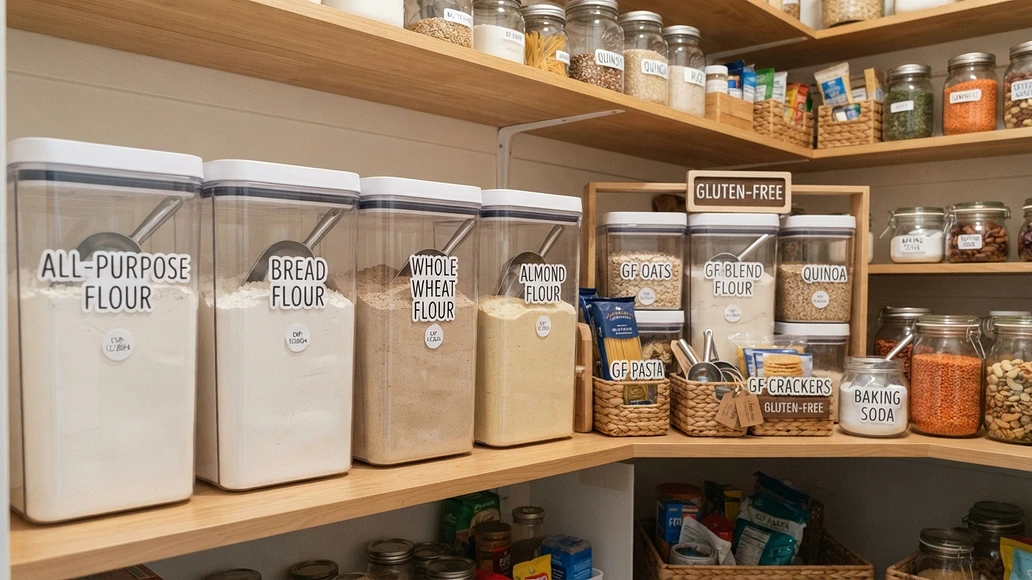
For everyday use, transferring opened flour to a clean, dry, airtight container is one of the easiest upgrades you can make. It helps reduce moisture pickup, slows flavor loss, and makes pantry pests easier to spot before they spread.
Pantry, fridge, or freezer, which is best?
The best storage spot depends on the flour type and your home environment. Refined white flours do well in a cool pantry if you use them regularly. Whole grain, freshly milled, nut, and seed flours benefit from colder storage because lower temperatures slow oxidation.
| Storage method | Main advantages | Main drawbacks | Best for |
|---|---|---|---|
| Pantry in airtight container | Easy access, simple daily use, protects from humidity and pests | Shorter life in warm or humid kitchens | All-purpose, bread, cake flour used often |
| Pantry in original paper bag | No transfer needed, low effort | Weak protection from air, moisture, and pests | Very short-term use only |
| Refrigerator in airtight container | Slows rancidity, extends life of whole grain and nut flours | Can absorb odors or condensation if poorly sealed | Whole wheat, rye, oat, almond, flax |
| Freezer in airtight container or freezer bag | Best quality extension for delicate flours, strong pest protection | Needs room, must avoid condensation during thawing | Whole grain, gluten-free specialty flours, nut flours |
| Mylar with oxygen absorbers in bucket | Useful for reserve storage, strong barrier against air and light | More gear, more process, not ideal for frequent opening | Preparedness storage of refined flour, better yet whole grains |
If you freeze flour, let the container come to room temperature before opening it. That helps prevent moisture from condensing into the flour.
How to store flour for everyday kitchen use
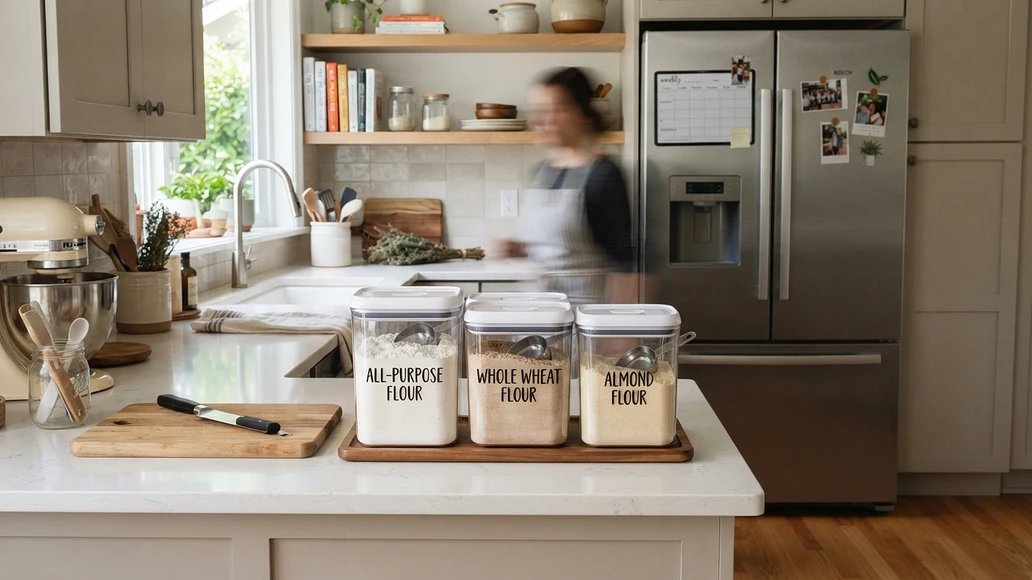
A practical home setup does not need to be complicated. Match your storage method to how fast you actually bake.
- Identify the flour type. Refined, whole grain, gluten-free, and nut flours do not store the same way.
- Choose a clean, fully dry airtight container. Food-safe plastic, glass, or metal can work.
- Label the container with the flour type, purchase date, and date opened.
- Store it in a cool, dark, dry place away from the stove, dishwasher, sunny windows, and laundry heat.
- Keep a smaller working container in the kitchen if you bake often, and store backup flour in a cooler spot.
- Rotate first in, first out, and avoid pouring fresh flour on top of older flour.
If your kitchen is humid, warm most of the year, or lacks a cool pantry, refrigeration or freezing becomes more useful, even for white flour.
Long-term bulk storage for preparedness
For households building a reserve, long-term storage is a different project from everyday pantry use. White flour can last much longer under carefully controlled conditions than it will in a normal kitchen cabinet, but results vary with temperature, packaging quality, and handling. This is one reason many preparedness-minded households store some flour for near-term use and rely on wheat berries for deeper storage.
Mylar bags with oxygen absorbers, sealed inside food-grade buckets and kept in a cool location, are commonly used for reserve storage. This method is more suitable for refined white flour than for whole wheat flour, which still has oils that can go rancid faster. If you want the longest practical shelf life, whole wheat berries generally outperform ground whole wheat flour.
| Staple | Long-term storage potential | Gear needed | Main tradeoff |
|---|---|---|---|
| White flour | Moderate to long under careful packaging and cool storage | Mylar, oxygen absorbers, bucket | Convenient to use, but shorter life than intact grain |
| Whole wheat flour | Short to moderate | Cold storage helps, bulk packaging less effective than for white flour | Better nutrition, but faster rancidity |
| Wheat berries | Very long under proper dry storage | Buckets or mylar, grain mill for fresh flour | Excellent storage life, but requires milling |
| Other whole grains | Often long when stored intact and dry | Storage containers, sometimes grinder | Flexible reserve option, but recipe adaptation may be needed |
For large-scale storage, local extension services or food storage professionals can provide more tailored guidance.
How to tell if flour has gone bad
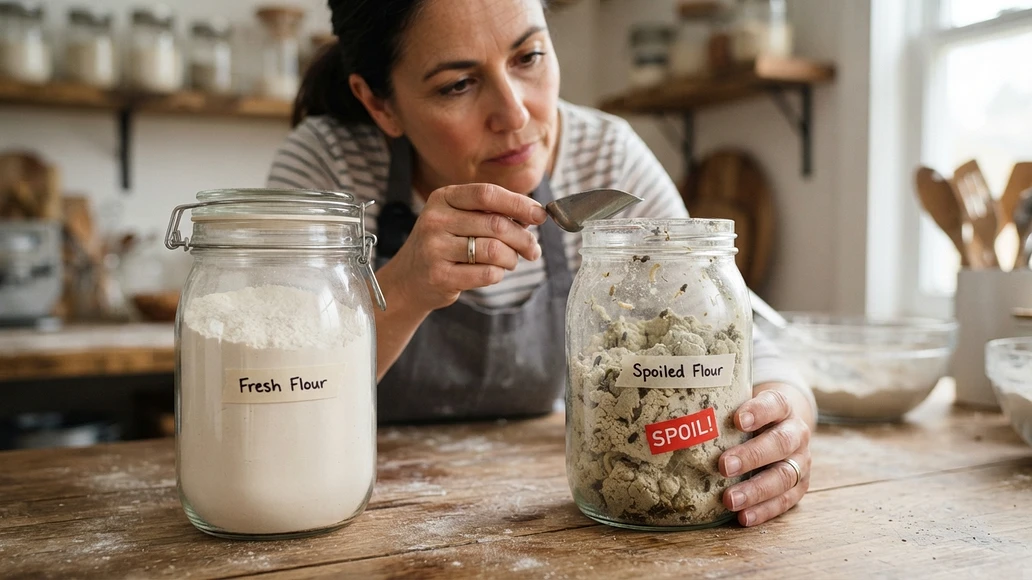
Flour does not always fail in dramatic ways. Sometimes it simply loses freshness. Other times it becomes clearly unsafe or unpleasant. Smell is often the fastest clue.
| What you notice | What it likely means | Safe to use? | Recommended action |
|---|---|---|---|
| Neutral, slightly wheaty smell, normal color | Still in good condition | Usually yes | Use as normal |
| Flat or stale smell, but no pests or moisture | Quality loss, not necessarily unsafe | Often yes for baking | Use soon, best in less delicate recipes |
| Sharp, bitter, oily, paint-like, or rancid odor | Oxidized fats, common in whole grain or nut flours | No | Discard |
| Clumps with signs of dampness or odd odor | Moisture exposure | No | Discard |
| Visible mold | Spoilage, possible mycotoxin risk | No | Discard, do not try to dry it out |
| Insects, eggs, beetles, or webbing | Pantry pest infestation | No | Discard and inspect nearby dry goods |
| Yellowing or unusual discoloration | Age, contamination, or spoilage | Questionable | When in doubt, discard |
For pregnant people, older adults, young children, and anyone with a weakened immune system, it is wise to be conservative. If flour seems questionable, replace it.
Special-care flours need colder storage
Whole grain flours
Whole wheat, rye, spelt, and oat flour contain more natural oils than refined white flour. Those oils improve flavor and nutrition, but they also shorten shelf life. If you do not use these flours quickly, the refrigerator or freezer is usually the better choice.
Freshly milled flour
Freshly milled whole flour can lose quality very quickly, sometimes within about a week at room temperature. If you mill your own grain, use it promptly or refrigerate or freeze it soon after grinding.
Gluten-free flours and blends
Gluten-free products vary widely. Rice flour may keep fairly well, while oat-based blends or mixes with added fats may decline faster. Keep them tightly sealed, label them clearly, and watch for changes in smell and performance.
Nut and seed flours
Almond flour, coconut flour, and flax meal are more prone to rancidity than refined wheat flour. Many households get the best results by storing them in the refrigerator or freezer from the start.
Can you use flour after the best-by date?
Often, yes, especially refined flour that has been stored well. The date on the bag is mainly about best quality. If the flour smells normal, looks normal, and has no signs of pests or moisture, it may still bake fine. That said, older flour can produce flatter flavor, weaker rise, or less predictable texture.
Be more cautious with whole grain and nut flours because they deteriorate faster. If you are unsure, do not try to save a few dollars by risking a bad batch or poor food safety outcome.
How storage affects baking results
Even when flour is technically usable, age and storage conditions can change how it performs. Older flour may taste dull, smell less sweet, and behave less consistently in breads and pastries. Whole grain flour can develop bitterness as fats oxidize. Moisture exposure can also affect texture and measuring accuracy.
If you have flour that is still acceptable but not at peak quality, use the freshest flour for breads, cakes, pastries, and recipes where flavor and structure matter most. Reserve older but still sound flour for pancakes, waffles, muffins, or breading.
Common mistakes that shorten flour life
Most flour problems come from a handful of avoidable habits.
- Leaving flour in a loosely folded paper bag for months.
- Storing it above the stove or next to the dishwasher.
- Keeping backup flour in a garage, shed, or damp basement without climate control.
- Mixing new flour into old flour.
- Using one scoop across allergen-free and regular flours.
- Opening cold flour before it warms up, which can cause condensation.
- Buying warehouse-sized bags that your household cannot use in time.
Small changes, especially cooler placement and airtight storage, usually make the biggest difference.
Buying and rotating flour with less waste
The smartest purchase size is the one you can use within the flour's quality window. If you bake occasionally, smaller bags often save money in the long run because less gets thrown away. If you buy in bulk, divide flour into smaller sealed portions so only one container is opened at a time.
Labeling matters here. Write the purchase date and open date on every container. A simple first-in, first-out routine helps prevent forgotten bags from aging in the back of the pantry.
Allergies, celiac concerns, and cross-contact
If you store flour for someone with celiac disease or a serious food allergy, use separate airtight containers, separate scoops, and clear labels. Do not let gluten-free flour share a scoop, shelf dust, or transfer funnel with wheat flour. Cross-contact can happen easily in busy kitchens.
Because some specialty flours are expensive and more delicate, cold storage can help protect both quality and safety. If performance matters for allergy-friendly baking, fresher flour is usually worth it.
A quick 10-minute flour storage reset
If your pantry needs a fast reset, start with the flours you already have. Check dates, smell each one, look for clumps or pests, transfer good flour to airtight containers, and move delicate flours to the fridge or freezer. Then label everything. That one routine solves most home flour storage problems before they become waste.