Lye Powder on the Homestead, Practical Uses, Serious Risks, and Smart Handling
Lye powder has a real place in traditional self-reliance, but it is not a harmless old-time ingredient. Learn what sodium hydroxide is, where it makes sense, how to handle it safely, and when it is better left alone.

Lye powder shows up in many old self-reliance conversations because it was once a practical household chemical for jobs that could not be done with mild soap and water alone. But there is an important reality check. Lye is sodium hydroxide, a strong corrosive chemical. It can burn skin, permanently injure eyes, irritate lungs, and damage surfaces if handled carelessly. That means the self-reliant approach is not to romanticize it. The smart approach is to understand exactly what it is, what it can do, and where the safety line needs to be.
This guide explains where lye fits into old-school living, which uses are still reasonable today, and how to reduce risk if you choose to keep it on hand. This is general information only, not a substitute for the product label, safety data sheet, Poison Control, or medical advice.
What lye powder actually is
In most modern retail and technical contexts, lye powder means sodium hydroxide, often abbreviated as NaOH. You may also see it sold as caustic soda, drain opener crystals, or soap-making lye. The label matters, because some products use broad language like “lye” or “caustic cleaner” even when the formula includes other ingredients.
Sodium hydroxide is highly alkaline. When it contacts water, it releases heat. When it contacts skin or eyes, it can begin damaging tissue quickly. That is why even a small container deserves the same respect you would give other dangerous household chemicals.
| Term | What it usually means | What to check before use |
|---|---|---|
| Lye powder | Usually sodium hydroxide in dry form | Read the ingredient panel to confirm it is pure sodium hydroxide and not a mixed cleaner |
| Caustic soda | Another common name for sodium hydroxide | Check concentration, form, and intended use |
| Sodium hydroxide | The chemical name for NaOH | Review label warnings, storage instructions, and first-aid directions |
| Drain cleaner crystals | May contain sodium hydroxide, but sometimes includes other additives | Do not assume it is suitable for soap making or other controlled uses |
| Ash lye | A traditional alkaline solution made from wood ash and water | Strength is variable and hard to control, so it is less predictable than commercial sodium hydroxide |
Why old-school households valued it
Before modern detergents and ready-made cleaners were common, strong alkalis had real utility. Households used lye or lye-based solutions for soap making, heavy cleaning, and some laundry-related tasks. In a self-reliant setting, it mattered because it could help turn fats into soap and cut through stubborn organic grime that mild cleaners could not handle.
That historical usefulness is real, but it should not be confused with safety. Traditional use does not mean gentle use. Many old methods also came with burns, ruined tools, and accidental injuries. Modern readers should keep the useful parts, and leave the risky folklore behind.
Where lye still makes sense today
There are a few legitimate modern uses for sodium hydroxide in a home or homestead setting. The key is that these uses are controlled, intentional, and backed by clear instructions.
| Use | Why people use it | Safety outlook |
|---|---|---|
| Soap making | It reacts with fats and oils to create soap in a controlled chemical process | Reasonable for careful adults using a tested recipe, proper PPE, and good ventilation |
| Drain cleaning | It can break down certain clogs made of grease and organic buildup | Mixed, because misuse can splash, overheat, or react with other cleaners already in the drain |
| Heavy-duty cleaning | It can remove stubborn residue in some industrial or workshop contexts | Mixed, because surface damage and exposure risks are easy to underestimate |
| pH adjustment in formulated products | Used in controlled manufacturing and some finished cosmetic products | Not a casual DIY use. Raw lye is not the same thing as a finished, tested product |
| General household ingredient | Sometimes treated in folklore as a cure-all | Avoid. This is where many dangerous myths begin |
What old-time use does not automatically justify
Lye is not a general-purpose pantry ingredient. It is not something to leave near food prep areas. It is not appropriate for casual skin contact, improvised beauty products, or folk remedies. It should never be mixed with bleach, acids, or unknown cleaners unless the chemistry is specifically understood. It should also be kept away from aluminum and other reactive metals, because caustic solutions can attack metal and create additional hazards.
If a method sounds vague, nostalgic, or based on “people used to do this all the time,” that is not enough. With lye, details matter.
Soap making, the most practical self-reliance use
For many households, soap making is the clearest traditional use that still makes sense. Lye is used to convert fats or oils into soap through saponification. That does not mean soap making is a kitchen shortcut. It is a controlled chemical process that requires accurate measurements, a tested recipe, proper containers, and patience during curing.
At a high level, safe home soap making means using a reliable formula, measuring by weight, wearing eye and skin protection, and working in a ventilated area away from children and pets. It also means understanding that raw soap batter is still caustic until the reaction is complete.
If you are new to the process, start with a beginner recipe from a reputable soap-making source and follow it exactly. Do not improvise substitutions until you understand the chemistry and the safety rules.
Is lye safe to handle at home?
For some households, yes, but only with limits. For others, no, it is not worth the risk. A careful adult with good vision, steady hands, ventilation, and a controlled workspace may be able to use it safely for narrow tasks like soap making. A crowded home with children, pets, poor ventilation, or frequent interruptions is a very different picture.
| Household factor | Lower-risk situation | Higher-risk situation |
|---|---|---|
| Children and pets | No access to workspace or storage area | Shared spaces, curious kids, or animals underfoot |
| Ventilation | Good airflow and room to work | Small enclosed room or poor air movement |
| Mobility and vision | Steady handling and clear labeling | Limited dexterity, poor vision, or rushed work |
| Respiratory health | No dust sensitivity and no breathing issues | Asthma, COPD, or sensitivity to dust or fumes |
| Work habits | Measured, organized, no distractions | Multitasking, interruptions, or guesswork |
PPE to put on before opening the container
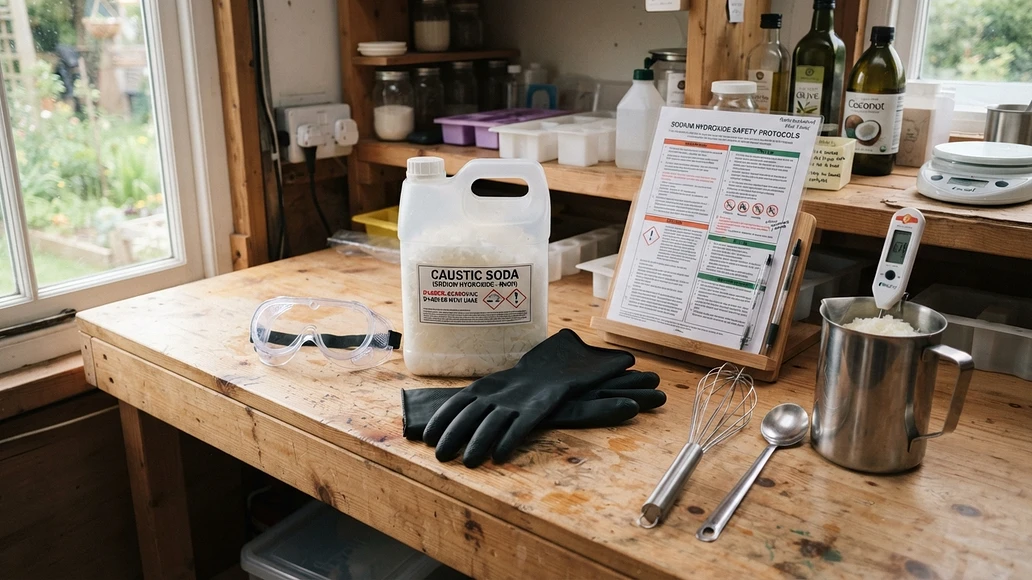
The safest time to think about protective gear is before the lid comes off. At minimum, use splash goggles, chemical-resistant gloves, long sleeves, long pants, and closed-toe shoes. Good ventilation matters, especially when mixing with water. If dust or mist exposure is possible, step back and reassess the setup rather than leaning over the container.
Contact lens wearers should be especially cautious. Eye exposures are more dangerous when irrigation is delayed. If you wear contacts, be prepared to remove them immediately if exposure occurs, but do not delay flushing the eyes with water.
Why the rule is add lye to water, not water to lye
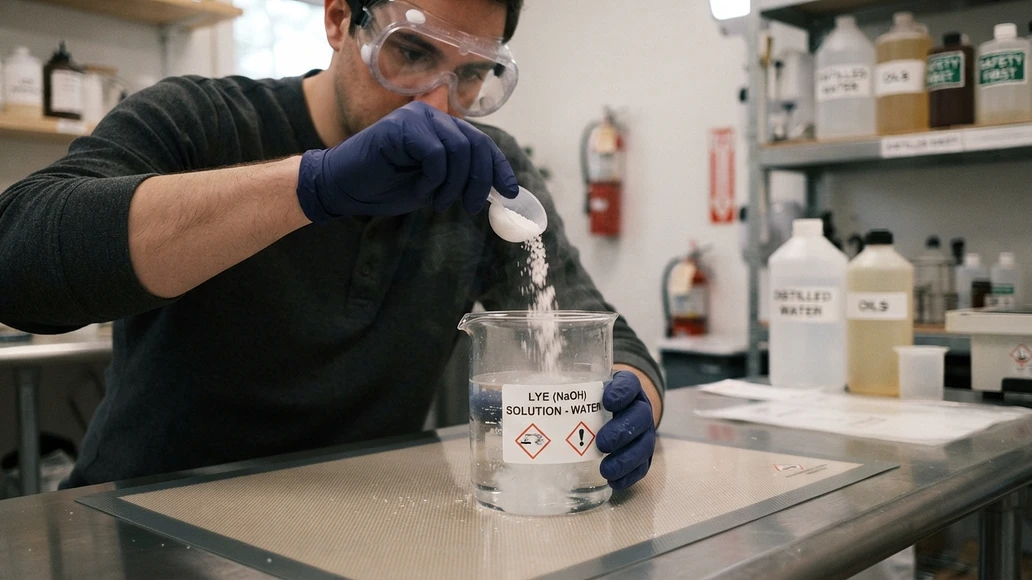
This is one of the most important handling rules. When sodium hydroxide dissolves, it releases heat. Adding water onto a concentrated pile of lye can cause sudden heating, splattering, or a violent reaction at the surface. Adding lye slowly into water helps control the heat and reduces the chance of a dangerous splash.
Use a suitable container, work slowly, and avoid leaning over the mixture. Never use aluminum. Follow the product instructions and your recipe directions exactly.
Storage rules that matter
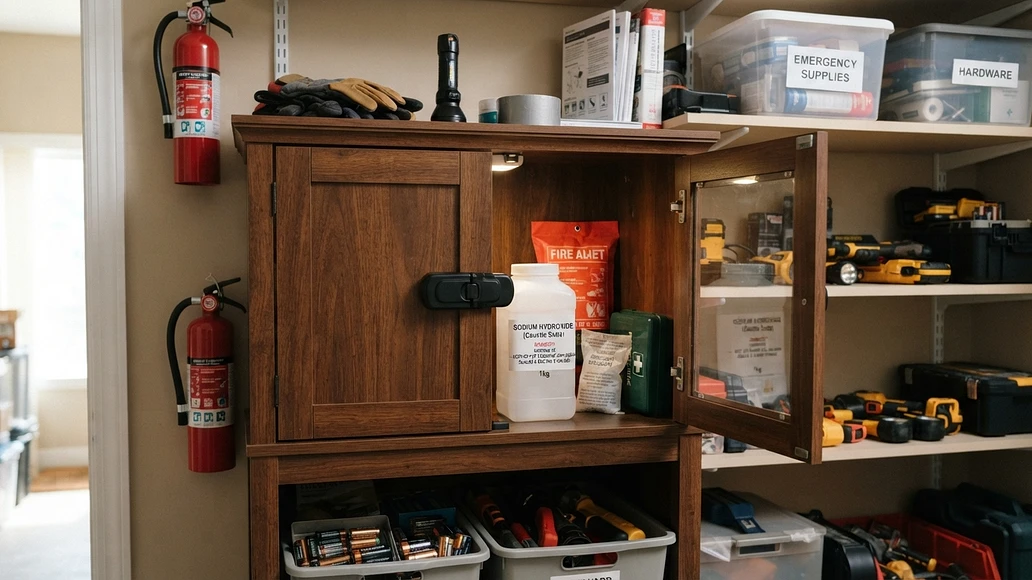
Lye must be kept dry, tightly sealed, clearly labeled, and locked away from children and pets. Moisture is a problem because sodium hydroxide can absorb water from the air and become clumpy or more difficult to handle. It should never be transferred into food containers, drink bottles, or unlabeled jars.
| Storage issue | Better choice | Bad choice |
|---|---|---|
| Container | Original labeled container with tight seal | Unlabeled jar, cup, or reused food packaging |
| Location | Locked cabinet, dry shelf, separate from food | Under sink with mixed cleaners or within reach of children |
| Moisture | Dry area with lid closed promptly | Humid room or open container left out |
| Nearby materials | Stored away from acids, bleach, and reactive metals | Next to unknown chemicals or aluminum items |
| Prepared solutions | Clearly labeled temporary container used only as directed | Mystery bucket or bottle with no date or warning label |
What can go wrong
The main hazards are burns, eye injuries, and respiratory irritation. Lye can damage skin without looking dramatic at first. It can cause severe eye injury very quickly. Dust or mist can irritate the nose, throat, and lungs. Ingestion is a medical emergency because it can burn the mouth, throat, and digestive tract.
One reason lye is so dangerous is that people may underestimate it. Pain may not fully reflect the depth of injury right away, and tissue damage can continue after exposure if the chemical is not flushed away promptly.
First aid basics for lye exposure
Immediate, prolonged flushing with water is the core first-aid response for skin and eye exposure. Do not try to neutralize fresh exposure with vinegar or another acid before flushing. That can worsen the situation by adding heat or delaying the one step that matters most, getting the chemical off the body.
| Exposure type | Possible symptoms | Immediate first aid |
|---|---|---|
| Skin contact | Burning, redness, slippery feeling, pain, whitening, blistering | Remove contaminated clothing and flush with plenty of running water right away. Continue rinsing and seek medical help for persistent pain, large areas, blistering, or any uncertainty |
| Eye contact | Pain, tearing, redness, blurred vision, severe irritation | Flush eyes with water immediately and continuously. Remove contact lenses if easy to do without delaying irrigation. Seek urgent medical care. Eye exposure is an emergency |
| Inhalation of dust or mist | Coughing, throat irritation, chest discomfort, trouble breathing | Move to fresh air and get medical help if symptoms are significant or persistent, especially with wheezing or breathing difficulty |
| Swallowing | Mouth pain, drooling, vomiting, chest or abdominal pain, trouble swallowing | Call Poison Control or emergency services immediately. Do not induce vomiting unless specifically instructed by professionals |
What not to do after exposure
Do not delay water flushing while searching for a home remedy. Do not pour vinegar on a fresh skin or eye exposure. Do not induce vomiting after swallowing lye unless Poison Control tells you to. Do not assume a small exposure is harmless just because symptoms seem mild at first.
When to call Poison Control or seek urgent care
Get professional help right away for any eye exposure, swallowing, breathing trouble, blistering, severe pain, or uncertainty about how much contact occurred. In the United States, Poison Control is available at 1-800-222-1222. If someone is having trouble breathing, losing vision, collapsing, or showing severe symptoms, call emergency services.
Disposal, do not guess
Disposal rules depend on the amount, concentration, and your local regulations. Small diluted amounts may be manageable under local guidance, but concentrated leftovers, unknown mixtures, or larger quantities should be treated as hazardous waste. Do not pour concentrated lye onto soil, outdoors, or into a septic system. Do not leave partly used solutions sitting around unlabeled.
If you are unsure, contact your local household hazardous waste program. That is the safest route.
Common myths that cause trouble
A few myths show up again and again. One is that traditional means safe. Another is that a tiny splash is no big deal. A third is that any alkaline cleaner is interchangeable with pure soap-making lye. None of those assumptions are reliable.
Another common mistake is treating finished products that contain sodium hydroxide as equivalent to raw lye. They are not the same. In cosmetics and other manufactured goods, sodium hydroxide may be used in tiny controlled amounts during formulation. That does not make raw lye a casual DIY ingredient.
Is lye a good fit for your preparedness supplies?
For most people, lye is not a general bug-out item. It is better thought of as a specialized home or workshop chemical for a narrow set of tasks. If your preparedness plan includes soap making, heavy-duty maintenance, or a homestead workflow that genuinely calls for it, then a small, properly stored supply may make sense. If not, there is no prize for keeping a dangerous chemical you do not know how to use.
Preparedness is about useful capability, not collecting hazards. If you decide to keep lye, keep it because you have a specific job for it, the right storage, and the discipline to handle it correctly.
FAQ
Is lye powder the same as sodium hydroxide?
Usually, yes. In most home, soap-making, and industrial contexts, lye powder refers to sodium hydroxide, also called caustic soda. Always verify the label because some cleaning products contain additional ingredients.
What is lye powder used for in old-school self-reliance?
Its most practical traditional use is soap making. It has also been used for heavy cleaning and other strong-alkali tasks, but many old methods are too risky or inconsistent for casual modern use.
Is lye safe for soap making at home?
It can be, if the process is controlled and the user follows a tested recipe, wears proper PPE, measures accurately, and works in a safe area. It is not a casual kitchen project.
What should you do if lye gets on your skin?
Flush the area with plenty of running water immediately. Remove contaminated clothing. Seek medical advice if pain continues, the area is large, blistering develops, or you are unsure how serious the exposure was.
Can lye damage your eyes or lungs?
Yes. Eye exposure is a medical emergency because sodium hydroxide can cause severe damage quickly. Dust or mist can also irritate or injure the respiratory tract, especially in people with asthma or other lung conditions.
How should lye powder be stored safely?
Keep it in its original labeled container, tightly sealed, dry, and locked away from children and pets. Store it away from food, acids, bleach, and reactive metals such as aluminum.