The Prepper's Guide to Potassium Permanganate, Useful, Risky, and Often Misunderstood
Potassium permanganate can disinfect, dry, oxidize, and even help start a fire, but it is not a casual survival chemical. Learn where it genuinely helps, where it creates new hazards, and how to handle it responsibly.

Potassium permanganate, often sold as dark purple crystals, has a reputation in preparedness circles as a do-it-all emergency chemical. That reputation is partly earned. It can oxidize organic material, help with some very dilute topical skin soaks, reduce microbial risk in emergency water treatment, and ignite certain fuels under controlled conditions. It is also a strong oxidizer that can burn skin, damage eyes, stain gear, and cause serious poisoning if swallowed.
This article is for general educational purposes only and is not medical advice. Any health-related use should follow professional instructions. If potassium permanganate is swallowed, gets in the eyes, or causes a painful skin reaction, contact Poison Control at 1-800-222-1222 in the United States and seek urgent medical care.
What potassium permanganate is, and why people keep it in survival kits
Potassium permanganate, abbreviated KMnO₄, is an oxidizing compound. In plain language, it reacts aggressively with many organic substances and reducing agents. That is why it has such a wide range of uses. The same chemistry that can help disinfect or dry a weeping rash can also create heat, fire, corrosion, or toxic exposure if used carelessly.
Preparedness-minded users like it because a small amount stores compactly and can serve several niche jobs. The problem is that many of those jobs require careful dilution, clean handling, and a realistic understanding of its limits. It is not a substitute for a proper first aid kit, a certified water filter, or safer fire-starting tools.
Is it really essential for preparedness?
For most households, no. For a highly organized kit built by someone who understands oxidizers, maybe. Potassium permanganate is best thought of as a specialty item, not a beginner staple. It shines when space is tight and the user has practiced with it beforehand. It is a poor choice for anyone who tends to improvise, eyeball measurements, or store chemicals loosely.
| Factor | Why people value it | Why caution matters |
|---|---|---|
| Compact storage | A small bottle of crystals can support several emergency tasks | A small bottle also contains enough material to cause serious injury if spilled or swallowed |
| Multi-use potential | Can be used for oxidation, some topical soaks, and fire starting chemistry | Each use has different dilution and handling rules, which increases user error |
| Long shelf life | Keeps well when dry and sealed | Storage near fuels, glycerin, sugar, or household chemicals can create dangerous incompatibilities |
| Emergency water role | May reduce microbial risk in a true emergency | Does not remove chemicals, heavy metals, or sediment, and is not equal to regulated water treatment |
| Medical folklore | Has real dermatology uses in very dilute external solutions | Dark or strong solutions can burn skin, and internal use is not for laypeople |
Where the evidence is strongest, and where survival lore gets ahead of the facts
Some uses are well established. Others are merely plausible or traditional. That distinction matters when you are deciding whether to carry it.
| Use | Evidence strength | What it may do | Key caution |
|---|---|---|---|
| Very dilute topical soaks for certain skin conditions | Well supported | Acts as an external antiseptic and drying agent | External use only, pale pink only, stronger solutions can injure skin |
| General skin cleansing in limited medical contexts | Well supported | Reduces surface microbial load | Not for deep wounds, large burns, or unsupervised use on vulnerable people |
| Emergency water disinfection | General guidance only | May reduce microbial risk when no better method exists | Not a complete water treatment method, does not remove chemical contamination |
| Fire starting with glycerin | Well supported | Creates a delayed exothermic reaction that can ignite tinder | High accidental fire risk, requires dry setup and practiced handling |
| Foot soaks for fungal or weeping skin issues | General guidance to well supported | Can dry and disinfect irritated skin | Too strong a solution can worsen irritation |
| Seed treatment | General guidance only | Can reduce some fungal contamination | Accurate dosing matters, overuse can damage seeds or create handling risks |
| Odor control | Mixed | Oxidation may reduce some odors | Safer household products are usually better |
| Internal poisoning treatment | Not appropriate for lay use | Historically used in specialized settings | Do not self-treat with it, ingestion can cause severe burns and poisoning |
Emergency water treatment, what it can do and what it cannot
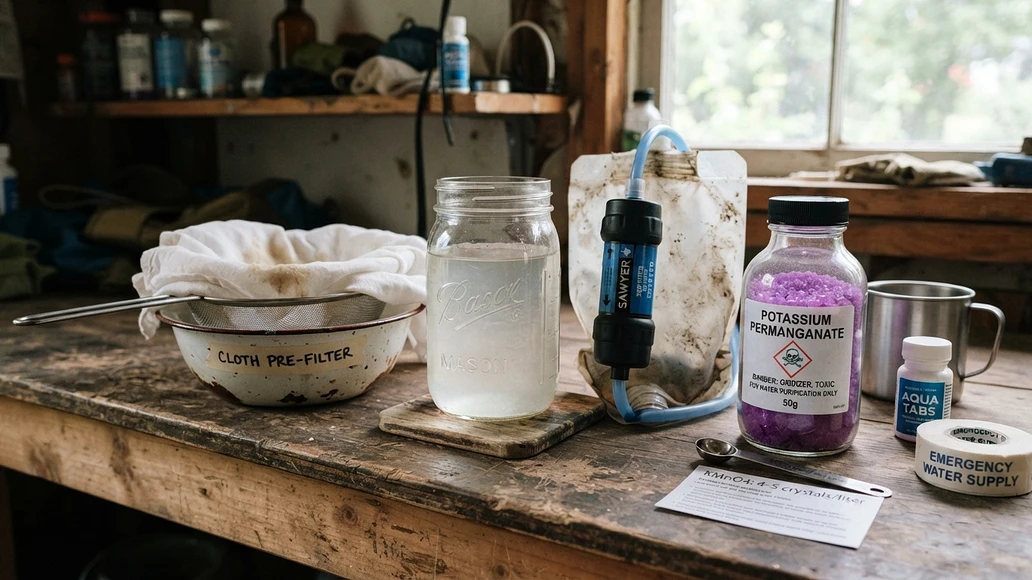
Potassium permanganate is sometimes described as a field water purifier. That wording is too generous. In a true emergency, a very dilute light pink solution may help reduce microbial risk. It does not make dirty water fully safe in the way a certified purifier, proper boiling, or approved chemical treatment can.
If you are considering it for emergency water use, keep these limits in mind. Start with the clearest water available. Pre-filter through clean cloth or a proper sediment filter to remove visible debris. The final water should be only faintly pink, never dark pink or purple. Let it stand for at least 30 minutes, and longer if the water is cold. If the color is strong, do not drink it. If you have a better option, use the better option.
Most importantly, potassium permanganate does not remove pesticides, petroleum products, heavy metals, salt, or many industrial contaminants. It is an emergency compromise, not a routine home treatment plan.
| Method | Best use case | Strengths | Weaknesses |
|---|---|---|---|
| Potassium permanganate | Last-resort emergency use by a trained adult | Compact, long-storing, may reduce microbial risk | Difficult to dose safely, does not remove chemicals, not ideal for routine use |
| Boiling | Biological contamination when fuel is available | Reliable against many pathogens | Needs time and fuel, does not remove chemicals |
| Household bleach, unscented, proper emergency guidance | Short-term emergency disinfection | Widely documented and easier to standardize | Shelf life declines, must use correct product and dose |
| Certified water filter or purifier | Prepared households and bug-out kits | Safer, more repeatable, often easier to use | Requires purchase, maintenance, and understanding of filter limits |
| Iodine products | Portable emergency treatment | Compact and familiar to many users | Taste issues, not ideal for everyone, use limits apply |
Topical skin use, where it has a real role
One of the most legitimate uses of potassium permanganate is as a very dilute external soak for certain skin problems, especially weeping, irritated, or infected-looking superficial skin conditions under medical guidance. Dermatology sources commonly emphasize that the solution should be pale pink. If it looks dark pink, magenta, or purple, it is too strong for skin contact.
People sometimes use it for weeping eczema, superficial skin irritation, or foot soaks where moisture control and mild antiseptic action are helpful. That does not mean it belongs in every first aid situation. It should not be poured into deep wounds, punctures, major burns, or large areas of broken skin. It is not a substitute for proper wound cleaning, dressing, and medical evaluation.
| Use scenario | Typical visual target | How long to use | Who should avoid home experimentation |
|---|---|---|---|
| Minor external skin soak for weeping rash or irritated superficial skin | Very pale pink | Short, limited soaks only | Children, pregnant people without guidance, people with diabetes, poor circulation, severe skin disease, or uncertain diagnosis |
| Foot soak for damp, irritated, or fungal-prone skin | Very pale pink | Short sessions, then dry feet thoroughly | Anyone with open deep cracks, neuropathy, vascular disease, or severe infection signs |
| Compress for a small superficial area | Very pale pink | Brief contact only | Anyone unable to measure carefully or monitor skin reaction |
| Deep wound, puncture, major burn, or large infected area | Not recommended for self-care | Do not use | Seek medical care instead |
If skin becomes painful, blistered, unusually darkly stained, or more inflamed after use, stop immediately and get medical advice. A pale pink solution is the upper visual cue most general readers should remember. Darker is not stronger medicine. Darker is more likely to be harmful.
Fire starting chemistry, useful but unforgiving
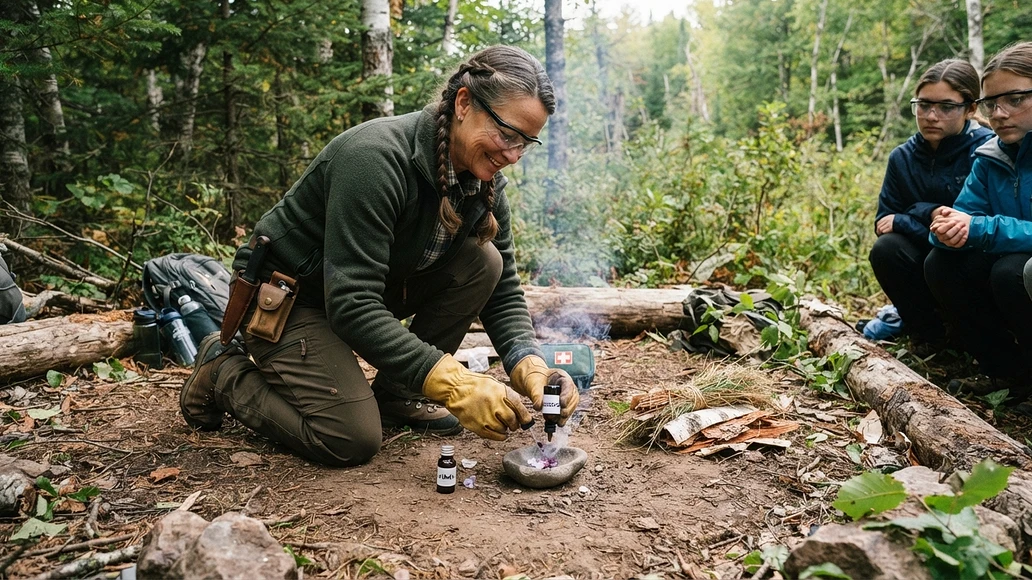
Potassium permanganate can help start a fire because it is a strong oxidizer. When mixed with glycerin, it can produce a delayed reaction that builds heat and ignites tinder. Some people also discuss sugar-based combinations, but those are less predictable in field conditions and still hazardous. This is not a camp trick for casual use. It is an emergency method for practiced adults working in a controlled area.
The main risk is that the same reaction you want can happen where you do not want it. Spilled crystals, contaminated containers, residue on gloves, or storage near fuels can create a serious hazard. Wind, damp tinder, and impatience also lead people to add too much material or lean too close during ignition.
- Choose bare mineral soil or another nonflammable surface.
- Prepare tinder first, before opening the chemical container.
- Use only a very small amount of crystals.
- Add the reactant carefully and step back.
- Do not hold the mixture in your hand or near your face.
- Transfer the flame to tinder once ignition begins.
Never practice this indoors. Never store potassium permanganate in the same pouch as glycerin, sugar, fuels, oily rags, or random chemical supplies.
Other survival uses, practical, niche, and sometimes overstated
Beyond water and skin use, potassium permanganate appears in many old field manuals and prepper discussions. Some of those uses are reasonable. Others are more folklore than dependable practice.
| Claimed use | Practical value | Reality check |
|---|---|---|
| Foot care | Moderate | Can help dry and disinfect superficial skin when very dilute, but it is not a cure-all |
| Seed treatment | Niche | Can be useful in controlled gardening contexts, but accurate dosing matters and safer products may be easier |
| Odor reduction | Low to moderate | Oxidation can reduce some odors, but household odor removers are simpler and safer |
| Gear cleaning or deodorizing | Low | May stain fabrics and some materials, and compatibility is poor |
| Fruit handling or ripening-related use | Low | Not a mainstream preparedness use and easy to misunderstand |
| General household disinfectant replacement | Poor choice | Too easy to misuse, and better standardized products exist |
How dangerous potassium permanganate can be
This is the part many survival articles rush past. Potassium permanganate is not just a clever purple chemical. It is a hazardous oxidizer with real poisoning and burn potential.
It can cause serious eye irritation and possible lasting eye injury. Strong solutions or direct crystal contact can burn skin. If swallowed, it can burn the mouth, throat, esophagus, and stomach, and may cause vomiting, abdominal pain, shock, breathing problems, and severe internal injury. Even small quantities are dangerous for children. Reported toxicity data and case literature make it clear that this is not a substance to leave casually accessible.
Dust inhalation is also a concern. Repeated exposure to manganese-containing dusts has been associated with respiratory irritation and, in occupational settings, longer-term neurological concerns. Most home users will never approach industrial exposure levels, but that is still a good reason to avoid handling loose crystals carelessly.
What to do after accidental exposure
| Exposure type | Immediate action | Next step |
|---|---|---|
| Swallowed crystals or solution | Rinse mouth. Give a small amount of water or milk if the person is awake and able to swallow | Call Poison Control immediately and seek emergency care |
| Eye splash | Flush with clean water for at least 15 minutes | Get urgent medical evaluation |
| Skin contact with strong solution or crystals | Remove contaminated clothing and rinse skin thoroughly | Seek medical advice if pain, blistering, or persistent irritation develops |
| Dust inhalation | Move to fresh air | Get medical help if coughing, wheezing, or breathing trouble occurs |
Storage and handling at home
If you decide to keep potassium permanganate, storage discipline matters more than quantity. The ideal setup is a tightly sealed, clearly labeled container inside a second protective container, stored cool and dry, away from sunlight, fuels, food, medications, and anything combustible or reactive.
| Storage factor | Best practice | Why it matters |
|---|---|---|
| Container | Original labeled container or a chemical-resistant sealed bottle | Prevents moisture entry and accidental mix-ups |
| Secondary containment | Use a separate sealed bag or box | Helps contain spills and staining |
| Location | Cool, dry shelf away from heat and flame | Reduces degradation and accidental reaction risk |
| Separation | Keep away from glycerin, sugar, fuels, oils, solvents, and household chemicals | Prevents dangerous oxidizer reactions |
| Labeling | Mark as OXIDIZER, EXTERNAL USE ONLY, DO NOT INGEST | Reduces misuse by family members or during stress |
| Child and pet safety | Locked storage only | Even small amounts can be dangerous if swallowed |
| PPE | Use gloves and eye protection when handling crystals | Protects against burns, splashes, and staining |
What type should you buy for preparedness?
If you buy potassium permanganate at all, buy from a reputable supplier that clearly identifies the product and provides safety information. Avoid mystery repackaged powders from unlabeled marketplace listings. Product descriptions vary by intended use, such as technical, laboratory, water-treatment, aquarium, or medical-related supply channels. For preparedness, the exact source matters less than clear labeling, purity information, and access to a safety data sheet.
Do not assume that because a product is sold for ponds, gardening, or general chemical use, it is automatically appropriate for skin contact or emergency water use. If the seller cannot provide basic documentation, move on.
Who should skip it entirely
Potassium permanganate is a poor fit for households with small children, confused adults, or anyone likely to mistake crystals for medicine or food additives. It is also a poor fit for people with asthma or chronic respiratory disease who may be irritated by dust, and for anyone with diabetes, poor circulation, neuropathy, major skin disease, or chronic wounds who should not be experimenting with caustic skin soaks.
If you are pregnant or breastfeeding, do not improvise with it at home without professional guidance. If you cannot measure carefully and follow written instructions exactly, choose safer alternatives.
How it compares with simpler preparedness tools
The strongest argument against calling potassium permanganate indispensable is that modern preparedness usually offers safer, easier options for each job.
| Item | Main role | Ease of use | Injury risk | Best takeaway |
|---|---|---|---|---|
| Potassium permanganate | Niche oxidizer, limited topical use, emergency fire chemistry | Low to moderate | High if misused | Useful only for trained, organized users |
| Unscented household bleach | Emergency water disinfection and sanitation | Moderate | Moderate | More standardized for household emergency planning |
| Iodine treatment products | Portable water treatment | Moderate | Moderate | Often simpler for field water use |
| Alcohol-based antiseptics | Surface and hand sanitation | High | Moderate | Better for routine hygiene, not for all wound care |
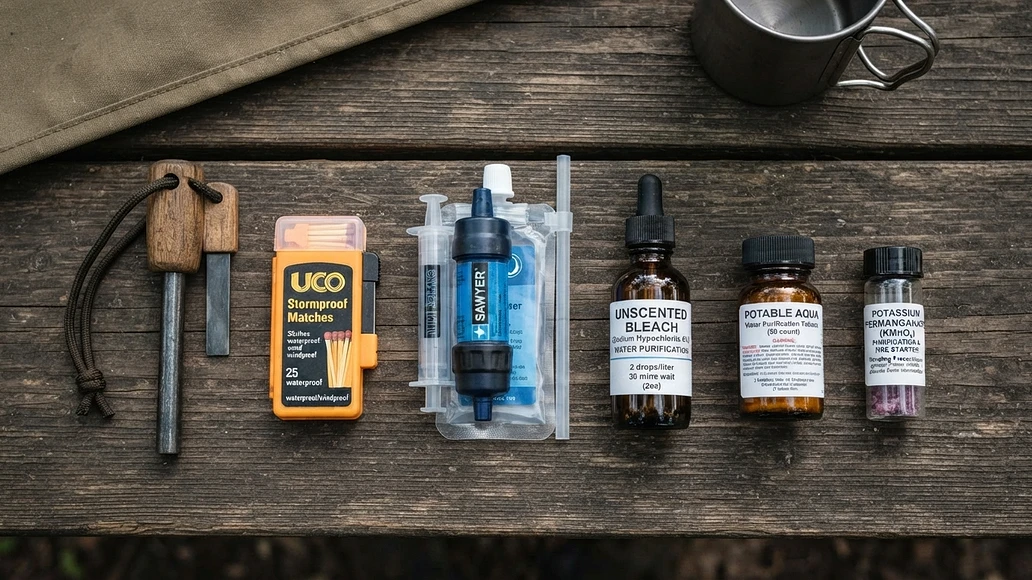
| Ferro rod | Fire starting | Moderate | Low | Far safer and more repeatable than chemical ignition |
| Stormproof matches or lighter | Fire starting | High | Low to moderate | Usually the better first-line fire tool |
| Certified water filter | Water treatment | High | Low | Best routine preparedness choice for most people |
Common myths that lead to accidents
One myth is that if a little works, more works better. With potassium permanganate, stronger often means more dangerous, not more effective. Another myth is that because it has historical medical uses, it is safe to drink or use internally. It is not. Internal use belongs to specialized medical contexts, not home improvisation.
A third myth is that any purple solution is close enough. It is not. For topical use, the visual target is very pale pink. Dark pink or purple is a warning sign. A fourth myth is that it can replace modern water treatment. It cannot. It is a stopgap at best.
A practical checklist if you still choose to carry it
- Store only a small amount in a clearly labeled, sealed container.
- Keep written instructions with it, including external-use warnings and Poison Control information.
- Separate it from fuels, glycerin, sugar, oils, and all food items.
- Carry gloves and eye protection if you plan to handle crystals.
- Use it only for pre-planned purposes you have studied in advance.
- For water, treat it as a last-resort method, not your primary plan.
- For skin, use only very dilute pale pink solutions and only on minor superficial issues.
- Do not use it on children unless specifically directed by a clinician.
- Do not ingest it, and do not mix it with random household chemicals.
- Prefer safer alternatives whenever they are available.
When to skip potassium permanganate and use something else
Use a certified filter, boiling, or approved emergency disinfection guidance for routine water planning. Use standard first aid cleaning and dressings for wounds. Use a ferro rod, lighter, or matches for fire. Use purpose-made antifungal or skin-care products for common foot and rash issues. In most real-world preparedness plans, potassium permanganate is not the first or safest answer.
FAQ
Can you drink water purified with potassium permanganate every day, or is it only for emergencies?
It should be viewed as an emergency-only option, not a daily drinking-water method. It may reduce some microbial risk when used very carefully, but it is not a complete or ideal home treatment system and does not remove many non-biological contaminants.
How much potassium permanganate is too much in a skin soak or foot bath?
If the solution is more than very pale pink, it is too strong for casual home use. Dark pink, magenta, or purple solutions should not be used on skin. Because exact concentration matters, anyone uncertain about dilution should avoid using it topically without professional instructions.
Is potassium permanganate safe to use around children and pets?
Not casually. It should be locked away. Children and pets are at higher risk from accidental ingestion, spills, and skin or eye exposure. For most family households, safer alternatives make more sense.
What should I do immediately if someone accidentally swallows potassium permanganate crystals or solution?
Rinse the mouth, give a small amount of water or milk if the person is awake and can swallow, then call Poison Control immediately at 1-800-222-1222 and seek emergency care. Do not wait for symptoms to become severe.
Can I mix potassium permanganate with other household chemicals to make stronger disinfectants?
No. Do not mix it with household chemicals. It is a strong oxidizer and can react dangerously with many substances, including fuels, organics, and reducing agents. Mixing chemicals without specific training is one of the easiest ways to create a fire, toxic exposure, or corrosive injury.