Powdered Milk for Emergency Pantries, How to Store It, Use It, and Know Its Limits
A practical guide to choosing the right dry milk, storing it for the long haul, calculating how much to keep, and using it safely in everyday life and emergencies.

Powdered milk earns its place in a preparedness pantry because it solves several problems at once. It stores far longer than fresh milk, takes up less space than ready to drink cartons, and can add protein, calcium, and cooking flexibility to shelf stable meals. For many households, it is one of the simplest ways to strengthen emergency food supplies without relying only on canned goods or expensive specialty products.
That said, dry milk is not magic. Shelf life depends heavily on temperature, moisture, light, and packaging. Different types behave differently in storage. It also has important limits for infants, people with milk allergy, and households managing certain medical conditions. A smart prepper plan treats powdered milk as one useful tool, not a complete nutrition strategy.
This guide covers what milk powder is, which type makes the most sense for long term storage, how to package and rotate it, how much to store, how to spot spoilage, and how to use it safely when water, refrigeration, or daily routines are disrupted.
Why dry milk deserves a place in a modern prepper pantry
Dry milk is one of the few shelf stable foods that can support both nutrition and morale. It can be mixed for drinking, stirred into oatmeal, baked into bread, added to soups, or used in homemade mixes. In an emergency, that flexibility matters. A pantry item that works across breakfast, baking, and comfort food is more likely to be used and rotated instead of forgotten.
Compared with fresh milk, powdered milk needs no refrigeration until it is mixed with water. Compared with canned dairy, it is usually lighter, more compact, and easier to portion. Compared with many protein powders, it often provides a more familiar food function in addition to protein.
Its biggest strengths are shelf stability, versatility, and cost per serving. Its biggest weaknesses are flavor differences, sensitivity to poor storage, and the fact that not everyone can use dairy safely.
What milk powder is, and what the labels really mean
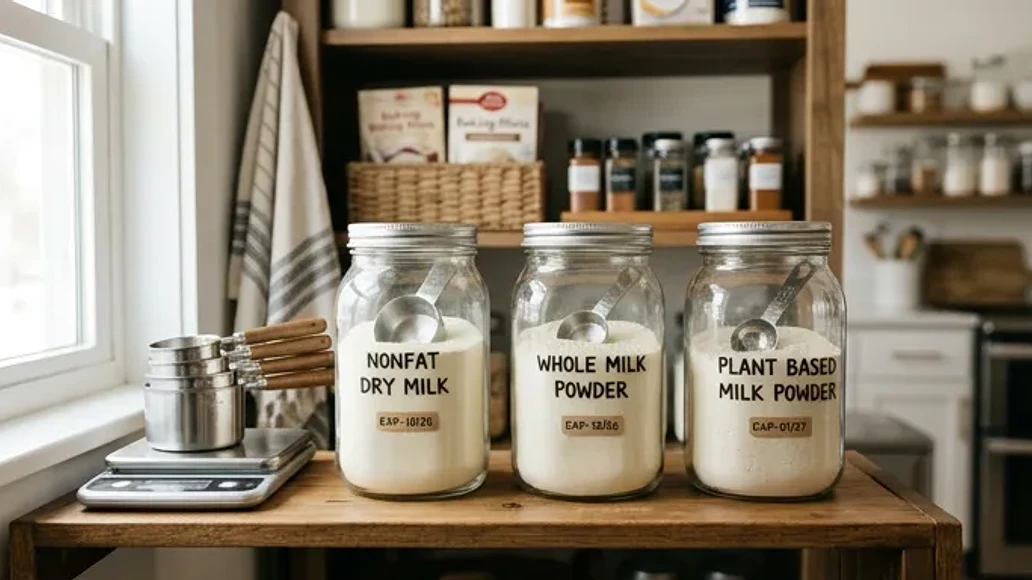
Milk powder is milk with most of the water removed. Commercial production typically uses evaporation and drying so the finished product can be stored dry and later reconstituted with water. The label matters because fat content, processing style, and fortification affect shelf life, taste, and nutrition.
Main types you will see
| Type | What it is | Storage strengths | Main drawbacks | Best prepper uses |
|---|---|---|---|---|
| Nonfat dry milk | Milk powder with most fat removed | Usually the longest shelf life because lower fat means lower rancidity risk | Less rich flavor and mouthfeel | Long term storage, baking, cooking, drinking when rotated well |
| Whole milk powder | Milk powder that retains milk fat | Better taste and calories per serving | Shorter shelf life because fat can go rancid | Shorter term storage, children and adults needing more calories, richer recipes |
| Instant powdered milk | Dry milk processed to dissolve more easily | Convenient for quick mixing | May cost more, shelf life varies by formula and packaging | Daily use, quick drinks, convenience kits |
| Fortified dry milk | Powder with added vitamins or minerals | Can improve nutrient coverage | Nutrients may decline over long storage, labels vary widely | Households focused on calcium and vitamin D support |
| Plant based milk powder | Powdered soy, oat, coconut, or other non dairy product | Useful for dairy free planning | Nutrition and protein vary widely, not a direct milk equivalent | Milk allergy, vegan storage, mixed household needs |
Two label details matter more than most shoppers realize. First, nonfat dry milk and whole milk powder are not interchangeable for storage life. Second, instant and non-instant products may use different processing and particle structure, which affects how easily they mix and sometimes how they perform in recipes.
Which type is best for long term preparedness
For most households, nonfat dry milk is the practical long term choice. Lower fat means better storage stability, especially if you are packing for multi-year storage. If your goal is a deep pantry that can ride through job loss, storms, or supply disruptions, nonfat dry milk usually gives the best balance of cost, shelf life, and usefulness.
Whole milk powder makes sense when taste and calories matter more than maximum shelf life. It can be a good fit for shorter rotation cycles, cold weather use, or households that actually drink it often enough to keep stock moving.
Instant dry milk is often the easiest to live with day to day. If you want your emergency supply to become part of normal life, convenience matters. A product that mixes quickly is more likely to be used, rotated, and replaced.
For households with mixed needs, a layered approach works well. Store a larger base of nonfat dry milk for long term use, keep a smaller amount of whole milk powder for flavor and higher calorie recipes, and add a dairy free powder if anyone in the home cannot tolerate cow's milk.
How long powdered milk really lasts
Dry milk does not have one universal shelf life. The answer depends on the type of powder, whether the package is opened, and how it is stored. In general, unopened nonfat dry milk stored cool, dry, and dark lasts much longer than whole milk powder. Once opened, exposure to oxygen and humidity starts working against quality.
Best by dates are mainly about quality, not a countdown clock to instant danger. A product may still be usable after that date if it has been stored well and shows no signs of spoilage. But quality, flavor, and some vitamins can decline over time, and poor storage can ruin powder long before the printed date.
| Product and condition | Typical storage outcome | Quality concerns over time | Key note |
|---|---|---|---|
| Unopened nonfat dry milk in cool, dry storage | Often suitable for long term storage, commonly measured in years | Flavor flattening, vitamin decline | Best option for deep storage |
| Unopened whole milk powder in cool, dry storage | Usually shorter storage life than nonfat | Rancidity risk from fat oxidation | Rotate more aggressively |
| Opened dry milk in original package | Shorter life after opening | Moisture pickup, off flavors, clumping | Transfer or reseal well after opening |
| Repackaged dry milk in airtight, low oxygen storage | Better long term quality retention | Still vulnerable to heat and moisture | Packaging helps, but environment still matters |
| Reconstituted milk | Perishable, like fresh milk | Bacterial growth if left warm | Refrigerate promptly and discard if abused |
Storage conditions that matter most
The three enemies of powdered milk are heat, moisture, and oxygen. Light also speeds quality loss. If you remember only one rule, remember this: cool, dry, dark storage beats fancy packaging in a bad room.
Heat speeds oxidation and nutrient loss. Moisture causes clumping, caking, and can support spoilage. Oxygen contributes to rancidity and stale flavors. Insects and pantry pests are another reason to use protective packaging.
| Storage factor | Best practice | Why it matters | Common mistake |
|---|---|---|---|
| Temperature | Store in the coolest stable indoor space available | Lower temperatures slow quality loss and rancidity | Keeping powder in a garage, shed, or attic |
| Humidity | Keep powder very dry and away from steam or damp air | Moisture causes clumping and spoilage risk | Storing near a stove, dishwasher, or basement leak |
| Light | Use opaque containers or dark storage areas | Light can degrade quality over time | Clear jars in sunny kitchens |
| Oxygen exposure | Minimize air in long term storage containers | Helps slow oxidation and off flavors | Repeatedly opening a large container for daily use |
| Clean handling | Use dry, clean scoops and seal promptly | Prevents contamination and moisture entry | Using a damp spoon or leaving the lid loose |
Where to store it in real homes
In apartments, an interior closet often beats a kitchen cabinet near appliances. In houses, a cool pantry is usually better than a garage. Basements can work if they stay dry and do not have flooding or condensation problems. In hot or humid climates, smaller sealed portions are especially helpful because each opening exposes less product.
Packaging options, from original bags to long term repacking
Original packaging is fine for short to moderate storage if the product will be used and rotated normally. For deeper storage, many preppers repackage dry milk into mylar bags, sealed jars, or commercially packed cans. The right choice depends on how long you plan to store it and how often you expect to open it.
| Packaging type | Advantages | Limitations | Best use case |
|---|---|---|---|
| Original package | No extra work, keeps label and instructions | Often less protective after opening | Short term pantry rotation |
| Mylar bag inside a bucket or tote | Good light and oxygen protection when sealed properly | Requires repackaging skill and careful labeling | Long term storage in larger quantities |
| Glass jar with airtight lid | Easy to inspect and use | Breakable, clear glass needs dark storage | Working pantry stock |
| #10 can or commercially sealed can | Strong protection and long shelf life potential | Less convenient once opened, often larger volume | Deep storage reserve |
| Small vacuum sealed portions | Reduces repeated exposure after opening | Needs equipment and careful portion planning | Humid climates and small households |
Oxygen absorbers are commonly used in long term dry food storage, but they are not a cure for bad storage conditions. Desiccants help with moisture control in some setups, but the main goal is still to keep the powder dry from the start. Whatever method you choose, label every package with the product type, packing date, original best by date, and estimated use first date.
How much to store per person
Quantity planning should start with how you actually use milk. A household that drinks milk daily, bakes often, and uses it in oatmeal or sauces will need more than a household that only wants a backup for coffee and occasional cooking. It also helps to plan by servings instead of by container count.
A simple starting point for adults is 1 to 2 servings per day if powdered milk is intended as a regular emergency food, and less if it is mainly for cooking. Children, older adults, and people with higher calorie needs may use more, but medical needs and tolerance vary.
| Planning scenario | Light use per person | Moderate use per person | Heavy use per person | Notes |
|---|---|---|---|---|
| 2 weeks | Enough for coffee, cereal, and a few recipes | Enough for about 1 serving per day plus cooking | Enough for 2 servings per day plus baking | Good starter level for most homes |
| 3 months | Backup pantry support | Regular emergency use with rotation | High reliance during disruption | Balance with canned fish, beans, and shelf stable milk |
| 1 year | Supplement only | Meaningful part of food plan | Requires disciplined storage and rotation | Avoid relying on one food for all protein and calcium needs |
Because brands vary in serving size and reconstitution ratio, the most accurate method is to read the label and convert your target number of servings into total pounds or cans. Build your plan around actual household habits, not idealized survival math.
How to recognize spoilage and when to throw it out
Do not use taste as your first safety test. If dry milk looks or smells wrong, discard it. Powdered milk should be dry and free flowing or only lightly compacted from normal settling. Serious clumping, dampness, discoloration, insect activity, or a strong stale, paint-like, or rancid odor are warning signs.
Whole milk powder is especially vulnerable to rancid smells because of its fat content. Nonfat dry milk may last longer, but it can still be ruined by moisture or contamination.
| Sign | What it may mean | Safe action |
|---|---|---|
| Major hard clumps or caking | Moisture exposure | Discard if moisture intrusion is clear or widespread |
| Yellowing or unusual darkening | Age, oxidation, or heat damage | Discard if paired with off odor or other spoilage signs |
| Rancid, sour, stale, or paint-like smell | Fat oxidation or spoilage | Discard |
| Mold, insects, webbing, or debris | Contamination | Discard immediately |
| Package swelling, leaks, or water damage | Compromised storage integrity | Do not trust it for emergency use |
How to mix powdered milk safely and make it taste better
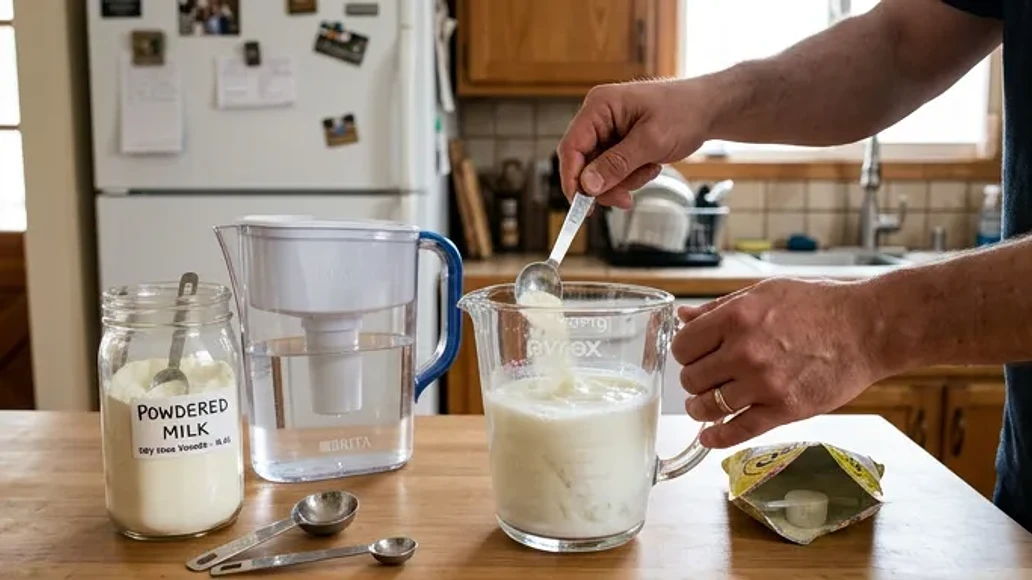
Always follow the package instructions for the brand you bought. Ratios vary. In general, use clean utensils, safe water, and a sanitized container. Add some water first, then the powder, then the rest of the water to reduce lumps. Chilling the mixed milk improves flavor for many people.
If safe water is limited, remember that contaminated water can undo all the benefits of careful food storage. Reconstituted milk should be treated like fresh milk. Refrigerate it promptly. If it sits out too long at room temperature, discard it.
- Wash hands and use a clean, dry scoop.
- Measure water and powder according to the label.
- Mix in a clean container until fully dissolved.
- Refrigerate promptly if not using right away.
- Discard leftovers that have been temperature abused.
For better taste, many people mix it ahead of time and chill it well. Using it in oatmeal, pancakes, mashed potatoes, soups, and baking can make flavor differences much less noticeable than drinking it plain.
What powdered milk contributes nutritionally
When tolerated, powdered milk can provide protein, calcium, and often vitamin D if fortified. It can help round out grain heavy emergency meals and improve the nutrition of stored staples like oats, rice pudding, biscuits, and soups. It is especially useful when a pantry has plenty of calories from grains and beans but needs more convenient dairy nutrition.
Still, it should not be your only nutrition plan. Long emergencies are easier on the body when food storage includes varied protein sources, fruits or vegetables, fats, and foods that fit the needs of everyone in the household.
| Option | Protein role | Calcium role | Shelf stability | Best fit |
|---|---|---|---|---|
| Powdered milk | Moderate, useful daily support | Usually strong | Good when stored properly | Pantry cooking and drinking |
| Shelf stable boxed milk | Similar use to fresh milk | Often strong | Good unopened, bulky to store | Shorter term convenience |
| Canned dairy products | Varies by product | Varies | Good unopened | Specific recipes and backup use |
| Plant based milk powder | Varies widely, soy often strongest | Depends on fortification | Varies by product | Dairy free households |
| Protein powder | Often high | Usually not a milk substitute | Good, depends on product | Protein support, not general milk use |
Who should be cautious with powdered milk
Regular powdered milk is not suitable as a substitute for infant formula for babies under 1 year. Infants have specific nutrition and safety needs, and emergency plans for babies should include appropriate formula or breastfeeding support planning. This is one of the most important safety limits in any milk powder discussion.
People with a true milk allergy should not use powdered milk. It contains milk proteins and can trigger serious reactions. People with lactose intolerance may or may not tolerate it, since lactose is still present. Some can handle small amounts, especially in recipes, but others cannot.
Households managing kidney disease, some heart conditions, or diabetes should plan more carefully. Powdered milk can contribute protein, minerals, carbohydrates, and sodium depending on the product. If someone in the home follows a medically restricted diet, it is wise to ask a clinician or dietitian before buying large quantities.
Pregnant and breastfeeding people can generally use powdered milk if they tolerate dairy, but food safety matters more, not less. Do not use spoiled or questionably stored powder.
Using it every week so your stock stays fresh
The best emergency food is food you already know how to use. Dry milk is easy to rotate if you stop thinking of it only as a crisis item. Use it in pancakes, muffins, biscuits, creamy soups, casseroles, cocoa mix, oatmeal, bread, and homemade seasoning blends. Keep one small container in the kitchen for daily use and leave the rest sealed in reserve storage.
A simple first in, first out system works well. Date every package. Open the oldest first. Replace what you use during normal grocery trips. If a product tastes acceptable in everyday cooking, it is much more likely to be a reliable emergency staple later.
Common mistakes preppers make with dry milk
The most common mistake is storing too much of the wrong type. Buying a large amount of whole milk powder for very long storage often leads to disappointment because flavor can decline faster than expected. Another mistake is keeping dry milk in hot garages or damp basements and assuming the package alone will protect it.
A third mistake is planning milk powder for infants. That is not a safe substitute for formula. Another is forgetting water. Dry milk is only useful if you also have a safe water plan and a way to keep mixed milk cold when needed.
Finally, many people buy it for emergencies but never test it in normal meals. If your household hates the taste, your plan needs adjustment now, not during a power outage.
Low infrastructure food safety basics
When power is unreliable, mix only what you expect to use soon. Keep utensils clean and dry. If refrigeration is limited, smaller batches reduce waste. If water safety is uncertain, treat or use stored potable water before mixing. In a prolonged outage, dry milk may be better used in cooked foods than as a cold beverage, because cooking can fit more naturally into meal prep and reduce leftover handling.
Clean containers thoroughly between batches. Residue left in pitchers or bottles can support bacterial growth. In austere conditions, sanitation discipline matters just as much as the food itself.

Quick reference tables for planning and rotation
| Task | What to do | How often |
|---|---|---|
| Inspect storage area | Check for heat, leaks, humidity, pests, and sunlight exposure | Monthly |
| Review package dates | Move oldest stock forward and note upcoming use first dates | Every 1 to 3 months |
| Test product quality | Open one unit from older stock and use it in normal cooking | Periodically during rotation |
| Update quantity plan | Adjust based on household use, new babies, diet changes, or medical needs | Twice per year |
| Check water plan | Confirm you have safe water to reconstitute dry foods | At every pantry review |
FAQ
Can I use powdered milk instead of infant formula in an emergency?
No. Regular powdered milk is not an appropriate substitute for infant formula for babies under 1 year. Families with infants should plan ahead with proper infant feeding supplies and seek pediatric guidance for emergency planning.
Is it safe to drink powdered milk past its best by date?
Sometimes, but only if it was stored properly and shows no signs of spoilage. Best by dates usually reflect quality, not an automatic safety cutoff. If there is any off odor, contamination, moisture damage, or rancid smell, discard it.
How do I store milk powder if my home is hot and humid?
Use the coolest indoor space available, avoid kitchens and garages, divide stock into smaller airtight portions, and protect it from moisture and light. In difficult climates, smaller sealed units are often safer than one large container that gets opened repeatedly.
What is the difference between instant powdered milk and regular powdered milk for preparedness?
Instant products are designed to dissolve more easily, which makes them convenient for daily use. Regular non-instant products may be less convenient to mix but can still work very well for storage and cooking. Always compare label instructions, ingredients, and packaging.
Can people with lactose intolerance keep powdered milk in their emergency supplies?
Some can, some cannot. Powdered milk still contains lactose. If symptoms are a concern, test tolerance during normal times or store lactose free or plant based alternatives instead. People with a true milk allergy should avoid powdered milk entirely.
References
No reference links were provided in the brief. For authoritative guidance, consult USDA food storage resources, USDA FoodData Central, FDA infant feeding guidance, CDC food safety resources, and university extension publications on dry milk storage and emergency food planning.