Old-Fashioned Canning Claims, Sorted by Safety
Traditional food preservation deserves respect, but not every old method belongs in a modern pantry. This guide separates harmless habits from risky shortcuts, explains the science in plain language, and shows how to keep family canning traditions while following tested safety standards.

Many people use the phrase Amish canning as shorthand for simple, traditional food preservation. The problem is that the phrase can hide a lot of different practices. Some are perfectly compatible with modern home canning guidance. Some are outdated but low stakes. Others are genuinely dangerous, especially when low acid foods are involved.
This article is general information only. It does not replace local Cooperative Extension advice, tested recipes, or current USDA and National Center for Home Food Preservation guidance. If you are canning for sale, gifting food widely, or feeding infants, pregnant people, older adults, or anyone with a weakened immune system, stick closely to recognized standards.
What people mean by “Amish canning”
There is no single Amish rulebook for canning. Amish and Mennonite communities vary by region, church district, family tradition, access to equipment, and local teaching. Some households use pressure canners routinely for vegetables, broth, and meats. Others may rely more heavily on older methods passed down through family. That means broad claims like “the Amish never use pressure canners” or “Amish methods are always safer” are too simplistic to be useful.
A better question is this: Does a specific method match tested canning science? If yes, it may be a traditional practice worth keeping. If not, tradition alone does not make it safe.
The plain-language science behind safe canning
Home canning safety revolves around acidity, heat, and time. The biggest concern in improperly canned low acid foods is Clostridium botulinum, a bacterium that can produce a dangerous toxin in sealed jars. You cannot count on smell, taste, or a normal-looking lid to warn you.
High acid foods are much less hospitable to botulism. Low acid foods are the opposite. That is why the method matters so much.
Food type | Typical examples | Acidity range | Usual safe home canning method | Main risk if processed incorrectly |
|---|---|---|---|---|
High acid foods | Most fruits, jams, jellies, pickles, acidified tomato products | pH 4.6 or lower | Boiling water bath, using a tested recipe and correct processing time | Spoilage, mold, yeast, texture loss, possible unsafe acid balance if recipe is altered |
Low acid foods | Green beans, corn, carrots, potatoes, meats, poultry, seafood, soups | Above pH 4.6 | Pressure canning, using tested times and pressure for jar size and altitude | Botulism toxin, severe foodborne illness, spoilage organisms surviving in the jar |
Mixed foods | Salsas, sauces, relishes, soups, stews | Varies by ingredients and ratios | Only use tested recipes with established acid balance and processing instructions | Unpredictable heat penetration and unsafe pH if ingredients are changed |
Processing times are not random. They are designed to get enough heat into the center of the jar for long enough to control the specific hazards of that food. Boiling longer does not turn a low acid food into a high acid one.
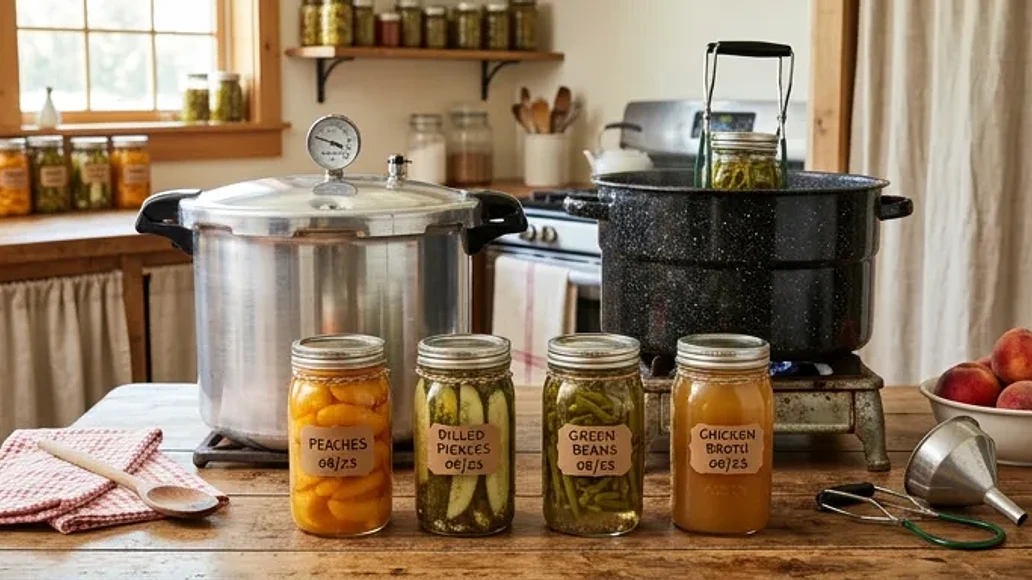
Myth or fact, the claims that need the most sorting
Claim | Verdict | Why it matters | Safer takeaway |
|---|---|---|---|
If the jar sealed, the food is safe | False and harmful | A seal only shows the jar closed. It does not prove the food reached a safe internal temperature. | Judge safety by method, recipe, time, pressure, and acidity, not by the seal alone. |
You can water bath anything if you boil long enough | False and harmful | Boiling water does not reach the temperatures needed for low acid foods. | Pressure can low acid foods. Water bath only tested high acid foods. |
Amish households do not use pressure canners | Overgeneralized | Practices vary widely. Many traditional households do use pressure canners. | Evaluate the method, not the label. |
Open kettle canning is just as good as processing filled jars | False and harmful | Hot food poured into hot jars without full processing does not reliably control contamination. | Process filled jars according to a tested recipe. |
Oven canning or dishwasher canning works | False and harmful | These methods do not provide reliable heat penetration or standardized processing. | Use only approved water bath or pressure canning methods. |
Extra vinegar or salt makes any recipe safe to can | False and harmful | Improvised changes can affect pH, density, and heat penetration in ways home cooks cannot verify. | Use tested recipes for acidified foods and mixed products. |
Commercial jars can always be reused for canning | Mixed | Some may fit lids poorly or break more easily because the glass is thinner. | Use standard mason jars for best reliability. |
Reusable lids are unsafe by definition | Mixed | Safety depends on following the lid maker’s directions exactly. | Use products as directed and avoid improvising. |
Myth 1, “If the jar sealed, the food is safe”
This is one of the most dangerous canning beliefs. A lid can seal on food that was never processed correctly. A sealed jar of green beans that was water bath canned is still unsafe, even if the lid is concave and the contents look normal.
Botulism toxin does not reliably announce itself. No odd smell is required. No bubbling is required. No mold is required. Safety comes from using the right method for the food, not from the appearance of the finished jar.
Myth 2, “Traditional households never use pressure canners”
This claim confuses culture with equipment. In reality, many conservative rural households use pressure canners because they preserve large amounts of vegetables, meat, and broth. Pressure canning is not a rejection of tradition. It is often the practical tool that allows traditional food storage to continue safely.
What matters is whether the canner is used correctly, with tested times, the right pressure for altitude, and jars packed according to recipe directions.
Myth 3, “Boiling longer makes low acid foods safe”
It does not. Water boils at a temperature too low to safely process low acid foods for shelf storage. That is why pressure canners exist. They raise the temperature above boiling water levels, which is necessary for low acid foods such as plain vegetables, meats, and many soups.
Adding time cannot replace adding pressure. This is one of the clearest places where old advice and modern safety science part ways.
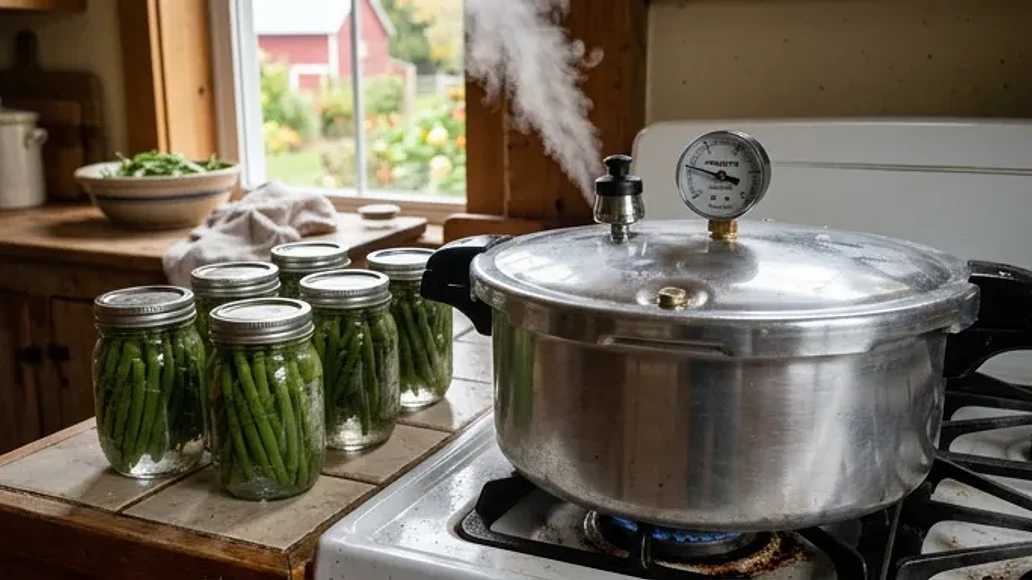
Myth 4, “Open kettle and oven canning are fine because they are old”
Age does not equal safety. Open kettle canning, where hot food is ladled into jars and sealed without full jar processing, is strongly discouraged by modern food preservation authorities. Oven canning is also not recommended. Dry heat does not move through jars the same way moist heat does, and home ovens are not designed to produce safe canning conditions.
Dishwasher canning falls into the same category. It may warm jars. It does not create a tested, reliable canning process.
Myth 5, “You can safely can milk, eggs, and cured meats at home with old methods”
This is another area where caution needs to be very firm. Home canning guidance does not provide tested recommendations for many dairy products. Eggs and certain dense or fatty products are also poor candidates for safe home canning. Older recipes for canned milk, cream sauces, bacon, or egg-based mixtures may still circulate, but that does not make them safe by current standards.
If a family recipe depends on shelf-stable dairy or egg preservation, the safer update is usually freezing, dehydrating where appropriate, or choosing a tested alternative recipe rather than trying to force it into a jar.
Myth 6, “Official processing times are overcautious compared with old know-how”
Tested times can feel conservative, especially if someone remembers a grandparent doing less. But processing times are built around jar size, food density, acidity, pack style, and heat penetration. They are not guesses. They are designed to reduce risk across real-world kitchens, not just ideal conditions.
The phrase “we always did it this way and nobody got sick” is anecdotal, not proof. Botulism is rare, but rare does not mean trivial. A near miss looks exactly like success until it does not.
Where tradition and modern guidance actually agree
Not every old-fashioned habit is suspect. Many traditional canning practices line up well with current recommendations when the recipe and method are tested. Respecting tradition does not require romanticizing risk.
Traditional style practice | Alignment with modern guidance | Notes | Best current approach |
|---|---|---|---|
Using a pressure canner for plain vegetables and meats | Strong alignment | This is the correct method for low acid foods. | Use tested times, correct pressure, and altitude adjustments. |
Water bath canning jams, jellies, fruits, and pickles | Strong alignment | Works well when acid and sugar ratios are tested. | Follow a tested recipe and do not improvise ingredient ratios. |
Saving harvests in standard mason jars | Strong alignment | Purpose-made jars remain the best choice. | Inspect jars for chips and cracks before use. |
Open kettle canning preserves | Conflicts with guidance | Sealing without full processing is not recommended. | Process filled jars in a boiling water bath for the tested time. |
Oven canning dry goods or filled jars | Conflicts with guidance | Not a tested canning method. | Store dry goods in clean containers, or use approved preservation methods. |
Reusing store-bought pasta sauce jars | Mixed and discouraged | Glass and threads may not hold up like mason jars. | Reserve them for refrigerator storage or dry storage, not routine canning. |
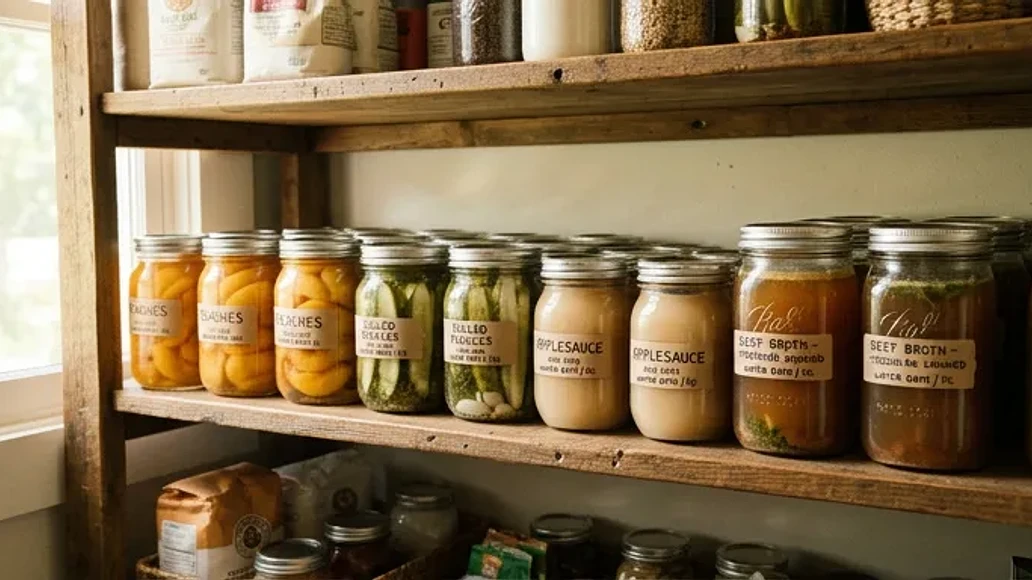
How to update a family recipe without losing its character
Many people are not trying to rebel against safety. They just want to preserve a beloved recipe. The safest path is to separate flavor tradition from processing safety.
Identify whether the food is high acid, low acid, or mixed.
Find a tested recipe that is very close in ingredient type, texture, and jar size.
Keep the flavor changes to low-risk items such as dried herbs or small seasoning adjustments, only where trusted guidance allows.
Do not thicken with flour, starch, dairy, or pureed low acid vegetables unless the tested recipe specifically includes them.
If no tested canning recipe exists, preserve it another way, such as freezing.
For example, a family tomato sauce may be adaptable if you use a tested tomato sauce recipe and keep the required added acid. A family cream soup recipe usually is not a safe home canning candidate.
Equipment myths, jars, lids, and what is actually essential
Safe canning does not require fancy gear, but it does require the right gear. A boiling water canner is for tested high acid foods. A pressure canner is for low acid foods. They are not interchangeable.
Equipment item | What it does | Needed for | Common myth | Reality |
|---|---|---|---|---|
Boiling water canner | Processes jars in boiling water | High acid foods | It can handle any food if used long enough | Not safe for low acid foods |
Pressure canner | Raises temperature above boiling water | Low acid foods | It is only for experts | It is the correct tool for many staple foods |
Standard mason jars | Designed for repeated home canning use | All approved canning methods | Any glass jar works the same | Mason jars are the most reliable choice |
Two-piece lids or approved reusable lids | Create the seal | All approved canning methods | All lids are interchangeable forever | Follow current manufacturer directions |
Jar rack | Keeps jars off direct pot bottom contact | Water bath and pressure canning | Optional in every situation | Important for proper heat circulation and reducing breakage |
Reusable lids are not automatically unsafe, but they are not a free-for-all either. Follow the manufacturer’s instructions exactly. If directions differ from what you are used to, the product directions control.
Altitude matters more than many family recipes admit
At higher elevations, water boils at a lower temperature. That changes processing requirements. A recipe that worked at sea level may be underprocessed in the mountains if you do not adjust time or pressure.
Altitude range | Boiling water behavior | Typical effect on water bath canning | Typical effect on pressure canning |
|---|---|---|---|
0 to 1,000 feet | Highest boiling temperature in normal home conditions | Base processing times usually apply | Base pressure guidance may apply, depending on canner type |
1,001 to 3,000 feet | Slightly lower boiling temperature | Processing time often increases | Pressure may need adjustment |
3,001 to 6,000 feet | Noticeably lower boiling temperature | Longer processing becomes more important | Higher pressure setting often required |
Above 6,000 feet | Much lower boiling temperature | Careful adjustment is essential | Follow tested altitude-specific pressure guidance exactly |
Always use the altitude instructions that come with the tested recipe or your Extension source. Do not guess.
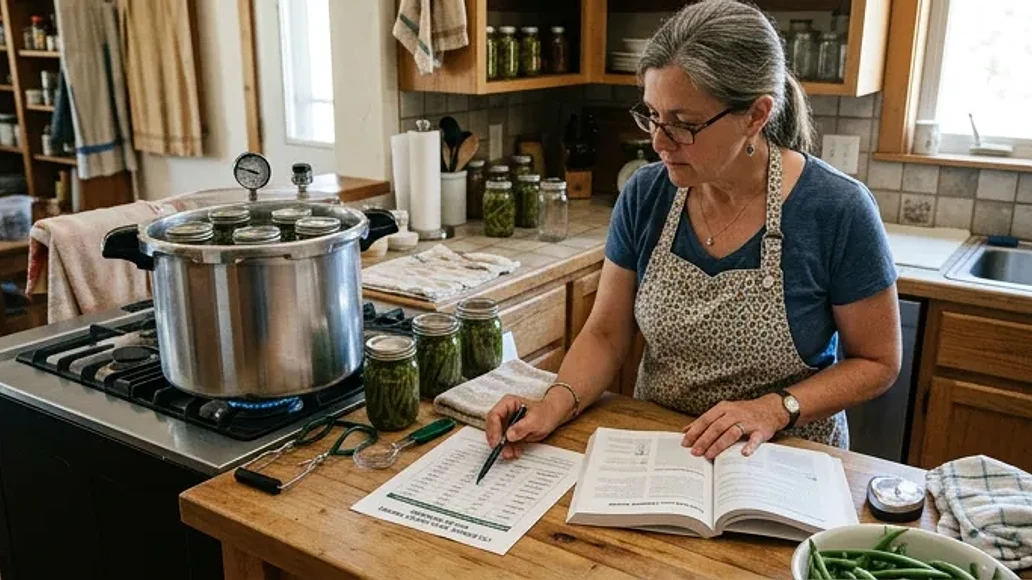
How to spot unsafe canning advice online
Social media has made old and alternative canning methods spread fast. Some videos are harmless. Others are risky. A few red flags should make you stop immediately.
The speaker says a method is safe because “my family always did it.”
They use oven canning, dishwasher canning, or open kettle canning as routine advice.
They claim a strong seal proves safety.
They pressure can dairy, flour-thickened soups, or egg mixtures without citing a tested source.
They say longer boiling replaces pressure canning.
They dismiss USDA, NCHFP, or Extension guidance without offering equivalent tested evidence.
A good habit is to cross-check any recipe or method against USDA, NCHFP, or a state Extension publication before you fill a single jar.
Extra caution for infants, pregnancy, older adults, and immune-compromised people
Questionable home canned foods are a bad gamble for anyone, but the stakes are higher for vulnerable groups. If you are feeding infants, pregnant people, older adults, or people with weakened immune systems, only serve home canned foods prepared according to modern tested guidance. If you are unsure how a jar was processed, do not serve it to them.
Seek emergency medical care right away if someone develops blurred vision, drooping eyelids, slurred speech, trouble swallowing, or muscle weakness after eating home canned food. Those can be signs of botulism, and fast treatment matters.
Selling or sharing home canned foods
Giving jars to neighbors may feel informal, but safety still matters. Selling at markets or online adds legal responsibility. Cottage food rules vary by state, and many states restrict which canned foods can be sold from home kitchens. Acidified foods, low acid canned foods, and meat products often fall under stricter rules.
If you plan to sell or distribute home canned goods, verify your state and local requirements first. Following recognized standards is not just good practice. It is part of protecting the people who trust your food.
A simple kitchen checklist for tradition-minded canners
Checkpoint | Safe answer | If the answer is no |
|---|---|---|
Do I know whether this food is high acid or low acid? | Yes | Pause and identify the food type before canning |
Am I using a tested recipe from USDA, NCHFP, or Extension? | Yes | Find a tested equivalent or preserve the food another way |
Am I using the correct method, water bath or pressure canning? | Yes | Do not substitute one for the other |
Have I adjusted for altitude if needed? | Yes | Look up the proper adjustment before processing |
Am I using purpose-made canning jars and following lid directions? | Yes | Switch to standard jars and approved lid instructions |
Would I feel comfortable serving this to a vulnerable person? | Yes, because it followed tested guidance | If unsure, do not serve it |
FAQ
Is it ever safe to use open kettle canning for anything?
As a home canning recommendation, no. Modern guidance advises processing filled jars rather than relying on hot fill and seal alone.
Can I safely pressure can meat and vegetables using a family recipe if I follow modern processing times?
Sometimes, but only if the recipe matches a tested product style closely enough. Ingredient density, fat, starch, and jar size all matter. When in doubt, use a tested recipe instead of adapting freely.
Are reusable canning lids as safe as single-use lids?
They can be used safely when the manufacturer provides clear instructions and you follow them exactly. Do not assume they behave the same as standard disposable lids.
Can older home-canned foods made with unverified methods be considered safe for infants or pregnant people?
No. If the method is uncertain, do not serve those foods to vulnerable groups.
How do I know whether an online “traditional canning” video is trustworthy?
Check whether it matches USDA, NCHFP, or state Extension guidance. If it relies on anecdote, dismisses tested methods, or promotes oven, dishwasher, or open kettle canning, treat it as unsafe advice.