Nest Box to Kitchen, Safe Egg Pickup Times for Backyard Flocks
Learn how long eggs can reasonably remain in the coop, when heat or freezing changes the rules, and how to handle late-collected eggs with better safety margins.

If you keep chickens, you have probably wondered how long eggs can sit in the nest box before quality drops or safety becomes questionable. The short answer is this. In a clean, cool, dry coop, eggs may remain usable for several days, and sometimes up to about 7 to 10 days, but best practice is to collect at least once a day, and more often during hot weather. Heat, humidity, dirt, cracks, pests, and broody hens all shorten the margin for error.
For most backyard keepers, the safest routine is simple. Gather eggs daily, refrigerate promptly if you wash them, and discard any egg with cracks, slime, mold, strong odor, or signs of pest damage. If someone in your household is pregnant, very young, older, or immunocompromised, use even more conservative handling and cook eggs thoroughly.
Important: This article offers general backyard egg safety guidance only. It does not replace advice from a doctor, veterinarian, extension agent, or local health authority. Follow national, state, and local food safety rules.
Why timing matters after an egg is laid
A freshly laid egg has a natural protective coating called the bloom, also known as the cuticle. This thin layer helps slow moisture loss and reduces the movement of bacteria through the shell. As long as the shell stays intact and dry, that protection helps the egg hold quality better.
But the nest box is not a controlled storage space. Temperature swings, manure, damp bedding, pecking, and insects all work against the egg over time. The longer an egg sits in the coop, the more likely it is to get dirty, cracked, warmed up, chilled too hard, or exposed to bacteria from the environment.
That is why daily collection is widely treated as the standard. It protects freshness, lowers breakage, and reduces contamination risk before the egg ever reaches your kitchen.
Reasonable coop timelines in normal weather
In mild conditions, many backyard keepers find that eggs left in a clean nest box for a few days are still fine for cooking. In cool, dry, sheltered weather, eggs may remain usable for up to about 7 to 10 days, especially if shells are clean and uncracked. Still, that range is not the same as ideal practice.
The safest interpretation is this. A clean temperate coop can buy you some time, but it should not become your regular storage plan. Every extra day in the nest increases uncertainty, especially if you do not know the exact lay date of each egg.
| Condition | Approximate time in coop | Quality trend | Main caution |
|---|---|---|---|
| Cool, dry, clean coop | Best collected within 24 hours, sometimes usable up to 7 to 10 days | Gradual freshness loss | Risk rises if shells are dirty, damp, or old lay date is unknown |
| Warm weather | Collect same day, preferably more than once | Faster quality decline | Bacterial growth risk increases with heat |
| Hot, humid weather | Collect as soon as practical, often twice daily or more | Rapid decline | Humidity and heat sharply reduce safety margin |
| Freezing conditions | Collect promptly | Possible freezing and shell damage | Frozen or cracked eggs should usually be discarded |
How heat, cold, and humidity change the answer
Summer heat
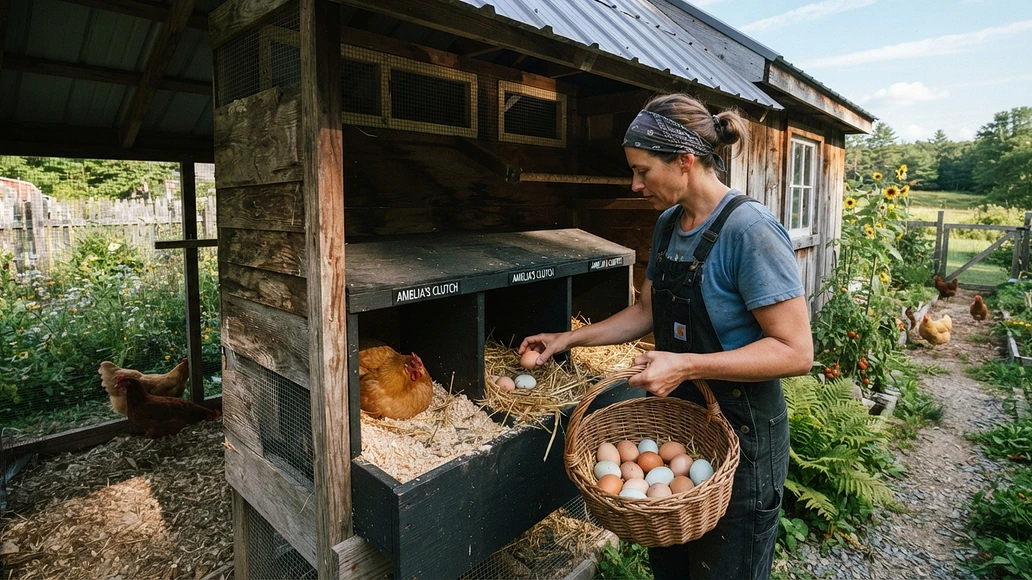
Heat is the biggest reason not to leave eggs sitting in the coop. Warm eggs age faster, and high temperatures can encourage bacterial growth. In summer, once-daily collection may not be enough, especially in poorly ventilated coops or regions with long hot afternoons.
A practical rule is to collect at least twice a day during heat, such as morning and late afternoon. During a heat wave, gather eggs as soon as you can after laying. If eggs sat through a very hot day and you are unsure how long they were exposed, treat them cautiously and do not use them for lightly cooked dishes.
Cold weather and freezing
Cold weather creates a different problem. Eggs can freeze in the nest box, and frozen contents may crack the shell, even if the crack is hairline and hard to see. Once the shell is compromised, bacteria can enter more easily. Freeze-thaw cycles make this worse.
If an egg is frozen solid or shows any crack after freezing, the safest choice is to discard it. Prompt winter collection helps prevent both shell damage and hidden contamination.
Humidity and damp coops
Moisture weakens your safety margin. Damp bedding, muddy nest boxes, and poor ventilation increase shell contamination and make eggs harder to keep clean. A humid coop also makes it more likely that dirt sticks to the shell and that the bloom is compromised during later cleaning.
If your coop runs damp, shorten your collection interval and improve bedding management, drainage, and airflow.
Collection schedules by season and flock size
The right routine depends on both weather and how many hens are laying. A tiny flock in spring is easier to manage than a busy mixed flock in August.
| Season or climate | Flock size | Recommended collection schedule | Notes |
|---|---|---|---|
| Cool or mild weather | 1 to 6 hens | At least once daily | Morning or early afternoon usually works well |
| Cool or mild weather | 7 or more hens | Once daily minimum, twice if nests get crowded | More birds means more breakage and soiling risk |
| Hot weather | 1 to 6 hens | Twice daily | Try morning and late afternoon |
| Hot weather | 7 or more hens | Twice daily minimum, more if practical | Important in coops with limited shade or airflow |
| Freezing weather | Any flock size | Prompt collection, often more than once | Prevents freezing and shell cracks |
| Damp or dirty coop conditions | Any flock size | Increase collection frequency | Also correct bedding and sanitation problems |
Fertile eggs, broody hens, and nests that are being sat on
Fertile eggs are not automatically unsafe, but they do need different judgment if a hen has been sitting on them. A broody hen warms eggs consistently enough to start development if conditions are right. That means an egg left under a broody hen for days is not the same as an egg resting in a cool nest box.
If you are collecting for eating, gather eggs regularly from broody nests and mark dates if needed. Eggs that have been sat on for several days are poor candidates for the kitchen, even if they do not smell bad yet. If you are not intentionally hatching chicks, remove eggs from broody hens promptly.
How to tell when a coop egg should not be eaten
Some eggs are easy discards. Others are borderline and should be judged conservatively.
| Egg condition | Action | Why |
|---|---|---|
| Clean shell, no crack | Usually keep | Best starting point for safe storage |
| Light dirt on shell | Usually keep, dry clean if possible | Minor dirt is manageable if shell is intact |
| Hairline crack or obvious crack | Discard | Cracks allow contamination through the shell |
| Heavy feces, mud, slime, or mold | Discard | High contamination risk |
| Bad odor at shell or when opened | Discard | Strong spoilage warning |
| Rodent chew marks or predator damage | Discard | Direct contamination risk |
| Frozen then cracked, or freeze-thaw damage | Discard | Shell integrity is compromised |
If several eggs suddenly look abnormal, or your flock has a sharp drop in production, lethargy, or unexplained illness, focus on flock health first and contact a veterinarian or extension service.
Freshness checks for eggs collected late
Freshness tests can help screen eggs that sat longer than you intended, but they do not erase risk from heat, cracks, or contamination.
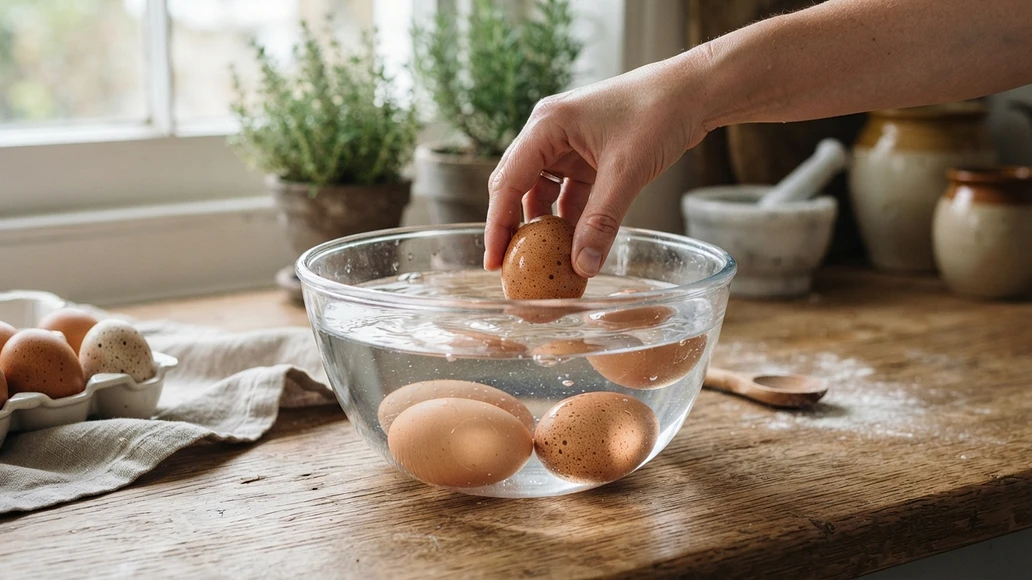
Float test
Place the egg in a bowl of water. A very fresh egg usually sinks and lies flatter. An older egg often stands upright or floats because the air cell has enlarged. A floating egg is a warning sign and should be discarded. A sinking egg is not a guarantee of safety, but it is a useful first check.
Candling
Candling means shining a bright light through the shell in a dark room. It can help you spot a large air cell, internal irregularities, or signs that an egg may have been incubated under a broody hen. It is more useful if you have some practice, but it can help sort uncertain eggs.
Sound and smell
If an egg sloshes noticeably when gently moved, it is old. Once opened, any sulfurous, rotten, or unusual smell means discard it immediately. When in doubt, throw it out.
Bloom, washing, and why coop time affects later storage
The bloom matters most when eggs are clean and unwashed. If you collect eggs promptly and they are fairly clean, leaving them unwashed preserves that natural barrier. Once you wash an egg, you remove much of that protection, and the storage rules become stricter.
If an egg truly needs washing, use water warmer than the egg, not colder. Cold water can encourage contaminants to move inward through the shell. Avoid soaking eggs. Dry them promptly, then refrigerate them at 40 degrees Fahrenheit or below.
Many backyard keepers do best with a simple system. Dry brush or wipe lightly soiled eggs, wash only the dirtiest eggs right before use or before refrigerated storage, and keep washed and unwashed eggs clearly separated and dated.
After collection, counter or fridge?
Storage after collection depends heavily on whether the eggs are washed and on your household risk tolerance.
| Storage situation | Approximate time | Best use | Key caution |
|---|---|---|---|
| Unwashed eggs at room temperature | About 2 to 4 weeks | Short-term use in stable indoor conditions | Shorter life in warm homes, not ideal for vulnerable households |
| Unwashed eggs refrigerated | Up to about 3 months | Best overall quality retention | Keep temperature steady |
| Washed eggs refrigerated | Use within normal refrigerated egg timelines, generally sooner is better | Households prioritizing stricter food safety | Do not leave washed eggs at room temperature |
| Eggs left in hot coop before collection | Use cautiously, if at all | Only thoroughly cooked dishes if still judged sound | Heat exposure reduces confidence even if shell looks normal |
If your household includes pregnant people, older adults, young children, or anyone with a weakened immune system, refrigeration is the more conservative choice even for clean unwashed eggs.
Coop and nest box setup that lowers egg risk
Good egg handling starts before collection. A cleaner nest box means fewer hard decisions later.
Use enough nest boxes for your flock so hens are not crowding into one dirty spot. Keep bedding dry and replace it often. Make sure boxes are shaded and the coop is ventilated without creating a draft directly on nesting hens. Exclude rodents and wild birds as much as possible, since both can spread contamination. Remove broken eggs right away so hens do not track yolk and shell debris through the nesting area.
Roll-away nest boxes can help in some setups because they move eggs away from hens after laying, reducing pecking and soiling. Even with a good design, though, regular collection still matters.
Biosecurity and sanitation around backyard eggs
Egg safety is tied to flock hygiene. Wash hands after handling birds, eggs, bedding, or manure. Clean baskets and collection containers regularly. Keep feed in rodent-resistant containers. Limit wild bird access to feed and water. Remove manure and wet litter on a routine schedule.
During periods of avian influenza concern in your region, be extra careful about hygiene and flock exposure. Proper cooking and handling remain central, but local agriculture guidance should take priority if there is an active outbreak nearby.
Extra caution for vulnerable household members
Not everyone has the same risk tolerance. People at higher risk from foodborne illness should use backyard eggs more conservatively.
| Group | Collection and storage approach | Cooking guidance | Risk note |
|---|---|---|---|
| Healthy adults | Collect daily, refrigerate if washed or if preferred for longer storage | Cook thoroughly when egg history is uncertain | Moderate caution still needed |
| Pregnant people | Prefer promptly collected, refrigerated eggs | Avoid raw or undercooked eggs, cook fully | Higher consequence from foodborne illness |
| Young children | Use only well-handled eggs | Cook fully | More vulnerable to dehydration and illness |
| Older adults | Use conservative storage and discard questionable eggs | Cook fully | Higher risk of severe illness |
| Immunocompromised people | Use the strictest handling, refrigeration, and dating practices | Cook eggs to 160 degrees Fahrenheit | Highest caution level |
Preparedness planning, weekends away and power outages
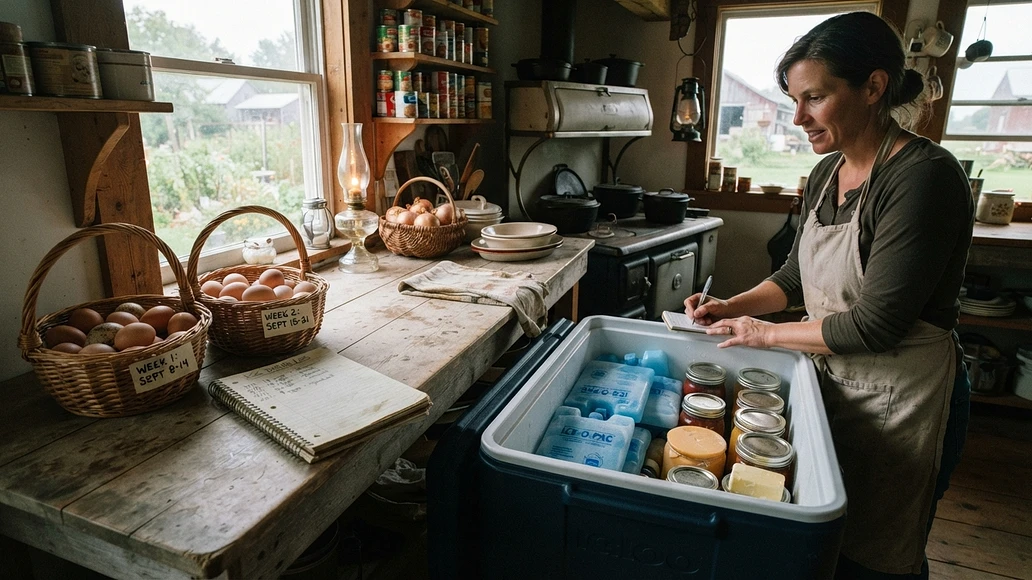
Preparedness-minded keepers often ask what to do when life interrupts the ideal routine. If you will be gone for a weekend, the safest option is to have someone collect eggs daily. If that is not possible, your acceptable margin depends on season. A cool, dry spell is far more forgiving than a humid summer weekend.
During a power outage, unwashed eggs that were already clean and intact may still be useful, but washed eggs need colder storage and should be prioritized first. If refrigeration is lost, use the oldest and most temperature-exposed eggs first, and cook them thoroughly. Date everything. When you are unsure how long eggs sat in the coop and then sat in a warm kitchen, be willing to discard them.
Traditional preservation methods such as water glassing or liming can extend storage for suitable clean unwashed eggs, but these methods are less standardized than ordinary refrigeration. They are best treated as advanced home food storage techniques, not a substitute for basic daily collection and careful handling.
Common mistakes and myths
Several habits create avoidable risk. One is assuming an egg is safe just because it looks normal. Another is leaving eggs through a heat wave because the coop is shaded. Shade helps, but it does not stop high ambient temperatures from aging eggs quickly. A third mistake is washing every egg automatically, then leaving washed eggs on the counter. Once washed, eggs should be refrigerated promptly.
Another common myth is that fertile eggs are unsafe by default. Fertility alone is not the issue. Time, temperature, shell integrity, and whether a hen has been incubating the egg matter more.
When to discard eggs and seek outside help
Discard eggs if they are cracked, slimy, moldy, foul-smelling, heavily soiled, pest-damaged, or of unknown age after extreme heat exposure. Also discard eggs if your flock may be affected by a disease outbreak and local authorities advise against use.
Seek medical advice if multiple people in your household develop vomiting, diarrhea, fever, or other signs of foodborne illness after eating backyard eggs. Seek veterinary or extension help if your flock shows sudden lethargy, deaths, major production changes, or abnormal shells.
FAQ
Can I leave eggs in the coop while I am on a weekend trip?
It is better to arrange daily collection. In cool, dry weather, eggs may still be usable after a short delay, but summer heat, humidity, and dirty nests make that much riskier.
What should I do with eggs that froze in the nest box?
If the shell cracked, discard them. If you suspect freeze-thaw damage or cannot confirm shell integrity, discard them. Prompt winter collection is the best prevention.
Are eggs still safe if a hen has been sitting on them for a few days?
They are poor candidates for eating. A broody hen can warm eggs enough to start development, so eggs sat on for days should be treated cautiously and usually not used for the kitchen.
Is it okay to eat backyard eggs that were laid but not collected during a heat wave?
That is a higher-risk situation. If eggs sat in significant heat for unknown hours, the safest choice is to discard them, especially for vulnerable household members. Do not use them raw or lightly cooked.
Do I have to wash every egg I collect from the coop?
No. Clean, dry eggs are often best left unwashed so the bloom stays intact. Wash only when necessary, use warmer-than-egg water, dry promptly, and refrigerate after washing.
References
- How Long Do Farm-Fresh Eggs Last In The Refrigerator
- How Long Do Farm Fresh Eggs Last and How to Store
- How to Clean and Store Fresh Eggs
- How to Keep Eggs Clean, From Coop to Kitchen
- Buying Backyard Eggs, Safety Tips and Storage Guide
- How Long Do Eggs Last, Facts About Farm Fresh Eggs
- Are Backyard Chicken Eggs Safe to Eat?