Activated Charcoal for Wound Care, What Helps, What Does Not, and When to Skip DIY
Activated charcoal has a real medical role, but not in the way many people assume. Learn where charcoal dressings may help, why DIY powder on open wounds is risky, and what basic wound care matters most in a home or preparedness setting.

Activated charcoal has a strong reputation in preparedness circles, but wound care is one area where it helps to separate useful tools from popular myths. Charcoal can play a role in modern medicine, yet its best established use is for certain poisonings under medical supervision, not as a cure-all for cuts, scrapes, or infected wounds. In wound care, the most promising evidence involves medical-grade activated carbon dressings used as an adjunct for chronic wounds, especially when odor and excess drainage are problems.
If you are wondering whether activated charcoal can heal wounds naturally, the short answer is this. It may help manage odor and moisture in some situations, but it is not a substitute for cleaning, pressure to stop bleeding, sterile dressings, antibiotics when needed, or professional care for serious injuries. This article is for general information only and is not a substitute for professional medical advice or emergency care.
What activated charcoal is, and how it works
Activated charcoal is a form of carbon processed to create a very large surface area full of tiny pores. That structure allows it to adsorb substances, which means particles stick to its surface. This is different from absorb, which means soaking something up into the material itself.
That adsorbing ability explains why activated charcoal has a place in toxicology and why some wound dressings use carbon layers. It can bind certain compounds, help reduce odor, and manage some wound exudate. What it does not do is magically pull infection out of tissue, restore blood flow, or close a wound on its own.
Medical charcoal is not all the same
There is a major difference between products made for hospitals and improvised charcoal from capsules, powders, filters, or homemade sources. Medical wound dressings that contain activated carbon are manufactured for contact with skin and wounds, with attention to sterility, structure, and performance. A loose black powder from a supplement capsule is not the same thing.
The one proven medical use, poisoning and overdose care in clinical settings
Activated charcoal is most strongly supported for selected cases of acute oral poisoning or overdose. Even then, it is not used automatically. Timing matters, the substance involved matters, and the patient's airway and overall condition matter. In practice, this is handled by poison control, EMS, emergency departments, and clinicians.
Do not use oral activated charcoal at home to self-treat poisoning or overdose. If someone may have swallowed a poison, call 911 or Poison Control right away. Home use can delay proper treatment and can be dangerous, especially if the person is sleepy, vomiting, seizing, or has swallowed a substance that charcoal does not bind well.
| Use or claim | Evidence level | Typical setting | Main takeaway | Key risks |
|---|---|---|---|---|
| Oral activated charcoal for selected poisonings | Well supported | Hospital, EMS, poison control guided care | Can reduce absorption of some toxins if used appropriately and soon enough | Aspiration, vomiting, delayed care, wrong indication |
| Activated carbon dressings for chronic wounds | Limited but promising | Wound clinics, supervised home care | May reduce odor and drainage, may support healing environment | Can distract from treating infection, poor circulation, or pressure injury causes |
| Loose activated charcoal powder on minor cuts | Weak or mixed | DIY home use | No strong proof it improves healing over standard clean dressings | Contamination, irritation, retained particles, delayed care |
| Charcoal as an antimicrobial cure for wounds | Mixed | Adjunctive wound care only | Not a replacement for debridement, antibiotics, or source control | False reassurance, worsening infection |
| Charcoal detox for skin or body wellness | Weak to unsupported | Supplements, cosmetics, internet remedies | Claims are not backed by good evidence | Skin irritation, medication interference, wasted time |
Can activated charcoal actually help wounds heal
The best discussion here is not about miracle healing. It is about whether charcoal can improve the wound environment enough to support standard care. Small studies and case series on activated carbon cloth dressings suggest they may help with chronic wounds by reducing odor, handling exudate, and improving the condition of surrounding skin. In some cases, wound size improved over time. That is encouraging, but it is still limited evidence.
These findings do not mean charcoal is a universal wound healer. Most of the better reports involve chronic wounds managed with structured dressings and clinical oversight, not random charcoal powder sprinkled onto a fresh cut. Also, chronic wounds often fail to heal because of pressure, poor circulation, diabetes, swelling, or infection. Charcoal does not fix those root causes.
What charcoal may do in wound care
In practical terms, charcoal-based dressings may help by adsorbing odor-causing compounds, managing some moisture, and making a wound easier to tolerate and monitor. That can be valuable in long-lasting wounds, especially when smell and drainage are major quality-of-life issues.
What charcoal does not do
Charcoal does not sterilize a wound reliably. It does not replace irrigation, debridement, pressure relief, blood sugar control, vascular care, or antibiotics when those are needed. It also does not remove toxins from the body in the popular detox sense.
Medical charcoal dressings versus DIY charcoal poultices
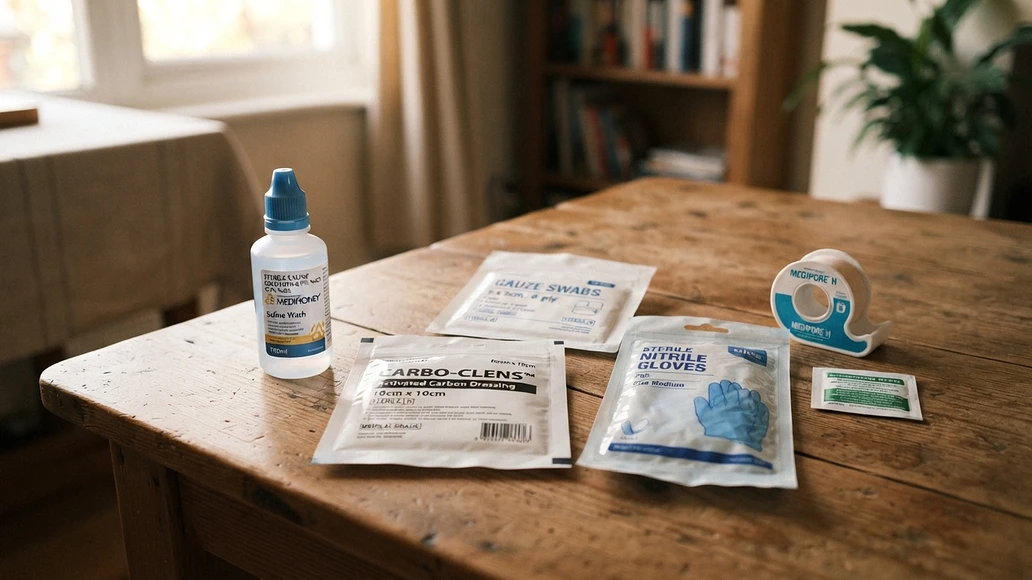
This is the distinction many articles skip. A medical-grade activated carbon dressing is a manufactured wound product. It is designed to contact skin safely, manage drainage in a predictable way, and fit into a broader wound care plan. A DIY charcoal poultice is usually a homemade mixture or loose powder with uncertain cleanliness, uncertain particle size, and no quality control.
Putting nonsterile charcoal into an open wound can introduce contaminants and leave debris behind. Fine particles may complicate cleaning later. If the wound is already contaminated, deep, punctured, or infected, adding improvised material can make things worse.
| Feature | Medical-grade activated carbon dressing | DIY charcoal powder or poultice |
|---|---|---|
| Manufacturing standard | Made for wound or skin contact | Often intended for supplements, cosmetics, or unknown use |
| Sterility and cleanliness | Controlled packaging and materials | May be contaminated or shed particles |
| Evidence base | Some limited wound-care literature | Mostly anecdotal or extrapolated |
| Best use case | Adjunct for odor and exudate in chronic wounds | Generally not preferred for open wounds |
| Main concern | Overestimating benefit | Infection risk and delayed proper care |
Basic wound care comes first, especially at home or in the field
If you are dealing with a minor wound in a home or preparedness setting, the basics matter far more than charcoal. Good wound care supports the body's normal healing process by reducing contamination, controlling bleeding, protecting tissue, and maintaining a balanced moisture level.
- Stop bleeding first. Apply firm direct pressure with clean gauze or cloth. If bleeding does not stop after 10 to 15 minutes of steady pressure, get medical help.
- Clean the wound. Rinse with clean running water or sterile saline. Remove visible dirt gently. Avoid harsh scrubbing deep into tissue.
- Protect the area. Cover with a clean dressing. For small cuts and scrapes, a simple nonstick pad or sterile gauze is often enough.
- Keep it slightly moist, not soggy. A wound that dries into a hard scab is not always ideal, but a wound that stays wet and dirty is also a problem.
- Check daily. Watch for redness, swelling, warmth, pus, bad odor, increasing pain, or fever.
If you have a sealed medical charcoal dressing and the wound is a chronic, draining, malodorous wound already being managed appropriately, it may be a reasonable adjunct. For a fresh minor cut, standard clean dressings are usually the better first choice.
When charcoal may be reasonable, and when it is a bad idea
Charcoal is most reasonable as an optional tool for odor control and exudate management in chronic wounds, not as a first-line treatment for acute injuries. In preparedness terms, it belongs in the category of specialized supplies, not core essentials.
| Situation | Could charcoal dressing help | Better priority | Need medical evaluation |
|---|---|---|---|
| Small clean scrape or shallow cut | Usually unnecessary | Rinse, protect, monitor | Only if worsening or not healing |
| Chronic draining wound with odor | Possibly, as an adjunct | Moisture control, pressure relief, cause management | Yes, especially if diabetic or poor circulation |
| Deep puncture wound | No | Cleaning, tetanus review, clinical care | Yes |
| Burns, especially significant burns | No | Burn first aid and prompt evaluation | Yes |
| Heavily contaminated wound with soil or debris | No | Thorough irrigation and assessment | Yes |
| Wound with exposed tendon or bone | No | Protect and seek urgent care | Yes, urgently |
Safer low-tech and natural-minded options to compare
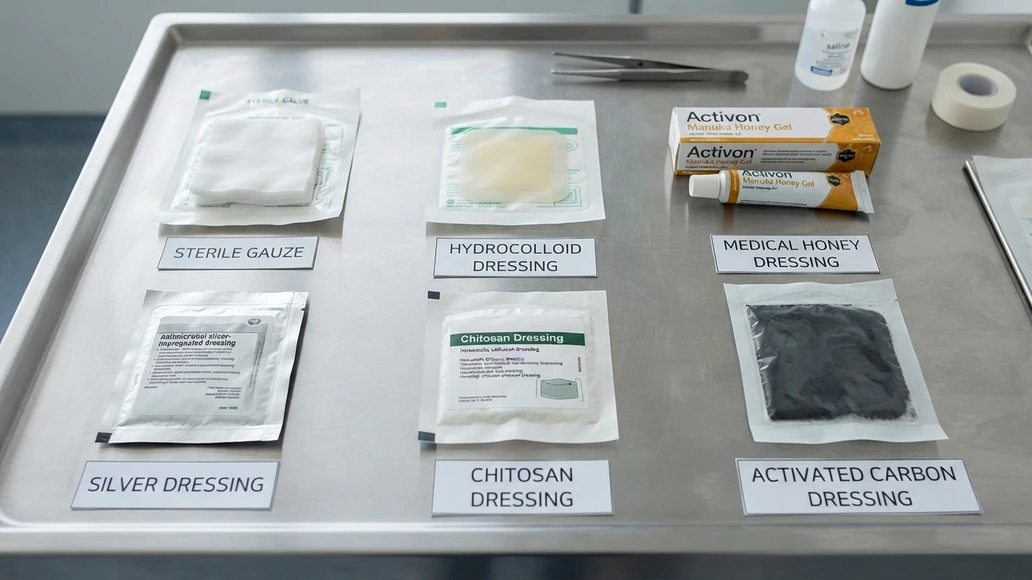
People looking into charcoal often want a practical, lower-tech approach. That is understandable. But if your goal is better healing, compare charcoal with options that have clearer roles in wound care.
| Option | Main role | Evidence strength | Best fit | Limits |
|---|---|---|---|---|
| Sterile gauze and nonstick dressings | Protection and absorption | Strong practical standard | Most minor wounds | Needs regular changes and monitoring |
| Hydrocolloid dressings | Moist healing environment | Well established for selected wounds | Shallow clean wounds, blisters | Not for obvious infection or heavy drainage |
| Medical honey dressings | Moisture balance and antimicrobial support | Moderate | Selected wounds under guidance | Use proper medical products, not kitchen honey in serious wounds |
| Silver dressings | Antimicrobial adjunct | Moderate in selected cases | Higher-risk wounds under guidance | Not needed for every minor cut |
| Chitosan-based dressings | Hemostasis and wound support | Promising to moderate | Advanced kits and specialty use | Availability and cost vary |
| Activated carbon dressings | Odor and exudate control | Limited but promising | Chronic malodorous wounds | Not a cure, not ideal for DIY open-wound use |
Topical charcoal and oral charcoal are not interchangeable
This point deserves its own section because confusion here can be dangerous. Topical charcoal products are meant for external use. Oral activated charcoal is a poison-management tool used in selected emergencies. Taking charcoal pills after an injury, surgery, or infection will not help your body heal faster. It may interfere with medications and nutrient absorption.
Long-term oral charcoal use is not recommended for wellness, detox, or routine first aid. It can cause constipation, black stools, vomiting, and in rare cases bowel complications. More importantly, it can reduce absorption of important medications, including heart medicines, seizure drugs, blood thinners, and immunosuppressants.
Who should avoid experimental charcoal wound treatments
Some people have much less room for error with wound care. Children, older adults, pregnant people, and anyone with diabetes, poor circulation, kidney disease, immune suppression, or significant chronic illness should be especially cautious. A wound that looks minor can become serious faster in these groups.
If someone has a foot wound and diabetes, a leg ulcer with swelling, or a wound that keeps reopening, do not rely on a homemade charcoal remedy. The priority is assessment, pressure relief if needed, infection control, and management of the underlying condition.
Red flags that mean home treatment should stop
Preparedness means knowing what you can handle and what needs outside help. Seek urgent medical care if a wound is deep, gaping, heavily contaminated, caused by an animal or human bite, or still bleeding after firm pressure. Also get help if there is spreading redness, warmth, swelling, increasing pain, pus, foul odor, fever, numbness, loss of function, or visible deeper structures.
Even a smaller wound deserves evaluation if it is not clearly improving within several days or not closing over 7 to 14 days. This is especially true for wounds on the feet or lower legs.
| Wound type or symptom | Reasonable home care | When to seek prompt help |
|---|---|---|
| Minor clean scrape | Rinse, cover, monitor daily | If redness, drainage, or pain increases |
| Small kitchen cut | Pressure, rinse, dress | If edges gape, bleeding persists, or movement is limited |
| Puncture wound | Basic cleaning only while arranging care | Same day evaluation is wise |
| Foot wound in a person with diabetes | Protect and offload pressure | Early professional evaluation is recommended |
| Bad odor or pus | Do not rely on charcoal alone | Needs medical assessment for infection |
| Fever or spreading redness | Not appropriate for home-only care | Urgent evaluation |
Building a practical wound kit for emergencies
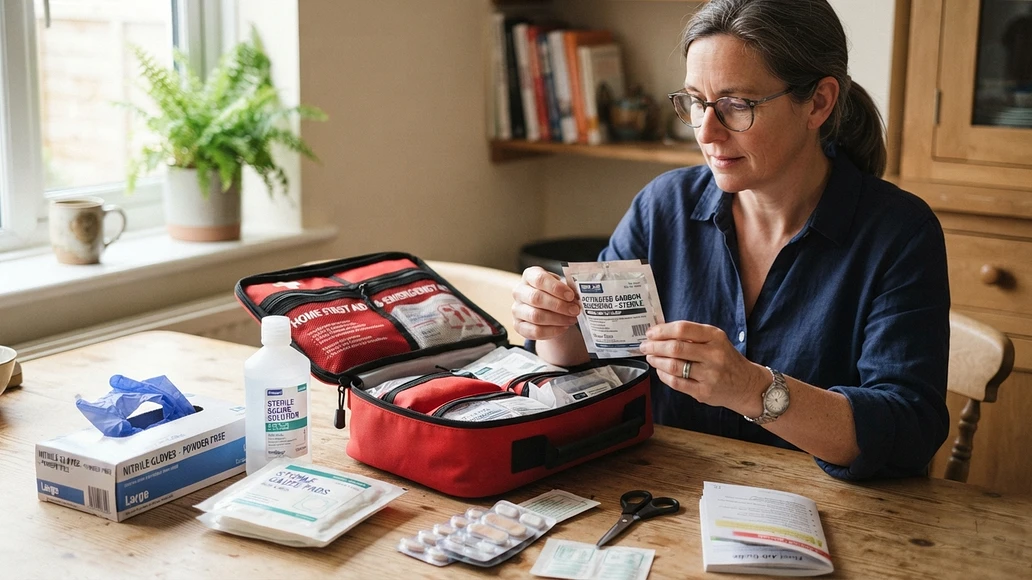
If you want a wound care kit that is actually useful, start with basics before specialty items. Clean water or sterile saline, gloves, sterile gauze, nonstick pads, tape, roller bandages, antiseptic appropriate for skin around the wound, tweezers, trauma shears, and a few modern dressings will do more for most situations than a jar of charcoal powder.
If you want to add charcoal, choose sealed medical-grade activated carbon dressings from a reputable manufacturer. Think of them as optional extras for specific situations, not as a replacement for standard supplies.
| Kit item | Priority level | Why it matters |
|---|---|---|
| Clean water or sterile saline | Essential | Wound irrigation is one of the most important first steps |
| Gloves | Essential | Reduces contamination during care |
| Sterile gauze and nonstick pads | Essential | Core wound protection and absorption |
| Tape and wrap | Essential | Keeps dressings secure |
| Hydrocolloid or blister dressings | Useful | Helpful for selected shallow wounds and friction injuries |
| Medical honey or silver dressing | Optional advanced item | Adjunctive support in selected cases |
| Activated carbon dressing | Optional specialty item | Most useful for odor and exudate in chronic wounds |
Common myths about charcoal and wound healing
One myth is that charcoal draws toxins out of a wound in a broad medical sense. It does not. Another is that if a little charcoal helps odor, more charcoal must speed healing. That is not supported. A third myth is that charcoal capsules, cosmetic masks, and wound dressings are basically the same product. They are not.
Another common mistake is using charcoal as a reason to delay care. If a wound smells bad, drains heavily, or keeps getting larger, the answer is not to keep adding more black powder. The answer is to find the cause.
FAQ
Can I sprinkle activated charcoal from a capsule directly onto a cut or scrape?
That is generally not a good idea. Capsule charcoal is not the same as a sterile wound dressing. It may introduce contaminants or leave particles in the wound. For a simple cut or scrape, rinsing well and covering with a clean dressing is the safer choice.
Is it safe to use activated charcoal on a wound for my child or an older relative?
Be cautious. Children and older adults can have more complications from wounds, and they should not be test cases for improvised remedies. If you are considering charcoal at all, use only a medical-grade dressing and only as an adjunct, not as the main treatment.
Will activated charcoal remove toxins or infection from a wound on its own?
No. It may help with odor and moisture in some dressings, but it does not reliably eliminate infection or remove toxins from tissue in the way many online claims suggest.
What kind of charcoal wound dressings should I look for if I want to add them to my emergency kit?
Look for sealed medical-grade activated carbon or activated carbon cloth dressings from reputable wound-care manufacturers. Avoid cosmetic charcoal products, loose powders, and homemade materials for open wounds.
Can I take activated charcoal pills after an injury or surgery to help my body heal faster?
No. Oral activated charcoal does not speed healing after injury or surgery, and it may interfere with medications and nutrient absorption. Do not use it for detox or routine recovery support.
References
- Activated Charcoal, StatPearls, NCBI Bookshelf
- Activated Charcoal, Benefits, Uses and Risks, WebMD
- Application of 100% Activated Carbon Cloth Dressings in Patients With Chronic Wounds, Wounds International
- Charcoal, Activated Monograph for Professionals, Drugs.com
- Canadian Antidote Guide, Activated Charcoal
- Therapeutic Potential of Chitosan-Based and Related Wound Dressings, PMC