Kitchen Swap Reality Check, Why Baking Soda Will Not Do Cornstarch's Job
Out of cornstarch and wondering if baking soda can fill in? Here is the practical answer, the kitchen science behind it, better substitutes to use instead, and how to rescue a recipe if you grabbed the wrong box.

If you are out of cornstarch, it is tempting to reach for any white powder in the pantry and hope for the best. In most recipes, that is a mistake. Baking soda and cornstarch may look similar in the box, but they do very different jobs in food. One helps baked goods rise. The other thickens liquids and changes texture.
The short answer is simple. Baking soda is generally not a substitute for cornstarch, and cornstarch is generally not a substitute for baking soda. If you swap them one for one, you usually get a dish that tastes wrong, behaves wrong, or both.
This guide explains why, shows the best substitutes for each ingredient, and covers what to do if you already used the wrong one. It also includes practical pantry planning for home cooks and preppers who want backups that actually work.
Baking soda vs. cornstarch, what they are and how they work
These ingredients are easy to confuse because they are both fine white powders often stored near flour and sugar. In the kitchen, though, they solve completely different problems.
| Ingredient | Primary role | How it works | Typical recipes | Can it replace cornstarch? | Can it replace baking soda? |
|---|---|---|---|---|---|
| Baking soda | Leavening | Reacts with acid to produce carbon dioxide gas | Cookies, quick breads, cakes, pancakes | No, not for thickening | Only with specific leavening alternatives, not by itself |
| Cornstarch | Thickening and texturizing | Starch granules swell and gelatinize in hot liquid | Gravy, pudding, pie filling, stir-fry sauce | Yes, it is the original thickener | No, it does not create lift |
| Baking powder | Leavening | Contains baking soda plus acid components, often with starch | Muffins, cakes, biscuits | No, not as a thickener | Yes, often the best backup for baking soda |
How cornstarch thickens sauces and fillings
Cornstarch is mostly starch. When mixed with a little cold liquid first, then heated in a sauce or filling, the starch granules absorb water and swell. That creates body and a smoother, thicker texture. This is why cornstarch works in gravy, glossy stir-fry sauces, fruit fillings, and puddings.
It is a physical thickening process. You are not creating bubbles or lift. You are changing the way liquid behaves.
How baking soda makes baked goods rise
Baking soda is sodium bicarbonate, an alkaline leavener. When it meets an acid such as buttermilk, yogurt, vinegar, lemon juice, brown sugar, or molasses, it produces carbon dioxide gas. Those bubbles expand in batter or dough and help create rise and tenderness.
It is a chemical reaction. You are not thickening a liquid. You are generating gas.
Can you swap baking soda for cornstarch in cooking or baking?
In almost every normal recipe, no. Baking soda does not thicken gravy, pudding, pie filling, or sauce the way cornstarch does. If you try it, the dish will usually stay thin and may develop an unpleasant alkaline or soapy taste.
In some baked goods, cornstarch and baking soda can appear together, but they are still not doing the same job. Cornstarch may soften texture or lighten flour mixtures, while baking soda handles rise. Removing one and expecting the other to cover both roles usually leads to disappointing results.
Chemical action vs. physical thickening
This is the key distinction. Cornstarch changes texture by swelling in hot liquid. Baking soda changes structure by releasing gas when paired with acid. Since those mechanisms are different, the ingredients are not interchangeable just because they are both powders.
What happens if you try anyway
| Recipe type | If you use baking soda instead of cornstarch | Likely result |
|---|---|---|
| Gravy or pan sauce | No real thickening | Thin texture, possible bitter or salty taste |
| Pudding or custard-style filling | No proper set | Loose texture, off flavor |
| Stir-fry sauce | Sauce stays watery | Poor coating, odd taste |
| Fruit pie filling | Fails to gel | Runny filling, possible foaming if acid is present |
| Fried coating | Different effect entirely | Can alter browning, but does not replace starch crispness |
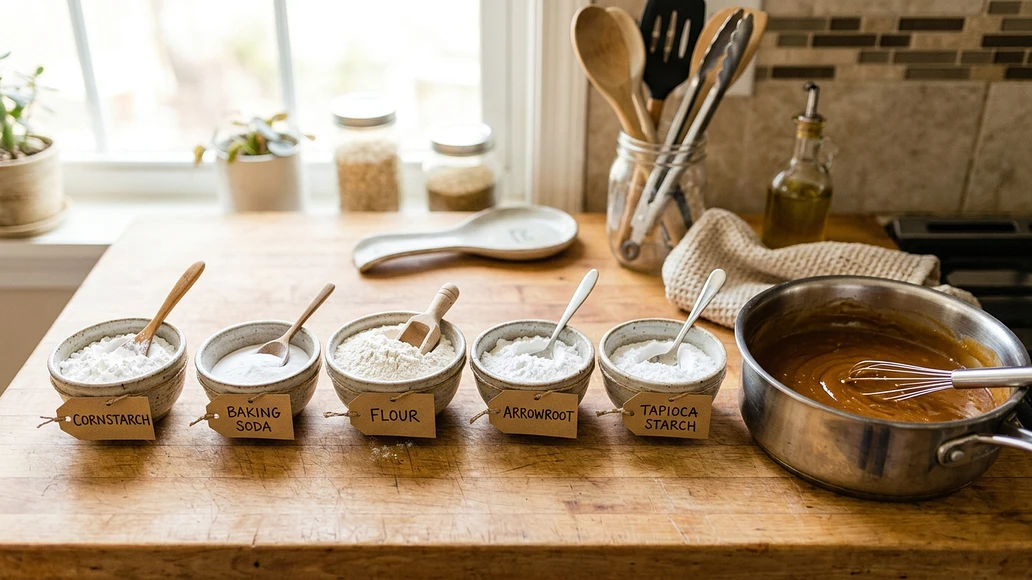
Why baking soda cannot thicken like cornstarch
If you want a simple mental model, think of cornstarch as a sponge for hot liquid and baking soda as a bubble-maker. A sponge changes thickness. A bubble-maker changes lift.
Even in recipes where baking soda reacts dramatically, that reaction does not create the silky body you need in sauces or fillings. At best, it may fizz if acid is present. At worst, it leaves a harsh taste and throws off the recipe's balance.
This is why a correct substitute for cornstarch should usually be another starch or flour, not a leavener.
Can you use cornstarch instead of baking soda?
This also fails in most cases. Cornstarch does not release carbon dioxide, so it cannot make cookies, muffins, or quick breads rise the way baking soda can. If you replace baking soda with cornstarch, baked goods often turn out dense, flat, and heavy.
Why cornstarch does not make baked goods rise
Rise depends on trapped gas. Cornstarch has no leavening power. It can affect tenderness or crispness in some recipes, but it cannot replace the chemical lift from baking soda.
When cornstarch does appear in baking
Some cookie and cake recipes use a little cornstarch for a softer crumb or more delicate texture. In those cases, it is a texture helper, not the engine that makes the batter rise.
Best substitutes for cornstarch when you are out
If your goal is thickening, choose another starch or flour based on the recipe. The best option depends on whether you want a glossy sauce, a sturdy pie filling, or a simple weeknight gravy.
| Substitute | Ratio for 1 tablespoon cornstarch | Best uses | What changes |
|---|---|---|---|
| All-purpose flour | 2 tablespoons flour | Gravy, roux-based sauces, stews | Less glossy, slightly cloudier, heavier texture |
| Arrowroot | 1 tablespoon arrowroot | Clear sauces, fruit fillings, gluten-free cooking | Glossy finish, can be less stable with long boiling |
| Tapioca starch | 1 tablespoon tapioca starch | Pie fillings, sauces, gluten-free thickening | Can become slightly stretchy if overused |
| Potato starch | 1 tablespoon potato starch | Quick sauces, gluten-free recipes | Works well, but can break down if overcooked |
Using all-purpose flour
Flour is the most common backup because many kitchens already have it. Use about 2 tablespoons of flour for every 1 tablespoon of cornstarch. Flour works especially well in gravy and hearty sauces, but it gives a more opaque result and a slightly heavier mouthfeel.
Arrowroot, tapioca, and potato starch
These are better choices when you want a smoother, glossier finish. Arrowroot is useful in fruit sauces and clear gravies. Tapioca starch shines in pie fillings and some gluten-free cooking. Potato starch can thicken quickly, but it is best added with care because prolonged boiling can weaken the texture.
Gluten-free thickening options
If you avoid wheat, arrowroot, tapioca starch, and potato starch are usually the most practical pantry backups. They are much closer to cornstarch than baking soda ever will be.
Better substitutes for baking soda than cornstarch
If you are missing baking soda, use a real leavening backup. The most common is baking powder.
| Original ingredient | Substitute | Typical ratio | Best use | Expected change |
|---|---|---|---|---|
| 1 teaspoon baking soda | Baking powder | 3 teaspoons baking powder | Cakes, muffins, pancakes, quick breads | May be slightly less browning or different flavor balance |
| Baking soda in some flour-based recipes | Self-rising flour | Recipe must be adjusted, not a direct spoon-for-spoon swap | Biscuits, simple quick breads | Changes flour and salt amounts too |
| Baking soda in light batters | Whipped egg whites | Varies by recipe | Recipes where structure can come from foam | Different texture, not a universal fix |
Baking powder is usually the simplest substitute because it already contains the leavening system you need. Cornstarch is not a meaningful substitute here.
What if a recipe calls for both baking soda and cornstarch?
That can happen, especially in cookies, cakes, and some coatings. In those recipes, each ingredient still has its own role.
| Recipe | Role of cornstarch | Role of baking soda | Can one replace the other? |
|---|---|---|---|
| Cookies | Softer texture, tenderness | Spread, browning, lift | No |
| Cakes | Lighter crumb in some formulas | Leavening when acid is present | No |
| Puddings | Main thickener | Usually not needed | No |
| Fried coatings | Crisp texture | Can aid browning or puff in some batters | No |
If a recipe includes both, removing one changes a specific part of the result. You may be able to omit cornstarch in a cookie recipe and still get edible cookies, but the texture will change. You may be able to replace baking soda with baking powder, but not with cornstarch.
Help, I added the wrong ingredient. Can I save this dish?
This is a common real-world mistake. Whether the dish is salvageable depends on when you caught it and how much you used.
Accidentally used baking soda in gravy or pudding
If you only added a tiny amount and have not heated the dish much yet, you may be able to start over by making a separate slurry with cornstarch or another proper thickener and adding it gradually. Taste the dish first. If it has a strong bitter, metallic, or soapy flavor, it is usually better to discard it than waste more ingredients trying to fix it.
If you added a large amount of baking soda, especially more than the recipe's normal seasoning could hide, the safest practical choice is often to throw it out and remake the dish. The issue is usually quality, not poisoning from a small recipe mistake, but a badly over-alkaline dish is not worth serving.
Added cornstarch instead of baking soda in cookies or cake
If the batter is not baked yet and you realize the mistake early, you can often stir in the correct amount of baking soda or use baking powder if the recipe allows. If the item is already baked, expect a flatter, denser result. It may still be safe to eat if all ingredients were normal food ingredients and the flavor is fine, but the texture will likely be disappointing.
When it is safe to eat, and when to discard
| Situation | Likely safety issue | Best action |
|---|---|---|
| Small mistaken amount of baking soda in a large dish | Usually quality problem more than toxicity | Taste carefully, salvage only if flavor is acceptable |
| Large amount of baking soda, strong bitter or soapy taste | Too alkaline, unpleasant, too much sodium | Discard and remake |
| Cornstarch used instead of baking soda in baked goods | Usually texture failure | Safe if ingredients are otherwise normal and fully cooked |
| Someone ate far more than recipe amounts of baking soda | Medical risk | Call Poison Control or seek urgent care |
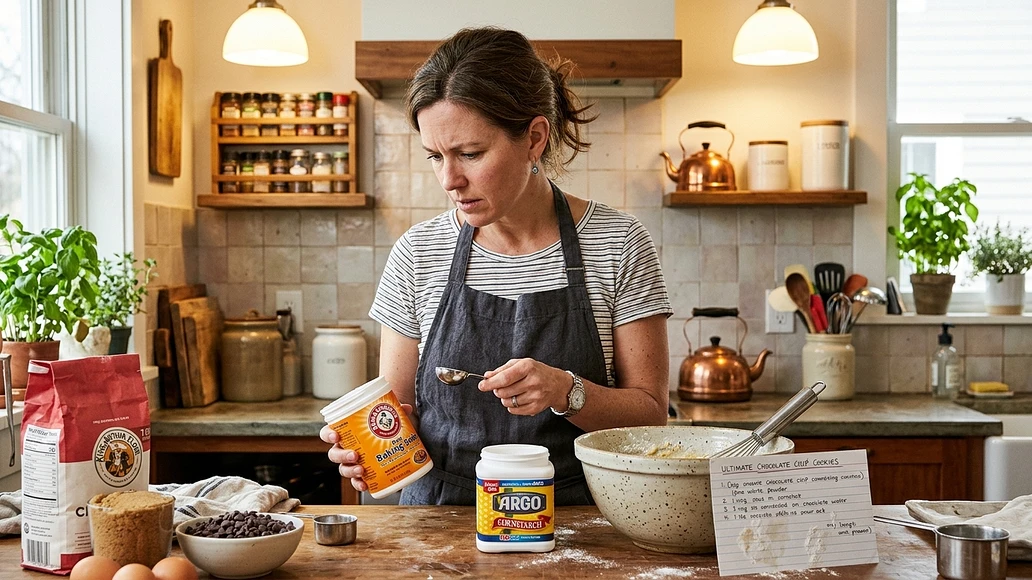
Pantry planning for preppers, stock backups that cover both jobs
Preparedness is not just about having more ingredients. It is about having the right categories of ingredients. A pantry with three leaveners but no backup starch is still vulnerable.
Build a basic thickening toolkit
A practical setup is cornstarch plus at least one backup such as all-purpose flour, arrowroot, tapioca starch, or potato starch. That gives you options for sauces, fillings, and coatings even if one item runs out.
Build a basic leavening toolkit
Keep baking soda, baking powder, and at least one acid source commonly used in baking, such as vinegar, cream of tartar, yogurt powder, buttermilk powder, or lemon juice if you rotate it regularly. This gives you flexibility for quick breads and emergency baking.
Shelf life, storage, and rotation
| Ingredient | Storage goal | What to watch for | Rotation tip |
|---|---|---|---|
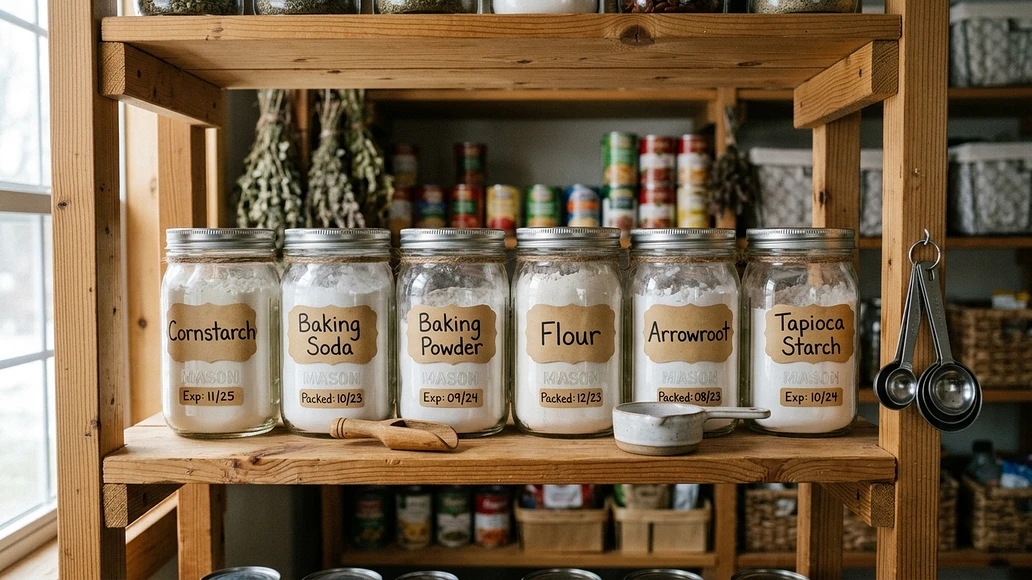
| Cornstarch | Cool, dry, sealed container | Moisture, clumping, pantry pests | Date the container and use oldest first |
| Baking soda | Cool, dry, tightly sealed | Loss of potency over time after opening | Label open date and test periodically in vinegar for fizz |
| Baking powder | Cool, dry, sealed | Weak rise if old | Replace on a schedule if you bake rarely |
| Arrowroot or tapioca starch | Cool, dry, sealed | Humidity and clumping | Store in smaller containers if used infrequently |
For long-term readiness, label similar-looking powders clearly. Many kitchen mistakes happen because containers look alike.
Non-food uses, when these powders overlap and when they do not
Baking soda and cornstarch both show up in cleaning and odor-control advice, but they are still not identical.
Cleaning and odor control
Baking soda is mildly abrasive and alkaline, so it can help with deodorizing and some cleaning tasks. Cornstarch is more of an absorber and gentle polishing aid in certain situations. That means one may work where the other does not, and baking soda can leave residue or haze on some delicate surfaces if used carelessly.
Do not assume a DIY cleaner that calls for cornstarch will behave the same with baking soda. Likewise, do not use either powder in ways that create dust clouds around infants, pets, or anyone with breathing sensitivity.
DIY body products and skin irritation risks
Some homemade deodorant and body powder recipes combine cornstarch and baking soda. That does not mean the mixture is risk-free. Baking soda has a high pH and can irritate skin or scalp, especially with repeated use or on sensitive skin. Cornstarch may feel soothing as a dry powder, but in damp skin folds it is not a cure for rashes or infections.
Natural does not automatically mean gentle. If a homemade product causes burning, redness, itching, or persistent irritation, stop using it.
Health and safety, use both ingredients wisely
In normal recipe amounts, cornstarch and baking soda are generally safe for most people. Problems usually come from misuse, overuse, or using them as home remedies without understanding the risks.
| Ingredient | Use type | Main benefit | Main risk | Who should be cautious |
|---|---|---|---|---|
| Cornstarch | Cooking | Reliable thickening | Refined starch, can raise blood sugar in larger amounts | People with diabetes or corn allergy |
| Baking soda | Cooking | Leavening and browning support | Off flavor if overused | Anyone using heavy-handed measurements |
| Baking soda | Medicinal self-use | May temporarily ease heartburn | High sodium load, metabolic alkalosis, serious overdose risk | Children, people with kidney disease, heart failure, high blood pressure, pregnancy, sodium-restricted diets |
| Baking soda | DIY skin or scalp use | Odor control in some homemade products | Irritation, barrier disruption | People with sensitive skin or scalp conditions |
Important limit. Do not ingest baking soda in large doses to treat health problems or to “alkalize” the body. That is not a safe kitchen hack. If someone consumes far more than a recipe amount and develops vomiting, confusion, trouble breathing, seizures, or severe weakness, contact Poison Control or emergency services right away.
If you have high blood pressure, kidney disease, heart failure, are pregnant, or follow a sodium-restricted diet, do not assume medicinal baking soda use is harmless. For cornstarch, people with diabetes or insulin resistance should remember that it is a refined carbohydrate, even though the small amounts used to thicken a sauce are usually modest.
Quick reference, what can replace what?
| Recipe need | Can baking soda replace cornstarch? | Better substitute | Rule of thumb |
|---|---|---|---|
| Gravy | No | Flour or potato starch | Use 2 tablespoons flour per 1 tablespoon cornstarch |
| Stir-fry sauce | No | Arrowroot or tapioca starch | Usually 1 to 1 |
| Pie filling | No | Tapioca starch or arrowroot | Usually 1 to 1 |
| Pudding | No | Cornstarch, arrowroot, or flour depending on recipe | Flour needs more volume |
| Cookies needing baking soda | Not applicable | Baking powder | Use about 3 teaspoons baking powder for 1 teaspoon baking soda |
| Cakes needing baking soda | Not applicable | Baking powder, if recipe structure allows | Expect some texture change |
| Fried coating | No | Cornstarch, potato starch, or flour | Choose starch for crispness |
Preparedness takeaway, learn functions, not just names
The most useful pantry skill is understanding what an ingredient does. If you know whether a recipe needs thickening, leavening, moisture, or structure, you can make better substitutions under pressure. If you only know that two powders look alike, you are more likely to waste food.
Practice substitutions when stakes are low. Try thickening one sauce with flour and another with arrowroot. Bake a small batch using baking powder in place of baking soda and note the difference. Those small experiments build confidence for times when supplies are limited.
FAQ
Can I mix cornstarch and baking soda together in a recipe?
Yes, if the recipe specifically calls for both. They can work side by side, but they are not doing the same job. Cornstarch affects texture or thickening. Baking soda affects rise and browning when acid is present. Mixing them does not make one replace the other.
Is it safe to eat food if I accidentally used baking soda instead of cornstarch once?
Usually, a small one-time recipe mistake is more of a flavor and texture issue than a poisoning issue. If the dish tastes strongly bitter, metallic, salty, or soapy, discard it. If someone consumed much more than a normal recipe amount of baking soda, especially a child, contact Poison Control.
Can I use baking soda and cornstarch together as a homemade deodorant or body powder?
Some people do, but that does not make it ideal for everyone. Baking soda can irritate skin because of its high pH. Cornstarch may feel dry and soft, but it is not a treatment for persistent rash, odor, or skin infection. Stop use if irritation develops.
Does cornstarch thicken cold liquids the same way baking soda reacts in them?
No. Cornstarch usually needs to be dispersed in cold liquid first, then heated to thicken properly. Baking soda does not thicken cold liquids. It may react in the presence of acid, but that reaction creates bubbles, not body.