Hidden Pantry Strategies Inspired by History, Without Sacrificing Food Safety
Learn discreet, practical ways to split up and conceal a home food reserve while keeping it legal, organized, and safe to eat. This guide covers renter-friendly hiding spots, structural cache risks, packaging, rotation, and food safety basics that many prepper articles skip.

Americans have hidden supplies for generations, whether during Prohibition, wartime rationing, or periods of local unrest and scarcity. The useful lesson is not romance or secrecy for its own sake. It is risk management. A resilient household does not put every can, grain bucket, and emergency meal in one obvious pantry. It spreads supplies out, keeps records simple, and avoids turning concealment into a food safety problem.
If you want a low-profile food reserve, the modern version should be boring, legal, and practical. The best hidden stockpile is one that stays dry, cool, pest-free, and easy enough to rotate that you will actually maintain it. Hiding food does not preserve it. Proper packaging, safe temperatures, and routine inspection do that.
This guide focuses on safe concealment for ordinary homes, apartments, and small properties. It does not encourage unsafe structural work, code violations, or risky food storage in hot, damp, or contaminated spaces.
What old concealment habits still teach us
During Prohibition and later rationing periods, people relied on a few repeatable principles. Those same ideas still work for food storage today, with some updates for modern housing and food safety.
- Decentralization, do not keep everything in one place.
- Compartmentalization, separate daily-use food from deeper reserves.
- Decoys, let the visible pantry look ordinary and incomplete.
- Quiet records, keep a simple paper inventory that does not advertise what you own.
- Ordinary appearance, the best hiding place often looks too dull to inspect closely.
These principles reduce the chance of total loss from theft, water damage, pests, or social pressure. They also make your home look normal, which is often more valuable than any clever hidden compartment.
When hiding food makes sense, and when standard storage is better
Concealment is useful when you want privacy, redundancy, and protection against a single point of failure. It is less useful when it pushes food into bad conditions. A hidden stockpile only makes sense if the location supports safe storage.
| Situation | Good approach | Why it works | Main caution |
|---|---|---|---|
| Short-term household preparedness | Deep pantry in normal storage areas plus a small concealed reserve | Easy rotation, low complexity | Do not overcomplicate access |
| Apartment living | Furniture storage, closet bins, disguised containers | No structural changes, renter-friendly | Avoid heat-prone balconies, attics, and car trunks |
| Suburban home | Split supplies between pantry, interior closets, and limited concealed compartments | Balances access and privacy | Check for humidity, pests, and code issues |
| Rural property | Primary pantry plus detached reserve or carefully planned cache | More space for redundancy | Buried or outbuilding storage can fail from moisture and temperature swings |
| Long-term reserve for severe disruption | Layered storage, main pantry, hidden in-home reserve, off-site backup | Reduces total-loss risk | Every layer needs labeling and inspection |
If a location is hot, damp, exposed to chemicals, or likely to attract rodents, it is not a good food cache, no matter how secret it is.
Safe and legal limits to keep in mind
For most households, storing extra food is legal. Problems usually come from how people modify a building or where they place supplies. Cutting into walls, floors, or stairs without understanding wiring, plumbing, or load-bearing parts can create electrical hazards, leaks, fire risks, and expensive structural damage. Renters also need to think about lease terms and damage deposits.
There is also an ethical side. Privacy is reasonable. Panic buying, unsafe hoarding, and making neighbors feel threatened are not. A discreet stockpile should support your household without creating unnecessary conflict.
If you are considering major hidden compartments, consult a licensed contractor and follow local code requirements. If your household includes pregnant people, infants, older adults, or anyone with immune compromise, use especially conservative food safety standards and discard questionable food rather than gambling on it.
Choose foods that can actually survive concealed storage
The easiest mistake is hiding the wrong foods in the wrong places. Shelf-stable items belong in most concealed storage. Perishables usually do not, unless the hidden area is still a proper refrigerator or freezer environment.
| Food type | Best storage conditions | Good hidden locations | High-risk locations | Rotation notes |
|---|---|---|---|---|
| Canned beans, vegetables, soups, meats | Cool, dry, stable room temperature | Interior closets, under-bed bins, disguised shelving | Attics, sheds, garages with extreme heat | Check for rust, swelling, leaks, and dents |
| Dry grains, rice, pasta, oats | Dry, low humidity, sealed food-grade containers | Furniture storage, closet totes, interior cabinets | Damp basements, crawlspaces, non-food-safe bins | Use oxygen and moisture protection where appropriate, rotate by date |
| Freeze-dried foods | Cool, dry, sealed packaging | Interior storage with low humidity | Hot garages, places with puncture risk | Protect pouches from crushing and moisture |
| Home-canned foods | Cool, dark, stable temperatures | Interior shelving, protected cabinets | Buried caches, hot attics, freezing outbuildings | Use tested canning methods only, inspect seals carefully |
| Oils, nuts, whole-grain flours | Cool storage, shorter rotation cycle | Accessible interior bins for frequent use | Deep hidden caches you rarely inspect | These go rancid faster than many staples |
| Refrigerated or frozen foods | Refrigerated at about 40 F or below, frozen at 0 F or below | Only in functioning cold storage | Closets, wall voids, garages, buried containers | Do not treat concealment as refrigeration |
Think in layers. Your visible pantry should hold normal weekly and monthly foods. Your concealed reserve should focus on durable, shelf-stable items that tolerate dry storage and can be rotated without drama.
Quiet preparedness, without broadcasting what you have
Historically, secrecy often mattered more than the hiding place itself. Today, that usually means ordinary habits rather than dramatic tricks.
- Buy gradually instead of making one obvious bulk run.
- Break down branded packaging if it advertises expensive emergency food.
- Keep delivery boxes from piling up where neighbors can read labels.
- Limit detailed conversations about your supplies.
- Use a paper inventory with abbreviations or room codes rather than a giant labeled wall chart.
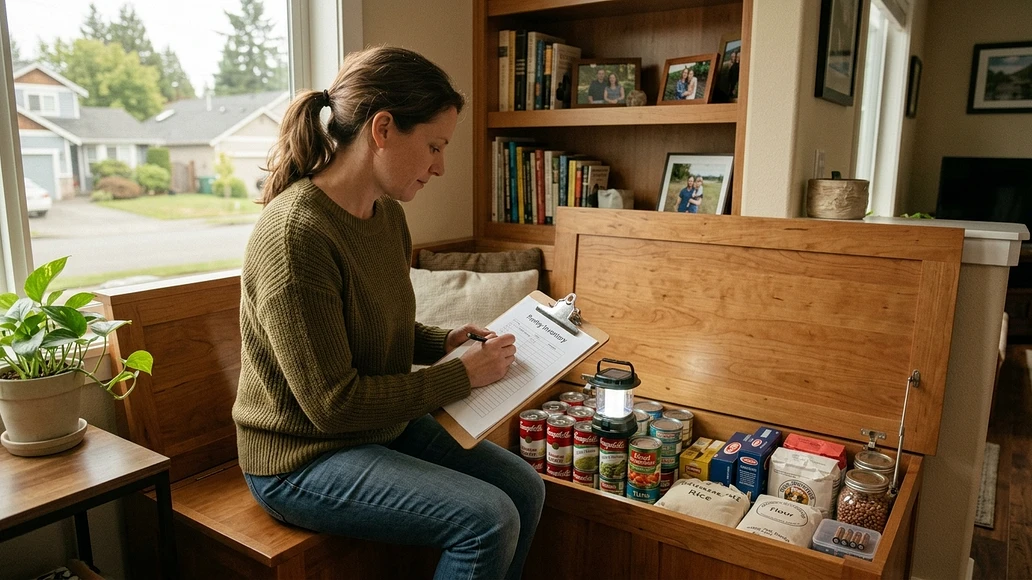
A coded inventory can be simple. For example, “C1” might mean hall closet shelf 1, and “B2” might mean bench compartment 2. The code does not need to be dramatic. It just needs to avoid telling a casual observer exactly where everything is.
Low-risk hiding places inside the home
The safest concealed storage is usually inside the conditioned part of the home, in places that look ordinary and stay within normal indoor temperature and humidity ranges.
Renter-friendly options
Renters should favor methods that leave no damage behind. Think disguised storage, not demolition.
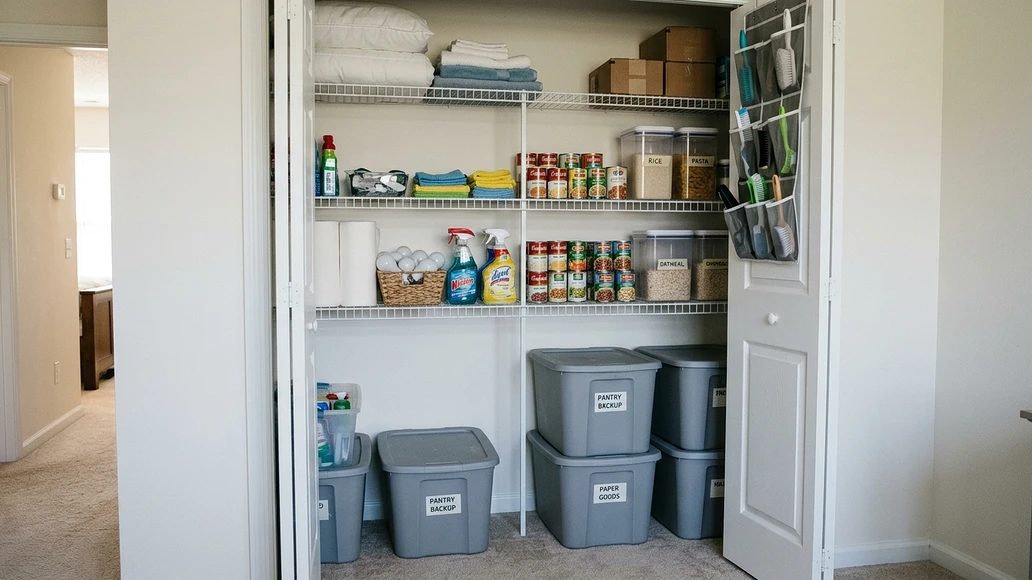
- Under-bed bins covered by normal linens or seasonal boxes.
- Storage benches, ottomans, and platform beds with hidden volume.
- Closet floors hidden behind luggage, coats, or labeled household bins.
- Bookshelf rows with a shallow false front and deeper storage behind.
- Plain totes labeled with boring categories like holiday decor or paperwork, as long as the contents are still food-safe inside.
These methods work because they blend in and preserve indoor conditions. The outer disguise should never be the food container itself. Food should still be sealed in appropriate packaging inside the disguised container.
Homeowner options with moderate effort
Homeowners have more flexibility, but the same rule applies. Do not trade safety for secrecy.
- Deep cabinet backs in interior utility closets.
- Built-in bench seating with sealed interior compartments.
- Removable toe-kick drawers under kitchen cabinets, if kept away from heat and moisture.
- Stair riser compartments built without cutting structural members.
- False backs in wardrobes or linen cabinets.
These are most useful for canned goods, packaged staples, and compact emergency foods. They are poor choices for anything that needs refrigeration or frequent inspection.
Structural compartments and buried caches, when they are worth the trouble
Some people jump straight to false walls or buried PVC tubes because they sound secure. In reality, these are higher-risk methods that only make sense for a limited reserve, not your whole food plan.
| Method | Cost level | Difficulty | Stealth | Capacity | Food-safety risk |
|---|---|---|---|---|---|
| Closet bins and disguised totes | Low | Low | Moderate | Moderate | Low if indoors and sealed |
| Furniture compartments | Low to medium | Low to medium | High | Low to moderate | Low if kept in conditioned space |
| Toe-kick or stair storage | Medium | Medium | High | Moderate | Medium, depends on heat, moisture, pests |
| False wall or hidden room | Medium to high | High | High | High | Medium to high, plus structural risk |
| Detached shed cache | Low to medium | Low | Low to moderate | High | High in hot, cold, or humid climates |
| Buried cache | Medium | Medium to high | High | Low to moderate | High unless packaging and drainage are excellent |
If you are thinking about a buried cache, remember that burial solves a visibility problem, not a preservation problem. Soil moisture, flooding, freeze-thaw cycles, shifting ground, and difficult retrieval all work against you. A buried cache should contain only food that is already properly preserved and then protected in multiple layers of robust, food-safe containment. Even then, it needs careful site selection, drainage awareness, and legal permission on the property.
Never bury food on shared land, utility easements, or rented property without explicit permission. Never dig before checking for underground utilities. If your area floods, has a high water table, or experiences severe freeze-thaw movement, buried food storage may be more trouble than it is worth.
How to keep hidden food safe to eat
This is the part many concealment articles skip. Food safety is what determines whether your reserve helps you or harms you.
Dry storage generally performs best in cool, stable conditions with low humidity. Refrigerated foods need to stay at about 40 F or below, and frozen foods at 0 F or below. Potentially hazardous foods left in the temperature danger zone for too long can support rapid bacterial growth. Hidden spaces near furnaces, water heaters, attic roofs, exterior walls with condensation, or uninsulated garages are poor choices.
- Use sealed, food-grade containers for dry goods.
- Keep food off concrete floors when possible, using shelves or risers.
- Separate food from fuels, paints, cleaners, and pesticides.
- Protect against rodents and insects with hard-sided outer containers where needed.
- Do not store food where leaks, condensation, or floodwater can reach it.
- Inspect hidden areas for odor, dampness, and pest activity before stocking them.
Home-canned foods deserve extra caution. Use only tested preservation methods from reliable extension or government sources. If a jar has a failed seal, leakage, spurting liquid, mold, or an off odor, discard it safely. Do not taste questionable food to test it.
Packaging that supports both concealment and shelf life
The outer hiding place and the inner food package do different jobs. The hiding place reduces visibility. The package protects the food.
| Packaging type | Best use | Strengths | Weak points | Best hidden-storage role |
|---|---|---|---|---|
| Original canned packaging | Commercial canned foods | Durable, pest-resistant, easy to rotate | Can rust in damp areas, dents matter | Excellent for indoor concealed shelves and bins |
| Glass jars | Home-canned foods, some dry goods | Visible condition check, inert material | Breakable, heavy, poor for buried use | Best in protected indoor cabinets |
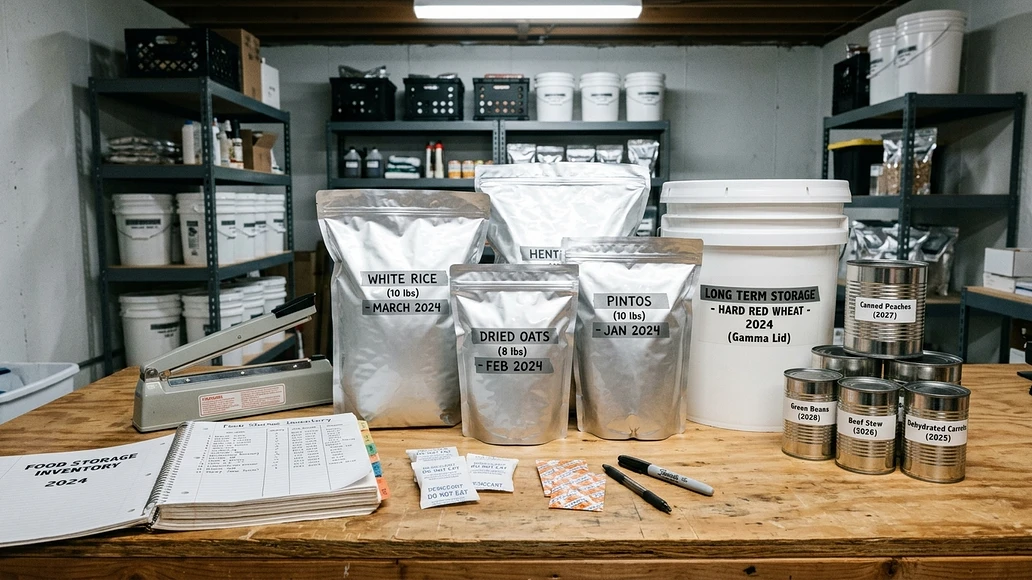
| Mylar bags with proper absorbers inside food-grade buckets | Dry staples like rice, beans, oats | Good barrier protection, stackable | Needs correct packing method, bulky | Strong option for deep pantry and concealed closet storage |
| Food-grade plastic containers | Dry goods and short to medium storage | Lightweight, reusable | Not all plastics are food-safe, some allow odor transfer | Useful inside disguised bins or furniture |
| Vacuum-sealed bags | Portioned dry goods or short-term freezer use | Compact, organized | Can puncture, not ideal as sole long-term barrier | Good as an inner layer, not the only layer |
If odor control matters because of pests or curiosity, use layered containment. For example, dry goods can go in a proper inner barrier, then a food-grade bucket, then a plain outer tote. Avoid exaggerated claims about making food undetectable. The realistic goal is to reduce smell, moisture exposure, and casual discovery.
Rotation and inspection for a concealed reserve
A hidden stockpile fails when it becomes forgotten food. Rotation should be simple enough that you can maintain it on a calendar.
| Interval | Tasks | What to log | Discard triggers |
|---|---|---|---|
| Monthly | Check for leaks, dampness, pests, and heat buildup in hidden areas | Room condition, visible package damage | Any food exposed to water, pests, or chemical fumes |
| Quarterly | Rotate accessible canned and boxed foods, compare inventory to actual stock | Items moved into kitchen use, replacements added | Bulging cans, broken seals, severe rust, infestation |
| Twice yearly | Deep inspection of furniture compartments, closet bins, and low-access caches | Condition of outer containers and labels | Mold, condensation, off odors, damaged packaging |
| Yearly | Review whether each hiding place still makes sense for your household and climate | Location changes, family access plan | Any cache that cannot be inspected or rotated reliably |
Use FIFO, first in, first out. Date everything. If privacy matters, use a code that still lets you understand age and location. A code like “24-03 C1” can mean packed in March 2024, stored in closet location 1. The point is not secrecy theater. The point is disciplined rotation.
Adapting your plan to apartments, suburban homes, and rural property
| Living situation | Best methods | Methods to avoid | Special notes |
|---|---|---|---|
| Apartment | Under-bed storage, benches, closet bins, disguised shelving | Wall cutting, balcony storage, hot car trunk overflow | Prioritize renter-friendly methods and easy evacuation access |
| Suburban house | Interior closets, basement areas with humidity control, built-in furniture storage | Attics, garages with summer heat, unsafe stair or wall modifications | Split supplies between daily pantry and deeper reserve |
| Rural property | Layered in-home storage, climate-aware outbuilding use, limited off-site reserve | Unsealed shed storage, casual burial in wet soil, wildlife-prone locations | Watch for rodents, temperature swings, and access during storms |
In all three settings, the best hidden reserve is the one you can reach during a power outage, inspect without special tools, and rotate without forgetting it exists.
Balancing access and secrecy
Not every emergency calls for the same level of concealment. A winter storm, short outage, or temporary job loss usually calls for a normal deep pantry you can reach quickly. A deeper concealed reserve is more useful as backup, not as your only source of food.
A simple three-layer model works well for many households:
- Main pantry, everyday foods you use and replace constantly.
- Hidden in-home reserve, shelf-stable staples and backup meals.
- Remote or hard-to-access cache, only if your property, climate, and maintenance habits truly support it.
If your system is so secret or complicated that your spouse, adult family member, or emergency backup person cannot find food when needed, it is too complex.
Common mistakes that ruin a hidden stockpile
- Putting everything in one clever hiding place.
- Using attics, garages, sheds, or wall voids that get too hot or damp.
- Storing food in non-food-grade containers.
- Ignoring pests until packaging is already damaged.
- Failing to date and rotate supplies.
- Hiding food near chemicals, fuel, or paint.
- Making structural cuts without understanding the building.
- Telling too many people, then relying on secrecy after the fact.
The most common failure is not discovery. It is spoilage from heat, moisture, and neglect.
FAQ
Can I safely hide canned food in my attic or garage long term?
Usually, no. Attics and many garages experience major temperature swings that shorten shelf life and can damage food quality. Canned food does best in a cool, dry, stable environment. An interior closet or conditioned room is usually a much safer choice.
How deep should I bury a food cache to protect it from weather and theft?
There is no universal safe depth because soil type, drainage, frost line, water table, and local law all matter. The bigger issue is not depth alone, it is moisture control, legal placement, and reliable retrieval. For most households, indoor concealed storage is safer and easier to maintain than burial.
Is it safe to store food in plastic tubs or buckets if they are not labeled food-grade?
Do not assume unlabeled plastic is food-safe. For direct food contact, use containers intended for food storage. A plain outer tote can be used as a disguise layer if the food itself is already sealed inside proper food-grade packaging.
How often should I check on a hidden food stash so it does not go bad?
Inspect conditions monthly, rotate accessible foods quarterly, and do a deeper review at least twice a year. If a location is hard to inspect, it should hold only very stable foods, or it should not be used at all.
What signs mean hidden food should be thrown away instead of eaten?
Discard food with bulging cans, broken seals, leaks, severe rust, mold, insect activity, rodent damage, water exposure, chemical odor, or any unexplained off smell. With home-canned foods, be especially cautious. If storage history is questionable, do not taste-test it.