How Your Neighborhood Usually Reacts in a Major Crisis
Most neighbors do not become instant enemies when a serious emergency hits. Here is what people commonly do in the first hours and days, how behavior changes as stress builds, and how to prepare boundaries, communication, and mutual aid without putting your household at unnecessary risk.

When people imagine a severe emergency, they often picture immediate chaos and hostile neighbors. Real life is usually more mixed. In many disasters, the first wave of neighbor behavior is not violence, but confusion, information seeking, family check-ins, supply runs, and small acts of mutual aid. That does not mean risk is imaginary. Stress, scarcity, rumor, intoxication, untreated mental illness, and poor boundaries can turn an ordinary block into a tense one. The smart approach is to prepare for both cooperation and friction.
This guide explains what neighbors may do first during SHTF, how those patterns often change over the first week, and how to protect your household without assuming everyone around you is an enemy. It focuses on practical, lawful, low-drama planning. This is general preparedness information, not legal or medical advice. Follow local emergency management instructions, and contact emergency services when available if someone is violent, suicidal, or in medical danger.
What SHTF Means at the Neighborhood Level
SHTF is a broad label, and neighbor behavior depends heavily on the type of event. A 12-hour power outage, a wildfire evacuation, a winter storm, a cyber outage, and a long economic disruption do not produce the same social dynamics. In short events, most people expect normal systems to return quickly. In longer disruptions, behavior changes as uncertainty grows and supplies run low.
For planning purposes, it helps to think in layers. First are short disruptions, such as storms, blackouts, boil-water notices, and temporary road closures. Second are medium disruptions, such as multi-day outages, fuel shortages, or severe supply chain interruptions. Third are prolonged disruptions, where jobs, deliveries, communications, and public services remain unstable for weeks. Your neighbors may look calm in the first category, stressed in the second, and much more transactional in the third.
How People Usually Behave in Disasters, Not Just in Movies
Disaster research and emergency guidance generally show that people often become more cooperative than popular culture suggests. They check on family, share information, help clear debris, charge phones, lend tools, and look after children or older adults. This does not mean everyone behaves well. It means the baseline is usually prosocial behavior mixed with confusion and uneven judgment.
What is strongly supported is that rumor spreads fast, especially early. People fill information gaps with guesses, social media posts, overheard comments, and fear. A neighbor who is not dangerous can still become a problem if they confidently spread false claims about contaminated water, road closures, looting, or government orders. In many neighborhoods, misinformation creates more bad decisions than deliberate malice.
Another common pattern is normalcy bias. Some neighbors will underreact. They may ignore warnings, delay buying essentials, refuse to charge devices, or assume the outage will be over by dinner. Others will overreact and make frantic supply runs, pressure others for updates, or start broadcasting worst-case theories. Your plan should account for both types.
What Neighbors Often Do in the First Week
| Timeframe | Common helpful actions | Common risky actions | What it means for your plan |
|---|---|---|---|
| 0 to 24 hours | Checking on family, charging devices, sharing news, helping with immediate cleanup, confirming who is home | Panic buying, rumor spreading, blocking roads or driveways, ignoring warnings, emotional overreaction | Verify information, secure essentials, keep communication calm and brief |
| 24 to 72 hours | Sharing ice, water, tools, cooking together, informal child or elder check-ins, comparing outage updates | Boundary testing, repeated requests for supplies, visible frustration, poor generator safety, conflict over noise or parking | Set clear limits, reduce visible waste, identify reliable neighbors |
| Day 4 to 7 | Bartering, watch rotations, pooled meals, rides to stores, coordinated cleanup | Resource jealousy, theft of opportunity, intoxication, group pressure, aggressive demands from a small minority | Use layered security, keep interactions predictable, cooperate selectively |
The First 24 Hours, What People Usually Do First
In the first day, most neighbors are trying to answer simple questions. How bad is this. How long will it last. Is my family safe. Do I need to leave. Can I still buy food, fuel, or medicine. That is why the most common first actions are checking phones, calling relatives, driving to stores, topping off gas, and talking over fences or in driveways.
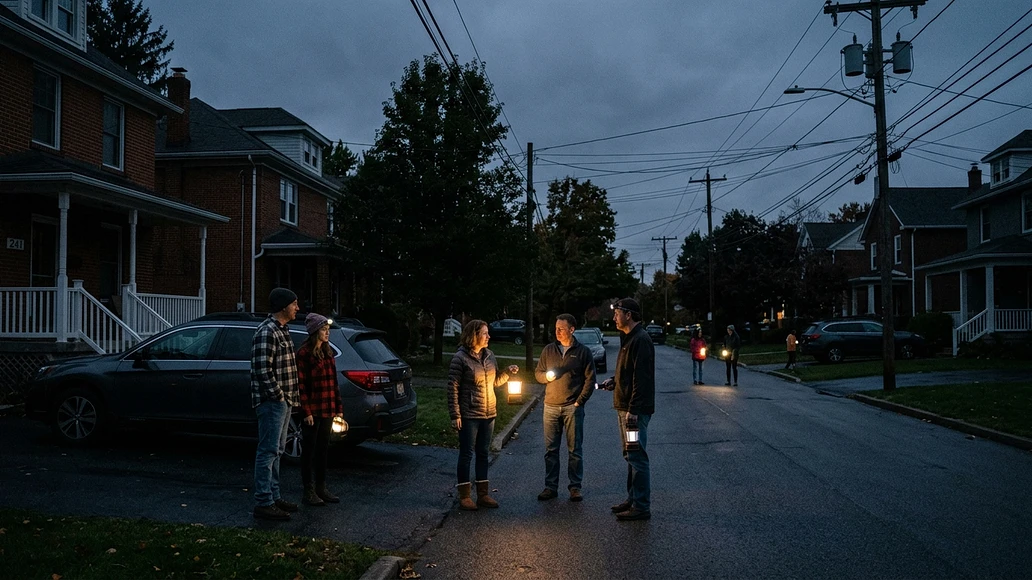
Some households will immediately start helping. They may lend a flashlight, move branches, share outage updates, or check on an older resident. Others will disappear indoors and focus only on their own household. Neither response automatically signals danger. Early isolation can simply mean they are overwhelmed or caring for children, pets, or medical needs.
The first day is also when people notice who seems prepared. If your home is brightly lit, smells like a full hot dinner, or has loud equipment running while others are struggling, you may attract attention. This is where quiet preparedness matters more than dramatic preparedness.
Days 2 Through 7, How Behavior Changes as Stress Builds
By the second or third day, the social picture gets clearer. Reliable people become easier to spot. So do the households that are disorganized, impulsive, or demanding. If stores are empty, fuel is scarce, or power is still out, neighbors begin adapting. This is when you may see shared cooking, borrowed extension cords, pooled freezer food, ride sharing, and informal watchfulness.
It is also when tension can rise. Sleep loss, heat or cold, spoiled food, money stress, and uncertainty wear people down. A neighbor who was friendly on day one may become irritable on day four. Repeated requests for batteries, ice, charging, or fuel can shift from understandable to intrusive. Small disputes over noise, pets, parking, generator exhaust, or children can become larger than they should.
Longer disruptions tend to create a sorting effect. Some neighbors become assets. Some remain neutral. A small number become recurring problems. Your goal is not to predict every personality perfectly. It is to notice patterns early and respond consistently.
Helpful Neighbor Actions Versus Dangerous Ones
| Behavior | Why it helps or harms | Suggested response |
|---|---|---|
| Checking on older adults, disabled residents, or families with infants | Improves safety and catches urgent needs early | Support if you can do so safely, coordinate simple check-ins |
| Sharing verified updates from official sources | Reduces rumor-driven mistakes | Encourage source checking and keep messages short |
| Pooling labor for cleanup or watch rotations | Builds resilience and reduces individual strain | Join selectively with clear roles and time limits |
| Repeatedly asking who has supplies | Can become pressure, gossip, or targeting behavior | Stay vague, do not inventory your home for others |
| Showing up agitated, intoxicated, or in a group to demand help | Raises risk and reduces your ability to de-escalate | Keep distance, end contact, call authorities if available |
| Broadcasting that a certain house has food, fuel, or gear | Creates resentment and security problems | Correct gently if safe, tighten OPSEC immediately |
| Offering barter or shared meals | Can reduce waste and strengthen trust | Use simple, fair exchanges and avoid dependency |
How to Read Early Warning Signs in Neighbor Behavior
You do not need to assume the worst, but you should pay attention to boundary testing. Early warning signs often look ordinary at first. A neighbor asks probing questions about your generator, freezer, fuel cans, or how long your food will last. Someone lingers too long near your garage. A person who never used to visit starts dropping by repeatedly at odd hours. A group begins discussing who has what.
Other warning signs are emotional rather than logistical. Watch for escalating anger, fixation on unfairness, intoxication, threats disguised as jokes, pressure to join a crowd, or repeated refusal to accept a polite no. These signs do not guarantee violence, but they do suggest you should simplify contact, avoid arguments, and stop sharing details.
If someone seems mentally unstable, severely sleep deprived, suicidal, or medically compromised, treat that as a safety issue, not a debate. Seek emergency help when possible. If a person depends on electricity for oxygen, refrigeration of medication, or other life-support needs, encourage advance coordination with medical providers and local emergency services before a crisis happens.
Should You Cooperate or Keep Your Distance
The answer is usually both. Total isolation is often weaker than selective cooperation. Full openness is often weaker than thoughtful privacy. The strongest position for most households is a middle path, know your neighbors enough to communicate and coordinate, but keep your resources, routines, and vulnerabilities on a need-to-know basis.
| Approach | Benefits | Risks | When it fits best |
|---|---|---|---|
| Mostly isolated | Less information leakage, fewer demands, simpler household control | Less help, less local intelligence, greater social suspicion | Very unstable environments, active threats, or severe preexisting conflict |
| Selective cooperation | Balances OPSEC with mutual aid, improves flexibility, builds trust with reliable people | Requires judgment, boundaries, and consistency | Most suburban and small-town settings |
| Open collaboration with many neighbors | More labor, more shared information, stronger community morale | More gossip, more dependency, harder to manage fairness | Small, high-trust communities with established relationships |
Build a Neighborhood Mutual Aid Network Before You Need One
The best way to reduce bad neighbor behavior is not a tougher speech at the door. It is less desperation before the emergency starts. Foundational steps matter more than reactive tactics. Households with basic food, water, lighting, first aid, and communication plans are less likely to panic or pressure others. Neighborhoods with even modest trust tend to solve small problems faster.
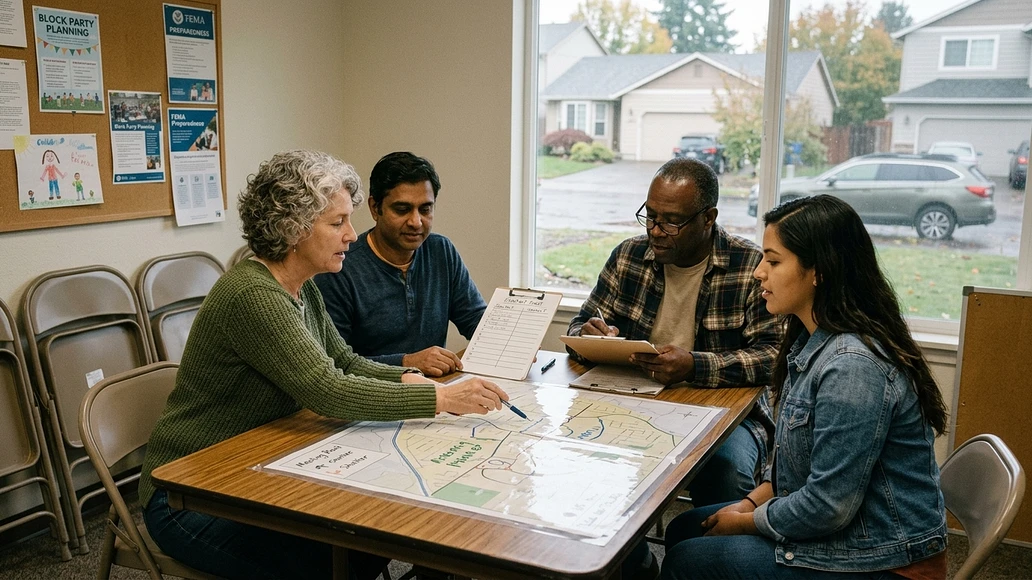
Start small. Learn names. Exchange contact information with a few nearby households. Identify who has medical training, tools, a truck, language skills, or mobility limitations. Agree on a simple check-in method and a rally point if phones fail. Keep it practical, not theatrical.
| Step | Status to aim for | Why it matters | Notes |
|---|---|---|---|
| Meet immediate neighbors | Done before any emergency | Familiarity lowers friction and speeds communication | Start with ordinary conversation, not collapse talk |
| Exchange phone numbers | At least 2 to 5 nearby households | Allows quick check-ins and updates | Consider text group plus one backup contact |
| Identify skills and vulnerabilities | Basic awareness only | Helps direct aid where it matters most | Do not collect intrusive personal details |
| Set a simple rally point | One nearby location | Useful if communications fail | Choose a safe, obvious place |
| Discuss basic outage plans | Short and realistic | Reduces rumor and duplicated effort | Focus on water, power, check-ins, pets |
What Role Neighbors Should Have in Your Family Plan
Your household plan should answer a few questions in advance. Who are you willing to check on. Who can you ask for help. Who should not be told much. What is your policy on lending tools, charging devices, or sharing water. What will you say if someone asks how much food you have. These decisions are easier when made calmly, not at the door under stress.
It also helps to separate foundational actions from supportive actions. Foundational actions reduce the core problem. These include storing basic supplies, having backup lighting and communications, and building a small network. Supportive actions mainly reduce side effects. These include privacy habits, better locks, motion lights, and short scripts for difficult conversations. Both matter, but the foundational layer usually does more to prevent conflict in the first place.
Safe Scripts for Neighbors Asking for Help
Many people struggle here because they want to be kind without creating dependency or exposing their household. The safest scripts are calm, brief, and specific. Avoid long explanations. Long explanations invite negotiation.
You might say, “We are on a tight plan ourselves, but I can spare two bottles of water today.” Or, “I can help you charge one phone for 20 minutes, but I cannot do more right now.” Or, “I do not discuss our household supplies, but the community center may have updates.”
If someone is pushy, use a broken-record approach. Repeat the limit without adding new details. “I cannot help with that.” “I have already told you what I can offer.” “I need to go back inside now.” If a person becomes aggressive, end the interaction. Do not argue through a doorway. Keep barriers between you and them when possible, and contact authorities if available.
Security and OPSEC Without Creating Enemies
Operational security does not have to mean secrecy about everything. It means reducing unnecessary signals. Keep supplies out of sight. Break down packaging discreetly. Avoid advertising large purchases, backup fuel, or specialty gear. Manage trash so it does not announce what you have. Use curtains and modest lighting discipline during outages.
Home security should stay lawful and proportionate. Good locks, exterior lighting, trimmed sightlines, and predictable routines are usually more useful than dramatic displays. Highly visible aggression can escalate tension, especially in a stressed neighborhood. The goal is to look organized and uninteresting, not provocative.
If you choose to coordinate watchfulness with neighbors, keep it simple. Focus on observation, communication, and reporting. Do not drift into vigilantism. Follow local laws, and involve law enforcement when available.
Urban and Rural Neighborhoods Behave Differently
Density changes everything. In urban areas, you may have more anonymity, more apartments, more foot traffic, and more dependence on shared infrastructure. That can mean faster rumor spread and more requests, but also more potential helpers close by. In rural areas, people may have more space, more tools, and more self-reliance, but also longer emergency response times and fewer nearby resources.
Urban households often benefit most from communication plans, discreet storage, and knowing building-level contacts. Rural households often benefit most from fuel planning, road access awareness, water system backups, and a short list of trusted nearby households. In both settings, the principle is the same, build enough trust to coordinate, but not so much exposure that your household becomes the default solution for everyone.
Checking on Vulnerable Neighbors Safely
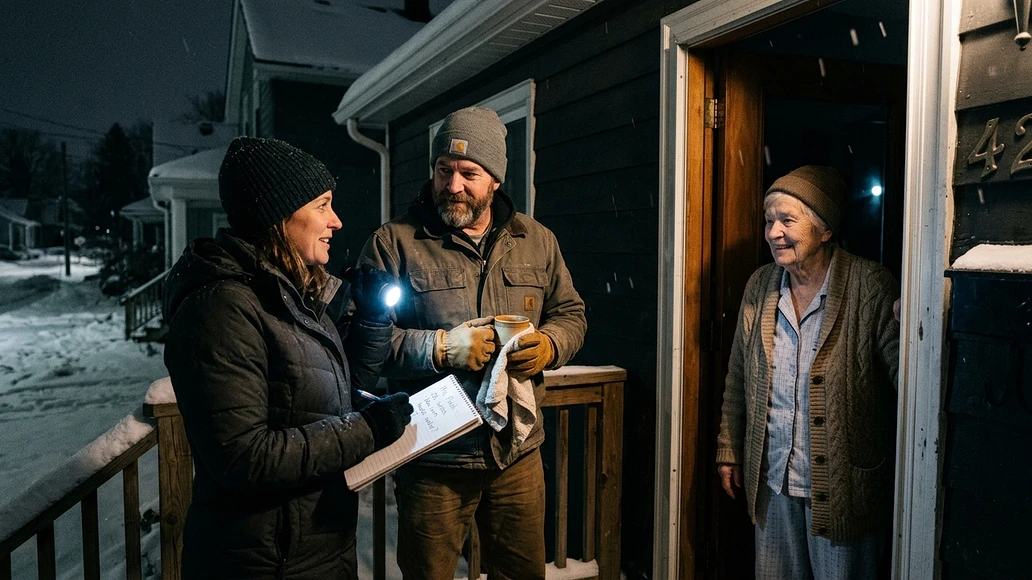
Emergency guidance often emphasizes checking on older adults, disabled neighbors, and people with medical needs, especially during evacuations, heat waves, winter storms, and power outages. That is sound advice, but do it safely. Use pairs when possible. Keep visits short. Ask practical questions. Do you have water. Do you have a way to stay warm or cool. Do you need help contacting family. Do you rely on powered medical equipment.
If someone uses electricity for life-support equipment, oxygen support, or refrigerated medication, encourage advance planning with healthcare providers, utility medical priority programs where available, and local emergency services. Do not promise technical or medical help you cannot safely provide.
Common Mistakes People Make With Neighbors Before and During a Crisis
One common mistake is oversharing. Telling people exactly what you store, how long you can last, or what backup systems you own can create future pressure. Another mistake is the opposite, acting so secretive or hostile that you cut yourself off from useful information and goodwill.
A third mistake is failing to notice minor conflicts before they matter. The neighbor who already ignores property lines, starts arguments, or abuses substances is unlikely to become easier during a crisis. You do not need to include every person equally in your plan. Selective trust is not cruelty. It is risk management.
Another error is assuming gear solves social problems. Supplies are essential, but they do not replace communication, boundaries, and local knowledge. A well-stocked house in a socially brittle neighborhood can still face unnecessary pressure.
Recent Lessons From Real Emergencies
Recent storms, blackouts, and climate-related emergencies have reinforced a simple lesson. Strong neighborhoods recover faster. People with a few trusted local contacts often get better information, faster welfare checks, shared labor, and practical help with transportation, cleanup, and temporary shelter. No specific dated update is required to see the trend. Emergency messaging continues to emphasize layered preparedness, backup power for critical needs, and checking on vulnerable neighbors.
Simple Planning Tools You Can Use This Week
If you want a realistic plan, start with a one-week view. Make sure your household can handle basic needs without immediate outside help. Then build a small neighborhood layer around it.
- Store enough water, food, medications, lighting, and first aid supplies for your household.
- Choose two or three nearby households you trust enough to exchange contact information with.
- Set one check-in method and one backup meeting point.
- Decide in advance what kinds of help you can offer, and what you will decline.
- Reduce visible signs of your supplies and backup systems.
- Write down a few calm scripts for requests, rumors, and boundary testing.
FAQ
What should I do if an aggressive neighbor demands my supplies during SHTF?
Prioritize distance, calm, and ending the interaction. Do not argue about what you have. Use a short statement such as, “I cannot help with that,” then disengage. Keep physical barriers in place when possible. If there is an immediate threat, contact law enforcement or emergency services if available, and follow local laws. Do not rely on general internet advice for complex self-defense or liability questions.
Is it safer to tell my neighbors that I prep, or keep it completely secret?
For most people, partial privacy works better than total secrecy or full disclosure. It is useful for trusted neighbors to know you take emergencies seriously and have a plan. It is usually unwise to share detailed inventories, fuel amounts, or how long your supplies will last.
How much help should I realistically offer neighbors without risking my own family?
Offer help from a preset limit, not from guilt in the moment. Decide in advance what you can spare in water, charging time, rides, or information. Small, clear, one-time help is often safer than open-ended support. If helping would endanger your household, it is reasonable to say no.
Can I organize a neighborhood watch or mutual aid group without sounding alarmist?
Yes. Frame it around storms, outages, wildfire smoke, winter weather, and everyday emergencies. Most people respond better to practical resilience than to collapse language. Keep the plan simple, local, and useful right now.
What if I have toxic or unstable neighbors before SHTF, should I still include them in my plan?
You do not need to treat every neighbor the same. Acknowledge reality. You can maintain basic civility while limiting information and access. If someone has a history of threats, violence, severe instability, or criminal behavior, keep your plan focused on distance, documentation, and lawful reporting rather than close cooperation.
References
- Home Emergency Preparedness Handbook | CAES Field Report
- We are in a crisis, How to build communities that can respond
- How to Build a Neighborhood Mutual Aid Network Before the Next Disaster
- University of Georgia Extension preparedness guidance
- SHTF in Europe, How to Prepare for Emergencies?
- The SHTF Survival List, Preparing for the Unpredictable
- What Does SHTF Mean and How to Prepare