A Frugal Potato Soup You Can Count On When Money and Supplies Run Thin
This simple potato and onion soup is cheap, filling, and easy to adapt, but the real value is knowing how to store ingredients safely, avoid bad potatoes, and turn a bare-bones bowl into a more balanced emergency meal.

When budgets tighten or the pantry looks sparse, a pot of potato and onion soup can still put a hot meal on the table. It is one of those plain, dependable dishes that asks very little of you. A few potatoes, an onion, water, salt, and a little fat if you have it can become something warm, filling, and comforting.
That said, a hard-times meal should be more than cheap. It should also be safe to cook, safe to store, and realistic about nutrition. Potato soup can help stretch food, but it is not a complete long-term diet by itself. This guide covers the basic recipe, ways to make it more sustaining, how to store potatoes and onions properly, and how to handle leftovers without taking chances.
Important: This article offers general home cooking and preparedness guidance, not medical advice. If you have diabetes, kidney disease, heart disease, high blood pressure, or another condition that affects your diet, use this information as a starting point and follow your clinician's advice.
Why this soup has lasted through hard times
Simple potato soups have shown up in frugal kitchens for generations because the ingredients are common, inexpensive, and easy to stretch. Potatoes provide calories and carbohydrates, onions add flavor, and salt makes the whole pot taste like more than the sum of its parts. In practical terms, this kind of soup works because it can be made from staples many households already keep on hand.
For preparedness, it also has a few advantages. Potatoes and onions are familiar foods, the recipe is forgiving, and the soup can serve as a base for leftovers, canned goods, or garden produce. If you have beans, lentils, powdered milk, or a spoonful of oil, you can turn a survival bowl into a more complete meal.
What hard-times potato and onion soup really is
At its most basic, this is not a restaurant soup. It is a practical staple meal built around what is available. The bare-bones version uses potatoes, onions, water, and salt. A slightly better version adds oil, butter, broth, or milk. A more balanced version adds protein and fat so the meal keeps you full longer.
The goal is not perfection. The goal is to make a safe, edible, low-cost meal from ordinary ingredients while using as little fuel and waste as possible.
The basic pantry version, 3 to 5 ingredients
This version is designed for simplicity and low cost.
Ingredients
- 4 medium potatoes, peeled if needed and diced small
- 1 medium onion, chopped
- 5 to 6 cups water
- 1 to 1 1/2 teaspoons salt, start lower and adjust later
- 1 to 2 tablespoons oil or butter, optional but helpful
Method
- If using oil or butter, heat it in a pot and cook the onion for 5 to 8 minutes until softened.
- Add potatoes, water, and salt.
- Bring to a boil, then reduce to a steady simmer and cover with a lid.
- Cook 15 to 25 minutes, depending on how small the potatoes are cut, until very tender.
- For a brothy soup, leave it as is. For a thicker soup, mash some of the potatoes in the pot with a spoon or potato masher.
- Taste and adjust salt only at the end.
Small dice saves fuel because the potatoes cook faster. Keeping the lid on also reduces cooking time and water loss.
Basic bowl versus upgraded bowl
| Version | Ingredients | Fuel and time needed | Nutritional features |
|---|---|---|---|
| Bare-bones soup | Potatoes, onion, water, salt | Low fuel, about 20 to 30 minutes | Mainly carbohydrates, modest fiber, low protein, very low fat, sodium depends on salt added |
| Improved pantry soup | Basic soup plus oil or butter, broth, herbs | Low to moderate fuel, about 25 to 35 minutes | More flavor and satiety from fat, still low in protein unless broth is substantial |
| More complete meal soup | Basic soup plus beans, lentils, powdered milk, eggs, canned fish, or shredded chicken | Moderate fuel, about 30 to 45 minutes depending on add-ins | Better balance of carbs, protein, and fat, more filling for longer periods |
How to make it more filling and more useful nutritionally
Potatoes are good emergency food, but they are mostly a carbohydrate source. That makes this soup helpful for short-term hunger, but not ideal as a stand-alone meal day after day. If you can, add one source of protein and one source of fat.
Good practical additions include cooked lentils, canned beans, powdered milk, a whisked egg stirred in at the end, canned chicken, or canned fish. A little oil, butter, or shelf-stable fat improves both calories and staying power. If you have carrots, cabbage, celery, or greens, they can add fiber and variety.
For people watching sodium, use less salt than you think you need at first. Bouillon cubes and canned broths can make a cheap soup taste better fast, but they can also push sodium very high.
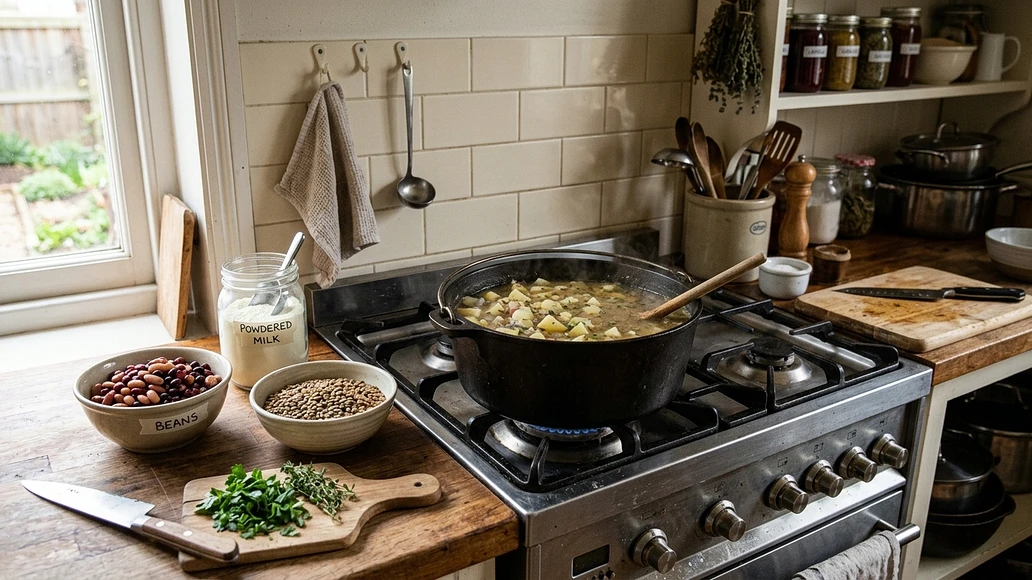
A simple upgraded version
- Make the basic soup.
- Add 1 cup cooked lentils or 1 can drained beans during the last 10 minutes.
- Stir in 2 to 4 tablespoons powdered milk mixed with a little cool water, or add a spoonful of oil.
- Season with black pepper, thyme, paprika, or bay leaf if available.
This turns a thin soup into something more suitable for a hard week, not just a hard evening.
How to store potatoes and onions so they last longer
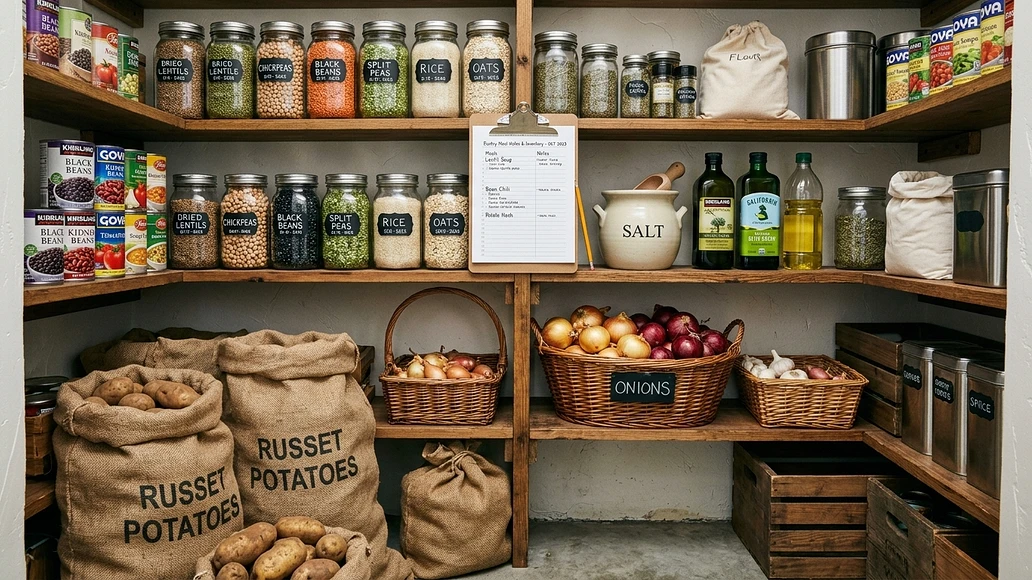
Storage matters because spoiled produce wastes money and can create safety problems. Potatoes keep best in a cool, dark, well-ventilated place. Onions also like cool, dry, ventilated storage. The important detail is that they should be stored apart, not because they become poisonous together, but because onions can speed up potato sprouting.
The viral claim that potatoes and onions stored together create a toxic combination is false. The real concern is simpler. Potatoes that turn green or sprout heavily can develop higher levels of glycoalkaloids, which are natural toxins.
| Item | Ideal conditions | Signs of spoilage | What to do |
|---|---|---|---|
| Potatoes | Cool, dark, dry, ventilated area, away from onions | Green skin, heavy sprouting, shriveling, soft spots, rot, bad smell | Discard strongly green, rotten, or heavily sprouted potatoes. Use sound potatoes first and rotate stock often |
| Onions | Cool, dry, ventilated area, away from potatoes | Softness, slime, mold, black spots, foul odor | Discard spoiled onions. Use firm onions with dry outer skins first |
When potatoes or onions are not safe to use
Do not treat all old produce as harmless. Some warning signs matter more than others.
Potatoes
If a potato is strongly green, bitter, or heavily sprouted, it is better to discard it. Small sprouts or small green patches can sometimes be cut away, but that does not guarantee all glycoalkaloids are removed. Boiling does not reliably make a bad potato safe. If you are feeding children, older adults, pregnant people, or anyone immunocompromised, be stricter, not looser.
Onions
Discard onions that are slimy, moldy, foul-smelling, or deeply soft. A dry outer layer or a small bruised spot is one thing. Wet rot is another.
If anyone develops severe vomiting, diarrhea, fever, confusion, or signs of dehydration after eating questionable potatoes or soup, seek medical attention promptly.
Leftover soup safety, cooling, refrigeration, and reheating
This is where many frugal meals go wrong. Soup is economical only if it does not make anyone sick.
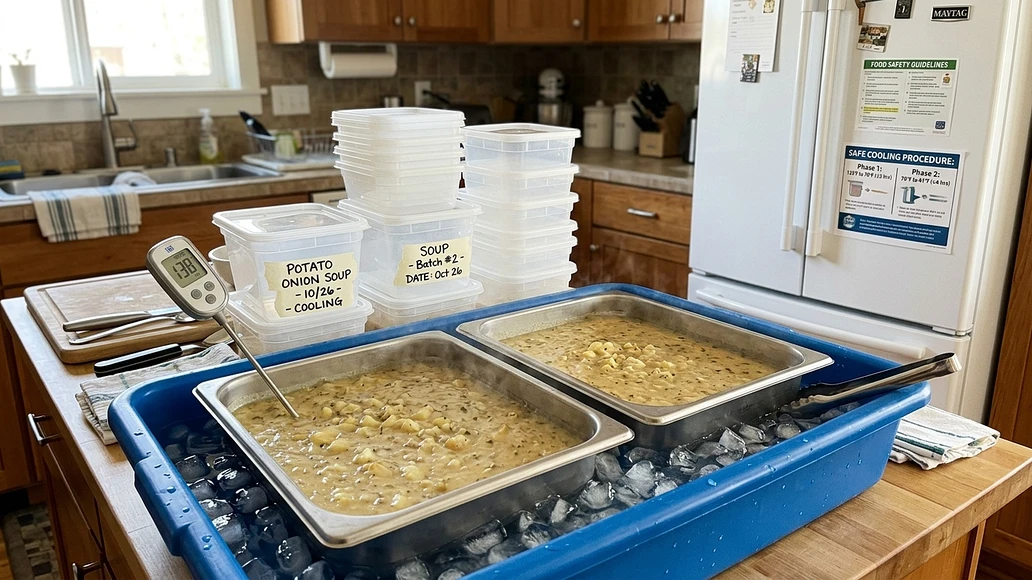
Cooked soup should not sit at room temperature for more than 2 hours. If the room is very hot, above 90 degrees Fahrenheit, limit that to 1 hour. After that, the safest choice is to discard it.
For refrigeration, cool the soup promptly and divide it into shallow containers so it chills faster. Do not leave a large pot sitting out all evening. Also avoid packing a huge steaming pot straight into an already crowded refrigerator, which can slow cooling and warm nearby foods.
| Storage condition | Maximum safe time | Key actions |
|---|---|---|
| Room temperature | Up to 2 hours, or 1 hour if above 90 degrees Fahrenheit | After that, discard. Do not rely on smell or taste to judge safety |
| Refrigerator, broth-based soup | 3 to 4 days at 40 degrees Fahrenheit or below | Cool quickly in shallow containers, cover, label, and reheat thoroughly |
| Refrigerator, dairy-rich soup | 2 to 3 days | Use sooner because cream, milk, or sour cream shortens quality and safety margin |
| Freezer | Best quality within about 2 to 3 months | Freeze within 2 days, leave headspace, thaw safely, reheat to 165 degrees Fahrenheit |
When reheating, bring leftovers to at least 165 degrees Fahrenheit. On the stove, that usually means heating until the soup is steaming hot throughout and reaches a full simmer or brief boil. Do not taste questionable leftovers to decide if they are safe.
Cooking with limited fuel and simple gear
If fuel is scarce, technique matters. Dice potatoes small. Keep the pot covered. Use just enough water to cook and mash for thickness instead of simmering a large volume for a long time. If you are adding lentils, red lentils cook faster than many other legumes.
Camp stoves, rocket stoves, and wood stoves can all cook this soup, but use them with ventilation and stable cookware. Keep flames away from children, loose clothing, and stored fuel. Follow the stove maker's instructions and local fire safety rules. Indoor use of outdoor fuel-burning equipment can create carbon monoxide danger, so keep emergency cooking plans realistic and safe.
Variations, from survival pot to comfort bowl
The same base recipe can go in several directions depending on what you have.
Broth-based
Use broth instead of water for more flavor, but watch sodium if using bouillon or canned stock.
Creamy
Add milk, evaporated milk, or a little cream after the potatoes are tender. Keep the heat lower after dairy is added to reduce curdling. Remember that dairy-rich soups spoil faster and freeze less well.
Dairy-free
Mash more potatoes for thickness, or add a spoonful of oil for richness. Oat milk or unsweetened shelf-stable plant milk can work in some versions.
Flavor upgrades
Bay leaf, thyme, rosemary, paprika, garlic, black pepper, celery seed, or a little vinegar at the end can make a plain pot taste much better without changing the budget much.
Adapting the soup for health needs
Because this topic touches diet and health, it helps to be direct. Potato soup can fit many households, but some people need to modify it.
| Health situation | Suggested adjustments | Notes |
|---|---|---|
| High blood pressure or low-sodium diet | Use water instead of salty broth, reduce added salt, avoid or limit bouillon, season with herbs and pepper | Taste before salting. Frequent high-sodium soups can be a problem for some people |
| Diabetes | Keep portions moderate, add beans, lentils, eggs, or fish, include non-starchy vegetables if possible | Potato-heavy soups can raise blood glucose. Follow personal medical guidance |
| Kidney disease | Discuss potato, potassium, and sodium intake with a clinician or dietitian | Needs vary widely by stage and treatment plan |
| Dairy intolerance | Skip milk and cream, use mashed potatoes or plant milk for texture | Dairy-free versions often store and freeze a bit better |
| Vegetarian or vegan | Use oil instead of butter, add beans or lentils for protein, use vegetable broth if desired | Easy to adapt with pantry staples |
Can you freeze it for emergencies?
Yes, but broth-based versions freeze better than creamy ones. Potatoes can become grainy after thawing, and cream may separate. If you plan to freeze soup, make the basic version first and add dairy later when reheating if possible.
Freeze in meal-sized containers within 2 days of cooking. Leave some space at the top for expansion. Thaw in the refrigerator when possible, or reheat from partially thawed on the stove over gentle heat until the soup reaches 165 degrees Fahrenheit.
Common mistakes that waste food or create risk
The first mistake is using bad produce because you do not want to throw anything away. Frugality matters, but not more than safety. Strongly green, rotten, or heavily sprouted potatoes are not worth the gamble.
The second mistake is oversalting early. Potatoes absorb seasoning differently depending on variety and water content. Add a little at first, then adjust at the end.
The third mistake is leaving a big pot out too long. This is especially common after dinner when everyone assumes they will refrigerate it later. Set a timer if needed.
The fourth mistake is making a creamy batch too large to use quickly. Dairy-rich soup has a shorter fridge life and poorer freezer quality.
Where this soup fits in an emergency food plan
Think of potato and onion soup as a base meal, not a complete preparedness strategy. It works best when paired with shelf-stable proteins and a few flavor builders. Canned beans, lentils, fish, chicken, powdered milk, oil, and dried herbs all make this soup more useful.
For planning, one adult portion is often around 1 1/2 to 2 cups as a main meal, depending on what else is served. If the soup is very plain, people may need larger portions or a side such as bread, beans, or canned meat.
A practical stock rotation habit is to buy potatoes and onions in amounts you can actually inspect and use. Preparedness is not just about quantity. It is also about avoiding spoilage and knowing how to turn staples into meals.
Recent myths and clarified guidance
One recent myth claimed that storing potatoes and onions together creates a poisonous combination. That is not supported by credible evidence. The practical truth is less dramatic. Storing them together can shorten potato storage life by encouraging sprouting, but it does not magically create a deadly gas pair.
The real safety issue is using potatoes that are green, bitter, or heavily sprouted, and mishandling cooked soup afterward. Focus on visible spoilage, proper storage, and safe leftover practices.
FAQ
Is potato and onion soup enough to live on during hard times?
It can help cover short-term hunger because it is filling and inexpensive, but it is not a balanced long-term diet by itself. It is low in protein and can be low in fat unless you add other ingredients. For longer stretches, pair it with beans, lentils, eggs, canned fish, dairy, or other protein sources.
Can I use canned or dehydrated potatoes and onions for this soup?
Yes. Canned potatoes can reduce fuel use because they are already cooked. Add them later in the process so they do not fall apart too much. Dehydrated onions work well and store conveniently. Watch sodium if using canned ingredients packed with salt.
What if my potatoes have small sprouts or green spots, can I still cook with them?
If the sprouts and green areas are very small, trimming them away may reduce risk, but it does not remove all concern. If the potato is strongly green, bitter, or heavily sprouted, discard it. When feeding vulnerable people, use only sound potatoes.
How long can I keep potato and onion soup in the fridge before it is unsafe?
Broth-based versions are generally best used within 3 to 4 days if refrigerated promptly at 40 degrees Fahrenheit or below. Dairy-rich versions are better used within 2 to 3 days. If the soup sat out too long before refrigeration, those timelines no longer apply safely.
What is the safest way to reheat leftover potato soup in an emergency situation?
Reheat only the portion you need when possible. Heat it on the stove until it is steaming hot all the way through and reaches 165 degrees Fahrenheit. Stir well so cold spots do not remain in the center. If you cannot verify safe storage history, it is better to discard the soup than risk illness.