Expired Amoxicillin at Home, What the Date Really Means
A practical, medically grounded guide to amoxicillin expiration, including tablets versus liquid, storage rules, disposal, preparedness planning, and why expired antibiotics are not recommended.

Amoxicillin is one of the most familiar prescription antibiotics in American households, which is why people often wonder whether an old bottle or leftover capsules are still usable after the printed date. The short answer is simple. Expired amoxicillin is not recommended. That is the mainstream medical and FDA-aligned position, especially for antibiotics and especially for liquid amoxicillin that has already been mixed.
This article explains the facts in plain language, including what expiration dates actually mean, why tablets and liquid suspension are very different, what risks matter most, and how to prepare your home medicine cabinet without drifting into unsafe antibiotic hoarding. This information is educational only and is not a substitute for personal medical advice from a doctor, pharmacist, or other licensed clinician.
What amoxicillin is, and why timing matters
Amoxicillin is a penicillin-class antibiotic used to treat certain bacterial infections. It does not treat viral illnesses such as most colds, flu, or many sore throats. When a clinician prescribes amoxicillin, the dose, timing, and duration are chosen to keep drug levels high enough to kill or suppress the target bacteria. If the drug is old, stored poorly, or taken for the wrong illness, the result may be no real benefit and a delayed path to proper care.
That is one reason antibiotic stewardship matters at home. Antibiotics work best when they are the right drug, at the right dose, for the right infection, for the right amount of time.
What an expiration date actually means
A medication expiration date is not a magic switch where a pill becomes dangerous at midnight. It is the last date the manufacturer guarantees the medicine will meet its labeled standards for potency and quality when stored under the recommended conditions. In practical terms, that usually means the drug should still contain at least about 90 percent of its labeled strength up to that date.
After that date, the biggest concern for most modern medicines is not sudden poisoning. It is uncertainty. The medicine may have lost enough potency to work poorly, or storage conditions may have changed its quality in ways you cannot see. With antibiotics, reduced effectiveness matters because under-treating a bacterial infection can lead to treatment failure, complications, and potentially more resistance pressure.
| Topic or claim | Evidence level | What it means for readers |
|---|---|---|
| Expiration dates mark the end of guaranteed potency and quality | Well supported | The date is a manufacturer guarantee, not a guess or marketing trick. |
| FDA guidance says not to use expired medicines | Well supported | Routine use of expired amoxicillin is not recommended. |
| Expired amoxicillin may be less effective rather than instantly toxic | Mixed but generally reassuring | The main risk is treatment failure and delay in proper care, not a promise of immediate poisoning. |
| Liquid amoxicillin expires quickly after mixing | Well supported | Reconstituted suspension usually must be discarded after about 10 to 14 days, as directed on the label. |
| Using stored antibiotics without a diagnosis is safe preparedness | Weak and harmful to recommend | Self-treating with old or leftover antibiotics can mean the wrong drug, wrong dose, and missed serious illness. |
Does amoxicillin really go bad after the date?
Yes, in the sense that the guaranteed shelf life has ended. No, in the sense that it does not instantly become poisonous the next day. Those two ideas can both be true. The problem is that patients cannot tell by looking whether an expired antibiotic still has enough potency to treat an infection correctly. That uncertainty is exactly why health authorities advise replacing expired medicine rather than relying on it.
Preparedness discussions sometimes point out that some sealed solid medications may remain chemically stable beyond the printed date if stored very well. Even so, that does not change the practical recommendation for home use. Do not plan on expired amoxicillin as a normal backup strategy.
Tablets and capsules versus liquid suspension
One of the biggest sources of confusion is treating all amoxicillin forms as if they age the same way. They do not. Solid forms and liquid forms have very different storage realities.
| Amoxicillin form | Typical labeled shelf life before expiry | After opening or mixing | Storage basics | When to discard immediately |
|---|---|---|---|---|
| Tablets | Often about 1 to 2 years, depending on manufacturer | Use by labeled date, unless pharmacist gives a shorter use-by date | Cool, dry place, away from heat, moisture, and light | Crumbling, discoloration, unusual odor, damaged packaging |
| Capsules | Often about 1 to 2 years, depending on manufacturer | Use by labeled date, unless pharmacist gives a shorter use-by date | Cool, dry place, original container preferred | Leaking, sticking together, odor change, visible damage |
| Liquid suspension, after reconstitution | Original powder may have a manufacturer date, but that changes once mixed | Usually discard after about 10 to 14 days refrigerated, or exactly as the pharmacy label states | Refrigerate if directed, keep tightly closed, do not keep past discard date | Cloudiness changes, separation, bad smell, leakage, expired discard date |
Why liquid amoxicillin is a special case
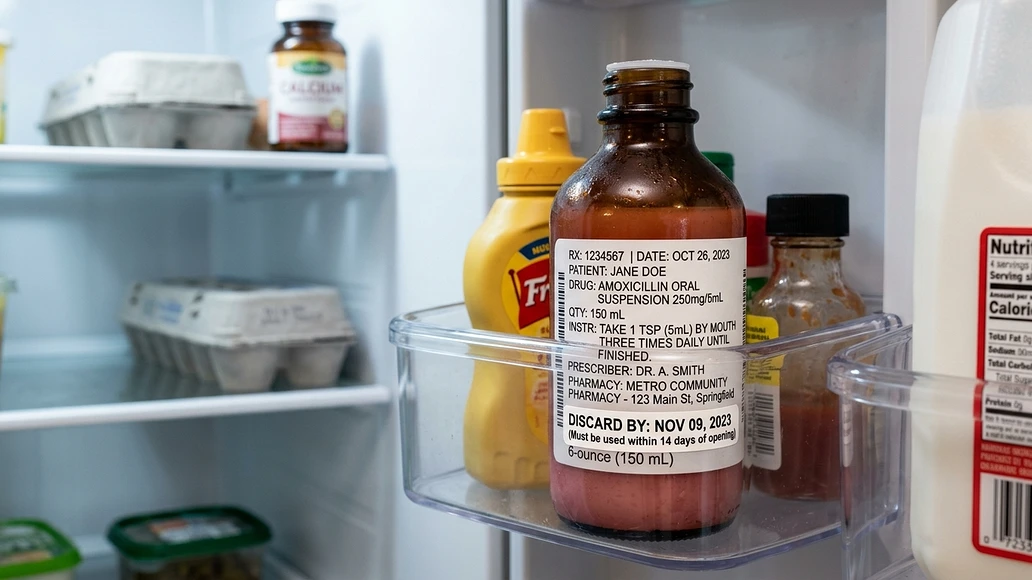
Liquid amoxicillin suspension deserves stricter handling. Once the pharmacist mixes the powder with water, the clock changes. The liquid form is much less stable than sealed tablets or capsules, which is why pharmacy labels often include a short discard date, commonly 10 to 14 days. After that, it should be thrown away even if some remains.
Never use expired liquid amoxicillin suspension. This is especially important for children, since liquid antibiotics are common in pediatric care and dosing is weight-based.
How storage affects potency
Heat, humidity, and light can speed medication breakdown. Bathrooms are a poor storage choice because showers create repeated moisture and temperature swings. A kitchen cabinet near the stove is also not ideal. Better choices are a cool, dry, dark place with stable temperatures, such as a high shelf in a bedroom closet or hallway linen cabinet, as long as children and pets cannot access it.
For liquid amoxicillin, follow the pharmacy label exactly. If it says refrigerate, refrigerate. If it says discard after a certain date, do not stretch it. Keep the cap tightly closed and avoid leaving it out for long periods.
| Storage location | Good choice or poor choice | Why |
|---|---|---|
| Bedroom closet shelf | Good choice | Usually cool, dry, dark, and stable |
| Hall linen cabinet | Usually good | Works if it stays dry and out of children's reach |
| Bathroom medicine cabinet | Poor choice | Humidity and temperature swings can shorten stability |
| Kitchen cabinet above stove | Poor choice | Heat exposure can degrade medicines faster |
| Car glove box | Very poor choice | Extreme heat and cold can damage medications quickly |
Why using expired amoxicillin is discouraged
The main reasons are practical and medical.
- It may not be potent enough to treat the infection properly.
- You may be treating the wrong condition, since many symptoms that seem bacterial are viral or noninfectious.
- Partial or ineffective treatment can delay proper care and increase the chance of complications.
- Misuse of antibiotics contributes to antibiotic resistance at both the personal and community level.
- Special populations may face higher risk from treatment failure or dosing errors.
In other words, the issue is not just whether the old antibiotic looks normal. It is whether it can be trusted to do an important job under real-world conditions. Once that trust is gone, the safest move is to get a fresh prescription if an antibiotic is truly needed.
Is expired amoxicillin ever safe in an emergency?
For routine home use, no. It is not recommended. In extreme disaster scenarios, people sometimes ask whether any old antibiotic is better than nothing. That is understandable, but it is still a high-risk choice. You may have the wrong drug for the infection, an inadequate dose, a degraded product, or a condition that needs urgent in-person care rather than self-treatment.
If someone is seriously ill and normal care is hard to reach, the safest step is still to seek professional guidance as quickly as possible through urgent care, telehealth, a pharmacist, a local clinic, or emergency services when red flags are present. Preparedness should focus on legal, current, and medically appropriate planning, not casual stockpiling of old antibiotics.
Risks that matter most
| Risk | How expired or unsupervised amoxicillin can contribute | Why it matters |
|---|---|---|
| Treatment failure | Subpotent medicine may not fully treat a bacterial infection | Symptoms can persist, worsen, or return |
| Complications | Delayed effective treatment can allow infection to spread | Some infections can become urgent or severe |
| Resistance pressure | Inappropriate antibiotic use exposes bacteria to inadequate treatment | This can support broader antibiotic resistance problems |
| Misdiagnosis | Many respiratory, throat, ear, and urinary symptoms are not conditions amoxicillin should treat blindly | The real cause may go untreated |
| Dosing errors | Leftover medication may not match the needed dose or duration | Children and people with kidney disease are especially vulnerable |
Who should be especially cautious
Some groups should not rely on expired or unsupervised amoxicillin under any normal circumstances.
- Children, because dosing is weight-based and liquid products expire quickly after mixing.
- Pregnant or breastfeeding people, because antibiotic choice and dose should be individualized.
- People with kidney or liver disease, because dose adjustments may be needed.
- Immunocompromised people, because treatment failure can become dangerous faster.
- Anyone with a history of penicillin allergy, because self-treatment can be risky even with in-date medication.
How to read the label on your bottle or box
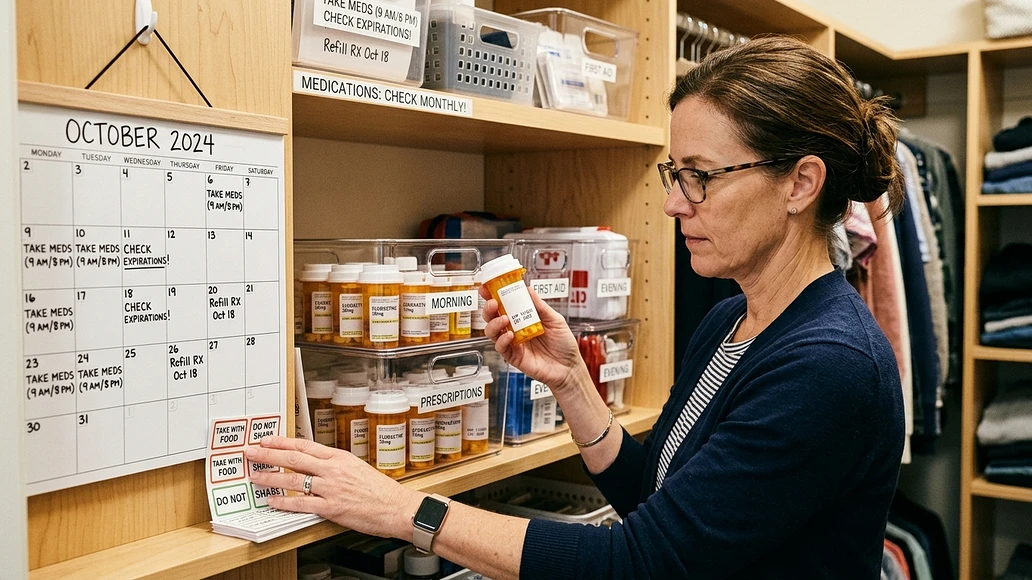
There may be more than one date involved. The manufacturer expiration date is the date assigned to the unopened product under proper storage conditions. A pharmacy may also place a use-by or discard-by date on the prescription label. For liquid amoxicillin, the pharmacy discard date after reconstitution is the one that matters most for actual use.
Check for these details before storing any prescription:
- The printed expiration date on the manufacturer packaging, if visible.
- The pharmacy label date and any discard instructions.
- Storage instructions such as refrigerate, protect from moisture, or keep tightly closed.
- Visual changes that mean discard now, even if the date has not arrived.
Preparedness without unsafe antibiotic hoarding
Households can prepare for illness and disruptions without keeping expired antibiotics around as a fallback plan. Better preparedness is boring, legal, and effective.
| Preparedness step | Why it helps | Safer than storing expired antibiotics because |
|---|---|---|
| Keep regular prescriptions current | Reduces last-minute gaps for chronic conditions | It uses clinician-supervised, in-date medication |
| Build a strong first aid kit | Supports wound care and early symptom management | Many common problems need supplies, not antibiotics |
| Stock basic over-the-counter symptom relief | Helps with fever, pain, congestion, and hydration support | It addresses comfort without pretending to treat bacterial infection |
| Know your telehealth and urgent care options | Improves access during nights, weekends, or storms | Professional advice lowers the chance of wrong self-treatment |
| Stay current on vaccines and preventive care | Reduces infection risk in the first place | Prevention is more reliable than old medication |
When to seek professional help instead of trying to manage it yourself
Do not rely on leftover or expired antibiotics when symptoms suggest a potentially serious infection. Seek urgent medical evaluation for difficulty breathing, chest pain, high fever that persists or worsens, confusion, severe lethargy, dehydration, rapidly spreading skin redness, severe pain, or signs of sepsis such as fast heart rate and low blood pressure.
| Situation | Reasonable home measures | When to call a clinician soon | When to seek emergency care |
|---|---|---|---|
| Mild cold-like symptoms | Rest, fluids, fever control, symptom relief | If symptoms are worsening, prolonged, or unusual | If breathing becomes difficult or chest pain develops |
| Sore throat or ear pain | Hydration, pain relief, rest | If severe, persistent, or accompanied by high fever | If swelling, breathing trouble, or severe lethargy appears |
| Urinary symptoms | Hydration while arranging care | Promptly, because the right antibiotic depends on the cause | If fever, flank pain, vomiting, or confusion occurs |
| Skin redness or wound concerns | Clean wound, cover appropriately, monitor closely | If redness spreads or pain increases | If there is rapid spread, severe pain, fever, or sepsis signs |
How to dispose of expired amoxicillin safely
Expired antibiotics should be removed from your cabinet, not saved indefinitely. The best option is a drug take-back program, pharmacy disposal kiosk, or community collection event. If no take-back option is available, follow current FDA instructions for household disposal. In many cases that means mixing the medicine, without crushing tablets unless instructions say otherwise, with an undesirable substance such as used coffee grounds or cat litter, sealing it in a bag or container, and placing it in the trash. Remove personal information from the prescription label before discarding the container.
Do not flush medicines unless the label or FDA flush list specifically says to do so. Most amoxicillin products are better handled through take-back or standard household disposal guidance rather than flushing.
Common myths, corrected
| Myth | Fact | Why it matters |
|---|---|---|
| If it looks fine, it is fine | Appearance alone cannot confirm potency or quality | You cannot see whether an antibiotic is still effective |
| Expiration dates are just a pharmacy trick | They are based on stability testing and quality guarantees | The date reflects evidence, not a sales gimmick |
| Any antibiotic is better than nothing | The wrong antibiotic or a weak one can delay proper care | Misuse can worsen outcomes and resistance |
| Bathroom cabinets are a good place for all medicines | Humidity makes bathrooms a poor storage spot for many drugs | Storage conditions affect shelf life |
| Antibiotics help most sore throats, colds, and coughs | Many of these illnesses are viral and do not need antibiotics | Unnecessary use exposes you to side effects without benefit |
| Leftover liquid amoxicillin can be saved for next time | Reconstituted liquid usually must be discarded after about 10 to 14 days | Old liquid suspension is a poor and unsafe backup plan |
Quick home medication safety routine
A simple monthly check can prevent most medicine cabinet problems.
- Review expiration and discard dates.
- Remove any expired antibiotics, especially liquid products.
- Check for heat, moisture, or light exposure in your storage area.
- Look for damaged packaging, odor changes, crumbling, or leakage.
- Keep a written list of current prescriptions and pharmacy contact numbers.
- Ask a pharmacist when you are unsure about a date or storage instruction.
A brief word on antibiotic resistance
Antibiotic resistance is not only a hospital issue. It is shaped by everyday decisions, too. Taking antibiotics when they are not needed, using leftovers, stopping early, sharing prescriptions, or relying on expired medication all work against good stewardship. Even when expired amoxicillin is not directly dangerous, it can still be part of a pattern of misuse that makes future infections harder to treat.
FAQ
How long is amoxicillin good for after the expiration date?
For home use, it should not be considered good for use after the expiration date. The date marks the end of guaranteed potency and quality. Liquid amoxicillin is even stricter and usually must be discarded about 10 to 14 days after mixing, according to the pharmacy label.
Can I take expired amoxicillin in an emergency if I cannot reach a doctor?
It is not recommended. In a true emergency, seek professional guidance through urgent care, telehealth, a pharmacist, or emergency services depending on symptoms. Using expired antibiotics without a diagnosis is high risk because the drug may be weak, unnecessary, or the wrong choice.
Is expired amoxicillin dangerous, or just less effective?
The main concern is usually reduced effectiveness and the consequences that follow, such as treatment failure or delayed care. That said, any medicine with unusual appearance, odor, leakage, or damaged packaging should be discarded immediately.
How should I store amoxicillin so it stays effective until the expiration date?
Store tablets and capsules in a cool, dry place away from heat, moisture, and light. Do not keep them in a bathroom or hot car. For liquid amoxicillin, follow the pharmacy label exactly, including refrigeration and discard instructions.
What should I do if I already took expired amoxicillin?
Do not keep taking it unless a clinician specifically advises you. Contact your pharmacist or prescriber for guidance, especially if you feel unwell, develop new side effects, or your symptoms are not improving. Seek urgent care right away if you have severe symptoms such as trouble breathing, chest pain, confusion, dehydration, or signs of a worsening infection.
References
- Don't Be Tempted to Use Expired Medicines | FDA
- Drug Expiration Dates - Are Expired Drugs Still Safe to Take?
- Does Amoxicillin Expire? What You Need to Know About Antibiotic Shelf Life
- How long is amoxicillin good for in the fridge? | SingleCare
- Safe Disposal of Expired Medication: FDA & DEA Guidelines 2026