Where Shelter Actually Matters Most in a Nuclear Emergency
The safest place in a nuclear emergency is not a mystery spot in the woods. It is usually the nearest substantial building, deep inside or below ground, with as much dense material between you and fallout as possible. This guide explains how to choose the best shelter at home, in apartments, at work, and in public spaces using evidence based principles.

Concern about nuclear war and radiological accidents rises whenever global tensions spike, but the most useful response is not panic. It is understanding what kind of shelter gives you the best chance of surviving blast effects, heat, and fallout. For most people, the safest option is not a remote fantasy bunker. It is the best available substantial shelter you can reach quickly, then improving that shelter with smart choices about time, distance, and shielding.
This article offers general preparedness information based on widely accepted emergency guidance. It does not replace instructions from local emergency management, public health officials, or medical professionals. In a real event, follow official alerts first whenever they are available.
What “safest place” really means in a nuclear emergency
There is no single hiding place that is safest in every scenario. A nuclear detonation creates several hazards, and each one matters differently depending on how close you are to the blast and what kind of structure surrounds you.
Very close to a detonation, severe blast pressure, collapsing buildings, fire, and extreme heat can be unsurvivable. Farther away, many people who avoid the immediate blast are at greatest risk from fallout, which is radioactive material that rises with the explosion and later falls back to the ground. That is why the best shelter is usually the place that puts the most dense material between you and the outside environment, especially during the first day after fallout begins.
In plain terms, “safest” usually means a location that is underground or deep inside a large, solid building, away from windows, exterior walls, and roofs with light construction.
How nuclear weapons harm people, in simple terms
Blast
Blast pressure can shatter glass, throw debris, damage lungs, and collapse structures. Even at distances where buildings remain standing, broken windows can cause severe injuries. That is one reason you should move away from windows immediately if you receive warning or see a flash.
Thermal radiation
The heat pulse can cause burns and ignite fires. Exposed skin and eyes are vulnerable. Looking at the flash can also injure vision.
Prompt radiation
This is the intense radiation released at the moment of detonation. It is most dangerous relatively close to the blast.
Fallout
Fallout is often the main hazard for people outside the immediate blast zone. Radioactive particles can settle on streets, roofs, vehicles, and soil, then expose people from outside the body and, if inhaled or swallowed, from inside the body. The good news is that fallout radiation drops significantly with time, especially during the first day or two. That is why sheltering quickly and staying put initially can save lives.
The three rules that matter most, time, distance, and shielding
Emergency planners use three core ideas to reduce radiation dose.
Time
The less time you spend exposed, the lower your dose. Fallout is most dangerous early on, then declines. Staying sheltered during the highest radiation period is one of the most effective actions you can take.
Distance
The farther you are from fallout deposits and contaminated outdoor surfaces, the better. A room at the center of a building is safer than a room against an outside wall. A basement below ground is often safer than a first floor room.
Shielding
Dense materials block more radiation than light materials. Concrete, brick, packed earth, and books or water containers stacked around a shelter area can help. Wood frame walls and car doors provide much less protection.
| Shelter type | Blast protection | Fallout protection | Main advantages | Main limitations | Typical accessibility |
|---|---|---|---|---|---|
| Basement in a sturdy home | Moderate | Good to very good | Below ground, easy to stock, familiar space | Not all basements are equally protected, some have windows or weak ceilings | Common in many single family homes |
| Interior room in a house without basement | Moderate | Fair to moderate | Quick to reach, can be improved with added mass | Less shielding than below ground spaces | Very common |
| Central stairwell or interior corridor in a large apartment building | Moderate to good | Good | Lots of surrounding material, fewer windows | Crowding, possible access restrictions | Common in urban buildings |
| Underground parking garage | Good | Good to very good | Below grade, concrete structure | Vehicle fumes, congestion, limited sanitation | Available in some apartments, offices, hospitals |
| Subway or underground station | Good | Very good if structurally sound | Deep shielding, substantial construction | May be crowded, closed, or unsafe to access after damage | Limited to some cities |
| Mine or cave | Variable | Potentially very good | Excellent earth shielding if stable | Collapse, flooding, ventilation, navigation hazards | Rare and often impractical |
| Car or truck | Poor | Poor | Immediate cover from weather and some debris | Very little radiation shielding | Common but not suitable as primary shelter |
| Mobile home, shed, tent, RV | Poor | Poor | Fast access if already inside | Light materials, many openings, weak structure | Common in some areas |
Best shelter choices if you are at home
If you are home when a nuclear event occurs or when warning is issued, your goal is to get to the most protected part of the structure fast, then improve it.
Single family house with a basement
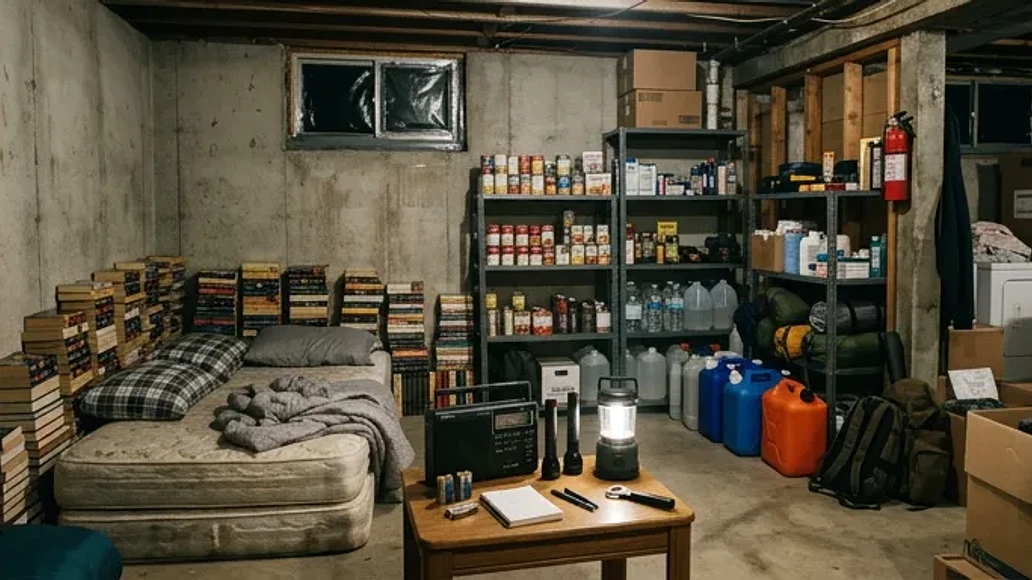
The basement is usually your best option, especially a corner or central area below ground and away from windows. If possible, choose a spot with the most earth outside the walls and the most material above you. A basement under the middle of the house is often better than one directly next to large basement windows.
House without a basement
Pick a small interior room on the lowest floor, such as a hallway, closet, bathroom, or storage room with no windows. Put as many walls as possible between you and the outdoors. If you have time, add mass around the shelter area using filled water containers, books, storage bins full of dense items, or furniture loaded with supplies.
Townhouse or row house
A lower floor interior room is often a strong choice because neighboring units add shielding on the sides. Stay away from front windows, back windows, and top floors if better options exist.
Mobile home
A mobile home is not a good fallout shelter. If you can safely reach a nearby permanent building quickly, do that immediately. A brick building, concrete building, basement, or community shelter is much better. If no better shelter is reachable in time, move to the most central low area available, but understand protection will be limited.
| Home area | Shielding quality | Recommended use | Notes |
|---|---|---|---|
| Basement interior corner or central area | High | Best home shelter option | Improve further by moving away from windows and adding stored supplies around the area |
| First floor interior bathroom or closet | Moderate | Good fallback if no basement | Choose the smallest windowless space with the most surrounding walls |
| Interior hallway | Moderate | Useful temporary shelter | Better than exterior rooms, can be improved with dense items |
| Attached garage | Low | Usually not recommended | Large doors, thin walls, and possible fuel hazards reduce safety |
| Bedroom with exterior walls and windows | Low | Avoid if possible | Glass and outside exposure increase risk |
| Attic or top floor | Very low | Avoid | Little shielding overhead and often poor structural protection |
Simple home improvements can help. Store water, food, flashlights, sanitation supplies, medications, and a battery radio in or near your chosen shelter area. Keep shoes, work gloves, and basic first aid supplies there too. If you have time before any crisis, identify the exact spot where your household would gather.
Safer places in apartments and high rise buildings
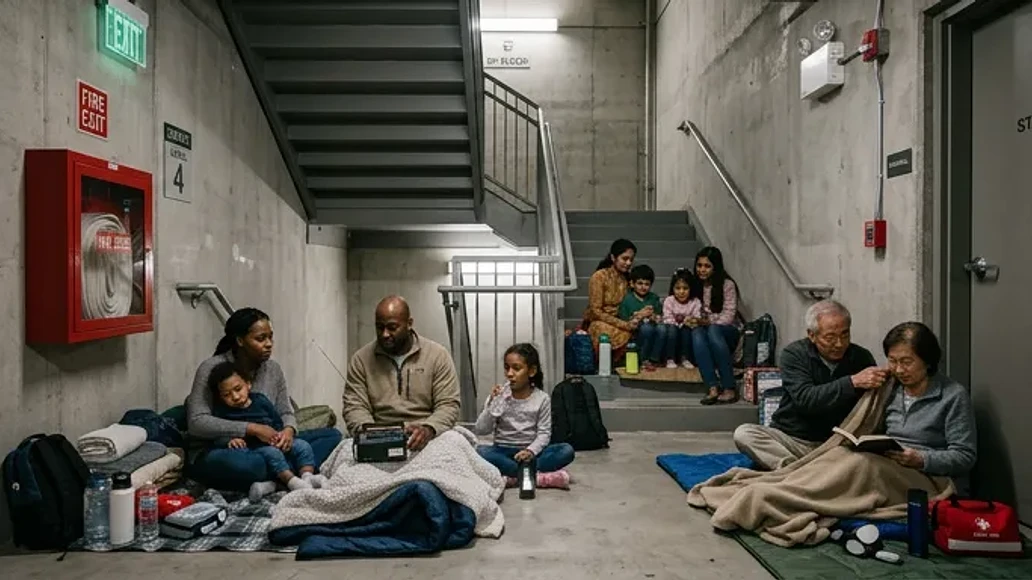
Many people assume high rise buildings are always dangerous in a nuclear event. The reality is more nuanced. In a substantial concrete or steel building, a central interior location can provide better fallout protection than a detached wood frame house.
The best spots are usually below ground or near the center of the building, such as basements, underground parking levels, interior corridors, service areas, or central stairwells away from exterior walls and glass. Middle floors in the center of a large building can also be useful if lower protected areas are inaccessible, because they may be surrounded by a lot of structural material.
Avoid rooftops, balconies, lobbies lined with glass, top floors with large windows, and apartments with only exterior rooms. If you are in your unit and cannot move far, choose the bathroom, hallway, or closet nearest the center of the building.
Where to go in offices, schools, hospitals, and other public buildings
In public buildings, the right move is usually to shelter in place inside the structure rather than rushing outside. Look for the same features that matter at home, lower levels, interior spaces, thick walls, and distance from windows.
In an office, move to a central conference room, stairwell, basement, or records area away from glass. In a school, interior hallways, lower level classrooms without windows, and designated shelter areas are usually better than gyms with large roofs and lots of exterior wall space. In hospitals, staff may direct people to interior treatment areas or lower floors. Follow facility instructions, because hospitals also have to manage oxygen, critical patients, and backup power systems.
Large malls, religious buildings, and civic centers vary widely. A concrete service corridor or basement storage area may be much safer than a bright open atrium. If staff direct people to a protected area, follow those instructions.
Are underground places always best?
Underground spaces often provide excellent fallout shielding, but they are not automatically safe. A good underground shelter must also be structurally sound, accessible, and able to support people for hours or days.
Subways, tunnels, and underground garages can be strong options because concrete and earth block radiation well. But underground spaces can also flood, lose ventilation, trap smoke, or become overcrowded. Caves and mines may offer heavy shielding, yet they can be unstable, hard to navigate, and dangerous without local knowledge.
| Evaluation factor | Good signs | Poor signs | Action to improve |
|---|---|---|---|
| Distance from outside | Deep inside or below ground | Near entrances or open ramps | Move farther inward if safe |
| Wall and ceiling mass | Concrete, earth, masonry | Thin sheet metal or light framing | Choose denser surrounding structure |
| Windows and openings | Few or none | Large glass areas, open vents, wide doors | Relocate away from openings |
| Structural stability | No visible collapse, managed facility | Cracks, water intrusion, falling debris | Leave for a safer substantial shelter if possible |
| Supplies and sanitation | Water, restrooms, lighting, communication | No water, darkness, no toilets | Conserve supplies and organize the space |
| Ventilation and air quality | Breathable air, no smoke or fumes | Exhaust, smoke, chemical odors | Move to a cleaner protected area |
Why cars, RVs, tents, and sheds are poor shelters
Light structures do not provide enough mass to block much gamma radiation from fallout. A car may protect you from weather and some flying debris, but it is not a good place to remain during fallout. RVs, trailers, tents, and sheds are similarly weak.
If a blast or warning catches you while driving, your best move is usually to get into the nearest substantial building as quickly as possible. Do not keep driving aimlessly if fallout may be arriving. Roads can clog, and your vehicle offers little protection. Once inside a better shelter, stay there until official guidance indicates it is safer to move.
Nuclear weapon detonation versus nuclear power plant accident
People often mix these scenarios together, but the safest action can differ. A weapon detonation creates immediate blast and heat hazards plus fallout. A reactor accident usually does not create a nuclear blast like a warhead, but it can release radioactive material that leads authorities to order sheltering or evacuation depending on wind, distance, and monitoring data.
| Scenario | Main hazard | Typical official advice | Role of iodine | Likely shelter duration | Special notes |
|---|---|---|---|---|---|
| Nuclear weapon detonation | Blast, heat, prompt radiation, fallout | Immediate shelter in substantial building, then await instructions | Limited and event specific, not a general fix | Often at least 24 hours, sometimes longer | Do not rush outside or drive through fallout |
| Nuclear power plant accident | Radiological release without weapon blast effects | Shelter or evacuate based on official zone guidance | May be advised for certain releases, only when directed | Varies by incident and monitoring | Plant emergency planning zones matter |
Do not self-medicate with potassium iodide or any so-called radiation detox product unless public health authorities specifically advise it for your situation. Potassium iodide only helps protect the thyroid from certain radioactive iodine exposures. It does not block most radiation hazards from a nuclear detonation.
How long should you stay sheltered?
For fallout, the first day is especially important. General guidance commonly emphasizes staying sheltered for at least 24 hours unless authorities tell you otherwise or your shelter becomes unsafe because of fire, collapse, or another immediate threat. In some situations, a longer stay may be safer.
When it becomes safer to move depends on official instructions, local fallout patterns, weather, and the quality of your current shelter. If you must leave because the building is unsafe, try to move to a better substantial shelter using the shortest practical route. Cover skin as best you can, avoid touching visible dust, and remove outer clothing and wash exposed skin once you reach safer shelter.
Special considerations for children, pregnant people, older adults, and people with medical needs
Radiation protection matters for everyone, but some groups need extra planning. Children are more vulnerable to dehydration, stress, and disrupted routines. Pregnant people should minimize exposure and seek medical evaluation after significant exposure or injury when it is safe to do so. Older adults and people with disabilities may need mobility aids, backup batteries, hearing or vision support, and help reaching shelter quickly.
Anyone who depends on insulin, oxygen, dialysis, seizure medication, heart medication, or other ongoing treatment should plan now for at least several days of disruption. Keep medications, copies of prescriptions, chargers, and essential equipment near your shelter area if possible.
Seek medical care as soon as it is safely accessible for severe burns, trouble breathing, altered mental status, uncontrolled bleeding, or signs of serious illness after exposure.
How to build a better improvised fallout shelter at home
You do not need a custom bunker to improve your odds. A practical home fallout shelter starts with choosing the best location you already have, then increasing shielding and readiness.
- Choose the lowest, most central space available.
- Move supplies there ahead of time, including water, shelf stable food, sanitation items, flashlights, batteries, first aid, and a radio.
- Reduce exposure from openings by staying away from windows and exterior doors.
- Add mass around the shelter area using filled containers, books, boxes of dense materials, or heavy furniture placed safely.
- Create a plan for sleeping, toileting, and communication so you can remain sheltered longer if needed.
Do not attempt dangerous structural modifications or heavy DIY underground construction unless it is professionally designed and permitted. Poorly built shelters can collapse, trap occupants, or create ventilation hazards.
Dangerous myths that increase risk
Several common ideas can get people hurt.
- Watching the flash from a window or rooftop is dangerous because of thermal injury and flying glass.
- Staying outside to film events increases exposure and delays sheltering during the most critical minutes.
- Masks alone do not protect you from penetrating gamma radiation. They may reduce inhalation of some particles, but they are not a substitute for shelter.
- Driving away immediately is not always safer. If fallout is arriving, a car is a poor shield and traffic can trap you in a bad place.
- Unapproved supplements and detox products are not reliable radiation protection and may be harmful.
Using alerts, local plans, and community shelters
Preparedness works better when you know your local system before an emergency. Check your county or city emergency management website. Learn how alerts are sent, whether by text, weather radio, sirens, or phone notifications. If you live near a nuclear power plant, review the plant emergency planning information for your area.
Some communities identify public shelter spaces, but many do not maintain old style marked fallout shelters. That makes it even more important to know the strongest nearby buildings you could reach quickly, such as a school, office tower, hospital, municipal building, or underground transit station, if public access would be allowed.
Mental resilience matters too
Nuclear emergencies are terrifying, and fear can lead to bad decisions. A simple family plan helps. Decide where household members should shelter if separated. Pick an out of area contact person. Keep messages short to conserve battery and reduce network congestion.
After the immediate danger, stress reactions are normal. Trouble sleeping, anxiety, and irritability may persist. Seek mental health support when services become available, especially if symptoms interfere with functioning or if children show ongoing distress.
FAQ
Is it safer to stay in my basement or an interior room if I do not have a basement?
If you have a basement in a structurally sound building, it is usually the better option because earth and concrete provide more shielding. If you do not have one, use the smallest interior room on the lowest floor, away from windows and exterior walls.
What should I do if a nuclear blast happens while I am driving?
Get to the nearest substantial building as quickly as possible. A car is poor fallout protection. If you see a flash, do not stare at it. Get low, protect yourself from flying glass and debris, then move into a better shelter as soon as you safely can.
Can a subway or underground train station protect me during a nuclear attack?
Yes, an underground station can provide very good fallout shielding if it is structurally sound and accessible. But conditions matter. Avoid damaged, smoky, flooded, or unstable areas, and follow transit or emergency personnel instructions.
Do gas masks or N95 respirators protect against nuclear fallout?
They do not protect against the main external radiation hazard from fallout. They may help reduce inhalation of some particles, but shelter, distance, and shielding are far more important. Do not rely on a mask as your primary protection.
Should I leave my shelter to pick up family members after a nuclear explosion?
Usually no, at least not immediately. The first hours can be the most dangerous for fallout exposure. If your shelter is safe, staying put is often the better choice until official guidance clarifies conditions. Family communication plans should assume that people may need to shelter where they are.
References
The following authoritative resources offer the most reliable public guidance for nuclear and radiological emergencies.
- Ready.gov, Nuclear Explosion
- CDC, Radiation Emergencies
- CDC, Radiation Emergencies and Pregnancy
- CDC, Radiation Emergencies and People With Disabilities
- U.S. Nuclear Regulatory Commission, Emergency Preparedness Around Nuclear Power Plants
- World Health Organization, Ionizing Radiation, Health Effects and Protective Measures
- International Atomic Energy Agency, Preparedness and Response for a Nuclear or Radiological Emergency
- HHS Radiation Emergency Medical Management
- EPA, Protective Action Guides for Radiological Incidents