Raising Capable Kids Through Everyday Work at Home
Household chores can do more than keep a home running. In prepper families, age appropriate tasks can build practical readiness, executive function, confidence, and teamwork, if parents use them safely and avoid overloading kids.

For prepper families, chores are not just about a cleaner kitchen or a mowed yard. They are one of the simplest ways to teach children how a household actually functions under normal conditions and under stress. A child who learns to wipe counters, sort laundry, rotate pantry items, refill water containers, and follow a checklist is also learning how to contribute during a power outage, a sick week, a supply disruption, or a move.
That does not mean children should be treated like unpaid labor or pushed into adult responsibilities too early. Healthy chores are age appropriate, taught step by step, supervised when needed, and balanced with school, sleep, play, and rest. When families get that balance right, chores can build competence, confidence, and resilience without burning kids out.
Why chores matter in a preparedness minded home
Preparedness is often framed around gear, storage, and emergency plans. Those matter, but a resilient home also depends on people who know how to do ordinary things well. Cooking safely, cleaning up spills before they become hazards, noticing when supplies run low, and following routines are all forms of readiness. In a time when many young adults report feeling unprepared for basic home management, teaching these skills early can close real gaps.
For children, chores also create a sense of belonging. They learn that they are not just being cared for, they are part of the team that keeps the household stable. That feeling of being needed can support family cohesion, which matters during stressful events when routines are disrupted.
What counts as a life skill in a prepper family
In a preparedness focused home, life skills go beyond sweeping floors. They include practical abilities, thinking skills, and emotional habits that help a family function when life is inconvenient or uncertain.
Life skill domain | What it includes | Why it matters in emergencies |
|---|---|---|
Self care | Hygiene, dressing for weather, basic nutrition, sleep routines | Reduces dependence and helps children stay functional during disruptions |
Household management | Cleaning, laundry, organizing, supply tracking, waste handling | Supports sanitation, comfort, and order during sheltering in place |
Food and water safety | Meal prep, storage rotation, labeling, handwashing, safe water habits | Helps prevent illness when resources are tight |
Health basics | First aid awareness, medication routines, restocking basics | Improves readiness for minor injuries and routine care |
Communication | Following instructions, leaving notes, contact lists, check ins | Helps families coordinate during outages or separation |
Problem solving | Planning, sequencing, noticing problems, adapting | Useful when plans change or systems fail |
Emotional resilience | Frustration tolerance, persistence, teamwork, recovery after mistakes | Supports calm and cooperation under stress |
Community support | Helping siblings, neighbors, elders, shared responsibility | Builds mutual aid capacity beyond one household |
How chores build readiness, not just obedience
Research and family practice both suggest that regular, age appropriate chores can support responsibility, self efficacy, and executive function. Executive function includes planning, working memory, organization, and self control. A child who remembers the steps for feeding animals, checks a list before bed, or puts away supplies in the right place is practicing these mental skills in a real setting.
It is important not to oversell this. Chores are not a magic formula that guarantees success later in life. They are one useful tool among many. Their value is strongest when adults model the task, explain why it matters, keep expectations consistent, and avoid turning chores into humiliation or punishment.
Claim about chores | Evidence strength | What chores realistically do | Important limit |
|---|---|---|---|
They build responsibility and work habits | Strong | Creates routine, follow through, and contribution to family life | Works best when expectations are consistent and fair |
They support executive function | Strong | Practices planning, sequencing, memory, and self monitoring | Chores are one influence, not the only driver of development |
They predict later success | Mixed but positive | Can be associated with competence and adjustment over time | Should not be framed as a guarantee |
They teach practical survival skills | Strong in practical terms | Builds cooking, sanitation, maintenance, and supply awareness | Skills must be taught safely and repeated often |
They improve family cohesion | Strong | Helps children feel needed and connected | Can backfire if chores are unfair or punitive |
Age appropriate chores that quietly train preparedness skills
The best chore systems grow with the child. A preschooler can help with sorting and wiping. A teen can manage meal planning, inventory, and basic maintenance under supervision. The goal is progression, not perfection.
Preschool, roughly ages 3 to 5
At this stage, chores should be short, concrete, and highly supervised. Children this age are learning routines, imitation, and simple sequencing.
Age group | Example chore | Preparedness skill trained | Supervision needed |
|---|---|---|---|
Preschool | Put shoes, coat, and flashlight in the same place | Routine, readiness, locating essentials quickly | High |
Preschool | Match socks and sort laundry by color | Sorting, following categories, household contribution | High |
Preschool | Wipe low surfaces with water or child safe cloth | Sanitation habits, task completion | High |
Preschool | Help carry lightweight snacks to a storage shelf | Supply awareness, teamwork | High |
Preschool | Hand items during first aid kit checks | Familiarity with emergency supplies | High |
Young children should not handle sharp tools, hot surfaces, heavy loads, or chemical cleaners. If a task involves heat, blades, fumes, or lifting, the adult should do the hazardous part.
Early elementary, roughly ages 6 to 9
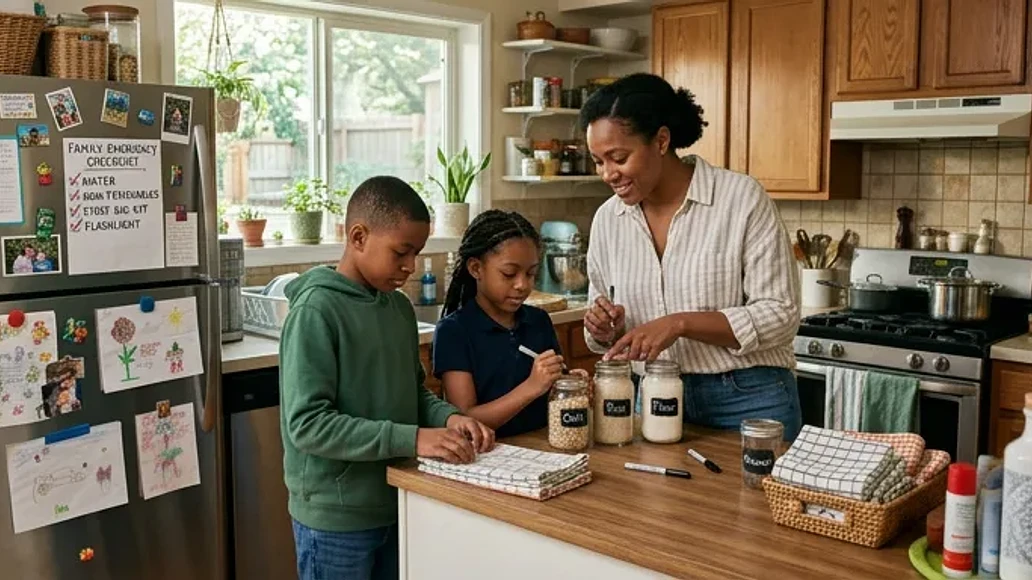
Children in this range can follow multi step directions and begin to understand cause and effect. This is a good age for simple kitchen and supply tasks.
Age group | Example chore | Preparedness skill trained | Supervision needed |
|---|---|---|---|
Early elementary | Set the table and clear dishes | Routine, teamwork, sanitation | Moderate |
Early elementary | Check dates on shelf stable snacks with an adult | Food rotation, observation, labeling | Moderate |
Early elementary | Refill pet water bowls and report low water | Water awareness, responsibility | Moderate |
Early elementary | Help pack a comfort item in a go bag | Evacuation readiness, checklist use | Moderate |
Early elementary | Fold towels and put hygiene items away | Organization, self care readiness | Low to moderate |
Tweens, roughly ages 10 to 12
Tweens can handle more independence, but they still need training and supervision for anything involving heat, blades, tools, or chemicals. This is a strong age for building competence through repetition.
Age group | Example chore | Preparedness skill trained | Supervision needed |
|---|---|---|---|
Tweens | Prepare simple no cook meals and snacks | Food safety basics, self sufficiency | Moderate |
Tweens | Track household batteries, flashlights, and chargers | Inventory management, power outage readiness | Low to moderate |
Tweens | Help sanitize water bottles and storage containers | Sanitation, water handling habits | Moderate |
Tweens | Learn basic sewing repairs like buttons | Repair mindset, resource conservation | Low to moderate |
Tweens | Assist with garden watering or harvest washing | Food production awareness, routine care | Moderate |
Teens, roughly ages 13 and up
Teens can take on meaningful responsibility and should be cross trained in a wide range of home skills, regardless of gender. They are close to independent living, so chores should increasingly resemble real household management.
Age group | Example chore | Preparedness skill trained | Supervision needed |
|---|---|---|---|
Teens | Cook a full simple meal safely | Meal planning, food safety, heat management | Moderate at first, then lower |
Teens | Rotate pantry and note low stock items | Inventory, budgeting awareness, food storage | Low |
Teens | Run laundry from start to finish | Hygiene, fabric care, independent living | Low |
Teens | Learn basic shutoff locations and household checklists | Home preparedness, emergency response awareness | High for instruction, low for review |
Teens | Maintain personal go bag and update contact card | Evacuation readiness, communication planning | Low |
How ordinary chores map to real emergency skills
One reason chores matter so much is that they transfer directly to crisis situations. A child may think they are just taking out trash or helping with dinner, but they are also learning sanitation, sequencing, and resource awareness.
Routine chore | Related emergency scenario | Skill payoff |
|---|---|---|
Doing laundry | Extended outage or sheltering in place | Clothing management, hygiene, conserving limited clean items |
Meal prep | Supply disruption, illness in the household | Food safety, portioning, using what is on hand |
Taking out trash | No pickup service, storm cleanup | Sanitation, pest prevention, noticing hazards early |
Refilling water bottles | Boil water advisory or short water interruption | Water awareness, routine storage habits |
Checking flashlights | Power outage | Battery management, equipment readiness |
Making beds and tidying rooms | Quick evacuation or sheltering with limited space | Order, access to essentials, reduced trip hazards |
Yard cleanup | Storm season, wildfire defensible space in some areas | Hazard reduction, outdoor awareness |
Restocking bathroom supplies | Staying home during illness or bad weather | Inventory habits, sanitation readiness |
Designing a chore system around your family emergency plan
A useful chore system does more than assign work. It connects daily routines to the way your family plans to handle likely disruptions. Start with your actual risks, such as storms, outages, winter weather, wildfire smoke, or temporary job loss. Then ask which household tasks support readiness for those events.
For example, if power outages are common, weekly chores might include checking flashlights, charging power banks, and keeping blankets organized. If your concern is supply disruption, pantry rotation and meal planning from stored foods become more important. If evacuation is a realistic risk, children can help keep shoes, jackets, and go bag items in consistent places.
Keep the system visible and simple. A wall chart, whiteboard, laminated checklist, or shared family app can all work. The best format is the one your household will actually use.
Preparedness goal | Weekly chore example | Monthly chore example | Who can help |
|---|---|---|---|
Food readiness | Check snack bin and rotate easy items | Review pantry dates and update shopping list | School age kids, tweens, teens |
Water readiness | Wash and refill daily use bottles | Inspect stored water containers with an adult | School age kids, tweens, teens |
Power outage readiness | Return flashlights to charging station | Test batteries and lantern locations | Tweens, teens |
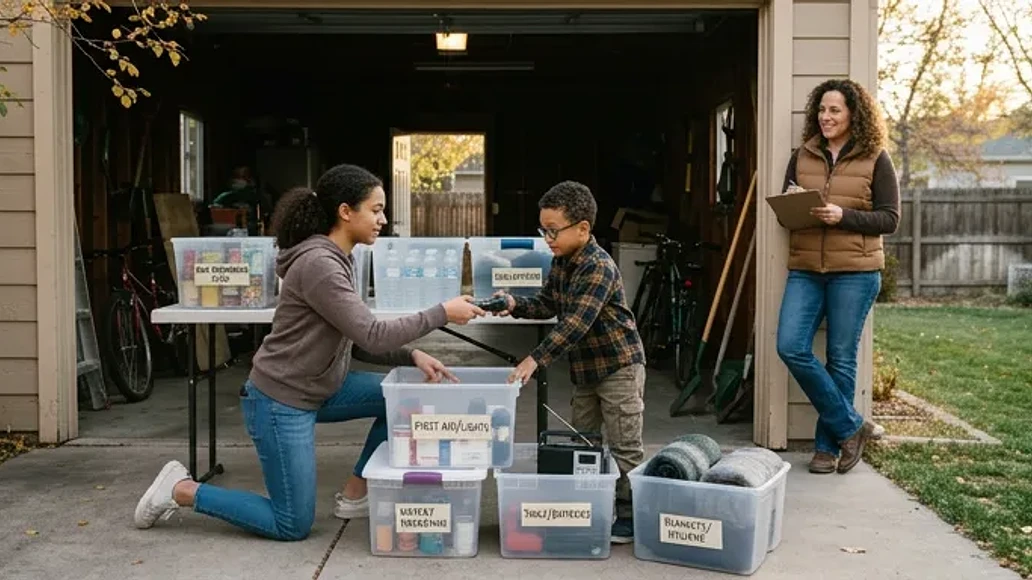
Evacuation readiness | Keep shoes and weather gear in assigned spot | Review go bag fit and comfort items | All ages with supervision as needed |
Home sanitation | Bathroom wipe down and trash removal | Deep clean storage areas safely | School age kids, tweens, teens |
Turning chores into mini drills
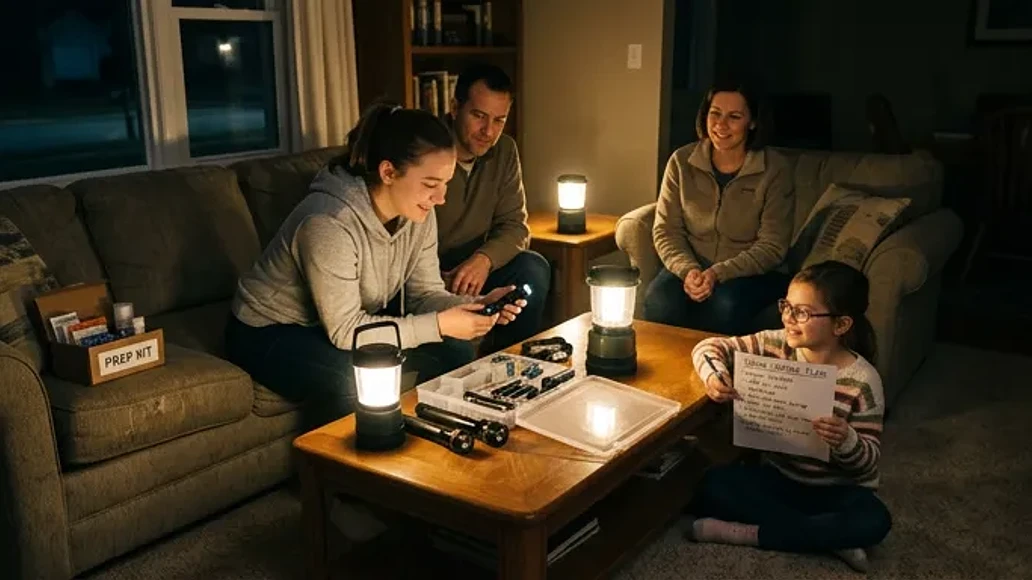
Children learn best when skills are practiced in context. A few low stress drills can turn ordinary chores into preparedness training without making the home feel fearful.
Blackout evening. Once in a while, turn off the lights for an hour and let kids practice finding flashlights, using battery lanterns, and following the evening routine safely.
Use what we have dinner. Ask older children or teens to help build a meal from pantry items that need rotation. This teaches inventory awareness and flexibility.
Water saving day. Practice shorter handwashing routines, careful dish use, and reporting drips or waste. Keep it educational, not punitive.
Go bag check. Have each child confirm that clothing still fits, snacks are current, and contact information is updated.
Communication tree test. Teens can practice calling or messaging designated family contacts in the right order.
Motivation that works better than punishment
Chores are most effective when they are treated as a normal part of family life, not as a sentence. If chores only appear when a child is in trouble, the task itself becomes associated with shame and resentment. That can undermine both motivation and skill building.
Instead, explain the purpose of the task. Children are often more cooperative when they understand that wiping counters helps prevent ants, rotating food prevents waste, and keeping shoes by the door helps everyone leave quickly if needed. Family meetings can help here. Let children have some voice in which tasks they do, when they do them, and how they track completion.
Rewards can be useful, especially for younger children learning a new routine, but they should not be the only reason chores happen. Over time, the goal is internal motivation, competence, and pride in contribution.
Practice | Why it helps | Why it harms if misused | Better alternative |
|---|---|---|---|
Using chores as punishment | May create short term compliance | Builds resentment and weakens intrinsic motivation | Keep chores separate from discipline |
Explaining the purpose of tasks | Builds meaning and buy in | Can become lecturing if overdone | Use short, practical explanations |
Offering limited choices | Supports autonomy and reduces power struggles | Too many choices can overwhelm some kids | Offer two or three clear options |
Public shaming for missed chores | Sometimes pressures compliance | Damages trust and confidence | Use calm reminders and problem solving |
Skill coaching with repetition | Builds competence and confidence | Takes more adult time at first | Teach once, practice often, review kindly |
Common mistakes prepper parents make
Preparedness minded parents often have good intentions, but a few patterns can make chores less effective.
Overloading children. A child can contribute without carrying the emotional or physical burden of keeping the household afloat.
Skipping training. Telling a child to do a task is not the same as teaching it.
Using fear. Constant warnings about collapse or disaster can create anxiety instead of confidence.
Assigning chores by gender. Every child should learn cooking, cleaning, basic maintenance, and planning.
Expecting adult standards. Children are learning. Progress matters more than perfection.
Safety first, tools, chemicals, heat, and lifting limits
Preparedness chores often overlap with real hazards. That means safety rules must be explicit. Young children should not use sharp knives, stoves, grills, power tools, ladders, or concentrated cleaning products. Older children and teens need direct instruction, close supervision at first, and clear stop points where they must get an adult.
Household chemicals deserve special caution. Many cleaners can irritate skin, eyes, and lungs, and some become dangerous if mixed. Keep products in original containers, follow label directions, ventilate the area, and store them out of reach. If there is a suspected poisoning or chemical exposure, contact Poison Control right away or seek emergency care for severe symptoms.
Chore type | Key risks | Safety rules | Age suitability |
|---|---|---|---|
Cooking | Burns, cuts, food contamination | Teach handwashing, safe knife handling, pan handle position, adult supervision for heat | Simple cold tasks for younger kids, stove work for older youth with supervision |
Cleaning | Chemical exposure, slips, fumes | Use mild products when possible, never mix cleaners, ventilate, wear gloves if needed | Water and cloth for young kids, stronger products only for older youth with instruction |
Yard work | Heat stress, insects, sharp debris, lifting strain | Hydrate, wear gloves, closed toe shoes, limit load weight, supervise tool use | Light pickup for younger kids, heavier work for teens |
Tool use | Cuts, crush injuries, eye injury | Teach one tool at a time, use eye protection when appropriate, store securely | Only age appropriate hand tools with direct supervision |
Supply storage | Falling items, heavy lifting, expired goods | Keep heavy items low, label clearly, use step stools safely, inspect dates | All ages can help within lifting limits |
If a child has asthma, chronic pain, mobility limits, sensory sensitivities, or another health condition, adjust tasks accordingly. Heavy lifting, strong fumes, and extreme temperatures may not be appropriate. When in doubt, ask the child's clinician what limits make sense.
Chores, mental health, and avoiding harmful burdens
There is a healthy line between responsibility and overburdening. Chores become harmful when children are expected to function as substitute adults, manage siblings constantly, absorb parental stress, or sacrifice sleep, school, and social development to keep the household running. This can be especially tempting after a crisis, during financial strain, or in single parent households.
Warning signs include frequent exhaustion, falling grades, constant conflict over chores, withdrawal, anxiety, or repeated comments that the workload feels unfair. If you see those signs, reduce the load, simplify expectations, and look for ways adults can reclaim the highest responsibility tasks.
If chores are triggering intense anxiety, aggression, or a sudden personality change, it is wise to talk with a pediatrician, family counselor, or school psychologist. Chores should build stability, not become a source of chronic distress.
Adapting chores for neurodivergent or disabled kids
Preparedness is stronger when every family member has a role that fits their abilities. Neurodivergent or disabled children may thrive with chores when tasks are broken into smaller steps and matched to their energy, sensory profile, and motor skills.
Visual schedules, picture labels, timers, color coding, and written checklists can make a major difference. Some children do better with predictable routines and one task at a time. Others may prefer jobs with less noise, fewer smells, or less physical demand. A child who struggles with vacuuming may do very well with inventory checks, sorting supplies, folding towels, or updating a checklist.
The goal is not to force sameness. It is to build useful participation and confidence in a way that respects the child.
Leadership, teamwork, and community resilience
As children grow, chores can become a training ground for leadership. Older siblings can demonstrate how to pack a lunch, label leftovers, or check a flashlight, while adults make sure the teaching stays supportive and does not turn into unfair caregiving. Rotating roles also helps children appreciate the full range of work that keeps a home functioning.
These habits can extend beyond the home. Teens who know how to organize supplies, communicate clearly, and complete practical tasks are often more useful in neighborhood support efforts, church groups, scout programs, and mutual aid networks. Preparedness is not just individual toughness. It is the ability to contribute calmly and competently where you are.
Simple ways to track progress without making home feel like boot camp
Children benefit from seeing their growth. A simple skill log can help parents notice what has been taught and what still needs practice. This does not need to be elaborate. A notebook, binder, or printable chart is enough.
Tracking method | What it records | Why it helps |
|---|---|---|
Skill checklist | Tasks learned, such as folding laundry or making a simple meal | Shows progress and reveals gaps |
Seasonal review | What skills need refreshers before winter, storm season, or school year | Keeps training practical and timely |
Reflection talk | What felt easy, hard, or useful | Builds self awareness and problem solving |
Readiness badge or milestone | Completion of a meaningful skill set | Can motivate without relying only on prizes |
Independent living list for teens | Laundry, meal planning, budgeting basics, cleaning, emergency contacts | Prepares teens for college, work, or first apartment |
How to adjust chores after a real emergency
After a storm, outage, evacuation, or family crisis, normal routines may not fit. Some children will want structure right away. Others will need a lighter load for a while. Start by asking what tasks are truly essential in the short term, such as hygiene, meals, pet care, and basic cleanup. Drop nonessential chores until the household stabilizes.
Then debrief together. What worked? What supplies were hard to find? Which tasks were too confusing? This turns the experience into learning without glorifying the hardship. Update your chore system and emergency plan based on what actually happened.
Where chores stop and professional help begins
Chores can teach many useful skills, but they are not a substitute for expert help in serious situations. Children and teens should not be expected to handle structural repairs, electrical hazards, major medical issues, severe mental health concerns, or toxic exposures on their own. Adults should call qualified professionals when a problem goes beyond routine household capability.
Likewise, if a family is relying on children to carry unsafe workloads or to support a home business in ways that interfere with education, rest, or safety, that is a sign the system needs correction. Preparedness should make a family more stable and humane, not less.
Frequently asked questions
How many chores are too many for kids in a prepper family?
There is no universal number, but chores are too many when they regularly interfere with sleep, school, homework, recovery time, friendships, or emotional wellbeing. A good test is whether the child still has room for normal development and whether the tasks match their age and ability. If the child seems chronically stressed or resentful, scale back and simplify.
At what age can kids safely help with cooking and food storage for emergencies?
Young children can help with washing produce, stirring cool ingredients, carrying light items, and putting labeled foods in place with close supervision. School age children can begin learning simple food rotation and basic kitchen routines. Tweens and teens can take on more cooking and storage responsibility, but heat, sharp tools, and food safety still require direct teaching and supervision until they show consistent competence.
How do I handle it if one child refuses to do preparedness chores?
Start by checking whether the problem is skill, timing, fairness, or control. Some children resist because they do not know how to do the task, because the task feels endless, or because they feel singled out. Offer a limited choice between tasks, break the job into smaller steps, and connect it to a clear family purpose. Keep consequences calm and predictable, and avoid turning the issue into a power struggle.
Can chores really prepare my teen to live on their own, or do I need formal classes too?
Chores can cover a large share of independent living skills, especially cooking, cleaning, laundry, supply management, and routine planning. Formal classes can still be helpful for budgeting, first aid, driver safety, or vocational skills. The strongest approach is usually both, daily practice at home plus outside instruction where needed.
How should I change chores for my kids after we go through a real disaster or long outage?
Reduce chores to the essentials at first and watch for signs of stress. Keep a few predictable routines because structure can be calming, but do not expect children to perform at normal levels immediately. Once the immediate strain passes, review what happened together and rebuild the system based on what was actually useful.