Build a Real-World Crisis Medical Kit for Home and Evacuation
A practical guide to building a family-ready SHTF first-aid kit, with clear priorities for minor injuries, major bleeding, medications, hygiene, storage, and when first aid is not enough.

If you are searching for essential items for an SHTF first-aid kit, the most useful approach is not to buy every medical gadget you see. A better plan is to build a kit that handles the injuries and illnesses most households are actually likely to face, then add a small trauma layer for true emergencies. In this guide, SHTF means a serious disruption where normal help may be delayed. A first-aid kit is for immediate care until symptoms improve or professional help becomes available. It is not a substitute for a doctor, pharmacist, EMS, or hands-on training.
This is health guidance only. For major bleeding, chest pain, stroke symptoms, severe allergic reaction, trouble breathing, head injury with confusion, deep burns, or suspected broken bones with deformity, seek emergency care immediately when possible. For children, pregnancy, older adults, kidney disease, liver disease, ulcers, blood thinner use, asthma, diabetes, or severe allergies, medication choices need extra caution.
What an SHTF first-aid kit should do
A realistic preparedness kit should cover three jobs. First, it should handle everyday problems like cuts, blisters, splinters, fever, diarrhea, and sprains. Second, it should support short-term care during a disruption, including hygiene, wound cleaning, and medication continuity. Third, it should include a limited set of trauma supplies for life-threatening bleeding and immobilization until advanced care is available.
The biggest mistake is building a fantasy kit heavy on tools and light on consumables. Most households need more gloves, gauze, tape, oral rehydration supplies, and routine medications than they need specialty gadgets.
Home kit, evacuation kit, and trauma kit, what is different?
| Kit type | Main purpose | What belongs in it | What does not belong as a priority |
|---|---|---|---|
| Home first-aid kit | Handle common injuries and illness at home | Bandages, gauze, tape, thermometer, gloves, OTC medicines, wound cleaning supplies, prescription backups | Large amounts of tactical gear without training |
| Evacuation or grab-and-go kit | Portable care during travel or sheltering elsewhere | Compact versions of core supplies, personal meds, copies of prescriptions, blister care, masks, sanitizer | Bulky duplicates of everything in the house |
| Trauma kit | Respond to life-threatening bleeding and major injury | Tourniquet, wound packing gauze, compression dressing, gloves, trauma shears, quick reference card | Use on minor cuts or routine household scrapes |
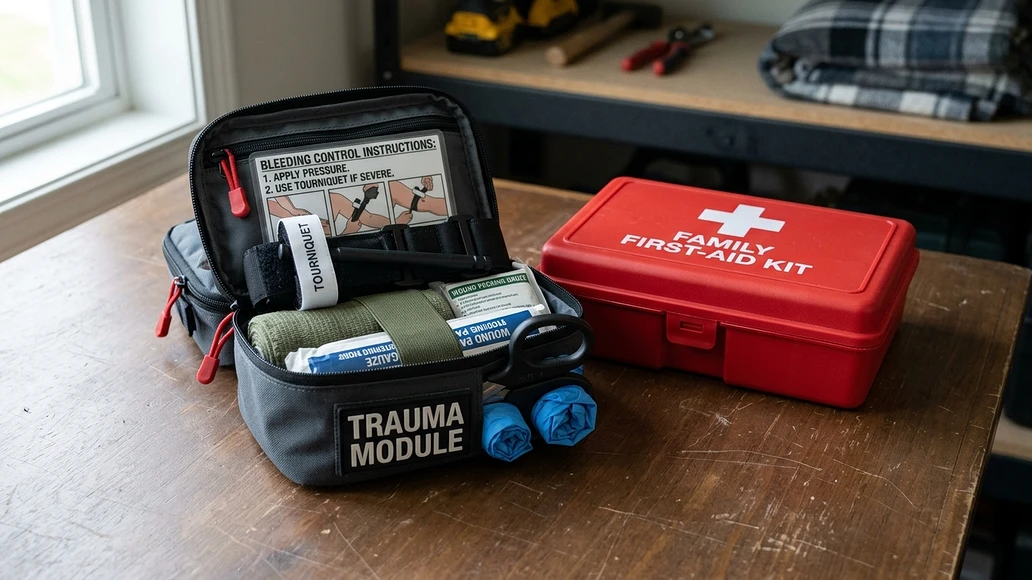
A tourniquet is a device used to stop life-threatening bleeding from an arm or leg. It is not for routine wounds. A trauma kit is best treated as a separate module inside or next to your main first-aid kit.
Core supplies that belong in almost every kit
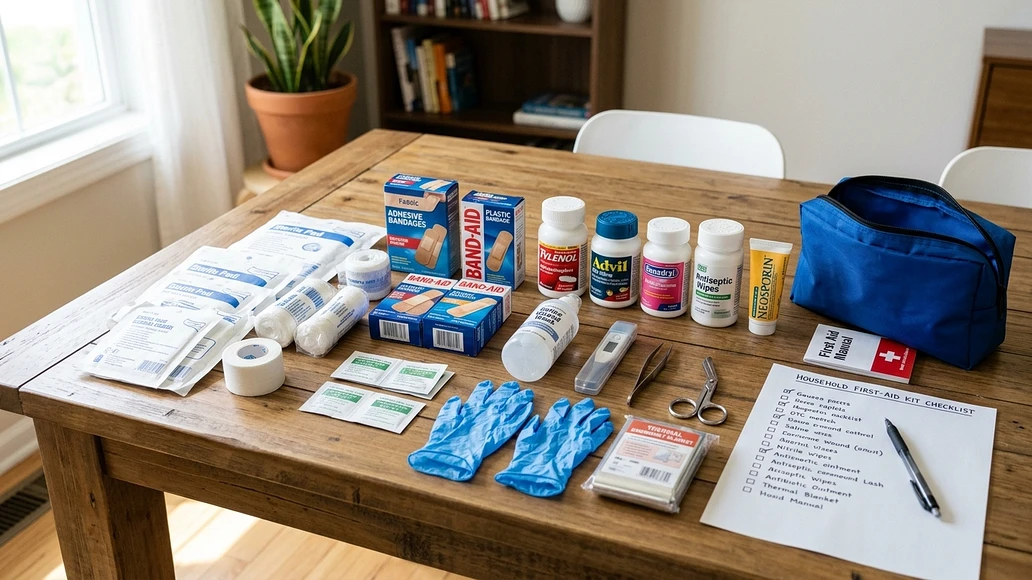
| Item | Purpose | Priority |
|---|---|---|
| Adhesive bandages in assorted sizes | Small cuts, abrasions, minor skin protection | Essential |
| Sterile gauze pads and rolled gauze | Absorb blood, cover wounds, support dressings | Essential |
| Medical tape | Secure gauze and dressings | Essential |
| Elastic wrap | Support sprains, hold cold packs in place | Essential |
| Triangular bandage or sling | Arm support, improvised immobilization | Useful |
| Nitrile gloves | Reduce contamination during care | Essential |
| Hand sanitizer and soap | Hand hygiene before and after care | Essential |
| Saline or clean wound irrigation solution | Flush dirt from minor wounds | Essential |
| Antiseptic wipes | Clean intact skin around a wound | Useful |
| Antibiotic ointment | Minor cuts and abrasions only | Useful |
| Tweezers | Splinters, ticks, debris removal from surface only | Essential |
| Scissors or trauma shears | Cut tape, gauze, clothing | Essential |
| Digital thermometer | Check fever and illness severity | Essential |
| Instant cold packs | Swelling, minor sprains | Useful |
| CPR face shield | Barrier device for rescue breathing if trained | Useful |
| Notebook, pen, medication list | Track symptoms, doses, allergies, times | Essential |
Minor wound care versus trauma care
| Situation | Best first response | Supplies to use | Important caution |
|---|---|---|---|
| Small cut or scrape | Wash hands, rinse wound, cover it | Gloves, clean water or saline, gauze, adhesive bandage | Do not pour harsh cleaners deep into the wound |
| Blister | Protect from friction, keep clean | Moleskin or blister dressing, tape | Watch for redness, pus, or worsening pain |
| Sprain | Rest, compression, elevation, cold pack | Elastic wrap, cold pack | Severe swelling or inability to bear weight may need medical evaluation |
| Nosebleed | Lean forward, pinch soft part of nose | Tissues, gloves | Seek care if bleeding is heavy or prolonged |
| Major bleeding from limb | Apply direct pressure, use tourniquet if life-threatening | Gloves, gauze, compression dressing, tourniquet | Tourniquets are for life-threatening bleeding, not routine cuts |
| Deep wound junctional area | Direct pressure, wound packing if trained | Packing gauze, compression dressing | Requires training and urgent professional care |
| Suspected fracture | Limit movement, support limb | Splint materials, triangular bandage, padding | Deformity, severe pain, numbness, or open fracture needs urgent care |
For routine wound cleaning, clean water or saline is the safest default. Alcohol and hydrogen peroxide can irritate tissue and are not ideal for routine deep wound care. Antibiotic ointment can be reasonable for small cuts and abrasions, but not for large, deep, puncture, or clearly infected wounds without medical advice.
Trauma add-ons for severe bleeding and fractures
If your household wants a true crisis-ready layer, add a small trauma module. This should be simple, labeled, and supported by training. A bleeding-control guide is worth including because stress makes people forget steps.
| Trauma item | Why it matters | Who should include it | Safety note |
|---|---|---|---|
| Commercial tourniquet | Can stop life-threatening limb bleeding | Homes, vehicles, range bags, workshop areas | Use for severe bleeding only, training strongly recommended |
| Wound packing gauze | Helps control deep bleeding where a tourniquet cannot be placed | Prepared households with training interest | Not for casual use on minor wounds |
| Compression dressing | Maintains pressure over serious wounds | Useful trauma add-on | Monitor for continued bleeding |
| SAM-style splint or rigid splint material | Supports suspected fractures and severe sprains | Useful for active families and remote travel | Does not replace imaging or fracture care |
| Trauma shears | Cut clothing quickly to assess injury | Very useful | Keep clean and accessible |
OTC medicines that earn their space
OTC medications are over-the-counter medicines sold without a prescription. They can make a kit far more useful, but labels matter. Check active ingredients, age limits, pregnancy warnings, and drug interactions every time.
| Medicine type | Common use | Key cautions | Who should be extra careful |
|---|---|---|---|
| Acetaminophen | Pain and fever | Too much can harm the liver, avoid doubling up with other products containing acetaminophen | Liver disease, heavy alcohol use, children, pregnancy dosing questions |
| Ibuprofen or naproxen | Pain, inflammation, fever | Can irritate the stomach, worsen kidney issues, and increase bleeding risk | Ulcers, kidney disease, blood thinner users, some older adults, pregnancy concerns |
| Antihistamine | Itching, hives, mild allergy symptoms | Some cause drowsiness and interact with other medicines | Older adults, children, glaucoma, urinary retention, people who must stay alert |
| Antacid | Heartburn or indigestion | Different products have different sodium, calcium, or magnesium loads | Kidney disease, sodium restriction, medication interaction concerns |
| Anti-diarrheal | Symptom relief for some diarrhea | Not always appropriate with fever or bloody diarrhea | Children, older adults, dehydration risk, suspected infection |
| Oral rehydration packets | Replace fluid and electrolytes | Follow mixing directions carefully | Everyone benefits, especially children and older adults |
| Cough drops or throat lozenges | Minor throat irritation | Choking risk in small children | Young children |
Aspirin is not a default first-aid staple for every household. It has specific adult-use contexts, but it also raises bleeding risk and is not for children in routine first aid. If you keep it, label it clearly and understand when not to use it.
Prescription items and special-risk medications
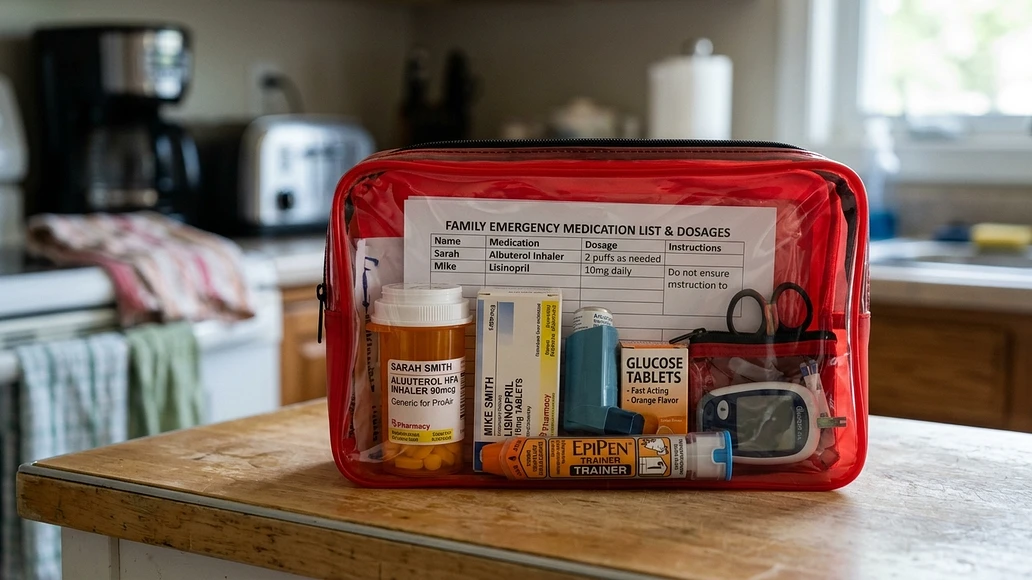
The most important medical prep is often continuity, not novelty. If someone in the home depends on daily medication, inhalers, glucose supplies, or emergency rescue medicines, those belong at the center of the plan. Stock prescription items only as prescribed, and store them according to the label or pharmacist instructions.
| Condition or risk | What to include | Why it matters | Important note |
|---|---|---|---|
| Severe allergy risk | Prescribed epinephrine auto-injector | First-line treatment for anaphylaxis | Anaphylaxis is a severe allergic reaction with breathing trouble, swelling, or collapse. Epinephrine should be used only as prescribed, and emergency care is still needed after use. |
| Asthma | Rescue inhaler, spacer if used, action plan copy | Breathing problems can worsen fast during smoke, dust, or stress | Monitor expiration dates and dose counters |
| Diabetes | Glucose source, glucose meter supplies, insulin or other prescribed meds, backup batteries if needed | Both low and high blood sugar can become dangerous | Temperature-sensitive storage may be critical |
| Opioid exposure risk | Naloxone | Can reverse opioid overdose temporarily | Naloxone is relevant when household exposure risk exists, not as a routine wound-care item |
| Heart or blood pressure conditions | Prescribed daily medicines, current medication list | Missed doses can create secondary emergencies | Review refill timing and storage needs |
How to customize for children, pregnancy, older adults, and chronic illness
| Household member | Useful additions | Why customization matters | Caution |
|---|---|---|---|
| Children | Child-appropriate medicine forms, dosing device, weight-based dosing notes, smaller bandages | Children need different doses and may not swallow pills | Never guess doses, check labels carefully |
| Pregnancy | Clinician-approved pain relief list, prenatal medication continuity, hydration support | Some common OTC medicines are not ideal in pregnancy | Review all medicines with a clinician or pharmacist when possible |
| Older adults | Medication list, spare glasses, hearing aid batteries, skin-friendly tape | Higher risk of interactions, falls, and fragile skin | Sedating antihistamines and NSAIDs may be riskier |
| Asthma or COPD | Rescue inhaler, masks, smoke avoidance plan | Air quality can worsen during disasters | Trouble breathing needs urgent evaluation |
| Diabetes | Fast glucose source, testing supplies, medication continuity | Illness and stress can change blood sugar quickly | Know signs of low blood sugar and dehydration |
| Severe allergies | Prescribed epinephrine, antihistamine for mild symptoms, allergy action plan | Food and insect exposures may increase during disruption | Antihistamines do not replace epinephrine in anaphylaxis |
Hygiene and sanitation supplies that prevent bigger problems
In a prolonged disruption, infection prevention matters almost as much as bandaging. Clean hands, cleaner water, and cleaner surfaces reduce the chance that a small injury turns into a serious problem.
| Sanitation item | Use | Priority |
|---|---|---|
| Soap | Best routine hand cleaning when water is available | Essential |
| Hand sanitizer | Backup hand hygiene | Essential |
| Nitrile gloves | Barrier protection during care | Essential |
| Masks | Reduce exposure to droplets, dust, smoke particulates to a limited degree depending on mask type | Useful |
| Clean water or saline | Wound irrigation and basic cleaning | Essential |
| Trash bags and zip bags | Waste control and waterproof organization | Useful |
| Paper towels or clean cloths | Drying and cleanup | Useful |
What to leave out, or at least not treat as essential
Not every survival-store item deserves space in a family kit. A lot of gear looks impressive but does little for common injuries. Some products are situational, and some can be harmful if used casually.
| Item or idea | Why it is not a default essential | Better priority |
|---|---|---|
| Large stockpile of specialty tools | Consumes budget without improving routine care | Buy more consumables and personal meds first |
| Harsh wound cleaners for deep wounds | Can irritate tissue | Use clean water or saline for routine flushing |
| Improvised wound closure products | Easy to misuse on wounds that need proper evaluation | Use gauze, pressure, and seek care when needed |
| Routine home antibiotic stockpiling | Not a general first-aid recommendation | Focus on prevention, cleaning, and prescribed continuity |
| Tourniquet without understanding its role | Useful only for life-threatening bleeding | Pair it with training and a bleeding-control card |
| Expired mystery medications loose in a bag | Raises dosing and identification errors | Keep medicines labeled and organized |
Minimum viable kit sizes for different households
| Household size | Practical baseline | What to scale up first |
|---|---|---|
| 1 adult | Small home kit plus personal meds and hydration support | Gloves, gauze, tape, pain reliever, antihistamine, oral rehydration |
| 2 to 4 people | Medium kit with duplicates of common consumables | Bandages, gauze, gloves, fever medicine, diarrhea support, thermometer |
| Family with children | Larger kit with child-safe dosing tools and kid-specific supplies | Child dosing notes, oral syringes, child-size bandages, extra hydration supplies |
For most families, the first things to run out are gloves, gauze, tape, adhesive bandages, pain relievers, and oral rehydration supplies. Buy deeper in those categories before chasing niche gear.
Storage, rotation, and restocking
A first-aid kit that cannot be found, opened, or trusted is not really a kit. Store supplies in a dry, easy-to-reach location. Use labeled pouches or bins so anyone in the household can find wound care, medications, and trauma items quickly.
| Task | Best practice | Why it helps |
|---|---|---|
| Medication storage | Keep in original packaging when possible | Preserves directions, lot info, warnings, and expiration dates |
| Monthly check | Scan for low stock, damaged packaging, and missing personal meds | Prevents surprise shortages |
| Seasonal review | Update clothing sizes, child doses, allergy plans, and household needs | Keeps the kit matched to real life |
| Expiration tracking | Use a simple checklist or spreadsheet with dates | Makes rotation easier |
| Waterproofing | Use zip bags or dry pouches for meds and paper documents | Protects critical items during leaks or evacuation |
Do not store temperature-sensitive medicines casually in a hot car or freezing shed unless the label specifically allows it. When in doubt, ask a pharmacist how to store a prescription backup safely.
Build it in phases if money is tight
| Phase | What to buy first | Goal |
|---|---|---|
| Phase 1 | Bandages, gauze, tape, gloves, thermometer, soap, sanitizer, pain reliever, antihistamine, oral rehydration packets | Cover the most common household needs |
| Phase 2 | Elastic wrap, cold packs, tweezers, scissors, saline, notebook, extra consumables | Improve day-to-day usefulness |
| Phase 3 | Personal prescription backups, inhaler supplies, glucose supplies, epinephrine if prescribed | Protect medically important continuity |
| Phase 4 | Tourniquet, packing gauze, compression dressing, splint materials, bleeding-control guide | Add a focused trauma layer |
When first aid is not enough
Even a well-built kit has limits. Seek urgent professional help when possible for heavy bleeding, trouble breathing, chest pain, stroke symptoms, severe allergic reaction, deep burns, signs of dehydration that are not improving, head injury with confusion or repeated vomiting, worsening wound infection, or suspected fractures with deformity, numbness, or loss of circulation.
Watch for infection red flags such as spreading redness, increasing warmth, pus, fever, red streaks, or worsening pain. For diarrhea, vomiting, or fever, dehydration risk rises quickly in children, older adults, and people with chronic illness.
Simple printable checklist
| Category | Checklist items |
|---|---|
| Bandaging and wound care | Adhesive bandages, sterile gauze pads, rolled gauze, tape, elastic wrap, saline or clean irrigation solution, antiseptic wipes, antibiotic ointment for minor cuts, blister care |
| Protection and hygiene | Nitrile gloves, soap, hand sanitizer, masks, trash bags, zip bags |
| Tools | Scissors or trauma shears, tweezers, thermometer, notebook, pen |
| OTC medicines | Acetaminophen, ibuprofen or naproxen if appropriate, antihistamine, antacid, anti-diarrheal if appropriate, oral rehydration packets, cough drops |
| Personal medical needs | Prescription medicines, inhaler, spacer, glucose supplies, epinephrine auto-injector if prescribed, medication list, allergy list |
| Trauma module | Commercial tourniquet, wound packing gauze, compression dressing, splint material, bleeding-control reference card |