Armored Vehicle Pricing in Plain English, What You Pay, What You Get, and What to Skip
Thinking about an armored car? Here is a realistic US cost breakdown by protection level, vehicle type, components, legal concerns, and ongoing ownership costs, plus safer lower-cost alternatives for most people.

For most Americans, a fully armored vehicle is not a practical purchase. It is expensive, heavy, harder to maintain, and only makes sense when there is a real, documented threat. That said, many people are curious about the numbers, and older articles often blur the difference between a modest retrofit and a true rifle-resistant build. This guide breaks down what armoring a vehicle usually costs in the US, what drives the price, what protection ratings mean, and when a lower-cost security plan is the smarter move.
As of the mid-2020s, professional armoring work commonly starts in the tens of thousands of dollars. A lighter handgun-focused package may begin around the low five figures, while serious rifle-resistant builds often climb well past that. Once you include the base vehicle, high-end armored SUVs and luxury sedans can easily reach six figures, and some factory armored flagship models go far beyond that.
What people mean by a “bulletproof” car
The term bulletproof is common, but bullet resistant is more accurate. No vehicle can stop every round, from every angle, under every condition. Real armoring is about matching protection to a likely threat level and building a system that works together.
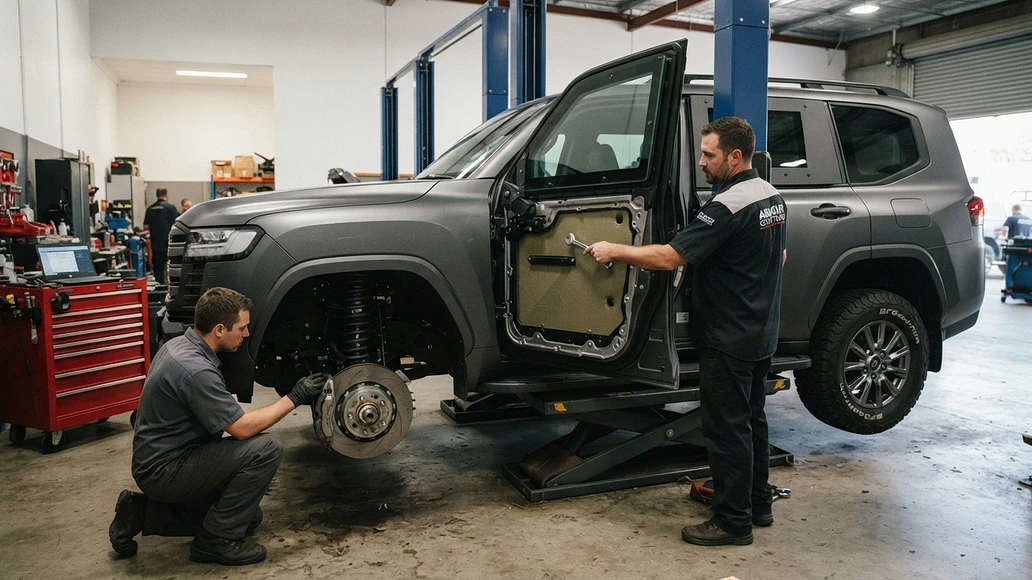
A professionally armored vehicle may include ballistic glass, opaque armor panels in the doors and body, overlap protection around seams, reinforced pillars, run-flat tire systems, upgraded suspension, stronger brakes, and in some cases protection for the roof, floor, battery, fuel tank, and firewall. Better builds also account for weight distribution, crash safety, and drivability.
This is why price varies so much. You are not just buying thicker windows. You are paying for materials, engineering, labor, testing, and mechanical upgrades that keep the vehicle safe after the armor goes in.
Typical US price ranges today
A realistic way to think about cost is to separate retrofit cost from total vehicle cost. Retrofit cost is what an armoring company charges to modify a vehicle you already own or one you buy separately. Total vehicle cost includes the base car plus the armoring package.
| Scenario | What it usually includes | Approximate US retrofit cost | Approximate total cost with vehicle |
|---|---|---|---|
| Entry handgun-focused sedan | Basic ballistic glass and lighter body armor for common handgun threats | $30,000 to $60,000 | $55,000 to $110,000 |
| Mid-level armored SUV | More complete passenger cell protection, run-flats, suspension and brake upgrades | $50,000 to $100,000+ | $90,000 to $180,000+ |
| Rifle-resistant SUV or truck | Heavier armor, thicker glass, more reinforcement, larger mechanical upgrades | $80,000 to $150,000+ | $130,000 to $250,000+ |
| Factory armored luxury sedan | Integrated engineering, premium protection package, manufacturer-level fit and finish | Not usually sold as retrofit only | $150,000 to $300,000+, sometimes much higher |
| Flagship factory armored model | Top-tier executive protection with extensive customization | Not usually sold as retrofit only | $700,000+ in some modern examples |
Those ranges are broad because the final quote depends on vehicle size, threat level, material choice, and whether the installer is building a discreet daily driver or a more specialized security vehicle.
Protection levels, explained without the jargon overload
Armoring companies may reference NIJ, UL 752, EN 1063, VPAM, or older B-ratings such as B4, B6, and B7. The exact standard matters, because “stops bullets” is too vague to be useful. A buyer should ask what standard was used, what was tested, and whether the whole package or only certain materials were certified.
| Protection level | Typical threat focus | Added weight estimate | Approximate retrofit range for sedan | Approximate retrofit range for SUV |
|---|---|---|---|---|
| B4 or similar handgun-focused level | Common handgun rounds | 800 to 1,200 pounds | $30,000 to $55,000 | $40,000 to $70,000 |
| B6 or similar rifle-resistant level | Higher-powered rifle threats in many security scenarios | 1,200 to 1,800 pounds | $55,000 to $95,000 | $70,000 to $130,000 |
| B7 or similar higher rifle level | More demanding rifle protection, depending on exact standard and test setup | 1,600 to 2,200+ pounds | $80,000 to $140,000+ | $100,000 to $180,000+ |
The key takeaway is simple. Higher protection means thicker glass, more armor, more overlap coverage, more reinforcement, and more strain on the vehicle. Cost and weight rise together.
For personal safety, the right question is not “What is the strongest armor I can buy?” It is “What credible threat am I trying to address, and can the vehicle still drive, brake, and handle safely afterward?”
Where the money actually goes
Many buyers are surprised that the glass alone can consume a large share of the budget. Ballistic glass is expensive, heavy, and difficult to fit correctly. The rest of the cost comes from opaque armor, reinforcement, labor, and the mechanical work needed to support the extra mass.
| Component | Typical price range | Why it costs what it does | Performance impact |
|---|---|---|---|
| Ballistic windshield and side glass | $10,000 to $50,000+ per vehicle | Thick laminated materials, custom shaping, installation complexity | Major weight gain, slower windows if operable, costly replacement |
| Body armor panels | $10,000 to $40,000+ | Steel or composite materials, custom cutting, overlap design | Raises curb weight, can affect door feel and body balance |
| Structural reinforcement | $5,000 to $20,000+ | Supports armor load and helps maintain integrity | Necessary for safety, especially around hinges and pillars |
| Run-flat systems or armored tire solutions | $3,000 to $10,000+ | Special inserts, wheels, and fitment | Harsher ride, higher replacement cost |
| Suspension, brakes, and sometimes cooling upgrades | $5,000 to $20,000+ | Required to manage extra mass and heat | Essential for safe stopping and predictable handling |
| Optional extras | $2,000 to $25,000+ | Fire suppression, intercoms, sirens, tracking, emergency lighting, smoke systems | Varies widely, often adds complexity more than core protection |
In other words, a suspiciously cheap quote usually means something is missing. It may be lower-rated glass, incomplete coverage, weak overlap protection, no suspension work, or poor documentation.
Retrofit versus factory armored, which makes more sense?
Retrofitting an existing vehicle can be appealing if you already own a suitable SUV or sedan and want to control the build. Factory armored vehicles, on the other hand, are engineered from the start around the extra weight and often offer better integration, warranty support, and resale confidence.
| Factor | Retrofit | Factory armored |
|---|---|---|
| Upfront cost | Often lower if you already own the vehicle | Usually higher purchase price |
| Engineering integration | Depends heavily on installer skill and vehicle platform | Usually stronger integration from the start |
| Warranty | Split between vehicle maker and armoring company | Often cleaner support structure, though specifics vary |
| Lead time | Can be faster or slower depending on shop backlog and parts | May involve long ordering windows for specialty models |
| Resale | More variable, depends on documentation and buyer trust | Often easier to explain and market to future buyers |
| Customization | Usually more flexible | More limited to manufacturer options |
A retrofit can be perfectly valid, but only if the base vehicle is a good candidate and the installer has a strong record. A small crossover with marginal payload and braking capacity is a poor starting point for heavy armor. A body-on-frame SUV or a larger premium sedan is often easier to armor safely.
Who actually benefits from an armored vehicle
Most people do not need one. Armoring makes the most sense for people with a specific threat profile, such as executives with documented threats, public figures, security contractors, people operating in high-risk regions, or families who regularly travel through areas where armed attacks are a realistic concern.
For everyone else, the money often goes farther when spent on layered security. That can include route planning, secure parking, better lighting, driver training, communications, travel timing, and temporary use of armored transport only when risk is elevated.
If your concern is general crime rather than a known targeted threat, a full armored build may be overkill. It can also create a false sense of security if the vehicle protection does not match the actual risk.
How armoring changes the way a vehicle drives
Armor and ballistic glass can add roughly 800 to 2,200 pounds, sometimes more. That extra mass affects nearly everything. Acceleration slows, braking distances increase, fuel economy drops, tire wear rises, and suspension components work harder. Doors become heavier, and some power window functions may be limited or redesigned.
This is not just a comfort issue. It is a safety issue. If a shop installs heavy glass and armor without properly upgrading suspension and brakes, the vehicle can become less safe in normal driving and in emergency maneuvers. Improper armoring can also hurt crash performance.
Buyers should ask for details on payload, axle loads, brake upgrades, suspension changes, and whether the finished vehicle has been road-tested under realistic conditions.
Legal and insurance issues in the US
There is no blanket federal ban on civilians owning armored vehicles or ballistic windows in the United States. Still, legality is not as simple as “yes, it is allowed.” State and local rules can affect tint, inspections, registration, weight classification, and modification disclosures.
Before commissioning work, check with your state DMV and, if needed, a local attorney familiar with vehicle compliance. Ask whether the finished vehicle needs updated paperwork because of weight or equipment changes. Also ask the armoring company what documentation they provide for registration and insurance purposes.
Insurance is another area where buyers should slow down and get answers in writing. Some insurers may cover the modifications, some may require an appraisal or special endorsement, and some may not want the risk at all. Premium changes are not easy to predict, so notify your insurer before the work begins, not after.
| Issue | Why it matters | What to verify before purchase |
|---|---|---|
| Window tint and visibility rules | Ballistic glass may interact with state tint laws and inspection standards | Allowed tint levels, inspection requirements, any exemptions |
| Vehicle weight and classification | Heavy armor can change handling and possibly paperwork needs | Final curb weight, axle loads, registration implications |
| Insurance disclosure | Undisclosed modifications can create claim problems | Coverage terms, endorsements, valuation method |
| Documentation | Needed for resale, claims, and compliance questions | Invoices, test certifications, serials, warranty terms |
How to spot a reputable armoring company
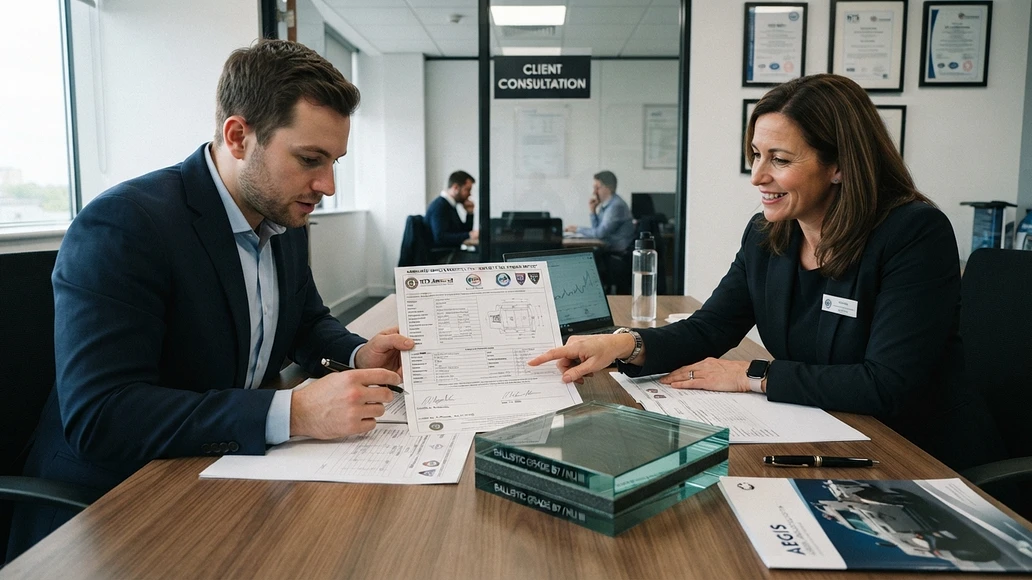
This is not a market where bargain hunting is wise. The best companies are transparent about standards, testing, materials, and support. They can explain exactly what is protected, what is not, and how the vehicle was engineered to handle the added weight.
| Question to ask | Why it matters | What a good answer looks like |
|---|---|---|
| What ballistic standard does this build meet? | Prevents vague marketing claims | A clear standard such as NIJ, UL 752, EN 1063, or VPAM, with level details |
| Was the whole package tested, or only the materials? | Material certification alone does not prove full-vehicle performance | Documentation on system testing, overlap design, and weak-point treatment |
| What mechanical upgrades are included? | Extra weight requires safe braking and handling | Specific brake, suspension, wheel, tire, and cooling changes |
| What is excluded from protection? | No vehicle protects everything equally | Honest explanation of roof, floor, engine bay, and seam coverage limits |
| What warranty and service support do you provide? | Armored vehicles need specialized maintenance | Written warranty, service intervals, replacement part availability |
| Can you provide references or prior build examples? | Helps verify track record | Real customer examples, photos, and documentation without evasiveness |
Red flags include prices far below market norms, no mention of standards, no explanation of overlap protection, no mechanical upgrade plan, or sweeping promises like “lifetime bulletproof guarantee.”
Alternatives if full armoring is too expensive
For many readers, the better answer is not a full armored build. It is a narrower, risk-based plan. Partial armoring, such as protecting only the passenger cell or only certain glass areas, can reduce cost, though it also reduces capability. Renting an armored vehicle for occasional high-risk travel can be much more economical than ownership. Professional driver training and route planning can also lower exposure at a fraction of the price.
| Alternative | Typical cost direction | Best use case | Main limitation |
|---|---|---|---|
| Partial armoring | Lower than full build | Specific, limited threat concerns | Protection gaps may be significant |
| Armored vehicle rental | Pay only when needed | Short trips, events, travel in elevated-risk areas | Not practical for daily use |
| Driver training and route planning | Much lower cost | General personal security and travel risk reduction | Does not provide ballistic protection |
| Secure parking and travel timing changes | Low cost | Reducing opportunistic crime exposure | Limited against targeted attacks |
| Professional threat assessment | Moderate cost | Determining whether armoring is justified at all | Requires ongoing review if circumstances change |
For preparedness-minded readers, this is an important point. Security spending should match realistic risk, not fear alone.
Hidden ownership costs people forget
The purchase price is only the start. Armored vehicles usually cost more to fuel, maintain, insure, and repair. Tire replacements can be expensive. Ballistic glass replacement is especially painful because it is specialized, heavy, and often custom. Resale can also be tricky because the buyer pool is smaller and many shoppers will want proof of standards, service history, and who performed the work.
| Ongoing cost area | Why it rises | Budget concern |
|---|---|---|
| Fuel | Extra weight reduces efficiency | Higher monthly operating cost |
| Tires and brakes | More mass means faster wear | More frequent replacement |
| Suspension service | Added load stresses components | Specialized parts and labor may be needed |
| Glass replacement | Ballistic glass is costly and custom | Large one-time repair bills |
| Insurance | Modified value and risk profile | Possible premium increase or special coverage needs |
| Resale | Smaller market and trust concerns | Longer selling time, uncertain value |
Why DIY armoring is a bad idea
This topic crosses into personal safety and major financial risk, so the safest advice is simple. Do not treat vehicle armoring as a garage project. Adding random steel, improvised panels, or heavy glass without engineering review can overload doors, damage hinges, upset handling, increase stopping distance, and create dangerous crash behavior.
DIY work can also create legal and insurance problems if the modifications are undocumented or if they interfere with safety systems. General information is useful for understanding quotes and asking better questions, but meaningful protective work should be designed and installed by a reputable professional company.
Recent market trends
Recent builds reflect higher material and labor costs than many older prepper articles suggest. At the same time, newer composites and improved glass designs are helping some companies produce more discreet armored vehicles with less obvious visual change. Demand has also broadened beyond heads of state and diplomats, which means more options exist, but it also means more uneven quality in the market.
That makes documentation even more important. In a growing market, the difference between a serious engineering firm and a flashy marketing operation can be enormous.
Bottom line
If you want a quick answer, professionally armoring a car in the US usually costs somewhere from about $30,000 to $100,000+ for many retrofit jobs, and more for larger vehicles or higher rifle-resistant levels. Once you include the vehicle itself, many real-world totals land in the $55,000 to $250,000+ range, with factory armored luxury models often much higher.
But the smarter answer is this. Do not start with the vehicle. Start with the threat. If there is no specific, credible reason to need ballistic protection, your money is often better spent on lower-cost security measures and better planning. If there is a real threat, work only with a reputable armoring company, verify standards and testing, check state compliance, and involve your insurer before signing anything.
References
- How Much Does it Cost to Bulletproof a Car in 2026?
- How Much Does It Cost to Bulletproof a Car? Full Breakdown
- How to choose car bullet proof,How much does it cost to bulletproof ...
- Cost Of Bulletproof Car: Complete Guide To Armored Vehicle Pricing
- कार को बुलेटप्रूफ बनाने के लिए कितना खर्च आता है? जानिए किन पार्ट्स को ...