Armored Vehicle Pricing in Plain English, What You Pay, What You Get, and What to Skip
Thinking about an armored car? Here is a realistic US cost breakdown for bullet resistant upgrades, protection levels, legal issues, hidden ownership costs, and lower cost alternatives that may make more sense for most drivers.

Armoring a vehicle is one of those topics that gets oversimplified fast. People hear the phrase “bulletproof car” and imagine a single upgrade with a single price. In reality, modern vehicle armoring is a package of tradeoffs involving ballistic glass, body panels, suspension, brakes, tires, weight, legality, and ongoing maintenance. As of the mid 2020s, professional armoring in the US usually starts in the tens of thousands of dollars, and complete high end builds can climb far beyond that.
This guide explains the real cost ranges, what those dollars usually buy, how protection levels differ, and why most people should think through lower cost security options before spending heavily. This is general information only, not a DIY guide. If you are seriously considering an armored vehicle, talk with a reputable armoring company, your insurer, and your local DMV or attorney before moving forward.
What “bulletproofing” a car actually means
The first reality check is terminology. Most vehicles marketed as bulletproof are more accurately bullet resistant. They are designed to resist specific threats, not every possible round, angle, or repeated attack. The protection level you choose determines both the price and the practical value of the build.
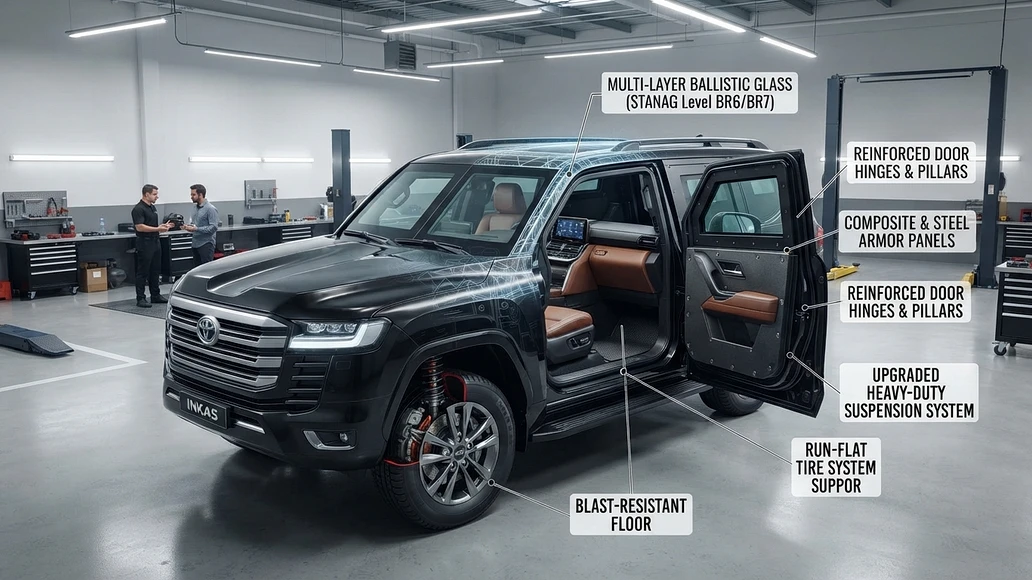
A professional armoring package may include ballistic glass, opaque armor in the doors and pillars, reinforced overlaps around seams, protected fuel system components, run flat tire systems, and mechanical upgrades to handle the extra mass. Some builds also add roof and floor protection, depending on the threat model.
| Armoring element | What it does | Why it affects cost |
|---|---|---|
| Ballistic glass | Protects windshield and side windows from rated threats | Thick multi layer glass is expensive, heavy, and difficult to fit correctly |
| Body armor panels | Protects doors, pillars, quarter panels, and other opaque areas | Material choice, coverage area, and threat rating drive price |
| Overlap protection | Closes gaps around doors, seams, and joints | Labor intensive fabrication is required for meaningful protection |
| Run flat systems | Allows limited travel after tire damage | Adds parts cost and can increase tire service expense |
| Suspension and brake upgrades | Helps the vehicle safely carry added weight | Necessary on many builds to preserve handling and braking |
| Optional systems | May include fire suppression, sirens, intercoms, tracking, or emergency gear | Customization can add thousands or much more |
How much armored vehicle work costs in the US
For a realistic planning number, many professional retrofit jobs fall roughly in the $30,000 to $100,000+ range, depending on the vehicle and protection level. That figure is usually the armoring work itself, not always the total price of the vehicle. Once you include the base car, many finished armored vehicles land in the $60,000 to $300,000+ range, and factory armored luxury models can go much higher.
The biggest cost drivers are threat level, total coverage area, vehicle size, glass area, and how much engineering is needed to keep the vehicle safe to drive after the added weight.
Typical retrofit ranges by protection level
| Protection level | Typical threat stopped | Added weight estimate | Approx retrofit range for sedan | Approx retrofit range for SUV |
|---|---|---|---|---|
| B4 or similar handgun focused protection | Common handgun threats | About 800 to 1,200 lb | $30,000 to $55,000 | $40,000 to $70,000 |
| B6 or similar rifle resistant protection | Higher powered rifle threats in the rated standard | About 1,200 to 1,800 lb | $60,000 to $100,000+ | $75,000 to $140,000+ |
| B7 or similar higher rifle protection | More demanding rifle threat profiles in the rated standard | About 1,600 to 2,200 lb or more | $90,000 to $150,000+ | $120,000 to $200,000+ |
These are broad planning ranges, not quotes. A discreet armoring package on a common SUV can cost less than a fully integrated luxury build, while unusual vehicles or extensive custom work can cost more than the table suggests.
Total cost when the base vehicle is included
Buyers often confuse retrofit cost with total ownership cost. If you already own a suitable vehicle, a retrofit may look cheaper on paper. If you need to buy the vehicle first, your all in cost rises quickly.
| Scenario | Base vehicle cost | Armoring cost | Approx total |
|---|---|---|---|
| Mid size used sedan with basic handgun protection | $20,000 to $35,000 | $30,000 to $50,000 | $50,000 to $85,000 |
| Newer SUV with rifle resistant package | $45,000 to $80,000 | $70,000 to $140,000 | $115,000 to $220,000 |
| Factory armored luxury sedan | Included in vehicle price | Integrated into purchase price | $150,000 to $300,000+, sometimes far higher |
Protection levels explained without the jargon overload
Armoring standards vary by region and manufacturer. You may see NIJ, UL 752, EN 1063, VPAM, BRV, ERV, and the familiar B4, B6, and B7 shorthand. The exact test methods differ, so buyers should not assume every label means the same thing. The practical takeaway is simple: ask what specific rounds, velocities, and test standards the package is certified to resist.
In broad consumer terms, lower handgun oriented levels cost less and add less weight. Rifle resistant levels cost much more because the materials, glass thickness, and structural demands increase sharply.
| Common label | General use case | Typical cost effect | Key caution |
|---|---|---|---|
| B4 | Often chosen for handgun focused threats | Lower entry point for professional armoring | May be inadequate if the real threat includes rifles |
| B6 | Common target for serious rifle resistance | Large jump in cost and weight | Vehicle dynamics and braking become more critical |
| B7 | Higher end rifle resistant builds | Very expensive and heavy | Not every vehicle platform is a good candidate |
One of the most important buying mistakes is paying for a package that does not match the actual threat. Under armoring can create false confidence. Over armoring can waste money and make the vehicle harder to drive safely.
Where the money goes in an armoring build
Most of the budget is not a mystery once you break it into components. Ballistic glass and opaque armor are usually the largest line items, followed by labor, reinforcement, and mechanical upgrades.
| Component | Typical price range | Performance impact |
|---|---|---|
| Ballistic glass package | $10,000 to $50,000+ | Adds major weight high on the vehicle, affects window operation and replacement cost |
| Body armor panels and overlap protection | $15,000 to $60,000+ | Adds weight throughout the body, can change door feel and service complexity |
| Run flat systems and tire upgrades | $3,000 to $10,000+ | Improves mobility after tire damage, can increase ride harshness and tire cost |
| Suspension, brake, and chassis upgrades | $5,000 to $20,000+ | Critical for safe handling, braking, and load support |
| Optional electronics and emergency systems | $2,000 to $25,000+ | Varies widely by mission, may complicate maintenance |
Why glass is so expensive
Ballistic glass is not ordinary automotive glass with a film added. It is a thick laminated system designed to absorb and disperse energy. It is expensive to manufacture, heavy to install, and costly to replace if damaged. On many builds, the windshield and side glass package is one of the single biggest contributors to the final invoice.
Why mechanical upgrades are not optional
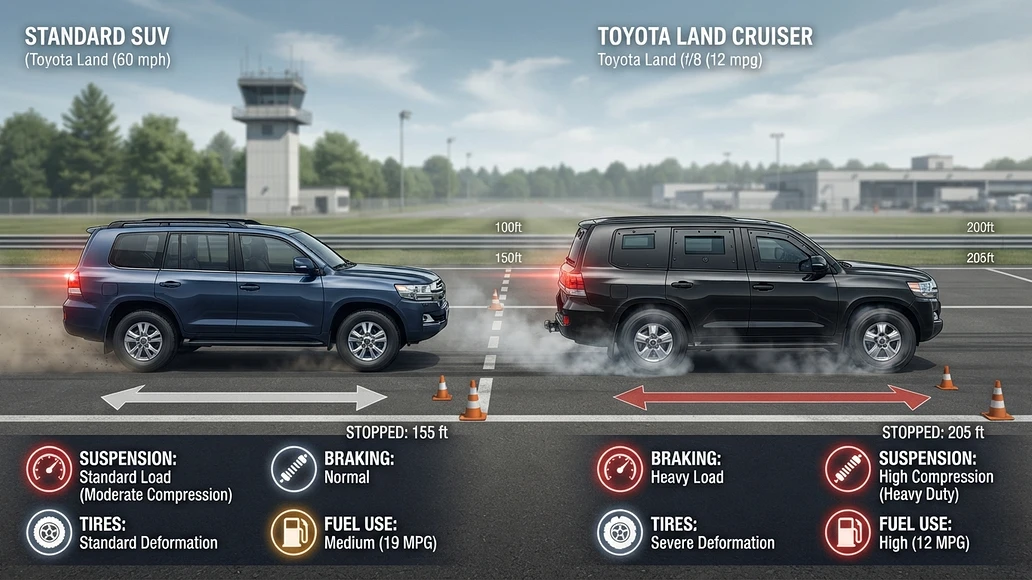
Armor can add roughly 800 to 2,200 pounds, sometimes more. That extra mass affects stopping distance, body roll, acceleration, tire wear, and heat management. If a company offers a very low price but glosses over suspension and brake upgrades, that is a serious warning sign. Improper armoring can make a vehicle less safe in a crash or emergency maneuver.
Retrofit versus factory armored vehicles
Some buyers want to armor a vehicle they already own. Others are better served by a factory armored model or a professionally built turnkey vehicle. Neither path is automatically better. The right choice depends on budget, warranty concerns, and how much confidence you want in the original engineering integration.
| Factor | Retrofit | Factory armored |
|---|---|---|
| Upfront cost | Can be lower if you already own a suitable vehicle | Usually higher purchase price |
| Engineering integration | Depends heavily on the armoring shop and platform suitability | Often better integrated from the start |
| Warranty | May complicate or limit original manufacturer coverage | Often cleaner support structure, though terms vary |
| Lead time | Can be faster or slower depending on shop backlog and custom work | May involve long order times for specialty models |
| Resale | More variable, depends on documentation and buyer trust | Often easier to explain to future buyers in the niche market |
A retrofit makes the most sense when the base vehicle is mechanically strong, parts are available, and the armoring company has proven experience with that exact platform. A factory armored vehicle may make more sense when you want the cleanest engineering package and are willing to pay for it.
Who actually needs an armored car
For most Americans, a bullet resistant vehicle is not a practical first line security purchase. It can make sense for people with a documented threat profile, high public visibility, regular travel through elevated risk areas, or professional duties that justify the expense. It is much harder to justify for ordinary commuting or generalized anxiety.
A better starting point is a risk assessment. What threat are you trying to reduce? Is it a credible personal threat, a workplace requirement, travel in unstable regions, or simply curiosity? If the answer is vague, full armoring is probably not the best use of money.
| Situation | Armored vehicle may make sense | Lower cost alternative may make more sense |
|---|---|---|
| Documented personal threats | Yes, after professional security review | Not as a sole measure |
| Occasional travel in higher risk areas | Sometimes, but rental may be smarter | Yes, rented armored transport or trained driver |
| Routine suburban commuting | Usually no | Yes, awareness, route planning, secure parking, communication |
| Business executive with regular exposure | Possibly, depending on threat profile | Layered security still needed |
How armoring changes the way a vehicle drives and ages
The added protection does not come free in daily use. Heavier doors feel different. Acceleration slows. Braking distances can increase if the build is not engineered well. Fuel economy usually drops. Tires, brakes, and suspension parts may wear faster. Replacement glass can be expensive and may have longer lead times than standard automotive parts.
That means the purchase price is only part of the story. An armored vehicle is often more expensive to operate, maintain, and eventually sell.
Legal and insurance issues in the US
There is no blanket federal ban on civilians owning armored vehicles or ballistic glass in the United States. However, legality is not the same as simplicity. State and local rules can affect tint, inspections, registration, and how modifications are documented. Some jurisdictions may care about visible changes, weight class issues, or compliance with local equipment rules.
Insurance is another area where buyers should slow down. A major modification can affect coverage, agreed value, claims handling, and disclosure requirements. Do not assume your current policy automatically covers expensive aftermarket armor.
| Issue | What to check | Why it matters |
|---|---|---|
| Window tint and visibility rules | State tint laws and inspection standards | Ballistic glass setups may interact with local visibility requirements |
| Registration and title questions | DMV guidance on modified vehicles | Some states may require documentation for major changes |
| Insurance disclosure | Talk to your insurer before and after installation | Undisclosed modifications can create claim problems |
| Weight and safety compliance | Installer documentation and mechanical upgrade records | Important for both safety and liability |
Because rules vary, this is one area where local professional advice matters. Before signing a contract, ask your DMV, insurer, and if needed a local attorney about compliance in your state.
How to choose a reputable armoring company
The market includes serious engineering firms and also sellers who use vague language, thin documentation, or unrealistic promises. Price alone is not a reliable guide. Extremely low quotes can signal shortcuts in materials, overlap protection, or mechanical upgrades.
| Question to ask | Why it matters | What a good answer looks like |
|---|---|---|
| What standard is this package certified to? | “Bulletproof” is too vague to trust | Specific NIJ, UL 752, EN 1063, VPAM, BRV, or similar documentation |
| Can you show test results for the glass and opaque armor? | Proof matters more than marketing | Clear test records from recognized labs or documented internal testing with details |
| What mechanical upgrades are included? | Weight changes vehicle safety | Suspension, brakes, tires, and related systems addressed in writing |
| Have you armored this exact vehicle platform before? | Experience reduces fit and reliability problems | Examples, photos, references, or production history |
| What warranty and service support do you provide? | Armored vehicles need specialized follow up | Written warranty terms, service intervals, and parts support plan |
Red flags include prices far below market norms, refusal to discuss standards, no mention of added weight, no service plan, and broad lifetime claims without detailed terms.
Alternatives if full armoring is too expensive
For many readers, the smarter answer is not full armoring. Partial armoring, occasional armored transport rental, or non vehicle security improvements can reduce risk at a much lower cost.
| Alternative | Typical use case | Cost profile |
|---|---|---|
| Glass only or partial cabin protection | When a limited threat profile is documented | Lower than full build, but still expensive and must be engineered properly |
| Armored vehicle rental | Short term travel in elevated risk areas | Often far cheaper than ownership for occasional use |
| Trained driver and route planning | Executive travel and predictable routines | Can provide meaningful risk reduction without vehicle modification |
| Secure parking, communications, and awareness training | Most ordinary civilian situations | Usually the best value for everyday safety |
For most households, better situational awareness, communication plans, and travel habits will improve safety more per dollar than a heavily modified vehicle.
Why DIY armoring is a bad bet
DIY vehicle armoring is not a realistic safety project for most people. Randomly adding heavy panels or non certified glass can overload doors, compromise crash performance, strain hinges, worsen braking, and create dangerous blind confidence. Structural changes can also create legal, inspection, and insurance problems.
That is why this article does not provide instructions for home modification. Meaningful ballistic protection requires engineering, tested materials, and professional installation. If your concern is serious enough to justify armor, it is serious enough to justify professional design and documentation.
What to budget beyond the purchase price
Even if the initial quote fits your budget, ownership costs can surprise you. Fuel use often rises. Tires and brakes may wear faster. Ballistic glass replacement is expensive. Some repairs may require specialized shops. Resale can also be tricky because the buyer pool is smaller and documentation matters a lot.
| Ongoing cost area | What to expect | Budget impact |
|---|---|---|
| Fuel | Lower fuel economy from added weight | Steady long term increase |
| Tires and brakes | Higher wear on heavier vehicles | Moderate to significant depending on mileage |
| Glass replacement | Specialized ballistic glass is costly | Potentially very high if damaged |
| Insurance | May require special handling or agreed value discussion | Variable, not easy to predict |
| Resale | Smaller market, buyers want records | Can reduce flexibility when selling |
Recent trends buyers should know
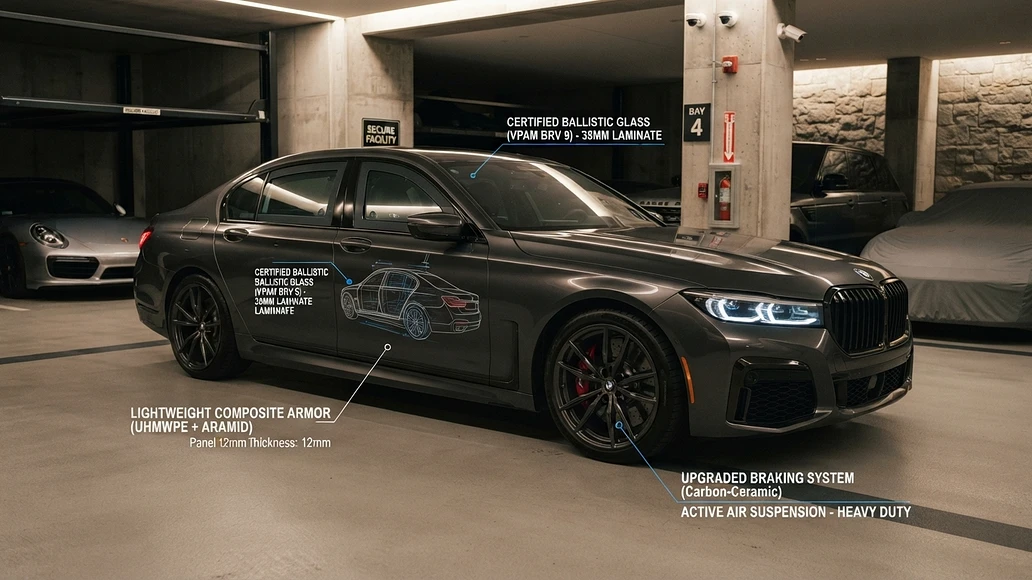
Recent builds are trending toward lighter composites, more discreet appearance, and better integration with modern luxury and SUV platforms. At the same time, prices have generally moved upward due to materials, labor, and demand. High end factory armored luxury vehicles can now reach very high six figures, especially with advanced protection packages and customization.
That makes careful shopping even more important. The difference between a sensible build and an overpriced one often comes down to whether the protection level, vehicle platform, and real world need actually match.
Bottom line
If you want a simple answer, here it is. Professionally armoring a car in the US usually costs at least several tens of thousands of dollars, and serious rifle resistant builds often push well past that. The true price includes not just armor and glass, but also engineering, mechanical upgrades, legal compliance, insurance coordination, and higher long term operating costs.
For people with a real, documented threat, an armored vehicle can be a legitimate tool. For most drivers, it is an expensive solution to a problem that is better addressed with layered security habits, smarter travel practices, and occasional specialty transport when needed. The safest next step is not to shop by marketing terms like “bulletproof,” but to define the threat, verify the standards, and get professional advice before spending money.
References
- How Much Does it Cost to Bulletproof a Car in 2026?
- How Much Does It Cost to Bulletproof a Car? Full Breakdown
- How to choose car bullet proof,How much does it cost to bulletproof ...
- Cost Of Bulletproof Car: Complete Guide To Armored Vehicle Pricing
- कार को बुलेटप्रूफ बनाने के लिए कितना खर्च आता है? जानिए किन पार्ट्स को ...