Morse Code for Modern Emergencies, How the Signal System Really Works
Learn what Morse code is, how dots, dashes, timing, and spacing create readable messages, and where this old system still makes practical sense for home preparedness today.

Morse code is one of the simplest communication systems ever created, but it only works well when you understand one detail many beginner guides skip, timing. At its core, Morse code turns letters, numbers, and a few symbols into short and long signals. Those signals can be sent by sound, light, tapping, radio tone, or even eye blinks. That flexibility is why Morse still has a place in preparedness, even though it is no longer a normal everyday way to communicate.
For most households, Morse code should be treated as a backup skill, not a replacement for phones, radios, written plans, or direct voice communication. Used that way, it can be a useful low tech option during blackouts, wilderness travel, weak signal conditions, or situations where speaking is difficult or impossible.
What Morse code is in plain English
Morse code is a method of encoding text into two basic signal lengths, a short signal called a dot and a long signal called a dash. Each letter and number has its own pattern. For example, the letter A is dot dash, and the letter N is dash dot. When those patterns are sent with correct spacing, another person can decode them back into words.
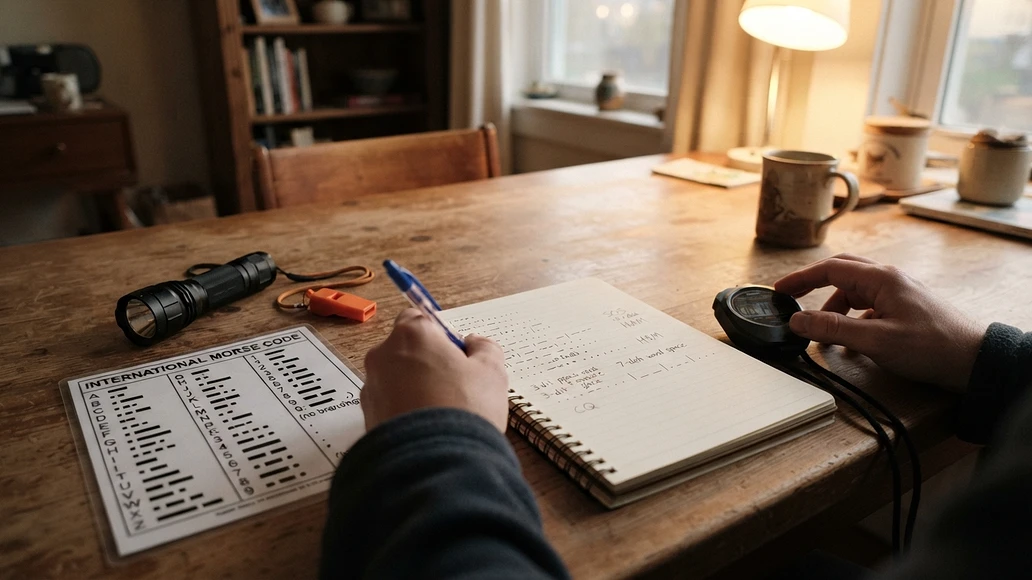
The system is simple enough to use with ordinary household items. A flashlight can make short and long flashes. A whistle can make short and long blasts. A person trapped behind a wall could tap short and long knocks. In accessibility settings, some people may use blinks or switch devices to send Morse-like patterns. That said, any long term assistive use should be planned with a qualified clinician or speech-language professional if fatigue, movement limits, or complex medical needs are involved.
A short history, and why Morse code was invented
Morse code grew out of the telegraph era, when inventors needed a reliable way to send messages over wires using electrical pulses. Samuel Morse and Alfred Vail helped develop the early system in the 1800s. Over time, the code evolved and standards changed. The version most people learn today is International Morse code, not the older American Morse used in parts of the telegraph era.
That distinction matters because modern training, amateur radio use, and most current references teach International Morse. If you want a practical skill you can actually share with others today, that is the version to learn.
How Morse code actually works, dots, dashes, timing, and spacing
Many people think Morse is just memorizing patterns. In reality, the spacing rules are what make the message readable. A dot is the basic unit of time. A dash lasts three time units. The pauses between parts of a letter, between letters, and between words also follow standard lengths.
| Element | Length in time units | Why it matters |
|---|---|---|
| Dot | 1 unit | The shortest signal |
| Dash | 3 units | The long signal, equal to three dots in length |
| Gap within one letter | 1 unit | Separates dots and dashes that belong to the same character |
| Gap between letters | 3 units | Shows where one character ends and the next begins |
| Gap between words | 7 units | Prevents words from running together |
Here is a simple example. The word HI is four dots, then two dots. If you do not leave a proper letter gap between the H and the I, the receiver may hear one long string of dots instead of two separate letters.
Speed is usually measured in words per minute, often shortened to WPM. Beginners do not need high speed to be useful. In a home or field emergency, clear sending matters more than fast sending.
International Morse vs American Morse, what should you learn?
If you are starting from scratch, learn International Morse code. It is the modern standard and the version used in current training materials and amateur radio practice. American Morse is historically interesting, but it is not the practical choice for most people today.
| Version | Main use | Should a beginner learn it? | Reason |
|---|---|---|---|
| International Morse | Modern training, amateur radio, general reference use | Yes | It is the current standard and easiest to share with others |
| American Morse | Historical telegraph use | Usually no | It is not the common modern standard for practical use |
This is one of the biggest places older preparedness articles can confuse readers. If your goal is useful communication, not historical study, International Morse is the right target.
Ways to send Morse code at home or in the field
One reason Morse remains relevant is that it does not depend on a single device. The same message can be sent through several channels.
| Method | How it works | Best use case | Main limitation |
|---|---|---|---|
| Sound | Short and long beeps, knocks, or whistle blasts | Dark conditions, through walls, noisy visual environments | Can be hard to hear at distance or in wind |
| Light | Short and long flashlight flashes or reflected sunlight | Night signaling, line of sight communication | Requires visibility and attention from the receiver |
| Tapping | Short and long taps on a surface | Confined spaces, trapped situations, quiet indoor signaling | Slow and physically tiring over time |
| Blinks or switch input | Short and long eye blinks or assisted inputs | Accessibility or no voice situations | Needs planning and may cause fatigue |
| Radio tone | Keyed audio tone over radio equipment | Amateur radio and weak signal communication | Subject to licensing and operating rules in normal use |
For most families, the easiest practice tools are a flashlight, a whistle, and simple tapping on a table or wall.
Where Morse code still makes sense today, and where it does not
Morse code is not dead, but it is also not a magic solution. It still has real value in a few areas. Amateur radio operators use it because it can work well in weak signal conditions and narrow bandwidth. Some emergency scenarios favor it because it can be improvised with light or sound. It also has niche value in accessibility when paired with appropriate tools and support.
At the same time, Morse is obsolete for most everyday communication. It is slower than speech and text for the average person. It is not the primary emergency method for the general public. If you have a working phone, text messaging, weather alerts, a charged radio, and a written family plan, those should come first.
| Scenario | How useful Morse is | What you still need |
|---|---|---|
| Ham radio weak signal work | High | Training, legal operation, proper equipment |
| Lost outdoors with a flashlight or whistle | Moderate to high | Shelter, navigation, location signaling, first aid |
| Blackout at home | Moderate | Family plan, backup power, radios, lighting |
| Everyday texting and general communication | Low | Normal digital tools are faster and easier |
| Accessibility support | Potentially high in specific cases | Professional guidance, suitable devices, fatigue management |
Emergency use, how to send SOS and HELP
The best known Morse distress signal is SOS, written as three dots, three dashes, three dots. It is easy to recognize and can be sent with light, sound, tapping, or blinking. In a real emergency, use it only for genuine distress.
| Message | Pattern | Good signaling methods | Notes |
|---|---|---|---|
| SOS | ... --- ... | Flashlight, whistle, tapping, blinking | Standard distress signal, reserve for real emergencies |
| HELP | .... . .-.. .--. | Flashlight, tapping, radio tone | Clear plain language distress message |
| HELP ME | .... . .-.. .--. / -- . | Light, sound, tapping | Useful when time allows a longer message |
| OK | --- -.- | Light, sound, tapping | Can be used in drills to confirm receipt |
How to send SOS with a flashlight
Face the light toward the area where a rescuer might see it. Make three short flashes, three long flashes, then three short flashes. Pause, then repeat. Keep the rhythm steady rather than rushing.
How to send SOS with a whistle
Use three short blasts, three longer blasts, then three short blasts. Repeat after a pause. A whistle can carry farther than a voice and may be a better option in wind or darkness.
How to send SOS by tapping or blinking
Use the same short short short, long long long, short short short pattern. If the receiver does not know Morse, tell them in advance during practice that short and long signals have meaning. In accessibility settings, keep sessions short enough to avoid strain.
Important safety point, do not use SOS casually. False distress signals can waste rescue resources and may carry legal consequences.

How long does it take to learn?
Most people can memorize a few letters quickly, but practical skill takes longer. A realistic timeline for basic familiarity is often a couple of months of steady practice. Comfortable sending and receiving at useful speed may take six to twelve months, depending on consistency, prior audio training, and whether you practice both receiving and sending.
| Skill level | What it usually means | Typical timeline |
|---|---|---|
| Beginner | Knows common letters, can send SOS and a few words slowly | Several weeks to 2 or 3 months |
| Functional | Can copy simple messages with decent spacing | About 2 to 6 months |
| Comfortable operator | Can send and receive with confidence at practical speed | About 6 to 12 months |
The biggest mistake is expecting fluency in a weekend. You can learn enough for a simple emergency signal quickly, but reliable use comes from repetition.
Best ways to learn, Koch, Farnsworth, and daily practice
Modern learners usually do better with audio based training than with staring at a chart. The goal is to recognize the sound or rhythm of each character as a whole pattern, not to count dots and dashes one by one.
Koch method
The Koch method starts with a small number of characters at full character speed. You add new characters gradually as accuracy improves. This helps your brain recognize patterns instead of translating from a visual chart.
Farnsworth spacing
Farnsworth training keeps individual characters at a realistic speed but stretches the spaces between them. That gives beginners time to think without teaching them a slow, choppy character rhythm that later becomes hard to unlearn.
A practical home routine
A short daily session works better than occasional marathon practice. Five to fifteen minutes of receiving practice, followed by a few minutes of sending with a flashlight, buzzer, or tapping, is enough to build steady progress. Families can turn this into a simple drill by sending names, room locations, or short status words like OK, OUT, or HELP.
Family and home drills that make Morse useful
Morse becomes more valuable when it is tied to a real household plan. Children can learn a few signals without mastering the full code. Adults can use drills to make the skill automatic under stress.
| Drill | How to do it | Preparedness benefit |
|---|---|---|
| Name game | Each person learns the Morse pattern for their first name | Builds familiarity with letters |
| Flashlight check-in | Practice sending OK and HELP across the yard or hallway | Builds confidence with light signaling |
| Wall tap drill | Send short messages through a closed door or wall | Useful for low visibility or trapped scenarios |
| Blackout practice | During a planned lights-out drill, use Morse as a backup check-in method | Integrates communication into the family emergency plan |
Keep drills simple. The goal is not to turn the household into radio operators. The goal is to build one more backup communication option.
Common mistakes and myths
Beginners often make the same errors. The first is counting symbols instead of learning the rhythm. The second is ignoring spacing, which makes even correct letters hard to read. The third is practicing only sending and never receiving. The fourth is assuming Morse can replace better tools.
A common myth is that Morse is required for amateur radio licensing. It is not required for most people seeking a ham license today. Another myth is that knowing SOS alone makes you fully prepared. It helps, but it is only one small part of a larger communication plan.
Morse code, ham radio, and legal limits
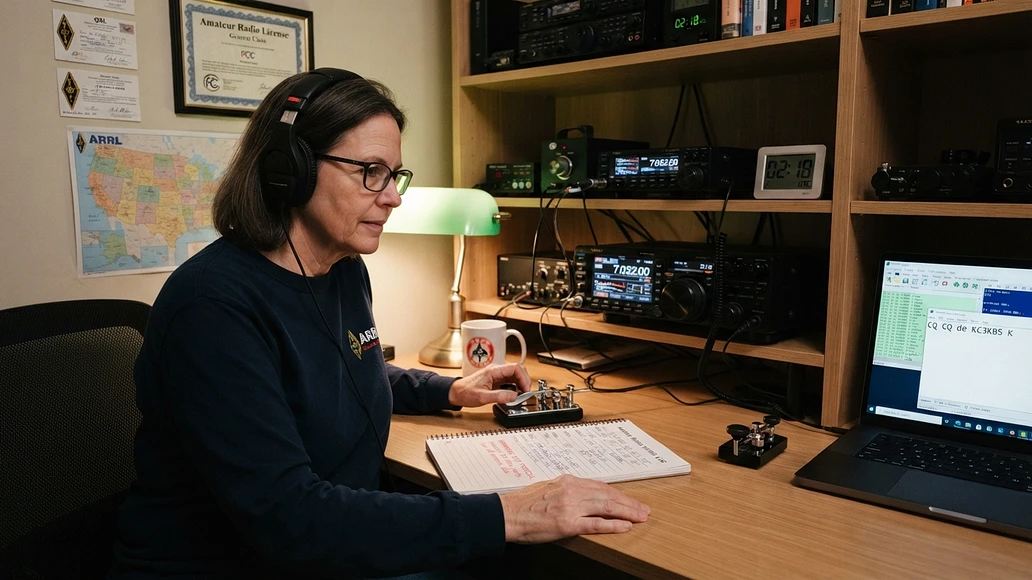
Morse remains respected in amateur radio because it can be effective in weak signal conditions. However, normal radio transmission is still governed by licensing and frequency rules. If you want to use Morse on the air outside a true emergency, get proper training and follow the rules that apply in your area.
Emergency exceptions may exist when life or property is at immediate risk, but that is not a free pass for casual practice. For routine learning, use offline apps, audio trainers, local clubs, or legal supervised operating opportunities.
Accessibility and alternate communication
Morse can be adapted for people who cannot speak or who have limited movement, especially through tapping, blinking, or switch-based input. In the right setting, that can make it a meaningful alternate communication channel. But this is not a one size fits all solution. Fatigue, motor control, cognition, and comfort all matter.
If you are exploring Morse as an assistive method for someone with significant medical or communication needs, involve a speech-language pathologist, occupational therapist, or other qualified clinician. That helps prevent overuse, frustration, and unrealistic expectations.
Should you learn Morse code as a preparedness skill?
For many households, Morse is worth learning at a basic level if you already care about emergency planning, hiking, radio, or low tech backup systems. It is especially sensible if you spend time outdoors, live in areas with storm outages, or enjoy practicing communication skills with family members.
If you are just starting preparedness from zero, put first things first. Water, first aid, lighting, weather awareness, backup power, and a written communication plan will do more for most families than Morse alone. Once those basics are in place, Morse can be a smart add-on.
Quick reference table, alphabet and numerals
| Character | Pattern | Character | Pattern |
|---|---|---|---|
| A | .- | N | -. |
| B | -... | O | --- |
| C | -.-. | P | .--. |
| D | -.. | Q | --.- |
| E | . | R | .-. |
| F | ..-. | S | ... |
| G | --. | T | - |
| H | .... | U | ..- |
| I | .. | V | ...- |
| J | .--- | W | .-- |
| K | -.- | X | -..- |
| L | .-.. | Y | -.-- |
| M | -- | Z | --.. |
| 1 | .---- | 6 | -.... |
| 2 | ..--- | 7 | --... |
| 3 | ...-- | 8 | ---.. |
| 4 | ....- | 9 | ----. |
| 5 | ..... | 0 | ----- |
FAQ
Do I need Morse code to get a ham radio license today?
For most people, no. Morse is no longer a standard licensing requirement for amateur radio in many places, including the United States. It is still useful and respected, but optional.
Is it legal and useful to send SOS with a flashlight or whistle?
Yes, in a real emergency it is a recognized distress signal and can be very useful. Do not use it as a joke or for routine practice in ways that could mislead rescuers.
How fast do I need to be for Morse to help in an emergency?
You do not need high speed. Clear timing and repetition matter more than speed for basic distress signaling.
Can children learn Morse for a family emergency plan?
Yes, at a simple level. Many children can learn SOS, OK, and a few letters through games and flashlight practice. Keep expectations age appropriate and pair Morse with simpler communication habits.