Safe Backup Lighting for Blackouts, Storms, and Off-Grid Nights
A practical guide to lighting your home when the power is out, with the safest indoor options first, room-by-room planning, battery management, and clear warnings about candles, fuel lanterns, and carbon monoxide.

When the grid goes down, the goal is not just to make light. It is to keep people moving safely, avoid fires, preserve battery life, and maintain enough visibility to cook, clean up, use the bathroom, check on children, and get out fast if conditions change. The best plan starts with battery-powered LED lighting, then adds rechargeable and solar-backed options, with open flames treated as a last resort rather than the default.
In plain terms, lighting your home without electricity can mean two different things. One is true non-electric light, such as candles or fuel lamps. The other is grid-independent light that still uses stored electrical energy, such as flashlights, lanterns, headlamps, USB lights, and power banks. For indoor safety, the second category is usually the better choice.
The safest indoor lighting order
If you are deciding what to reach for first during an outage, use a simple safety hierarchy. Battery and rechargeable LEDs belong at the top because they produce light with far less heat and fire risk than open flames. Candles and fuel-burning lamps belong near the bottom because they add burn, tip-over, smoke, and carbon-monoxide concerns.
| Lighting method | Best use | Main strengths | Main limits or risks | Indoor recommendation |
|---|---|---|---|---|
| LED flashlight | Quick checks, focused tasks, finding panels or supplies | Bright, cool-running, long runtime, easy to store | Needs charged cells or spare batteries | Strong first choice |
| LED lantern | Lighting a room, table, hallway, or shared space | Wide area light, low heat, easy for groups | Can drain quickly if left on high | Strong first choice |
| Headlamp | Stairs, repairs, caregiving, carrying items | Hands-free, follows your line of sight | Narrow beam, some people dislike wearing it | Strong first choice |
| Rechargeable light | Routine outages, daily use, reducing disposable battery use | Convenient, reusable, often bright | Must be charged ahead of time, lithium-ion care matters | Strong choice with backup plan |
| USB light plus power bank | Small spaces, bedside use, phone support | Compact, flexible, useful in kits | Runtime depends on bank capacity and cable compatibility | Good secondary system |
| Solar light | Extended outages, daytime recharge backup | Can recharge without grid power | Needs prior sun exposure, weather limits charging, many outdoor models are not ideal indoors | Backup option, not only option |
| Glow stick | Marking exits, bathrooms, or trip hazards | No flame, simple, low heat | Low brightness, limited duration, disposal concerns | Useful marker, not primary light |
| Candle | Last-resort short-term light | Works without batteries | Fire, smoke, burns, tip-over hazard | Use only if safer options are unavailable |
| Oil, kerosene, or propane lamp | Mostly outdoor or specifically approved uses | Can provide sustained light in the right setting | Fuel spills, fumes, fire, carbon monoxide, ventilation issues | Do not assume indoor safe |
What to do in the first 10 minutes of a blackout
The first few minutes matter because most injuries happen when people move too fast in the dark. Slow down, confirm the outage, and light the paths people actually use.
| Time window | Action | Why it matters |
|---|---|---|
| First 1 to 2 minutes | Grab the nearest flashlight or headlamp, check on everyone in the home, and tell people to stay put until a path is lit | Prevents falls, panic, and collisions |
| Next 3 to 5 minutes | Light stairs, hallways, bathrooms, and the main exit first | These are the highest-priority movement zones |
| Next 5 to 10 minutes | Set a lantern in the main living area, place a second light in the bathroom, and assign one portable light per person if possible | Creates a usable household layout without draining every device at once |
| By 10 minutes | Check smoke alarms and battery-backup carbon-monoxide alarms, then decide whether to conserve power or prepare for a long outage | Safety systems matter more when normal utilities are disrupted |
Best tools for different jobs
Flashlights for quick tasks and backup
A flashlight is still the fastest answer for most outages. It is ideal for checking the breaker panel, walking outside briefly, inspecting a leak, or finding supplies. Keep one by each bed, one near the main exit, and one in the kitchen. Models with a low mode are especially useful because low output can stretch runtime dramatically.
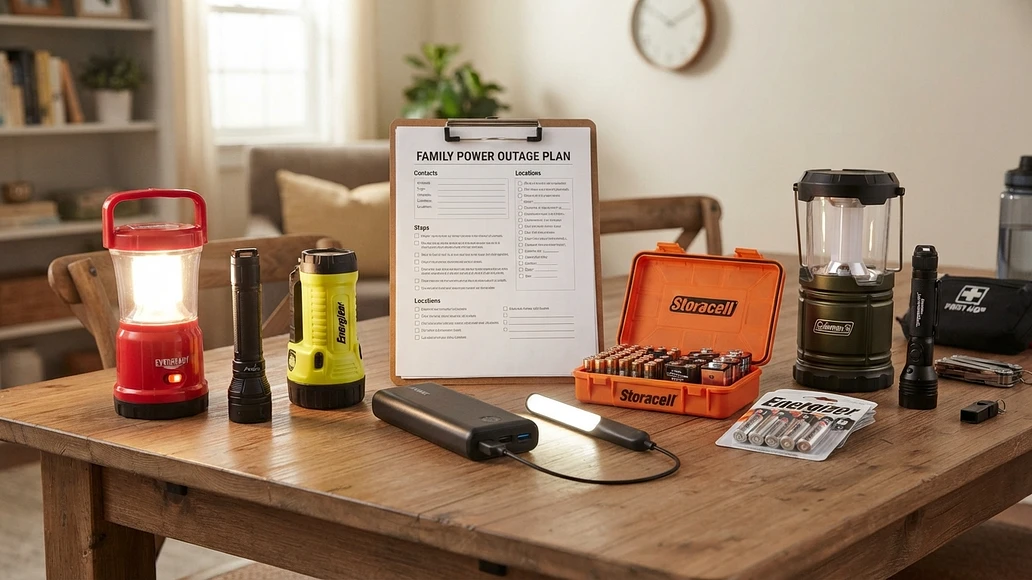
Choose a flashlight with a simple switch, a beam that is not too narrow for indoor use, and a battery type you already stock. If your household uses AA or AAA cells for other gear, standardizing can make emergency resupply easier. If you prefer rechargeable models, keep at least one light that runs on replaceable batteries as a backup in case charging is not available.
Lanterns for room lighting
Lanterns work better than flashlights when several people need to see the same area. A lantern on a kitchen counter, dining table, or bathroom vanity can provide broad, low-glare light without forcing someone to hold a beam all evening. For outages, a lantern with multiple brightness settings is more useful than one that is only very bright. Medium output is often enough for eating, talking, and moving around safely.
Look for a stable base and controls that are easy to use in the dark. If a lantern has a hanging hook, use it only where it will not create a head-level hazard or swing into curtains. Before relying on any rechargeable lantern, check for recalls through the CPSC database.
Headlamps for stairs, caregiving, and repairs
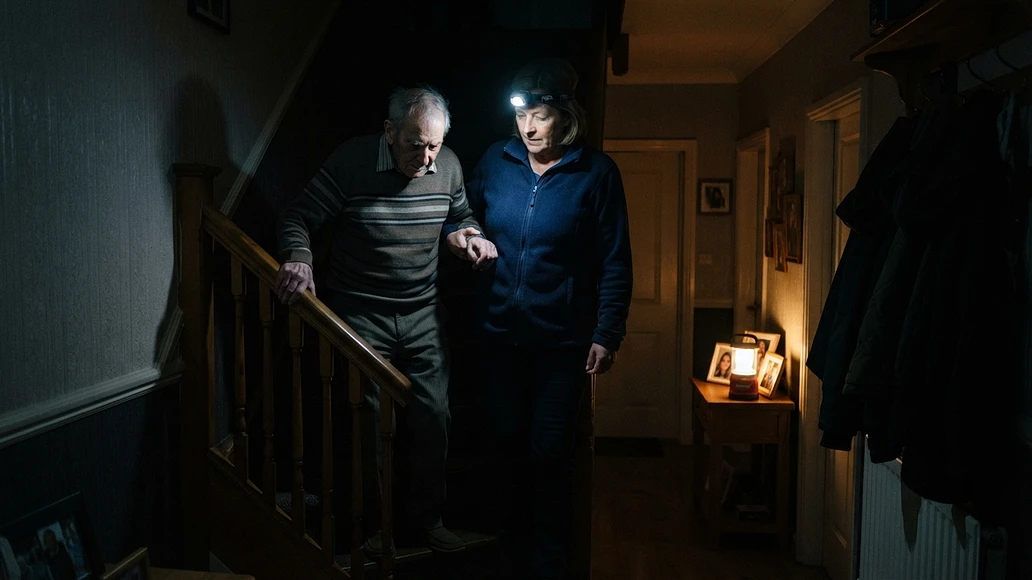
Headlamps are often the most practical light in a real emergency because they keep both hands free. That matters when carrying a child, helping an older adult, cleaning up broken glass, shutting off water, or walking stairs with a hand on the rail. A headlamp is also easier to use than a flashlight when you need to read labels, connect a charger, or manage pets.
For home use, a headlamp with a low mode is usually more comfortable than a very bright trail-running model. Bright light bouncing off white walls can create glare indoors. If your home includes anyone with low vision, test beam patterns ahead of time to see what provides the best contrast without washing out surfaces.
Rechargeable lights, USB lamps, power banks, and solar backups
Rechargeable lighting can be excellent, but it is only as good as your charging routine. A lantern that was never topped off is just a plastic decoration when the power fails. If you rely on rechargeable gear, build a habit of charging after each use and checking battery level monthly.
USB lights are a smart secondary layer. A small USB lamp plugged into a charged power bank can light a bathroom, bedside table, or kitchen corner with very little setup. This is also useful if you want to preserve your phone battery instead of using the phone flashlight all night. The limitation is simple. Runtime depends on the power bank's capacity, the cable, and the lamp's power draw.
Solar options help most during longer outages, but they are often misunderstood. A solar lantern or solar garden light does not create power on demand at night. It must have been charged previously, and recharge speed depends on season, weather, panel size, and placement. Outdoor solar path lights can be brought inside temporarily as a backup source, but they are usually dim and not a substitute for a real emergency lantern.
| System | Works best when | What to watch for | Practical advice |
|---|---|---|---|
| Rechargeable lantern | You maintain a regular charging routine | Battery aging, recall notices, heat during charging | Keep one charged and one backup light on disposable batteries |
| USB light with power bank | You need compact area lighting | Wrong cable, weak bank, drained bank from phone use | Store lamp, cable, and bank together |
| Solar lantern | You expect multi-day outages and have sun access | Slow charging in winter or storms | Test real recharge times before you need it |
| Solar path light | You need temporary marker lights indoors | Low brightness, short duration | Use for hall edges or bathrooms, not as primary room light |
Why candles and fuel lamps are not the first answer
Candles are common because they are familiar, cheap, and easy to store. That does not make them the safest choice. During outages, fire agencies and consumer safety guidance consistently favor battery-powered flashlights and lanterns over candles. A candle can be knocked over by a child, pet, sleeve, or curtain. It can also be forgotten when people get tired and go to bed.
Fuel-burning lamps add another layer of risk. Kerosene, oil, and propane devices may produce useful light in the right setting, but they also introduce fuel handling, spills, fumes, flame control, and in some cases carbon-monoxide hazards. A camping lantern or outdoor emergency light is not automatically safe for indoor use. Follow the product label and owner’s manual exactly. If a device is not specifically approved for indoor use, do not bring it inside and assume ventilation will solve the problem.
Carbon-monoxide warning
Never use a generator, charcoal grill, camp stove, or other fuel-burning appliance indoors, in a garage, basement, shed, crawlspace, tent, or any enclosed or partially enclosed area. Carbon monoxide can build up quickly and can be deadly. If anyone develops headache, dizziness, weakness, nausea, confusion, chest pain, or fainting during an outage, get everyone into fresh air and contact emergency services right away.
If you have no safer option and must use a candle
The safest candle is the one you never need because you planned better. Still, some households will eventually face a situation where batteries are dead and no LED backup is available. If that happens, treat flame lighting as a controlled, short-term measure.
| Safer candle practice | Reason |
|---|---|
| Use one candle at a time in the smallest area needed | Reduces fire risk and makes supervision easier |
| Place it on a stable, noncombustible surface | Lowers tip-over and heat damage risk |
| Keep it well away from curtains, bedding, paper, furniture, and flammable liquids | Prevents nearby materials from igniting |
| Keep children, pets, and loose clothing away | Reduces burns and accidental knockovers |
| Never carry a lit candle while walking | Prevents wax spills, burns, and dropped flames |
| Extinguish it before leaving the room or going to sleep | Unattended flames are a major fire hazard |
Do not improvise lamps with cooking oil, alcohol, gasoline, or random containers. Those setups can flare unexpectedly, spill burning fuel, crack from heat, or release dangerous fumes. They are not a safe substitute for proper emergency lighting.
A room-by-room lighting plan that actually works
Homes do not need equal light everywhere. They need the right light in the right places. Planning by room helps you avoid wasting batteries in low-priority areas while leaving dangerous areas too dark.
| Area | Primary light | Secondary light | Main goal |
|---|---|---|---|
| Bedrooms | Flashlight at each bedside | Headlamp for one adult | Immediate orientation and safe movement after waking |
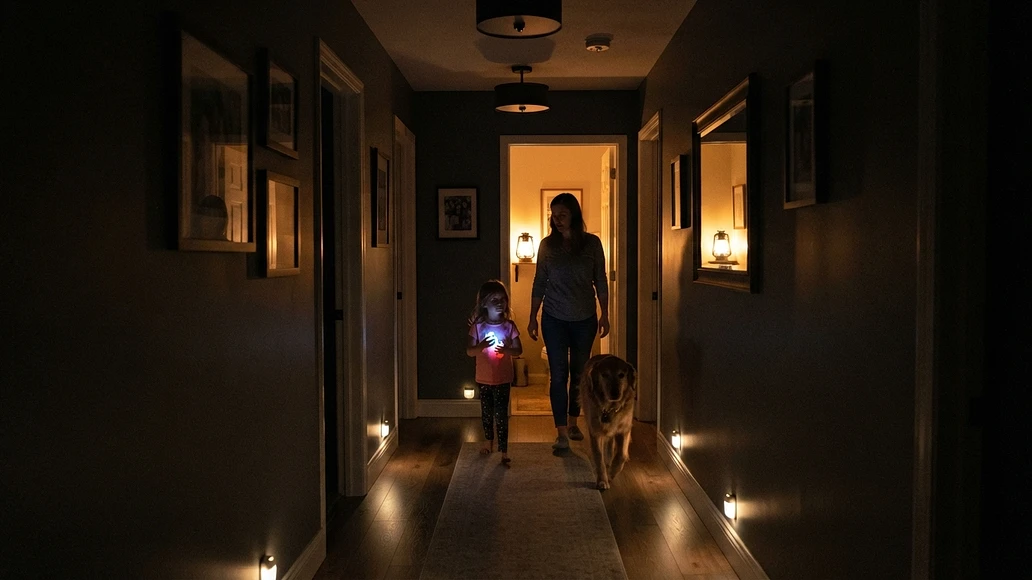
| Hallways and stairs | Lantern or plug-free area light placed off the walking line | Glow stick or low-output marker light | Prevent trips and falls |
| Bathroom | Small lantern or USB light | Flashlight in drawer | Night use without balancing a candle near towels or water |
| Kitchen | Lantern on counter | Headlamp for food prep or cleanup | Task visibility and safer knife handling |
| Main living area | Medium-output lantern | Rechargeable backup lantern | Shared light for gathering and information |
| Entry and exit points | Flashlight near door | Glow marker or low lantern nearby | Fast evacuation if needed |
| Caregiving or medical area | Headlamp plus lantern | Dedicated charged backup light | Hands-free care and reliable visibility |
How to choose the right emergency light
Brightness matters, but it is not the only thing that matters. A very bright light on high mode may look impressive in a product listing and still be a poor outage tool if it drains too fast, creates glare, or uses a battery system you cannot support.
| Feature | Why it matters at home | Good practical target |
|---|---|---|
| Beam pattern | Flood beams work better indoors than narrow spot beams | Wide, even light for rooms and stairs |
| Runtime | Long outages punish lights that only perform well on high | Useful low and medium modes with published runtimes |
| Controls | Complex mode cycling is frustrating in the dark | Simple switch, easy to operate one-handed |
| Battery type | Affects storage, cost, and replacement options | Standardize where possible |
| Weather resistance | Important if you may step outside in rain or snow | Basic splash resistance is helpful |
| Hands-free use | Critical for stairs, repairs, and caregiving | At least one headlamp per household section |
| Charging method | Determines whether you can recover during a long outage | USB charging plus a power-bank or solar backup |
Battery storage and charging mistakes to avoid
Emergency lighting fails as often from battery problems as from poor light quality. Store spare batteries in a cool, dry place, in original packaging or a proper battery case so terminals cannot contact metal objects. Loose batteries in a junk drawer can short, leak, or become impossible to sort by age.
Do not mix old and new batteries in the same device unless the manufacturer specifically allows it. Do not mix incompatible chemistries. Remove alkaline batteries from gear that will sit unused for long periods if the manufacturer recommends it, because leakage can ruin contacts. For rechargeable lithium-ion devices, stop using and do not charge any unit that is swollen, leaking, cracked, unusually hot, or giving off an odd smell.
Button and coin batteries deserve special caution. Keep them away from children and pets. If swallowed, they can cause severe injury or death. That warning applies not just to toys, but also to some novelty or decorative LED lights.
Lighting for children, older adults, pets, and people with disabilities
The best outage plan is not one-size-fits-all. A child may need a simple push-button lantern that can stay beside the bed. An older adult may do better with a lantern that has a large handle and a switch that is easy to feel. Someone with low vision may need more even room lighting and stronger contrast on stairs, not just a brighter beam. A person using mobility aids may need pathways kept completely clear of charging cords, stools, and baskets.
Pets also change the plan. Tail height is enough to knock over unstable lights, and anxious animals often pace during storms. Keep lights off the floor when possible, and avoid open flames entirely in homes with active pets. If someone in the home depends on medical equipment, emergency lighting should be part of a larger outage plan that includes backup power, communication, and evacuation options.
What not to improvise
Some ideas spread quickly during emergencies because they seem clever and cheap. That does not make them safe. Avoid homemade alcohol lamps, gasoline lamps, cooking-oil wick jars, unstable candle holders, and any electrical setup used near sinks, tubs, or wet floors. Do not modify battery packs, wiring, charging circuits, or fuel systems. Do not assume a social media trick has been tested for indoor safety.
Also avoid creating trip hazards with extension cords, dangling USB cables, or lights placed directly in the walking path. A dim but safely placed light is better than a brighter setup that causes a fall.
Seasonal and outdoor use
For winter storms, prioritize long-runtime indoor LEDs, spare batteries, and battery-backup carbon-monoxide alarms. For hurricane season, add weather-resistant flashlights and a way to recharge from a vehicle or solar panel after the storm passes. For camping or evacuation, headlamps and lanterns still make sense, but remember that outdoor-rated gear is not automatically approved for indoor shelter use.
If you evacuate to a hotel, shelter, or relative's home, compact lighting matters more than large room lanterns. A small headlamp, pocket flashlight, USB light, and power bank can cover most short-term needs without taking much space.
Maintenance, recall checks, and replenishment
Emergency lighting should be checked before storm season and again before winter. Test every flashlight and lantern, replace weak batteries, inspect charging cables, and verify that each sleeping area still has a working light. Review the CPSC recall database before relying on rechargeable lanterns or specialty lighting products. Product safety changes over time, and a light that worked fine last year may now have a recall notice or updated warning.
| Task | How often | What to do |
|---|---|---|
| Quick function test | Monthly | Turn on each light, check brightness, inspect for corrosion or damage |
| Recharge cycle check | Monthly | Top off rechargeable lights and power banks if your manufacturer recommends it |
| Battery replacement review | Every 6 to 12 months | Rotate stored cells, discard leaking or expired batteries properly |
| Recall check | Before storm season and after major purchases | Search the CPSC recall database for your models |
| Household plan review | Twice a year | Confirm light placement in bedrooms, stairs, bathrooms, kitchen, and exits |
Bottom line
If you want the safest way to light your home when the power is out, start with LED flashlights, lanterns, and headlamps. Add rechargeable lights, power banks, and solar charging as backups, not as excuses to skip battery planning. Treat candles and fuel-burning lamps as higher-risk tools with strict limits, not cozy first choices. A simple room-by-room plan, tested gear, and fresh batteries will do more for your safety than any improvised trick.