Lessons From Venezuela for Household Readiness in America
Venezuela’s long crisis offers real preparedness lessons, but not a simple blueprint for the United States. Here is what transfers to U.S. households, what does not, and how to build a practical plan for water, medications, food, power, communications, and finances.

When preppers talk about Venezuela, the conversation often turns into a vague warning about collapse. That is not very useful. A better approach is to look at what actually happened there, separate the causes from the symptoms, and ask a narrower question: what can an American household do now to handle shortages, outages, price shocks, and service interruptions without assuming the United States will follow the same path?
Venezuela’s experience matters because it shows how daily life becomes harder when inflation surges, infrastructure weakens, health care access becomes less reliable, and public services fail unevenly. It also shows that crises are rarely one event. They unfold over years, affect regions differently, and often include partial recovery in some areas while hardship continues in others. For preparedness, that means the goal is not to predict a national collapse. The goal is to reduce harm at the household level.
This article is for general education, not individual medical, legal, or financial advice. If your household includes pregnancy, diabetes, kidney disease, oxygen dependence, refrigerated medicines, mobility limitations, or other chronic needs, build your plan with a clinician, pharmacist, or other qualified professional.
What Venezuela’s crisis actually included
It is more accurate to think of Venezuela’s situation as several overlapping problems rather than one dramatic breakdown. Over time, the country experienced severe economic contraction, very high inflation and then hyperinflation, declining oil production, shortages of basic goods, unreliable electricity and public services in some areas, strain on the health system, political conflict, and large-scale migration. Sanctions, corruption, policy failures, infrastructure deterioration, and dependence on oil revenue all played roles. No single explanation covers everything.
For preppers, the important lesson is not to argue over one cause. It is to notice the pattern of consequences. Households suffered when money lost value quickly, stores had gaps on the shelves, transportation became harder, medicine access became less predictable, and people had to rely more on family networks and informal support.
What transfers to U.S. preparedness, and what does not
Some lessons travel well. Others do not.
| Lesson or claim | How well it transfers to U.S. households | Preparedness takeaway |
|---|---|---|
| Keep water, food, medicines, lighting, and backup charging at home | High | These help in storms, outages, distribution delays, and temporary shortages |
| Maintain cash, multiple payment methods, and a modest emergency fund | High | Useful during card outages, banking disruptions, and sudden price increases |
| Expect uneven service restoration and patchy local conditions | High | Plan for your neighborhood, not just national headlines |
| Assume the U.S. will mirror Venezuela’s political and economic path | Low | This is misleading. Institutions, currency systems, geography, and supply chains differ |
| Rely on weapons as the main preparedness answer | Low | Prioritize avoidance, locks, lighting, communication, and lawful safety planning |
| Expect gardening to replace disrupted food distribution quickly | Low | Gardening is a supplement, not a short-term substitute for stored food |
The United States has different institutions, a different energy system, a different currency environment, and different regional supply chains. That does not make U.S. households immune to disruption. It means the most realistic planning focus is temporary and regional stress, not a copy-and-paste collapse script.
A short timeline, why it matters to preppers
Venezuela’s deterioration was not a single week when everything stopped. It was a long sequence. Oil dependence left the economy vulnerable. Economic contraction deepened. Inflation accelerated into hyperinflation. Public confidence and purchasing power eroded. Infrastructure and public services weakened. Health care access became more difficult. Migration increased as families sought stability elsewhere. More recently, some reporting has described partial stabilization efforts, renewed international financial engagement, and reconstruction discussions, while humanitarian needs and institutional concerns remain. Recent reporting has also noted earthquake damage in 2026, adding another layer to an already stressed system.
The preparedness lesson is simple: long emergencies usually arrive in phases. First prices rise. Then certain items become hard to find. Then outages or service failures become more disruptive because households are already financially stretched. A family that prepares only for one dramatic event can miss the slower, more common pattern.
Rank your household priorities by consequence
Many people buy specialty gear first because it feels decisive. In reality, the highest-value preparations are usually less exciting. Water, medications, sanitation, food, power for essential devices, communications, transportation readiness, and financial resilience matter more than tactical extras for most households.
| Priority | Why it comes first | What good preparation looks like |
|---|---|---|
| Water | Dehydration and sanitation problems escalate quickly | Stored water, safe containers, treatment options, and a backup source plan |
| Medications and medical continuity | Missed doses can become dangerous before food shortages do | Refill planning, records, refrigeration backup, clinician coordination |
| Sanitation and hygiene | Service interruptions create illness risk and stress | Toilet contingency, soap, disinfecting supplies, trash management |
| Food | Shortages and inflation are easier to manage with a rotating reserve | Two weeks to three months of familiar food, with cooking and water plans |
| Power and lighting | Outages affect safety, refrigeration, communication, and medical devices | Flashlights, batteries, charging, safe backup power |
| Communications | Reliable information reduces panic and bad decisions | Battery radio, charging plan, family contact plan, official alerts |
| Finances | Cash flow problems worsen every other disruption | Emergency fund, small cash reserve, multiple payment methods |
A practical action plan for 72 hours, 14 days, and 90 days
First 72 hours
| Need | Minimum target | Low-cost option | Higher-cost option |
|---|---|---|---|
| Water | At least 1 gallon per person per day, plus extra for pets and sanitation | Store commercially bottled water or refill food-grade containers | Larger water storage system with treatment supplies |
| Food | Three days of no-cook or easy-cook meals | Canned foods, nut butter, crackers, shelf-stable milk | Expanded pantry with camp stove used only as directed and where safe |
| Lighting | Hands-free and room lighting | Flashlights and spare batteries | Rechargeable lanterns and battery banks |
| Medical | Essential prescriptions and first aid basics | Refill as allowed, keep copies of medication list | Backup refrigeration and organized medical kit |
| Communications | Ability to receive alerts and contact family | Charged phones and car charger | Battery radio and larger power bank |
Two weeks
| Need | Priority | What to add |
|---|---|---|
| Water | Very high | Increase storage, add treatment method, identify alternate safe source |
| Food | Very high | Build a rotating pantry of familiar foods that match dietary needs |
| Sanitation | High | Trash bags, toilet backup, soap, bleach if appropriate, cleaning supplies |
| Power | High | Battery rotation, charging schedule, cold-storage plan for food and medicine |
| Finances | High | Small emergency cash reserve and bill triage plan |
| Transportation | Medium | Keep fuel above half a tank, maintain tires, fluids, and chargers |
One to three months
| Need | Goal | Important tradeoff |
|---|---|---|
| Food reserve | A deeper pantry with rotation | Do not buy foods your household will not eat |
| Water resilience | Storage plus treatment plus source backup | Treatment does not fix every contamination problem |
| Medical continuity | Better documentation and supply planning | Requires coordination with clinicians and lawful refill timing |
| Backup power | Support critical devices and refrigeration needs | Generators require fuel, maintenance, and strict safety practices |
| Financial resilience | Emergency fund and diversified payment access | Build gradually to avoid debt-driven panic buying |
Water and sanitation, the most overlooked basics
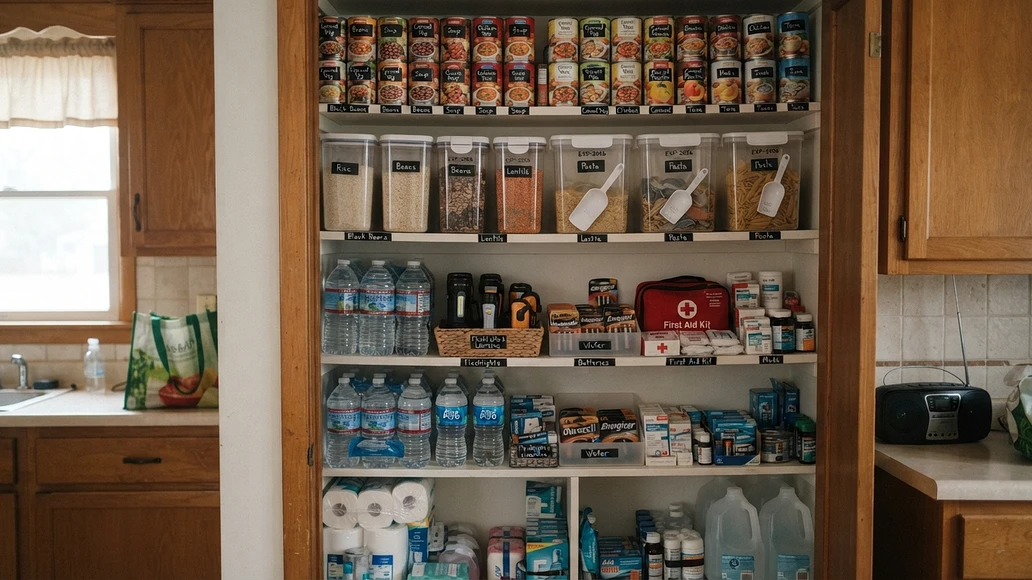
Water problems become household emergencies fast. A family can tolerate inconvenience in many areas, but not for long without safe drinking water and a sanitation plan. Store water in clean, food-grade containers. Label and rotate it according to the container type and storage conditions. Keep a separate plan for drinking, cooking, handwashing, and toilet needs.
It is also important to understand the limits of treatment. Boiling can address many biological hazards, but it does not remove all chemical contamination. Ordinary household filters also vary widely. Fuel, sewage, industrial chemicals, and unknown pollutants may require official guidance or a different water source entirely. If water looks, smells, or tastes unusual after flooding, industrial accidents, or infrastructure damage, do not assume boiling alone makes it safe.
For sanitation, think beyond toilet paper. If water service is interrupted, you need a way to manage waste, hand hygiene, and trash without contaminating living areas. A simple toilet contingency, heavy-duty bags, soap, and cleaning supplies often do more for health than another piece of gear.
Medication continuity can matter more than extra gear
In real disruptions, missing medication is often more dangerous than running low on snacks. Build a current medication list with names, doses, prescribers, pharmacy contacts, and refill numbers. Keep copies in paper form and on your phone. If someone in your household uses refrigerated medicine, ask a pharmacist or clinician how to store it safely during outages and what temperature limits matter.
Do not change doses, substitute imported drugs, or rely on herbal or online crisis cures without professional guidance. People with diabetes, kidney disease, immune suppression, pregnancy, oxygen dependence, or complex medication schedules need individualized continuity plans. If you use powered medical equipment, backup electricity moves much higher on your priority list.
| Medication issue | Preparedness step | Safety note |
|---|---|---|
| Routine prescriptions | Track refill dates and ask about lawful early refill options | Policies vary by insurer, state, and medication type |
| Refrigerated medicines | Plan for cooler storage, backup power, and temperature monitoring | Ask a pharmacist for product-specific limits |
| Medical records | Keep printed summaries and digital copies | Protect privacy while ensuring access in an emergency |
| Special diets or supplies | Store compatible foods and necessary consumables | Do not assume generic emergency food fits medical needs |
Power and communications, plan for inconvenience before catastrophe
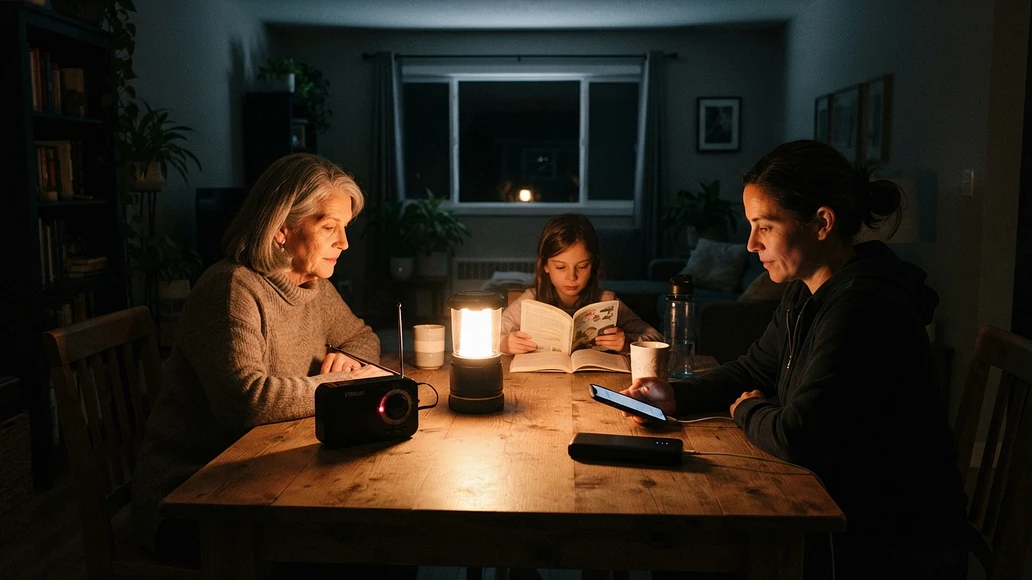
Venezuela’s experience highlights how disruptive unreliable electricity can be. In the U.S., a storm, wildfire, heat wave, grid failure, or local equipment problem can create similar household stress even if the broader system remains intact. Start with lighting, phone charging, refrigeration planning, and a way to receive official information.
If you use a generator, treat it as a tool with serious hazards, not a magic fix. Never operate a generator indoors, in a garage, basement, enclosed porch, or near doors and windows. Use carbon-monoxide alarms and follow manufacturer instructions and local code requirements. Do not improvise home electrical connections. If you want generator power tied into household circuits, use a qualified electrician and proper transfer equipment.
Battery banks, car chargers, rechargeable lanterns, and a battery or hand-crank radio are often more useful for most families than jumping straight to a large generator. They are quieter, simpler, and easier to maintain.
| Power option | Best use | Main limitation |
|---|---|---|
| Flashlights and lanterns | Immediate lighting | Battery dependence |
| Power banks | Phones, small electronics, some medical accessories | Finite capacity, must be recharged |
| Vehicle charging | Short-term phone and device charging | Fuel use, not safe in enclosed spaces |
| Portable power station | Quiet backup for small devices and some appliances | Cost and limited runtime |
| Generator | Longer outages and larger loads | Carbon-monoxide risk, fuel storage, noise, maintenance |
Food storage without waste or fantasy
Food preparedness works best when it looks like an expanded version of your normal pantry. Inflation, temporary shortages, and distribution delays are more common than total food disappearance. A rotating reserve of familiar foods helps you avoid panic buying and lets you absorb price spikes by purchasing gradually.
Think in terms of meals, not just calories. Include foods your household actually eats, plus the water and fuel needed to prepare them. If the power is out, dry beans and rice are less helpful if you have no safe way to cook them. Balance shelf-stable proteins, ready-to-eat foods, comfort foods, and items that fit allergies, diabetes management, low-sodium needs, or infant feeding requirements.
Food safety matters during outages. If refrigeration temperatures have been unsafe for too long or contamination is suspected, discard the food. Do not taste questionable food to decide whether it is safe.
| Food category | Why it belongs in a preparedness pantry | Common mistake |
|---|---|---|
| Canned proteins and meals | Ready to eat, long shelf life | Ignoring sodium, taste preferences, or can rotation |
| Dry staples | Cost-effective and versatile | Forgetting water, cooking fuel, and pest-proof storage |
| No-cook foods | Useful during outages and evacuations | Buying too little variety for more than a few days |
| Special diet foods | Critical for health and compliance | Assuming generic emergency food works for everyone |
| Comfort items | Supports morale and appetite during stress | Letting them crowd out essentials |
Inflation preparedness is mostly about cash flow, not prophecy
One of the clearest transferable lessons from Venezuela is that rising prices hurt households long before any dramatic headline event. Inflation preparedness does not require predicting currency collapse. It means reducing your exposure to sudden price jumps and payment disruptions.
Build a modest reserve of essentials you already use. Keep some emergency cash in small bills if that is safe for your household. Maintain more than one way to pay, such as cash, debit, and credit used responsibly. Review which bills are truly fixed, which subscriptions can be cut, and which purchases can be shifted earlier if prices are rising. Avoid panic buying that creates debt or leaves you with supplies you cannot rotate.
| Financial step | Benefit | Limit |
|---|---|---|
| Small emergency cash reserve | Helps during card outages and short disruptions | Does not protect against every financial shock |
| Rotating pantry | Reduces repeated exposure to price spikes | Requires storage space and discipline |
| Emergency fund | Absorbs repairs, travel, and temporary income loss | Takes time to build |
| Multiple payment methods | Improves flexibility when one system fails | Needs careful account management |
Community resilience beats isolated stockpiling
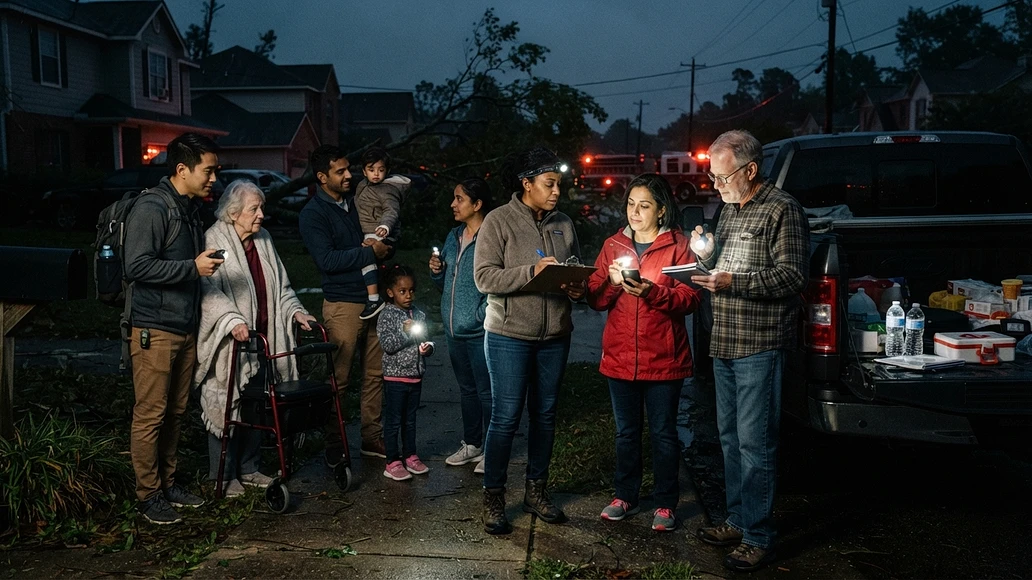
Another durable lesson is that social networks matter. In prolonged stress, people rely on relatives, neighbors, faith communities, local organizations, and trusted contacts for information, transportation, childcare, medicine pickup, and emotional support. A household that has supplies but no communication plan can still be fragile.
Preparedness does not have to mean broadcasting your inventory. It does mean knowing who can check on an older adult, who has medical training, who can share verified local information, and who might need help if services fail. Mutual aid is not a substitute for personal responsibility, but it often determines how well a neighborhood handles disruption.
Security without escalation
Periods of uncertainty can increase fear, rumors, and opportunistic crime. The safest default is still avoidance, awareness, and lawful prevention. Good locks, exterior lighting, charged phones, a family check-in plan, and knowing when to leave an area are more broadly useful than acting as if confrontation is inevitable.
Firearm laws vary by state and local jurisdiction, and any defensive tool carries legal and safety responsibilities. This article does not offer individualized legal advice. If you choose to own defensive tools, get lawful training, secure storage, and a clear understanding of your local rules. Do not make weapons the center of your preparedness plan.
Common mistakes this case study helps us avoid
| Mistake | Why it causes problems | Better approach |
|---|---|---|
| Buying specialized gear before water and medications | Misses the most immediate risks | Fund basics first |
| Assuming any water can be purified at home | Creates false confidence around chemical contamination | Know the limits of boiling and filters |
| Relying on one payment method | Card or network outages can block purchases | Use multiple payment options and keep modest cash |
| Ignoring prescription continuity | Health problems can escalate quickly | Track refills, records, and storage needs |
| Using generators unsafely | Carbon-monoxide poisoning can be fatal | Operate outdoors only, away from openings, with alarms |
| Overestimating stored food | Calories alone do not equal usable meals | Plan for water, cooking, diet, and rotation |
| Treating every disruption as proof of national collapse | Leads to poor decisions and panic spending | Plan for realistic local scenarios first |
Scenario comparison, what to do first
| Scenario | Most urgent household needs | What preparation helps most |
|---|---|---|
| Short power outage | Lighting, charging, refrigeration decisions, information | Flashlights, power banks, radio, food safety plan |
| Prolonged outage | Water, sanitation, medicine, cooling or heating, fuel | Stored water, hygiene supplies, backup power, refill planning |
| Inflation shock | Cash flow, food budget, transportation costs | Rotating pantry, emergency fund, multiple payment methods |
| Distribution disruption | Staples, household goods, medication access | Two-week to three-month reserve of essentials |
| Civil emergency or unrest | Reliable information, avoidance, family coordination | Communication plan, charged devices, secure home, alternate routes |
Recent context, dated and cautious
As of 2026, reporting has described renewed engagement by international financial institutions, debt and reconstruction discussions, continuing human-rights concerns, and persistent humanitarian needs. Reporting has also noted major earthquake damage, which adds acute recovery challenges to existing infrastructure and service problems. Those details may change. The lasting preparedness lesson does not. Households are better off when they can handle service interruptions, price shocks, constrained access to medicine, misinformation, and uneven recovery.
The bottom line for preppers
Venezuela is not a script for America. It is a reminder that hardship often arrives as a chain of practical problems, expensive groceries, missing medicines, unreliable power, bad information, and stretched public services. The best response is not theatrical collapse talk. It is boring competence.
If you want the most useful takeaway, start here: store water safely, build a rotating pantry, protect medication continuity, prepare for outages, keep multiple ways to pay, and strengthen your local support network. Those steps will help in the widest range of realistic disruptions, whether the problem lasts a day, a month, or longer.
References
- Venezuela | World Bank Group
- International Monetary Fund, Venezuela country information
- UNHCR, Venezuela situation
- United Nations OCHA, Venezuela
- U.S. Department of State, Venezuela country information
- CDC, emergency water guidance
- Ready.gov, power outage guidance
- FDA, food safety during power outages
- WHO, Venezuela emergency information
- Reuters, Venezuela latest reporting