Leaving Modern Life Behind, What It Really Takes to Enter an Amish Church
Yes, a non-Amish outsider can sometimes become Amish, but it is rare, slow, and far more about faith and submission to community rules than about living off grid. This guide explains which groups may be more open, what the process usually involves, and why many people are better served by learning Amish-style skills without trying to convert.

Many people ask whether a non-Amish person, often called an "English" outsider by Amish communities, can join the Amish. The short answer is yes, sometimes. The more honest answer is that it is rare, difficult, and usually misunderstood. Joining the Amish is not mainly about swapping smartphones for lanterns or moving to a farm. It is a religious commitment that involves church membership, obedience to a local community's rules, and a willingness to reshape nearly every part of daily life.
This article offers general information only, not legal, medical, or religious advice. If you are considering a major life change, especially one involving marriage, children, health needs, debt, property, or relocation, talk with qualified professionals and with actual Amish or related Anabaptist communities before making decisions.
What “joining the Amish” actually means
A lot of popular media treats Amish life like a simple-living package. In reality, Amish identity is rooted in Christian faith, adult baptism, humility, separation from the world, and submission to the local church. That means an outsider is not just asking to wear plain clothes or avoid grid power. They are asking to be accepted into a disciplined religious body with its own expectations for worship, work, family life, and conduct.
The Amish are not one single uniform group. Different settlements and affiliations have different standards for transportation, electricity, business tools, language use, dress, and interaction with outsiders. Even where conversion is possible, acceptance depends on the local church district, bishop, and congregation.
Can an outsider really become Amish?
Yes, it has happened. But it is uncommon enough that nobody should assume it is a realistic plan for most people. Amish communities generally do not evangelize in the way many other churches do. They are usually cautious about outsiders because membership is expected to be lifelong, and because culture, language, family ties, and shared habits matter deeply.
In practical terms, the answer is best understood this way: possible for a small minority, discouraged or effectively closed in many communities, and often much harder than curious readers expect.
| Claim or theme | Evidence strength | Does it solve the core question or only ease curiosity? | Notes |
|---|---|---|---|
| Some outsiders can and do become Amish | Well supported | Solves the narrow question for a tiny minority | Documented by Amish-focused sources and community accounts, but still very rare. |
| Most Amish communities discourage outsider conversions | Well supported | Solves the expectation problem | Important for readers who assume any settlement might welcome them. |
| Some groups are more open than others | Well supported | Helps serious seekers focus on realistic paths | New Order and certain less closed settlements may be more approachable. |
| Joining is mainly a lifestyle change | Weak | Only eases romantic ideas | This is one of the biggest myths. It is primarily a church commitment. |
| Amish life guarantees safety, happiness, or preparedness | Weak | Does not solve deeper problems | Romanticized claims ignore real hardship, discipline, and limits. |
How different Amish groups view outsiders
Readers often talk about "the Amish" as if every community follows one rulebook. That is not how Amish life works. The local Ordnung, which is the community's unwritten code, shapes daily life and can vary significantly from one settlement to another.
| Amish group or tendency | Typical stance on technology | Language and worship patterns | General openness to outsiders |
|---|---|---|---|
| New Order Amish | Often somewhat less restrictive, depending on settlement | May use more English in some settings | Generally more open than stricter groups, though still cautious |
| Old Order Amish | Conservative limits on electricity, vehicles, and media | Often use Pennsylvania Dutch in daily life and German in worship elements | Usually guarded, with acceptance depending heavily on local leadership |
| Very conservative groups, including Swartzentruber tendencies | Highly restrictive | Strong emphasis on separation and tradition | Typically least open to outsider conversion |
This table is a broad guide, not a promise. A person might find one Old Order settlement more approachable than another, while a more conservative group may not seriously entertain the idea at all.
What the process usually involves
Where outsider conversion is possible, it is usually slow and relational. There is no universal application form. A person generally has to move near a settlement, build trust, attend services, learn expectations, and show long-term consistency. In some accounts, a sponsoring family or close host relationship plays an important role. Language learning may also matter, especially for daily integration.
| Step | Typical time frame | What it involves | Main challenge |
|---|---|---|---|
| Relocating near a settlement | Months to years | Living close enough to attend church and build relationships | Work, housing, and leaving existing support systems |
| Building trust with Amish families | Ongoing | Regular contact, humility, and willingness to learn | Outsiders may be viewed cautiously for a long time |
| Adapting to plain living expectations | Months to years | Clothing, transportation, communication, work habits, and modesty | Daily inconvenience is only part of the adjustment |
| Learning language and worship patterns | Varies widely | Pennsylvania Dutch for daily life in some communities, German elements in church | Language barriers can be major |
| Instruction and church attendance | Often extended | Religious teaching, observation, and proving commitment | It is not a casual trial period |
| Baptism and congregational acceptance | Usually after a long process | Formal church membership and submission to the Ordnung | Approval is not guaranteed |
Even after acceptance, the real test is staying. Some outsiders who try to join later leave because the demands are heavier than expected, or because they never fully adapt to the social and religious structure.
Daily life changes are bigger than most people expect
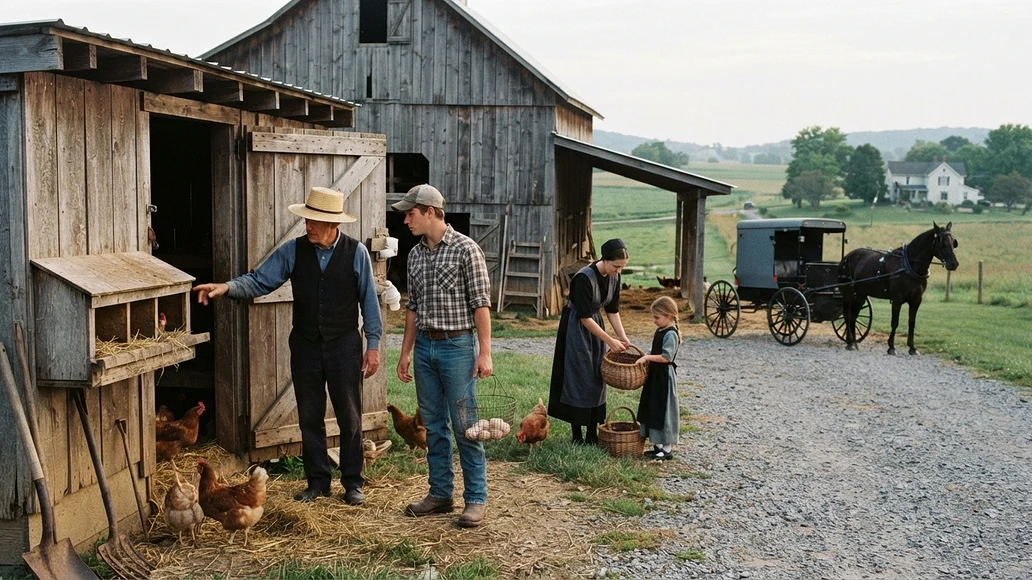
Preparedness-minded readers are often drawn to the Amish because of self-reliance, practical skills, and lower dependence on modern systems. Those are real features of many Amish communities, but they come with tradeoffs. The issue is not simply doing without a few gadgets. It is accepting a whole social order.
| Area of life | Typical modern American norm | Typical Amish expectation | What this means for a newcomer |
|---|---|---|---|
| Transportation | Personal car and independent travel | Horse and buggy, hired rides, or community-approved arrangements | Less personal mobility and more dependence on community norms |
| Communication | Smartphones, internet, constant connectivity | Limited or restricted phone use, often outside the home or business-specific | Reduced privacy and slower contact with the outside world |
| Work | Wide career choice and digital employment | Farming, trades, shops, manual labor, family businesses | Skills and income options may narrow sharply |
| Clothing | Individual style and consumer choice | Plain dress tied to local rules | Personal expression becomes secondary to conformity |
| Schooling | Conventional K-12 and college pathways | Community-specific schooling, often ending earlier than mainstream norms | Important issue for families with children |
| Family and gender roles | Highly individualized expectations | More traditional and community-defined roles | Can be a major adjustment for spouses and children |
| Entertainment | Streaming, social media, sports culture | Strong limits on media and worldly amusements | Social life becomes much more local and structured |
For some people, these changes feel grounding. For others, they become isolating. That is why romantic ideas about simplicity should be tested against real daily routines, not just aesthetics.
The Ordnung matters more than outsiders realize
The Ordnung is the local code that governs practical life. It may address clothing details, acceptable tools, buggy style, power sources, business equipment, courtship standards, and contact with the broader world. It is usually unwritten, but it is not optional for members.
This is one reason joining is so hard for outsiders. A newcomer may be willing to give up television or a car, but struggle with the deeper expectation of obedience. Amish life places a high value on humility and community harmony over personal preference. If a person is drawn mainly by off-grid techniques, they may resist the very authority structure that makes Amish life Amish.
How rare is successful outsider conversion?
Rare enough that no one should plan on it casually. Exact numbers are hard to pin down across all settlements, and many stories are anecdotal. Still, the broad picture is consistent. Outsider converts exist, but they are unusual, and many attempts do not end in long-term membership.
Why do attempts fail? Common reasons include culture shock, language barriers, family conflict, unrealistic expectations, inability to accept church discipline, and practical strain around work, health, or children. Some people discover that what they wanted was not Amish religion, but relief from modern stress.
Health, legal, and financial realities
This is where curiosity should give way to caution. A move into a closed religious community can affect healthcare access, insurance patterns, emergency planning, taxes, retirement expectations, and property decisions. Amish communities do use modern hospitals and doctors, but local practices around insurance, transportation, and long-term care may differ from what an outsider is used to.
If you have chronic illness, pregnancy concerns, disability-related needs, mental health treatment, or medications that require steady specialist access, do not assume you can simply adapt later. Talk with your healthcare team first. If you are considering selling a home, quitting a job, cashing out retirement, or changing business arrangements, speak with a licensed financial or legal professional before acting.
| Concern | Why it matters | Safer next step |
|---|---|---|
| Chronic medical needs | Rural distance, transportation limits, and different community norms can complicate care | Review the plan with your doctor and specialists before relocating |
| Mental health or burnout | Major life changes can intensify stress rather than solve it | Talk with a counselor before making a drastic move |
| Marriage and children | One spouse may want the change more than the other, and children bear the consequences | Consider family counseling and practical planning |
| Debt or legal trouble | Trying to disappear into a community is unrealistic and unethical | Address debts and legal obligations directly with qualified help |
| Income and retirement | Work patterns and long-term benefits may not match your assumptions | Get professional tax and retirement advice first |

What if you have tattoos, a divorce, or a complicated past?
There is no single universal answer. Some conservative communities may see visible tattoos, past divorces, criminal history, or other markers of modern life as serious barriers. Others may focus more on repentance, honesty, and present conduct. The key point is that these issues are handled locally, not by a national Amish office.
What matters most is honesty. Anyone trying to hide a past, minimize legal trouble, or present themselves as a novelty project is unlikely to build trust. If your interest is sincere, expect direct questions and a long period of observation.
Better alternatives for many seekers
A surprising number of people who ask about becoming Amish are not really seeking Amish church membership. They are seeking slower living, stronger family rhythms, practical skills, less debt, more meaningful work, or a faith community with clearer boundaries. Those needs may be met in other ways.
| Path | Openness to outsiders | Technology stance | Best fit for |
|---|---|---|---|
| Amish church membership | Usually low | Strict and community-specific | People seeking a full religious and cultural commitment |
| Mennonite church | Often higher | Varies widely, from conservative to fairly modern | People drawn to Anabaptist faith without the same level of separation |
| Intentional Christian community | Varies | Usually more flexible | People wanting shared life and service without Amish rules |
| Homesteading or simple-living path | Open | Self-chosen | People mainly seeking resilience, skills, and lower consumption |
For many readers, this is the most practical takeaway. You can learn from Amish strengths without trying to enter a closed church culture that may not be meant for you.
What preparedness readers can learn without converting
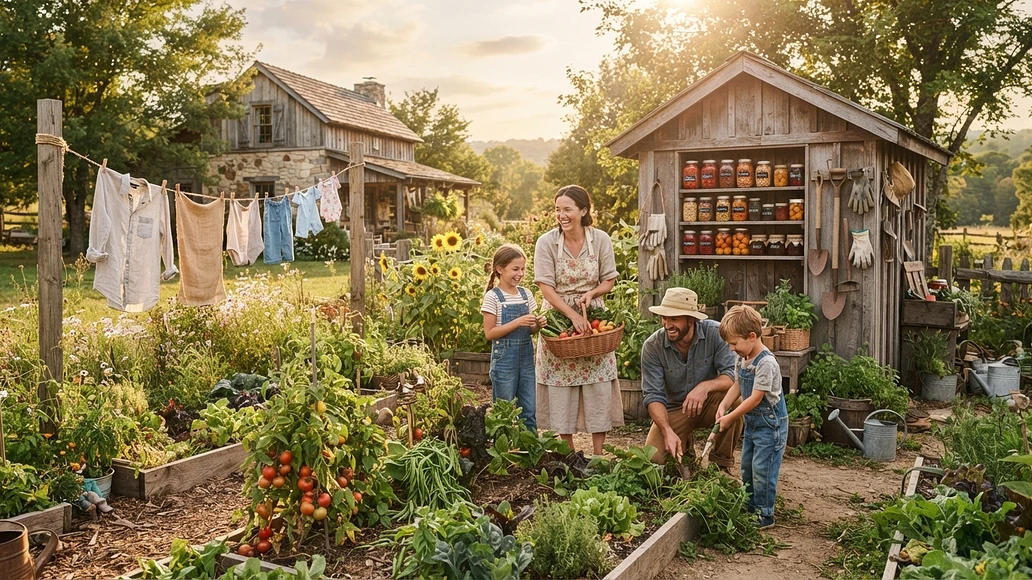
Amish communities are often admired for habits that increase resilience. These include gardening, food preservation, repair culture, mutual aid, practical trades, and lower dependence on fragile supply chains. Those lessons can be adopted respectfully in ordinary American life.
Useful areas to study include home gardening, pressure canning with approved safety guidance, sewing and mending, hand-tool woodworking, pantry management, cooking from staples, and building stronger neighborhood support networks. These are concrete preparedness gains. They do not require pretending to be Amish or treating Amish people like a survival template.
Common myths that deserve a reality check
| Myth | Reality |
|---|---|
| Anyone can join if they are willing to give up electricity | Technology sacrifice is only one small part of a much deeper religious and cultural commitment. |
| All Amish groups follow the same rules | Rules vary by settlement and church district, often significantly. |
| Amish life is automatically safer in disasters | Some low-tech habits improve resilience, but Amish communities still face storms, illness, economic strain, and supply problems. |
| Reality TV shows the normal path for outsiders | Entertainment formats exaggerate conflict and do not represent ordinary church life well. |
| Joining the Amish is a good way to escape modern problems | Unresolved stress, depression, debt, or relationship problems usually follow you unless addressed directly. |
Questions to ask yourself before taking this seriously
Ask whether you are drawn to Amish faith, or merely to Amish aesthetics. Ask whether your spouse agrees. Ask what your children would lose or gain. Ask whether your health needs are manageable in a more rural and restricted setting. Ask whether you are running toward conviction, or away from pain.
If your desire to disappear into a simpler life is tied to depression, trauma, burnout, or family crisis, seek counseling first. A major move may intensify those pressures. If your interest is mainly practical, start by changing your own household habits before imagining a total cultural transfer.
How to respectfully visit and learn from Amish communities
Respect starts with boundaries. Do not photograph people without permission. Do not treat homes, buggies, or worship practices like museum exhibits. Do not assume every Amish business wants long conversations about religion or preparedness. If you buy goods, pay fairly and be courteous. If you are invited into deeper conversation, listen more than you speak.
For readers who want to learn, the most respectful path is often indirect. Support local produce stands, furniture makers, quilt auctions, or farm markets where welcome. Study practical skills through extension programs, local workshops, and your own community. Let admiration become discipline, not tourism.
So, is trying to become Amish the right move?
For a very small number of people, maybe. For most, probably not. The Amish are not an off-grid club or a preparedness upgrade. They are a religious people with strong communal boundaries, local rules, and a way of life that asks for obedience as much as simplicity.
If what you truly want is more resilience, less consumer pressure, stronger family habits, and practical home skills, you can begin where you are. Grow food. Learn preservation safely. Reduce debt. Repair things. Build local relationships. Join a church or community that matches your convictions. In many cases, that path is both more realistic and more respectful than trying to enter a world that was never designed as an escape hatch for modern frustration.
FAQ
Is it realistic for a modern American to become Amish today?
It is possible, but not realistic for most people. Successful outsider conversion is rare, and many communities are effectively closed to it.
Do I have to give up all technology to join the Amish?
You would have to accept the local community's rules, which may sharply limit or regulate technology. The exact standards vary, but the deeper issue is obedience to the Ordnung, not just owning fewer devices.
How long does it usually take for an outsider to be accepted into an Amish church?
There is no universal timeline. Serious attempts often take months or years and may involve relocation, relationship-building, instruction, and eventual congregational approval.
Are Amish communities safer or more secure than modern life during disasters?
Some Amish habits, such as local production, repair skills, and mutual aid, can improve resilience. But Amish life does not guarantee safety, and these communities still face emergencies, health issues, and economic stress.
What is the difference between joining the Amish and joining a Mennonite church?
Mennonite churches are often more open to newcomers and may allow much more technology, depending on the group. Amish membership is usually more culturally closed and more tightly regulated in daily life.