Why Body Armor Can Stop a Round and Still Leave Life Threatening Trauma
A ballistic vest can prevent penetration and still allow severe injury. Learn how behind-armor blunt trauma, coverage gaps, rifle threats, poor fit, and non-certified gear can turn a survivable hit into a medical emergency.

People often say “bulletproof vest,” but that phrase creates the wrong expectation. Modern body armor can dramatically reduce the risk of a fatal torso gunshot, yet it does not make the wearer invulnerable. A vest may stop a bullet from penetrating and still leave the person with severe bruising, broken ribs, lung injury, internal bleeding, or a dangerous injury outside the area the armor covers.
The key idea is simple. Stopping penetration is not the same as preventing injury. The force of impact still has to go somewhere, and the body can absorb enough of that force to suffer serious trauma. In rare cases, especially with high energy impacts, poor fit, coverage gaps, or vulnerable health conditions, that trauma can become life threatening.
This article explains how bulletproof vests can still cause fatal injuries in plain English, while keeping the bigger truth in view. Body armor saves lives. It just has limits, and those limits matter most after a real impact.
What “bulletproof” really means
No wearable vest is literally proof against every bullet. A more accurate term is bullet-resistant or ballistic-resistant body armor. Armor is designed and tested against specific threats, not all threats.
That means a vest can perform exactly as designed and still fail against a different round, a different velocity, a hit near the edge, multiple impacts, or a shot that lands outside the protected zone. It also means a vest can stop the projectile but not fully protect the chest, lungs, ribs, or abdomen from blunt force.
Two definitions help keep the topic clear:
- Penetration means the bullet or fragments pass through the armor into the body.
- Injury prevention means reducing the damage caused by the impact, even if the bullet does not penetrate.
Armor is mainly built to prevent penetration. It reduces trauma too, but it cannot erase it.
How body armor stops bullets
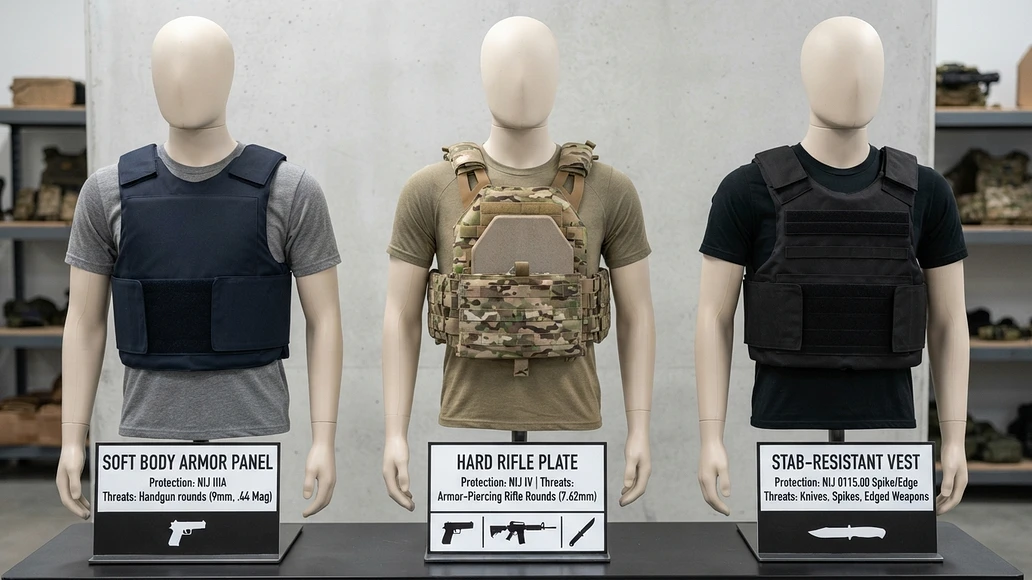
Soft armor, often made from layered high-strength fibers, works by catching and slowing handgun rounds. Hard armor plates, made from ceramic, polyethylene, steel, or hybrid materials, are designed for higher energy threats, especially rifles.
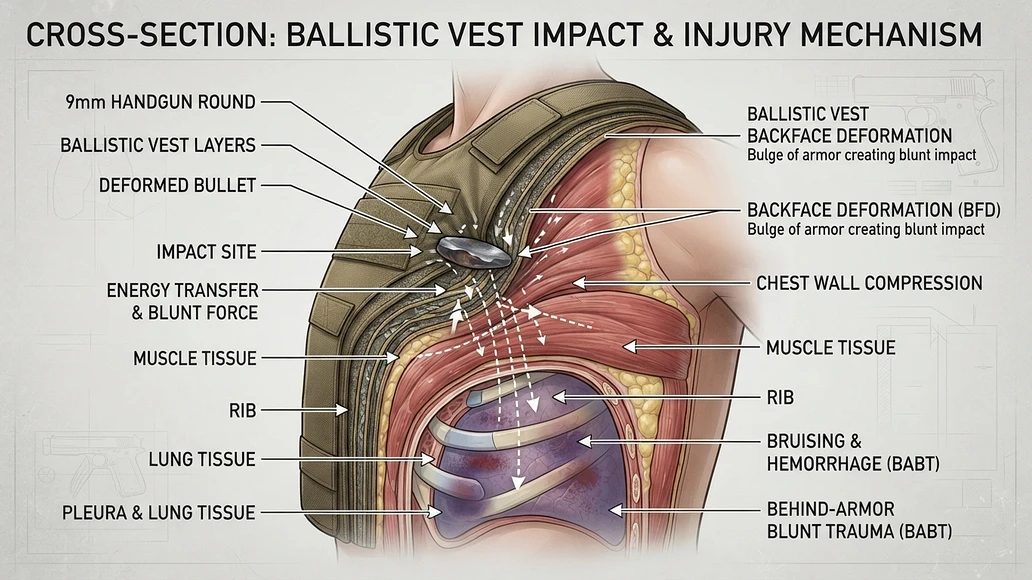
When a bullet strikes armor, several things happen at once. The projectile deforms, fragments, slows, or breaks apart. The armor spreads the force over a wider area. Some energy is absorbed by the material, and some is transferred into the body behind it.
That last part is where injury can still happen. Even if the bullet does not enter the torso, the armor can bulge inward on impact. This inward movement is often discussed as backface deformation. The body then experiences a sudden, concentrated blunt strike.
Why stopping the bullet does not stop all injury
Imagine being hit in the chest with a very fast, very hard hammer blow spread across a small area. That is not a perfect analogy, but it helps explain why a stopped round can still hurt badly. The armor interrupts penetration, but the body still experiences a violent impact.
The severity depends on several factors:
| Factor | Why it matters | Higher risk situation |
|---|---|---|
| Bullet energy | More energy means more force must be absorbed by armor and body | High velocity or heavier rounds |
| Armor type | Soft armor and hard plates manage force differently | Soft armor facing a high energy threat |
| Hit location | Chest, lower ribs, side torso, and upper abdomen can hide vital structures | Impact over heart, lungs, liver, or spleen area |
| Fit and coverage | Poor fit can shift protection and increase edge exposure | Vest rides up, gaps at side, plate too small |
| Wearer health | Fragile bones or reduced reserve increase injury risk | Older age, osteoporosis, lung disease, blood thinners |
| Impact pattern | Edge hits and awkward angles can reduce protection | Round strikes near plate border or uncovered area |
This is why “the vest caught it” should never be treated as the end of the story.
What is behind-armor blunt trauma?
Behind-armor blunt trauma, often shortened to BABT, is the injury caused by the force transmitted through armor into the body. The bullet may be stopped, but the chest wall can still be driven inward hard enough to damage tissue.
Researchers and standards bodies have long recognized this problem. NIJ testing includes limits on backface deformation to reduce the chance of severe trauma. A commonly cited figure under legacy testing is 44 mm. That number is useful for lab comparison, but it is not a promise that real-world injury cannot happen below that threshold, and it does not mean every impact above it is automatically fatal.
In practical terms, BABT can range from a painful bruise to rib fractures, lung contusion, breathing trouble, and internal bleeding. Rarely, the trauma can be severe enough to contribute to death even though the bullet did not penetrate the torso.
How a stopped bullet can still become a fatal event
The vest itself is not “killing” the wearer in normal use. The more accurate explanation is that a ballistic impact can still create a fatal chain of injury through one or more mechanisms.
Severe chest trauma
A hard impact can fracture ribs, bruise the lungs, or impair breathing. A badly bruised lung, called a pulmonary contusion, may worsen over hours. A person who seems stable at first can later develop increasing shortness of breath or low oxygen levels.
Pneumothorax or collapsed lung
Blunt chest trauma can sometimes lead to air leaking around the lung. This can make breathing painful and ineffective. In severe cases it becomes an emergency.
Internal bleeding
Lower chest and upper abdominal hits are especially concerning because the liver, spleen, and major blood vessels may be at risk. A vest may stop penetration while the body still suffers dangerous internal injury.
Missed protection zones
Armor does not cover the entire body. The neck, face, sides, shoulders, arms, pelvis, and often parts of the lower abdomen remain vulnerable. A person may survive the center-torso hit but die from a second wound or a round that slips into a gap.
Threat mismatch
If soft armor is used against a rifle threat, the result may be catastrophic. The wearer may believe they are protected when they are not protected against that class of ammunition.
Which injuries matter most after a torso impact
Not every impact causes the same level of harm. Some people walk away with bruising and soreness. Others develop injuries that need urgent imaging, oxygen support, chest tube treatment, or surgery.
| Possible injury | What it can feel like | Why it matters |
|---|---|---|
| Bruising and chest wall pain | Soreness, tenderness, visible welt | Can be minor, but pain alone does not rule out deeper injury |
| Rib fracture | Sharp pain with breathing or movement | Can impair breathing and may be associated with lung injury |
| Lung contusion | Shortness of breath, worsening cough, chest tightness | May worsen over time and reduce oxygen exchange |
| Pneumothorax | Sudden breathing trouble, chest pain, fast breathing | Can become life threatening without prompt care |
| Internal bleeding | Dizziness, weakness, abdominal pain, fainting | May be hidden at first and rapidly dangerous |
| Cardiac or major vessel trauma | Severe chest pain, collapse, shock | Medical emergency with immediate risk to life |
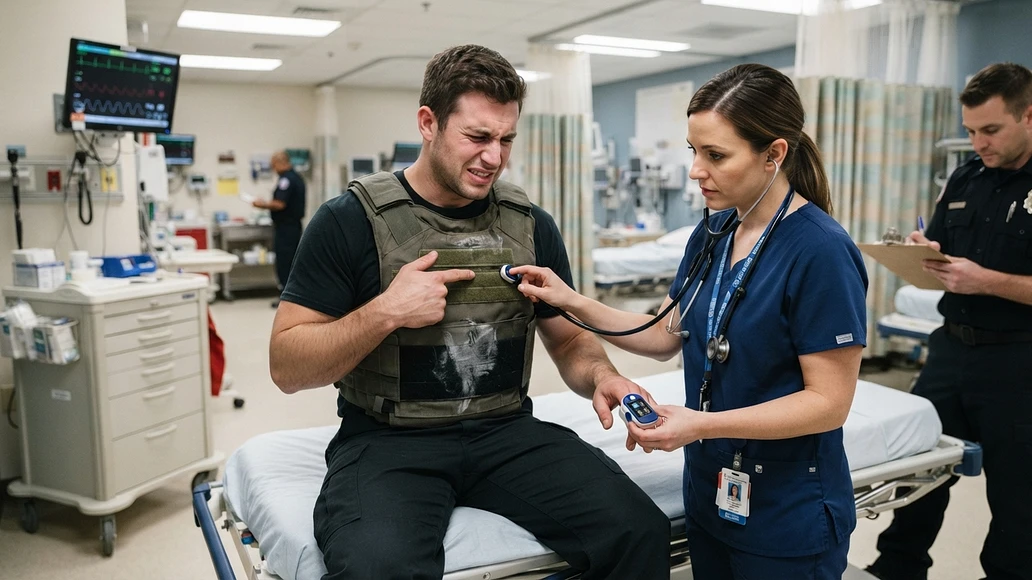
If someone is hit in the chest or abdomen while wearing armor and has chest pain, shortness of breath, dizziness, confusion, vomiting, fainting, coughing blood, or visible deformity, treat it as an emergency.
When soft armor is not enough
Soft armor is generally intended for handgun threats. It is flexible and wearable, but it is not a substitute for rifle-rated plates. This is one of the most dangerous misunderstandings in the civilian market.
| Armor type | Typical purpose | Main limitation |
|---|---|---|
| Soft ballistic armor | Commonly used for handgun protection | Generally not suitable for rifle threats |
| Hard rifle plates | Designed for higher energy rifle rounds | Heavier, more limited coverage, still not full-body protection |
| Stab-resistant armor | Designed to resist edged or pointed weapons | Not automatically ballistic-rated |
| Multi-threat armor | Built to address more than one hazard type | Must be checked for specific certifications, not assumed |
| Trauma pad or backing component | May help manage comfort or blunt force characteristics depending on system | Not a magic upgrade, and not a replacement for proper rating |
Another common mistake is assuming “bulletproof” also means “stab proof.” Those are separate performance claims. Some products are multi-threat, but many are not.
Why rifle rounds, edge hits, and coverage gaps matter
Even high quality armor only protects the area it covers. Most vests and plate carriers leave important anatomy exposed. A round that lands just outside the plate, under the arm, above the vest, or low in the abdomen can be fatal despite the presence of armor.
Edge hits are also important. Armor tends to perform best within its tested strike zones. Impacts near the edge may behave differently, especially if the plate shifts, the carrier fits poorly, or the round arrives at an angle.
Coverage tradeoffs are unavoidable. More coverage usually means more weight, heat, and reduced mobility. Less coverage improves comfort and movement but leaves more vulnerable areas exposed. There is no perfect setup, only a better match between likely threat and acceptable burden.
How fit, sizing, and coverage affect safety
Proper fit is not just about comfort. It affects whether the armor protects vital structures and whether it stays in place during movement. A vest that is too small may leave critical gaps. A vest that is too large may shift, ride up, or interfere with normal movement.
Important fit issues include chest width, torso length, plate height, side coverage, and whether the carrier holds the armor securely against the body. Worn straps, damaged carriers, and improvised setups can all reduce real-world protection.
Condition matters too. Ballistic materials can degrade from age, moisture, UV exposure, repeated flexing, poor storage, and physical damage. Follow manufacturer guidance and verify whether the product is still within its service life and remains compliant.
What NIJ ratings mean in plain English
The National Institute of Justice, or NIJ, publishes the main U.S. performance standards people look for when evaluating ballistic armor. Older products may be labeled under NIJ 0101.06. Newer products are appearing under NIJ 0101.07, which uses updated categories and testing language.
The exact technical details are more involved, but the plain-English takeaway is this. NIJ compliance tells you the armor was tested to a defined standard for specific threats. Marketing phrases alone do not.
| Standard language you may see | Plain-English meaning | What to remember |
|---|---|---|
| NIJ 0101.06 Level II or IIIA | Legacy handgun-oriented soft armor categories | Common on older compliant products, still widely encountered |
| NIJ 0101.06 Level III or IV | Legacy rifle plate categories | Plate performance depends on exact tested threats |
| NIJ 0101.07 HG | Newer handgun category naming | Do not assume direct one-to-one equivalence without checking test details |
| NIJ 0101.07 RF | Newer rifle category naming | Look for the exact compliant model and threat listing |
| “Tested to NIJ standards” | May mean almost anything in marketing | Not the same as official compliance or certification listing |
How to tell if armor is certified
The safest approach is to verify the exact model through official NIJ compliance resources, not just product packaging or ad copy. Reputable sellers should identify the manufacturer, model number, standard version, and compliance status clearly.
Be cautious with vague phrases such as “meets NIJ,” “built to NIJ specs,” or “tested in a lab” if the company does not provide a traceable compliant model. Certification and compliance language matter because body armor is a life safety product, not just another piece of gear.
Does backface deformation cause fatal injuries?
It can contribute to them, but context matters. Backface deformation is one of the main ways a stopped round can still injure the body. The armor bulges inward, and the chest wall absorbs a violent strike. If the force is high enough, the result can be broken ribs, lung bruising, breathing failure, or internal damage.
That said, the presence of backface deformation does not automatically mean a fatal injury occurred. Many people survive armor impacts with bruising and pain alone. The danger is assuming that because the bullet did not penetrate, the person must be fine. That assumption can delay treatment for injuries that worsen over time.
Who is at higher risk from chest impact
Some people are more vulnerable to blunt trauma even when the armor performs as intended. Reduced physiologic reserve can turn a survivable impact into a more serious medical problem.
| Higher-risk factor | Why it raises concern | Why evaluation may be more urgent |
|---|---|---|
| Older age | Less reserve, more fragile tissues | Complications may develop faster |
| Osteoporosis or fragile bones | Higher chance of fractures | Rib fractures can impair breathing |
| Blood thinners or bleeding disorders | Greater risk of hidden bleeding | Internal injury may become dangerous quickly |
| Chronic lung disease | Less breathing reserve after chest trauma | Even modest injury can cause major symptoms |
| Pregnancy | Two-patient concern and altered anatomy | Lower threshold for prompt medical assessment |
| Prior chest surgery or cardiopulmonary disease | May tolerate trauma poorly | Symptoms can be more serious than they first appear |
What to do immediately after being hit while wearing armor
First, treat the event as a trauma incident, not a gear success story. If the scene is unsafe, get to safety and call emergency services as soon as possible. Then focus on the person, not the vest.
- Check for breathing difficulty, severe chest pain, confusion, fainting, or heavy bleeding.
- Look for wounds outside the armor coverage area, especially neck, side torso, underarm, abdomen, and extremities.
- Do not assume the absence of bleeding means the absence of injury.
- Keep the person as still and calm as practical while waiting for medical help.
- If symptoms are significant, worsening, or involve chest or abdominal trauma, seek emergency evaluation immediately.
Do not rely on self-diagnosis after a hard torso hit. Internal injuries can evolve over minutes or hours.
When to seek emergency care after an armor impact
| Symptom after impact | What it may suggest | Recommended response |
|---|---|---|
| Mild soreness only, no breathing issues, no dizziness, no visible wound outside coverage | Possible superficial injury, but deeper injury still cannot be ruled out remotely | Medical evaluation is still wise after a ballistic torso impact |
| Chest pain or pain with breathing | Rib injury, lung contusion, pneumothorax, cardiac concern | Urgent medical evaluation |
| Shortness of breath, fast breathing, blue lips, worsening cough | Lung injury or collapsed lung | Call 911 or seek emergency care now |
| Dizziness, fainting, weakness, confusion | Shock, internal bleeding, low oxygen | Emergency care now |
| Abdominal pain, vomiting, severe bruising, swelling | Possible internal organ injury or bleeding | Emergency care now |
| Coughing blood or visible deformity | Serious chest trauma | Emergency care now |
If the person is pregnant, on blood thinners, has a bleeding disorder, or has chronic lung disease, the threshold for emergency evaluation should be even lower.
Common myths about bulletproof vests
Myth: If the bullet did not penetrate, you are fine
False. A stopped round can still cause serious blunt trauma.
Myth: Any vest protects against rifles
False. Soft armor is generally for handgun threats. Rifle protection usually requires appropriate hard plates.
Myth: Bullet-resistant means stab-resistant
False. Knife and spike resistance are separate performance categories.
Myth: NIJ-style marketing language is the same as certification
False. Verify actual compliance for the exact model.
Myth: More armor always means complete safety
False. Coverage gaps, fit problems, weight, and mobility tradeoffs still matter.
How to choose safer armor for the actual threat
The safest buying mindset is threat-based, not slogan-based. Start with the realistic hazard you are trying to reduce, then verify the armor is designed and compliant for that threat.
| Buying question | Why it matters | Safer approach |
|---|---|---|
| What threat am I trying to stop? | Handgun, rifle, and edged threats are not the same | Match armor type to the most realistic threat |
| Is the exact model compliant? | Marketing claims can be vague or misleading | Verify official NIJ compliance information |
| Does it fit my body correctly? | Poor fit creates gaps and movement problems | Use proper sizing guidance and reputable sellers |
| Is the armor in good condition? | Damage and age can reduce performance | Inspect condition and follow service-life guidance |
| Am I assuming it covers more than it does? | Coverage gaps are a major real-world risk | Understand exactly what anatomy is protected |
For legal and purchasing questions, remember that civilian ownership rules, workplace policies, and use restrictions can vary by state and situation. Verify local law and the current certification status of any product before buying or relying on it.
What recent NIJ standards updates changed
Many buyers still see legacy NIJ 0101.06 labels, especially on existing inventory and older compliant products. Newer standards under NIJ 0101.07 update test methods and naming, including HG and RF categories. The practical takeaway for most readers is not to memorize every category, but to understand that standard version matters and that older and newer labels may coexist in the market for some time.
When comparing products, check three things carefully: the exact standard version, the exact compliant model, and the exact threats the armor was tested against. That tells you much more than a generic “bulletproof” claim ever will.
Bottom line
Body armor saves lives, but it does not cancel physics or anatomy. A vest can stop a bullet and still leave the wearer with dangerous blunt trauma, especially to the chest or upper abdomen. Serious injury becomes more likely when the threat exceeds the armor rating, the hit lands near an edge or gap, the fit is poor, or the wearer has less reserve because of age or medical conditions.
The most important safety message is this. If someone wearing armor takes a hard torso hit and develops chest pain, breathing trouble, dizziness, fainting, abdominal pain, coughing blood, or worsening symptoms, get emergency medical care. No article, checklist, or self-exam can reliably rule out internal injury after a ballistic impact.
References
- National Institute of Justice, Ballistic Resistance of Body Armor, NIJ Standard 0101.07
- National Institute of Justice, Body Armor Performance Standards and Compliance Testing
- National Institute of Justice, Body Armor Overview
- MedlinePlus, Chest Injuries
- MedlinePlus, Trauma and Injury
- Mass General, Chest Trauma
- Mayo Clinic, First Aid for Chest Injuries
- Peer-reviewed review on behind-armor blunt trauma and thoracic injury mechanisms
- Peer-reviewed experimental research on blunt ballistic impact, rib fracture, and lung injury risk