Speeding Skin Repair at Home, Natural Wound Care That Helps and What to Skip
Learn which natural wound care methods actually support faster healing for minor cuts, scrapes, and small burns, plus the first aid basics, safety limits, and red flags that mean it is time to get medical help.

Many people want a more natural way to care for cuts, scrapes, and small burns, but the fastest healing usually comes from combining simple first aid with a few well-chosen remedies. The key is knowing what actually helps new tissue grow, what mainly soothes discomfort, and what can make a wound worse.
This guide is for minor, uncomplicated wounds only. It does not replace medical care for deep cuts, heavy bleeding, punctures, bites, large burns, or wounds that look infected. If you have diabetes, poor circulation, immune suppression, are pregnant, or are caring for a child or older adult, use extra caution and seek professional advice sooner.
How wound healing works
Your body repairs skin in stages. First comes clotting and inflammation, which stop bleeding and begin cleanup. Next comes tissue growth, when new skin cells and collagen start filling the area. Last comes remodeling, when the wound strengthens over time and the scar slowly changes.
Natural remedies can only help if they support these steps. In practice, that means keeping the wound clean, slightly moist, protected from friction, and free from irritation. A remedy that burns, dries, or contaminates the area can slow healing even if it has a healthy reputation.
Which wounds are safe for home care, and which are not
Minor wounds are usually small, shallow, clean, and easy to control with pressure. They do not gape open, expose deeper tissue, or keep bleeding. Anything beyond that deserves more caution.
| Wound feature | Usually safe for home care | Needs urgent medical evaluation | Needs emergency help |
|---|---|---|---|
| Bleeding | Stops within a few minutes of firm pressure | Oozes again repeatedly or is hard to control | Heavy bleeding that does not stop after 10 to 15 minutes of firm pressure |
| Depth | Superficial scrape or small shallow cut | Deep cut, puncture, or wound with separated edges | Visible fat, tendon, muscle, or bone |
| Cause | Clean household scrape or minor kitchen nick | Dirty object, rusty nail, animal bite, human bite | Major trauma, crush injury, electrical or chemical burn |
| Location | Small wound on low-friction skin | Face, hand, foot, over a joint, or genitals | Eye injury or wound affecting breathing or major function |
| Burns | Small superficial burn | Blistering burn larger than a few inches | Large burn, facial burn, electrical burn, chemical burn |
| Healing progress | Looks a little better every day | No clear progress within a week | Rapid swelling, red streaks, fever, or severe worsening |
First aid comes before any natural remedy
If you want a wound to heal faster, start with the basics. This matters more than any oil, herb, or salve.
- Wash your hands well before touching the wound.
- Apply firm pressure with a clean cloth or gauze until bleeding stops.
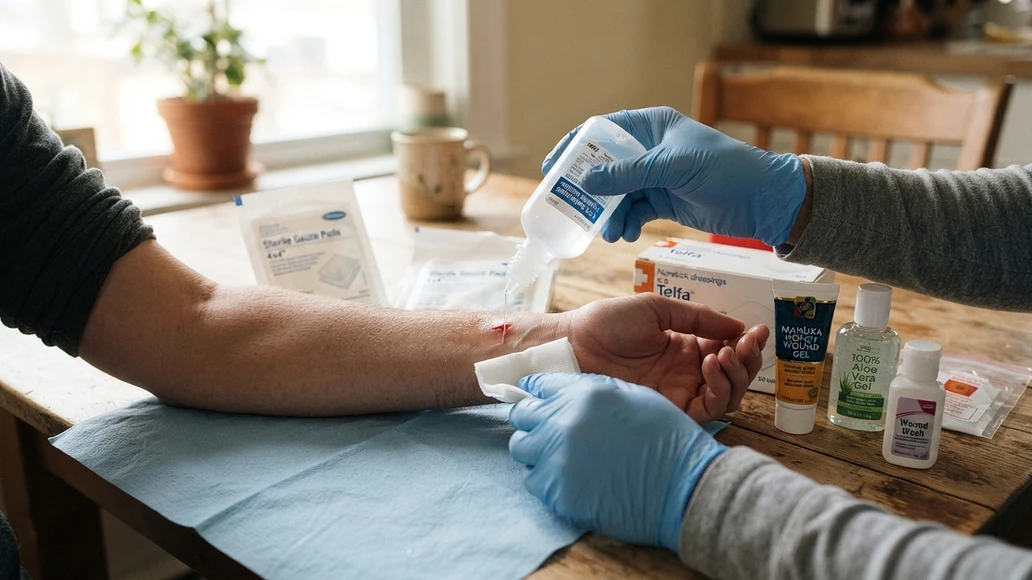
- Rinse the wound with clean running water or sterile saline to remove dirt.
- Wash the skin around it gently with mild soap, but do not scrub the wound bed.
- Pat dry with clean gauze.
- Apply a suitable moisture-supporting product, such as petroleum jelly, medical-grade honey, or pure aloe for a minor burn, depending on the wound type.
- Cover with a clean nonstick dressing or bandage.
- Change the dressing daily, or sooner if it gets wet or dirty.
For routine minor wounds, avoid pouring alcohol, hydrogen peroxide, or strong iodine into the open area. These can damage healthy cells and slow repair.
Does keeping a wound moist help it heal faster?
Yes, for most minor wounds, a moist healing environment helps new tissue form more efficiently than letting the area dry out and crack. Covered wounds are also less likely to be rubbed open, contaminated, or picked at.
Moist does not mean soggy. If a bandage traps too much fluid, the skin around the wound can soften and break down. The goal is a clean, slightly moist surface with regular dressing changes.
Natural remedies with the best support
Not all natural products are equal. A few have decent evidence for specific situations, while many others are traditional remedies with limited human data.
| Remedy or approach | Main benefit | Evidence strength | Can shorten healing time? | Major cautions |
|---|---|---|---|---|
| Medical-grade honey | Helps control microbes, supports moist healing | Strong for some wounds | Yes, in some cases | Use medical-grade only, not grocery honey |
| Pharmaceutical-grade aloe vera | Soothes inflammation and supports surface repair | Moderate to strong for minor burns and shallow wounds | Often yes | Avoid fragranced or alcohol-based gels |
| Turmeric or curcumin | Anti-inflammatory effects | Mixed and limited human evidence | Possibly | Can irritate skin and contaminate open wounds if homemade |
| Coconut oil | Helps reduce dryness | Limited clinical evidence | Unclear | Use only a thin layer on clean minor wounds |
| Diluted tea tree oil or essential oils | Possible antimicrobial effect | Limited | Uncertain | Must be diluted, can burn or trigger dermatitis |
| Good cleaning with water or saline | Reduces contamination | Strong | Yes, indirectly | Do not replace with harsh antiseptics |
| Moisture-retentive dressing or petroleum jelly | Protects new tissue and prevents cracking | Strong | Yes | Apply to a clean wound and change dressing regularly |
| Protein, vitamin C, zinc, hydration | Supports collagen and immune function | Strong overall | Yes, especially if intake is poor | Supplements may not be right for everyone |
Medical-grade honey
Honey is one of the better-supported natural options, but the details matter. Medical-grade honey is sterilized and prepared for wound use. It can help maintain a moist environment and may reduce bacterial growth in some wounds.
Do not use regular kitchen honey on an open wound. Grocery honey is not processed for wound care and may contain contaminants. For a minor scrape or shallow cut, apply a thin layer of medical-grade honey to a clean dressing, not a thick glob directly into a deep wound. Then cover and change the dressing as directed on the product.
Aloe vera for minor burns and shallow skin injuries
Pure or pharmaceutical-grade aloe vera gel can be useful for small superficial burns and some abrasions. It mainly helps by soothing inflammation and supporting surface healing. Choose a product with minimal ingredients. Fragrance, dyes, and alcohol can sting and irritate damaged skin.
For a minor burn, cool the area under running water first. Do not put aloe on a severe burn, a chemical burn, or a large blistering burn without medical guidance.
Turmeric, coconut oil, and similar plant-based options
Turmeric and curcumin are interesting, but the evidence is not as strong as many articles suggest. Lab studies are promising, yet home use is tricky. Kitchen turmeric can stain, irritate, and introduce contamination. If used at all, it should be in a well-formulated product intended for skin use, and only on very minor wounds or around the edges, not packed into a deep open area.
Coconut oil may help prevent dryness once a wound is clean and superficial, but it is not a substitute for irrigation, dressing, or infection monitoring. Thick oils can trap debris if used too early or too heavily.
Essential oils, benefits and risks
Essential oils are often marketed as natural antiseptics, but they are also common causes of skin irritation. If someone chooses to use them, they should be diluted properly and never applied undiluted to broken skin. They are not a first-line wound treatment, and they are a poor choice for children, pregnancy, large skin areas, or people with sensitive skin unless a clinician approves them.
Natural remedies that mostly soothe, not speed closure
Some home measures can make you feel better without clearly making the wound close faster. That does not make them useless, but it helps to be realistic.
| Approach | Main effect | Best use | Likely impact on healing speed |
|---|---|---|---|
| Cool compress around the area | Reduces discomfort and swelling | Minor bumps, surrounding irritation, small burns after cooling | Mostly symptom relief |
| Aloe gel | Soothing plus some healing support | Minor burns and shallow abrasions | Can help in some cases |
| Elevation | Reduces swelling | Minor injuries on hands or feet | Indirect support |
| Rest and protection from friction | Prevents reopening | Any minor wound | Yes, indirectly |
| Red light devices | Experimental tissue support | Not standard DIY care | Promising but uncertain |
What should you avoid putting on a wound?
Several common home treatments can delay healing or increase irritation. Alcohol, hydrogen peroxide, and strong iodine can injure healthy tissue when used routinely on minor open wounds. Undiluted essential oils can cause chemical irritation. Homemade garlic or onion pastes can burn skin and are not sterile. Thick salves applied before proper cleaning can trap dirt and bacteria.
Another mistake is using cosmetic skin products on broken skin. Fragranced lotions, exfoliants, and anti-aging serums are not wound care.
Nutrition and habits that help skin repair faster
Topical care matters, but your body also needs raw materials to rebuild tissue. Protein supports collagen and immune function. Vitamin C helps collagen formation. Zinc plays a role in repair, especially if you are low in it. Good hydration, sleep, and blood sugar control also matter.
| Nutrient or habit | Role in healing | Practical food or lifestyle sources | When to get medical advice |
|---|---|---|---|
| Protein | Builds new tissue | Eggs, yogurt, beans, fish, poultry, lean meat | If appetite is poor, healing is slow, or you are losing weight |
| Vitamin C | Supports collagen formation | Citrus, berries, peppers, potatoes, broccoli | If diet is very limited or deficiency is possible |
| Zinc | Supports repair and immunity | Meat, shellfish, beans, nuts, dairy | Before supplementing long term |
| Hydration | Supports circulation and tissue health | Water, soups, hydrating meals | If dehydration is persistent |
| Blood sugar control | Reduces delayed healing risk | Follow diabetes plan, balanced meals | Any wound in a person with diabetes deserves extra caution |
| Sleep and no smoking | Supports immune and repair processes | Consistent sleep, smoking cessation | If healing is repeatedly poor |

Special guidance for children, older adults, and people with diabetes
Children often do well with simple wound care, but they are more likely to pick at scabs or resist cleaning. Keep dressings secure and watch for infection. Older adults may have thinner skin and slower healing, so even small wounds can worsen faster than expected.
People with diabetes, poor circulation, neuropathy, or immune compromise should be much more conservative about home treatment. Foot wounds deserve special attention. A small blister, crack, or scrape can become serious quickly. If you fall into one of these groups, it is wise to contact a clinician early rather than experimenting with multiple natural products.
How long should a minor wound take to heal?
Healing time depends on depth, location, friction, circulation, and how well the wound was cleaned at the start. A small paper cut may seal in a day or two. A scrape on the knee may take longer because it gets bumped and bent.
| Wound type | Typical healing time | What is normal | When delay is a concern |
|---|---|---|---|
| Small shallow cut | Several days to about 1 week | Mild tenderness, less redness each day | Still open, more painful, or more red after several days |
| Superficial scrape | About 1 to 2 weeks | Scab or pink new skin, gradual improvement | No progress within a week or repeated reopening |
| Minor superficial burn | Several days to 2 weeks | Less stinging, skin gradually closes | Blistering worsens, drainage appears, or pain increases |
Warning signs that natural care is not enough
Stop home treatment and get medical advice if redness spreads, warmth increases, swelling worsens, pain rises instead of falls, pus appears, a bad odor develops, or you get fever or red streaks moving away from the wound. Also seek help if the wound changes color, drains more, or simply does not seem to be moving forward.
Do not delay care because a remedy is labeled natural. Infection and tissue damage can progress while you wait.
Using natural and over-the-counter products together
Some people want to combine aloe or honey with standard products. That can be reasonable for minor wounds, but layering too many products can create irritation or make the wound too wet. In general, pick one main topical approach and use it consistently.
If you are using an antibiotic ointment, do not also pile on oils, salves, and honey unless a clinician tells you to. More is not better. If you have medication allergies, sensitive skin, or a chronic condition, ask a pharmacist or clinician before combining products.
Common mistakes that slow healing and increase scarring
The biggest mistakes are poor cleaning, repeated picking, letting the wound dry out and crack, using dirty bandages, and returning too soon to activities that rub the area open. Another common problem is changing products every day because of online advice. Constant switching can irritate the skin and make it harder to tell whether the wound is improving.
Sun exposure also matters. Freshly healed skin can darken and scar more noticeably if it is not protected.
Natural scar care after the wound closes
Once the skin has fully closed, gentle moisturizing can help with comfort and flexibility. Plain fragrance-free moisturizer, aloe, or a simple occlusive product may help the area feel less tight. Protect the new skin from sun exposure with clothing or sunscreen once the skin is intact. Gentle massage can help some scars after full closure, but do not massage an open or fragile wound.
Building a home wound-care kit with safe natural options
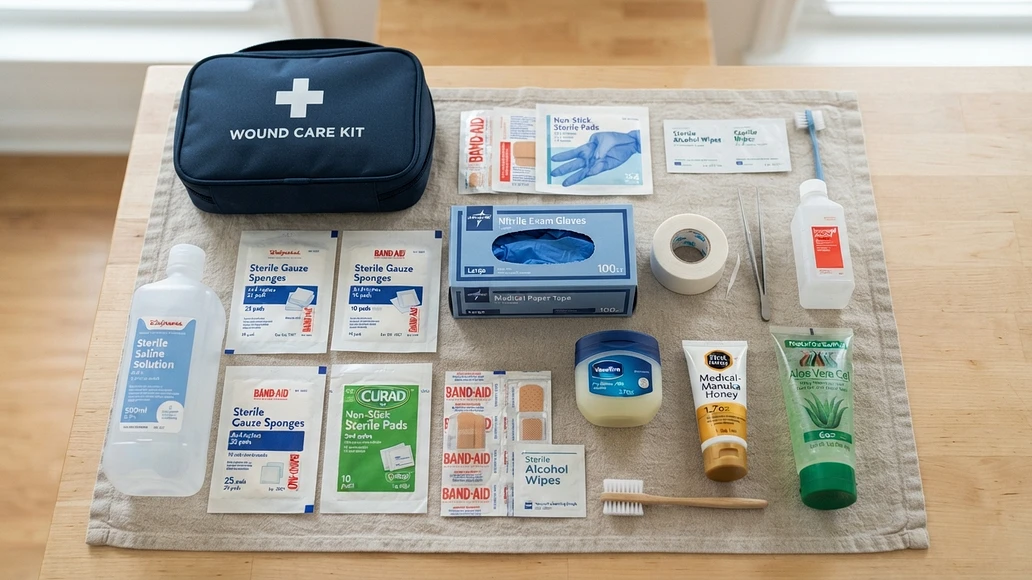
A practical kit should focus on cleaning and protection first, then a few optional natural aids with decent support.
| Item | Why keep it | Natural, standard, or both | Notes |
|---|---|---|---|
| Sterile saline or wound wash | Rinses debris safely | Standard | More useful than harsh antiseptics for routine minor wounds |
| Nonstick sterile dressings | Protects healing tissue | Standard | Choose several sizes |
| Medical tape or wrap | Secures dressings | Standard | Avoid wrapping too tightly |
| Petroleum jelly | Supports moist healing | Standard | Simple and widely recommended |
| Medical-grade honey | Optional natural topical support | Both | Use only wound-care grade products |
| Pure aloe gel | Useful for minor burns and soothing | Natural | Choose alcohol-free, fragrance-free gel |
| Gloves and tweezers | Cleaner wound handling | Standard | Keep tweezers clean |
| Gauze and clean cloths | Pressure and dressing changes | Standard | Essential for bleeding control |
How to talk with your doctor about natural remedies
If you prefer natural care, tell your clinician exactly what you want to use and where the wound is located. Bring the product name or a photo of the label. Ask whether it is appropriate for the wound type, whether it could interact with your medications or skin conditions, and how long you should try it before reassessing.
This is especially important if you are pregnant, breastfeeding, taking blood thinners, have diabetes, or have a history of allergic skin reactions.
FAQ
Can I use regular kitchen honey on a cut or scrape?
It is better not to. If honey is used for wound care, choose a medical-grade product made for that purpose. Regular honey is not prepared to the same cleanliness standard and is not the best choice for open skin.
Is it better to let a wound air out instead of keeping it covered?
Usually no. Most minor wounds heal better when they are kept clean, slightly moist, and covered with a fresh dressing. Leaving them open can dry the surface and increase friction and contamination.
Are natural remedies safe for children's cuts and scrapes?
Simple options such as proper rinsing, a clean dressing, and in some cases plain aloe for a minor burn can be reasonable. Strong essential oils, homemade pastes, and multiple layered products are poor choices for children. When in doubt, keep it simple and ask a pediatric clinician.
How do I know if my wound is infected even if I used natural treatments?
Watch for spreading redness, increasing warmth, swelling, worsening pain, pus, bad odor, fever, or red streaks. Natural products do not prevent all infections, and they can sometimes hide the fact that a wound is getting worse.
Can I still use antibiotic ointment if I am using honey or aloe on a wound?
Sometimes, but do not stack several products without a reason. Too many layers can irritate the skin or make the wound too wet. If you want to combine products, ask a pharmacist or clinician which single approach makes the most sense for your situation.