Nest Box to Kitchen, Safe Timing for Collecting Backyard Eggs
Learn how long eggs can reasonably stay in the coop, how weather changes the risk, and what to do with late-collected eggs. This guide covers daily collection routines, storage timelines, warning signs, and practical safety steps for backyard keepers.

If you keep chickens, there will be days when eggs sit in the nest box longer than you planned. The big question is not only whether the eggs are still edible, but how weather, shell condition, cleanliness, and handling affect safety. In general, collecting eggs at least once a day is the best practice. In cool, clean, dry conditions, eggs may remain usable for several days, and sometimes longer, but quality and safety margins shrink the longer they sit. In hot weather, damp coops, or dirty nests, the safe window gets much shorter.
For most backyard flocks, the safest routine is simple. Collect daily, collect more often in summer, discard cracked or badly soiled eggs, and refrigerate promptly if eggs are washed or if you want the longest storage life. If anyone in your household is pregnant, elderly, very young, or immunocompromised, use even more conservative handling and cook eggs thoroughly.
Why timing matters after an egg is laid
A freshly laid egg has a natural protective coating called the bloom, also called the cuticle. This thin layer helps slow moisture loss and reduces the movement of bacteria through the shell. As long as that bloom stays intact, an unwashed egg has more protection than many new chicken keepers realize.
But the coop is not a controlled storage room. Nest boxes can be warm, humid, dusty, or contaminated with manure. Eggs can be stepped on, pecked, chilled, frozen, or exposed to rodents and wild birds. The longer an egg stays in that environment, the more chances there are for shell damage, contamination, and quality loss.
That is why daily collection is widely recommended even though some eggs left in a clean coop may still be usable later. Best practice and maximum possible time are not the same thing.
Reasonable coop timelines in normal weather
In a clean, shaded, well-ventilated coop with cool to mild temperatures, eggs can sometimes remain edible for several days. Many backyard keepers use a rough range of up to about 7 to 10 days in cool, dry conditions, but that should be treated as a practical upper-end estimate, not an ideal target. Earlier collection is safer and preserves better quality.
If you do not know exactly when an egg was laid, be more cautious. If the shell is dirty, the nest is damp, or daytime temperatures are climbing, shorten your acceptable window. If the egg has any crack, slime, mold, or off odor, discard it.
| Condition | Approximate coop time | Quality change | Main caution |
|---|---|---|---|
| Cool, dry, clean nest box | Best collected within 24 hours, sometimes usable for several days, with some keepers using up to 7 to 10 days as an outside estimate | Gradual loss of freshness, larger air cell, thinner whites over time | Not ideal for vulnerable households, inspect carefully |
| Mild weather, average backyard coop | Collect daily | Good quality if gathered promptly | Delay increases contamination and breakage risk |
| Hot or humid weather | Collect at least twice daily, sooner during heat waves | Quality drops faster | Bacterial growth risk rises with heat |
| Freezing conditions | Collect promptly, often more than once daily | Eggs may freeze, crack, or develop texture changes | Cracked or freeze-damaged eggs should be discarded |
How heat, cold, and humidity change the answer
Summer heat
Heat is the biggest reason not to stretch coop time. Warm eggs held in a hot nest box lose quality faster, and bacteria multiply more readily in warm conditions. During summer, especially when daytime temperatures are high, once-daily collection may not be enough. Twice-daily collection is a better routine, and in extreme heat, checking even more often is wise.
If eggs sat through a heat wave in an unshaded or poorly ventilated coop, be conservative. Even if they look normal, they may not be the eggs you want to trust for your family.
Winter cold
Cold weather creates a different problem. Eggs can freeze in the nest box. Frozen eggs often crack, even if the crack is fine and hard to see. Once the shell is compromised, bacteria can enter more easily. Freeze-thaw cycles also hurt texture and quality. If an egg froze and cracked, discard it. If it froze without cracking and you are certain it stayed clean, some keepers cook it thoroughly right away, but for general household safety, especially for vulnerable people, the cautious choice is to discard questionable eggs.
Humidity and damp bedding
Damp coops are harder on eggs than dry ones. Moisture, manure, and dirty bedding increase contamination risk and can soften the practical margin you have for delayed collection. A humid nest box in summer is one of the worst combinations for leaving eggs too long.
Collection schedules that fit flock size and season
A single hen or a small backyard flock is easier to manage than a larger mixed flock, but the same principle applies. The more birds you have, the more often eggs should be gathered to reduce crowding, breakage, and dirty shells.
| Season or climate | Small flock, about 1 to 6 hens | Larger flock, 7 or more hens | Notes |
|---|---|---|---|
| Cool or mild weather | At least once daily | At least once daily, often twice if boxes fill quickly | Morning or late afternoon collection usually works well |
| Hot summer weather | Twice daily | Twice daily, sometimes three checks in extreme heat | Prioritize shaded coops and airflow |
| Freezing winter weather | Once to twice daily | Twice daily if eggs are freezing in boxes | Frequent checks reduce freeze damage |
| Damp or muddy conditions | At least once daily | Twice daily if nests soil quickly | Change bedding often and remove dirty eggs promptly |
Fertile eggs, broody hens, and eggs left under a sitter
Fertile eggs are not automatically unsafe, but they do need more attention if a hen has been sitting on them. A broody hen warms eggs repeatedly, which changes the situation from simple storage to possible incubation. If eggs have been under a broody hen for several days and you are not certain which are fresh table eggs and which were sat on, do not guess. Separate nest boxes and clear labeling help prevent confusion.
For eating eggs, non-fertile and fertile eggs are handled similarly when they are collected promptly and stored correctly. The bigger issue is whether the egg has been warmed for incubation, exposed to manure, or left too long in changing temperatures.
How to tell when a coop egg should be discarded
Some eggs are easy to reject. Others are more borderline. When in doubt, the safest answer is to throw it out.
| Egg condition | Action | Why |
|---|---|---|
| Clean shell, no crack | Usually keep | Lowest contamination risk if collected from a clean nest |
| Light dirt on shell | Keep if shell is intact, clean carefully only if needed | Minor dirt is less concerning than washing unnecessarily |
| Hairline crack or visible crack | Discard | Cracks allow bacteria through the shell |
| Heavy manure, mud, slime, or mold | Discard | High contamination risk |
| Bad smell at shell or after cracking | Discard | Strong spoilage warning |
| Rodent damage, peck marks, or predator disturbance | Discard | Shell integrity and sanitation are compromised |
| Frozen and cracked | Discard | Crack plus freeze damage raises risk |
Freshness checks for eggs collected late
Freshness tests can help screen eggs, but they are not perfect safety guarantees.
Float test
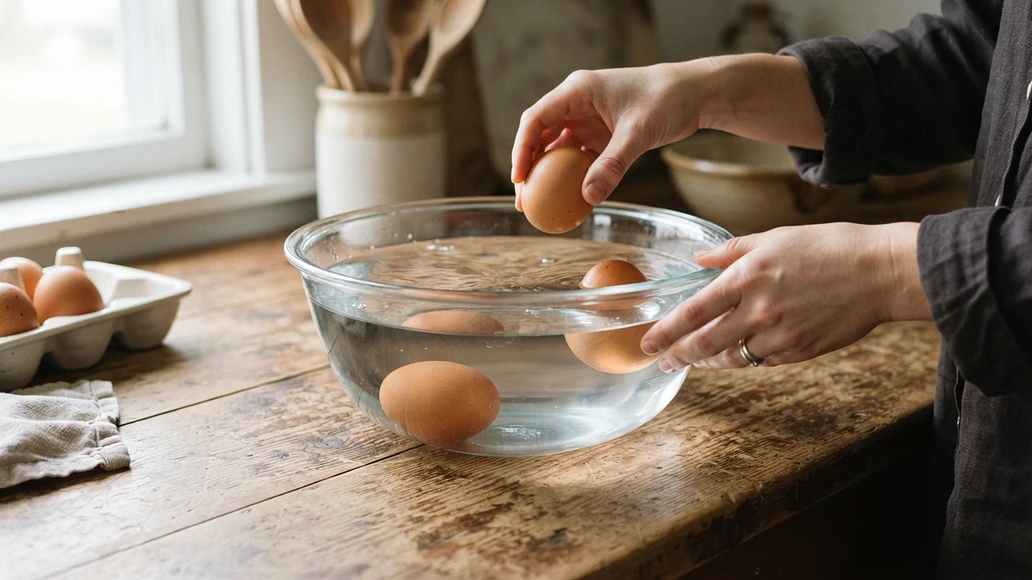
Place the egg in a bowl of water. Very fresh eggs usually sink and lie flatter. Older eggs often stand upright or float because the air cell inside grows over time. A floating egg is older and may be unsafe, but a sinking egg is not automatically safe if it came from a dirty or cracked environment.
Candling
Candling means shining a bright light through the shell in a dark room. It can help you spot a large air cell, internal irregularities, or signs that an egg may have been incubated. It is useful if you keep fertile birds or have broody hens.
Sound and smell
If an egg sloshes unusually when shaken gently, or smells sulfurous or rotten when cracked, discard it immediately. Smell is one of the strongest spoilage clues once the shell is opened.
Bloom, washing, and why coop time affects later storage
The bloom is one reason unwashed backyard eggs can keep longer than many people expect. If the shell is clean and dry, leaving the bloom intact gives you more flexibility after collection. Once you wash an egg, that protective layer is reduced or removed, and the egg should be refrigerated promptly.
If an egg needs cleaning, use the least aggressive method that works. Dry brushing or gently wiping off minor debris is often preferred for lightly soiled eggs. If washing is necessary, use water warmer than the egg, not cold water, to reduce the chance of drawing contaminants inward. Avoid soaking eggs. Dry them and refrigerate them soon after washing.
Do not wash every egg automatically if it is already clean. Unnecessary washing shortens your storage options.
After collection, how long eggs last on the counter or in the fridge
Coop time is only the first part of the storage story. What you do next matters just as much.
| Storage location | Egg type | Approximate timeline | Key caution |
|---|---|---|---|
| Room temperature | Unwashed eggs with intact bloom | Often about 2 to 4 weeks | Store in a cool room, not a hot kitchen |
| Refrigerator at 40°F or below | Unwashed eggs | Often up to about 3 months | Best for longest quality retention |
| Refrigerator at 40°F or below | Washed eggs | Often several weeks to a few months, depending on age and handling | Refrigerate promptly after washing |
| Counter after washing | Washed eggs | Not recommended | Bloom has been removed, refrigeration is safer |
For preparedness-minded households, refrigeration gives the best margin for safety and quality. If you choose room-temperature storage for unwashed eggs, keep them in a cool, stable environment and rotate them carefully.
Coop and nest box setup that reduces egg risk
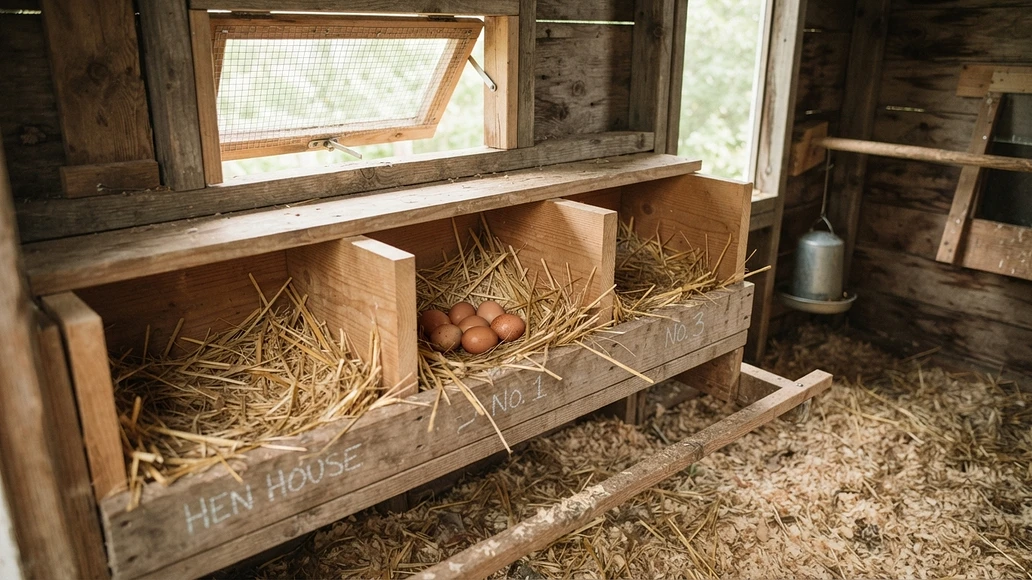
A safer egg starts with a cleaner nest. Good coop design does not make old eggs fresh again, but it reduces the chance that a few hours in the nest box become a sanitation problem.
Helpful practices include enough nest boxes for your flock, dry bedding, shade, ventilation, regular manure removal, and exclusion of rodents and wild birds. Roll-away nest boxes can also reduce breakage and pecking in some setups. If eggs are consistently dirty, the answer is usually better nest management, not more washing.
Biosecurity and sanitation around backyard eggs
Backyard eggs can be safe, but only if the flock and the keeper follow good hygiene. Wash your hands after handling eggs, birds, bedding, or manure. Clean baskets and collection containers regularly. Limit wild bird access to feed and water. Control rodents. Keep visitors out of poultry areas when disease outbreaks are active in your region.
Recent bird flu outbreaks are a reminder that flock hygiene matters. General guidance remains consistent. Thorough cooking and careful handling reduce risk, while raw or lightly cooked eggs are a poorer choice, especially during outbreaks.
Extra caution for pregnant people, children, older adults, and immunocompromised people
Some households should use stricter rules. If anyone eating the eggs is pregnant, elderly, very young, or has a weakened immune system, collect eggs daily, refrigerate promptly, discard questionable eggs without debate, and cook eggs thoroughly to 160°F. Avoid raw batter, homemade dressings with raw egg, runny eggs, or lightly cooked dishes unless you are using pasteurized products.
| Group | Collection and storage approach | Cooking guidance | Risk level |
|---|---|---|---|
| Healthy adults | Daily collection, prompt refrigeration if washed or if storing long term | Cook thoroughly for best safety | Moderate if handled well |
| Pregnant people | Use only well-handled eggs, collected promptly | Cook fully to 160°F | Higher consequence from foodborne illness |
| Young children | Use conservative storage and discard questionable eggs | Cook fully | More vulnerable |
| Older adults or immunocompromised people | Prefer daily-collected, refrigerated eggs only | Cook fully, avoid raw egg dishes | Highest caution |
Preparedness planning for weekends away and power outages
If you will be away for a weekend, the safest plan is to have someone collect eggs daily. If that is not possible, the weather matters. A cool spell in a clean coop is far less risky than a July heat wave. Before leaving, clean nest boxes, add fresh bedding, improve shade and airflow, and reduce anything that attracts rodents.
During a power outage, unwashed eggs that were already clean and intact may still be more flexible than washed eggs, because the bloom remains. But if eggs have already been refrigerated, repeated warming and cooling is not ideal. In a long outage, prioritize the cleanest, freshest eggs first and cook them thoroughly.
For longer-term storage, some homesteaders use water glassing or liming with clean, unwashed eggs. This is a traditional method, not a substitute for standard food safety practices, and results can vary. If you try it, follow a tested process carefully and use only very fresh eggs with intact shells.

Common mistakes and myths
| Myth or mistake | Better approach | Why it matters |
|---|---|---|
| "If it looks fine, it is fine" | Consider weather, age, shell condition, and smell too | Appearance alone does not prove safety |
| Leaving eggs all week in summer | Collect at least twice daily in heat | Heat speeds quality loss and bacterial risk |
| Washing every egg right away | Leave clean eggs unwashed until needed, or refrigerate after washing | Washing removes the bloom |
| Using cold water to wash eggs | Use water warmer than the egg if washing is necessary | Cold water can increase contamination risk |
| Trusting the float test alone | Use it as one clue, not a final verdict | Freshness and safety are not identical |
When to discard eggs and focus on flock health
If your flock suddenly produces many odd shells, soft eggs, unusually dirty eggs, or there is a sharp drop in production along with lethargy or illness, stop thinking only about storage time. Flock health may be the bigger issue. Consult a veterinarian or your local extension service if birds seem sick, deaths occur, or you hear of a disease outbreak in your area.
If multiple people in your household develop vomiting, diarrhea, fever, or stomach cramps after eating backyard eggs, contact a clinician and consider local public health guidance. General backyard egg advice is helpful, but it does not replace medical, veterinary, or local health authority instructions.
FAQ
Can I leave eggs in the coop while I am on a weekend trip?
It is better to have someone collect them daily. In cool, dry weather, some eggs may still be usable after a short trip, but summer heat, damp nests, or dirty conditions make that much riskier.
What should I do with eggs that froze in the nest box?
If they cracked, discard them. If they froze without cracking and remained clean, some people cook them right away, but the cautious household-safety answer is to avoid questionable freeze-damaged eggs.
Are eggs still safe if a hen has been sitting on them for a few days?
Be careful. A broody hen may have started warming them for incubation. If you are not sure how long they were sat on, do not treat them like ordinary freshly laid table eggs.
Is it okay to eat backyard eggs that were laid but not collected during a heat wave?
That is one of the higher-risk situations. Even if the eggs look normal, prolonged heat reduces your safety margin. For vulnerable households, discard them. For others, be very conservative and do not use questionable eggs.
Do I have to wash every egg I collect from the coop?
No. Clean eggs can be left unwashed so the bloom stays intact. Wash only when needed, then refrigerate promptly.
Bottom line
If you want the simplest answer, collect eggs every day. In hot weather, collect twice a day or more. In cool, clean conditions, eggs may remain usable for several days, but that is not the same as best practice. The longer eggs stay in the coop, the more quality and safety become a judgment call. Clean nests, intact shells, prompt collection, careful storage, and thorough cooking are what keep backyard eggs on the safe side.
Disclaimer: Backyard egg safety guidance here is general. It does not replace advice from a doctor, veterinarian, extension agent, or local health authority. Follow national and local food safety regulations, especially during disease outbreaks.
References
- How Long Do Farm-Fresh Eggs Last In The Refrigerator
- How to Clean and Store Fresh Eggs
- How Long Do Farm Fresh Eggs Last and How to Store
- Buying Backyard Eggs: Safety Tips and Storage Guide
- How to Keep Eggs Clean, From Coop to Kitchen
- Summer Egg Storage, How long do fresh eggs last
- Are Backyard Chicken Eggs Safe to Eat?
- How Long Do Eggs Last, Facts About Farm Fresh Eggs