Can Wild Lettuce Really Help Migraine Pain? A Practical, Safety-First Look
Wild lettuce has a long reputation as a natural pain herb, but migraine relief is a more complicated question. Here is what it is, what the evidence actually shows, how people use it, and where the safety limits matter most.

Wild lettuce gets talked about in preparedness circles as a natural pain reliever, sleep aid, and backup remedy when the medicine cabinet is running low. That reputation makes it easy to assume it might be useful for migraines too. The problem is that migraine is not just ordinary pain. It is a neurologic condition with triggers, phases, and symptoms that often need a more targeted plan.
The short version is this. Wild lettuce may have mild sedative and pain-relieving effects for some people, but there is no strong human evidence showing that it reliably treats migraines, prevents attacks, or changes the course of the condition. If someone chooses to experiment with it, the safest framing is as a cautious, secondary option for symptom relief, not as a replacement for proven migraine care.
This article takes a practical home-preparedness approach while staying grounded in evidence and safety. It covers what wild lettuce is, why people use it, what modern research does and does not support, and when a migraine needs medical attention instead of another home remedy.
What wild lettuce is, and why people connect it with headaches
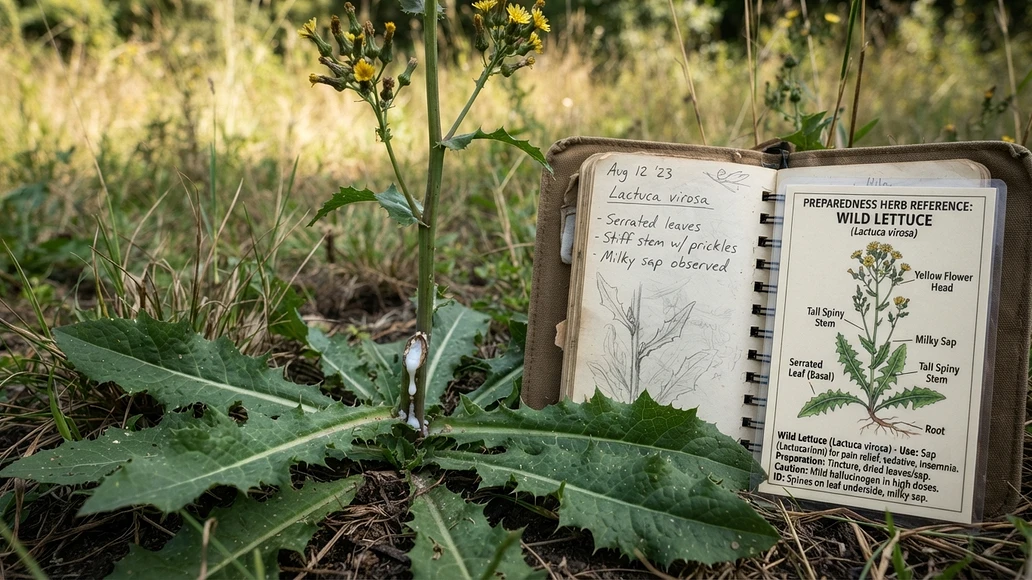
Wild lettuce usually refers to Lactuca virosa, a bitter plant related to common lettuce but not the same thing you would put in a salad. It has historically been called opium lettuce, mostly because of its milky sap and its reputation for calming or sedating effects. That nickname can be misleading. It is not opium, and it does not work like prescription opioids.
Traditional herbal use focused more on general pain, cough, restlessness, and trouble sleeping than on migraine as a clearly defined diagnosis. Over time, people began extending those pain-relief claims to headaches and migraines. In preparedness culture, that often turns into advice about harvesting, drying, or extracting the plant for future use.
The key distinction is that a remedy that sometimes dulls discomfort is not automatically a migraine treatment. Migraines can involve throbbing pain, nausea, light sensitivity, sound sensitivity, visual aura, and neurologic symptoms. A plant that makes a person drowsy or calmer may ease part of that experience without actually treating the migraine process itself.
How wild lettuce may work in the body
Wild lettuce contains compounds often discussed in herbal literature, especially lactucin and lactucopicrin. These are thought to contribute to the plant's bitter taste and possible sedative or analgesic effects. Animal studies suggest these compounds may reduce pain responses and promote calmness or sleepiness.
That matters because some people with migraines are looking for two things at once. They want less pain, and they want relief from the agitation, sleeplessness, or sensory overload that often comes with an attack. In theory, a mildly sedating herb could help a person rest in a dark room and feel less distressed.
But theory is not the same as proof. The available research does not establish a standard human dose for migraines, does not show consistent benefit in clinical migraine patients, and does not tell us which form is safest or most effective.
Does wild lettuce help migraines, or mainly make symptoms easier to tolerate?
This is the most useful way to think about it. There are two separate questions.
First, does wild lettuce prevent migraines, shorten attacks, or reduce how often they happen over time? Right now, there is no solid evidence that it does.
Second, could it make some symptoms feel more manageable for some people? That is more plausible, but still unproven. If wild lettuce helps at all, the likely benefit would be partial symptom relief, such as mild pain reduction, calming, or easier sleep during or after an attack.
That distinction matters in real life. A person who mistakes temporary sedation for true migraine control may delay better treatment, keep using an herb that is not doing enough, or miss warning signs that need medical care.
What modern research actually shows
Most of the positive discussion around wild lettuce comes from traditional use, animal studies, lab findings, and anecdotal reports. That is not worthless, but it is a weak evidence base for a condition as disruptive and variable as migraine.
| Claim or topic | Evidence status | What it means in practice |
|---|---|---|
| General pain relief | Limited and mixed | Animal studies suggest analgesic effects, but there are no robust human trials establishing reliable pain relief or a standard dose. |
| Migraine treatment | Very weak | There are no strong human clinical trials showing wild lettuce treats migraines specifically. |
| Sleep or nervous restlessness | Limited and mixed | Mild sedative effects are plausible, but evidence in people is still thin and inconsistent. |
| Migraine prevention | No meaningful evidence | There is no good evidence that wild lettuce reduces attack frequency or changes the underlying condition. |
| Short-term symptom easing | Plausible but unproven | Some people may feel calmer or sleepier, which could make an attack easier to ride out, but benefit is uncertain and highly individual. |
Recent patient-oriented reviews have become more cautious, not less. The trend in newer summaries is to emphasize that wild lettuce is not backed by strong clinical evidence in humans, especially not for migraines.
How wild lettuce compares with standard migraine care
Preparedness-minded readers often want to know where an herb fits when compared with common over-the-counter and prescription options. The answer is that wild lettuce sits far behind standard migraine approaches in both evidence and dosing clarity.
| Approach | Evidence for migraines | Main advantages | Main drawbacks |
|---|---|---|---|
| Wild lettuce | Weak | Traditional use, may offer calming or mild pain relief for some people | No robust migraine trials, no standard dose, real interaction and toxicity concerns |
| NSAIDs such as ibuprofen or naproxen | Good for many patients | Widely available, familiar dosing, better evidence for acute migraine relief | Can irritate the stomach, affect kidneys, and may not be safe for everyone |
| Triptans | Strong for many migraine patients | Designed for migraine, often more effective than generic pain relievers | Prescription access, not appropriate for every patient |
| Magnesium and riboflavin | Moderate for prevention support | Useful in some prevention plans, generally more studied than wild lettuce | Not a quick fix during an active attack, still best used with medical guidance |
| Non-drug measures such as hydration, dark room, cold pack, sleep | Supportive but practical | Low cost, low risk, easy to include in a home kit | Often not enough by themselves for severe attacks |
For most people, the best preparedness plan is not choosing wild lettuce instead of standard care. It is building a layered plan that includes known triggers, proven medications when appropriate, and low-risk comfort measures at home.
Common forms of wild lettuce, and why dosing is a problem
People use wild lettuce in teas, tinctures, extracts, capsules, and sometimes smoked forms. The challenge is that there is no well-established, evidence-based migraine dose. Product strength can vary dramatically, and homemade preparations are even less predictable.
That unpredictability is one of the biggest safety issues. A tea made from one batch of plant material may be much weaker or stronger than another. Concentrated extracts can increase the risk of side effects. Smoked forms add respiratory irritation and make dose control even harder.
If someone is determined to try wild lettuce, the safest general principle is to avoid concentrated or inhaled forms, avoid combining it with alcohol or sedating drugs, and discuss it with a clinician or pharmacist first. This article does not provide a dosing recipe because there is no established safe, effective migraine dose supported by good human evidence.
Smoking or vaping wild lettuce is especially hard to justify. It may expose the lungs to irritants, creates fast but unpredictable effects, and does not solve the bigger problem of weak evidence.

Possible benefits, if any, in a real-world migraine setting
The most realistic case for wild lettuce is narrow. A healthy adult with occasional migraines, no major medical conditions, and no interacting medications might find that a mild preparation helps them feel calmer or sleep through the tail end of an attack. That is a symptom-management role, not a treatment breakthrough.
Even then, expectations should stay modest. Wild lettuce is not likely to match migraine-specific medications for many people, and it should not be expected to stop aura, reverse neurologic symptoms, or prevent future attacks.
| Potential benefit | Evidence level | Related risk | Practical takeaway |
|---|---|---|---|
| Mild calming effect | Limited | Drowsiness, impaired alertness | May help some people rest, but do not drive or work with tools afterward |
| Mild pain easing | Limited | False confidence, delayed proper care | Do not assume reduced discomfort means the migraine is adequately treated |
| Sleep support during recovery | Limited | Next-day grogginess, interaction with sleep medications | Use caution, especially if you already take sedating medicines |
| Natural backup option in a preparedness plan | Anecdotal | Misidentification, inconsistent potency, toxicity | Not a first-line item, and only worth considering if safety issues are fully understood |
Risks, side effects, and who should avoid it
Natural does not mean low risk. Wild lettuce can cause mild side effects at lower amounts and more serious toxicity at higher amounts or in sensitive people.
Commonly reported side effects include drowsiness, dizziness, nausea, dry mouth, headache, bitter taste, and next-day grogginess. More serious reactions reported in case summaries and warnings include sweating, rapid heartbeat, dilated pupils, confusion, hallucinations, heavy sedation, and breathing difficulty.
| Group | Recommended stance | Why |
|---|---|---|
| Healthy adults not taking interacting medicines | Use only with caution | Evidence is weak, dosing is not standardized, and side effects are possible |
| Pregnant people | Avoid | Safety data are lacking and potential fetal risk is unknown |
| Breastfeeding people | Avoid | Unknown transfer and effects on the infant |
| Children and teens | Avoid | Higher concern for nervous system effects and no reliable safety data |
| People with glaucoma, cardiovascular disease, liver disease, or uncontrolled high blood pressure | Avoid unless specifically cleared by a clinician | Potential for complications and poor tolerance |
| Anyone scheduled for surgery | Avoid | Sedative effects and possible medication interactions |
| People with known Asteraceae plant allergies | Avoid | Possible allergic reactions |
Drug interactions and dangerous combinations
Wild lettuce should not be treated like a harmless tea if you take other medications. The biggest concern is additive sedation. Combining it with alcohol, benzodiazepines, sleep medicines, opioids, or other central nervous system depressants can increase the risk of excessive drowsiness, confusion, slowed breathing, and accidents.
There are also cautions around possible interactions with medicines that affect bleeding and with some psychiatric or neurologic medications. Because product labels and homemade preparations are inconsistent, it is hard to predict how strong an interaction risk may be in a given case.
If you take prescription migraine medicine, anxiety medicine, antidepressants, sleep aids, seizure medicine, pain medicine, or blood thinners, it is smart to ask a pharmacist or clinician before trying wild lettuce at all.
How to talk to your doctor before trying it
If migraines are a recurring problem, a quick conversation with a healthcare professional can save a lot of trial and error. Bring a list of all medicines and supplements you use, how often your migraines happen, what symptoms you get, and what you have already tried.
A migraine diary is especially useful. Note timing, triggers, food, sleep, menstrual cycle if relevant, aura, nausea, light sensitivity, and what helped. That makes it easier to tell whether a remedy is doing anything real or whether the attack simply followed its usual pattern.
Good questions to ask include whether wild lettuce could interact with your current medicines, whether your headaches sound like migraine or another condition, and what evidence-based prevention options might fit your situation better.
Safer preparedness strategies for migraine relief at home
A home-preparedness mindset works best when it prioritizes low-risk, repeatable tools. For migraines, that usually means building a small kit and a clear routine rather than relying on one uncertain herb.
| Preparedness item or strategy | Why it helps | Notes |
|---|---|---|
| Water and electrolyte option | Dehydration can worsen headaches | Useful during illness, heat, travel, or power outages |
| Cold pack | Can reduce discomfort during an attack | Keep one ready in the freezer if possible |
| Eye mask or blackout method | Helps with light sensitivity | Simple and low cost |
| Quiet room plan | Reduces sensory overload | Important for family preparedness if one member gets migraines |
| Doctor-approved over-the-counter medicine | Often more evidence-based than herbal options | Store and rotate according to label directions |
| Magnesium or riboflavin, if clinician-approved | May support prevention in some people | Better suited to long-term planning than emergency relief |
| Migraine diary and trigger list | Improves prevention and treatment decisions | One of the most useful low-tech tools you can keep |
In a preparedness context, the best backup is usually not a stronger homemade extract. It is a better system. Know your triggers, keep your approved medicines stocked, store comfort items, and have a plan for when symptoms cross the line from familiar to dangerous.

Red-flag symptoms that need medical care
Home remedies are not appropriate for every headache. Seek urgent medical care for a sudden thunderclap headache, the worst headache of your life, a new or rapidly worsening pattern, or headache after head injury.
Also get prompt medical attention for headache with weakness, numbness, confusion, fainting, seizure, speech trouble, vision loss, fever, stiff neck, chest pain, or trouble breathing. If you try wild lettuce and then develop severe confusion, palpitations, heavy sedation, or breathing problems, get help right away.
Do not stop prescribed migraine treatment in favor of an unproven herb without medical guidance.
Common myths and mistakes
Myth: If it is called opium lettuce, it must be a powerful natural painkiller
The nickname is more folklore than a reliable guide to effect. Wild lettuce is not equivalent to opioids, and its effects are much less predictable.
Myth: Natural means safe enough to experiment freely
Many natural substances can cause sedation, allergic reactions, toxicity, or medication interactions. Wild lettuce is no exception.
Myth: If a little helps, more will work better
This is one of the riskiest assumptions. There is no established safe upper limit for migraine use, and higher amounts increase the chance of toxicity.
Myth: If it helps me sleep, it treated my migraine
Better sleep can be useful, but sedation is not the same thing as controlling the migraine process.
Checklist before you consider wild lettuce for migraines
| Question | Why it matters |
|---|---|
| Do I actually get migraines, or could this be another kind of headache? | Different headache types need different treatment plans |
| Am I pregnant, breastfeeding, under 18, or managing a chronic medical condition? | These groups should generally avoid wild lettuce |
| Do I take sedatives, opioids, sleep aids, anxiety medicine, antidepressants, seizure medicine, or blood thinners? | Interaction risk may outweigh any possible benefit |
| Am I considering smoking or using a concentrated extract? | These forms raise safety concerns and make dosing less predictable |
| Do I have a plan if side effects occur? | You should know when to stop and when to seek urgent help |
| Have I already built a basic migraine kit with proven, low-risk tools? | Preparedness works best when safer options come first |
FAQ
Is wild lettuce safe to use at home for migraines if I am otherwise healthy?
Not automatically. A healthy adult may tolerate it better than a high-risk person, but the evidence for migraine benefit is still weak and dosing is not standardized. Even in healthy adults, drowsiness, dizziness, nausea, and more serious reactions are possible.
Can I take wild lettuce with my prescription migraine or anxiety medications?
You should not assume that combination is safe. Wild lettuce may increase sedation and could interact with medicines that affect the nervous system or bleeding. Ask a clinician or pharmacist before combining it with prescription drugs.
Is smoking wild lettuce safer or more effective than drinking it as a tea?
No. Smoking adds lung irritation and still does not solve the problem of inconsistent dosing and weak evidence. It is generally a less safe option.
Can pregnant or breastfeeding people use wild lettuce for headaches?
No, it is best avoided. There is not enough safety data to recommend it during pregnancy or breastfeeding.
How quickly does wild lettuce work, and how long do its effects last?
There is no reliable clinical answer because human data are limited and products vary. Any effects, if they occur, are likely to depend on the form used, the amount, and the individual person's sensitivity.
Bottom line
Wild lettuce is better understood as a traditional herb with possible mild sedative and pain-easing effects than as a proven migraine remedy. For migraines specifically, the evidence is weak, the dosing is unclear, and the safety concerns are real enough to matter.
If you are building a practical home plan, focus first on proven migraine strategies, trigger management, hydration, rest, cold therapy, and doctor-approved medications. Wild lettuce, if considered at all, belongs in the category of cautious experimentation with professional input, not dependable first-line care.
References
- Wild Lettuce: An Evidence-Based Guide for Patients
- Wild Lettuce: Health Benefits, Types, How to Use and Side Effects
- What Is Wild Lettuce Good For? Benefits and Risks
- What Is Wild Lettuce? Uses, Benefits, and Risks
- Poison lettuce, wild lettuce, what studies say
- Lactuca virosa, wild lettuce
- Lactuca virosa, Wild Lettuce