Wild Lettuce and Other So-Called Natural Opioids, What They Are and the Safety Facts
People often search for a backyard plant that acts like morphine, but the answer is more complicated than folk medicine suggests. This guide explains what wild lettuce is, how it differs from opium poppy and kratom, what the evidence actually shows, and when pain needs medical care instead of self-treatment.

When people look for a plant that is "like morphine," they are usually talking about wild lettuce, sometimes called opium lettuce. That nickname causes confusion. Wild lettuce is not the same plant as opium poppy, and it does not contain morphine in the way poppies do. The comparison mostly comes from its milky sap, called lactucarium, and from traditional claims that it may have mild sedative or pain easing effects.
That distinction matters. A plant can be traditional, natural, and still be unreliable, sedating, contaminated, or simply the wrong tool for serious pain. If you are considering any botanical for pain relief, it helps to separate folklore from chemistry, and symptom relief from actual treatment of the cause.
What people usually mean by a plant that resembles morphine
The phrase can mean three different things, and they are not interchangeable.
| Meaning of the claim | What it actually refers to | Why it can mislead readers |
|---|---|---|
| Visual resemblance | Milky latex from a cut stem or leaf | Many plants produce latex, and that does not mean they contain opioid drugs |
| Traditional use | Historical use for calming, sleep, or discomfort | Traditional use is not the same as proven, standardized medical treatment |
| Opioid-like effect | A claim that a plant acts like morphine in the body | Some plants may have sedating or analgesic effects without being true opiates, and some claims are exaggerated |
For wild lettuce, the strongest accurate statement is this: it has a history of traditional use and limited preclinical research suggesting possible mild analgesic or sedative activity, but it is not morphine and should not be treated as a substitute for prescription pain medicine.
Wild lettuce is not the same as opium poppy
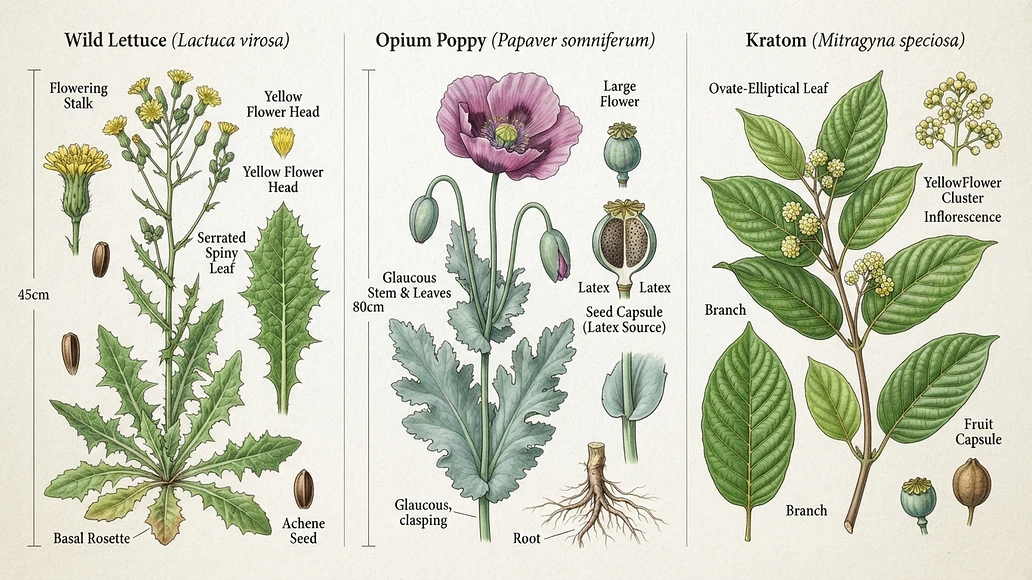
Opium poppy, Papaver somniferum, is the well-known plant source of opium alkaloids such as morphine and codeine. Wild lettuce belongs to a different plant group entirely. Its chemistry is different, its effects are less defined, and the comparison to poppy is mostly based on appearance of the sap and old herbal language.
| Plant | Main identity | Key compounds or concern | Pain relief evidence | Main risks | U.S. context |
|---|---|---|---|---|---|
| Wild lettuce | Lactuca species, often Lactuca virosa or related wild types | Lactucin, lactucopicrin, milky latex called lactucarium | Limited, mostly traditional use and preclinical data | Sedation, allergy, dose variability, contamination, delayed medical care | Not an FDA-approved pain treatment |
| Opium poppy | Papaver somniferum | Morphine, codeine, other opium alkaloids | Well established source of opioid compounds | Dependence, overdose, legal issues, respiratory depression | Heavily regulated due to opioid content |
| Kratom | Mitragyna speciosa | Mitragynine, 7-hydroxymitragynine | Mixed for benefit, stronger evidence for safety concerns | Addiction, liver injury, seizures, contamination, overdose risk, especially concentrated 7-OH products | Not FDA-approved, subject to warnings and varying state rules |
What lactucarium is, and why people compare it to opium latex
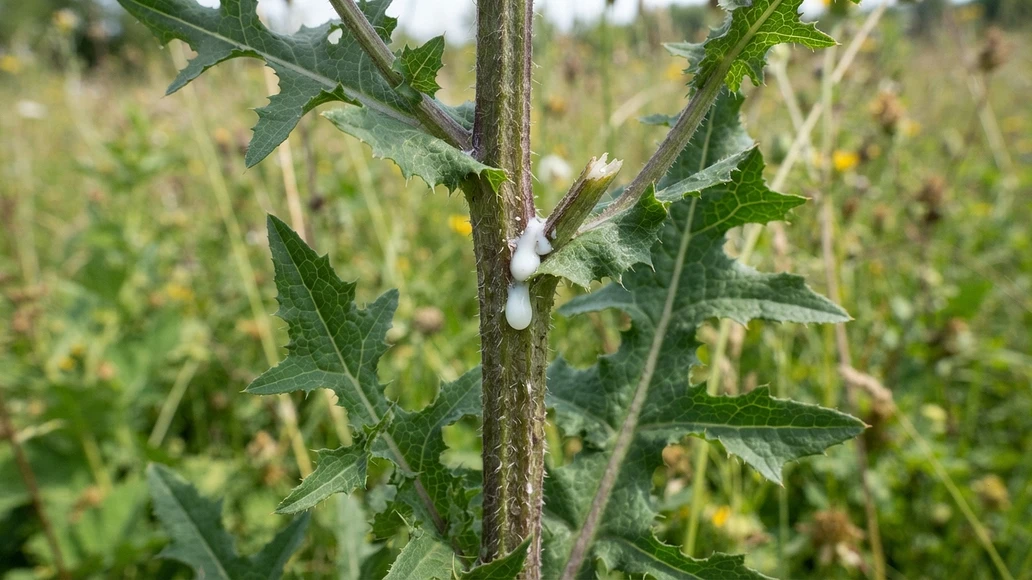
When wild lettuce stems or leaves are cut, they can release a white, milky sap. That dried sap is called lactucarium. Historically, some herbal traditions used it for calming effects or discomfort. Because opium poppy also produces a latex, people began making a visual and folk-use comparison.
But visual similarity is not chemical equivalence. Milky latex is not proof of morphine, codeine, or any true opiate. This is one of the biggest points of confusion in online articles and videos.
What the research says about wild lettuce for pain relief
The evidence is limited. Wild lettuce has traditional use behind it, and some lab or animal research has looked at compounds such as lactucin and lactucopicrin for possible sedative or analgesic effects. That is enough to justify cautious interest, but not enough to call it a dependable pain treatment for people.
There are several reasons for that gap. Human data are sparse. Products are not standardized. Home-prepared material can vary widely in strength. And pain itself is not one condition. A mild headache, a strained muscle, nerve pain, kidney stone pain, and chest pain are completely different problems that should not be lumped together.
| Claim | Evidence level | Practical takeaway |
|---|---|---|
| Wild lettuce contains morphine or true opiates | Weak to false | Do not assume wild lettuce is chemically similar to opium poppy |
| Wild lettuce may mildly reduce discomfort or promote calm | Limited and mixed | Possible traditional or preclinical effect, but not proven as a reliable human pain remedy |
| Wild lettuce is a safe substitute for pain medication | Unsupported | Natural does not mean safe, standardized, or appropriate for serious pain |
| Kratom has opioid-like effects | Well supported | This is a different category of risk than wild lettuce, with stronger concerns about dependence and toxicity |
| Homemade extracts provide predictable dosing | Unsupported and unsafe | Potency can vary greatly, making self-dosing unreliable |
How to identify wild lettuce more safely
Correct identification matters because plant mix-ups are common, especially with weeds that share similar leaves, stems, or sap. Wild lettuce is often described as a tall, weedy plant with lobed leaves, a central stem, yellow dandelion-like flowers, and milky sap when cut. Some species may have leaves that clasp the stem and a somewhat prickly midrib underside.
That said, identification from a short internet description is not enough for safe use. Lighting, growth stage, region, and species variation can all change appearance. If you cannot identify a plant with confidence using a reliable field guide and multiple characteristics, do not ingest it.
Common misidentification problems
| Issue | Why it matters | Safer approach |
|---|---|---|
| Assuming any milky-sap weed is wild lettuce | Many plants produce latex, and some can irritate skin or be unsafe to ingest | Use multiple plant traits, not sap alone |
| Confusing young plants with mature plants | Leaf shape can change as the plant grows | Compare several growth stages in a trusted field guide |
| Relying on one photo online | Angle, region, and species variation can mislead | Cross-check with extension resources or a regional flora guide |
| Mixing up wild lettuce with opium poppy | They are different plants with very different legal and chemical profiles | Learn the family-level differences before making any comparison |
Why homemade dosing is unreliable
Even if a plant has potentially active compounds, that does not mean a home preparation gives a predictable result. Strength can vary based on species, soil, weather, plant age, storage, and preparation method. Tea, tincture, dried sap, and extracts can all differ substantially.
This is especially important with sedating botanicals. A preparation that seems weak one time may be stronger the next. That creates risk for drowsiness, impaired judgment, nausea, or dangerous interactions with alcohol or medications. It also creates a false sense of control that can delay proper care for a condition that needs diagnosis.
For that reason, it is not responsible to treat homemade extraction as a standardized medical approach.
Side effects and interaction risks that matter most
Wild lettuce is often discussed as if it were gentle simply because it is a plant. That is not a safe assumption. Sedation is one of the main concerns. So are allergic reactions, stomach upset, contamination, and interaction with other substances that affect the brain or nervous system.
| Risk area | What to watch for | Why caution is needed |
|---|---|---|
| Sedation | Drowsiness, slowed reaction time, dizziness | Can impair driving, tool use, and decision-making |
| Drug interactions | Alcohol, opioids, benzodiazepines, sleep aids, some antidepressants, seizure medicines | Combining sedating substances can increase harm |
| Allergy or sensitivity | Rash, itching, swelling, stomach upset | Plant families can trigger reactions in sensitive people |
| Contamination | Mold, pesticides, misidentified plant material | Wild-harvested or informal products may not be quality controlled |
| Delayed care | Repeated self-treatment while symptoms worsen | Pain can signal infection, fracture, nerve injury, or organ disease |
Who should avoid wild lettuce and similar sedating botanicals
Some groups should be especially cautious or avoid use entirely unless a qualified clinician says otherwise.
| Person or situation | Why avoidance is wise | Better next step |
|---|---|---|
| Pregnant or breastfeeding people | Safety data are inadequate | Ask a clinician before using any herbal sedative or pain remedy |
| Children and teens | Dosing and safety are unclear | Use pediatric guidance for pain instead of self-experimenting |
| Older adults | Higher risk of falls, confusion, and medication interactions | Review all medicines and supplements with a clinician or pharmacist |
| People with liver disease | Herbs and extracts may add metabolic stress | Seek medical advice before use |
| People with seizure history | Some botanicals and interactions may lower seizure threshold | Avoid unsupervised use |
| People with substance use disorder history | Mind-altering or sedating products can complicate recovery | Use clinician-guided pain strategies |
| Anyone taking sedatives or opioids | Combined effects can increase danger | Do not combine without professional guidance |
Wild lettuce vs kratom vs opium poppy, the practical difference
These plants are often grouped together online, but they do not belong in the same safety bucket. Wild lettuce is mostly a traditional herb with limited evidence and uncertain potency. Opium poppy is the source of true opioid alkaloids. Kratom has opioid-like effects and a much more serious modern safety discussion, especially around concentrated 7-hydroxymitragynine products.
If your search started with the phrase "natural morphine," the most important takeaway is this: do not assume all plant pain remedies are mild, and do not assume stronger means safer or better.
When a plant remedy is not the right choice
Pain is a symptom, not a diagnosis. A plant that dulls discomfort does not fix the cause. Self-treatment is a poor fit for severe, unexplained, worsening, or persistent pain. It is also a poor fit when pain comes with fever, weakness, numbness, shortness of breath, or recent injury.
| Situation | Why self-treatment is risky | Recommended action |
|---|---|---|
| Chest pain or trouble breathing | Could signal a medical emergency | Seek urgent care immediately |
| Severe pain after a fall or injury | Possible fracture, internal injury, or bleeding | Get prompt medical evaluation |
| One-sided weakness, confusion, or severe headache | Possible neurologic emergency | Call emergency services |
| Black stool, bloody stool, or vomiting blood | Possible gastrointestinal bleeding | Seek urgent care |
| Abdominal pain with fever or vomiting | Could be infection or surgical problem | Get medical care |
| Pain that lasts more than a few days or keeps returning | Needs diagnosis, not repeated masking | Schedule professional evaluation |

What to try instead for short-term pain relief
For minor, short-term pain, safer basics often help more than internet-famous herbs. Rest, hydration, gentle movement when appropriate, heat or cold, and evidence-based over-the-counter options may be more predictable than a homemade botanical. If you use nonprescription pain relievers, follow the label and consider your own health conditions, especially ulcers, kidney disease, liver disease, blood thinners, or pregnancy.
For chronic pain, repeated self-medicating with herbs is rarely the best long-term plan. Chronic pain often responds better to a cause-based approach that may include physical therapy, sleep improvement, stress management, exercise progression, and clinician-guided treatment.
Legal and regulatory context in the United States
Claims that a plant is "morphine-like" can blur important legal and medical distinctions. In the U.S., true opioid-containing plants and opioid drugs are heavily regulated. Wild lettuce is not an approved pain medication. Kratom products are also not FDA-approved, and federal agencies have repeatedly warned about safety, contamination, and dependence concerns. State rules can vary.
That means online marketing language should not be mistaken for proof of safety, legality, or effectiveness. A dramatic label can sell a product while telling you very little about what is actually in it.
How to interpret online claims about natural morphine
A good rule is to slow down whenever a headline promises a backyard substitute for a powerful drug. Ask three questions.
- Is the claim about appearance, traditional use, or actual chemistry?
- Is there solid human evidence, or mostly folklore and animal data?
- Does the article clearly explain who should not use it and when to seek medical care?
If those answers are vague, the claim is probably oversold.
Bottom line
Wild lettuce is the plant most often linked to the idea of a natural painkiller that resembles morphine, but the resemblance is mostly historical and visual, not chemical. It may have mild traditional or preclinical analgesic interest, yet it is not the same as opium poppy, not a proven morphine substitute, and not a safe answer for severe or unexplained pain.
If pain is intense, persistent, or paired with red-flag symptoms, skip the experiment and get medical care. For minor pain, use lower-risk, evidence-based measures first, and be skeptical of any product or post that treats "natural" as a guarantee of safety.
References
- FDA, FDA and Kratom
- Yale Medicine, Kratom, What Is It and Is It Safe
- University of Utah Health, Kratom, What You Need to Know About This Natural Opioid
- Encyclopaedia Britannica, Kratom
- PubMed, Research overview relevant to kratom analgesic potential and safety caveats
- ScienceDaily, Natural product shows pain-killing properties